
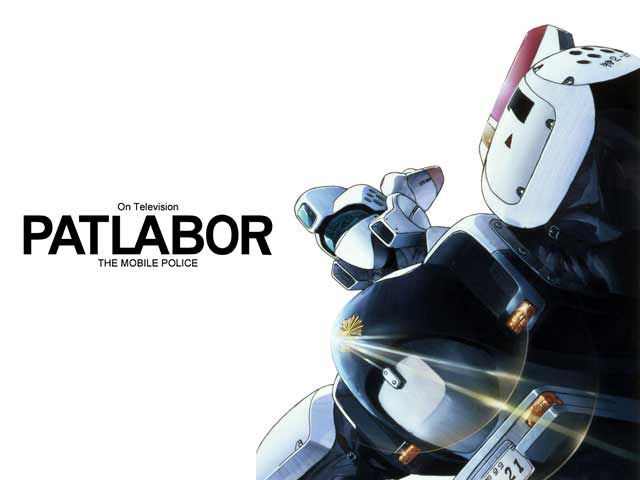
Mobile Police Patlabor" is a pioneering title in media-mix content that began with the release of the original video animation (OVA) in 1988 and the serialization of the manga version in "Shonen Sunday" magazine. The story is set in Tokyo in 1999, a time when robots for work have become a part of everyday life due to demand. The story depicts how Akira Izumino, a rookie female police officer, struggles against the daily incidents and events as a member of the robot unit introduced by the police.
Outline of "Mobile Police Patlabor
Mobile Police Patlabor" is a pioneering title in media mix content that began in 1988 with the release of an original video animation (OVA) and the serialization of the manga version in Shōnen Sunday magazine.
The series began in 1988, and from there, it developed into an initial OVA (7 volumes of 30 minutes each), a manga version (22 volumes), the first theater version, an animated TV version (47 episodes), a new OVA series (16 volumes of 30 minutes each, with a renewed audio version of the animated TV version), a second theater version, and a new OVA series that continued the TV version. The second feature film, five video games for the FC Disk System, Game Boy, PC Engine, and PS1, a novel by three authors (Kazuomi Ito, Michiko Yokote, and Mamoru Oshii), the third feature film and a short animation film, a live-action film with a new cast, and a short animation film, have all been released. The feature of this series is that it is characterized by a large number of works.
The film depicts a police drama in a world where "Reaver," a ride-on giant robot, has spread throughout the world with the development of hyper-technology.
Reavers are treated as a type of vehicle in the world of this work, and are neither super robots with special powers nor new weapons that can destroy conventional forces, but rather exist for construction and other work in Tokyo and other cities.
The depiction of organizations is also kept to a minimum.
The organization to which the protagonists belong is the Metropolitan Police Department, which has created the "Special Vehicle Section 2" in the Security Department to take down criminal reavers.
However, there is a collusive structure with a heavy industry manufacturer that produces reavers, as well as the problem of industrial espionage involved in the collusion.
The film also depicts police budget problems, the reputation of the police among the public, conflicts with politics, decisions made by the upper echelons of the police force, and the anguish faced by police officers in the field in response to these decisions.
It is also very famous that "Bayside Shakedown" was a live-action drama based on this work.
It is also one of the representative works of Mamoru Oshii, a well-known film director of some of his works, including the theatrical version.
As for the story, the content of each media differs in large and small ways because it is a media-mix work.
Mobile Police Patlabor" (former OVA), "Mobile Police Patlabor the Movie", "Mobile Police Patlabor 2 the Movie
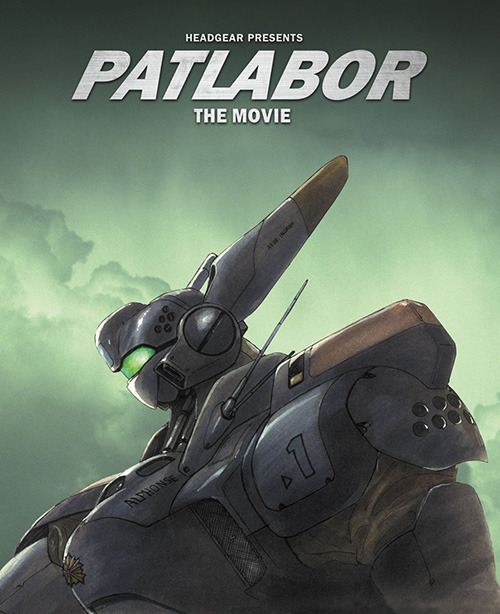
The series that started it all.
With Mamoru Oshii as overall director, the series continues with "Mobile Police Patlabor" (former OVA), which consists of seven episodes, and "Mobile Police Patlabor the Movie," which concludes with "Mobile Police Patlabor 2 the Movie.
In "Mobile Police Patlabor" (former OVA), the story centers on the "Special Vehicle Section 2," a group of out-of-work police officers in a realistic Tokyo world where the giant robot Reaver exists, and the story is filled with slapstick gags and ultimately leads to a confrontation with political thought criminals.
In addition to the common name "Old OVA," the series also has the common names "Early OVA" and "Early Days.
The world of "Mobile Police Patlabor the Movie" is a continuation of the "Mobile Police Patlabor" (old OVA), but with less gags and more serious plot development.
The story is that the revolutionary operating system "Hyper Operating System (HOS)" developed by Eiichi Hoba, a genius programmer who committed suicide, has become widely used, but in fact, the OS has a mechanism that causes the Reaver to go out of control under certain conditions, such as wind speeds of 40 meters per second. The story goes as follows.
The film, "Mobile Police Patlabor 2 the Movie," is the one in which Mamoru Oshii's colors are most strongly expressed, with Kiichi Goto as the main character, and depicts the story of the police and the Self-Defense Forces in conflict over the intentions of Yukihito Tsuge, a thought criminal who wants to "recreate" the war situation in Tokyo.
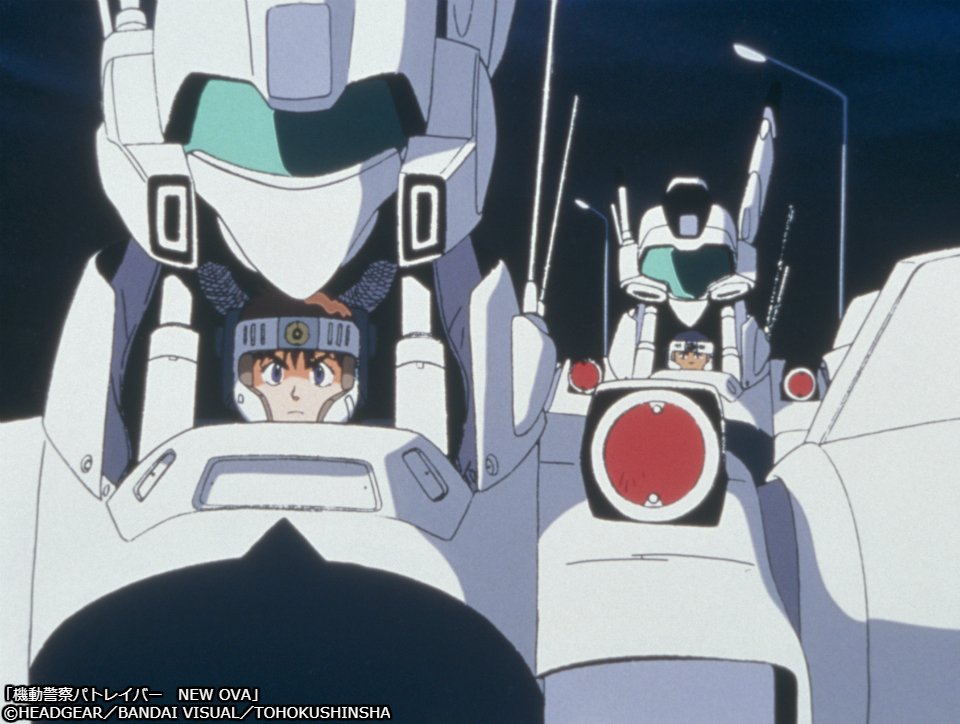
Mobile Police Patlabor ON TELEVISION" and "Mobile Police Patlabor NEW OVA
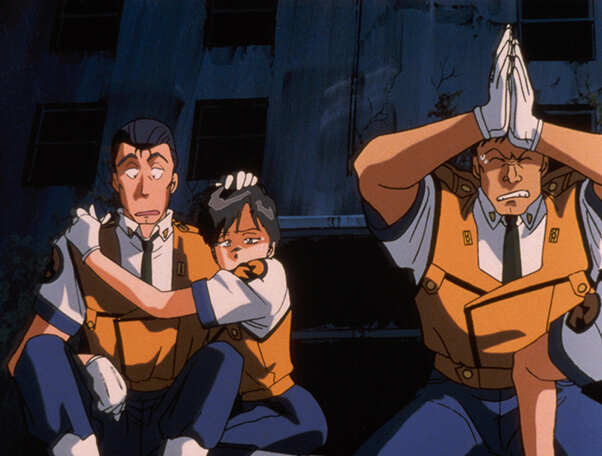
This anime series is a parallel universe to "Mobile Police Patlabor" (former OVA).
Therefore, while the characters and worldview are almost identical, the stories are completely different.
Like the TV series, the content is light-hearted and child-friendly, and depicts a battle against a criminal reaver that threatens the public, with slapstick gags by the fallen police officers of the Special Vehicle Section 2. The new OVA is a complete sequel to "Mobile Police PATLABOR ON TELEVISION," and is in effect a film adaptation of the script that could not be broadcast in "Mobile Police PATLABOR ON TELEVISION.
In addition, taking advantage of the length of the TV anime, there are many episodes that focus on the individual members of the Special Vehicle Section 2.
While the overall story is an ensemble drama, it also emphasizes the first-person perspective.
WXIII PATLABOR THE MOVIE 3

This is a so-called spin-off work.
The official name is "WXIII Kikudou Keisatsu Patlabor PATLABOR THE MOVIE 3".
WXIII" is read as "Waisted Thirteen".
It is a one-off film that shares the same worldview as the other films, but has no connection to any other series.
The main characters are an old detective and a young detective, as if recreating the detective dramas of the past.
The story is a drama between the police and criminals concerning "Waste No. 13," a man-eating monster created through genetic research.
Minipatos."
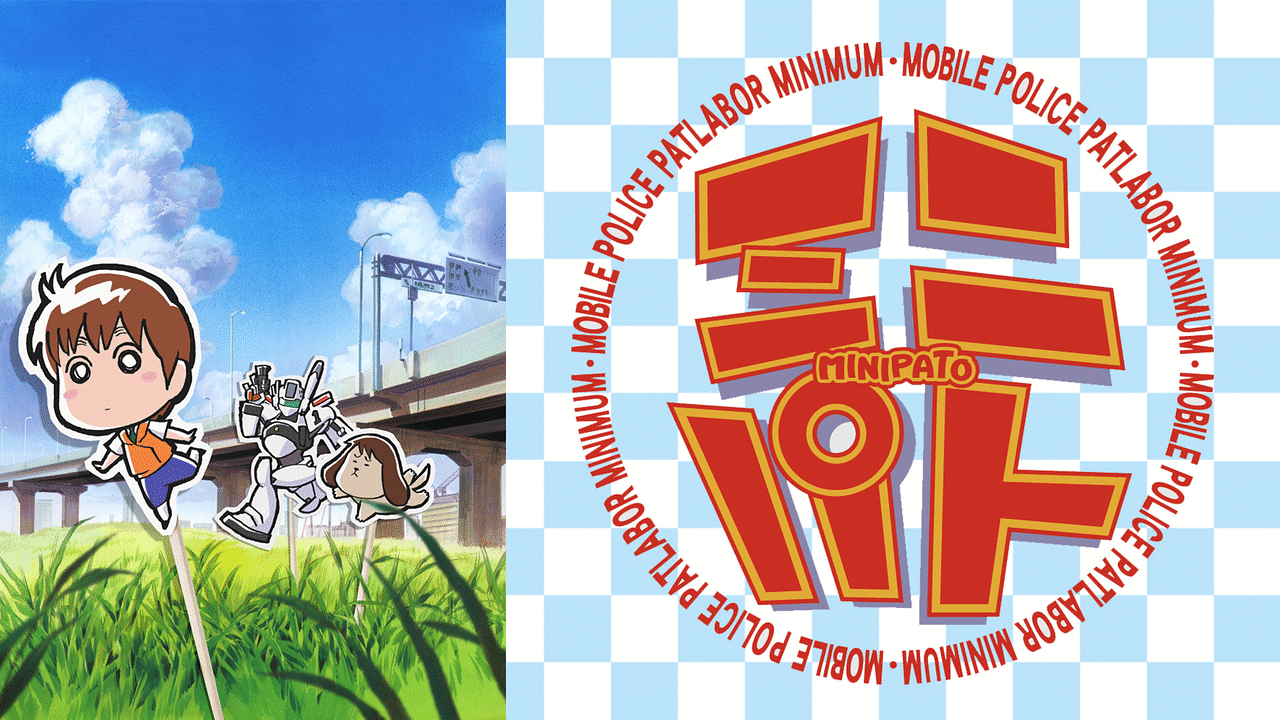
This gag anime film was screened at the same time as the third theatrical version.
The film is a self-parody of the Patlabor series, with plenty of material and sarcasm scattered throughout.
At first glance, it appears to be a "patapata puppet show" with paper characters pasted on disposable chopsticks, but in fact it was made using full computer graphics, a labor-intensive and time-consuming process.
Directed by Mamoru Oshii.
Mobile Police Patlabor" (manga version)
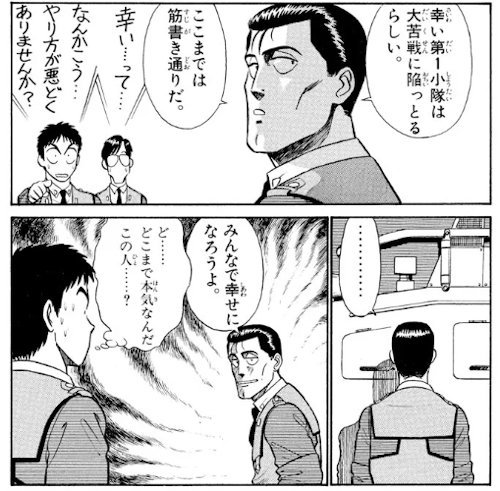
Manga version by Masami Yuki, the original creator of the entire Patlabor series.
While the basic setting is identical to that of the anime series, Yuuki's original story unfolds through his own interpretation.
It is a long-running serial in Shōnen Sunday.
The main theme of the story is the growth of young police officers assigned to the Special Vehicle Division 2 and their battle against a large corporation that manipulates crimes involving reavers from behind the scenes to take advantage of their profits.
Since it is in manga form and has been published in paperback, it serves as the most easily accessible introduction to "Patlabor" in the post-anime era, and many people have become fans of the "Patlabor" series from this work.
Mobile Police Patlabor" (novel version)
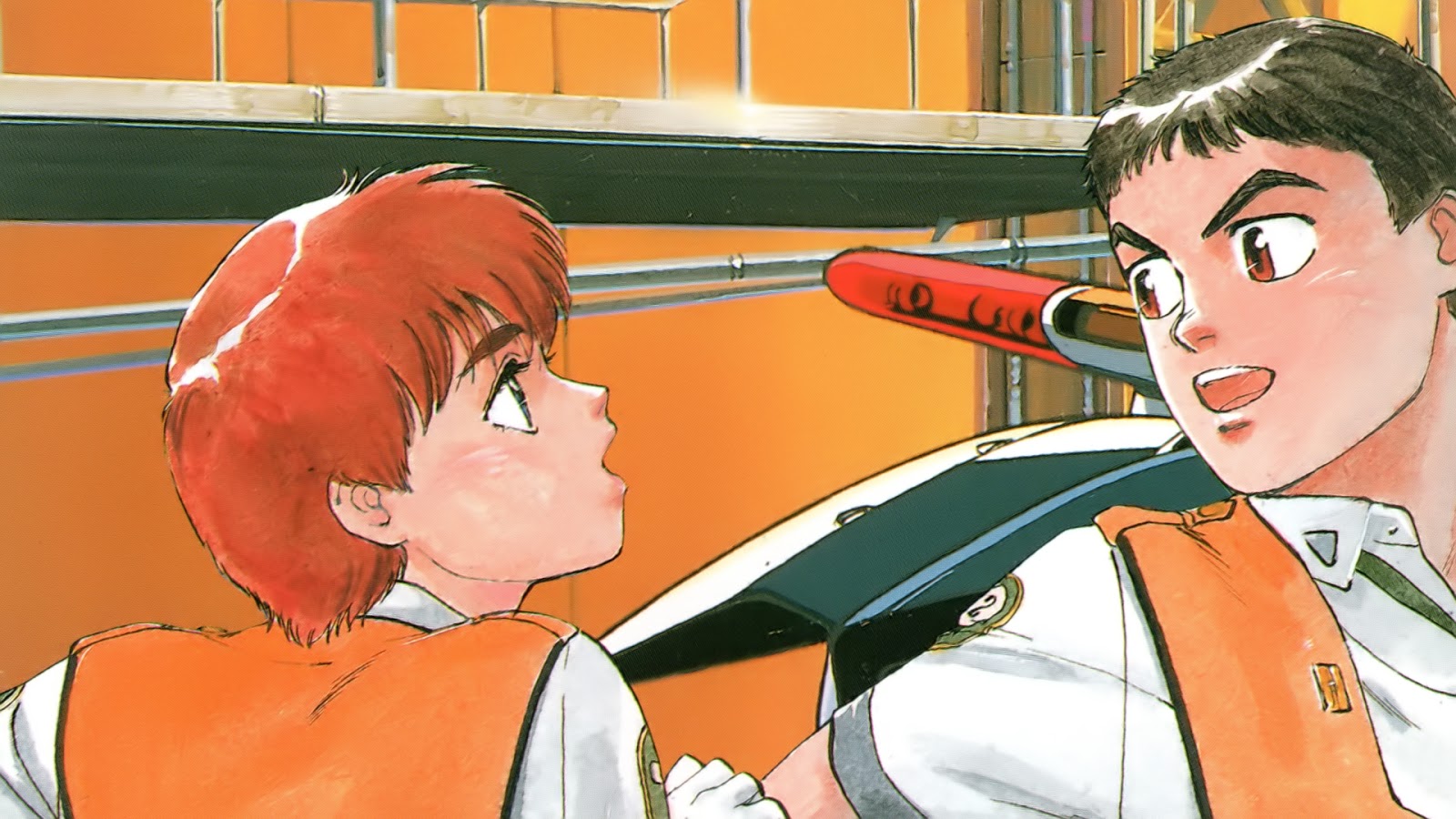
From an illustration of the novel version.
Novels by Headgear members and anime scriptwriters.
There is not a single work, but multiple works.
The world setting is also divided into those that continue from "Mobile Police Patlabor" (former OVA) and those that are not limited to "Mobile Police Patlabor" (former OVA), making it basically a group of works for deep fans who are familiar with Patlabor.
The specific lineup is as follows
Novels that share the same world setting from "Mobile Police Patlabor" (former OVA)
TOKYO WAR - Patlabor (Part 1)" by Mamoru Oshii
TOKYO WAR - KIDS POLICE PATLABOR (Part 2)" by Mamoru Oshii
TOKYO WAR MOBILE POLICE PATLABOR" by Mamoru Oshii
A novel that mixes the world settings of "Mobile Police Patlabor" (former OVA) and "Mobile Police Patlabor ON TELEVISION" series.
Mobile Police Patlabor: 40 Meter Wind Speed" by Kazunori Ito
Mobile Police Patlabor 2: Syntax Error" by Michiko Yokote
Mobile Police Patlabor 3: Third Mission" by Michiko Yokote
Patlabor 4: Blackjack (Part 1)" by Michiko Yokote
Patlabor 5: Black Jack (Part 2)" by Michiko Yokote
A novel that shares the same world setting from "Mobile Police Patlabor" (former OVA) but contains inconsistencies, mistakes, and intentional alterations in some settings.
Banzai: Keishicho Security Department Special Vehicle Section 2" by Mamoru Oshii
The Man in the Backseat" by Mamoru Oshii
Mobile Police Patlabor The Next Generation" (live-action version)
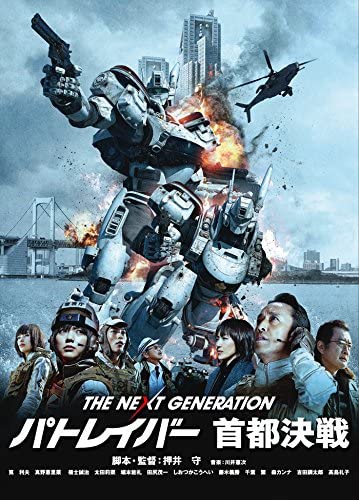
A live-action film by Mamoru Oshii.
There are two types of works: "Mobile Police Patlabor: The Next Generation," which became an official work, and its predecessor, "Pilot Movie.
Basically, most of the characters from the anime series do not appear in this live-action drama, which is an original development by Oshii, but the world setting itself is a continuation of "Mobile Police Patlabor" (former OVA).
Reiver is depicted in 3DCG, and the viewer can enjoy images as if Ingram were walking around in a live-action Tokyo.
It is said that a life-size Ingram (about 8 meters) was created to "save" the cost of 3DCG, and was used for filming maintenance scenes and stick-up scenes (it is not clear if this really saved money or not).
Synopsis and story of "Mobile Police Patlabor

Related Articles

Spoiler commentary and discussion of Pichi Pichi Pitch (Pitch)
Pichi Pichi Pitch" is a manga by Michiko Yokote (scenario by Michiko Yokote) and Pinku Hanamori (art by Pinku Hanamori), as well as a TV anime and game series based on the manga. Ruchia Nanami, a mermaid princess from the North Pacific, gives a pearl to a boy named Kaito Domoto in order to save him from falling into the sea. Seven years later, Ruchia needs the pearl to perform her coming-of-age ceremony, and in order to get it back from Kaito, she becomes a human girl and goes to land. The love of her friends and the sad love story are the charms of this work. Her nickname is "Pitch.
Read Article

April 2024 Spring Anime (First Semester Anime) Summary
This is an alphabetical list of spring anime that will start airing in April 2024.The April 2024 spring anime lineup includes many hot new anime and sequels to popular series. Information such as anime titles, broadcast information, cast voice actors and staffs are compiled in an easy-to-understand format.
Read Article

Pichi Pichi Pitch Quotes and Lines / Great Scenes and Scenes of Pichi Pichi Pitch
Pichi Pichi Pitch" is a girls' manga by Michiko Yokote and Pinku Hanamori, serialized in "Nakayoshi" magazine. The main character is Ruchia Nanami, a mermaid princess living on earth. The story centers on a battle between mermaids and a water monster that tries to threaten the peace of the sea, as well as love between mermaids and humans, and friendship among friends. Numerous lines that spoke of love and peace and expressed feelings for others attracted girls and women in the readership.
Read Article
Top 20 recommended anime from the 80's that are highly acclaimed even overseas!
Anime is a major culture that Japan is proud of. Japanese anime has a reputation for its detailed storylines and character settings, as well as its high level of drawing techniques, and is especially highly acclaimed in foreign countries. There are even cases where anime broadcast in Japan is newly produced in other countries. This article introduces 20 titles of 80s anime from Japan that were highly acclaimed overseas.
Read Article
Mobile Police Patlabor - Recommended for Adults! A compilation of masterpieces of anime [MAJOR].
When you hear the word "anime," you may have the image that it is something for children to watch. But in fact, there are many works that adults want to watch and should watch as well. In this article, we have compiled a list of great anime works for you, the adult. Some will make you cry, some will make you laugh, and some have great stories. Take a look!
Read Article
PSYCHO-PASS the Movie: Cunning Bite is back! The stage is set overseas, and the hot battle is about to begin!
A man who had done justice for himself became a murderer and disappeared. What is he thinking now, and what is he trying to accomplish? Akemi Tsunemori, who has grown up to be a full-fledged detective, steps into the "Sheen," where the new sibula system has been introduced. In the danger zone where bullets fly, he meets a man again.
Read Article

Mamoru Oshii takes a stab at "The Wind Rises"! Hayao Miyazaki's contradictions are pointed out!
Mamoru Oshii, an animation director who is also widely known for his abilities, gave a tongue-in-cheek review of "The Wind Rises" by world-renowned animation director Hayao Miyazaki. According to Oshii, this work "contains Hayao Miyazaki's 'contradictions,'" and his merciless critique was controversial. Here are some of the reactions at the time.
Read Article
Contents
- Outline of "Mobile Police Patlabor
- Mobile Police Patlabor" (former OVA), "Mobile Police Patlabor the Movie", "Mobile Police Patlabor 2 the Movie
- Mobile Police Patlabor ON TELEVISION" and "Mobile Police Patlabor NEW OVA
- WXIII PATLABOR THE MOVIE 3
- Minipatos."
- Mobile Police Patlabor" (manga version)
- Mobile Police Patlabor" (novel version)
- Mobile Police Patlabor The Next Generation" (live-action version)
- Synopsis and story of "Mobile Police Patlabor
- Mobile Police Patlabor" (former OVA)
- Mobile Police Patlabor the Movie
- Mobile Police Patlabor 2 the Movie
- WXIII PATLABOR THE MOVIE 3
- Minipatos."
- Mobile Police Patlabor ON TELEVISION" and "Mobile Police Patlabor NEW OVA
- Griffon version
- Omnibus Edition
- CLAT Edition
- Mobile Police Patlabor" (manga version)
- Mobile Police Patlabor" (novel version)
- Mobile Police Patlabor: 40 Meter Wind Speed
- Mobile Police Patlabor 2: Syntax Error
- Mobile Police Patlabor 3: Third Mission
- Mobile Police Patlabor 4: Blackjack (Part 1)" and "Mobile Police Patlabor 5: Blackjack (Part 2)
- TOKYO WAR - KIDS POLICE PATLABOR (Part 1), TOKYO WAR - KIDS POLICE PATLABOR (Part 2), TOKYO WAR MOBILE POLICE PATLABOR
- Keishicho Security Department, Special Vehicles Division 2
- The Man in the Back Seat.
- Mobile Police Patlabor The Next Generation
- Characters from "Mobile Police Patlabor
- 2nd Platoon, 2nd Special Vehicle Section
- Akira Izumi
- Kiichi Goto
- Yuma Shinohara, Asuma Shinohara
- Isao Ota
- Kanuka Clancy
- Takeo Kumagami
- Mikiyasu Shinshi
- Hiromi Yamazaki
- Special Vehicle Section 2, 1st Platoon
- Shinobu Nagumo
- Tsutomu Gomioka
- Isawa
- Special Vehicle Section 2 Maintenance Team
- Seitaro Sakaki
- Shiba, Shigeo
- Shaft Enterprises, Inc.
- Utsumi
- Kurosaki
- Badrinath Haruchand.
- criminal matter
- Takahiro Matsui
- Takeshi Kusumi
- Shinichiro Hata
- Mecha from "Mobile Police Patlabor
- Ingram
- zero expression
- python
- peacemaker
- Type 97 Reaver Command Vehicle
- Type 99 large special-purpose carrier
- Brocken
- phantom
- griffon
- Terminology for "Mobile Police Patlabor
- labor
- police raver
- Working lay bar (general-purpose lay bar)
- military raver
- Computer system related
- Hyper Operating System (HOS)
- ASURA SYSTEM
- police force
- Special Vehicle Section 2
- Investigation Division, Jonan Police Station
- business
- Shinohara Heavy Industries
- Shaft Enterprises, Inc.
- Hishii Industry Co.
- Mitsubishi Heavy Industries
- Kaisaki Heavy Industries
- purpose-built ship built by Oda Nobunaga, a daimyo in the Edo period
- Toyohata Auto
- Toto Institute of Biomedical Research
- business plan
- Babylon Project
- Izumo Project
- Famous quotes, lines, scenes, and scenes from "Mobile Police Patlabor
- Nomyoaki: "My alphans~!
- Ota: "Way to go!"
- Goto: "Let's all be happy together."
- Backstories, trivia, and small stories/episodes/anecdotes about "Mobile Police Patlabor".
- The original "Ultra Series" and its parodies
- A life-size Ingram was produced.
- Theme song and insert song for "Mobile Police Patlabor
- OP (Opening): Hiroko Kasahara "Mirai-ha Lovers" (Early OVA version 1 - 6)
- OP (Opening): Yuko Nito, "Be You As You Are" (TV version 1 - 34)
- OP (Opening): Kenji Kawai "Heavy Armor" (Mobile Police Patlabor the Movie)
- OP (Opening): Kenji Kawai "Theme of Patlabor 2" (Mobile Police Patlabor 2 the Movie)
- ED (Ending): Kenji Kawai "Revolution" (Early OVA version 6)
- ED (Ending): KISSME QUICK "MIDNIGHT BLUE" (TV version 1 - 34)
- ED (Ending): Kenji Kawai "Into the Morning Sun" (Mobile Police Patlabor the Movie)
- ED (Ending): Kenji Kawai "Hallucination" (Mobile Police Patlabor 2 the Movie)