
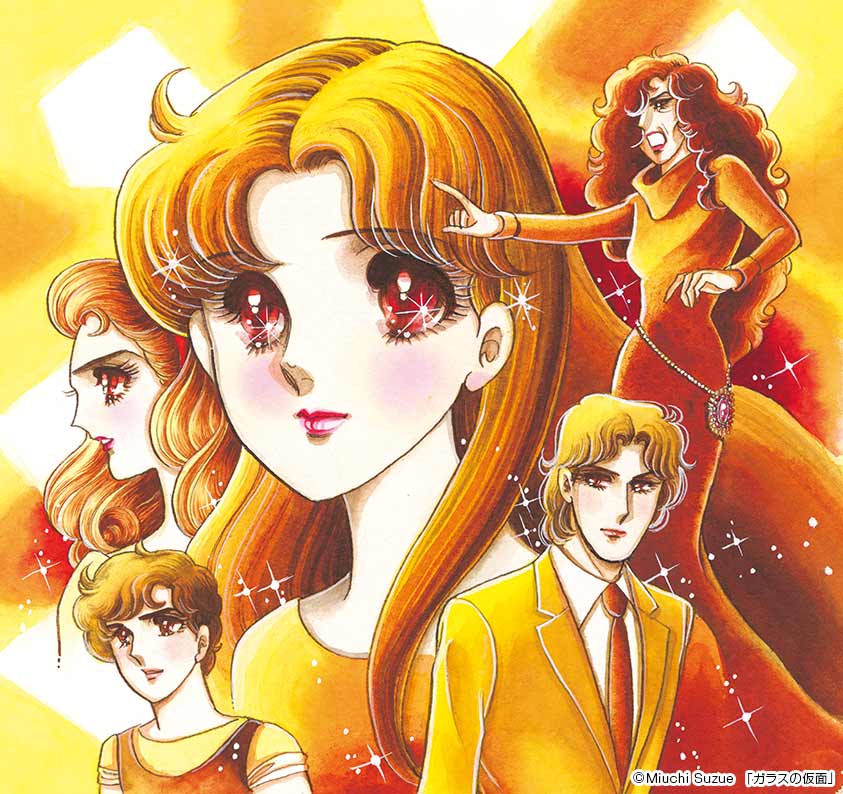
Glass Mask" is a Japanese girls' manga by Suzue Minauchi that has been serialized in Hakusensha's "Hana to Yume" magazine for more than 40 years since 1976, and as of September 2014 had sold more than 50 million copies, making it a bestseller that is considered a milestone in girls' manga.
Maya Kitajima, an ordinary young girl, has a burning passion for theater and puts everything she has into it, allowing her talent to flourish. Competing with the thoroughbred Ayumi Himekawa in the theater world, she aims to produce a masterpiece, "Benitenjo," which has never been seen before.
A Midsummer Night's Dream
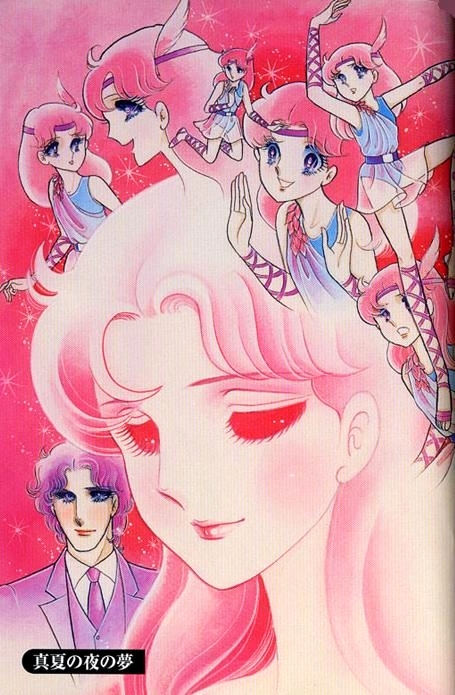
Background
After the success of "Frankenstein's First Love," a stage performance by the Tsukikage Plus Narwhal Theater Company, the leader of the Narwhal, Hotta, wanted to take a further leap forward and tried to rent not only an underground theater but also a large theater with many seats, the Athenaeum, but was turned down due to a lack of buzz.
After considering other possible venues, he took Maya's suggestion that it would be perfect for the subject matter of "A Midsummer Night's Dream" and chose an outdoor stage in a park near the theater that had been turned down as the site for the performance.
Maya also got Tsukikage's permission, and the decision was made for her to participate in the performance.
The manager of the Athenaeum theater came to see Tsukikage and the unicorns on the outdoor stage after learning that the troupe he had turned down was actually the one that had won the top prize in the theater competition.
A promise was made in the presence of Daito Entertainment and Hayami that if they could gather a larger audience than the Athenaeza's capacity, they would consider performing at the Athenaeza.
Maya and her friends were suddenly motivated, and Hayami gave them various advice on how to make the stage a success. Maya chased after Hayami as he was leaving, as she did not believe that Hayami would cooperate with Maya without a plan. Maya and Hayami take Maya out on a boat ride, where Maya finds Tsukikage's condition worrisome and Hayami is able to see Tsukikage's condition. Maya was able to ask about Tsukikage's condition there, and before long the topic of conversation turned to the purple rose. Maya told Hayami about Maya's dream to invite the person with the purple rose to the grand theater someday when she is able to perform there.
When asked what she would do if the person with the purple rose was a jerk, Maya assured him that she could love any person. Hayami was about to ask her a deeper question, but she stopped herself and faked it by saying, "The sunlight is so bright.
Hayamizu's efforts to reach out to the newspapers and the flashy publicity that was mixed in with Maya and her friends' play proved to be a huge success, drawing 1,400 people on the first day and a total of 6,000 people for the three-day performance.
Synopsis.
Based on Shakespeare's play.
A comedy featuring aristocrats, craftsmen, and forest-dwelling fairies who set foot in a forest near Athens.
Hermia is supposed to marry Demetrius, but she falls in love with Lysander and elopes with him after he blames her.
Helena, who is in love with Demetrius, informs him of their elopement, and Demetrius goes deep into the forest to look for Hermia in order to get her back.
The fairy king and queen are fighting over their adopted son.
Lysander and Hermia flee deep into the forest and sleep tiredly, while Demetrius and Helena chase after them. In order to cure the love affair between the two couples, the Fairy King has Puck the Fairy bring him some cheating grass and devise a plan to keep the adopted son for himself.
The fairy pack's success brings the story to its final grand conclusion.
Casting
Auberon, the fairy king: Taichi Hotta
Titania, the fairy queen: Mina Sawatari
Demetrius
Lysander: Rei Aoki
Hermia: Sayaka Mizunashi
Helena: Keiko Ninomiya
Puck, the fairy: Maya Kitajima
La Traviata
Synopsis.
Alfredo, a young aristocrat, falls in love with Violetta (a high-class prostitute), a Parisian socialite, and makes passionate love to her. This awakened Violetta to true love.
However, Alfredo's father did not approve of their love, and the two were separated.
The two overcame difficulties and were finally reunited, but by then Violetta was suffering from tuberculosis and her life was on the verge of disappearing.
Violetta breathed her last in Alfredo's arms.
Casting
Alfredo: Yuu Sakurakoji
The Two Princesses
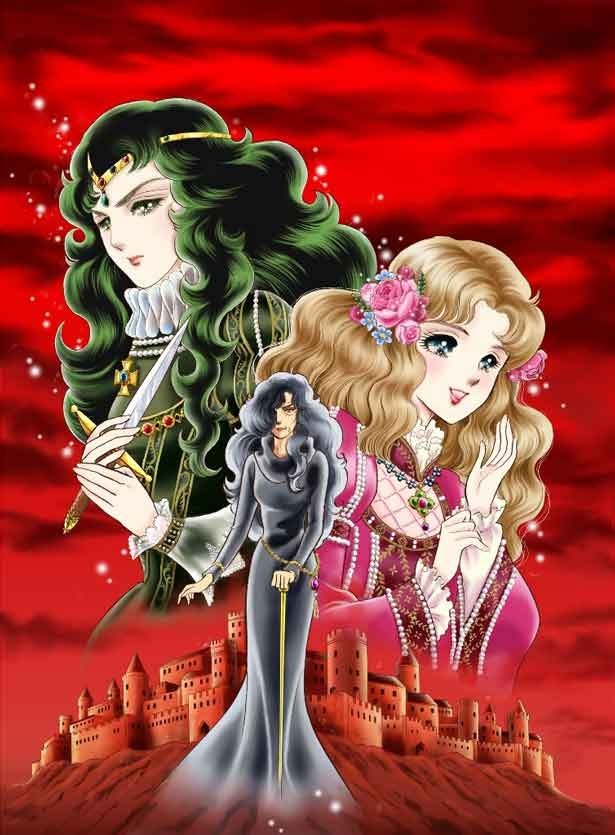
Background.
Maya won the role of Ayumi's partner in the "Two Princesses" audition by showing an overwhelming difference in ability. The story depicts the contrasting lives of two princesses, the gorgeous Aldis and the dark and hateful Origeldo. Everyone thought that Ayumi would play the role of the most beautiful girl in the world, but the roles assigned to Ayumi were Origeldo and Aldis to Maya.
Maya and Ayumi, unable to grasp the role, try to get the part by swapping each other's environment. When Hayami found out that Maya was having a hard time finding a role, he gave her a purple rose and invited her to a restaurant. Maya was filled with anticipation at the thought of meeting the purple rose, but it was Hayami who showed up. Since they were meeting for the first time, Hayami, who was acquainted with both Maya and Hayami, was present and acted as a go-between.
Through Kitashirakawa, whom the purple rose had brought together, Maya learned the performance of "sensory reproduction.
[Synopsis.
Queen Katarzyna of Lastonia has had her entire family executed for the crime of aiding the rebels. Her only daughter, Origeldo, is also taken prisoner. However, she was falsely accused of the crime by the Ragnaid faction of the second queen. The first princess, Origeldo, endured her life in prison, keeping her hatred for the second queen's faction in her heart.
The new queen, Ragnaid's daughter, the second princess Aldis, grew up to be a beautiful daughter like a goddess of spring, loved by people and nurtured like a butterfly and a flower. She was a kind princess who was devoted to her sister, Origeldo, who was imprisoned.
However, Origeldo has not forgotten her family's grudge and secretly plans to take revenge against Rastonia. Considered the standard-bearer by the anti-royalist faction, Origeld pretended to cooperate with them, deceived the anti-royalists, and returned to the castle.
Hearing that Erinwald, which was hostile to Rastonia, had formed an alliance with Denmark, a plan was hatched to marry Aldis to Erinwald in order to avoid a futile conflict. However, Aldis, who was still very young, refused the marriage as if she were a hostage. Hearing this, Origeld came forward and said he would go to Erinwald instead.
This raised Origeld's stock, and the king gave her a certificate of succession to the throne, and she married into Erinwald as the first princess.
After marrying into Erinwald, Origeld was favored by King Erinwald and steadily rose in power. Ardis, on the other hand, makes efforts to stop the war with her neighbor Harland, and the two countries move toward a truce. However, the truce was unilaterally broken by Lastonia when Origeld sent reinforcements to Lastonia, destroying the Harland royal family.
Origeld gained increasing support from the people of Lastonia. Ardis was saddened by the deeds of Rastonia. Origeld further murdered Johan, the first in line for the throne, and began to make a bid for the throne. After executing his family for plotting the death of the king, who was seriously ill, by the hated queen Ragnaid, Origeld took the throne as queen of Rastonia and locked up his sister Ardis in the prison he had once been in.
Three years have passed since Aldis went to prison. When Origeld went to see the angelic Aldis suffer, he was astonished to see that Aldis was still smiling as she had been in the past, and was getting along well with the guards.
Driven by hatred, Origeld points his sword at Aldis, but Aldis is willing to accept it if it will calm Origeld's heart. However, Origeld could not bring himself to kill Aldis.
At that moment, a knight broke into the prison to save Ardis, and Origeld missed the knight, and Ardis left Lastonia with the knight.
Ardis is happy with the knight in a faraway land and watches what happens to Rastonia.
Origeldo avenges his family's death and takes control of Lastonia as he had wished, but he lives as the queen of Lastonia in solitude, trusting no one, and in the tension of not knowing when someone might try to take the throne.
Casting
Origeldo: Ayumi Himekawa
Aldis: Maya Kitajima
King of Lastonia: Hiroshi Tsuda
Queen Katarzyna: Hitomi Azuma
Queen Ragnaid: Taeko Suzaka
Empress Dowager Haldorah: Chigusa Tsukikage
Anna Karenina.
Background.
After finishing "Two Princesses," Maya received an envelope with no sender. It contained an invitation ticket to the stage "Anna Karenina".
Suspicious, she went to the theater and sat down in her reserved seat. Just before the performance began, Hayami appeared next to her. Maya was drawn in by Hayami's desperate plea for her not to run away, and they went to see the play together. Afterwards, they spent a date-like day together visiting a fair and a planetarium.
[Synopsis.
Original story by Tolstoy
Anna is the wife of a government official and happily married with a son, but when she goes to visit her brother and his wife, she has a fateful encounter with a young officer, Vronsky, and they fall madly in love. Anna left home without her son and was chased out of town to live in Vronsky's estate. However, their relationship began to drift apart, and Anna threw herself onto a train in despair.
Having lost Anna, Vronsky lost sight of his purpose in life and threw himself into the war against the Turks.
Isadora!
[Background
The Osawa Theatre Office, which was beginning to lean, instructed Kuronuma to do something controversial for his stage in order to win a big prize. However, the Osawa office, fed up with Kuronuma's insistence that he would not perform for awards, planned to stage a play to win the prize. The lead role was played by Madoka Enjoji, the star of the Hoshi Revue, and directed by the veteran Yohiko Fujimoto. This was Madoka Enjoji's first stage performance after leaving the company, and it attracted a lot of attention.
The Osawa Theater Office used the rehearsal hall and planned theater used by "The Forgotten Wilderness" for "Isadora! and even pulled out a number of actors who were scheduled to appear in "The Forgotten Wilderness" to make "Isadora! and even recruited a number of actors who were scheduled to appear in "The Forgotten Wilderness" to help make "Isadora!
On the other hand, "The Forgotten Wilderness" was rehearsing hard to create Kuronuma's stage, despite the poor environment on the second floor of a pachinko parlor, where the noise from the train echoed.
[Synopsis.
A stage production depicting the life of Isadora Duncan, a barefoot dancing prodigy.
Isadora revolutionized the dance world by rejecting the ostentatious stages and beautifully decorated costumes that had existed until then. Isadora's success and acclaim attracted glamorous suitors, and she gave birth to two children out of wedlock.
Isadora was in the midst of happiness when a sudden misfortune befell her. Her beloved children died in an accident, and Isadora spent her days living in madness.
In Russia, where she was performing, she met and married a younger genius poet, Yessenin, but they eventually broke up, and Yessenin committed suicide with a pistol.
Isadora's life comes to an end. All that remains is to dance. Isadora dances until the moment of her death.
Casting
Isadora Duncan: Madoka Enjoji
Forgotten Wilderness
Background.
Maya, who had gained attention for her performance in "The Two Princesses," received a string of performance requests, but it is no exaggeration to say that her next production will decide everything for Maya, who must win an award equal to that of Ayumi within the two years promised to Tsukikage.
Carefully, a director named Ryuzo Kuronuma came to Maya as she was choosing her next play. Kuronuma handed Maya the script for "The Forgotten Wilderness" and told her that Maya's role was not that of an ordinary human being, but that of a wolf girl. Intrigued, Maya decided to perform in "The Forgotten Wilderness.
The president of the Osawa Theater Office, who was not pleased with Kuronuma's decision, decided to give her a chance to perform in a play that would win an award at the Academy Arts Festival.
However, Osawa's theater company, "Isadora! Maya's performance as a wolf girl at a party after the first day's performance, under Hayami's provocation, attracted a lot of attention, and the theater and arts festival officials became interested.
On the first day of the performance, with a typhoon directly hitting the area and surrounding roads blocked, Hayami was the only audience member who came to see the performance. The performances that followed the next day were also well received, and "The Forgotten Wilderness" was accepted to participate in the Academy Arts Festival.
Synopsis.
September 14, 1928. Two naked girls are found walking on all fours among a pack of wolves deep in the Carpathian Mountains. They were captured by the villagers, who made a spectacle of the rare wolf-girls. The older sister died of consumption, and the remaining sister was taken in by Stewart, a young anthropologist, who was to raise her as a human being.
The girl, named Jane, lived the life of a wild wolf, but Stewart patiently continued to educate her as a human being. During the course of her education, Jane mistakenly eats poison dumplings for rats, and Stewart takes care of her devotedly, which leads her to grow fond of him.
Jane eventually learns to walk on two legs, but she has a hard time learning to speak. However, when Jane smells Stewart's scarf, she exclaims, "Stewaaaah..."
Eventually, Jane was separated from Stewart and taken in by a human family, but she never left the scarf that Stewart had given her.
Casting
Jane the wolf girl: Maya Kitajima
Stewart: Yuu Sakurakoji
unsewn part of a hanging sleeve on a traditional Japanese woman's garment
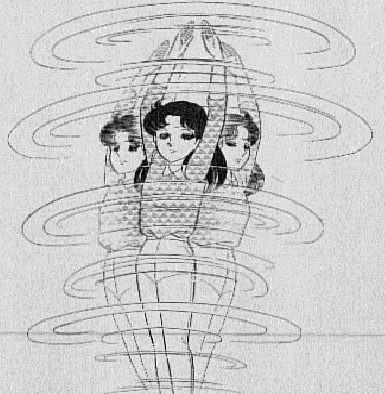
[Background.
Maya won the All Japan Drama Association's Best Acting Award, and she and Ayumi are now able to aim for the Kohtenyo. Tsukikage's wish was for Ayumi and Maya to go to the hometown of the Kohtenyo to learn acting. Here, they learn everything about the Kohtenyo from Tsukikage.
First of all, in order to play the role of Kohtenyo, one must understand nature. Tsukikage challenged them to express wind, fire, water, and earth.
First, the two began to think about how to express wind.
Ayumi's performance
Ayumi's performance was to express wind with a minimum of movement. First of all, she stood quietly. She shrugged her shoulders slightly, moved her neck, and used her eyes and facial expressions to express that the wind was blowing past the nape of her neck.
Tsukikage evaluated Ayumi's performance as perfect.
Maya's performance.
Maya's performance was a life of the wind as if she were the wind. She expressed a whirlwind, a gentle breeze, a tailwind, and a headwind with her body.
Tsukikage harshly criticized Maya's performance, calling her "a wind that fails to be a wind. She said that pretending to be the role itself, while seemingly wonderful, had a major drawback, and instructed Maya to remember that if she were an actress, she should be acting, not pretending to be the role.
Listening to Tsukikage's scathing criticism, Ayumi feared Maya's instinct to go straight to the heart of the role.
fire
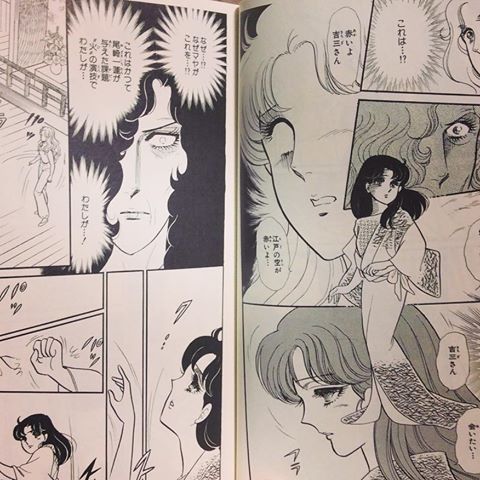
[Background
The next task was to perform fire.
Maya's performance of the wind, in which she tried to become the wind itself, left a lasting impression on Ayumi, who tried to perform the rhythm and movement of fire.
Maya, on the other hand, was looking at the fire in the kamado and wondering if she could express the fire in her heart.
At that time, Maya was asked by Genzo to go to the town to pick up a medicine for Tsukiage, when she happened to meet an elderly man she had met at the train station earlier. While eating sweetmeats together at a sweet shop, the man told Maya about the fire etude and taught her a play called "Yaoya Oshichi," which is often performed in Kabuki and Joruri dramas.
Maya tried to act out the fire in Oshichi's heart for Kichizo.
[Ayumi's performance].
Ayumi used a long, thin cloth held in both hands to represent the burning fire. Ayumi expressed the fire's vigor and rhythm by setting the intense burning fire and the movement of the fire to music, demonstrating without regret the ballet and dance training she had been cultivating since she was a child. Ayumi's movements were so accomplished that she could have performed on stage as is.
Maya's performance
Maya's performance was a scene from "Yaoya Oshichi. In the scene where he sets fire to the town of Edo to see Kichizo, he climbs up on a tower and rings a half bell, which he expresses in pantomime. Maya's performance of the fire in the heart of Oshichi, whose whole body is engulfed in flames and his body is scorched by the flames, was very sad.
Tsukikage praised Ayumi's performance as so beautiful that it reminded him of a fire spirit, and he praised Maya's Oshichi for conveying the fire of the heart well, although it was not yet matured in terms of performance. However, he told Maya's Seven to fall in love for real, as there was no madness of love in her eyes.
water (esp. cool, fresh water, e.g. drinking water)
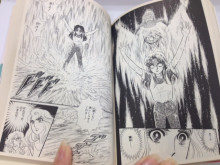
[Background
The next assignment was water.
Peter Hamill, a photographer who had followed Ayumi to Ume-no-sato, asked Tsukikage the meaning of doing these etudes. Tsukikage told him that the real purpose of this assignment was not the result, but the process.
Maya realizes that water transforms into clouds, rain, and sometimes rainbows, and she learns about the power of water by visiting a hydroelectric power plant. She then thought of the dragon god who presides over water and decided to play the role of the dragon god.
Ayumi sees water as something that connects life, as love, and realizes that all human activity is based on love. She decides to make the mermaid princess, who is destined to become a bubble of water when she loses her love, her water act.
[Ayumi's performance
Ayumi jumps into the water with her upper body naked. Although she is a mermaid who can only live in water, she was attracted to a human prince and took a witch's potion to become human. She is in pain as her body is remade by the potion, and she is unable to breathe on land. Her newly formed legs hurt so much that she could hardly walk, even when she tried to stand up. However, she stood up, enduring the intense pain because she wanted to see the prince once more.
Ayumi's performance was so beautiful and captivating that everyone recognized it.
Even Maya, her rival, was so enthralled by Ayumi's performance that she applauded generously, wanting to see the rest of the show.
Maya's performance.
Maya entered behind the waterfall and appeared out of the water with her hands outstretched in front of her with a roar that sounded like an earth-shaking roar. As the dragon goddess, she expressed her anger at humans who neglect nature, take water for granted without appreciation, pollute the water, and unnecessarily scavenge the bounty of the water, as well as her anger at the dragon goddess forcing the flowing water into human habitats.
The audience was shocked to see the dragon god in the form of Maya, as if Maya was moving the water, and was unable to speak for a while.
Although her performance was restrained, she effectively raised her hands to express the intimidation and anger of the god. When asked why she chose this move, Maya replied that it looked kind of cool, but Ayumi could not suppress her jealousy of Maya's instincts and talent.

Related Articles
Can't Die Until I Read the Final Episode! The World of Long Form Shoujo Manga
The final installment of this long-running manga never seems to arrive, making us want to shout, "How long is this going to go on? and you want to scream, "How long is this going to go on? This tendency is mainly seen in shonen and seinen manga published in magazines such as Jump, but there are also epic manga in the shoujo manga genre. I can't die until I read the last episode! Here are some long-form shoujo manga.
Read Article
Late Night Gintama⁉"Osomatsu-san" Episode 7 Parody Summary
Episode 7 is all about Totti! We've also included a parody of Totti... and this time we've put together a parody of episode 7!
Read Article
A summary of seven reasons why The Glass Mask is not quite finished!
Kochikame" has come to an end, but there are many manga that never end, such as "Golgo 13" and "Berserk. There are also manga that "for some reason" never end, such as "The Glass Mask. Here is a summary of the reasons why they never end. Glass Mask" is a Japanese girls' manga by Suzue Minauchi, which began serialization in 1976.
Read Article
Tags
Contents
- Outline of "The Glass Mask
- The story behind "The Glass Mask
- The Girl with a Thousand Masks meets the Moon Shadow
- Rehearsal and purple roses at Tsukikage Theater Company
- Fighting in a Theater Competition
- Stage Arashi" Maya
- On Helen, the "Miracle Worker"
- Maya's success and scandal
- Re-emergence, and with Ayumi
- Return to show business and "Red Heavenly Woman
- Characters in "The Glass Mask
- Maya Kitajima
- Tsukikage Chigusa
- Rei Aoki
- Sayaka Minazuki
- Mina Sawatari
- Yasuko Kasuga
- Genzo Kobayashi
- Ayumi Himekawa
- Yuu Sakurakoji
- Hajime Onodera
- Mai Aso
- Masumi Hayami
- Eisuke Hayami
- Saeko Mizuki
- Hijiri Karato
- Ichien Ozaki
- Norie Otobe
- Ryuzo Kuronuma
- Gekidan Ikkakuju
- Shigeru Satomi
- Kikuko Harada
- Utako Himekawa
- Mitsugu Himekawa
- Kei Akame
- Haru Kitajima
- Sugiko Yamashita
- Shiori Takamiya
- Hiroko Kusaki
- Hiroshi Yoshizawa
- Peter Hamill
- The Glass Mask" play within a play
- Frauenkelmesser
- Wakakusa Monogatari (The Tale of the Young)
- comparison of statures
- destiny
- Castle of Ashes
- Gina and the Five Blue Jars
- White Youth
- Love in the Old Castle
- Beauty and the Beast
- prince's family register
- river running between Tokyo-to and Kanagawa Prefecture
- Snow White
- storm-drenched hill
- Smile of a Stone
- Japanese bird cherry (Prunus grayana)
- miracle-worker
- Splendor of the heavens
- Rainbow Memory
- beyond red light
- White Jungle
- Shangri-la
- golden seed
- Portrait of Carmilla
- Yasha-hime Monogatari (Tale of the Yasha)
- Romeo and Juliet
- Lady Pirate Bianca
- shower
- Frankenstein's First Love
- My work No.707 My Beloved Olympia
- Juliet
- A Midsummer Night's Dream
- La Traviata
- The Two Princesses
- Anna Karenina.
- Isadora!
- Forgotten Wilderness
- unsewn part of a hanging sleeve on a traditional Japanese woman's garment
- fire
- water (esp. cool, fresh water, e.g. drinking water)
- the earth (historically, esp. as opposed to the heavens)
- celestial maiden
- Glossary of "The Glass Mask
- celestial maiden
- Purple Rose People
- Tsukikage Theater Company
- Ondine Theatre Company
- unicorn troupe
- Hawk Street Group
- Daito Entertainment
- Icchu star school
- Famous quotes, lines, scenes, and scenes from "The Glass Mask
- The scene where Maya jumps into the ocean in the middle of winter and picks up her ticket.
- I'm going to be an actress!"
- The scene where Tsukikage protects Maya from her mother who came to bring her back.
- The scene where Maya confronts Ayumi in a challenge that requires her to keep performing with only four words.
- To have a "purpose in life" is to discover for oneself the value of living as a human being.
- The scene where Maya's mask comes off for the first time.
- The scene where Masumi Hayami gets upset when Maya hugs her.
- You can hit me or break me or do whatever you want...! I don't know how to apologize.
- I can't tolerate a miserable actor like you! I can't tolerate a lowly actor like you...!
- Oraaaa, it's Toki!
- I'll be waiting for you for two years!
- No matter how thick the shadows are, you can't have shadows without light..."
- The signal won't be red forever.
- Masumi-sama, the sea inside you is too wide for me to see..."
- Come on! Jane!"
- The scene where Hayami, alone in the midst of a typhoon, shows up for the first day of the stage performance of "The Forgotten Wilderness".
- The storm inside me doesn't look like it's going to let up anytime soon..."
- The dream is over..."
- The scene where the two really mean what they say to each other after the Red Tennyo rehearsal in the Valley of Plum Blossoms.
- "You must remember... I hate purple roses.
- The scene where Hayami protects Maya at her own risk.
- The scene where Hayami embraces Maya when she can no longer fool herself about her feelings.
- The scene where Shiori tried to commit suicide by entering the pond with the purple roses she hated.
- The scene where Hayami nodded his head to stay by Shiori's side, but could not give up his feelings for Maya and divulged his true feelings to Sei.
- Theme song for "The Glass Mask
- 1984 Aiken version OP: Mariko Ashibe "Glass Mask
- 1984 Aiken version ED: Mariko Ashibe "Purple Light
- 2005 Tokyo Movie Version OP: Candy "Promise" (Episodes 1 - 26)
- 2005 Tokyo Movie Version OP: Aiko Ikuta "zero" (Episodes 27 - 51)
- 2005 Tokyo Movie Version ED: Aina "Yasashii Sayonara" (Episodes 1 - 13)
- 2005 Tokyo Movie Version ED: Sister Q "Step One" (episodes 14 - 26)
- 2005 Tokyo Movie Version ED: Splash Candy "Honto ni narenakute" (Episodes 27 - 39)
- The Glass Mask" TV Drama
- Summary of the TV drama "The Glass Mask
- The Glass Mask" TV Drama Main Characters and Characters
- Theme song for the TV drama "The Glass Mask
- OP: B'z "Calling
- ED: Yuki Haruhara "Polar Star - Kimi Dake Dake Shinobu" (Polar Star - Only You Can Believe)
- Series 2 ED: B'z "Happiness
- Backstory, Trivia, and Anecdotes of "The Mask of Glass
- It was actually supposed to take about two volumes.
- Purple roses really are a thing.
- Total number of white-eye scenes is about 1,300.
- Masumi Hayami is officially on Twitter.
- Purple roses are given to the "Mask of Glass" project exhibition.