
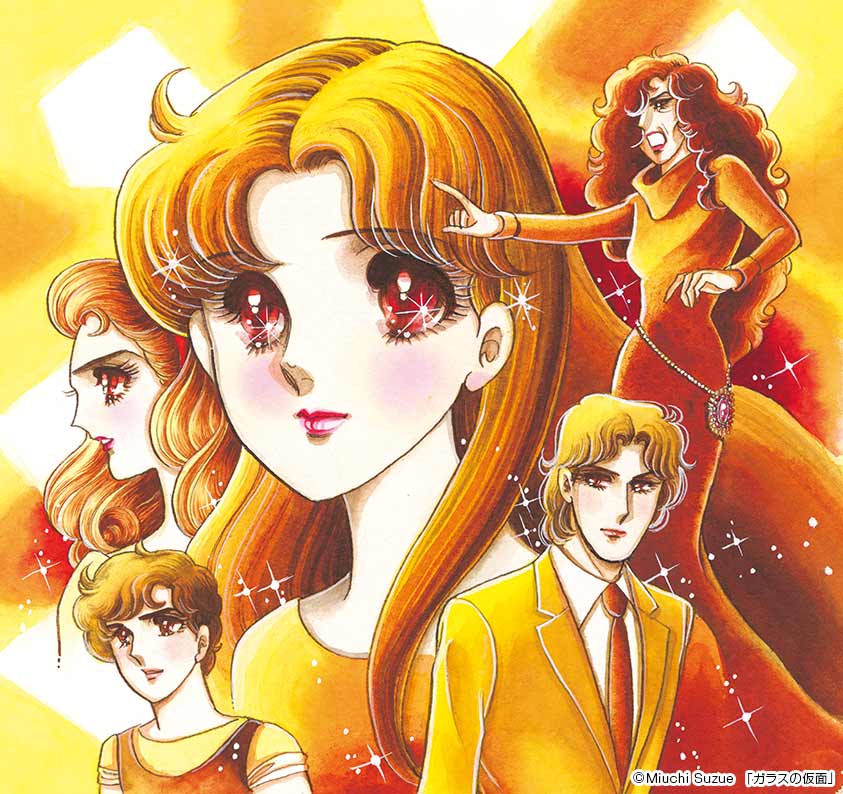
Glass Mask" is a Japanese girls' manga by Suzue Minauchi that has been serialized in Hakusensha's "Hana to Yume" magazine for more than 40 years since 1976, and as of September 2014 had sold more than 50 million copies, making it a bestseller that is considered a milestone in girls' manga.
Maya Kitajima, an ordinary young girl, has a burning passion for theater and puts everything she has into it, allowing her talent to flourish. Competing with the thoroughbred Ayumi Himekawa in the theater world, she aims to produce a masterpiece, "Benitenjo," which has never been seen before.
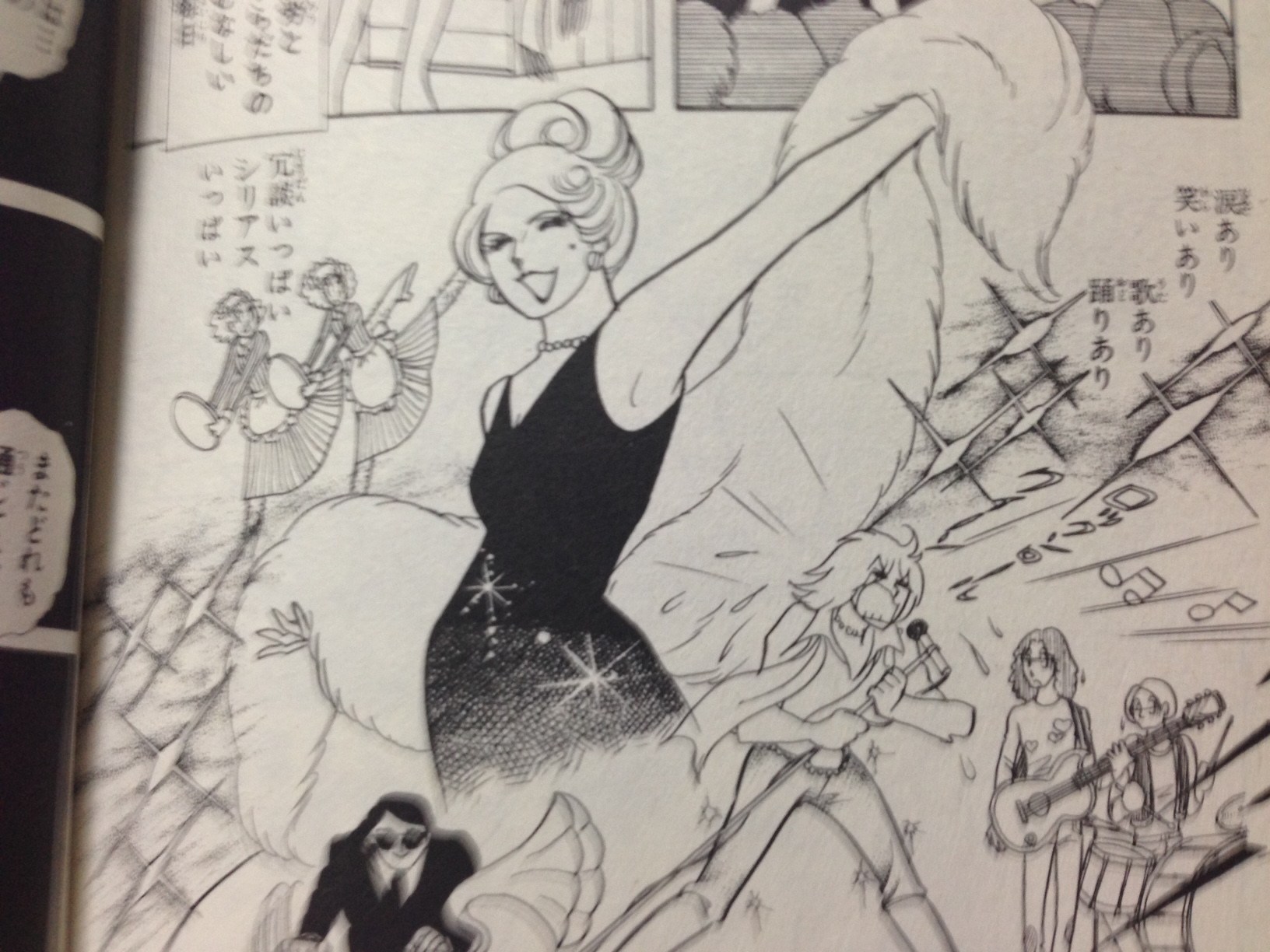
The story was performed by the Unicorn Theatre Company at the National Drama Competition.
Synopsis.
Hans, who lives in the countryside, leaves his village to go to the city to succeed, despite his girlfriend Maria's protestations to the contrary. On his way to the big city of Ekundola, he comes across three forks in the road. A strange old man appears and tells him that all three roads lead to Ekundola, but none of them do. He told them to choose their destiny with all their hearts and disappeared.
Hans, thinking the old man strange, chose the right path. What he found at the end of the right path was a bloody life as an assassin. Regretting his wrong choice of path, Hans strongly wished to change his fate if he could, and found himself back on the parting path.
The next path left he chose was a life of idle love with the countess and its breakup. Wishing to return again, Hans returned to the parting path he had taken and took the last middle path. The last path is the glorious star position. He lost his freedom, love, and comfort in exchange for wealth and fame, and his days were empty of fatigue and frustration. Regretting his decision to leave the village and lamenting his wish to return to those days, Hans suddenly found himself standing at that parting of the ways.
Hans, who had come to prefer a life of peace and love in his hometown to success in the big city, chose his true path and returned to his original village.
Castle of Ashes
The story was performed by the Ondine Theater Company in a national theater competition.
Synopsis.
At the end of the Meiji era, the Takanami family, once a feudal lord of 500,000 koku, has fallen with the changing of the world.
The story depicts Miya, the only princess of a feudal lord's family, living proudly in the midst of her prodigal father and corrupt family.
Gina and the Five Blue Jars
[Background
This is a story performed by Gekidan Tsukikage at the National Drama Competition.
Onodera's plot destroyed the props and ripped off the costumes of the theater troupe Tsukikage. With the help of the theater troupe Ikkakujyu, the group repairs the props and borrows costumes from the drama club of a nearby high school, and struggles to somehow put on a performance despite the interference. However, due to a betrayal by a theater troupe member intrigued by Onodera, the troupe got stuck at a place where they had gone to borrow costumes, and all the performers except Maya were unable to make it on time for their performance.
Maya made drastic changes to the script, took the stage alone, and successfully performed on stage.
Although the play won first place in a public vote by the audience, Onodera criticized the play as an act that tainted the spirit of theater, and the Gekidan Tsukikage was excluded from the judging process.
As a result, Aoyagi Productions no longer provided assistance, and Gekidan Tsukikage fell apart, leaving only a few members.
Synopsis.
A traveler appears at Gina's house while she is away from home and asks her to take care of a blue jar. The story is about Gina's various troubles over the blue jar.
Casting
Gina: Maya Kitajima
White Youth
Background.
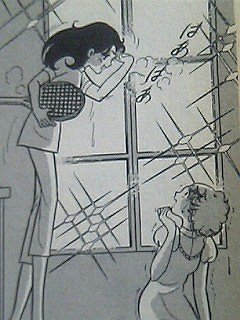
The Tsukikage Theater Company has fallen into Onodera's schemes. Maya wants to make Tsukikage a little easier by working, but no one will hire her as a junior high school student. When Maya learned that they were looking for a friend to play the role of a friend in a movie starring idol singer Emi Tabuchi, she went for an audition. The result was unsuccessful, but she was assigned a small role as it was too good to discard. She played an inpatient at the hospital where the main character is hospitalized, and was set to play a patient with a crippled leg.
Maya was unable to perform her role as a crippled patient well, so she tied her own leg so that she could not use her left leg. Although the role required only one line, Maya practiced so hard that her leg was bruised, and everyone around her was astonished at her persistence.
On the set of the filming, Maya stunned her co-stars and other people involved by her realism, which was hard to believe that she was acting, and was shown in close-up on the screen even though she had only a minor role.
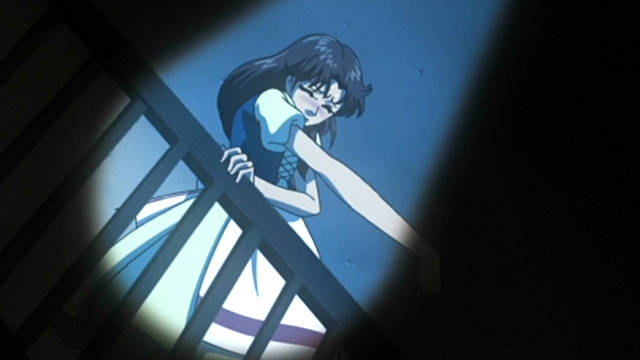
Synopsis.
When the protagonist learns that he has little time left to live, he turns away his friend who came to visit him and breaks down on the stairs in tears. The crippled girl picks up the racket dropped by the protagonist and, dragging her crippled leg, walks up the stairs and hands it to the protagonist.
Casting
Main character: Emi Tabuchi
Crippled girl: Maya Kitajima
Love in the Old Castle
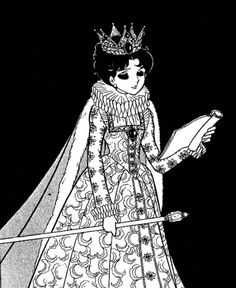
The theater company Tsukikage had fallen into decline and Maya was unable to put on a play even if she wanted to. Maya wanted to act in a play, so she contacted the drama club at her junior high school, and they agreed to put her in a play.
At first, Maya played the role of a passerby, but on the day of the presentation, the queen suddenly became ill and Maya took the stage as her understudy.
The drama club members were astonished by Maya's performance as the dignified queen, which was a complete change from her usual demeanor.
Casting
Passerby → Queen: Maya Kitajima
Beauty and the Beast
Background.
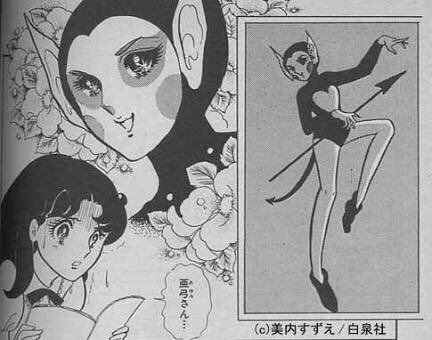
The play was performed by Ondine Theater Company as a consolation play for an institution.
Ayumi, who was eager to play many roles, took on the role of a servant of a witch who had no one to play the role.
Synopsis.
Belle, a beautiful girl living in the French countryside, is always reading books and immersing herself in the world of stories. The townspeople call her "beautiful but strange.
While searching for her father, who has gone out into the woods and never returned, she wanders into a large white castle deep in the woods. In the dark and eerie castle, his father is held captive. The joy of reunion was short-lived when, with a roar, the master of the castle appeared in the form of a wild beast.
Belle is forced to take his place and remain in the castle in order to save her father.
While spending time in the old castle, Belle and the Beast come to understand each other and develop a true love.
Casting
Witch's servant: Ayumi Himekawa
prince's family register
[Background.
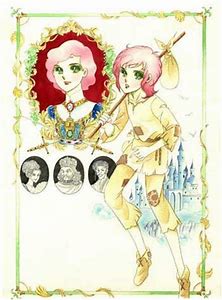
Ayumi, who is aiming for the role of "Red Tennyo," which is considered a fantastic masterpiece, wanted to play a role that would break her previous image of herself. After giving a good performance as a mischievous messenger in "Beauty and the Beast," a play performed for the comfort of an institution, Ayumi chose to broaden her acting range by playing two roles in "The Prince and the Beast.
Synopsis.
Tom, a young boy living in a poorhouse, lives a life of daily needs and food. His father, a drunkard, does nothing, and Tom makes a living by begging.
One day, while climbing an iron fence to get a glimpse of the court, Tom is caught by the guards and captured.
Tom was so dirty that he was bathed and washed in the court, and when Edward, the prince who was interested in the outside world, tried on Tom's dirty clothes, he found that Tom and Edward looked so much alike that he could not tell the difference between them.
When Tom got out of the bath, he found that his own clothes were missing, and instead there were expensive clothes hanging on the floor, so he put them on and noticed that everyone treated him like a prince.
Tom and Edward begin to live together, but they are not the same person.
[Casting.
Prince Edward and Tom, the beggar boy: Ayumi Himekawa
river running between Tokyo-to and Kanagawa Prefecture
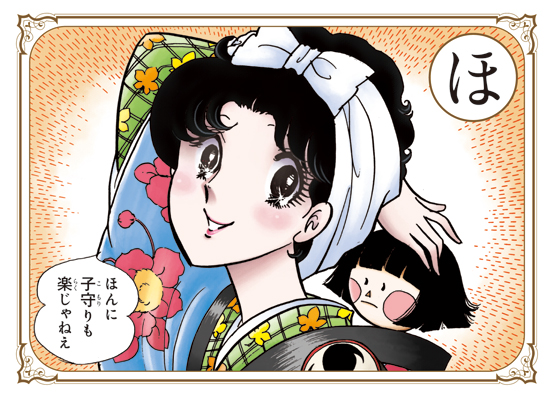
[Background.
Maya, who became even more aware of her strong desire for theater after her performance in the theater film "White Youth Sheet Music" and at a junior high school drama club presentation, went around to theaters asking if she could use them to find a stage that would allow her to perform.
In the meantime, Kikuko Harada of Eishinza, who claimed to be a disciple of Tsukikage, was interested in Maya, and after an acting test by Kikuko Harada of Eishinza, Maya was selected to perform on the stage of "Onna Kawa".
Synopsis.
In the Meiji era, the main character Shino marries into a feudal country vacation and lives amongst her unloving husband and mother-in-law who only cares about the family name.
She eventually falls in love with a servant, elopes in search of her true self, and lives a tumultuous life.
Maya plays the role of a country-educated nanny hired by an old family.
This play earned Maya the nickname "Stage Arashi" from Kikuko Harada.
Casting
Kikuko Harada
Tazu, the babysitter: Maya Kitajima
Snow White

Related Articles
Can't Die Until I Read the Final Episode! The World of Long Form Shoujo Manga
The final installment of this long-running manga never seems to arrive, making us want to shout, "How long is this going to go on? and you want to scream, "How long is this going to go on? This tendency is mainly seen in shonen and seinen manga published in magazines such as Jump, but there are also epic manga in the shoujo manga genre. I can't die until I read the last episode! Here are some long-form shoujo manga.
Read Article
Late Night Gintama⁉"Osomatsu-san" Episode 7 Parody Summary
Episode 7 is all about Totti! We've also included a parody of Totti... and this time we've put together a parody of episode 7!
Read Article
A summary of seven reasons why The Glass Mask is not quite finished!
Kochikame" has come to an end, but there are many manga that never end, such as "Golgo 13" and "Berserk. There are also manga that "for some reason" never end, such as "The Glass Mask. Here is a summary of the reasons why they never end. Glass Mask" is a Japanese girls' manga by Suzue Minauchi, which began serialization in 1976.
Read Article
Tags
Contents
- Outline of "The Glass Mask
- The story behind "The Glass Mask
- The Girl with a Thousand Masks meets the Moon Shadow
- Rehearsal and purple roses at Tsukikage Theater Company
- Fighting in a Theater Competition
- Stage Arashi" Maya
- On Helen, the "Miracle Worker"
- Maya's success and scandal
- Re-emergence, and with Ayumi
- Return to show business and "Red Heavenly Woman
- Characters in "The Glass Mask
- Maya Kitajima
- Tsukikage Chigusa
- Rei Aoki
- Sayaka Minazuki
- Mina Sawatari
- Yasuko Kasuga
- Genzo Kobayashi
- Ayumi Himekawa
- Yuu Sakurakoji
- Hajime Onodera
- Mai Aso
- Masumi Hayami
- Eisuke Hayami
- Saeko Mizuki
- Hijiri Karato
- Ichien Ozaki
- Norie Otobe
- Ryuzo Kuronuma
- Gekidan Ikkakuju
- Shigeru Satomi
- Kikuko Harada
- Utako Himekawa
- Mitsugu Himekawa
- Kei Akame
- Haru Kitajima
- Sugiko Yamashita
- Shiori Takamiya
- Hiroko Kusaki
- Hiroshi Yoshizawa
- Peter Hamill
- The Glass Mask" play within a play
- Frauenkelmesser
- Wakakusa Monogatari (The Tale of the Young)
- comparison of statures
- destiny
- Castle of Ashes
- Gina and the Five Blue Jars
- White Youth
- Love in the Old Castle
- Beauty and the Beast
- prince's family register
- river running between Tokyo-to and Kanagawa Prefecture
- Snow White
- storm-drenched hill
- Smile of a Stone
- Japanese bird cherry (Prunus grayana)
- miracle-worker
- Splendor of the heavens
- Rainbow Memory
- beyond red light
- White Jungle
- Shangri-la
- golden seed
- Portrait of Carmilla
- Yasha-hime Monogatari (Tale of the Yasha)
- Romeo and Juliet
- Lady Pirate Bianca
- shower
- Frankenstein's First Love
- My work No.707 My Beloved Olympia
- Juliet
- A Midsummer Night's Dream
- La Traviata
- The Two Princesses
- Anna Karenina.
- Isadora!
- Forgotten Wilderness
- unsewn part of a hanging sleeve on a traditional Japanese woman's garment
- fire
- water (esp. cool, fresh water, e.g. drinking water)
- the earth (historically, esp. as opposed to the heavens)
- celestial maiden
- Glossary of "The Glass Mask
- celestial maiden
- Purple Rose People
- Tsukikage Theater Company
- Ondine Theatre Company
- unicorn troupe
- Hawk Street Group
- Daito Entertainment
- Icchu star school
- Famous quotes, lines, scenes, and scenes from "The Glass Mask
- The scene where Maya jumps into the ocean in the middle of winter and picks up her ticket.
- I'm going to be an actress!"
- The scene where Tsukikage protects Maya from her mother who came to bring her back.
- The scene where Maya confronts Ayumi in a challenge that requires her to keep performing with only four words.
- To have a "purpose in life" is to discover for oneself the value of living as a human being.
- The scene where Maya's mask comes off for the first time.
- The scene where Masumi Hayami gets upset when Maya hugs her.
- You can hit me or break me or do whatever you want...! I don't know how to apologize.
- I can't tolerate a miserable actor like you! I can't tolerate a lowly actor like you...!
- Oraaaa, it's Toki!
- I'll be waiting for you for two years!
- No matter how thick the shadows are, you can't have shadows without light..."
- The signal won't be red forever.
- Masumi-sama, the sea inside you is too wide for me to see..."
- Come on! Jane!"
- The scene where Hayami, alone in the midst of a typhoon, shows up for the first day of the stage performance of "The Forgotten Wilderness".
- The storm inside me doesn't look like it's going to let up anytime soon..."
- The dream is over..."
- The scene where the two really mean what they say to each other after the Red Tennyo rehearsal in the Valley of Plum Blossoms.
- "You must remember... I hate purple roses.
- The scene where Hayami protects Maya at her own risk.
- The scene where Hayami embraces Maya when she can no longer fool herself about her feelings.
- The scene where Shiori tried to commit suicide by entering the pond with the purple roses she hated.
- The scene where Hayami nodded his head to stay by Shiori's side, but could not give up his feelings for Maya and divulged his true feelings to Sei.
- Theme song for "The Glass Mask
- 1984 Aiken version OP: Mariko Ashibe "Glass Mask
- 1984 Aiken version ED: Mariko Ashibe "Purple Light
- 2005 Tokyo Movie Version OP: Candy "Promise" (Episodes 1 - 26)
- 2005 Tokyo Movie Version OP: Aiko Ikuta "zero" (Episodes 27 - 51)
- 2005 Tokyo Movie Version ED: Aina "Yasashii Sayonara" (Episodes 1 - 13)
- 2005 Tokyo Movie Version ED: Sister Q "Step One" (episodes 14 - 26)
- 2005 Tokyo Movie Version ED: Splash Candy "Honto ni narenakute" (Episodes 27 - 39)
- The Glass Mask" TV Drama
- Summary of the TV drama "The Glass Mask
- The Glass Mask" TV Drama Main Characters and Characters
- Theme song for the TV drama "The Glass Mask
- OP: B'z "Calling
- ED: Yuki Haruhara "Polar Star - Kimi Dake Dake Shinobu" (Polar Star - Only You Can Believe)
- Series 2 ED: B'z "Happiness
- Backstory, Trivia, and Anecdotes of "The Mask of Glass
- It was actually supposed to take about two volumes.
- Purple roses really are a thing.
- Total number of white-eye scenes is about 1,300.
- Masumi Hayami is officially on Twitter.
- Purple roses are given to the "Mask of Glass" project exhibition.