
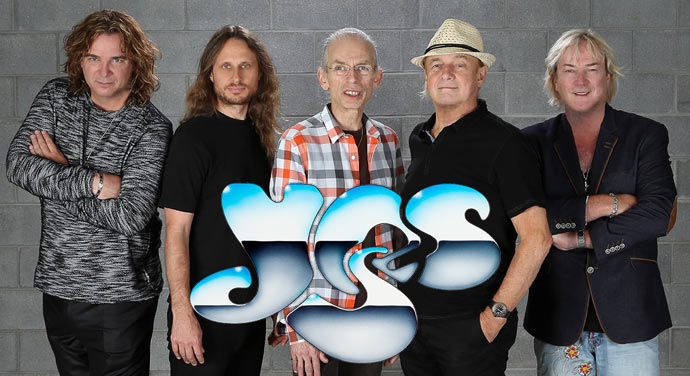
Yes is a progressive rock band formed in London in 1968. The band was inducted into the "Rock and Roll Hall of Fame" in 2017.
Released in 1971
Songs
Roundabout (Anderson-Howe)
Cans and Brahms (Johannes Brahms, arr. Rick Wakeman)
We Have Heaven (Anderson)
South Side of the Sky (Anderson-Squire)
5% for Nothing (Bruford)
6. long distance runaround (Anderson)
The Fish (Schindleria Praematurus) (Squire)
Mood for a Day (Howe)
9. heart of the sunrise (Anderson - Squire -Bruford)
Recording members
Jon Anderson - lead and backing vocals
Steve Howe - electric and acoustic guitars, backing vocals
Chris Squire - bass guitars, backing vocals, electric guitar
Rick Wakeman - Hammond organ, grand piano, RMI 368 Electra-Piano and Harpsichord, Mellotron, Minimoog synthesizer
Bill Bruford - drums, percussion
This is the first album to feature cover art by Rick Wakeman, who replaced Tony Kaye on keyboards, and Roger Dean, who designed many of the band's records and logos.
Wakeman, who played as many as 12 keyboards, was technically superior to Kaye and gave Yes a new status in the progressive rock world.
These five are considered the strongest lineup in the history of Yes.
Four of the tracks are group performances, while the other five consist of individual ideas by the members.
It charted at #7 in the UK charts and #1 in the charts. The Recording Industry Association of America (RIAA) has certified sales of over 2 million copies.
Close to the Edge/Crisis
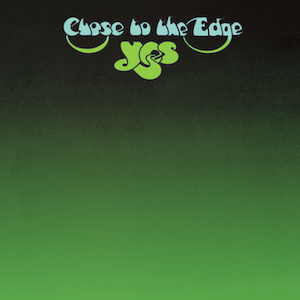
Released in 1972
Songs
1. crisis -Close To The Edge (Jon Anderson, Steve Howe)
i) The Solid Time Of Change
ii) Total Mass Retain
iii) Rise And Fall -I Get Up, I Get Down
iv) Seasons Of Man
2. comradeship -And You And I (Anderson; themes by Bill Bruford, Howe, Chris Squire)
i) Cord Of Life
ii) Disappointment -Eclipse
iii) The Preacher The Teacher
iv) The Apocalypse
3. Siberian Khatru (Anderson; themes by Howe, Rick Wakeman)
Recording members
Jon Anderson - lead vocals
Steve Howe - guitar, backing vocals
Chris Squire - bass, backing vocals
Rick Wakeman - keyboards
Bill Bruford - drums, percussion
The album received a gold disc just for pre-release pre-orders.
The songs, composition, performances, vocals, and choruses are all perfectly executed on this album.
In particular, the 18-minute title track, with its themes of good and evil, positive and negative, harmony and disharmony, is perhaps the most perfectly composed and structured song by a progressive rock band.
No. 4 on the UK charts, No. 3 on the US charts.
Tales from Topographic Oceans
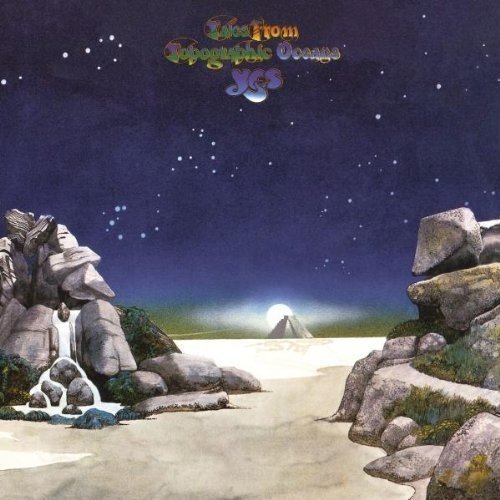
Released in 1973
Included songs
1. the Revealing Science of God (Dance of the Dawn)
The Remembering (High the Memory)
The Ancient (Giants under the Sun)
Ritual (Nous sommes du soleil)
All lyrics by Jon Anderson and Steve Howe. All music written and arranged by Anderson, Howe, Chris Squire, Rick Wakeman and Alan White.
Recording members
Jon Anderson - lead vocals, acoustic guitar, percussion
Steve Howe - guitars, electric sitar, backing vocals
Chris Squire - bass guitar, backing vocals
Rick Wakeman - keyboards
Alan White - drums, percussion, backing vocals
The first studio album featuring drummer Alan White, who joined the band after Bill Bradford left in 1972.
Inspired by Hindu scriptures read by John Anderson, the album was co-produced with Steve Howe, but Rick Wakeman disagreed with the concept and musical direction of the album and left the band after the tour.
The follow-up to "Crisis" (Close to the Edge) must have been a long-awaited album for Yes fans. However, it was a "problem album" that divided fans, with no sense of urgency in the performances and a weak rock feel, and was regarded as a redundant, redundant waste of time that indulged in grandiose production principles.
Even so, the album reached No. 1 on the UK charts and No. 6 on the US charts.
Relayer
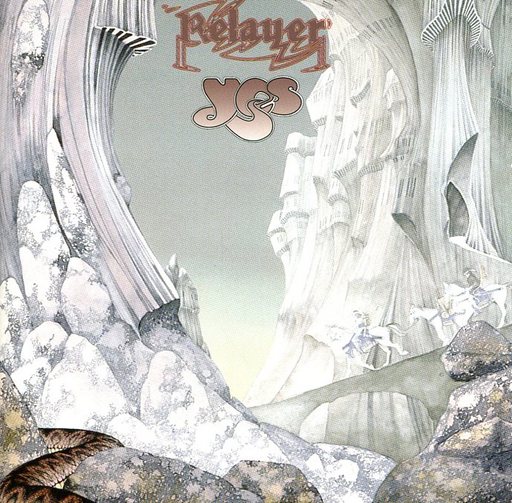
Released in 1974
Songs Included
1. the Gates of DeliriumJon(Anderson, Steven James Howe, Patrick Moraz, Chris Squire, Alan White)
Sound ChaserJon (Anderson, Steven James Howe, Patrick Moraz, Chris Squire, Alan White)
To Be Overon (Anderson, Steven James Howe, Patrick Moraz, Chris Squire, Alan White)
Recording members
Jon Anderson - lead vocals
Steve Howe - acoustic and electric guitars, vocals
Patrick Moraz - keyboards
Chris Squire - bass guitar, vocals
Alan White - drums, percussion
This is the album after Rick Wakeman left the band and Patrick Moraz joined.
The album is divided into three parts based on the theme of "War and Peace.
One of the main characteristics of this album is that the guitar plays a very leading role along with the drums.
Although Moraz, with his jazz background, is not the lead player, his distinctive playing is heard throughout the album. Because of this, fans of Rick Wakeman's sound had a hard time accepting the album, and at the time of its release, both sales and popularity were sluggish. However, the album eventually reached No. 4 on the UK charts and No. 5 on the US charts.
Going for the One/ Ultimate
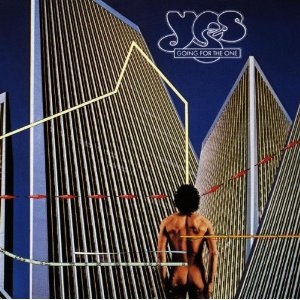
Released in 1977
Songs Included
1. ultimate - Going For The One (Jon Anderson)
2. turn of the century - Turn Of The Century (Anderson, Steve Howe, Alan White)
Parallels Are Treasure - Paralells (Chris Squire)
4. wonderous stories - Wonderous Stories (Anderson)
5. the state of enlightenment - Awaken (Anderson, Howe)
Recording members
Jon Anderson - lead vocals, harp
Steve Howe - steel guitar, acoustic and electric guitars, vachalia, pedal steel guitar, vocals
Chris Squire - bass guitar, vocals
Rick Wakeman - piano, electric keyboards, church organ at St. Martin's in Vevey, Polymoog synthesizer, choral arrangement on "Awaken"
Alan White - drums, percussion, tuned percussion
Supporting Musicians
Ars Laeta of Lausanne - choir on "Awaken
Richard Williams Singers - choir on "Awaken"
Patrick Moraz's musical ideas and his performance style were not what Jesus wanted. In the end, Moraz left Jesus with only his last album. He was replaced by Rick Wakeman, who returned to the band after a three-year absence.
In many ways, this album can be seen as a follow-up to Fragile. Its five tracks were embraced as a revival of the previous Jesus, retaining mystical, abstract, and lyrical imagery, grandiose and melodic, vocals, perfectly balanced harmonies, etc.
No. 1 on the UK charts, No. 8 on the US charts.
Tormato
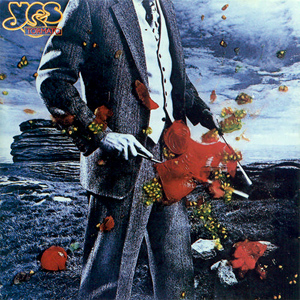
Released in 1978
Included songs
1. shining tomorrow - Future Times / Rejoice - Rejoice (A.Anderson,Squire,Howe,Wakeman,White/B.Anderson)
Don't Kill The Whale (Anderson,Squire)
Madrigal (Anderson,Wakeman)
Release, Release (Anderson,White,Squire)
Arriving UFO (Anderson,Howe,Wakeman)
Circus Of Heaven (Anderson(Featuring the voice of Anderson's son, Damion.))
Onward (Squire)
On The Silent Wings Of Freedom (Anderson,Squire)
Recording members
Jon Anderson - vocals, percussion, 10-string Alvarez guitar, Puerto Rican cuatro
Steve Howe - Gibson Les Paul Custom guitar, Martin 000-45, Fender Broadcaster, Gibson ES-175, Gibson acoustic guitar, mandolin, Spanish guitar, vocals
Chris Squire - harmonised Rickenbacker bass guitar, bass pedals, Gibson Thunderbird bass guitar, piano, vocals
Rick Wakeman - Birotron, Hammond organ, Polymoog synthesizer, piano, harpsichord, RMI Electra Piano
Alan White - drums, military snare drum, glockenspiel, crotales, cymbals, bell tree, drum synthesizer, gongs, vibraphone, vocals
The last studio album featuring John Anderson and Rick Wakeman in the band's lineup.
The variety of guitars and keyboards used has increased since the last album, and the tone has become more flamboyant. The keyboards, especially the poly-moog and the bi-rotron, contribute to the loud sound, but are overdone and distracting.
The big productions became small works, and the urgency of the previous albums faded away, and those who were expecting so-called "progressive" music did not welcome the new album.
UK Chart #8 US Chart #10
Drama
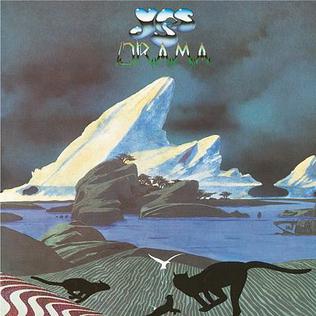
Released in 1980
Songs
1. machine messiah
2. white car
3. dream event -Does It Really Happen?
Into The Lens
Run Through The Light
Tempus Fugit
All songs by Geoff Downes, Trevor Horn, Steve Howe, Chris Squire and Alan White
Recording members
Trevor Horn - lead vocals, fretless bass on "Run Through the Light"
Steve Howe - Gibson Les Paul on "Machine Messiah" and "Run Through the Light", Gibson Les Paul Goldtop on "Does It Really Happen? Console Steel and Telecaster on "Into the Lens", Martin mandolin on "Run Through the Light", Fender Stratocaster on "Tempus Fugit", backing vocals
Chris Squire - bass, backing vocals, piano on "Run Through the Light"
Geoff Downes - keyboards, vocoder
Alan White - drums, percussion, backing vocals
John Anderson and keyboardist Rick Wakeman left the band during rehearsals for this album due to musical differences and distrust between the other members. (This was the first studio album without Anderson as frontman.)
Two members of The Buggles, lyricist/vocalist Trevor Horn and keyboardist Geoff Downes, joined to replace Anderson and Wakeman. But it could not last. The band's subsequent UK tour was met with middling reviews and Horn was unable to fill Anderson's role and the lineup disbanded in early 1981, ending this chapter of the Yes story.
The album reached #2 on the UK charts and #18 on the US charts, becoming the first album since 1971 not to be certified gold by the RIAA.
90125/Lonely Heart
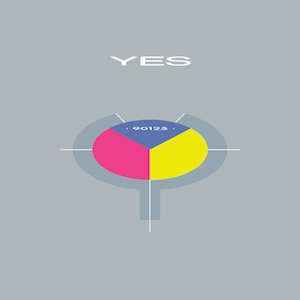
Released in 1983
Songs Included
Owner Of A Lonely Heart (Trevor Rabin/Jon Anderson/Chris Squire/Trevor Horn)
Hold On (Anderson/Rabin/Squire)
It Can Happen (Squire/Anderson/Rabin)
Changes (Rabin/Anderson/Alan White)
Cinema (Squire/Rabin/White/Tony Kaye)
Leave It (Squire/Rabin/Horn)
Our Song (Anderson/Squire/Rabin/White/Kaye)
City of Love(Rabin/Anderson)
Hearts (Anderson/Squire/Rabin/White/Kaye)
Recording Members
Jon Anderson - vocals
Chris Squire - bass guitars, vocals
Trevor Rabin - guitars, keyboards, vocals
Alan White - drums, percussion, backing vocals, Fairlight CMI
Tony Kaye - keyboards
Supporting Musicians
Dipak Khazanchi - sitar and tambura on "It Can Happen
Graham Preskett - violin on "Leave It"
Trevor Horn - backing vocals
Alan White, Chris Squire, and Trevor Rabin started a new band called Cinema after Jesus broke up after the "Drama" tour, and eventually added John Anderson and Tony Kaye to the band as "Jesus", The band recorded the album with Trevor Horn as the producer.
The band's sound was very different from that of Jesus up until then, with a more pop and modern sound, and fans of progressive rock who knew the golden age of Jesus were hesitant, but the single "Owner Of A Lonely Heart" reached No. 1 on the U.S. charts and became the most popular new music on the music scene at the time. The single "Owner Of A Lonely Heart" reached No. 1 on the U.S. charts, and the band's new music fan base grew with the music scene of the time. (The album title "90125" is a catalog number assigned by Atco Records, a subsidiary of Atlantic Recording Corporation.
No. 16 on the UK charts, No. 5 on the US charts
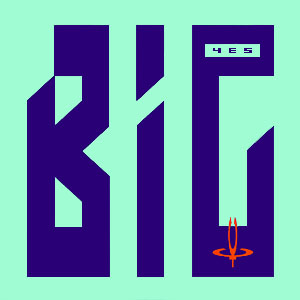
Big Generator

Contents
- Yes Overview
- Members of Yes
- John Davison
- Steve Howe
- Billy Sherwood.
- Jeff Downs
- Alan White
- Former Members
- John Anderson
- Chris Squire
- Tony Kaye
- Bill Bradford
- Peter Banks
- Tony O'Reilly
- Rick Wakeman.
- Patrick Moraz
- Trevor Horn
- Trevor Rabin
- Eddie Jovenson
- Igor Koloshev
- Benoit David
- Oliver Wakeman.
- session musician
- David Foster.
- Colin Gorling.
- Dipak Kazanki
- Graham Pressett.
- Jimmy Zavala.
- Session musician for Union (1991)
- Steve Porcaro
- Randy Lane Lesh.
- Reese Fulber.
- Louis Jardim
- Gerard Johnson
- Live Musicians
- jacket design
- Yes Band History
- History I
- History II
- History III
- History IV
- History V
- History VI
- Yes Discography
- Studio Album
- Yes/Yes First Album
- Time and a Word
- The Yes Album
- Fragile/Kowaremono
- Close to the Edge/Crisis
- Tales from Topographic Oceans
- Relayer
- Going for the One/ Ultimate
- Tormato
- Drama
- 90125/Lonely Heart
- Big Generator
- Union/Crystal
- Talk/Talk
- Keys to Ascension
- Keys to Ascension 2
- Open Your Eyes
- The Ladder
- Magnification
- Fly from Here
- Heaven & Earth
- live album
- Yessongs/Yessongs
- Yesshows
- 9012Live: The Solos/9012Live
- Something's Coming: The BBC Recordings 1969-1970/BBC Sessions 1969-1970 Something's Coming
- House of Yes: Live from House of Blues/House of Yes
- Songs from Tsongas: Jesus 25th Anniversary Concert
- The Word Is Live/Live Years
- Symphonic Live
- Live at Montreux 2003
- Union Live/Union Tour 1991
- In the Present - Live from Lyon
- Like It Is: Yes at the Bristol Hippodrome/"Yes Third Album" & "Ultimate" Complete Live - Live in Bristol 2014
- Progeny: Seven Shows from Seventy-Two/Progeny: 1972 Live
- Like It Is: Yes at the Mesa Arts Center/"Crisis" & "Kowaremono" Complete Recreation Live - Live in Arizona 2014
- Topographic Drama - Live Across America/ Oceanographic Drama
- Yes Member Quotes and Great Lines of Wisdom
- John Anderson
- Chris Squire
- Bill Bradford
- Peter Banks
- Rick Wakeman.
- Alan White
- Trevor Horn.
- Trevor Rabin
- Representative songs of Yes
- Owner Of A Lonely Heart
- ROUNDABOUT
- Heart of the Sunrise
- Close to the Edge (Crisis)