
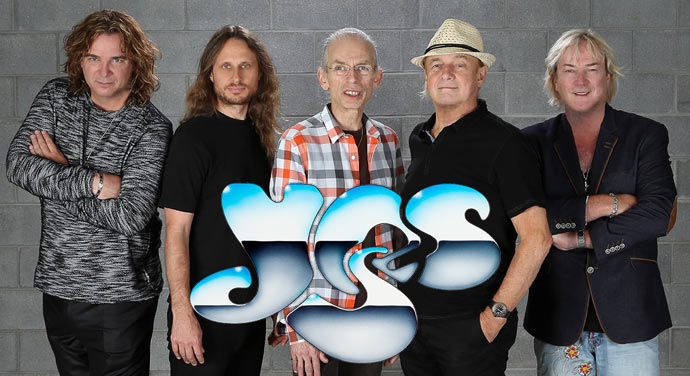
Yes is a progressive rock band formed in London in 1968. The band was inducted into the "Rock and Roll Hall of Fame" in 2017.
Session musician for Union (1991)
Jonathan Elias, synthesizer, keyboards, backing vocals
Tony Levin, bass guitar, sticks
Jimmy Haun, guitar
Allan Schwartzberg, percussion
Gary Barlough, synthesizer
Jerry Bennett, synthesizer, percussion
Jim Crichton, synthesizer, keyboards
Gary Falcone (backing vocals)
Deborah Anderson (backing vocals)
Ian Lloyd (backing vocals)
Tommy Funderburk (backing vocals)
Sherman Foote (synthesizer)
Brian Foraker (synthesizer)
Chris Fosdick, synthesizer
Rory Kaplan, synthesizer
Alex Lasarenko, synthesizer, keyboards
Michael Sherwood (backing vocals)
Danny Vaughn (backing vocals)
Steve Porcaro
Steve Porcaro
Instrument: Synthesizer, Keyboards
Albums: "Union" (1991), "Open Your Eyes" (1997)
Randy Lane Lesh.
Randy Raine-Reusch
Instrumentation: Musical instruments from all over the world
Participating album: The Ladder (1999)
Reese Fulber.
Rhys Fulber
Charge : Dance Loop
Participating album: "The Ladder" (1999)
Louis Jardim
Luís Jardim
Role: Percussionist
Participated album: "Fly from Here" (2011)
Gerard Johnson
Gerard Johnson
Assignment : Piano
Participating album: "Fly from Here" (2011)
Live Musicians
Ian Wallace (Drums) 1968 (one show)
Tom Brislin (Key) 2001 (Symphonic Live)
Jay Schellen (Ds) 2016-2017 (replacement for Alan White)
Dylan Howe (Ds) Touring in 2017
jacket design
Roger Dean
Roger Dean designed the jackets for Yes' fourth album, "Fragile", through "Going for the One".
He also designed the band's name logo, contributing to the visual aspect of the project.
Yes Band History
History I

In 1968, after the Warriors disbanded, John Roy Anderson (October 25, 1944) was looking for work. He was invited to record with a band called The Gun, but declined because of problems within the band.
He met Chris Squire (B) (Christopher Russel Edward Squire, March 4, 1948 - June 27, 2015), who was stuck in a band called Mabel Greer's Toyshop at the time, by chance at a club. They met by chance at a club and while discussing their circumstances, they hit it off and decided to form a new band.
Clive Bailey (G) and Bob Hagger (Ds), also of Mabel Greer's Toy Shop, attempted a session with the four of them, but Hagger left the band due to difficulties ahead. The band placed an ad in the Melody Maker for a drummer, and Bill Bruford (William Scott Bruford, Ds., May 17, 1949) came along.
He had been playing drums for Savoy Brown at the time, but he was in a hurry because he had not signed a formal contract. Before they could start rehearsals, they were suddenly offered a job at South London College, but Bradford's outstanding drumming made the other three members of the band forget their worries about not rehearsing, and they officially welcomed Bradford as a member of the band.
The four of them began rehearsing anew, but they felt the need for a keyboardist to help them build a precise sound. The five began rehearsing together, but Bailey had to leave the band due to musical differences. Once again, Squire brought in Peter Banks (G) (July 15, 1947 - March 7, 2013), a guitarist who had worked with Squire in The Syn and Mabel Greer's Toy Shop.
With a strong lineup, the band was renamed "Yes" (as Peter Banks is said to have named it) and began training for its debut. After many hard rehearsals, the band finally got a chance to perform at the Marquee Club. Gradually, they became well known and eventually became the opening act. (Anderson's part-time job at the Marquee Club at the time was the catalyst for this move.)
In 1969, they became the first British band to sign with American Atlantic Records. Their debut single was "Sweetness" (Anderson - Squire - Bailey) on the A-side and "Something's Coming" (Music by Leonard Bernstein, lyrics by Stephen Sondheim), a song from West Side Story.
The debut album had a total of eight songs, including cover songs, and was simply titled "Yes. In the UK, the album was released as a single, followed by the album, followed by the single, while in the US, the album was released as an album, followed by the single. The A-side of the single was "Sweetness," but the B-side was "Every Little Thing" by The Beatles.
John Anderson later said in an interview about the debut album, "My ideal sound would have been Cream's heavier sound with The Fifth Dimension's chorus, but the production was bad. But the production was bad. This was a showcase album. But I feel it hinted at the future of Jesus." He said.
History II
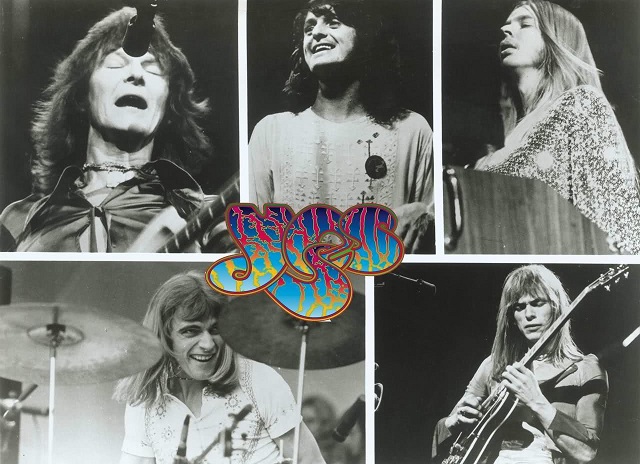
In 1970, Peter Banks left the band due to differences in musical orientation. The third time around, Squire brought in Steve Howe (Stephen James Howe, April 8, 1947).
(It is said that Robert Fripp was the first name mentioned as Banks' replacement.
The second album, "Time and a Word," was released while Banks was still in the band.
In 1971, The Yes Album, the first and third album of the new Yes, is released.
During the recording of this album, Tony Kaye had decided to leave the band. The reason was that Kay wanted to keep the organ style while the other members wanted to use synthesizers and mellotron. Squire again came up with the idea of filling Kay's shoes, and the newest member, Richard Christopher Wakeman (May 18, 1949 - ), who had left the Strawbs and had made a name for himself with his many sessions with bands and solo artists before that, was brought in to fill Kay's shoes. (May 18, 1949 - ), who had previously been known for his sessions with many bands and solo artists, became a new member. Fragile was released.
Bill Bradford leaves the band in 1972. Bill Bradford's musical roots were in jazz. He decided to join King Crimson in order to realize the songs he had written using the rhythms that were the foundation of his music. The remaining members considered the next drummer and offered Alan White (June 14, 1949), who had worked with the Plastic Ono Band and other groups, a session with him, and he became an official member of the band. (The finalists were Michael Rex Giles (formerly of King Crimson) and Alan White.)
Close to the Edge is released. (This album was recorded while Bill Bradford was still a member of the band, so Alan White did not participate.
1973 Yessongs, the first live album by Yes, is released. Alan White joined the band on this album, but two of the songs were recorded during Bill Bradford's tenure.
Tales from Topographic Oceans is released. This is the first studio album after Alan White joined the band.
History III

Contents
- Yes Overview
- Members of Yes
- John Davison
- Steve Howe
- Billy Sherwood.
- Jeff Downs
- Alan White
- Former Members
- John Anderson
- Chris Squire
- Tony Kaye
- Bill Bradford
- Peter Banks
- Tony O'Reilly
- Rick Wakeman.
- Patrick Moraz
- Trevor Horn
- Trevor Rabin
- Eddie Jovenson
- Igor Koloshev
- Benoit David
- Oliver Wakeman.
- session musician
- David Foster.
- Colin Gorling.
- Dipak Kazanki
- Graham Pressett.
- Jimmy Zavala.
- Session musician for Union (1991)
- Steve Porcaro
- Randy Lane Lesh.
- Reese Fulber.
- Louis Jardim
- Gerard Johnson
- Live Musicians
- jacket design
- Yes Band History
- History I
- History II
- History III
- History IV
- History V
- History VI
- Yes Discography
- Studio Album
- Yes/Yes First Album
- Time and a Word
- The Yes Album
- Fragile/Kowaremono
- Close to the Edge/Crisis
- Tales from Topographic Oceans
- Relayer
- Going for the One/ Ultimate
- Tormato
- Drama
- 90125/Lonely Heart
- Big Generator
- Union/Crystal
- Talk/Talk
- Keys to Ascension
- Keys to Ascension 2
- Open Your Eyes
- The Ladder
- Magnification
- Fly from Here
- Heaven & Earth
- live album
- Yessongs/Yessongs
- Yesshows
- 9012Live: The Solos/9012Live
- Something's Coming: The BBC Recordings 1969-1970/BBC Sessions 1969-1970 Something's Coming
- House of Yes: Live from House of Blues/House of Yes
- Songs from Tsongas: Jesus 25th Anniversary Concert
- The Word Is Live/Live Years
- Symphonic Live
- Live at Montreux 2003
- Union Live/Union Tour 1991
- In the Present - Live from Lyon
- Like It Is: Yes at the Bristol Hippodrome/"Yes Third Album" & "Ultimate" Complete Live - Live in Bristol 2014
- Progeny: Seven Shows from Seventy-Two/Progeny: 1972 Live
- Like It Is: Yes at the Mesa Arts Center/"Crisis" & "Kowaremono" Complete Recreation Live - Live in Arizona 2014
- Topographic Drama - Live Across America/ Oceanographic Drama
- Yes Member Quotes and Great Lines of Wisdom
- John Anderson
- Chris Squire
- Bill Bradford
- Peter Banks
- Rick Wakeman.
- Alan White
- Trevor Horn.
- Trevor Rabin
- Representative songs of Yes
- Owner Of A Lonely Heart
- ROUNDABOUT
- Heart of the Sunrise
- Close to the Edge (Crisis)