
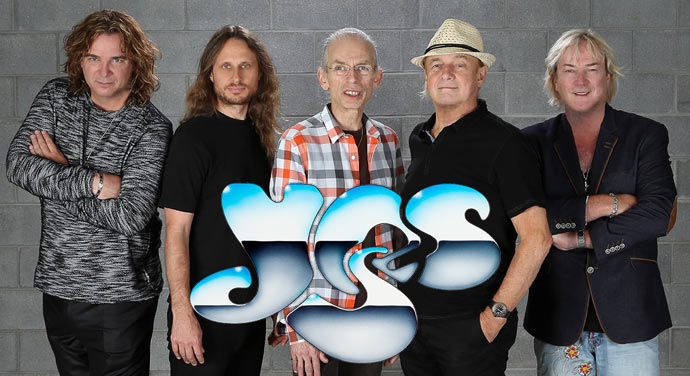
Yes is a progressive rock band formed in London in 1968. The band was inducted into the "Rock and Roll Hall of Fame" in 2017.
Chris Squire Real name: Christopher Russel Edward Squire (b. March 4, 1948 - d. June 27, 2015)
Tenure: 1968-1981, 1982-2004, 2008-2015.
Responsibilities: bass guitar, backing vocals, piano, harmonica, timpani, lead vocals.
He was an original member and leader of the band.
Squire's primary instrument is a 1964 Rickenbacker (model RM1999, serial number DC127).
In a 1973 interview with Guitar Player magazine, Squire confessed that he had rewired the RM1999 to stereo, sending the bass and treble pickups to separate amplifiers, respectively, to obtain a unique tone at that time.
Squire also worked on several other projects over the years.
He once formed a band called Conspiracy with Yes member Billy Sherwood, which toured the United States in 1992 under the name The Chris Squire Experiment.
He had worked with Nikki Squire (then his wife) at Esquire.
Squire and White began working with Led Zeppelin guitarist Jimmy Page on a project called XYZ (ex- Yes and Zeppelin). However, after recording a few demo tracks, the project never came to fruition.
In late 2004, Squire joined The Syn reunion. The band released an album called Syndestructible in 2005.
Squire was also involved in two solo projects with other former members of The Syn: Gerard Johnson, Jeremy Stacey, and Paul Stacey.
His Christmas album, Chris Squire's Swiss Choir, was released in 2007.
Squire collaborated with Steve Hackett and members of Genesis to create Squackett's 2012 album, A Life Within a Day.
In June 2015, it was announced that Squire died in Phoenix, Arizona at the age of 67 while undergoing treatment for leukemia.
Tony Kaye
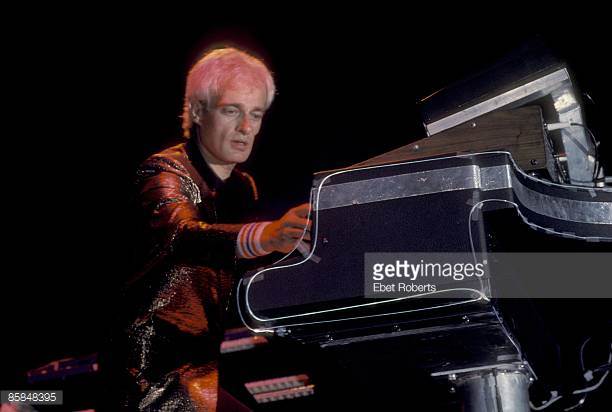
Tony Kaye Real name: Anthony John Selvidge (born January 11, 1946)
Period: 1968-1971, 1982-1983, 1983-1994.
Duties: organ, piano, and synths.
Original member.
Kay participated in sessions with various bands and artists before joining and during the time he was out of Yes, and has been praised for his technique.
This includes Duke Ellington, Count Basie, Badfinger, David Bowie, and many others, both jazz and rock.
Kay is known for his simple playing style (especially on the organ) and avoids long, improvised solos.
For many years, producer and mixer Eddie Offord (Eddie Offord) has cited Kay as one of the best Hammond organ players.
Kay was also an astute tennis player and played in professional tournaments in the 1980s.
Bill Bradford
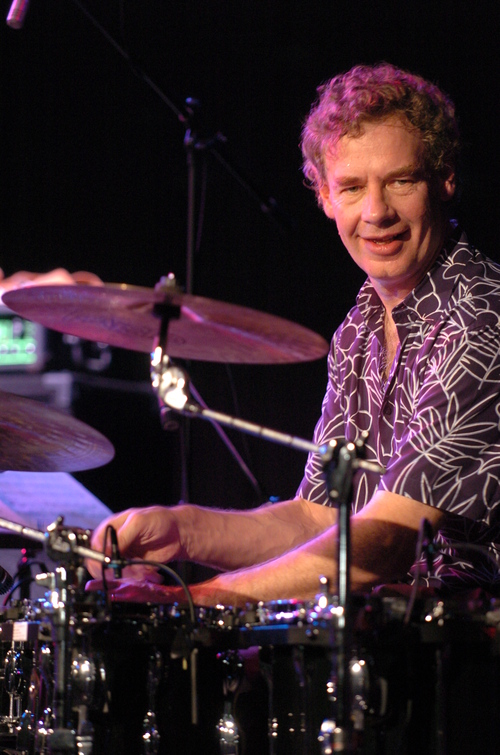
Bill Bruford: William Scott Bruford (born May 17, 1949)
Period: 1968-1972, 1990-1992
Charge: drums, percussion
Original Member.
Bill Bruford grew up in jazz, and as an amateur drummer in the 1960s, after a handful of lessons from Lou Pocock of the Royal Philharmonic Orchestra, he began his professional career in 1968.
A British drummer renowned for his powerful and precise polyrhythmic style.
Bradford was a leader of the so-called British "art rock" movement.
Whenever Bradford's name is mentioned, it almost always begins with the words "drummer extraordinaire" or "precision percussionist.
In 1972, Bradford left Yes to join King Crimson in order to pursue a higher calling as a drummer.
After that, he played in a number of progressive rock and jazz bands, but retired from performing at the age of 60. He now spends his time giving drum lectures.
Peter Banks
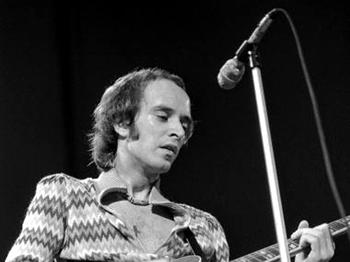
Peter Banks Real name: Peter William Brockbanks (b. July 15, 1947 - d. March 7, 2013)
Period: 1968-1970
Charge: Guitar
Original member.
He was fired after a dispute with Anderson and Squire over the inclusion of an orchestra on Yes' second album, "Time and a Word".
He went on to form Flash and Empire, record solo albums, and do sessions with other artists, but never returned to Yes.
He died of heart failure at his home in Barnet, London, on March 7, 2013, at age 65.
Tony O'Reilly
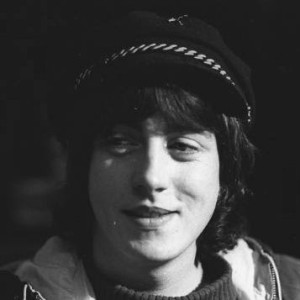
Tony O'Reilly (Date of birth unknown)
Period: September-November 1968
Charge : Drums
Joined Yes just after their debut. Joined the band after Bill Bradford left the band for a while.
Rick Wakeman.
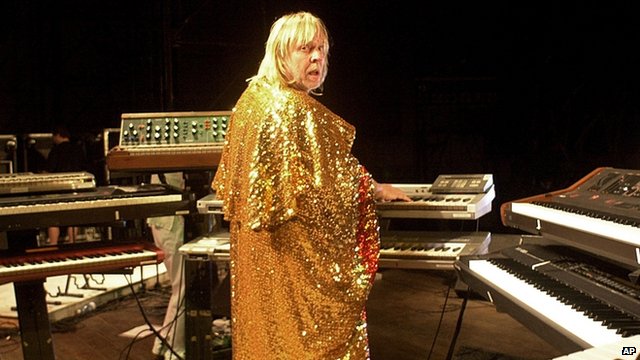
Richard Christopher " Rick " Wakeman (born May 18, 1949)
Period: 1971-1974, 1976-1980, 1990-1992, 1995-1996, 2002-2004
Keyboards: Keyboards
Considered one of the best rock keyboardists in progressive rock and a pioneer of the "multi-keyboard" style.
One of the keyboardists behind the golden era of Yes.
Joined Yes after Tony Kaye. He introduced orchestration to the band.
Although Wakeman's contribution to Yes was very significant, he repeatedly left and joined the band. Some say that this was due to a rift between the other members and Wakeman's booze-soaked, selfish attitude. However, it seems that Wakeman was still indispensable to Yes.
Patrick Moraz
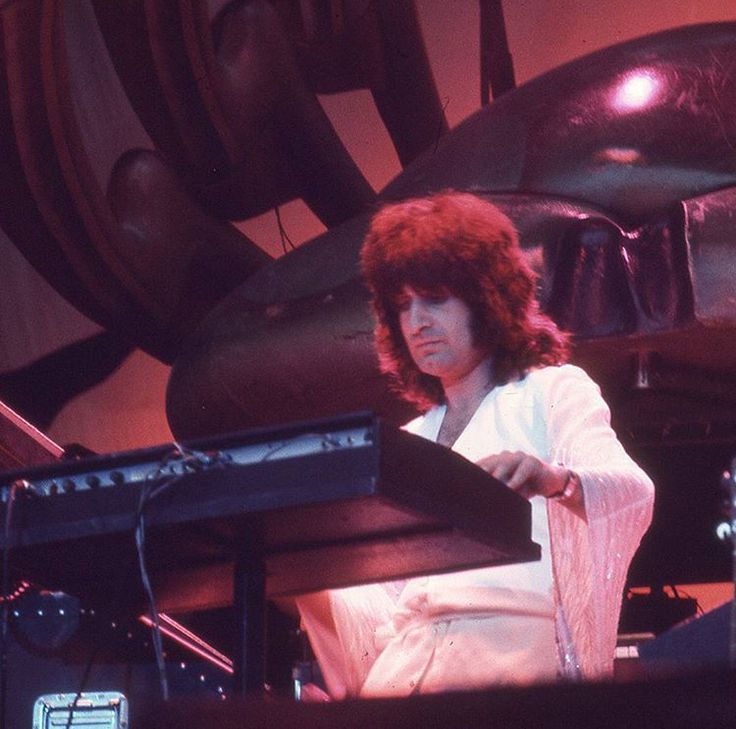
Patrick Moraz (born June 24, 1944)
Period: 1974-1976
Keyboardist.
Joined Yes as a replacement for Rick Wakeman. (Evángelos Odysséas Papathanassíou (formerly of Aphrodite's Child) and Rod Argent (formerly of The Zombies) were mentioned as possible replacements. (Rod Argent, formerly of The Zombies).
After the studio album "Relayer" and the Relayer tour, he left the band.
Trevor Horn
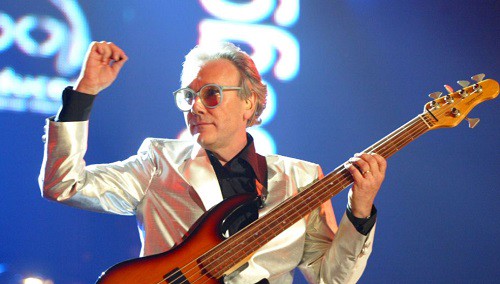
Trevor Charles Horn (born July 15, 1949)
Period: 1980-1981
Responsibilities: Lead vocalist, bass guitar, guitar
Became lead vocalist in 1980, replacing John Anderson.
He joined the band as lead vocalist on their 10th album, "Drama" (1980). (He played fretless bass on "Run Through the Light" only.)
After only seven months, Horn left Yes to concentrate on producing.
In 1983, he joined Yes for their "comeback" album, "Lonely Heart" (90125) (1983), not as a member, but as a producer.
He now works more as a producer than as a musician.
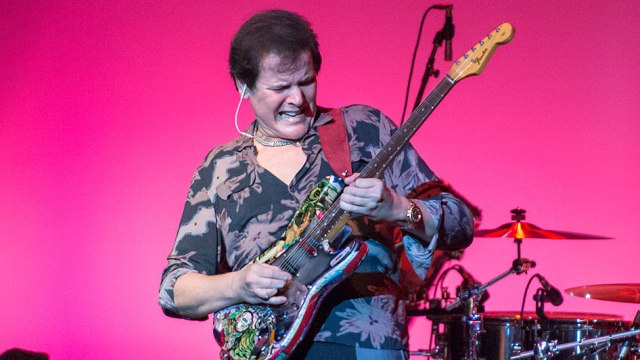
Trevor Rabin

Contents
- Yes Overview
- Members of Yes
- John Davison
- Steve Howe
- Billy Sherwood.
- Jeff Downs
- Alan White
- Former Members
- John Anderson
- Chris Squire
- Tony Kaye
- Bill Bradford
- Peter Banks
- Tony O'Reilly
- Rick Wakeman.
- Patrick Moraz
- Trevor Horn
- Trevor Rabin
- Eddie Jovenson
- Igor Koloshev
- Benoit David
- Oliver Wakeman.
- session musician
- David Foster.
- Colin Gorling.
- Dipak Kazanki
- Graham Pressett.
- Jimmy Zavala.
- Session musician for Union (1991)
- Steve Porcaro
- Randy Lane Lesh.
- Reese Fulber.
- Louis Jardim
- Gerard Johnson
- Live Musicians
- jacket design
- Yes Band History
- History I
- History II
- History III
- History IV
- History V
- History VI
- Yes Discography
- Studio Album
- Yes/Yes First Album
- Time and a Word
- The Yes Album
- Fragile/Kowaremono
- Close to the Edge/Crisis
- Tales from Topographic Oceans
- Relayer
- Going for the One/ Ultimate
- Tormato
- Drama
- 90125/Lonely Heart
- Big Generator
- Union/Crystal
- Talk/Talk
- Keys to Ascension
- Keys to Ascension 2
- Open Your Eyes
- The Ladder
- Magnification
- Fly from Here
- Heaven & Earth
- live album
- Yessongs/Yessongs
- Yesshows
- 9012Live: The Solos/9012Live
- Something's Coming: The BBC Recordings 1969-1970/BBC Sessions 1969-1970 Something's Coming
- House of Yes: Live from House of Blues/House of Yes
- Songs from Tsongas: Jesus 25th Anniversary Concert
- The Word Is Live/Live Years
- Symphonic Live
- Live at Montreux 2003
- Union Live/Union Tour 1991
- In the Present - Live from Lyon
- Like It Is: Yes at the Bristol Hippodrome/"Yes Third Album" & "Ultimate" Complete Live - Live in Bristol 2014
- Progeny: Seven Shows from Seventy-Two/Progeny: 1972 Live
- Like It Is: Yes at the Mesa Arts Center/"Crisis" & "Kowaremono" Complete Recreation Live - Live in Arizona 2014
- Topographic Drama - Live Across America/ Oceanographic Drama
- Yes Member Quotes and Great Lines of Wisdom
- John Anderson
- Chris Squire
- Bill Bradford
- Peter Banks
- Rick Wakeman.
- Alan White
- Trevor Horn.
- Trevor Rabin
- Representative songs of Yes
- Owner Of A Lonely Heart
- ROUNDABOUT
- Heart of the Sunrise
- Close to the Edge (Crisis)