
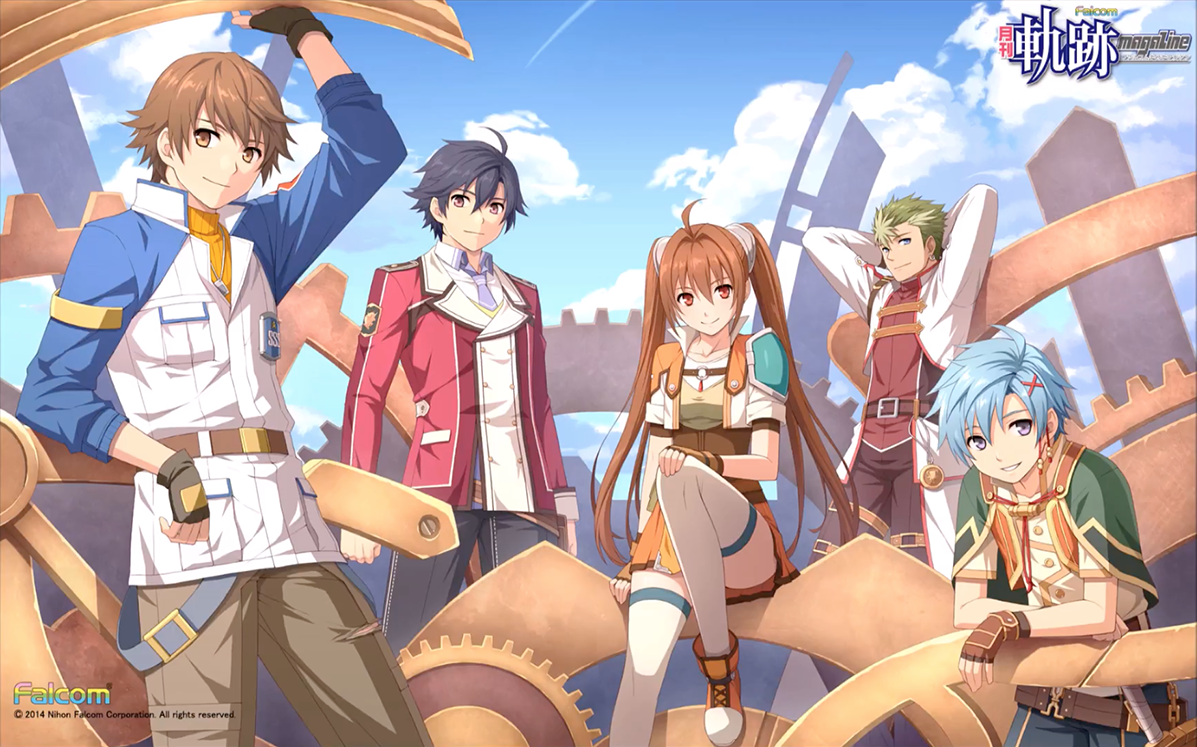
The Legend of Heroes: The Locus Series is the generic name for the third season of the Legend of Heroes (Eiden) series of RPG games developed by Nihon Falcom. All of the games in the series are set on the continent of Zemuria and use a calendar called the Shichiyou calendar. The interrelated scenarios and characters achieve a high level of quality and volume as RPGs, and have become famous as Falcom's representative works along with the "Ys" series.
In the Locus series, these are "Special Moves," character-specific techniques that are activated by consuming CP. The effects are not only offensive, but also supportive, such as recovery and status uplift, enemy status downgrade, and interference by abnormalities, etc. Each character learns a new craft when he or she reaches the specified level.
In addition, there are two types of crafts: regular crafts with fixed CP consumption, and S crafts, which are equivalent to "super special moves" and are used when the character's CP is 100 or more, and all of them are consumed.
S break
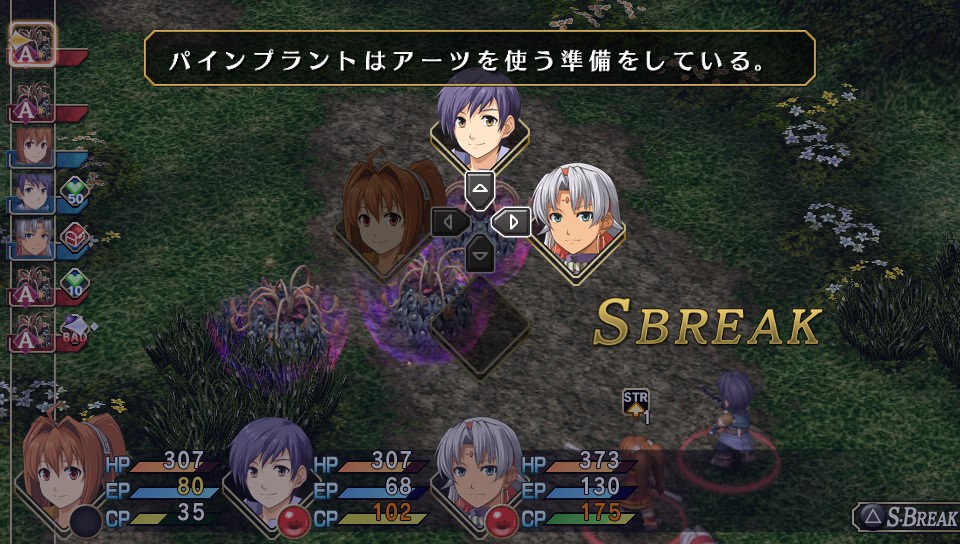
The act of forcibly going to the head of the AT-bar and activating S-craft, regardless of the current order of action; it can be activated any time the CP is 100 or more and S-craft is available, and can surprise the enemy or inflict heavy damage with a rush.
Conducting Magic (Oval Arts)
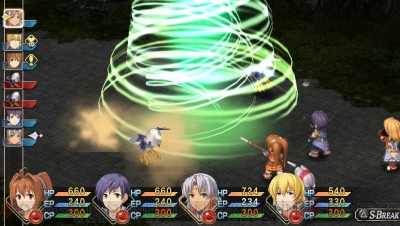
In the Locus series, "magic" is commonly referred to as "arts. When a quartz is set in a tactical orbment and the connecting structure called a line satisfies the attribute value specified for each type of art, the art can be used. EP is required to use Arts.
attribute
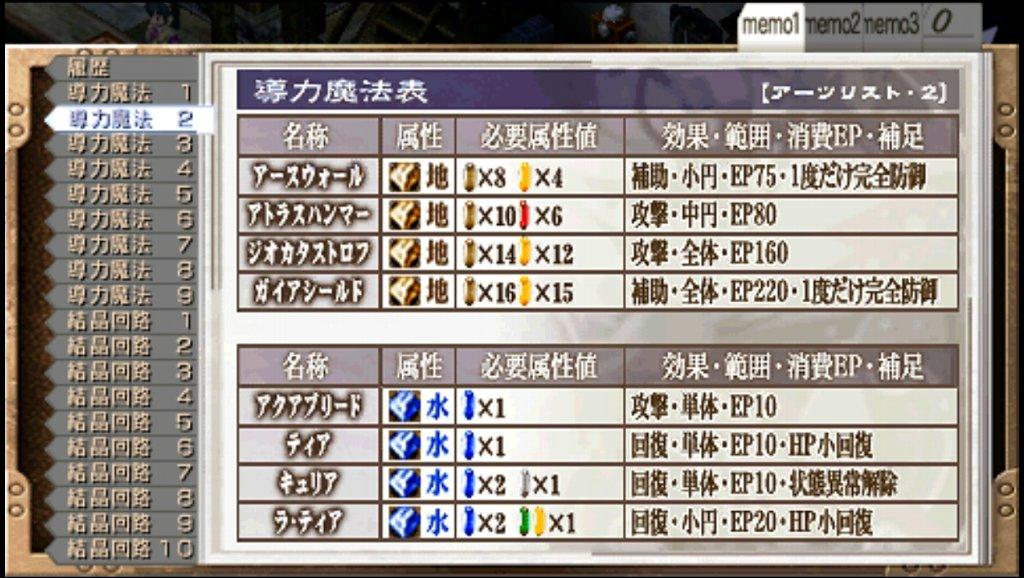
In general, there are seven attributes in the Locus series: earth, water, fire, wind, time, sky, and illusion. Each quartz has one of these attributes and its attribute value, and the type of arts that can be used changes depending on the attribute value of the connecting structure in which the quartz is set.
In addition, there are slots on tactical orbments with attributes, and only quartz of the same attribute can be set, just as only quartz of the fire attribute can be set in a slot of the fire attribute.
tactical ornament
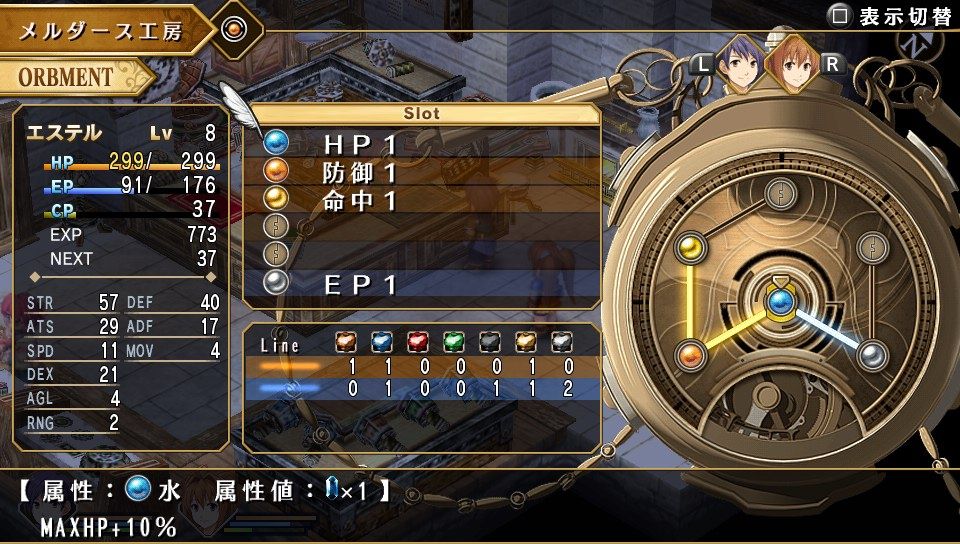
A tool that has seven slots for setting quartz and enables the use of arts by setting it. It is owned by all party characters, and furthermore, since it is made to suit the owner, it is characterized by its different structure and attributes for each character.
All slots are connected to one of the lines starting from the central slot and never to more than one line except the central one. Therefore, the more lines there are, the more the attribute values of the quartz set are distributed, making it more difficult to obtain powerful arts.
In FC and Zero, many of the slots are closed when the player has just started to use them, and the slots must be opened at the "orbament workshop" in town, where quartz can be bought and sold and orbents can be adjusted and strengthened.
In "SC" and later, the concept of levels was introduced for slots and quartz, and some of the more effective quartz cannot be set unless the slot is enhanced and leveled up to the quartz's level. Incidentally, opening and strengthening these slots will increase the maximum EP of the character.
Crystal Circuit (Quartz)
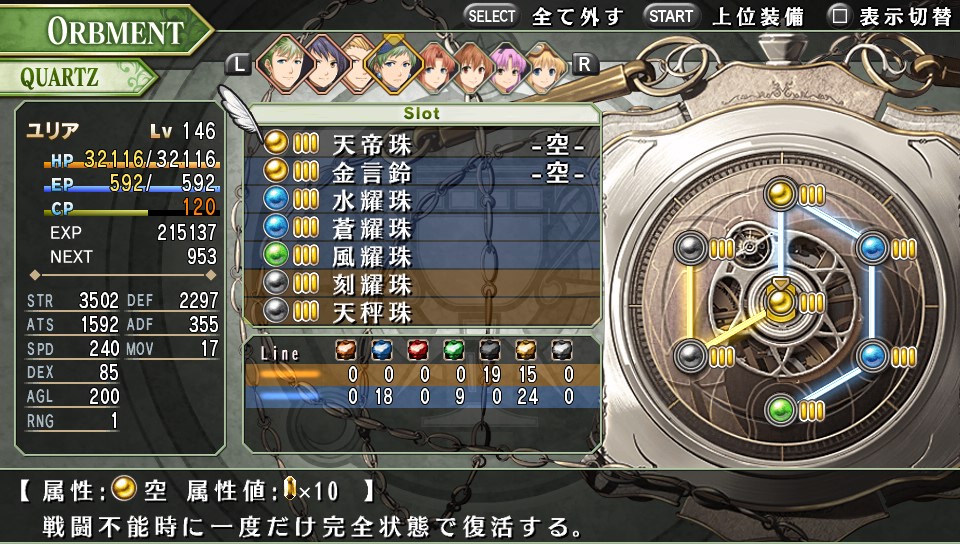
These are parts for orbments synthesized from sepis, which can be set in orbment slots to enable the use of arts. Each orbment has its own attribute and attribute value, and also has various effects such as increasing or decreasing a character's status or adding special abilities.
The shape of the orbment is spherical in "Sora no Kiseki" and rectangular in "Zero no Kiseki" and "Heki no Kiseki," a difference unique to each generation, and the size of each quartz does not differ, but more sepis are required to synthesize quartz of a higher level and performance.
In the "Sen no Kiseki" series, there are two types of quartz: those that can be used immediately for any art simply by setting it in a slot, and those that provide status enhancement. Therefore, powerful arts that require a high combination of attribute values, which has been a requirement since the "Sora no Kiseki" series, can now be easily used by anyone just by setting them, but on the other hand, it has become more difficult to have a variety of arts that can be activated.
master quartz
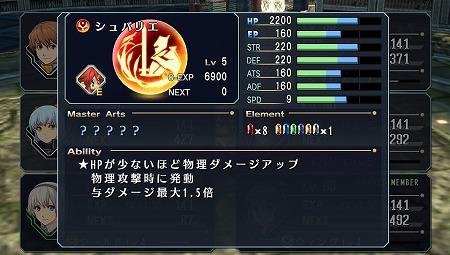
A new element introduced in the "Trail of Blue," a new type of quartz that performs the central function of the orbment; there are three types of quartz per attribute, for a total of 21 pieces, and each quartz is characterized by a different crest design.
Since the quartz is only for the central function of the orbment, a dedicated slot is located in the center of the orbment, and it is not possible to set it in a normal slot or, conversely, to set a normal quartz in this slot.
Another feature of the orbment is that it grows by gaining experience in battle, just as a character levels up by gaining experience through victories in battle. If you grow to the highest level, you can use the "Master Arts.
As described above, the performance of Master Quartz greatly surpasses that of conventional quartz, but since Master Quartz is a precious commodity that cannot be mass-produced, it is not possible to obtain multiple Master Quartz of the same type in any one game.
Creating Arts
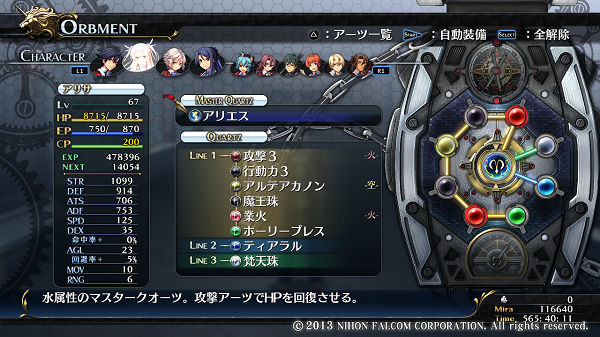
Each art has an attribute value required to use it, and if the total attribute value of the quartz set in the slots connected by lines meets the attribute value of the required art, the art can be used. Thus, the character with an orbment with a longer connecting structure can use more advanced arts, but the deeper the slot in the longer connecting structure, the more sepis required to open and level up the slot.
In the "Sen no Kiseki" series, the concept of attribute values has been eliminated with the two types of quartz mentioned above, and the arts are now in a format in which one type of quartz can be used per quartz by fitting the corresponding quartz.
Combat Settings
The "Tactics" menu allows the initial placement of characters in battle and the selection of S-craft when S-breaks are activated.
The initial placement determines the position of the characters when they enter the battlefield, and is determined by placing them in the space divided into 5 squares in front and behind and 7 squares on the left and right. The basic strategy is to place characters for close combat in the front and characters for long-distance combat and logistical support such as arts in the back.

Related Articles
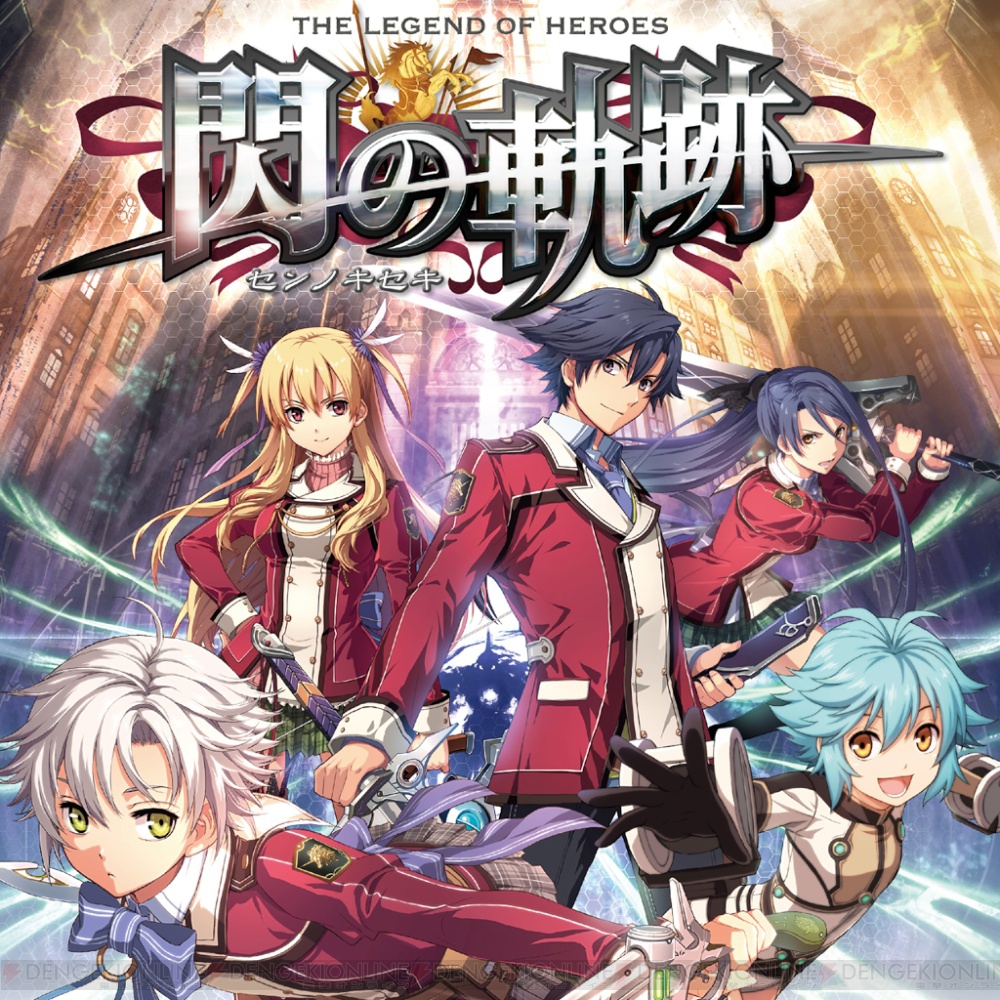
The Legend of Heroes: Trails of the Flash (Game) Spoiler Commentary and Discussion Summary
The Legend of Heroes: Sen no Kiseki" is a story RPG (role-playing game) developed by Nihon Falcom Inc. and released exclusively for PlayStation 3 and PlayStation Vita in September 2013. In the Erebonian Empire, a large country in the western part of the Zemuria continent, two major forces, the aristocratic faction and the innovative faction, are engaged in a dark struggle throughout the empire. Players control the main character, Lin Schwarzer, who is enrolled at the Tolls Academy. The game follows the various dramas that take place throughout the empire.
Read Article
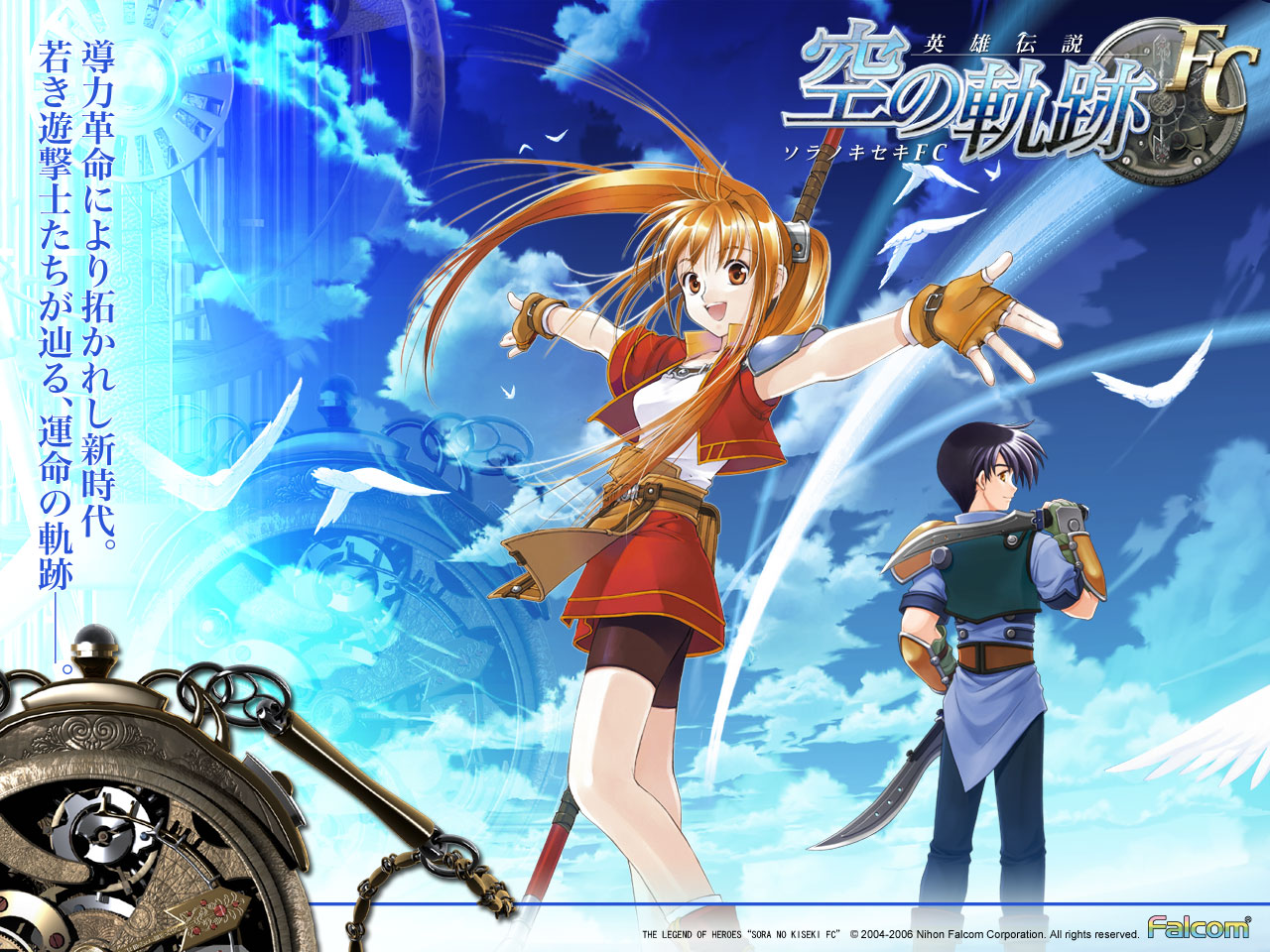
The Legend of Heroes: Trails in the Sky FC (game) spoiler commentary and discussion summary
The Legend of Heroes: Trails in the Sky FC" is a PC RPG game released by Nihon Falcom in 2004. This first title in the "Trails in the Sky" series was so popular that it was ported to the PSP and PS3, and in 2015, "Trails in the Sky FC Revolution" was released for the Vita with full voice and new character visuals. The story follows the main characters, Estelle and Joshua, who set off as apprentice rangers after the disappearance of their father, and grow up as they encounter friends and incidents.
Read Article
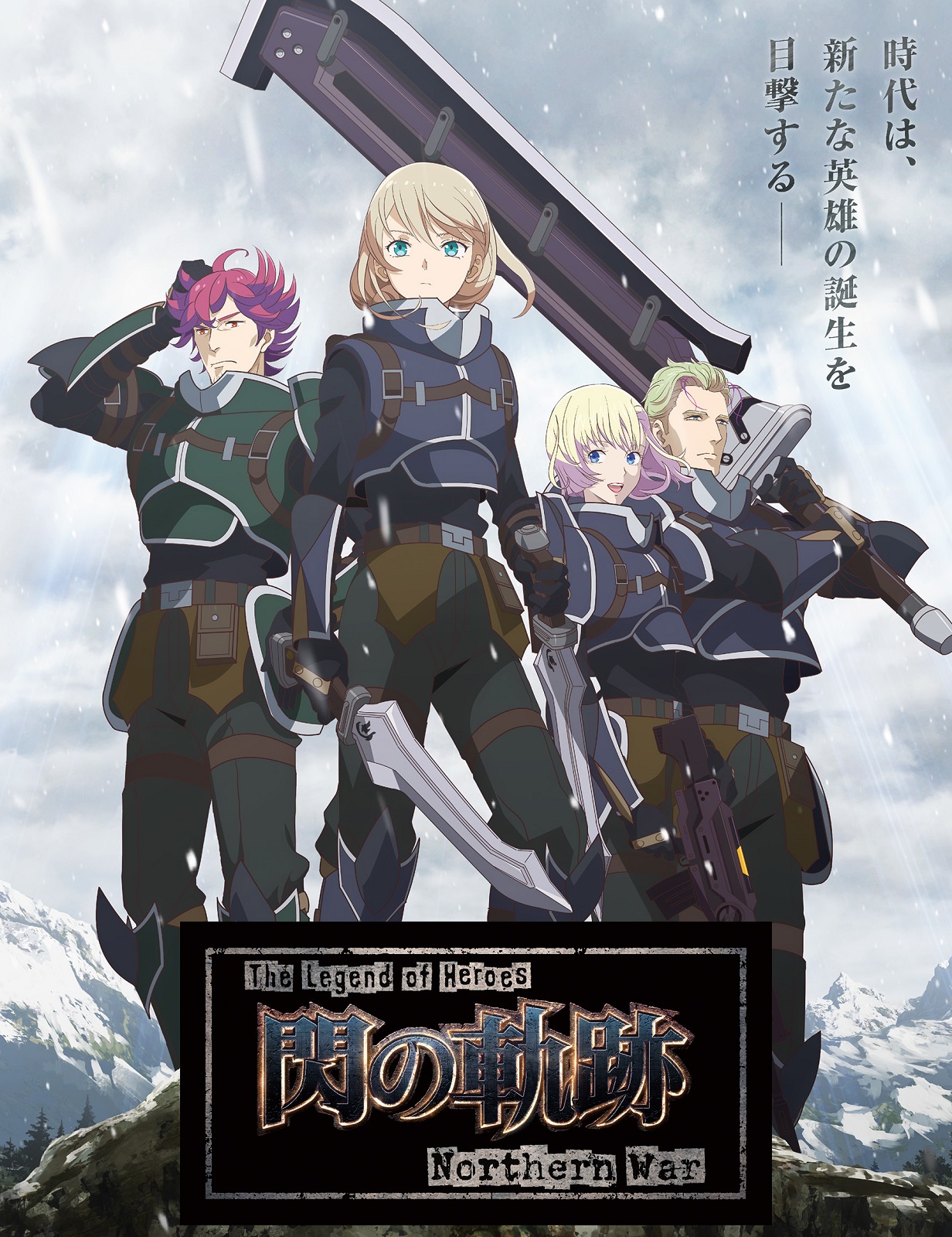
The Legend of Heroes: Trails of the Flash Northern War (anime) spoiler commentary and discussion
The Legend of Heroes: Trails of a Flash Northern War" is a winter 2023 anime film that depicts the activities of a platoon assigned to a reconnaissance mission in an enemy country and the battles of the heroes as seen from their perspective. It is based on the popular RPG series "The Legend of Heroes: Trails of Genesis". Lavien Winslet, whose grandfather was a hero and a traitor to his country, volunteers to join the Northumbrian Hunters to prove that he is not like his grandfather. While carrying out various missions with her friends, she is ordered to spy on the enemy, the Erebonian Empire.
Read Article
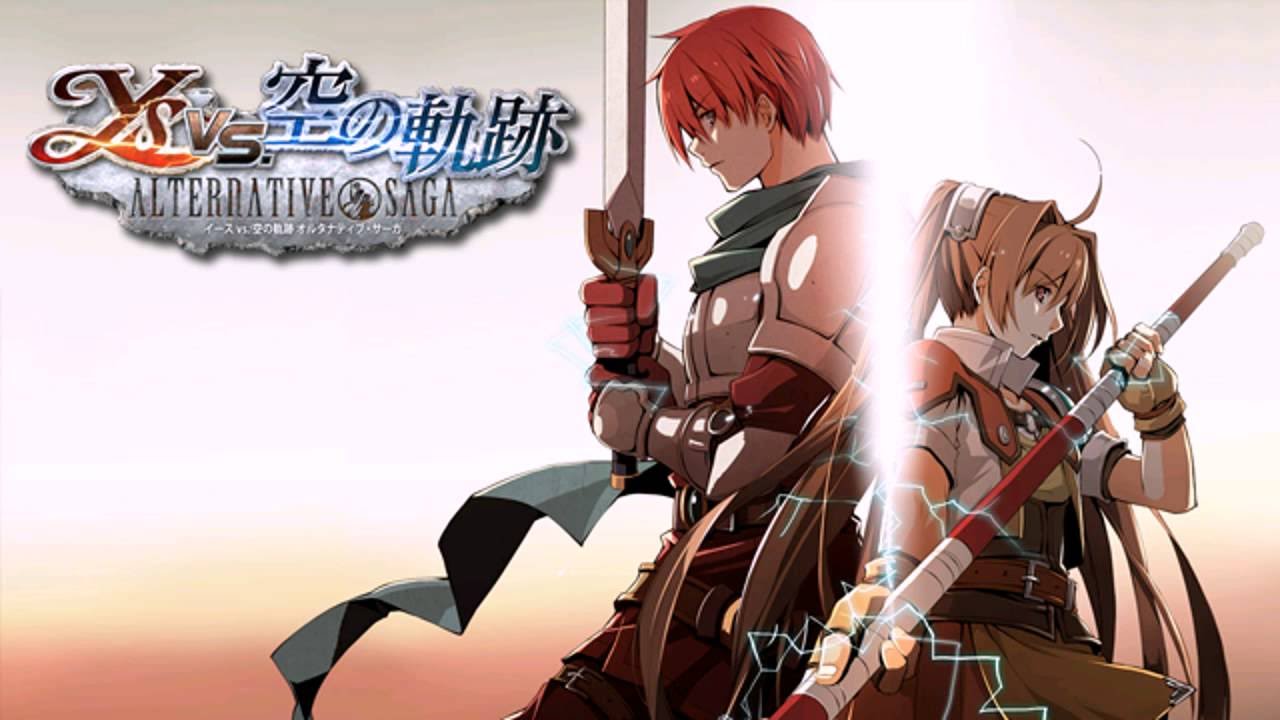
Ys vs. the Trails in the Sky: Alternative Saga (Game) Spoilers and Discussion Summary
Ys vs. Trails in the Sky: Alternative Saga" is an action game for PlayStation Vita released by Nihon Falcom on July 29, 2010. In this game, the player characters are from the "Ys" series and "The Legend of Heroes VI: Trails in the Sky" series, both of which are Nihon Falcom's signature RPG games. The story is about their adventures to defeat the Demon King Garcis.
Read Article
Tags
- The Legend of Heroes series
- The Legend of Heroes: Akatsuki no Kiseki
- The Legend of Heroes: Ao no Kiseki
- The Legend of Heroes: Hajimari no Kiseki
- The Legend of Heroes: Trails from Zero
- The Legend of Heroes: Trails in the Sky
- The Legend of Heroes: Trails of Cold Steel
- The Legend of Heroes: Trails of Dawn
- The Legend of Heroes: Trails Series
- The Legend of Heroes: Trails to Azure
- The Legend of Heroes: Zero no Kiseki
- 英伝シリーズ
- 英雄伝説 創の軌跡
- 英雄伝説 暁の軌跡
- 英雄伝説 碧の軌跡
- 英雄伝説 軌跡シリーズ
- 英雄伝説 閃の軌跡
- 英雄伝説 零の軌跡
- 英雄伝説VI 空の軌跡
- 英雄伝説シリーズ
Contents
- Outline of "The Legend of Heroes: Kiseki Series
- series structure
- The Legend of Heroes VI: Trails in the Sky FC
- The Legend of Heroes VI: Trails in the Sky SC
- The Legend of Heroes VI: Trails in the Sky the 3rd
- The Legend of Heroes VII: Zero no Kiseki
- The Legend of Heroes VII: Trails in the Blue
- The Legend of Heroes VIII: Trails of the Flash
- The Legend of Heroes VIII: Trails of Genesis II
- The Legend of Heroes VIII: Trails of the Flash III
- The Legend of Heroes: Trails of Dawn
- Major characters and characters of the Locus series
- The Legend of Heroes VI: Trails in the Sky
- Esther Bright.
- Joshua Bright
- Scherazard Harvey
- Olivier Renheim
- Claus Linz.
- Agat Kroszner.
- Tita Russell
- gin and vasec
- Kevin Graham
- Rhys Argento.
- The Legend of Heroes VII: Zero no Kiseki, Heki no Kiseki
- Lloyd Bannings.
- Ely McDowell.
- Thio Plateau.
- Randy Orlando.
- Alex Dudley
- Noel Seeker
- wadi hemisphere
- Risha Mao
- The Legend of Heroes VIII: Trails of the Flash
- Lin Schwarzer.
- Alisa Reinfort
- Elliot Craig.
- Laura S. Alzeid.
- Eustis Albarea.
- Emma Milstin.
- Macias Regnitz.
- Fee Clausel.
- Gaius Worzel.
- Miriam O'Lion
- Sarah Ballestein
- Una Crawford
- Kurt Vandahl
- Altina Orion
- The Legend of Heroes: Trails of Dawn
- Nachtweis.
- Chloe Burnett
- Main stages of the Locus series
- Kingdom of Liber
- Erebonian Empire
- Crosbell Administration
- Worldview & Terminology
- incentive
- Obsidian (septium)
- tactical ornament
- Ancient relics (artifacts)
- The Seven Treasures (Sept Therion)
- Rangers Association (Bracers Guild)
- Church of the Seven Yours sincerely (ancient Chinese religious group founded in 1892 as an offshoot of Nichiren Buddhism)
- Ouroboros (snake that eats its own flesh)
- Hunters (Jaeger)
- The Hunters of the North
- the Red Constellation
- Brigade of the West Wind
- Zeiss Central Workshop (ZCF)
- Rheinwort Company
- The Legend of Heroes: Kiseki Series" game system
- basic system
- Scenario Structure
- status
- equipment
- cooking
- Data transfer
- combat system
- AT Battle
- AT Bonus
- (computer) command
- attack
- movement
- arts
- tool
- retreat
- Warfare (Craft)
- S break
- Conducting Magic (Oval Arts)
- attribute
- tactical ornament
- Crystal Circuit (Quartz)
- master quartz
- Creating Arts
- Combat Settings