
Wakfu" is an MMO RPG developed and operated by the French company ANKAMA.
It is a 2D turn-based simulation RPG using Adobe Flash and is basically free to play.
Players travel through "12 worlds" that have been completely devastated by a catastrophe called "Ogrest's Chaos.
side kick (rugby)
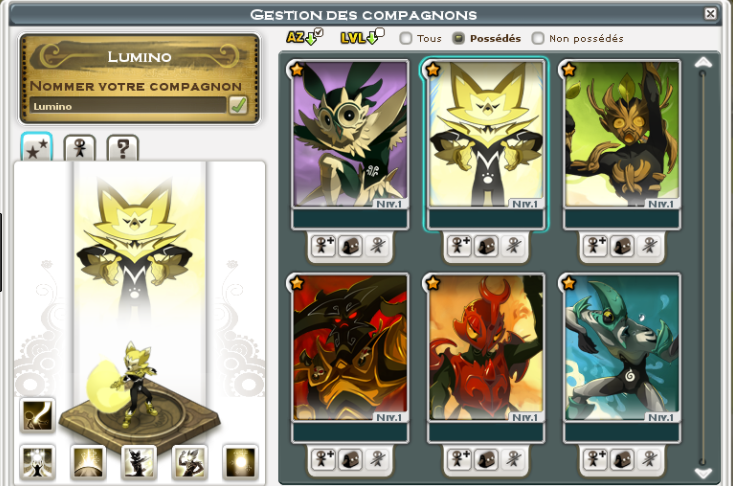
A sidekick is a person who assists the player in combat.
They can be added to a party just like a character, and can join a PT to fight in place of a character.
The number of sidekicks is limited to two per character. In other words, one character can form a party of three.
This is only a "help function for solo players" and is not so useful as an asset.
If you are looking for more power, it is better to use the "Hero System" described below.
hero system
The Hero System is a "summon characters from the same account to a party" system.
Up to two characters can be summoned per account, and a party of three can be formed with one account.
The maximum party size is six, so a full party can be formed with two accounts.
The summoned characters are not restricted in any way and can be used as usual in battle.
There are also no restrictions on experience, item drops, etc., and the amount obtained by the character will be processed as usual.
While similar play has been possible in the past with multiple accounts and synchronized client activation, this system is much more convenient in that it eliminates the need to switch windows and manage them.
However, the hero system can only be used by paying for the rights, which are sold in 30-day increments.
business
It is different from the class and is divided into two categories: collecting and producing. The maximum level here is 100.
There are 6 gathering occupations: farmer, fisherman, herbalist, woodcutter, miner, and hunter.
There are six crafting occupations: armorer, baker, chef, knapper, weapon maker, lapidary, leatherworker, and tailor.
There are three categories of weapon craftsmen: melee weapons, long-range weapons, and ranged weapons, meaning that there are 10 craftsmen in total.
There is no limit to the number of craftsmen a character can acquire, and a single character can master all of them.
The harvesting profession involves gathering resources from fixed collection points scattered throughout the field, or planting seedlings or seeds at "planting points" and harvesting them over time.
The crafting profession involves gathering materials and going to workshops located in towns and fields to manufacture weapons, armor, and other items.
Basically, the harvested materials are processed into equipment and consumable items by the production occupations.
For example, wheat collected by a farmer is processed into flour, which is then cooked into bread at a bakery. Miners process the ore they collect into ingots, which are then made into equipment items by armorers and weapon makers.
market
In "Wakfu," acquired and manufactured equipment and items can be sold and bought among players. The unit of currency is the "kama".
In this game, where players cannot buy equipment or items from NPCs, they can only buy items at this market.
The only other market where players can buy items is at the Haven Bag open-air market, but this is not a mainstream market due to the so-called open-air market system.
The market is a consignment market, where players can set which items to sell, in how many units, at what price, and for what period of time.
For example, "10 cama of 1 piece of wheat for 12 hours," "100 cama of 10 pieces of wheat for 6 hours," "5,000 cama of 500 pieces of wheat for 24 hours," and so on.
Items not purchased after the time period will be returned and returned to the inventory.
Haven Bag
Haven Bag is a bag that serves as a sort of My House given to individual players.
It can be accessed anywhere outside the dungeon. It looks like a slanted bag about the size of a Boston bag.
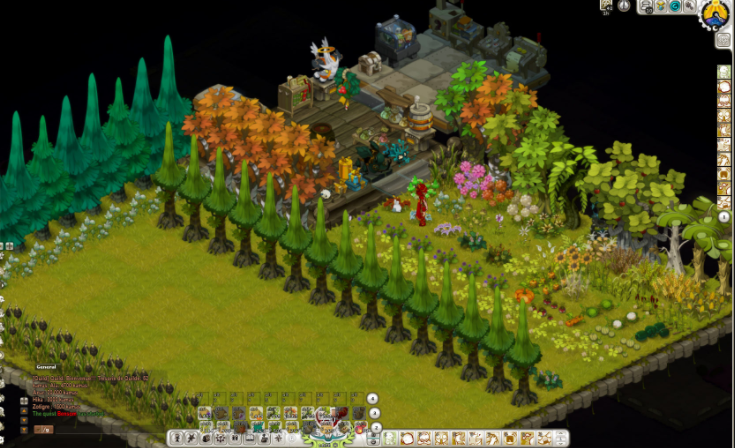
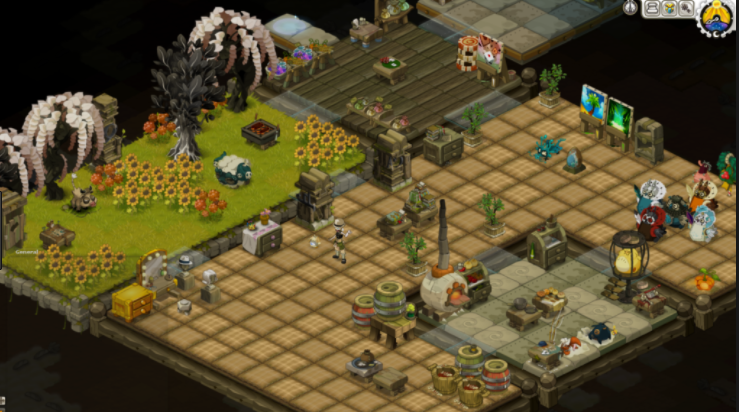
The Haven Bag is divided into 9 areas, which are managed by 5 categories of Gems.
The player is free to customize which gems are placed in which areas. A maximum of nine Gems can be placed in the Haven Bag, and they can be rearranged freely.
The control panel gem for "Item Warehouse Management and Allow Others to Enter the Haven Bag". It cannot be removed.
Merchant Gems for other "street vendors" and decoration gems for "space for furniture and other decorative items". Garden Gems for "space for fields and tree planting" and Crafter Gems for "space for workbenches for production" may be freely attached and detached.
Since they serve as a kind of "My House," they can be attached or detached at will.
For example, a player can create a vast field by using all garden gems except for the control panel gem, which cannot be removed, and can also use the Crafter Gem as a production workbench that can be accessed anywhere because it is troublesome to move from one town to another to get to the workbench.
Environmental Systems
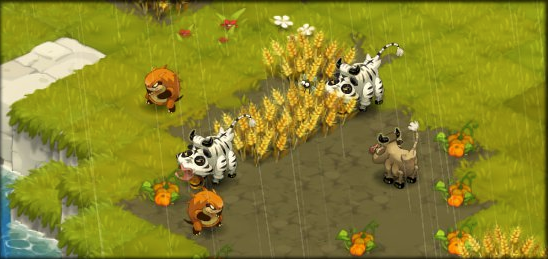
In the "Wakfu" world, plants such as trees and flowers disappear from the field once they are collected.
Since they do not automatically repopulate, players need to plant seedlings or seeds.
Unless the player plants the seed, no new resources will be generated. Therefore, in some cases, there will be a situation in which the desired resource is not available (i.e., extinct) no matter where the player goes.
Similarly, monsters can be "planted".
The hunter collects "seeds" from monsters and sows them to create new monsters.
If the seeds are not planted, the monsters will become extinct in the field.
Even if they become extinct, the environment will be reset during maintenance associated with a major update.
Fish in the fishing grounds and ore in the veins will repop in a certain amount of time.
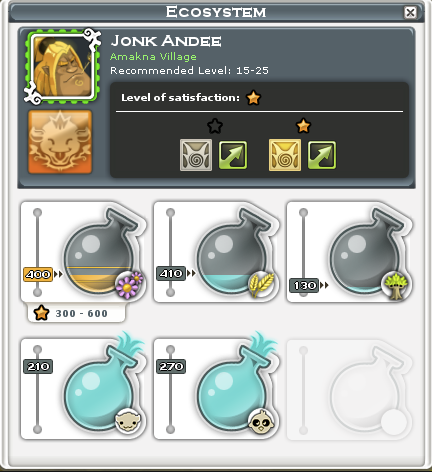
A map has a set value of "this amount of resources should be present on this map," and if the map adheres to that amount, the area will receive experience and item drop bonuses.
This is called the "ecosystem. If the resources are reduced or increased too much, the environment will be damaged and the bonuses will disappear.
national system
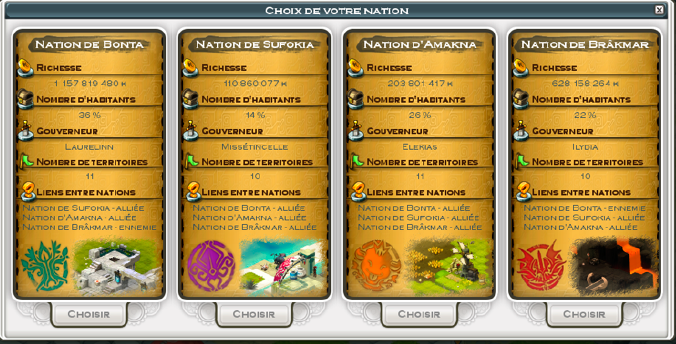
After completing the tutorial, players will belong to one of four nations: Bonta, Brakmar, Amakhna, or Sfokia.
Depending on which country a player belongs to, the experience gained in a profession will be adjusted accordingly.
The player can change freely by completing a special quest. For players who want to save time and effort, there are items that can be purchased to change nations.
Belonging to a certain nation does not prevent you from having adventures. It is possible to go to other countries to gather resources, fight monsters, and challenge dungeons.
Therefore, you may decide according to your preferences.
Characters who belong to a nation are given "citizen points. These are points that indicate how much they have contributed to the nation to which they belong. The points are reset when you switch nations.
Each nation has its own laws regarding "recommended actions" and "prohibited actions." Citizen points are awarded for recommended actions, and points are deducted for prohibited actions.
For example, if an area is designated by the eco-system to have "this amount of resources on this map," and the environment is damaged by excessive extraction or reproduction, the citizen points will be penalized.
And if the citizen points become negative, they are penalized and certified as "Outlaw".
When you become an "outlaw," your movement is restricted, such as the fast-travel warp point "The Up" becomes unusable, access to some areas becomes impossible, and the PvP (versus versus combat) mode is turned on.
In order to unlock this state, players must complete a special quest and be defeated in PvP by a character who has become a member of the national guard.
If you are defeated by a guard character, you will be forcibly transferred to the prison map and your citizen points will be reset.
Characters with more than a certain number of citizen points can run for election, and if they are successfully elected, they become lords of their nation.
The term of office is two weeks, at the end of which an election is held to determine the new lord.
The character who becomes a lord can freely set the laws of each area of the state to which he or she belongs.
They determine the upper and lower limits of each area's resources (including monsters), and manipulate the area's environment by changing the weather and temperature. They can also set taxes to be applied to markets for buying and selling among players.
Because of this system, the environment in "Wakfu" is not constant, but constantly changing.
The control of the number of monsters and plants depends on the actions of the players.
quest
In Wakfu, quests are presented by NPCs as requests or adventure objectives. By accomplishing them, you will receive experience and items.
Main quests" are automatically generated when you reach a certain level or visit a specific map, and they take you into the world of "Wakfu.
The main quests take the player on a quest to discover the truth about the "Chaos of Ogrest" and to obtain the "artifact" that has been sealed away for that purpose.
The "Mercenary Quest" is a sub-quest in which the player receives a request that can be accomplished in that area.
They are unrelated to the main quests, do not increase the number of places you can go, and offer little or no reward, so you can ignore them.
They are meant to add depth to the worldview by talking to NPCs on that map and reading the quest requests.
Environmental Quests are special quests that occur only in that area. They are timed, and you will receive experience if you accomplish them. There is no penalty for failure.
Quests that do not have much to do with the storyline or worldview, and only provide instructions such as defeating specific monsters.
extinct ancestor of the modern cow, Almanacus almanacus

Related Articles
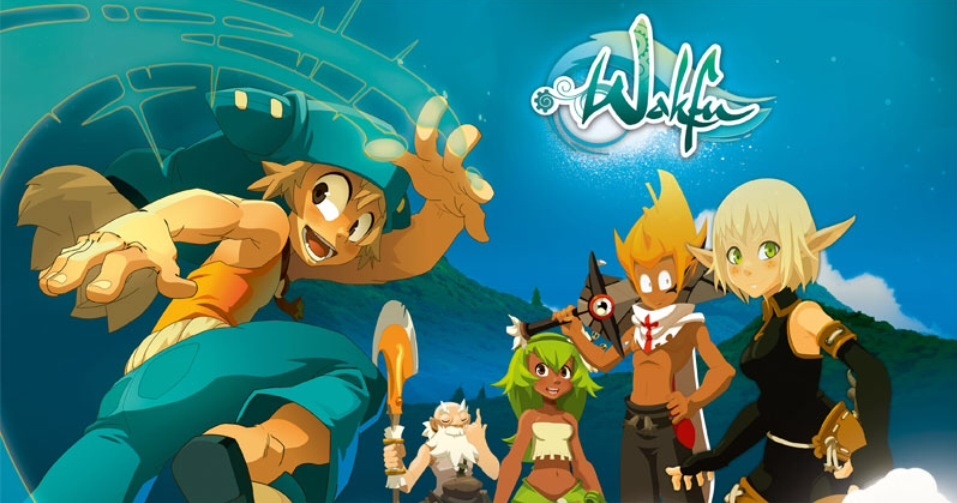
Spoiler commentary and discussion of Wakfu (animated version of Wakfu)
Wakfu" is an animation produced by the French company ANKAMA. The worldview is similar to that of the MMORPG of the same name, and the story is about a boy named Hugo who has the ability to use a portal to travel at any moment, and his journey to find his "real family" with the support of various friends. In Japan, the film is available on Netflix and Disney XD.
Read Article
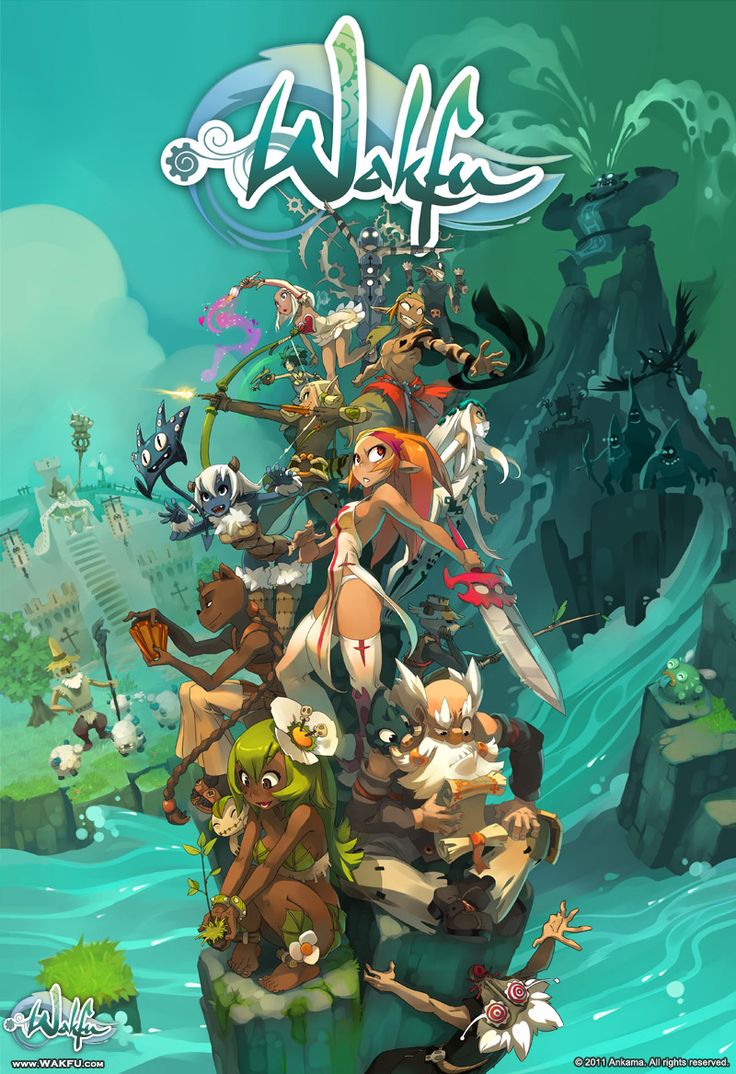
Class Summary for Wakfu
Classes are the races of "Wakfu," the MMO and animated film developed by the French company ANKAMA, and the MMO's predecessor, "Dofus. The MMO version of the game allows players to choose a class when they create their characters.
Read Article
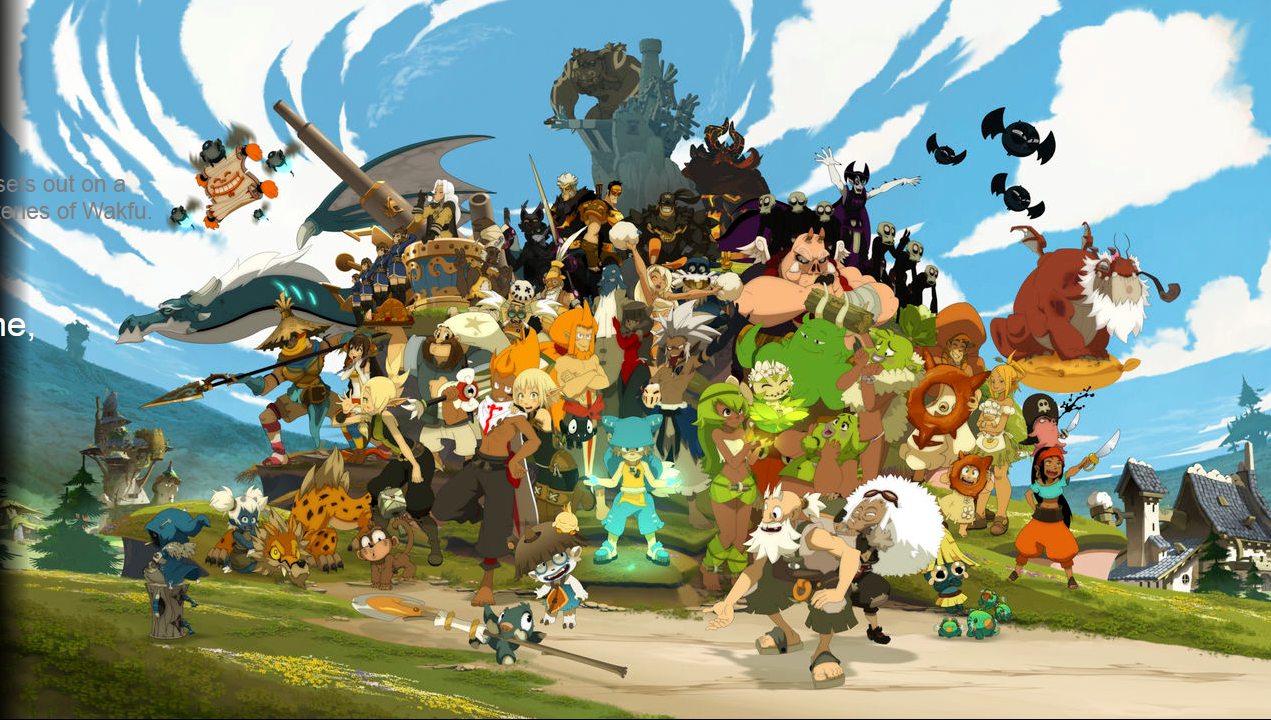
Summary of famous quotes, lines/scenes and scenes from Wakfu
Wakfu is an animation produced by the French company ANKAMA. The original story is based on the world of the MMO (online game) of the same name. Various spin-offs have been created, ranging from short movies to manga. The first season aired in France in 2008, and the Japanese dubbed version will air on Disney XD on July 23, 2017.
Read Article
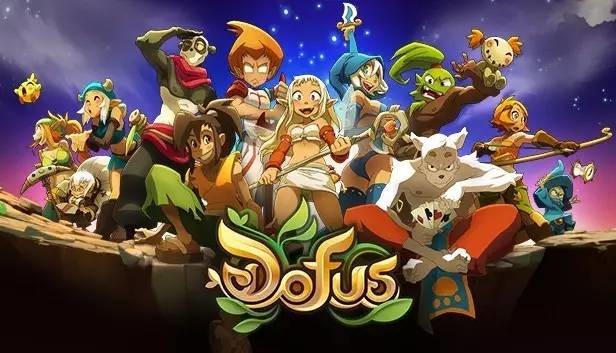
Dofus spoiler commentary and discussion summary
Dofus" is an MMO RPG developed and operated by the French company ANKAMA. It is a 2D turn-based simulation RPG using Adobe Flash and is basically free to play. Players travel in search of "Dofus," a magical egg left behind by a legendary dragon.
Read Article
Contents
- Outline of "Wakfu
- Synopsis and story of "Wakfu
- class
- feca
- Osamodus.
- Nutrov
- Sulam
- xerol
- Ecaflip.
- Enillipsa.
- yiop (i.e. a fever that brings with it an intellectual or psycho-developmental disorder)
- clapper (two long pieces of wood that are clapped together; used in gagaku, etc.)
- sadida
- sugar cane juice
- mandawa
- tactician
- zobar
- steamer
- heliotrope
- huppertemarge
- combat system
- summary
- Level/Status
- movement
- Action/Attack
- self-challenge
- party
- side kick (rugby)
- hero system
- business
- market
- Haven Bag
- Environmental Systems
- national system
- quest
- extinct ancestor of the modern cow, Almanacus almanacus
- Pet Mount
- dungeon
- Backstory, trivia, small stories/episodes, and anecdotes from "Wakfu