
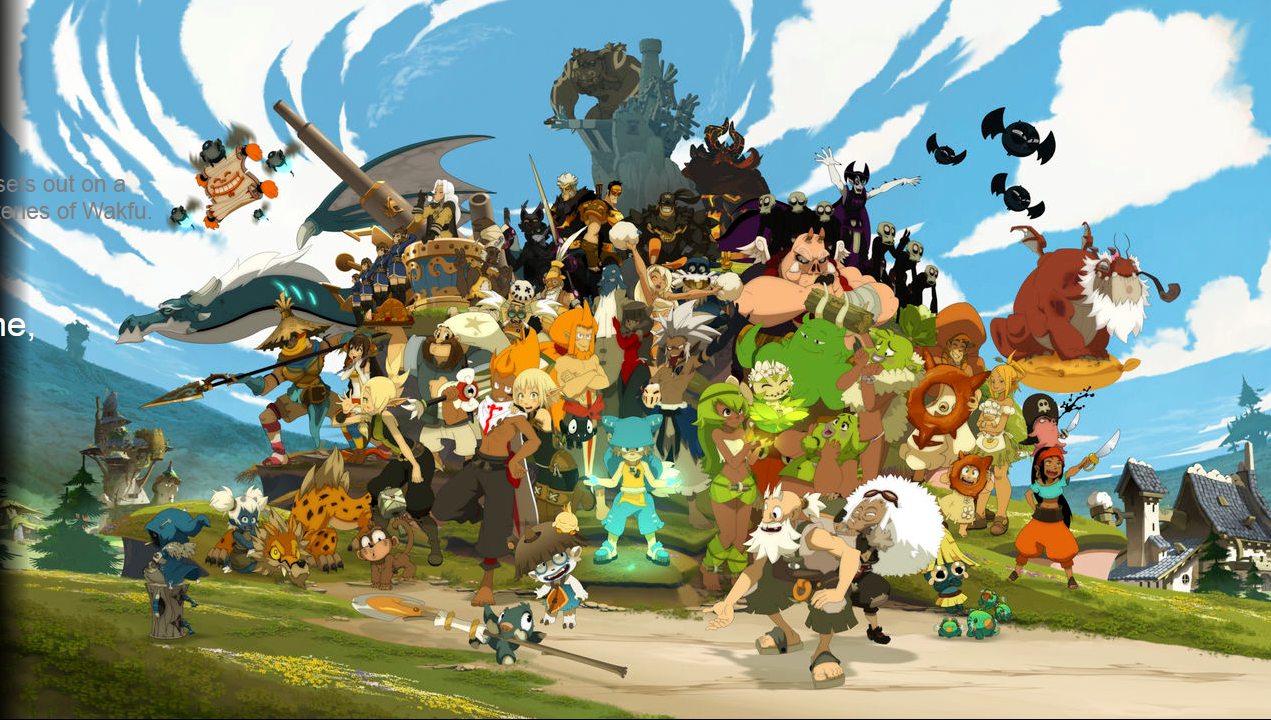
Wakfu is an animation produced by the French company ANKAMA. The original story is based on the world of the MMO (online game) of the same name. Various spin-offs have been created, ranging from short movies to manga.
The first season aired in France in 2008, and the Japanese dubbed version will air on Disney XD on July 23, 2017.
Overview of Wakfu
Wakfu is an animation produced by the French company ANKAMA.
The first season aired in France in 2008, followed by the second season in 2010. In Japan (with the exception of a French audio version with subtitles translated by fan volunteers), an English audio version with Japanese subtitles was made available on Netflix in September 2015.
Furthermore, a Japanese dubbed version will be broadcast on Disney XD on July 23, 2017.
The voices were provided by Nao Fujita (Hugo), Shiro Go'ou (Gurgalo Raglan), Nobuo Tobita (Knox), and Shin Urayama (Ruel Strudo).
Sharing the same worldview as the MMORPG of the same name, the anime version takes place several years to several decades after the MMO.
Some characters also appear in the MMO version and can be seen in it. Characters reimported from the MMO version also appear in the anime.
Some characters have become so popular that they have been published as spin-off comic book series.
The animation was created using Adobe Flash.
The character designs are influenced by Japanese anime, and the series has its own unique worldview while incorporating Japanese anime.
The special episode "Noximilien l'Horloger" was produced in Japan, with character design by Masaaki Yuasa.
The story is an adventure adventure with a well-balanced mix of comical and serious elements.
Family" is the theme throughout the first season, second season, special episodes, and all other visual works.
The dialogue contains many technical terms that are not explained, making the story a bit difficult for beginners who have no knowledge of the world, but those who have played the MMO version and are somewhat familiar with the world can easily understand the story.
The following notation is based on the French version, as there are many differences in translation between the French version and the Japanese version, and between the English version and the Japanese translation.
world view
12 Worlds
The story takes place on a planet called "Twelve Worlds" floating alone in the universe called Cross Shrike. The time period is several hundred years after the great flood known as the "Chaos of Orestes.
In the "12 worlds," people always believe in one of the 13 gods, and they are divided according to their appearance and personality in accordance with the characteristics of the god.
tribe
The Eliatrope, a race of beings that excel at spatial travel through portals, are the rarest and closest to the gods who created the 12 worlds, and are paired with the dragon, a legendary being who is also close to the gods. Dragons and Eliatrope were the guardians of the "Area Cube," a hidden treasure that amplifies its owner's power.
Hugo, the protagonist of "Wakfu," belongs to the "Eliatrope" tribe. Each Eliatrope and dragon has a counterpart, and Hugo's counterpart is a dragon named Adamai.
Ruel's "Enutroph," Amalia's "Sadida," Evangeline's "Kula," Tristopan's "Iop," and Knox's "Zeror" are the names of the races that are the followers of the god who protects the twelve worlds. The "Enutrof" are greedy treasure hunters, the "Sadida" are plant manipulating puppeteers, the "Kula" are bow hunters, the "Iop" are aggressive warriors, and the "Zeror" are sorcerers who manipulate time.
Many of the "Iop" are knights, and their role is to seal the powerful demon "Shush" and use him as a messenger. They are called "Guardian Knights of Shush," a prestigious position.
Hugo's Famous Quotes and Lines
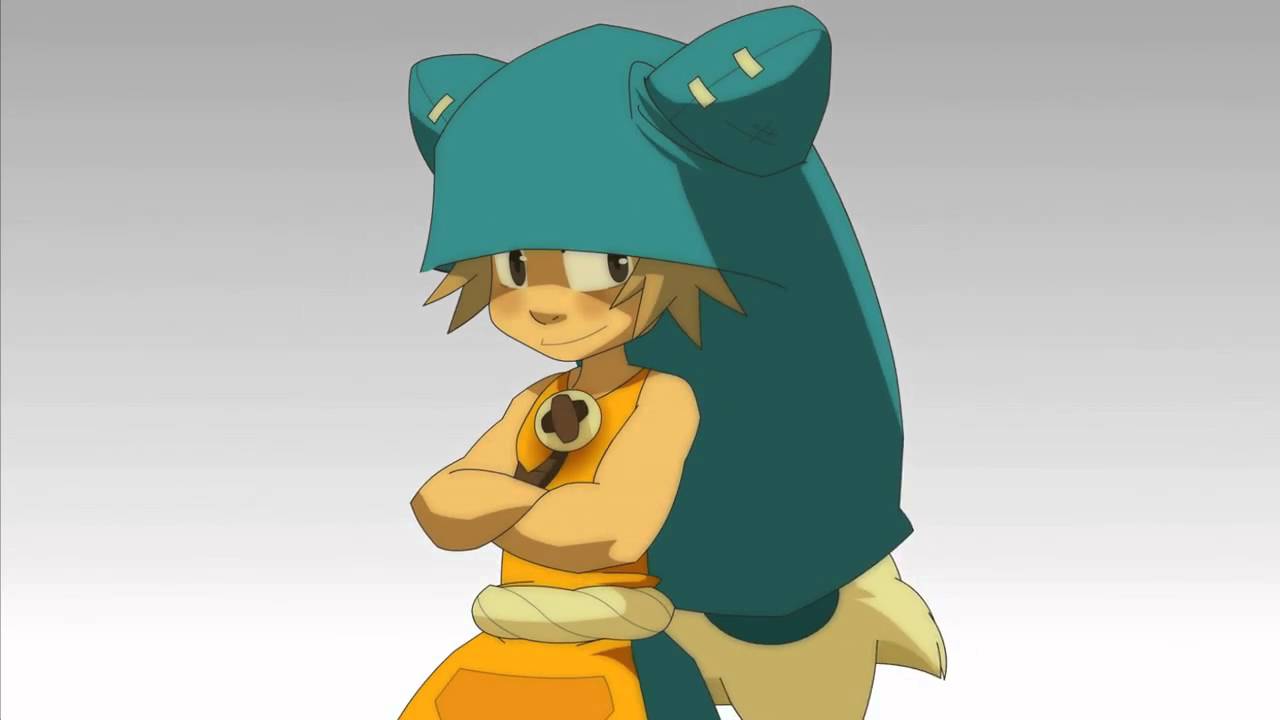
dad
A word that Hugo utters in various scenes. It refers to his adoptive father, Alibate.
Even after learning the truth about his birth as an Eliatrope, that "there are no parents because Eliatrope reincarnates as an egg even after death," Hugo still calls Alibate his father.
Alibate also calls him "my son" in the same way. This line symbolizes the family theme of "Wakfu.
And this guy! Alibate Special!
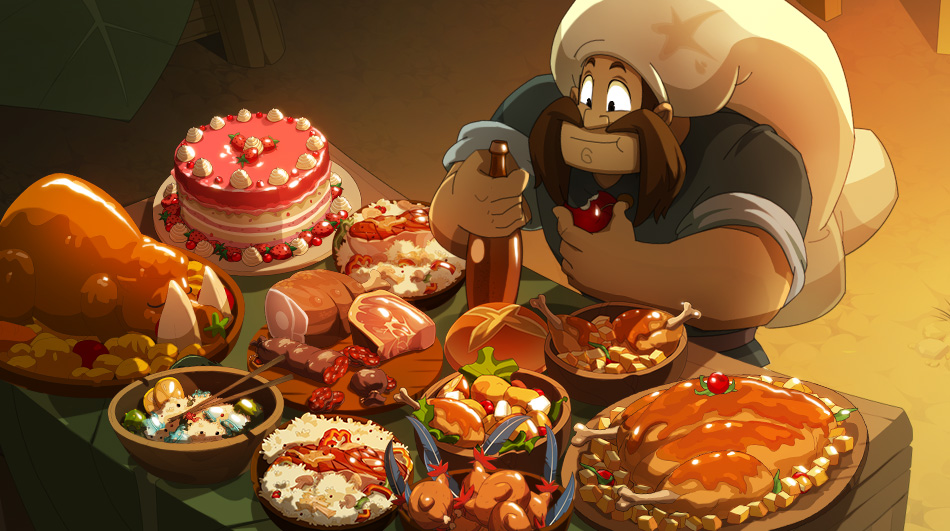
This is a line that Hugo says in the scene where he helps Alibate to cook a specialty of the innkeeper in the village of Emelka.
This is not so much a great line as a great scene.
Delicious meal scenes are one of the charms of "Wakfu. Even the sound of chewing bread is said to be delicious.
The "Alivate Special" is a dish that can actually be made: sliced bell peppers and sliced mushrooms are sauteed in butter with rice, seasoned with salt and pepper, and then topped with a thick slice of steak.
Why do you call yourself a black raven? That's ridiculous!
A few words to Black Crow, who frequently attacks the market in the village of Kerba.
"Wretch, be afraid of the dark fire! Fear your worst nightmare! Black Crow, wielding his long, spear-like sword, was not intimidated, "May I ask you a question? I asked, "Since all ravens are black, isn't calling yourself a black raven a redundant expression?" I asked.
In fact, he even suggested, "How about an evil raven?" He even suggested, "How about an evil raven?
This scene shows Hugo's fearless side.
Whatever happens, we are not alone.
This is a line from Hugo's speech to cheer up Dragon Adamai, who was feeling faint with grief over the loss of his kindred, Gulgalogran.
Although not related by blood, dragons and eliatropes are considered spiritual and soul brothers. Even though he lost Gurgalogran, who was his foster parent and only kindred spirit, he still has himself as a "brother," and he has other reassuring friends like Amalia and others. Encouraged by Hugo, Adamai nodded.
From this point on, Hugo and Adamai split off from the group and went their separate ways.
This is a memorable scene in which the two are separated by their own goals, but their hearts are always together and they are never alone.
Death, come here, I'm not afraid anymore
Hugo parted from the group and headed for the guardian's temple in search of the Gulagarogran "dofus" (dragon egg). There, a golem was guarding the dofus.
The golem judges Hugo as an intruder and attacks him, but Hugo devises a new technique called "stacking portals and firing beams.
Hugo, who until now had only the ability to bounce back an opponent's attack by shifting it through a portal, has now mastered the art of attacking on his own.
Hugo, convinced that he could not win by simply reflecting the golem's attacks, but that he could win with this technique, confidently says these words.
After defeating the golem without incident, Hugo joins the group with the Gurgaloglan dofus.
Famous quotes and lines from Amalia
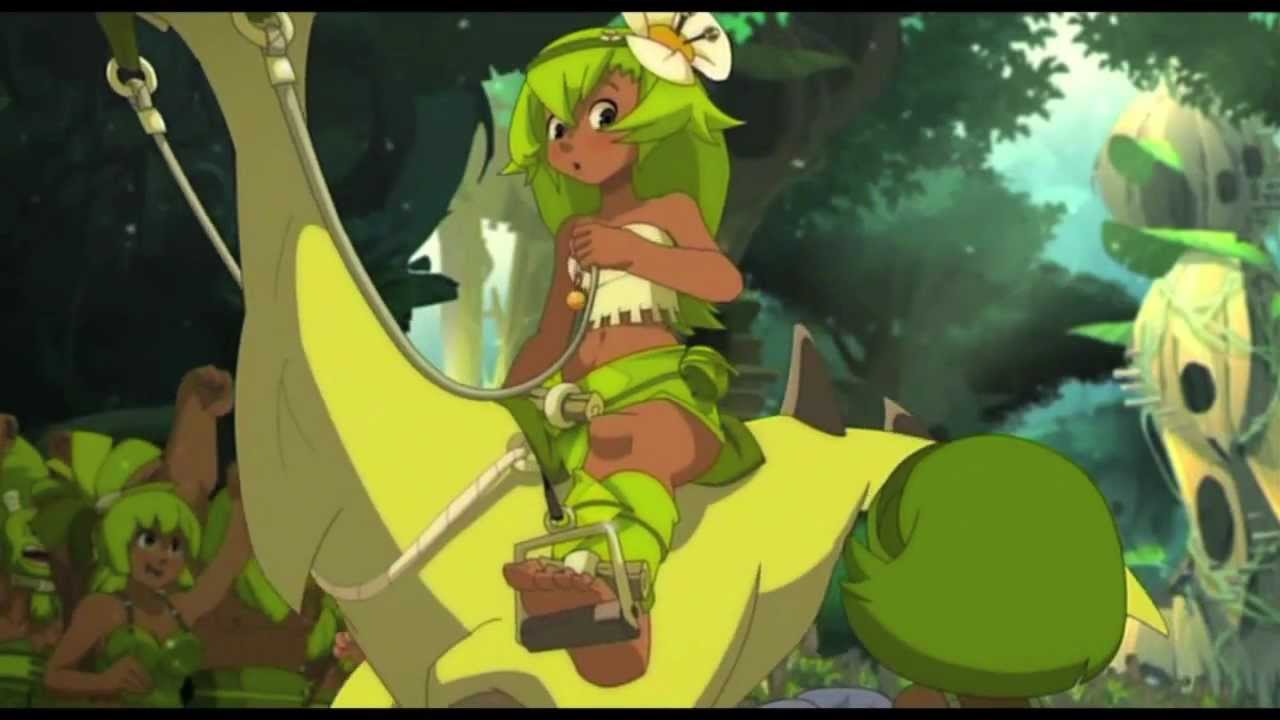
Isn't a campfire on a starry night very adventurous?
A line uttered by Amalia, the Princess of "Sadida."
She said this in the first episode of the first season, when she was lost and had to camp out after dark while looking for the way to the village of Emelka.
Amalia and her attendant, Evangeline, are in the middle of a pilgrimage. Amalia and her companion Evangeline are in the middle of a pilgrimage, but this is Amalia's first time outside of the kingdom, and she is excited about everything, even the campsite.
Isn't it very adventurous to stay in the wild? Amalia is so excited that Evangeline, who is fed up with the constant camping, sighs, "The problem is that it's adventure after adventure," and when Amalia smiles and offers her roasted tree roots to Evangeline, she says bitterly, "It sure tastes like adventure. The difference between the two is highlighted by Amalia's flirtatious flirtation and Evangeline's wry smile. Amalia's frivolous flirtations appear in various scenes later on, and each one leaves Evangeline scratching her head.
It is a typical line that clearly shows Amalia's light-hearted approach to her important role as a pilgrim.

Related Articles
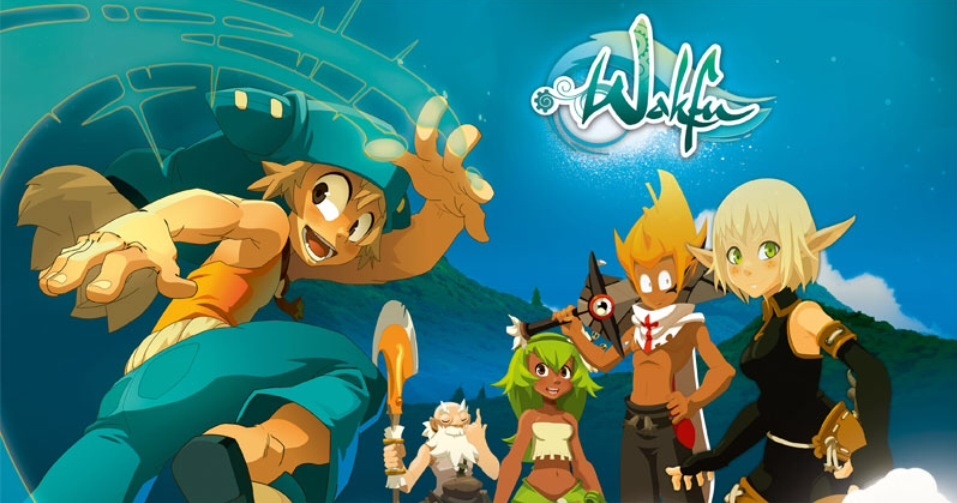
Spoiler commentary and discussion of Wakfu (animated version of Wakfu)
Wakfu" is an animation produced by the French company ANKAMA. The worldview is similar to that of the MMORPG of the same name, and the story is about a boy named Hugo who has the ability to use a portal to travel at any moment, and his journey to find his "real family" with the support of various friends. In Japan, the film is available on Netflix and Disney XD.
Read Article
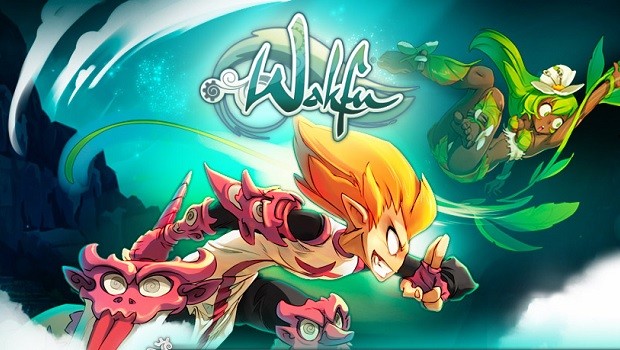
Summary of Wakfu Spoilers and Discussion
Wakfu" is an MMO RPG developed and operated by the French company ANKAMA. It is a 2D turn-based simulation RPG using Adobe Flash and is basically free to play. Players travel through "12 worlds" that have been completely devastated by a catastrophe called "Ogrest's Chaos.
Read Article
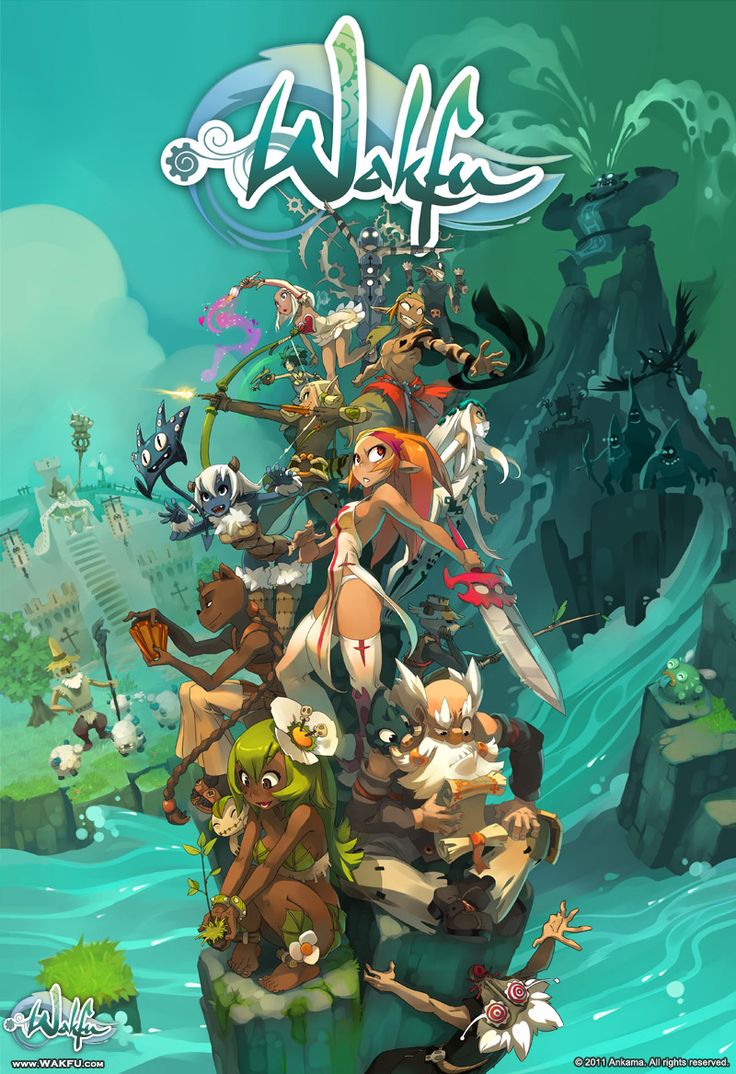
Class Summary for Wakfu
Classes are the races of "Wakfu," the MMO and animated film developed by the French company ANKAMA, and the MMO's predecessor, "Dofus. The MMO version of the game allows players to choose a class when they create their characters.
Read Article
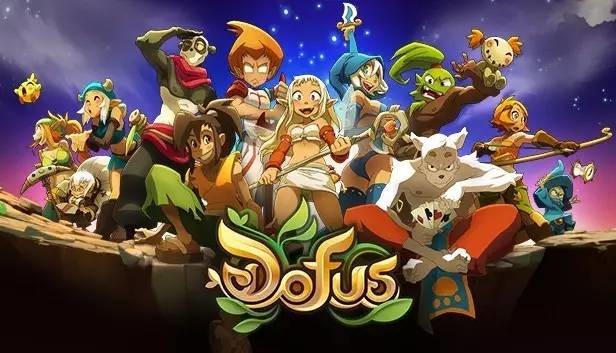
Dofus spoiler commentary and discussion summary
Dofus" is an MMO RPG developed and operated by the French company ANKAMA. It is a 2D turn-based simulation RPG using Adobe Flash and is basically free to play. Players travel in search of "Dofus," a magical egg left behind by a legendary dragon.
Read Article
Contents
- Overview of Wakfu
- world view
- 12 Worlds
- tribe
- Hugo's Famous Quotes and Lines
- dad
- And this guy! Alibate Special!
- Why do you call yourself a black raven? That's ridiculous!
- Whatever happens, we are not alone.
- Death, come here, I'm not afraid anymore
- Famous quotes and lines from Amalia
- Isn't a campfire on a starry night very adventurous?
- Where have you been, little rascal?
- My brother called me childish twice!
- I can feel the trees and plants getting antsy.
- Tristopan Quotes and Famous Lines
- This sword is really annoying!
- Then don't call me a bakap!
- That's not what I wanted to do!
- We're not legends, Rubylux.
- I've stepped into a legend.
- Rubylux Quotes and Famous Lines
- Enough chatter, any more dialogue and hatred will speak for itself!
- Let me go and show you how to fight the shush.
- I'm giving them a little surprise at first.
- Evangeline Quotes and Famous Lines
- Giant clav squid tentacles go up in smoke, something's wrong!
- Come here, baba cup.
- I know it's very difficult for you to become a legend.
- Ruel Stroud Quotes and Famous Lines
- Want to bet a shovel?
- This is a sacred room.
- God of Enutrof, I will double my donation if a miracle happens here!
- Now, get out! I don't want this!
- Gulag Lang Quotes and Famous Lines
- Let you enjoy the wrath of the Gulag Lang.
- It seems the devil's sword was preventing him from seeing through to you guys.
- If you're impressed, Gulaglan is disappointed!
- Knox Quotes and Famous Lines
- Waqf that satisfies my craving that is almost infinite.
- My Time Stops
- All mistakes will be corrected.
- I am saddened that your friend would be so disappointed.
- It's like the strawberry on the cake.
- Famous quotes and lines from Adamai
- We are brothers, the only ones in the world.
- Other sub-character quotes and lines of wisdom
- It's the chaos of Ogrest!
- Kaboooooooooooooooooooooooooooooooooooooooooooooooooooooooooooo!
- Mark the last time!
- Always with you, Noximilian ......
- Not a bad idea to know how to use your head.
- I told you. I said, "I didn't do anything."