月に吠えらんねえ

月に吠えらんねえ

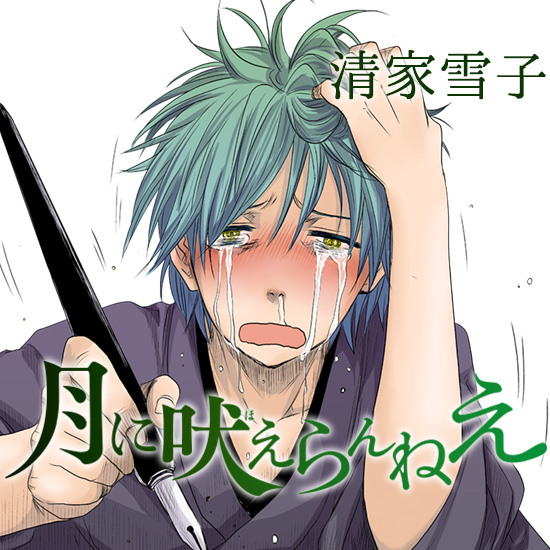
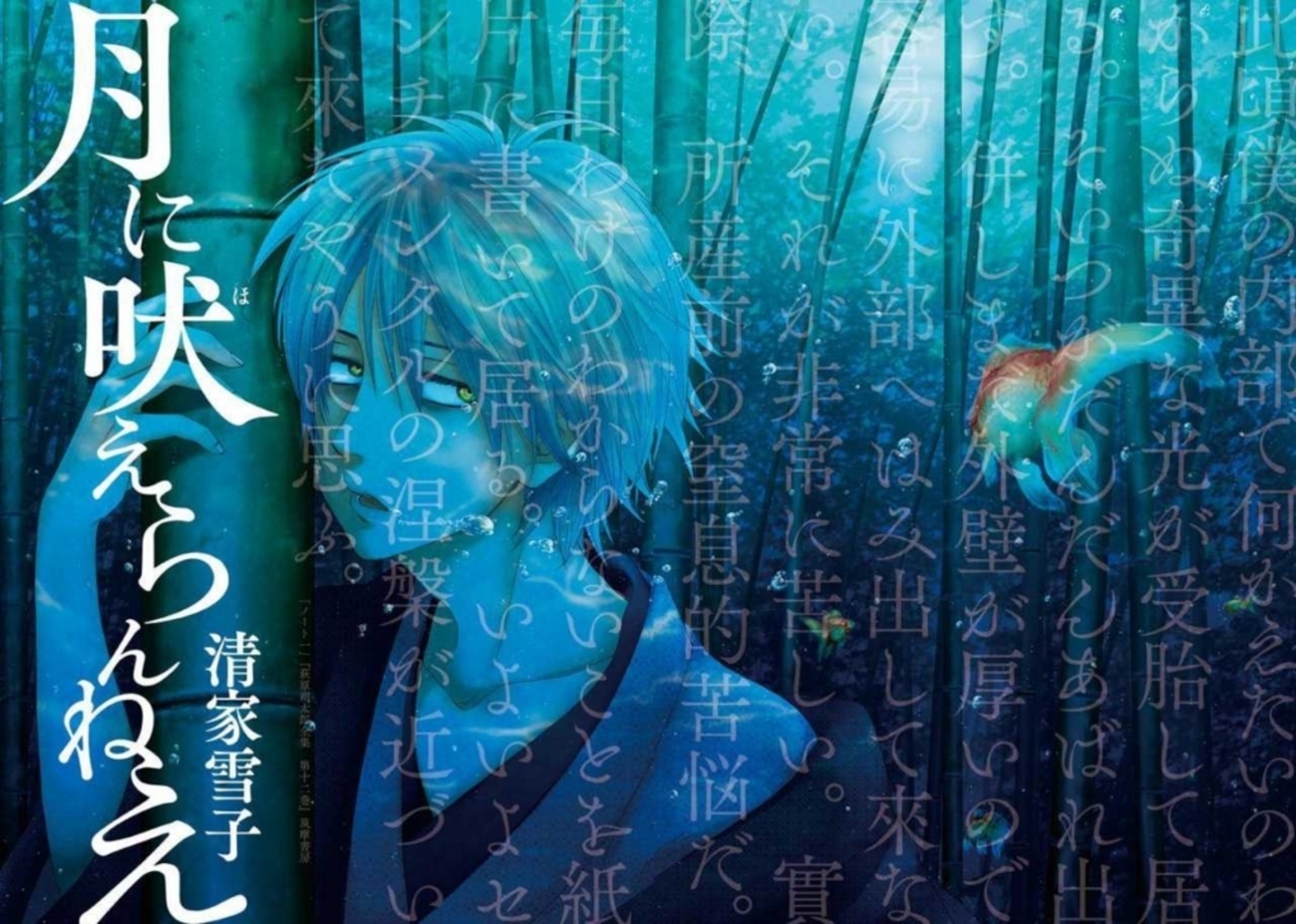
『月に吠えらんねえ』は2013年から2019年にかけて『月刊アフタヌーン』にて連載された、清家雪子によるファンタジー漫画。略称は『月吠』。
舞台となるのは近代日本のような幻想の街「詩歌句街」。街では近代の詩人・歌人・俳人たちの作品からイメージされたキャラクターが創作活動を行っている。自意識の目覚めに苦しむ近代の女性像や文学者の戦争責任といったテーマを扱っており、文化庁メディア芸術祭マンガ部門新人賞を受賞、第19回センス・オブ・ジェンダー賞を受賞するなど高い評価を得ている。
またリブート作品として『月に吠えたンねえ』がある。

Related Articles on 月に吠えらんねえ

Reviews, Ratings and Comments on 月に吠えらんねえ

月に吠えらんねえ
9

Has there ever been an anthropomorphism with so many references?

Tsuki no Barkeranae is a personification of images from works of modern poetry and haiku.
Anthropomorphism and beautification are no longer uncommon, and it is already an everyday occurrence in Japan for weapons, foodstuffs, great figures of the past, etc., to be turned into handsome men or beautiful girls.
First, pick up the book and roll up one page from the last page. There is a list of references. Roll up one more page. There is a list of references. If you count them, you will find that the work was written with the help of more than 200 references.
If you read the first volume and think, "Why did I need all these?" but I think you will be able to understand it as the volume goes on.
The charm of anthropomorphic and beautification works is that all the information in the story is generally available in the story where the character appears so that you can catch on and immediately see what is so wonderful about the character.
Even in social games, when you get a character, you can read his/her self-introduction, and with that you can immediately know what kind of guy the character is.
However, when it comes to "Tsuki no Barkeranne," the advantages of the anthropomorphism and beautification are ignored at all costs, and neither the character's actions nor his psychology are surprisingly unreadable. In this respect, it is very close to a normal manga, so if you have a cheap image of anthropomorphism, I would like you to try reading it first.
It is a story that is properly enjoyable to follow. And the reason for that unintelligible amount of references becomes clearer as the volume goes on. If you can, try to read it without spoiling the story. I don't want you to read it and then be surprised that I wrote this! I hope you'll be surprised and turn the pages.
If you want to read a manga that is unconventional in many ways, if you want to read something out of the ordinary, I highly recommend this work.

月に吠えらんねえ
8

Unstable Poets

You think you've opened a comic book, but long, long strings of words are swirling across the page.
If you start reading "Tsuki ni Barkeranne" (written by Yukiko Seike for Kodansha), you may be surprised at the number of poetic quotations that are packed into the book.

The protagonist of the story is a young man with a boyish or adolescent-like face named "Saku," based on images from poet Sakutaro Hagiwara's poems.
(However, it becomes more and more difficult to identify him as a man with each passing volume of the comics, which leads to the fascinating "instability" of this work!)
) Saku lives in a place called "modern □gai" (詩歌句街) and seems to be getting along well with his admirer, Mr. White (the original image is based on Kitahara Hakushu), and his apprentice, Miyoshi (the original image is based on Miyoshi Tatsuji).

Their way of life seems to pay homage to the relationships that real-life literary giants have developed, but the author, Seike, clearly states in the first panel of the first volume of the comic, "I have nothing to do with any real person or group.
It is rare for the words "no relation" to be used at the beginning of a story, as they are often used in various works.
This is also true of Saku, who literally screams (or faints) when he has a hallucination of being swallowed by "the word," and Mr. Shira, who shows his over-the-top playboyishness, frequently engages in orgies, and they are in the midst of excessive madness.
Indeed, it is impossible to connect their humanity with the real-life writers. Rather, it is indeed scolding.
However, the poetic phrases quoted in the film are nothing but actual works, and one cannot help but feel a disturbing atmosphere in the imbalance between the irrepressible "excessive deformation" and "actual works.

The true nature of this disquieting atmosphere is revealed in the sixth episode, "1945," included in volume 2 of the comic.
In the first volume, Seike mentions the strange inhabitants of the town and Saku's close friend Rhinoceros (originally imagined by Saisei Muroo) who left the town, and finally in the second volume, Seike begins to describe the "war" in which the poets were caught up.
His brushstrokes accelerate and become more severe as the story progresses, revealing the hidden feelings that the poets were unable to bark out.
There is no doubt that the "war poems" bequeathed by these unstable poets are the backbone of this story.
What did they think at the end of creating "war poems"?
The author is facing this question head-on in an attempt to depict it.

Parent Tags