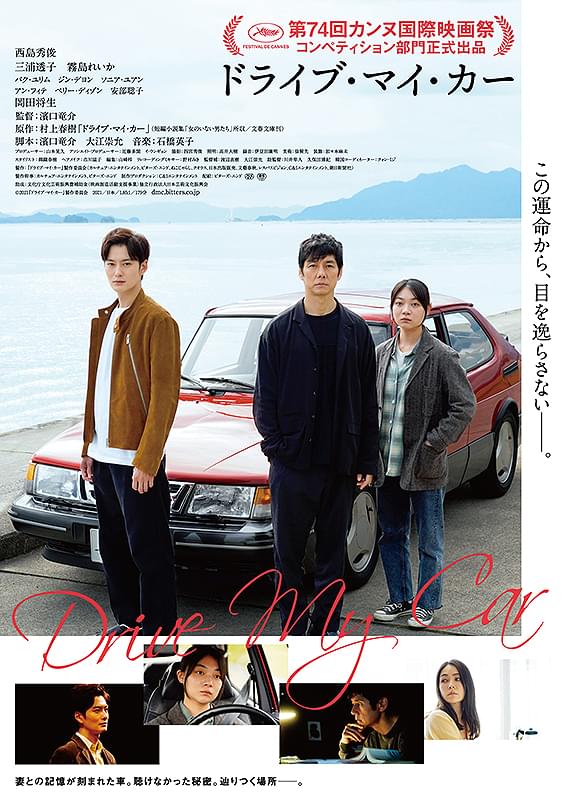
ドライブ・マイ・カー / Drive My Car

ドライブ・マイ・カー / Drive My Car

『ドライブ・マイ・カー』とは、村上春樹の短編小説、およびそれを原作とした実写映画作品。村上による原作小説は、短編集『女のいない男たち』の1作目として2013年12月に発表され、その後国内外で翻訳出版された。2021年には濱口竜介監督によって映画化された。映画版は第74回カンヌ国際映画祭で日本映画初となる脚本賞などを受賞したほか、第94回アカデミー賞で国際長編映画賞を受賞するなど国内外で極めて高い評価を受けている。
俳優の家福は接触事故を起こしたことや緑内障の徴候が見つかったことから事務所や警察の手前運転を止められ、自動車修理工場の経営者から紹介された若い女性・渡利みさきを専属運転手として迎えることになる。黄色のサーブ900コンバーティブルの助手席に乗りながら、家福はかつて女優であり、自分以外の4人の男と関係を持っていた亡くなった妻のことを深く回想する。首都高速道路の渋滞中にはみさきから友だちを作らない理由を問われ、妻の死後にテレビ局で知り合いバーで語り合うようになった、妻の情事の相手である俳優の高槻との思い出が重なっていく。
この原作小説をベースにしつつ、同じ短編集に収録された「シェエラザード」や「木野」の要素、およびアントン・チェーホフの戯曲『ワーニャ伯父さん』の台詞や設定を織り交ぜて映画版は再構築されている。
映画版では、舞台演出家の家福悠介は、脚本家の妻・音と二人で暮らしていた。音は家福が台詞を覚えるためのカセットテープを作成し、セックスの最中に思いついた物語を語って家福に書き留めてもらうという夫婦の習慣があった。ある日、家福は妻の浮気を目撃するが、平穏な生活を守るためにそれを告げぬまま日常を続け、やがて音は突然の病で他界してしまう。
二年後、家福は広島で行われる国際演劇祭に招聘され、自身の愛車である赤の「サーブ900ターボ」の専属ドライバーとして無口な女性・渡利みさきと出会う。演劇祭では多国語による『ワーニャ伯父さん』の舞台稽古が進められ、妻の浮気相手ではないかと疑う若い俳優の高槻もワーニャ役として参加する。車を走らせる中でみさきは自身の過酷な過去や生い立ちを語り始め、家福も高槻に妻との秘密や満たされながらも拭えなかった心の闇を打ち明ける。物語の終盤、高槻が事件を起こして舞台を去ったあと、家福はショックを乗り越えるためにみさきとともに彼女の故郷である北海道へ向かい、雪原の中でこれまで目を背けてきた妻への感情や自身の傷と真正面から向き合う姿が描かれている。

Reviews, Ratings and Comments on ドライブ・マイ・カー / Drive My Car

ドライブ・マイ・カー / Drive My Car
8

『ドライブ・マイ・カー』:静寂が語る人間の真実

監督・濱口竜介が紡ぎだす『ドライブ・マイ・カー』は、言葉と沈黙の狭間に潜む人間の真実を探る珠玉の作品だ。村上春樹の短編小説を原作としながらも、濱口監督独自の視点で大胆に拡張され、観る者の心に深く刻まれる3時間の旅路となっている。

物語は、舞台演出家の家福(西島秀俊)が突然妻を亡くしたことから始まる。広島での演劇フェスティバルに向かう彼を待っていたのは、指定ドライバーのみさき(三浦透子)だった。赤いサーブ900は、この物語のもう一人の主役と言っても過言ではない。車内という閉ざされた空間が、逆説的に心を開く場となっていく。

西島秀俊は、喪失の痛みを内に秘めた家福を、抑制の効いた演技で見事に表現する。特に、妻の遺した録音テープを聴きながら車を運転するシーンでは、無言のまま複雑な感情の機微を表す彼の演技力が光る。三浦透子演じるみさきも、当初の無愛想さから徐々に内面を覗かせていく繊細な変化を、説得力ある演技で描き出す。

本作の魅力は、登場人物たちの繊細な心の動きだけでなく、視覚的な美しさにもある。瀬戸内海の穏やかな風景から、雪に覆われた北海道の山々まで、日本の多様な景観が、登場人物の心象風景と見事に重なり合う。

劇中劇として上演される「ワーニャ伯父さん」も、本編のテーマと巧みに呼応する。多言語での上演という設定は、言語の壁を超えた理解の可能性を探る試みだ。特に、韓国人俳優パク・ユリムが演じるソニアの日本語での独白シーンは、言語を超えた感情の普遍性を強調し、観客の心を揺さぶる。

本作における時間の流れは緩やかだが、決して冗長ではない。むしろ、その「間」の中に豊かな感情や思考が詰まっており、観客を物語の中に深く引き込む。長回しのショットや、車窓から見える風景の移ろいは、まるで人生そのものの比喩のようだ。

『ドライブ・マイ・カー』は、喪失、赦し、そして人生の再生という普遍的なテーマを、静謐な映像美と卓越した演技で描き出した秀作である。濱口監督の繊細な演出と、俳優陣の圧倒的な存在感が見事に調和し、観る者の心に長く残る深い余韻を生み出している。

この作品は、派手なアクションや劇的な展開ではなく、日常の中に潜む人間の機微を丁寧に掬い取ることで、私たちの人生や関係性について静かに、しかし力強く問いかけてくる。それは、映画という芸術が持つ力を改めて感じさせる、珠玉の3時間である。

ドライブ・マイ・カー / Drive My Car
9

Subsequent life, in which the darkness held by each of them intersects and changes

It was thought to be a road movie, but it was a human drama depicting the various thoughts and feelings of the characters gathered in one place. The characters were of different races and generations, and spoke not only Japanese but also English and sign language. The film carefully depicted how the distance between these different people gradually grew closer, and how they became separated at one moment.
The images are very beautiful, and the scenery of the Seto Inland Sea and the night view of the city center from the train window make you feel like you are watching the same scenery as the main character. That iconic red car and the taciturn driver. The episode of how that young woman became a good driver and the long, long drive from there to the end of the film were very impressive as the story progressed quickly.
The sadness of two people who have suffered a great loss and their attempts to regenerate from it were directed in a way that was not rushed, but was emotionally moving and beautifully directed. The main character played by Hidetoshi Nishijima is a very patient and stable person, and I was moved by this scene. On the other hand, the man played by Masaki Okada and the wife of the main character played by Reika Kirishima struggle with their own failing selves and are unable to do anything about it. But by evoking in the viewer a gentle imagination that allows them to forgive even this, the film changes the way they look at things that are constricting them and makes them feel that they can be a little calmer in the future.

ドライブ・マイ・カー / Drive My Car
7

The last line of Lee Yoon-ah, played by Park Yurim, is memorable

This work can be described as a human drama centering on a stage actor and director, played by Hidetoshi Nishijima, and a woman driver, played by Toruko Miura, who picks him up and takes him home. The woman driver comforts the main character who has lost his wife, but it is not written in the context of a romantic relationship. The smooth, slow-moving driving scenes seem worth it.
In a play directed by the protagonist, the protagonist chooses actors to direct a play by Chekhov's Uncle Vanya, but he puts seemingly non-intersecting actors on the same stage: Japanese, Chinese, Korean, and Deaf. The Korean actress Lee Yuna, played by Park Yurim, delivers her lines in sign language on stage at the end of the film, and it is a divine sight.
'I saw a happy life in my dream.'
Each person may have his or her own happy dream that he or she imagines.

Incidentally, Masaki Okada, a popular young Japanese actor, also appears in the film. He is portrayed as one of the unfaithful partners of the deceased protagonist's wife, who had a scandal before that, and then does something extraordinary at the end, which is also a highlight. As I thought in his role as Werther in the movie "Confessions," Masaki Okada is very good in roles with this kind of impact!

ドライブ・マイ・カー / Drive My Car
9

drive my car

Hidetoshi Nishijima is still Hidetoshi Nishijima!
I can feel his charm. I really love him.

Masaki Okada is also wonderful. I don't know if it's shallow or deep, but is it deep? I don't know if it's shallow or deep, but it's deep or shallow....
I don't know if it's shallow or deep, but it's deep... I think there are only a few people who can play that role.
And he is overwhelmingly cute.

And she's so cute....and so is Toruko Miura!
The last scene was a bit strange. I was a bit confused about the last scene, but when I saw at the end roll that it was based on Haruki Murakami's novel, I thought, "Oh, I see.
I was fascinated by the expression on the face of Ms. Toruko Miura in the last scene.

Reika Kirishima is also wonderful.
I could tell that she must really love Mr. Nishijima.
Even though she does things like that.
It was a bit fake, or maybe there are people like that, but I can't deny that it was a bit like a story.

Also, the location of Hiroshima is wonderful.
The garbage incineration plant is dramatic in itself.
It was the best place for Ms. Toruko Miura to take Hidetoshi Nishijima.

The road to Hokkaido was also great.
I am sure it was not a fun road trip, but I was still somewhat excited to go away by car.
I thought of Ms. Toruko Miura's mother, who was buried in her house after the landslide, still there, still intact, still unrescued.