
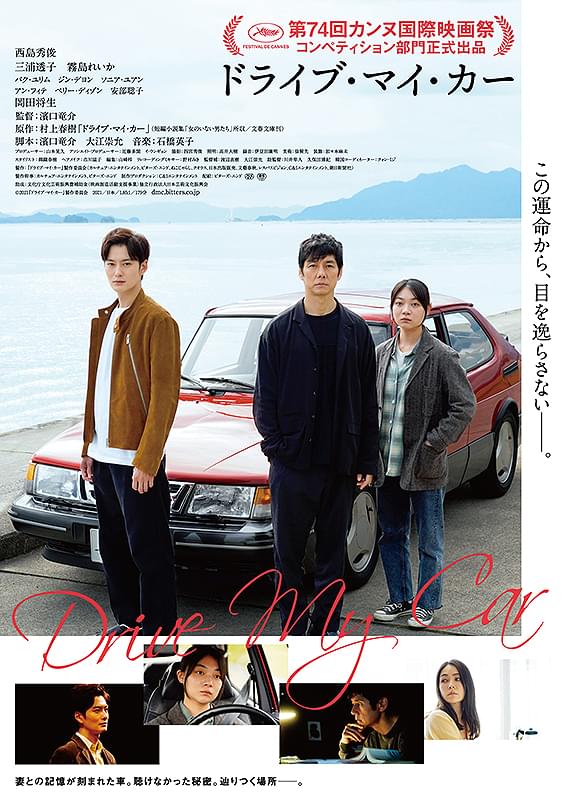

Subsequent life, in which the darkness held by each of them intersects and changes
It was thought to be a road movie, but it was a human drama depicting the various thoughts and feelings of the characters gathered in one place. The characters were of different races and generations, and spoke not only Japanese but also English and sign language. The film carefully depicted how the distance between these different people gradually grew closer, and how they became separated at one moment.
The images are very beautiful, and the scenery of the Seto Inland Sea and the night view of the city center from the train window make you feel like you are watching the same scenery as the main character. That iconic red car and the taciturn driver. The episode of how that young woman became a good driver and the long, long drive from there to the end of the film were very impressive as the story progressed quickly.
The sadness of two people who have suffered a great loss and their attempts to regenerate from it were directed in a way that was not rushed, but was emotionally moving and beautifully directed. The main character played by Hidetoshi Nishijima is a very patient and stable person, and I was moved by this scene. On the other hand, the man played by Masaki Okada and the wife of the main character played by Reika Kirishima struggle with their own failing selves and are unable to do anything about it. But by evoking in the viewer a gentle imagination that allows them to forgive even this, the film changes the way they look at things that are constricting them and makes them feel that they can be a little calmer in the future.