ベニスに死す / Death in Venice

ベニスに死す / Death in Venice

Death in Venice is a 1971 Italian film. It is based on the literary novel of the same name by Thomas Mann.
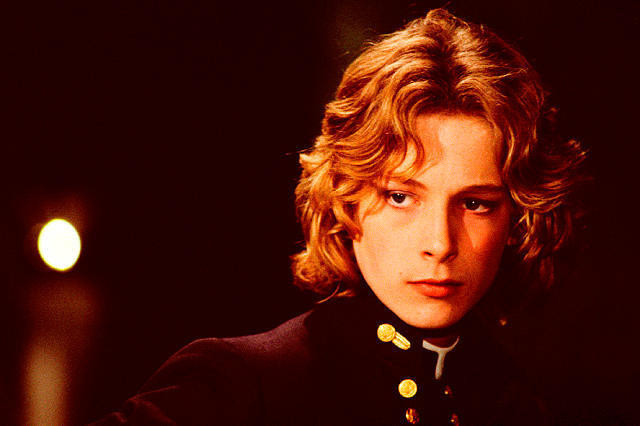
The setting is Venice, Italy in 1911. The protagonist, an elderly composer named Aschenbach, happens to see a beautiful boy named Taggio, who is the embodiment of pure beauty, at the hotel where he is staying, and is instantly attracted to him. Unable to control his perverse feelings for Taddeo, Aschenbach wanders the streets of Venice, but cholera has already begun to spread in the city. The film depicts Aschenbach's intoxication with the world of beauty in the midst of the plague in Venice.
Directed by Luchino Visconti. Starring Dirk Bogart and Bjorn Andresen.
The entire film is filled with a thoroughly decadent atmosphere, with the use of Gustav Mahler's solemn music throughout and the overwhelming beauty of Swedish-born Bjorn Andresen, who plays the beautiful boy.
The film won first place in the 45th Kinema Junpo Best Ten and the 25th Anniversary Prize at the 24th Cannes International Film Festival, and was screened in a revival in 2011 in a new print to commemorate the 40th anniversary of its production.

Reviews, Ratings and Comments on ベニスに死す / Death in Venice

ベニスに死す / Death in Venice
8

A historical masterpiece that is distinctly different from today's commercial cinema, and one that pursues artistry to the hilt.

Art is man-made beauty created by man. It can never come close to the natural beauty created by God.
The purer something is, the closer it is to natural beauty, and the more impure it is, the further it is from natural beauty. The younger you are, the purer you are, and the older you get, the more impure you become.

In this film, the contrast between youth and old age, between natural beauty and artificial beauty, is strikingly depicted in every scene. The beautiful boy Turgio and the old composer Aschenbach. The city of Venice and the view of the sea from there.

When the old composer Aschenbach visits the city of Venice after falling into a slump due to failing health, he meets the dazzlingly beautiful young boy Tageo.
Aschenbach is attracted by Turgio's young and pure beauty, and begins to pursue him, but his lack of confidence prevents him from speaking to him or touching him.

Aschenbach, a composer who symbolizes artificial beauty, wishes to approach Turgio, who symbolizes natural beauty, and acquire that beauty.
However, even though he tries to rejuvenate himself with comically toxic make-up, he is unable to do anything before Turgio's natural beauty, and is intimidated.

In the last scene, Aschenbach watches Turgio fighting with his friends on the beach, leaning back in his chair on the sand, unable to move.
Eventually, Turgio enters the sea and points to the setting sun in the distance, silhouetted as if he had become one with nature. Aschenbach tries to reach out his hand in that direction, but it fails to reach him and he dies.
Artificial beauty was defeated by the overwhelming beauty of nature.

Visconti's works are all pictorial, and many of them are thoroughly artistic. It would be difficult to make such films in today's commercialism-driven film industry, so in this sense, Visconti's works are of great value.

ベニスに死す / Death in Venice
8

be caught up in beauty

The old composer "Gustav Aschenbach" is visiting Venice for a rest and relaxation.
There, he meets a beautiful boy named Taggio, who captivates him.
Gustav and Taddeo first meet in a salon on a ship bound for Venice.
In the salon, where tourists from all over the world gather, Gustav's eyes fell on Taggio, a boy with a family who suddenly came into view.
Taddeo chats with the family for a while, but as he leaves, he looks at Gustave.
It was as if he knew that Gustave was staring at Taddeo.
At that moment, Gustave must have felt a kind of "love" for Taddeo.
Gustav, captivated by a beauty that transcended gender, began to think of Taddeo both in his sleep and in his waking hours.
Midway through the story, Gustave finally decides to leave Venice because the worsening weather and his feelings for Taggio are becoming uncontrollable.
However, he is forced to return to his hotel in Venice due to a problem.
Gustave's resolve is broken, but on the boat ride to Venice, he looks cheerful and excited at the prospect of spending another day in Venice with Taggio.
The return to Venice marks a turning point in Gustave's behavior.
He began to follow Taggio, whom he had previously only followed with his eyes, and he began to voluntarily apply makeup to men, whom he would have despised.
Meanwhile, an epidemic of infectious diseases breaks out in Europe, and Gustave himself contracts the disease.
The makeup he had applied to the beautiful boy melts away with perspiration, and the old composer is left looking ugly and pathetic.
As his consciousness fades, his last sight is of Taggio.
In a discussion with a friend before his visit to Venice, the composer had insisted that "an artist must be exemplary" and "don't talk about art as if it were the devil," but after meeting Taggio, he became trapped by the demon of beauty.
The role of Taggio was played by Bjorn Andresen, whom director Luchino Visconti searched all over Europe and selected out of thousands of candidates.
The beauty of the character must have captivated not only Gustav, but the audience as well.
Björn Andresen was also in "Midsummer," which was released in 2019.
Gustav's inviting and seductive look at Taddeo and his expression as he consumes himself with illness, but still seeks Taddeo, seemed to tell the subtleties of his heart in great detail because he had so few lines.
The carefully crafted screen composition and exquisite colors of the film, with attention to detail in the props and the positions of the people in each scene, are as beautiful as an impressionist painting, and the final scene is enhanced by the main theme, Mahler's symphony "Adagietto".
This work is especially recommended for those who like going to museums, those who enjoy viewing paintings, and those who like classical music.