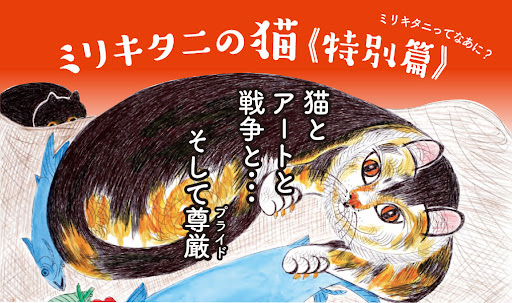
ミリキタニの猫 / The Cats of Mirikitani

ミリキタニの猫 / The Cats of Mirikitani

『ミリキタニの猫』(ミリキタニのねこ)とは、2006年にアメリカで公開されたドキュメンタリー映画。監督はリンダ・ハッテンドーフ。ニューヨークでホームレス生活を送っていた日系アメリカ人画家、ジミー・ミリキタニの人生と再生を描いた作品である。日本では2007年に劇場公開され、その後DVD化や配信を通じて広く知られるようになった。
ストーリーは、路上で猫の絵を描き続けていたミリキタニとハッテンドルフ監督との出会いを起点に展開し、第二次世界大戦中の日系人強制収容の記憶や、家族・故郷の喪失といった、ミリキタニの抱えている事情や過ごしてきた人生が次第に明らかになっていく。さらに2001年のアメリカ同時多発テロ事件を契機として共同生活が始まり、互いの人生に訪れた大きな転機も余すことなく描かれている。
2008年にはミリキタニの人生や制作過程を補足する関連書籍『ミリキタニの猫』も刊行されており、映像とテキストの双方からその軌跡を辿ることが可能となっている。この関連書籍についてもハッテンドルフ自身が執筆しており、映画と併せて多くのファンの心を掴んでいる。

Reviews, Ratings and Comments on ミリキタニの猫 / The Cats of Mirikitani

ミリキタニの猫 / The Cats of Mirikitani
10

Grandpa Mirikitani, New York's rebellious street painter.

The documentary film, "Mirikitani's Cat," explores the life, hidden past and thoughts of a Japanese American painter who lived on the streets of Soho, New York.
What, Mirikitani? Who? A Japanese American?
That's what everyone must be thinking. It's a documentary about a man named Mirikitani, a surname that is common in Hiroshima.
It all started when Linda Hattendorf, an image editor living in New York City, saw a dirty Asian grandfather who painted pictures of cats in her neighborhood and talked to him. We witness the process that changes Linda's life and her grandfather's life completely. The viewer is drawn into the world as if he or she were a part of it. This is the charm of this documentary, and it is a rare documentary that allows us to share in this magical miracle experience.

The background of the film is filled with serious themes such as immigration, war, and the timing of 911, but even without prior knowledge, the intense and fast-paced old man Jimmy is somehow lovable, and you can't help but laugh and admire the cats and landscapes he paints on the streets of New York City. I can't help but laugh and admire the cats and landscapes he paints on the streets of NY.
So, if you like the city of New York, cats and animals, illustrations and picture books, history with a bit of a dark side, or (like me) just like things, this book is for you. I recommend this film to everyone who is even a little bit interested in it.

I first saw this film a long time ago, at the Tokyo International Film Festival in the fall of 2006. Despite being an American film, it was selected for the Best Picture Award in the Japanese Eyes section, and it was the first time it was screened in Japan. I was drawn in by the film because I thought it looked somewhat interesting, but the strong character of the grandfather and the unprecedented storyline pulled my soul out of my body, and since then, the film has become a part of my heart.

At first glance, Grandpa Jimmy looks like Shigeru Izumiya, but his character and his life are truly unprecedented. The background of this character is gradually revealed in the daily interactions with Linda after he happened to come to live at her house.
Second-generation Japanese American born in California and raised in Hiroshima. Self-proclaimed descendant of a samurai. When the relationship between Japan and the U.S. began to cloud over, he returned to California by himself, where the war broke out. Japanese and their descendants who were on the West Coast at the time were treated as spies and forced to live in concentration camps in the desert. After renouncing his U.S. citizenship, Grandpa Jimmy finally became a free man long after the war and moved to New York City, where he worked as a live-in cook and continued to paint. After the death of the husband of his last employer, he was forced to live on the streets, but he never stopped painting. He painted cats, persimmons of Hiroshima, and sometimes even a picture of the atomic bomb, calling himself a grand master artist appealing for peace. What a proud, unwavering, rock 'n' roll way of life!
On the other hand, there is also a mischievous side to her that, after living with her for a while, she worries with tears in her eyes about Linda, who does not return from her outings even after nightfall. Although they come from different generations, backgrounds, and races, they clash with each other, but gradually form a heartwarming bond as if they were parent and child, or even grandfather and granddaughter. As the stubbornly closed hearts open up, a heartwarming gentleness emerges in the style of the paintings.
The process of human rebirth is also very endearing and interesting.

As for this work, only used DVDs are available. However, several times a year, the co-producer, who has returned to Japan, holds events such as film screenings and exhibitions of Grandpa Jimmy's paintings, so if you have a chance, please take the opportunity to attend one and be struck by the mysterious power of Mirikitani.
You may be touched by the mysterious power of Mirikitani, and your heart will be freed and you will be able to look forward to the future. It is precisely because we live in such an uncertain world.

ミリキタニの猫 / The Cats of Mirikitani
10

Miracle on the streets of NY, Viva Mirikitani Power!

The film explores the life, hidden past, and thoughts of a Japanese American painter living on the streets of SoHo, New York. Jimmy Tsutomu Mirikitani (Mikitani), born in Sacramento and raised in Hiroshima, U.S.A., began painting cats in early 2001 when director Linda spoke to him. She invited him into her house, where he was painting and coughing in the stagnant air just after 9/11, and he became unintentionally involved in Grandpa Jimmy's mysterious life. She and her parents moved to Hiroshima to receive a Japanese education when she was a child, but returned to the U.S. because she did not want to go to Marine Corps School, where World War II broke out. There, World War II broke out, and he was forced to live in a Japanese American internment camp. After the war, he finally became a free man and headed to New York. He worked as a cook and painted for many years, but when his last employer died, he became a street dweller. The film unravels the life of Grandpa Jimmy, who fell in between the darkness of history and the law of two countries, Japan and the United States. His later years, when he would paint the A-bomb Dome with a rough and violent touch, and cats and persimmons with a gentle, heartwarming touch, sometimes attracting passersby on the street. This documentary film tells the story of how, thanks to the efforts of Director Linda and the welfare office, his citizenship was restored and he was able to live in an apartment with care, where he lived with his beloved cat Miko until his death in heaven a few years ago. The film shows not only the changes in his life up to that point and historical matters unknown even to the Japanese, but also the gradual opening of the door to his heart that had been closed for many years, and the gentle change in Grandpa's character, expression, and even his painting style. I was strongly impressed by the fact that human beings can change so much no matter how old they are. During the end roll, he and Janice Mirikitani, a third-generation Japanese American poet who turned out to be a relative during the filming, signed a peace sign while shouting "Mirikitani Power! and a peace sign. I have not had a chance to see this film, but I have been visiting the Jimmy Mirikitani art exhibition that is held twice a year in Tokyo. Viva, Mirikitani Power!

ミリキタニの猫 / The Cats of Mirikitani
10

Wandering cat-loving grandfather painter shouts his love on the streets of New York

The documentary film, "Mirikitani's Cat," explores the life, hidden past and thoughts of a Japanese American painter who lived on the streets of Soho, New York. What, Mirikitani? Who? A Japanese American? That's what everyone must be thinking. It's a documentary about a man named Mirikitani-san, a surname that is common in Hiroshima.
It all started when Linda Hattendorf, an image editor living in New York, saw a dirty old Asian man painting pictures of cats in her neighborhood and, being a cat lover, talked to him. We witness the process of Linda's and Grandpa's life being completely changed. The viewer is drawn into the world as if he or she were a part of it. This is the charm of this documentary, and it is a rare documentary that allows us to share in a magical miracle experience.
The background of the film is filled with serious themes such as immigration, war, and the timing of 911, but even without prior knowledge, the intense and fast-paced old man Jimmy is somehow lovable, and you can't help but laugh and admire the cats and landscapes he paints on the streets of New York City. You can't help but laugh and admire the cats and landscapes he paints on the streets of NY. So, I recommend this film to anyone who loves the city of New York, loves cats and animals, loves illustrations and picture books, loves history with a bit of a dark side, or (like me) just loves things, or anyone who is even slightly interested in them.
I first saw this film a long time ago, at the Tokyo International Film Festival in the fall of 2006. Despite being an American film, it was selected for the Best Picture Award in the Japanese Eyes section, and it was the first time it was screened in Japan. I went to see the film on a whim because I thought it looked interesting, but the strong character of the grandfather and the unprecedented storyline pulled my soul out of my body, and since then, the film has been a part of my heart and soul.
At first glance, Grandpa Jimmy looks like Shigeru Izumiya, but his character and his life are truly unprecedented. The background of his life is gradually revealed in the course of daily conversations after he happened to come to live at Linda's house. She is a second-generation Japanese American born in California and raised in Hiroshima. Self-proclaimed descendant of a samurai. When the clouds were gathering over relations between Japan and the U.S., he returned to California by himself, where the war broke out. Japanese and their descendants who were on the West Coast at the time were treated as spies and forced to live in concentration camps in the desert. After the war, Grandpa Jimmy renounced his U.S. citizenship, and when he was finally free, he moved to New York City and continued to paint while working as a live-in cook. He continued to paint while working as a live-in cook. Even after his last employer died and he had no choice but to live on the streets, he never stopped painting. She painted cats, persimmons of Hiroshima, and sometimes even a picture of the atomic bomb, appealing for peace, and calling herself a grand master artist. What a proud, unwavering, rock 'n' roll way of life!
On the other hand, there is also a mischievous side to her that, after living with her for a while, she worries with tears in her eyes about Linda, who does not return from her outings even after nightfall. Despite their different generations, backgrounds, and races, they clash with each other, but gradually form a heartwarming bond like a parent and child, or even a grandfather and granddaughter, and the process of human rebirth is very endearing and interesting.

Now that DVDs of this film are only available in used condition, the co-producer, who is back in Japan, holds events a few times a year, including film screenings and an exhibition of Grandpa Jimmy's paintings. If you have a chance, please come and join us and be touched by the mysterious power of Mirikitani. You may be touched by the mysterious power of Mirikitani, and your heart will be freed and you will be able to look forward to the future. It is precisely because we live in such an uncertain world.