
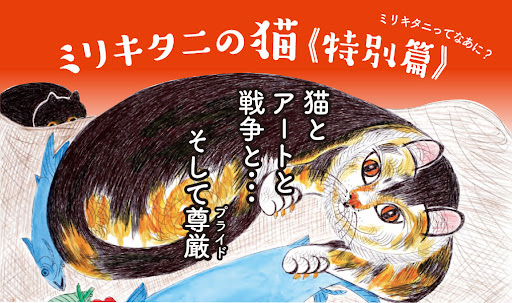

Miracle on the streets of NY, Viva Mirikitani Power!
The film explores the life, hidden past, and thoughts of a Japanese American painter living on the streets of SoHo, New York. Jimmy Tsutomu Mirikitani (Mikitani), born in Sacramento and raised in Hiroshima, U.S.A., began painting cats in early 2001 when director Linda spoke to him. She invited him into her house, where he was painting and coughing in the stagnant air just after 9/11, and he became unintentionally involved in Grandpa Jimmy's mysterious life. She and her parents moved to Hiroshima to receive a Japanese education when she was a child, but returned to the U.S. because she did not want to go to Marine Corps School, where World War II broke out. There, World War II broke out, and he was forced to live in a Japanese American internment camp. After the war, he finally became a free man and headed to New York. He worked as a cook and painted for many years, but when his last employer died, he became a street dweller. The film unravels the life of Grandpa Jimmy, who fell in between the darkness of history and the law of two countries, Japan and the United States. His later years, when he would paint the A-bomb Dome with a rough and violent touch, and cats and persimmons with a gentle, heartwarming touch, sometimes attracting passersby on the street. This documentary film tells the story of how, thanks to the efforts of Director Linda and the welfare office, his citizenship was restored and he was able to live in an apartment with care, where he lived with his beloved cat Miko until his death in heaven a few years ago. The film shows not only the changes in his life up to that point and historical matters unknown even to the Japanese, but also the gradual opening of the door to his heart that had been closed for many years, and the gentle change in Grandpa's character, expression, and even his painting style. I was strongly impressed by the fact that human beings can change so much no matter how old they are. During the end roll, he and Janice Mirikitani, a third-generation Japanese American poet who turned out to be a relative during the filming, signed a peace sign while shouting "Mirikitani Power! and a peace sign. I have not had a chance to see this film, but I have been visiting the Jimmy Mirikitani art exhibition that is held twice a year in Tokyo. Viva, Mirikitani Power!