2001年宇宙の旅

2001年宇宙の旅

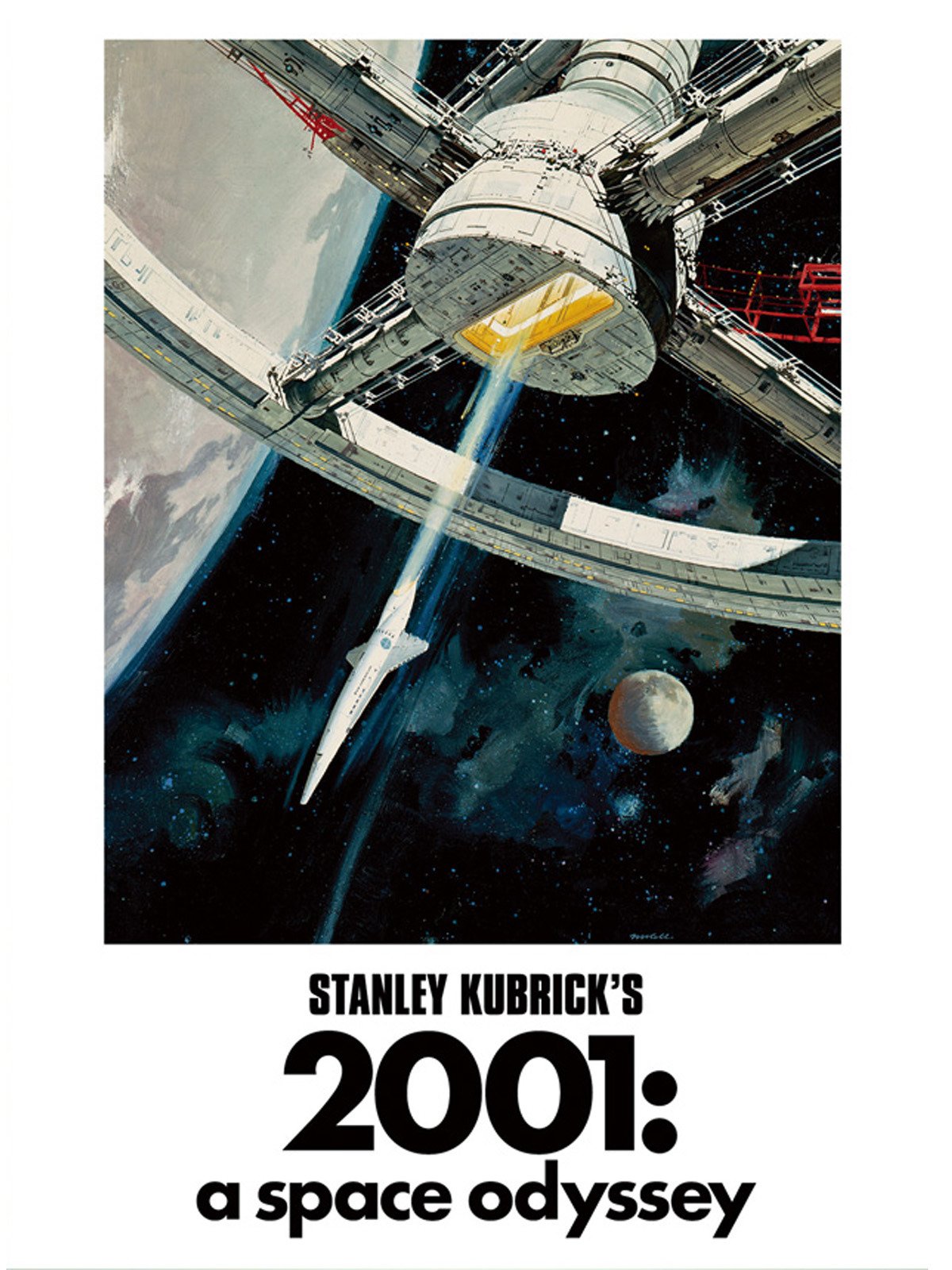
2001: A Space Odyssey is an American-British science fiction film and novel of the same name that was released in 1968. The film was first released in Japan in the same year. The original story was written by Arthur C. Clarke and the screenplay was written by Clarke and Stanley Kubrick, who also directed the original story.
The story mainly depicts the era of human space travel. It is known as one of the most influential films ever made, with a variety of advanced techniques not found in conventional cinema, the uncompromising perfection of outer space, and the dramatic use of classical music, and has elevated science fiction films beyond the traditional label of children's action films into the realm of philosophy, science, and metaphysics. It is also the film that elevated science fiction films out of the traditional children's action genre and into the realm of philosophy, science and metaphysics.
The film won the 1968 Academy Award for Best Special Visual Effects and the 1969 Hugo Award for Best Science Fiction or Fantasy Film and Related Character. Arthur C. Clarke's novel version, published after the film's release, was written concurrently with the screenplay, but also incorporated Clarke's own interpretation.

Reviews, Ratings and Comments on 2001年宇宙の旅

2001年宇宙の旅
9

A timeless masterpiece in which the genius filmmaker Kubrick lavished his talents!

2001: A Space Odyssey is an epic science fiction film released in 1968, produced and directed by Stanley Kubrick.
The screenplay was written by Kubrick and science fiction writer Arthur C. Clarke. To begin with, Kubrick was inspired by Clarke's 1951 short story "The Avant-Garde. The film depicts the events on a spacecraft on a flight to Jupiter with the emotional computer HAL on board, after an alien stone monument (monolith) that influenced human evolution is discovered on the Moon. In the background are foreshadowed themes of existentialism, human evolution, technology, artificial intelligence, and life on a planet other than Earth. The film is notable for its scientifically accurate scenes of space travel and pioneering special effects. Kubrick eschews all conventional cinematic and narrative flourishes. Dialogue is rare, and the film is punctuated by long sequences punctuated by classical music. Classical music such as Richard Strauss's "Zarathustra" and Johann Strauss's "The Blue Danube" were used for the soundtrack. After its release, the film received mixed reviews, with some critics describing it as apocalyptically dark and others as an optimistic affirmation of human hope; in 1991, the Library of Congress paid tribute to it as "culturally, historically, and aesthetically significant."

2001年宇宙の旅
9

The origin of science fiction films up to the present day.

In 1968, when the film was released, there was no CG or VFX used in today's science fiction films, and one cannot help but feel respect, admiration, and awe at the work that created such an impressive outer space pattern.
As of today (2021), humans have only reached the moon, and AI (artificial intelligence) has not yet caught up with what is described in the film, but in the near future, or with current technology, the space travel used in the film seems possible.
However, it is only because there is no need to do so, but if events like the one in this film were to occur....
The latter half of the film has many fantasy elements, and the evaluation of the film is divided, but for a science fiction film of that era, the beauty of the images and the technology that made it possible is something that we cannot help but agree with.
The theme song played at the opening and during the film is well known to everyone.
Even though synthesizers were widely used in that era, the music used in the film was composed by a classical orchestra, giving the film a grand sense of scale.
This trend has been carried over to today's science fiction films, such as Star Wars, which also uses a classical orchestra for its music.
This film was followed by a sequel, "2010: A Space Odyssey," but in any case, this film is the starting point of science fiction.