
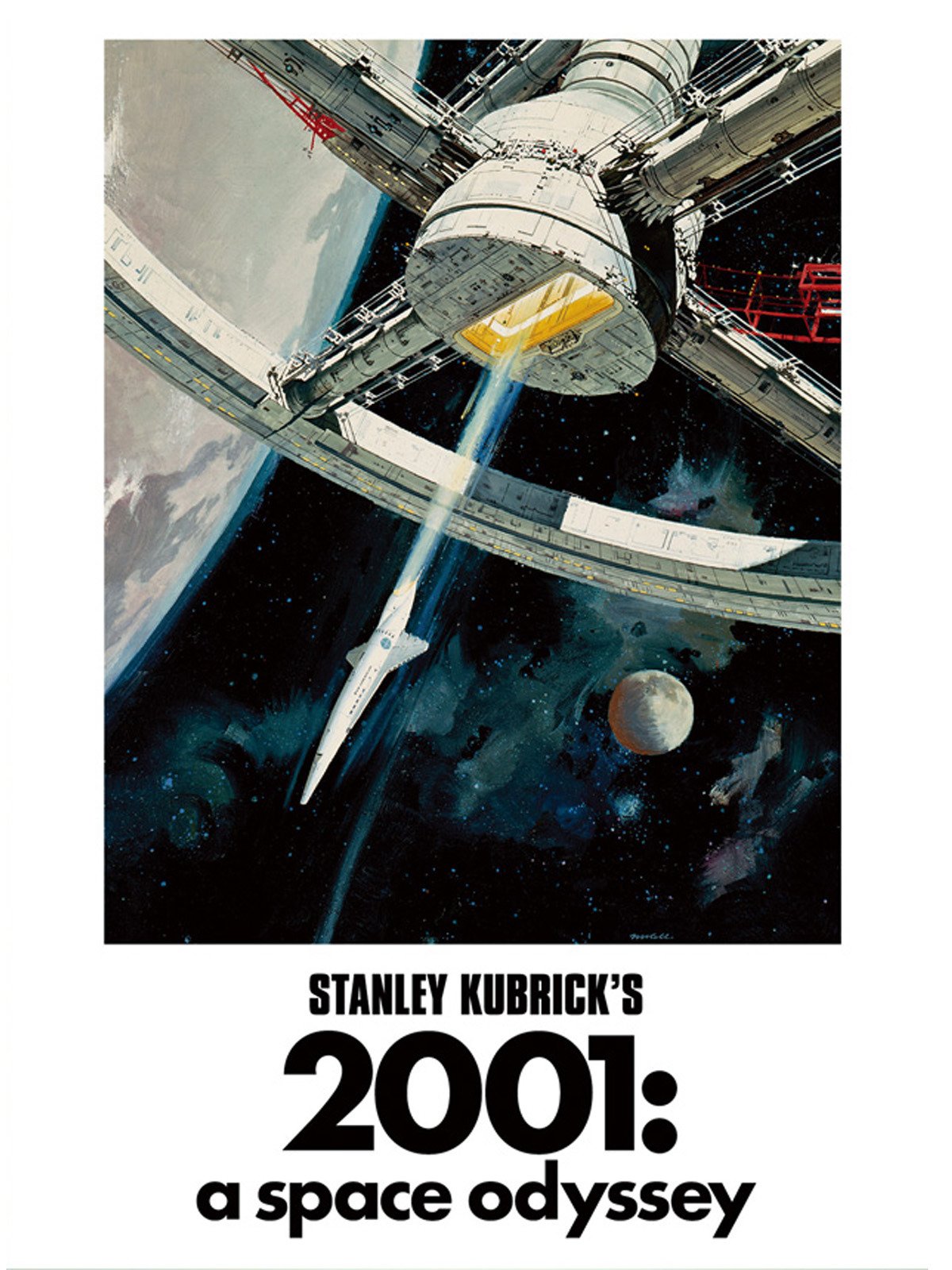

A timeless masterpiece in which the genius filmmaker Kubrick lavished his talents!
2001: A Space Odyssey is an epic science fiction film released in 1968, produced and directed by Stanley Kubrick.
The screenplay was written by Kubrick and science fiction writer Arthur C. Clarke. To begin with, Kubrick was inspired by Clarke's 1951 short story "The Avant-Garde. The film depicts the events on a spacecraft on a flight to Jupiter with the emotional computer HAL on board, after an alien stone monument (monolith) that influenced human evolution is discovered on the Moon. In the background are foreshadowed themes of existentialism, human evolution, technology, artificial intelligence, and life on a planet other than Earth. The film is notable for its scientifically accurate scenes of space travel and pioneering special effects. Kubrick eschews all conventional cinematic and narrative flourishes. Dialogue is rare, and the film is punctuated by long sequences punctuated by classical music. Classical music such as Richard Strauss's "Zarathustra" and Johann Strauss's "The Blue Danube" were used for the soundtrack. After its release, the film received mixed reviews, with some critics describing it as apocalyptically dark and others as an optimistic affirmation of human hope; in 1991, the Library of Congress paid tribute to it as "culturally, historically, and aesthetically significant."