
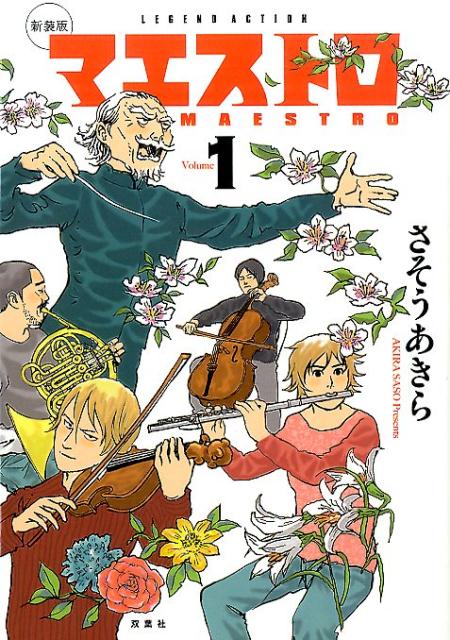

Recommended as a guide to non-verbal communication. I would recommend it to anyone who has experience in ensembles or sessions, even if you have no experience with musical instruments.
We would like you to read this regardless of your experience with the instrument.
If you have no experience with a musical instrument, I would first recommend it as a guide to non-verbal communication.
However, I would recommend it to anyone who has had experience playing in an ensemble, such as an elementary school drum and fife team, for a period of time in a concentrated way.
If you have experience with musical instruments, ensembles, sessions, etc., I think you will be able to relate to many parts of the book.
The non-verbal communication in the ensemble scenes in the film is very precise, and I think it may change the way you normally listen to music.
Perhaps some people may have a preconceived notion that the subject matter is "high-stakes" because it is based on classical music, but it is a work that can be read casually.
Throughout the book, the characteristics of each instrument and the craftsmanship of each player are carefully depicted. The conflicts caused by the craftsmanship of each player may also be felt realistically.
Nonverbal communication and psychological descriptions are applicable not only to music but also to many other situations, including work and private life, so I think it will be helpful in dealing with them.
You may also find it helpful to learn how to get along in an organization, and since each character is unique, you may be able to objectively look at your own environment and say, "I know someone like that," or "I can relate to that!
The main character, concert master Kosaka, who struggles to unite the characters with strong individuality and craftsmanship, and the shrewdness of the maestro (master conductor) Tendo of the title may be recommended, especially for those in supervisory or managerial positions.
As mentioned above, this is a work that even those who have no experience with musical instruments can greatly relate to.
The three volumes are complete and very easy to read. The descriptions of the performances are so powerful that you can almost hear the music, and it is impossible not to get emotionally involved with the characters, especially with the humanistic nature of the maestro! You are guaranteed to read the book all the way to the climax.