

No Title
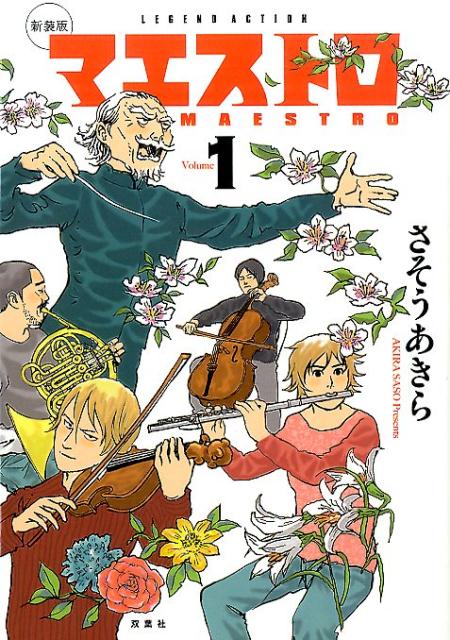
I hardly knew what was in the book, and from the cover, it looked like an orchestral story. From the cover, I imagined an orchestral story, a passionate battle between a talented and confident violinist and a quirky conductor, and maybe a little romance with a flutist.
I imagined that there might be a bit of romance between the flutist and the flutist, and decided to watch it.
It was a little different from what I had imagined, but I was drawn in from the beginning and was able to watch more and more.
In the second half, I felt that I gradually lost interest in the film, but I enjoyed watching it until the end.
The main character was probably an obochan (young boy).
He was not glaring.
He was not so handsome as to be good-looking.
Not so handsome as to be handsome, not so talented as to be talented, but just in the right halfway point.
He was a little bit withered. But he is pretty good.
He is neither very young nor very dull.
I think the conductor, Toshiyuki Nishida, is good.
However, I wonder if it was necessary for him to be so deformed.
All the yelling, head-banging, extreme poverty, etc.
Is it possible that a person who hadn't conducted at all since he was boycotted by the orchestra when he was quite young, but who, with his talent alone, would make an amazing conductor?
Well, I'm not a music expert, so, well, I don't really care.
If you are a serious musician, I think you will be under-appreciated here....
I also feel that one amateur girl, who lost her family in the earthquake and tsunami, is capable of making great sounds. I feel like that's a bit "huh?
I feel sorry for her because she lost her family in the earthquake, and I think she is a very talented girl to begin with.
But I wonder what was the point of the gradual loss of interest in the middle of the film?
What was the reason?
The story about the loss of the sponsor, the scam, the debt collectors, and so on, were all just passed by so smoothly, without much sense of overcoming hardships and doing their best.
Well, without that part, it wouldn't have been a story about almost breaking up, but overcoming the difficulties and working together to do their best, would it?
Hmmm. If that was the case, I would have liked a little more of a sense of overcoming.
What I didn't understand was the recollection scene in the hospital room.
I remember that long ago, when the main character was a child and his father was still alive, he was in a hospital room, and his father was in the same room with him.
I remember that the main character was a child and his father was still alive, and he told Toshiyuki Nishida's wife that his father played for him once in the hospital room.
I wonder if it is correct to say that the father once played a piece for Toshiyuki Nishida's wife in the hospital room when the main character was a child and his father was still alive.
The scene where the performance was successful at the concert was good.
The expression on the main boy's face was good, and the scene after the performance was over, when the performers said they had done their job, was also good.
It's great to see a successful performance that you are satisfied with, and it makes the audience happy as well.
The problem was the second day.
Hmmm. After all, was the goal to make Toshiyuki Nishida's wife listen to the orchestral music conducted by Toshiyuki Nishida?
And did she really die while listening to the orchestra?
Hmmmmmmm.... Is that right...?
Well, but it was pretty interesting~!