

Ultimate Healing
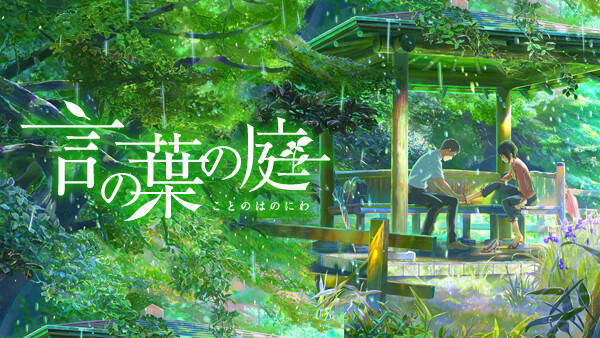
A movie based on Makoto Shinkai's novel "Garden of Words". It is just so beautiful that words cannot describe it.
Although Makoto Shinkai made a big hit with "Kimi no na wa" (What is your name?), I personally prefer "Garden of Words" for its more realistic and poignant feeling. There is nothing to complain about the images and music. For a movie, the amount of dialogue between the characters is very small, but the exquisite descriptions of rain and light are enough to express all the sensitive feelings of the characters. Rain plays an especially important role in the story, and the sounds of rain dripping, bouncing off the ground, and falling hard and forcefully are so wonderful that one could make a whole movie just from the images of rain. Also, the ending song "rain" by Motohiro Hata is a great cover song that fits the movie perfectly.
After watching this movie, I always want to listen to "rain" on rainy days. The film is very short (46 minutes), but the content is so rich and satisfying that you don't feel that it's a short film.
I have personally seen "Garden of Words" six or seven times, so I never get tired of this movie no matter how many times I see it. Although the amount of information is much less than the original, I have no complaints because it is very well put together and the important scenes are excerpted well. It is not uncommon to be disappointed by movies that do not reproduce the original work, but with regard to Garden of Words, even if you already know the original work, the movie has a completely different charm, so I recommend that you watch it.
On the other hand, if you have already seen the movie, you can learn more about Garden of Leaves of Words by reading the original novel, which only touches on Takao's brother, Yukino's ex-lover, his high school classmates, and even the seniors at Takao's part-time job, which were only mentioned briefly in the movie. Both the movie and the novel are excellent, and you should watch and read both.