
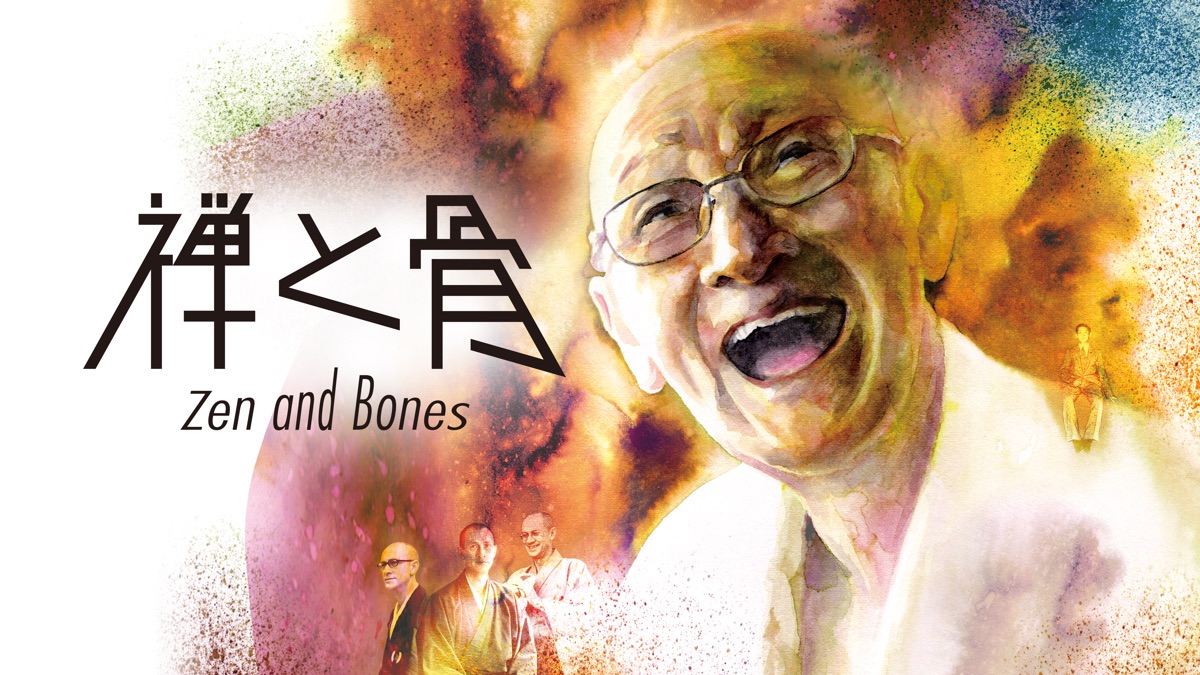

A record of the soul of a half-great-grandfather Zen monk who was tossed about by the times.
The young man, born and raised in Yokohama, boarded the Hikawa Maru from Yokohama harbor in search of his father, who had gone back to the U.S. with his second brother and had not been heard from since. Little did he know that this would be the last time he would see his mother.
Zen and Bones" is a documentary film that depicts the extraordinary life of a half-Japanese, half-American Zen monk who was at the mercy of war and wandering blood. The film closely follows the later years of Henry Mittwer, a Zen monk at Tenryuji Temple in Kyoto, who was more of an aloof and eccentric person than a monk. The monk had a crazy dream to make a film about the nursery rhyme "The Red Shoes," which brought his family and friends into the picture and brought the monk's bizarre life into focus.
After coming to the U.S., Mitova met Sachiko, but the Pacific War broke out. They were both interned in a Japanese American internment camp. He volunteered for the U.S. Army in order to be repatriated to Japan, but his family eventually grew and he stayed in the U.S. He returned to Japan alone 21 years later. She became devoted to Zen and moved to Myoshinji Temple in Kyoto.
Sachiko remained in L.A. and taught piano to earn a living, then her daughters were brought to Japan for their education, and eventually the family settled in Tenryuji Temple. The family eventually settled in Tenryu-ji Temple, where Mitowa became a member of the Urasenke school of tea ceremony and also took up ceramics and ikebana flower arranging. As time went by, he met Director Nakamura, who had just completed "Yokohama Merry," having heard that there was an eccentric grandfather monk in Kyoto.
The Girl with the Red Shoes
I was taken away by a foreigner.
Riding on a boat from the wharf in Yokohama
A foreigner took me away
(lyrics by Amejo Noguchi, music by Chosei Motoyo)
Various attempts were made to make a live-action or animated version of the movie "The Red Shoes," but due to budget constraints and mixed directions, it was never made. Director Nakamura's camera, which had been in contact with the artist during his monthly visits to Kyoto, captures the days of the moody old man, who was more going my way than Zen, as he revealed his emotions. The chaotic scenes of him and his second daughter, who is still traumatized in some ways by being brought to Japan at an impressionable age when she did not understand the language well, and the chaotic exchange of Japanese and English, including their eldest son and daughter who were there, will pierce the hearts of those watching the film.
Eiji Wentz, who plays young Mitwa in the recreation of her youth and who, coincidentally, also has a German-American father (but apparently could not speak English to the astonishment of Chad Mullane, who played her eldest brother), also gives an impassioned performance. I don't understand, Detective. I am Japanese, born in Japan." ...He says he was able to show his true self, which is different from when he is in a variety show.
The other actress in the film is Kimiko Yo as the mother of a former geisha, and the song played during the end roll is "Love Me to the Bone," sung by Ken Yokoyama.
What did Mitoi want to entrust to the girl with the red shoes? And where do people come from and where do they go... This is a film that makes us think about such things again, and Yokohama will continue to play like a basso continuo until the curtain closes.