
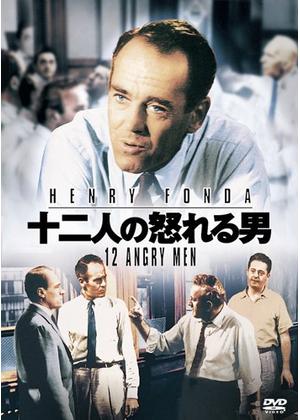

Twelve Angry Men
Low budget, representative of black and white standards.
Mostly room-to-room exchanges.
A tense drama about the trial of one boy for the murder of his parents, it is a historical masterpiece about the ideals and realities of the jury system.
The 12 men are indeed a diverse group of human beings: some are intellectuals, some grew up in slums, some are serious, some are lax. Just when you think they are leaning toward the opinion that the boy is a murderer of his parents and should be "put away quickly," one man stands up. He says, "The boy's life is at stake, so let's stop making snap judgments and have a serious discussion from the beginning. Tension flares in the empty room, and the audience is drawn into the world of the film, whether they like it or not.
In Japan, decisions are made by majority vote, but under the American jury system, if all 12 members do not agree, the case must be redone.
One man, Henry Fonda, plays the role of an intelligent and calm man, and while the film is worth seeing just for the spirited performances of the 12 great actors, the story is also excellent. The story is a tale of two or three twists and turns as the tension builds to a climax. We, the viewers, feel as if we are in that room with them and are experiencing a simulated experience.
It is a wonderful story, well directed, and performed with great spirit by talented actors. The best part of the film is Lee J. Cobb's masterful performance, especially as the angry man who cries guilty until the very end.
He has a magnificent presence that overwhelms the viewer. It is a famous scene that will remain in the history of cinema.