
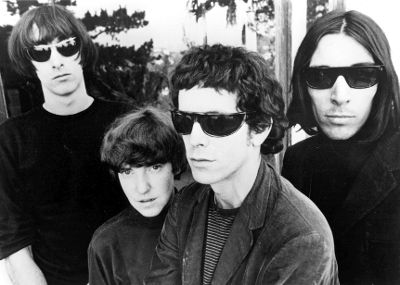
The Velvet Underground is a four-piece rock band formed in New York City. Although the band did not achieve commercial success during its existence, its avant-garde sound and literary poetry, which focused on the darker side of human nature, such as sexual taboos and drugs, had a profound influence on contemporary alternative rock music and played a major role in the artistic development of rock music. Also known by the abbreviated name Velvets.
This song of the same name is from the second album "White Light/White Heat" released in 1967.
Lou Reed provided the main vocals and John Cale and Sterling Morrison provided backing vocals.
The song is characterized by a noisy sound featuring an intensely distorted bass by John Cale.
The Gift
This song is from the second album released in 1968.
It is an experimental song over 8 minutes long, with a short story being told from the left speaker and instrumental rock playing from the right speaker.
The story is read by John Cale. The story was written by Lou Reed when he was a student. It is a black story about a couple in a long distance relationship.
Sister Ray
The last track on the album "White Light/White Heat" released in 1968.
The song is over 17 minutes long, with the same chords repeated over and over again. The lyrics were written by Lou Reed and the music was composed by all band members.
The lyrics deal with drugs, violence, homosexuality, and cross-dressing.
The second half of the song features jazz-influenced improvisation.
Candy Says
The song is from the third album "The Velvet Underground" released in 1969.
The song is based on the character Candy Darling, a drag queen who worked in the studio of Andy Warhol, who produced the first album. The song is quiet and beautiful, and was written by Lou Reed to express Candy's feelings.
What Goes On
It is also the only song from the third album released in 1969 that was cut as a single from the third album.
Doug Yule plays bass, organ, and backing vocals.
It was covered by Bryan Ferry in 1978, and the Talking Heads song "Once in a Lifetime" quoted the organ riff from this album.
After Hours
This song is the last track on the third album.
The lead vocalist is Lou Reed, and it is one of the few songs on which he does not sing vocals.
The song is too pure and embarrassing for Lou Reed, who wrote the song, to sing it himself, so Maureen Tucker on drums handles the vocals.
It is a very simple cute song with only acoustic guitar and bass.
Sweet Jane
The song is from the fourth album "Loaded" released in 1970. It was composed by Lou Reed.
Also released as a single, it is a simple, folk-rock based pop song.
Lou Reed is said to have influenced his later solo career, as he self-covered the song many times after going solo.
The Velvet Underground Episodes and Anecdotes
The third album, "The Velvet Underground," released in 1969, was more subdued and less noisy than the previous albums, due to the departure of John Cale, who had an avant-garde musical style, and the addition of Doug Yule, who had a pop sensibility. However, there is another reason for this: the effects pedals that were responsible for the noisy sound were stolen along with the instruments while on tour prior to recording the third album. However, the band members were not that discouraged, as they had not thought of following the sound of the previous album.


Contents
- The Velvet Underground Overview
- Members of The Velvet Underground
- Lou Reed
- John Cale
- Sterling Morrison
- Maureen Tucker
- Doug Yule
- Angus MacLise
- Original Albums
- The Velvet Underground & Nico
- White Light/White Heat
- The Velvet Underground
- Loaded
- Squeeze
- The Velvet Underground's signature song
- Sunday Morning
- All Tomorrow's Parties
- I'll Be Your Mirror
- White Light/White Heat
- The Gift
- Sister Ray
- Candy Says
- What Goes On
- After Hours
- Sweet Jane
- The Velvet Underground Episodes and Anecdotes