
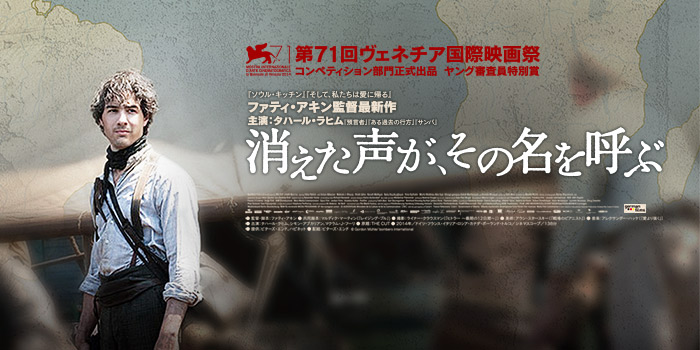
The Ottoman Empire during World War I. One night, Nazaret, an Armenian blacksmith, is suddenly taken away by the military police, forced into forced labor, and executed. His throat is cut and he loses his voice, but he manages to survive, and his only hope is to see his beloved family. In this epic historical drama film, young master filmmaker Fatih Akin portrays a father who walks through the desert, crosses the sea, and travels halfway around the world over a period of eight years.
What is the Armenian Genocide?
In the multi-ethnic Ottoman Empire, in addition to the Turks, there were many other ethnic groups such as Kurds, Arabs, and Greeks, each of whom believed in Islam, Judaism, and Christianity. The Armenians also maintained good relations with the government as a community, while still believing in Christianity. However, as some of them began to awaken to democracy through exchanges with the West, nationalist movements gradually gained momentum, and friction began to arise between them and the Muslims.
In 1914, the Ottoman Empire, which had been in decline, entered World War I on the side of Germany. When Russia invaded the Ottoman Empire in response, some Armenians joined the Russian side and others engaged in guerrilla activities against the Ottoman army. In the spring of 1915, the Ottoman government, which regarded these acts as anti-national and hostile, launched the "Death March" policy of forcibly relocating Armenians living in areas of conflict with Russia to camps. 600 Armenian politicians and intellectuals were taken away on April 24, many of whom were later killed.
Still Divided Views and Controversy
This Armenian genocide, which took place more than 100 years ago, is said to be the "first genocide of the 20th century" and was modeled by Hitler. However, views on the genocide differ greatly depending on the country and position. The Armenian side claims that it was an organized massacre, while the Turkish side claims that it was an accidental tragedy that occurred in the course of fighting. Some say the number of victims is more than 1.5 million, while others believe it to be in the hundreds of thousands.
In recent years, however, the view that this was genocide has become the mainstream view, with the French National Assembly passing the "Armenian Genocide Denial and Prohibition Act" in 2006, and the German Bundestag recognizing the Armenian Genocide as genocide in 2016. Turkish Prime Minister Erdogan was also the first Turkish leader to express his condolences for the Armenian Genocide in 2014.
Famous quotes, lines, scenes and scenes from "The Missing Voice Calls Its Name
Illusion of a wife to guide the protagonist
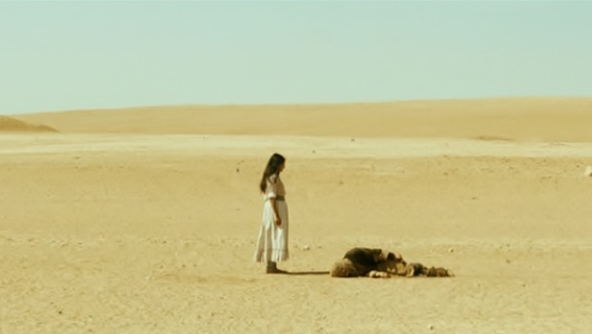
Used effectively throughout the play is the song that his wife Raquel sang to him at the beginning of the play. On a night when it was still peaceful, Nazareth fell asleep listening to his wife's beautiful singing. After that, Nazaret never saw his wife again. But when he is lost or discouraged, he hears this song from somewhere. It was as if his wife was leading him to his daughters.
And when Nazareth walks through the desert and collapses, Raquel appears out of nowhere. But he does not reach out to her. When she calls out to him and he gets up, he looks a little relieved and goes away again. Combined with the empty white desert background, it is a very mysterious and beautiful scene.
Chaplin's The Kid
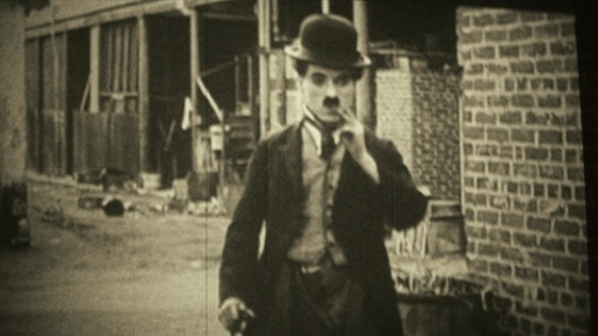
When the war ended, they were set free. When the Turks left Aleppo, people threw stones at them. But even after the war ended, the difficulties continued. As refugees, they had nowhere to go. At that time, a movie came to town. Projected on the wall was Chaplin's silent film "The Kid. This film is said to be the first to combine comedy and tragedy in the history of cinema. Chaplin's comical moves drew laughter from the crowd. And Nazareth was smiling before he knew it. Perhaps if her throat had not been cut, she would have laughed out loud.
In such a time of loss of family, friends, and hope for tomorrow, Chaplin brought a smile. It is a scene that reminds us of the greatness of Chaplin and the splendor of cinema.
Episodes and anecdotes from "The Missing Voice Calls Its Name
Fatih Akin, who challenged a historical taboo.
It was no easy task for director Fateh Akin, who has Turkish roots, to take up this subject, which still divides opinion more than 100 years later. In fact, he received threats for making this film, which has made it impossible for him to travel to Turkey casually.
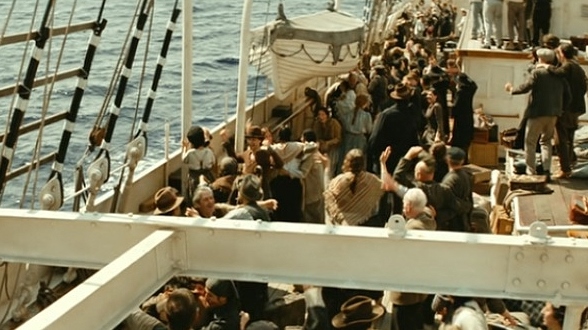
However, he is not denouncing Turkey in this film. What he wanted to depict was not genocide, but the story of a father's search for his daughters, a story of immigration and emigration. To find his daughters, the father walks through the desert and crosses the sea. A man who believes in God and tries to be good also becomes a perpetrator in order to meet his daughters. It is a film that looks at one such person.
The masters who reached out
Many masters of the film industry provided support for the production of this film. Martin Scorsese, who praised the story, offered advice on the overall vision of the film. Roman Polanski gave advice on how to film the epic story, and Atom Egoyan on how to portray the Armenians.
In addition, Mardik Martin, an Armenian who worked on Martin Scorsese's "Raging Bull" and other films, joined the film as a screenwriter and co-writer for the first time in 30 years. Alan Stalski, who won an Academy Award for Best Art Direction for "Schindler's List," is also the art director.
trailer (film, TV)

Tags
Contents
- Overview of "The Missing Voice Calls Its Name"
- The story behind "A Missing Voice Calls Its Name"
- Characters from "The Missing Voice Calls Its Name
- Nazaret Manugian (played by Tahar Rahim)
- Raquel (played by Hindi Zahra)
- Lucine (played by Lara Heller)
- Omar Nasreddin (played by Makram J. Houli)
- Hagop Nakasian (played by Kevork Malikan)
- historical background
- What is the Armenian Genocide?
- Still Divided Views and Controversy
- Famous quotes, lines, scenes and scenes from "The Missing Voice Calls Its Name
- Illusion of a wife to guide the protagonist
- Chaplin's The Kid
- Episodes and anecdotes from "The Missing Voice Calls Its Name
- Fatih Akin, who challenged a historical taboo.
- The masters who reached out
- trailer (film, TV)