
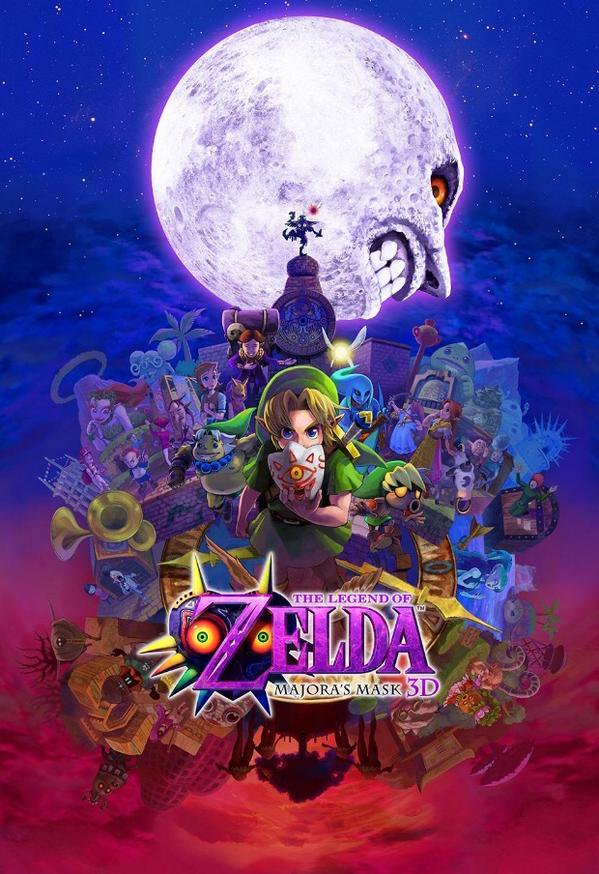
The Legend of Zelda: Majora's Mask" is a sequel to "The Legend of Zelda: Ocarina of Time" released by Nintendo for the Nintendo 64 in 2000, and follows the basic system of "Ocarina of Time" while incorporating unique elements such as the "three-day system" and the ability to transform into different races with a "mask. Link wanders into the other world of Tarmina, which is destined to be destroyed in three days, and uses Ocarina of Time to repeat the three days until its destruction in order to save Tarmina and track down the Mask of Mujra, the mask that will lead the world to destruction.
The Legend of Zelda: The Mask of Mujuru" Overview
The Legend of Zelda: Majora's Mask" is an action-adventure game released by Nintendo in 2000 for the Nintendo 64 (hereinafter "Rokuyon"). The game was an exclusive software that could only be played with the "Memory Expansion Pack," a peripheral device that expands the main memory of the Rokuyon, so a bundled version of this game with the Memory Expansion Pack was also released.
This title was included in the "Zelda Collection" for the GameCube, which was distributed in 2004 as a prize for Nintendo's "Club Nintendo" membership service, and was also distributed on the Virtual Console from 2009, and in 2015, a remake of the game, "The Legend of Zelda: Mujuru" for the Nintendo 3DS, was released. The Legend of Zelda: Majora's Mask 3D" for Nintendo 3DS was released in 2015.
The catchphrase for this title is "This time Zelda is scary. As the copy says, this title has a world doomed to destruction, many settings and effects that remind us of death, and eerie background music that stirs up a sense of uneasiness, all of which create an all-encompassing sense of fear, creating a worldview that is unique among the Legend of Zelda series.
It is a direct sequel to "The Legend of Zelda: Ocarina of Time" released in 1998, and the basic controls and systems are taken over from those of "Ocarina of Time. The basic controls and systems are inherited from "Ocarina of Time." Perhaps because the game is based on "Ocarina of Time," it is one of the most difficult games in the series, with challenging puzzles and few hints.
The story is a continuation of the "Ocarina of Time" story, so it can be played without problems even if you have not played "Ocarina of Time," but there are many elements in the presentation and characters that will make you grin if you are familiar with "Ocarina of Time.
The game also incorporates new systems, such as the ability to repeatedly time leap through three days and the ability to change appearance depending on the mask you wear.
Link continues his journey after his adventures in "Ocarina of Time," and in the forest he encounters a strange masked imp named Stalkid, who leads him to an alternate world called "Tarmina," which is destined to be destroyed when the moon falls four days later. Link learns that the "Mask of Mujra," the mask worn by Stalkid, is the cause of the destruction, and he uses the Ocarina of Time to repeat the three days leading up to the destruction, while adventuring through Tarmina in search of a way to stop the moon from crashing and to retrieve the Mask of Mujra.
The GameCube, Wii/WiiU, and 3DS versions of Zelda Collection differ in some respects, with the GameCube version of "Zelda Collection" having the buttons on the screen adapted to the GameCube controller, the menu display showing the number of heart pieces and masks obtained, and other minor display changes. The menu display shows the number of heart pieces and masks obtained, and other minor display changes have been made. Also, the game can now be saved on hold, which was not possible in the Rokuyon version.
There are no major changes to the game content, but the overall playing experience has been made more comfortable, such as the Zora Link barrier being able to be used at any time, the puzzle solving to stop the water wheel in the Great Bay Temple with an ice arrow being adjusted so that the wheel always stops horizontally, and the same movie being skippable the second time around and onward. The same movie can be skipped from the second time onward.
The Wii and WiiU Virtual Console versions have no noticeable changes from the Rokuyon and "Zelda Collection" versions, but some effects and flashing expressions have been toned down.
One subtle change is that Link no longer screams when he is bounced by Gort in the movie that enters before the boss battle in Snowhead's Temple.
One major change to the controls of the 3DS version of "Mujra's Mask 3D" is support for operation using the gyro-sensor of the Nintendo 3DS console, which allows the viewpoint to be adjusted by tilting the console.
In addition, items can now be used via the touch panel in addition to the buttons, greatly reducing the hassle of changing items each time.
The graphics have also been completely redesigned, making it easier to see the changes in facial expressions and other details that could not be expressed in the Rokuyon version.
The in-game time display has been changed from the analog clock of the Rokuyon version to a digital clock, which makes it easier to see the specific time, but this is controversial because the analog clock of the Rokuyon version was popular for its atmosphere.
As for the game content, there are no changes in the storyline, but significant changes and additions have been made to the structure of the dungeon, the placement of items, and the effects of some melodies.
For example, the effect of "Toki no Gyakusawa Uta" (Song of Time Reversed), which in the Rokuyon version "reduced the progression speed of in-game time by 1/3," has been adjusted to "reduce the progression speed of in-game time by 1/2" in the 3DS version.
The most significant change is in the strategy of dungeon bosses. In addition to changes in the behavior patterns of each boss, a weak spot, the "eyeball," has been added, and it is now impossible to defeat a boss without attacking it.
In particular, the boss Twin Mordo, which is fought in the temple of Rockville, has been changed so drastically that it is not an exaggeration to say that it is completely different from the Rokuyon version, making the procedure more complicated and the difficulty level soaring.
Other additions include the addition of the "Fishing Boli" from "Ocarina of Time" to Woodfall and Great Bay, allowing players to enjoy a fishing mini-game.
The Legend of Zelda: The Mask of Mujra
Meet the Starkids
After the battle in "Ocarina of Time," Link, the hero of time who saved the world, returns to his original time and sets out on his beloved horse, Epona, to find his friend (presumably the fairy Nabby, who is never mentioned in the film) whom he left at the end of his journey.
Along the way, in a misty forest, Epona is pranked by Stalkid, an ogre wearing a strange mask, and his fairy siblings Chat and Trail, and Link falls off his horse.
Fainting, Link is deprived by Stalkid of the Ocarina of Time, which was entrusted to him by Princess Zelda.
Link chases after Starkid, who has ridden away on Epona, but Starkid transforms him into a Deknut, a plant-like creature.
Link and his fairy friend, Chat, who has been separated from Stalkid, chase after Stalkid and end up in a clock tower in the town of Clocktown in the other world of Talmina.
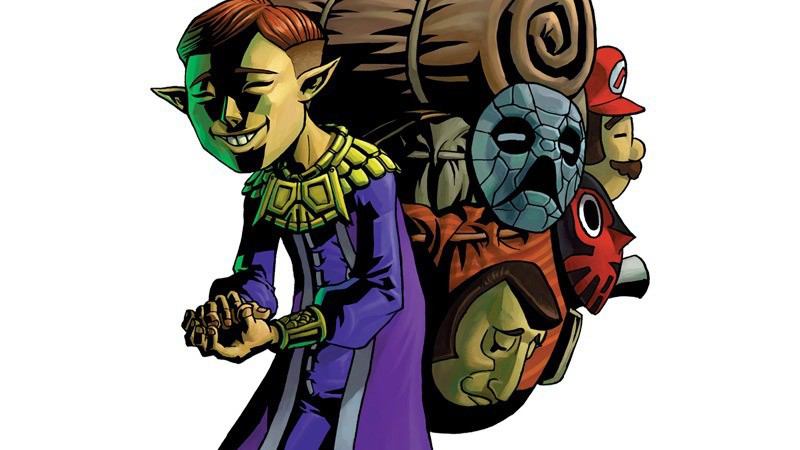
Inside the clock tower, Link meets a mysterious man who calls himself "The Mask Shop of Happiness," and is offered a deal.
The deal was that in exchange for instruction on how to return from his DeKnut form to his original form, he would get back the mask of Mujra that Starkid was wearing.
According to the mask maker, the Mask of Mujra contains a terrible power, and if it is not retrieved quickly, there will be "big trouble.
Link agrees to the deal and decides to first retrieve the Ocarina of Time, which the mask maker says he needs to return to his original form.
Three days repeating with the fall of the moon
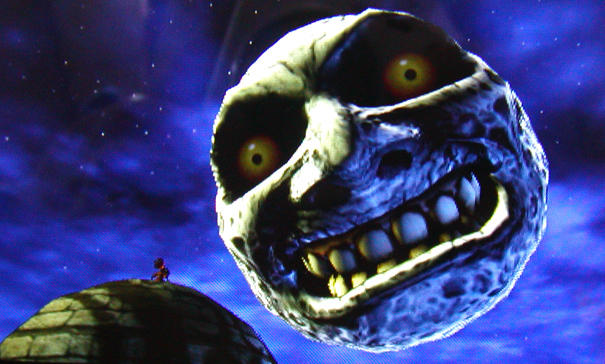
The falling moon.
In Clocktown, where Link has wandered into, preparations are underway for the "Carnival of the Ticks," a festival scheduled to take place in three days.
However, a huge humanoid moon floating in the sky above is getting closer and closer, and rumors are rife that it will fall if nothing is done.
Link, who had been searching for Starkid with Chat, confronts Starkid on the rooftop of the clock tower on the night of the Carnival of the Ticks.
Starkid was trying to destroy the world of Talmina by causing the moon to fall through the evil power of the Mask of Mujra.
However, Link, who had been transformed into Deknut, could not compete with Stalkid, who had gained powerful powers through the Mask of Mujra, and time was running out.
Trail, who was Chat's brother and had been working with Starkid, asked Link to bring four people from the swamp, mountain, sea, and valley to stop the moon from falling (these four people were the giants sealed in the four temples in the Talmina fairy tale).
When he did not understand what Trail was saying and the moon seemed to be falling, Link took advantage of Starkid's opening to retrieve the Ocarina of Time and played the "Song of Time" that Princess Zelda had taught him.
He then went back in time and returned to the clock tower three days before he made the deal with the mask maker.
Seeing that Link had successfully retrieved the Ocarina of Time, the masked man immediately taught him the "Song of Healing.
When Link played the song of healing, he returned to his human form, and the deknut came off his face as a mask.
The song of healing has the power to heal the soul and transform it into a mask.
Link, who had returned to human form, used the song of healing to create a mask that enabled him to use his special powers, and he used it to find the four people mentioned by Trail while manipulating time with the song of time in order to avoid the fall of the moon three days later.
Confrontation with the Mask of Mujra
Over the course of the three days leading up to the fall of the moon, Link adventured through the four regions of Tarmina, Woodfall in the swamps, Snowhead in the snowy mountains, Great Bay on the coast, and Ikana in the valleys, breaking the Starkid curse that plagued the inhabitants of each region and awakening the giants sealed by the Starkid. In the course of these adventures, Link was able to help the people of the valley.
What aided Link in his adventures were "masks" that, when worn, displayed mysterious powers.
In particular, the "Mask of Deknutz," which Link obtained when the curse of Deknutzification was lifted, the "Mask of Goron," which he obtained in accordance with the will of Darmani III, a hero of the Goron tribe with a body like a rock and tremendous strength, and the "Mask of Zora," which he obtained as proof of inheriting the soul of the musician Mikau, a Zora who lives by the water and swims freely underwater. The "Mask of Zora," which Link obtained as proof that he had inherited the soul of the musician Mikau of the Zora Tribe, who lived by the water and swam freely in the water, had the power to transform Link into each tribe by wearing it, and by borrowing the unique powers of each tribe, Link overcame many difficulties.
In Woodfall, he stopped the poison from flowing out of the temple and rescued the Deknut princess from captivity.
In Snow Head, he saved the Goron tribe from being attacked by a blizzard blowing from the temple and restored spring to the mountain village.
In Great Bay, they rescued the Zora tribe, who were suffering from rising sea temperatures, and restored voice to the Zora diva, who had lost her voice.
In Ikhana, he appeased the regret of the departed who had been awakened by a curse and put them to sleep again.
By awakening the four giants, Link obtains the melody "Oath of Command," which calls the giants to lend their strength at the time of the moon's fall.
And so time comes again to the third night, the night of the carnival. Just as on the first three nights, on the rooftop of the clock tower, Link confronts Starkid.
As Link played the "Oath of the Moon," which the giants had taught him on the rooftop of the clock tower, four giants appeared and supported the moon, stopping it from falling.
Just when it seemed that all was settled, Starkid's appearance changed drastically.
Starkid's mujra mask falls off, but the mask makes an eerie sound and begins to move of its own volition.
Starkid became like a puppet, and Mujra's mask spoke.
It was not that Starkid was trying to destroy the world with the power of the Mask of Mujra, but that the Mask of Mujra was trying to destroy the world by controlling Starkid.
Calling Starkid "mere trash," the Mujra mask was sucked into the moon.
The moon, having sucked in the Mujra mask, began to fall again.
The moon would not return to the sky unless the Mujra mask was destroyed.
Link plunged into the moon to stop the Mujra mask.
Inside the moon, Link faced Mujra's Mask and defeated it after a fierce battle.
Mujra's Mask, having exhausted its magical power, reverted to a mere mask and was safely taken over by the mask maker, completing the deal between Link and the mask maker.
In Clocktown, where the threat of the moon has passed, the Carnival of the Hour is held as planned, and Link enjoys the carnival. Then, Link returned to his original world, Hyrule, being thanked by the people who had helped him on his journey in Tarmina.
Once again in the misty forest, Link, astride Epona and guided by Chat, is confronted by Starkid, who apologizes to Link for his series of misdeeds, and the two reconcile with a promise to become friends. Chat decides to go with Stalkid and the trail, and he and Link part ways.
With Stalkid and the two fairies seeing him off, Link left the misty forest and returned to his quest to find his friends in Hyrule.
Game System of "The Legend of Zelda: Majora's Mask
3-day system
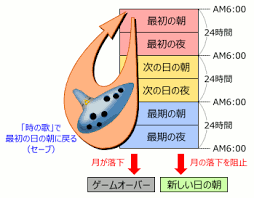
In this work, three days (72 hours later, on the morning of the fourth day) after the main character Link visits Clocktown in the other world of "Talmina," the moon will fall and "Talmina" will be destroyed.
The objective of the game is to conquer each dungeon, defeat the "Mask of Mujra," and prevent the fall of the moon within the very limited time of three days.
In the game, time is constantly passing at a different rate than in reality, except during conversations or when the menu screen is open, etc. Every 12 hours, time changes from "first morning, first night, next morning, next day, next night, last morning, last night," and as soon as the morning of the fourth day arrives, the world is destroyed and the game is over. The game is over, and the player must start over from the last saved state.
During this time limit, Link can use the "Ocarina of Time" to play the "Song of Time" to save the state of the game and return to the "First Morning.
The "three-day system" is the key to this work, in which the player repeatedly repeats the three days until destruction, adventuring throughout "Tarmina" and searching for a way to prevent the moon from falling.
However, the game saves only the items that have been captured, such as bows and hookshots, masks and masks once obtained, rupees deposited in the bank, pieces of hearts, maps, and the player's memory, and returns all other items and money to their initial state (zero).
Also, the contents of conversations with people, the progress of events, and tricks in the dungeon are all initialized.
In the Rokuyon version, the only time to save was when returning to the morning of the first day using the Song of Time, but in the 3DS version, returning to the first morning using the Song of Time does not save the game; instead, the game can be saved at the large winged statues at various locations. In addition, the international and "Zelda Collection" versions of the game allow for an interrupted save.
Masks and masks
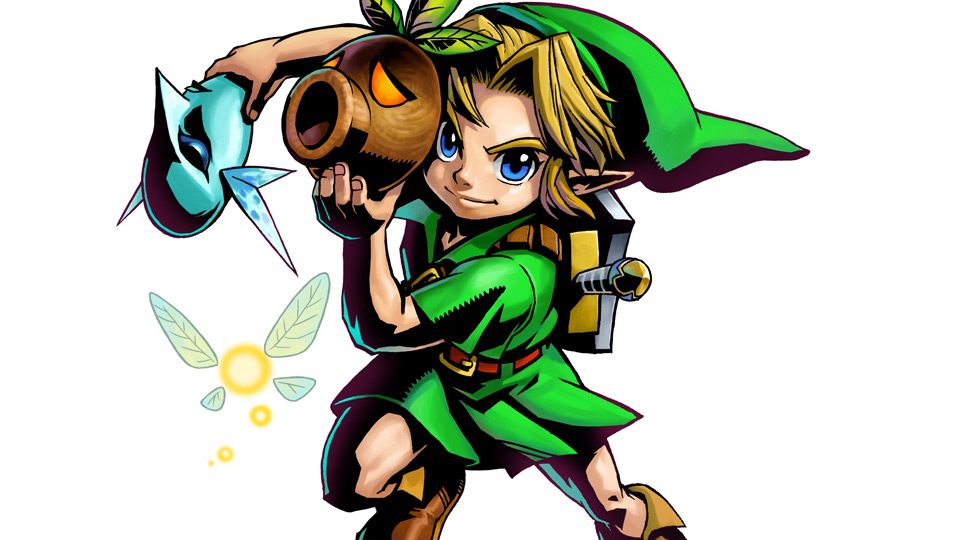
There are a total of 24 types of "masks" and "masks" in this work, which can be worn to obtain various effects. The difference between "masks" and "masks" is whether or not Link's appearance changes significantly.
When Link wears the "Mask," his appearance changes drastically and he transforms into a "DeKnut Link," "Goron Link," "Zora Link," or "Onigami Link," and he can perform unique actions for each of these races.
Masks, while not changing the Link's appearance, are indispensable items for various events, such as being able to talk to enemies, changing people's reactions, hearing special stories, moving faster, and becoming less noticeable to enemies.
Although it is possible to complete the game without completing all the masks, the last mask, the "Mask of the Demon Man," can be obtained by going to the moon, the last dungeon, with 23 masks collected, and accepting the demands of the children there.
The Onijin no Kamen (Mask of the Demon) can only be used in battle with the Mujra no Kamen (Mask of the Mujra), and when worn, the Onijin no Kamen can unleash powerful techniques.
Sub-events and Bombers' Group Handbook
As mentioned above, time is constantly passing in this work through the "three-day system.
In this context, the characters also take various actions on different days and times, which are arranged in the form of a vast number of sub-events, allowing Link to intervene in their lives and destinies.
The "Bombers' Group Notebook," which is obtained early in the game, records the action schedules of the people Link meets and assists him in managing the sub-events.
Bombers' Group Handbook
The Bombers is a secret society of justice formed by children living in Clocktown.
During the course of the story, Link joins the Bombers, and is given a membership notebook.
The Bombers' organizer automatically records the schedules of the people he meets in Tarmina for the next three days.
By solving the problems and difficulties of the people of Tarmina, you can obtain masks and items.
What is written in the notebook is the person's schedule, the progress of the conversation, whether or not the mask/item was obtained, and a certificate of completion.
Z Attention System
This is a feature that was also available in the previous "Ocarina of Time". It allows the player to focus attention (lock on) to people, objects, and enemies around Link, and automatically adjust the camera. In this work, the fairy "Chat" serves as the icon.

Related Articles
Summary of Link's successive voice actors and their works [The Legend of Zelda series].
Link, the main character in "The Legend of Zelda" series, is not the same person in many works, even though his name is the same. For this reason, the voice actor also differs from work to work, and many voice actors have voiced Link in the past. Here is a list of Link's voice actors and the works they have been in charge of.
Read Article
Summary of powerful enemies and boss characters in The Legend of Zelda series
In "The Legend of Zelda" series, in addition to the last boss such as Ganondorf, there are other powerful enemies and boss characters that you will fight during the story. Some of them have a distinctive appearance and some have nasty attacks, making them memorable even if they are mid-boss class enemies. Here is a list of powerful enemies and boss characters from "The Legend of Zelda" series.
Read Article
Maniac: The Legend of Zelda Backstory, Urban Legends, and Trivia Summary
The Legend of Zelda" is a very popular Nintendo series that began in 1986. In this article, we will introduce a wide range of backstories, urban legends, trivia, trivia, and miscellaneous information about the game. You will definitely enjoy the game more if you know these trivia. Some of the stories are a bit horrifying, so please be careful.
Read Article
The Legend of Zelda: Ocarina of Time (Tokioka) Spoilers and Discussion Summary
The Legend of Zelda: Ocarina of Time" is an action-adventure game released in 1998 for the Nintendo 64. It was the first 3D title in the series, and is still extremely popular in Japan and abroad today due to its high degree of perfection, including a worldview with depth, three-dimensional puzzle solving, and an epic story. Set in Hyrule, a land said to be inhabited by the descendants of the gods, the main character Link embarks on an adventure spanning two eras (child and adult) and battles the demon king Ganondorf, who plans to take the legendary treasure Triforce and rule the world.
Read Article
The Legend of Zelda: The Wind Tact (Kaze Taku) Spoiler Commentary and Discussion
The Legend of Zelda: The Wind Waker" is an action-adventure game released by Nintendo for the GC in 2002. While the action and puzzle-solving elements were in line with previous 3D Zelda games, the atmosphere was completely redesigned with the use of anime-style graphics. The setting is not the continent of Hyrule, but a world of wind and sea, with a great ocean and islands. Link sets off on an ocean adventure to save his sister, who has been kidnapped by demons, but he soon learns the secrets of the world and becomes embroiled in a fateful battle between Hyrule and Ganondorf.
Read Article
The Legend of Zelda 1 (first) spoiler commentary and discussion.
The Legend of Zelda" is an action-adventure game released by Nintendo in 1986 for the Family Computer Disk System. Although it was the first in the series, it completed the foundation of the puzzle-solving elements that have been carried over to later titles in the series, such as pushing objects and destroying walls with bombs. In order to recover the Triforce of Power and Princess Zelda from the clutches of the evil Daimon Ganon, the main character Link sets out on an adventure to complete the Triforce of Wisdom by obtaining pieces of the Triforce of Wisdom from the eight labyrinths scattered throughout the vast Hyrule.
Read Article
The Legend of Zelda: The Triforce of the Gods (Kamitora) Spoiler Commentary and Discussion
The Legend of Zelda: The Triforce of the Gods" is an action-adventure game released by Nintendo for the Super Nintendo Entertainment System in 1991. This third title in the series follows the gameplay of "The Legend of Zelda," but with more items and Link's actions, and a greater variety of puzzles to solve. In addition, the series' classic legendary sword, the "Master Sword," makes its first appearance in this title. Link's adventure through the world of light and darkness begins as he attempts to defeat the Great Demon King Ganon, who plans to rule the world, and save Princess Zelda.
Read Article
The Legend of Zelda: Breath of the Wild (Brewwire) Spoiler Commentary and Discussion
Action adventure game for Wii U/Nintendo Switch released by Nintendo in 2017. The game features an open world, which makes it a game where you choose and search for new things by yourself, rather than a one-step strategy. The game also incorporates new elements from "The Legend of Zelda," such as the breakage of weapons and armor, and the goal is to explore and save the unprecedented world of Hyrule with Link.
Read Article
The Legend of Zelda: Fushigi no Boshi (game) spoiler commentary and discussion.
The Legend of Zelda: Fushigi no Boshi" is an action-adventure game released by Nintendo for the GBA in 2004. Using the "Mystery Hat," a magical hat that reduces Link's body to the size of a dwarf, he travels between the normal world and the dwarf world to solve riddles. The game includes many elements not found in other games in the series, such as the "piece-matching" and the mole glove. In order to save Princess Zelda, who has been turned to stone by the curse of the resurrected Gufu, Link and his talking hat, Ezero, set out on a journey to obtain the legendary Piccol sword and defeat Gufu.
Read Article
The Legend of Zelda: Tears of the Kingdom (Tiaquin) Spoilers and Discussion Summary
The Legend of Zelda: Tears of the Kingdom" is an RPG for Nintendo Switch that challenges players to explore mysterious islands in the sky in search of a way to save the world from the threat of doom, and is a sequel to the internationally acclaimed masterpiece open world RPG "The Legend of Zelda: Breath of the Wild". Link awakens from a 100-year sleep, defeats the Demon King Ganon, and rescues Princess Zelda. However, Ganon has not been completely destroyed, and a new threat looms over the world. In search of a way to save the world, Link takes on the challenge of exploring islands in the sky that have never been explored by mankind.
Read Article
Spoiler commentary and discussion of Link's adventures (game)
Link's Adventure" is an action-adventure game released by Nintendo in 1987 for the Family Computer Disk System. This second title in the series differs from the other titles in the series in that it is an RPG with a very strong side-scrolling action perspective. Several years after Link's victory over Ganon in the previous installment, "The Legend of Zelda," Link once again sets out on an adventure with sword and shield in hand to challenge the trials of the Triforce in order to revive the Triforce of Courage and save the first Princess Zelda and Hyrule in a devastated Hyrule where Ganon's influence still remains.
Read Article
The Legend of Zelda: Twilight Princess (Twapri) Spoiler Commentary and Discussion
An action-adventure game released by Nintendo for the Wii and Nintendo GameCube, it is part of The Legend of Zelda series. It is abbreviated as "Twapuri. Set in a world called Hyrule, the story is about Link, the main character, who meets many people and, with their help, faces difficulties, rescues Princess Zelda, and protects the world from a huge evil.
Read Article
The Legend of Zelda: The Island of Dreams (Dream Island) Spoilers and Discussion Summary
The Legend of Zelda: Yumemiru Island" is an action-adventure game for the Game Boy that was released in 1999 as the fourth installment in Nintendo's "The Legend of Zelda" series. It is a sequel to "The Legend of Zelda: The Triforce of the Gods". The main character, Link, is on his way back to the Kingdom of Hyrule when he gets caught in a storm and drifts ashore on the mysterious island of Koholint, which is rich in nature. It was the first game to feature a heroine other than Zelda, and characters from other Nintendo titles made guest appearances. The game was awarded the Gold Hall of Fame in the cross review of the game magazine "Famicom News".
Read Article
The Legend of Zelda: The Four Swords (4 Swords) Spoilers and Discussion Summary
The Legend of Zelda: Four Swords is an action-adventure game that was released by Nintendo for the GBA in 2003 and includes The Legend of Zelda: The Four Swords. Players can cooperate with each other to attack four stages. Players work together to conquer four stages and compete for the total amount of rupees collected in each stage. Link is divided into four players and sets off on an adventure with the legendary sword Four Swords to save Princess Zelda, who has been kidnapped by the resurrected Wind Witch Gufu.
Read Article
The Legend of Zelda: The Four Swords+ (4 Swords+) Spoilers and Discussion Summary
The Legend of Zelda: The Four Swords+" is an action-adventure game for the GameCube (GC), released by Nintendo on March 18, 2004. The game can be played by up to four players by connecting a Game Boy Advance to the GameCube using a special adapter. In addition to "Hyrule Adventure," the sequel story to "The Legend of Zelda: The Four Swords," the game includes two competitive games, "Shadow Battle" and "Navi Trackers," allowing players to enjoy three different types of games.
Read Article
The Legend of Zelda: Triforce of the Gods 2 (Kamitora 2) Spoilers and Discussion
Released by Nintendo in 2013 for the Nintendo 3DS, The Legend of Zelda is part of the Legend of Zelda series. The world is set far in the future from "The Legend of Zelda: The Triforce of the Gods," which was released on the Super Nintendo Entertainment System in 1991. Link sets out on an adventure to save Princess Zelda and the Seven Sages, who have been turned into paintings by Yuga, a priest of Loral. Newly added to the system in this title is the ability to turn into a mural, which allows the main character Link to enter walls.
Read Article
The Legend of Zelda: The Hourglass of Dreams (Dream Sand) Spoiler Commentary and Discussion Summary
The Legend of Zelda" was released by Nintendo for the Nintendo DS in 2007 as part of the "The Legend of Zelda" series. The story takes place a few months after "The Legend of Zelda: The Wind Waker," in which the main character Link embarks on an adventure to save Tetra (Zelda), who has been kidnapped by a ghost ship. In terms of the system, the Nintendo DS touch screen and microphone functions are utilized to solve puzzles scattered throughout the dungeons.
Read Article
The Legend of Zelda: Skyward Sword (Skyward Sword) Spoiler Commentary and Discussion
The Legend of Zelda: Skyward Sword (Skyward Sword) is an action-adventure game released by Nintendo in 2011 for the Wii and later for the Wii U as a downloadable game in 2016. It is positioned as the story of the beginning of "The Legend of Zelda" and tells the story of how the series' common elements, such as the Master Sword and the Triforce, were created and why "Zelda" was later passed down as a legend, all while controlling the main character Link.
Read Article
Zelda Warriors: Apocalypse of Evil (game) spoiler commentary and discussion.
Zelda Warriors: Apocalypse of Evil" is an action game developed by Koei Tecmo Games and released in 2020, and is a collaboration between "The Legend of Zelda" and the "Warriors" series. The game is based on the "Great Disaster" that occurred 100 years before "The Legend of Zelda: Breath of the Wild," and allows players to enjoy the exhilarating action that only the "Warriors" series can provide. The ability to control not only Link, but also other familiar characters from "The Legend of Zelda: Breath of the Wild" is one of the charms of this game.
Read Article
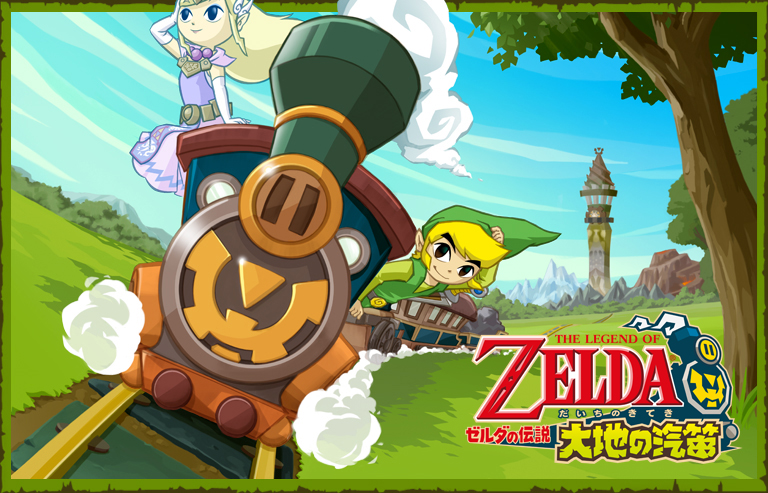
The Legend of Zelda: The Whistle of the Earth (game) spoiler commentary and discussion
The Legend of Zelda: The Whistle of the Land is an action-adventure game released by Nintendo in 2009 exclusively for the Nintendo DS. It is also abbreviated as "steam whistle". The game is characterized by the use of the touch panel and microphone on the Nintendo DS to move and take action. Princess Zelda of the Kingdom of Hyrule is transformed into only her soul by the kingdom's minister, Kimaroki, in order to resurrect the Demon King. Link sets off on an adventure to restore Princess Zelda's body and peace to the kingdom.
Read Article
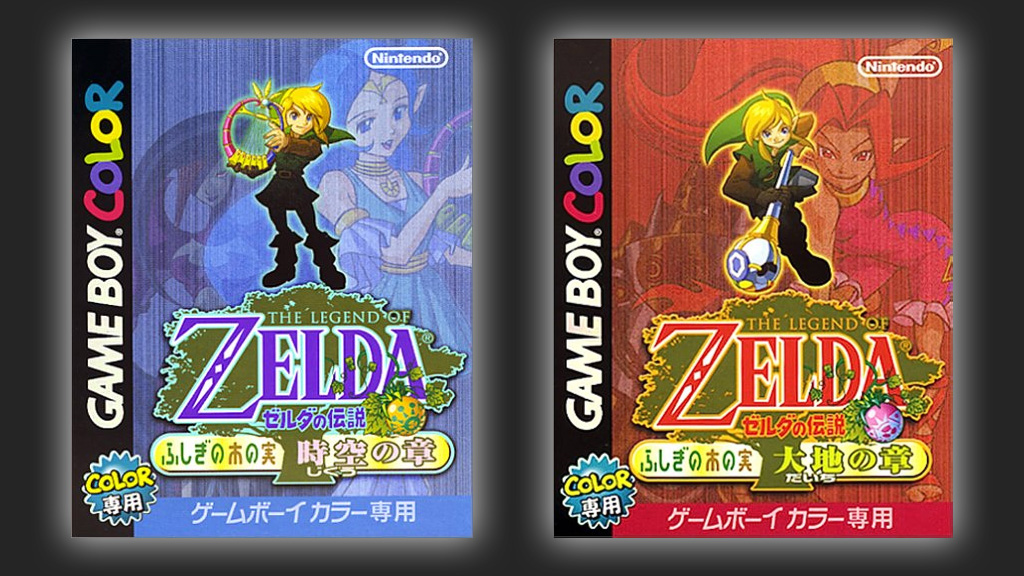
The Legend of Zelda: Fushigi no Ki no Nuts (game) spoiler commentary and discussion.
The Legend of Zelda: Fushigi no Ki no Nuts" is an action-adventure game for the Game Boy Color released by Nintendo in 2001. Two titles, "Chapter of the Earth" and "Chapter of Time and Space," were released at the same time, with the same system and some characters, but with completely different stories and maps. The game begins in the land of Horodrum in "Chapters of Earth" and in the land of Lovrenne in "Chapters of Time and Space", where the player is given trials by the "Triforce" at Hyrule Castle in the Kingdom of Hyrule.
Read Article
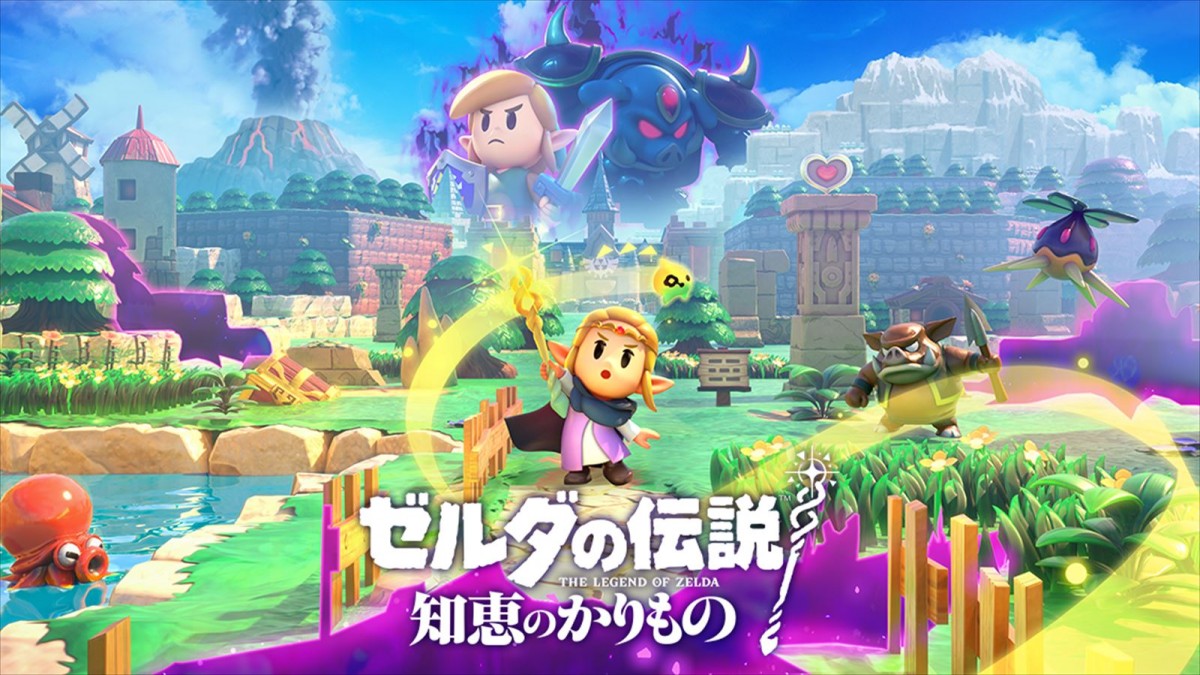
ゼルダの伝説 知恵のかりもの(ちえかり)のネタバレ解説・考察まとめ
『ゼルダの伝説 知恵のかりもの』とは、王国の姫・ゼルダが冒険をする2024年9月発売のNintendo Switch用アクションアドベンチャーRPGである。魔王ガノンにさらわれたゼルダはリンクに助けられるが、リンクは裂け目に飲み込まれてしまう。剣を持たないゼルダは町やフィールドにある物体を「借り」、ハイラルを冒険することになる。謎解き・戦闘の自由度が高く何度でも遊べるリプレイ性がある作品である。
Read Article
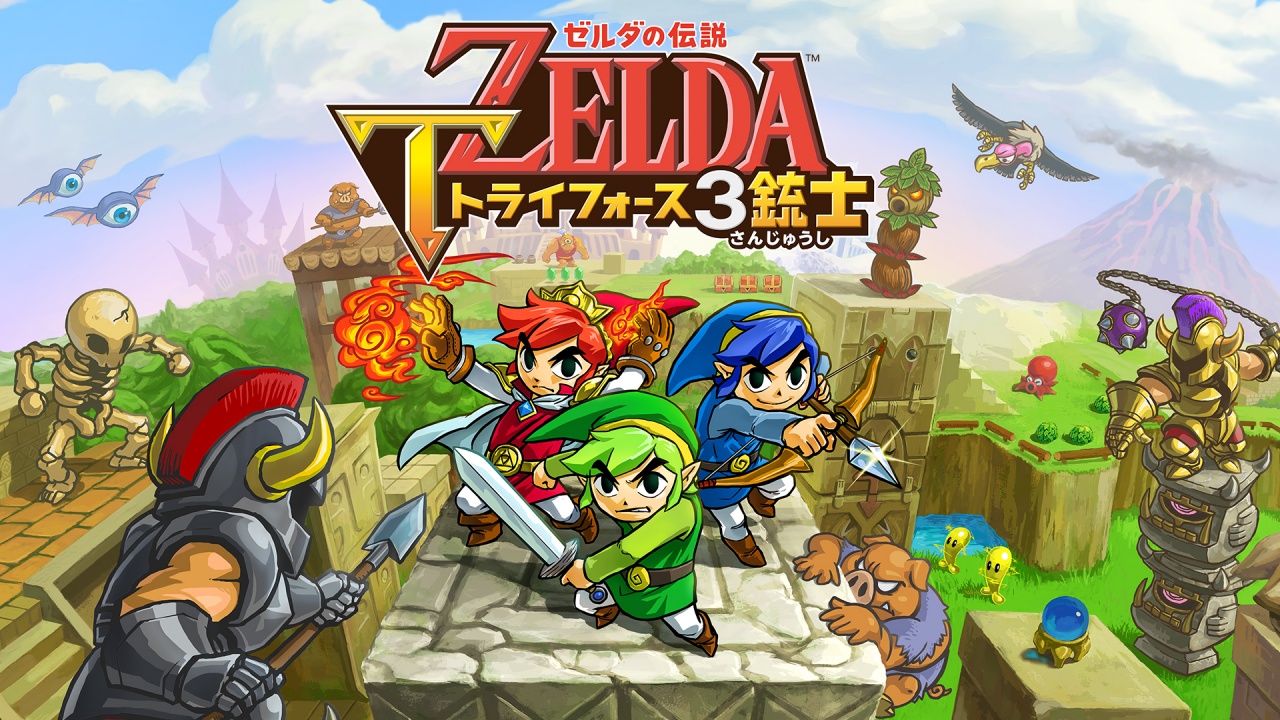
The Legend of Zelda: The Three Musketeers of the Triforce (Tora-san and Tora-3) Spoilers and Discussion
The Legend of Zelda: Tri Force 3 Musketeers is an action-adventure game released by Nintendo in 2015 exclusively for the Nintendo 3DS. It is abbreviated as "Tora-san" and "Tora 3". The game is a multiplayer-specific game, in which three players cooperate with each other. A princess in a fashion-loving country is cursed by a witch to wear tights that she cannot take off. In order to break the curse, the king recruits a "legendary hero" who is rumored to be able to defeat the witch.
Read Article
The Legend of Zelda: Majora's Mask
The Legend of Zelda: Majora's Mask" was recently remade on the 3DS. The setting is so finely crafted that you wouldn't notice it if you played it normally. I will introduce it in this summary.
Read Article
Summary of the five major bosses in The Legend of Zelda: The Mask of Mujra
The Legend of Zelda: Majora's Mask" was released on the Nintendo 64 and later remade on the Nintendo 3DS. Summary of the five bosses that appear in the film.
Read Article
History in Hyrule. The Amazing Currents of The Legend of Zelda - Victory Edition
How will history proceed after Link's victory in Ocarina of Time? In this article, we will summarize the history of Hyrule if peace in Hyrule prevails.
Read Article
The Legend of Zelda: Mujra's Mask Useful tips, tricks, and bugs
The Legend of Zelda: Majora's Mask" assumes that the player has already played the previous title, and is one of the more difficult games in the "Legend of Zelda" series. However, there are some points where the game can be conquered easily by using some tricks and knowing some small tricks and bugs. Here we have compiled a list of such tricks, tricks, and bugs.
Read Article
The NPCs are alive! The Legend of Zelda: The Mask of Mujra's well-crafted NPCs
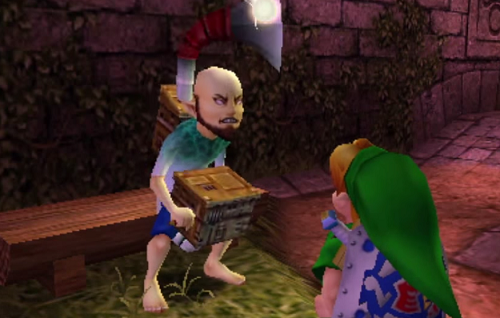
The concept of "The Legend of Zelda: Majora's Mask" is to repeat three days over and over again, and you will see the same scenery and NPC behavior over and over again. For this reason, the NPCs' actions are very well designed so that the player does not get bored.
Read Article
The Legend of Zelda: The Mask of Mujra summarizes the charms of Mujra's Mask [spoiler alert].
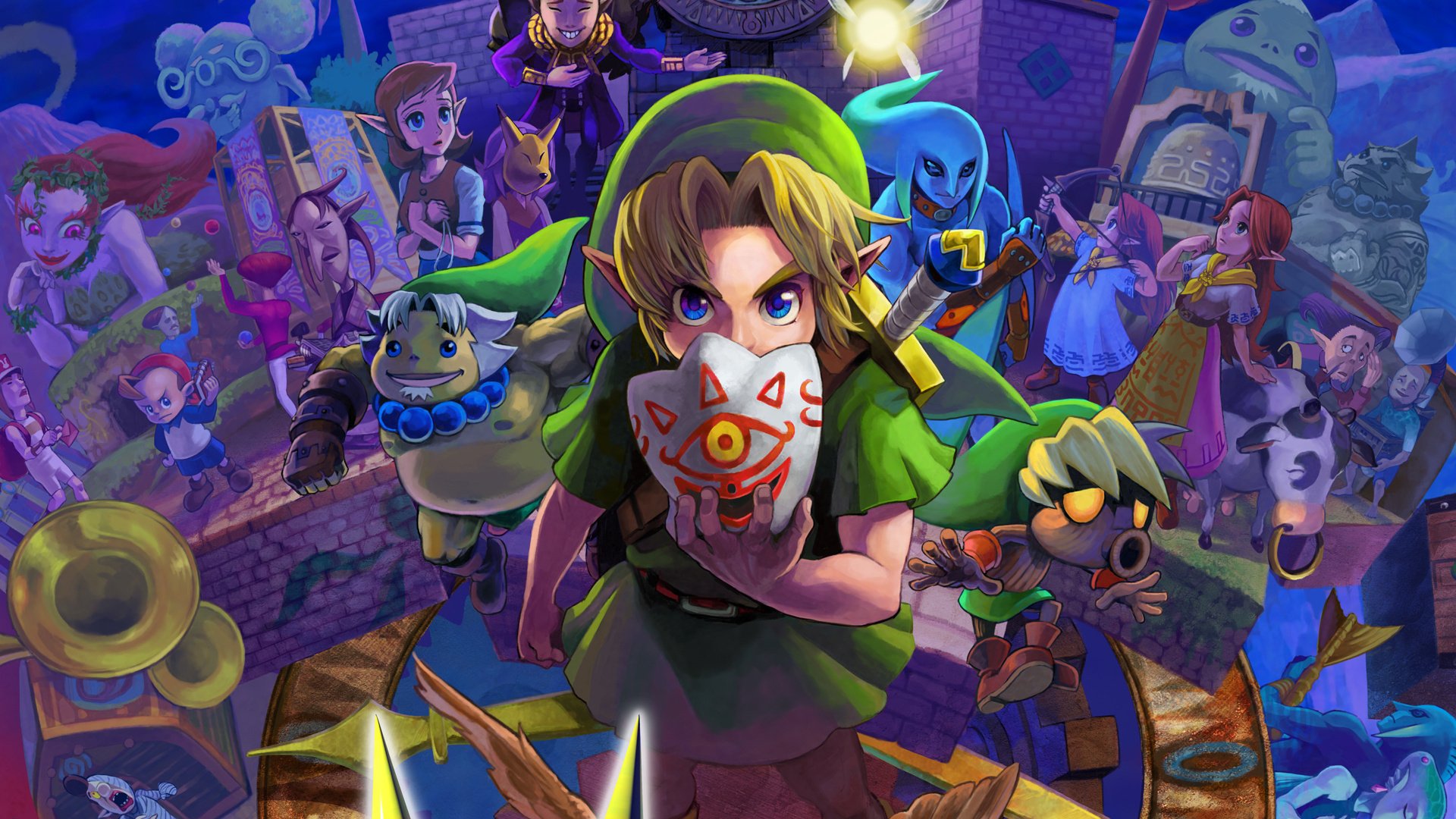
The Legend of Zelda: Majora's Mask" is a sequel to "The Legend of Zelda: Ocarina of Time," and is known as a challenging game because it assumes players have played the previous title. On the other hand, the story and characters are very appealing, and the game has a very high degree of perfection. Here we summarize the charms of "The Legend of Zelda: Majora's Mask.
Read Article
The Legend of Zelda's semi-hero (?) The Trail of the Chinkuru
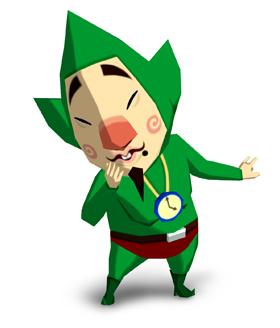
Cinkle first appeared in "The Mask of Mujra" and later played the leading role in the film. This section introduces the trajectory of Cinkle's rise from a minor role to the main character.
Read Article
Summary of characters and characters from The Legend of Zelda series
In "The Legend of Zelda" series, there are many characters other than Link, the main character, and Zelda, the heroine and namesake of the series. Here is a summary of the characters and their appearances. Although many years have passed between works in this series and there is no direct connection between them, it is well known that characters with the same appearance and name often appear in multiple works.
Read Article
History in Hyrule. The Amazing Currents of The Legend of Zelda - Defeat.
The history of Hyrule, where time has branched out. In this article, I will summarize the history of one of them, the history of the defeat of the hero of time. What kind of world did it become after Link was defeated? ......
Read Article
History in Hyrule. The Amazing Currents of The Legend of Zelda - A Positive History
The Legend of Zelda has had several series, each with a different setting. But those series were properly connected! This section examines the history of Hyrule from the birth of the Master Sword.
Read Article
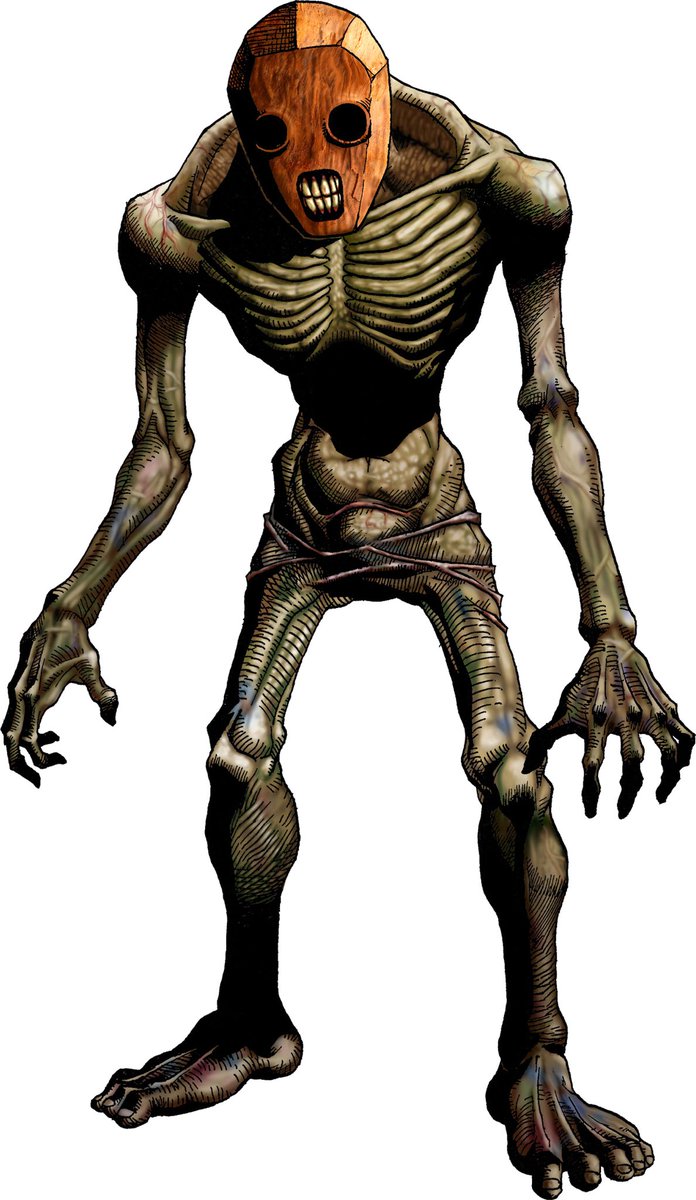
In-depth summary of Ledet (Legend of Zelda)! A traumatizing enemy! Ocarina of Time, Tact of the Wind
Leadet is an enemy character that first appears in "The Legend of Zelda: Ocarina of Time. The character was a traumatic experience for many players because of his horrific zombie-like appearance, the fact that he would cling to you and suck your blood if you approached him, and the fact that you were forced to get close to him because no remote attacks such as bows and arrows or backhanders would work.
Read Article
A compilation of super high quality cosplay images from overseas! Beautiful elves, The Legend of Zelda, and much more!
Here we have compiled a collection of high quality cosplay images from overseas. They include beautiful elves, characters from the popular game series "The Legend of Zelda," and cosplay from popular anime such as "Puella Magi Madoka Magica.
Read Article
Summary of Swordsman characters in the game
Swords are indispensable weapons in RPGs and action RPGs. From the legendary holy swords that only the brave can pull off to the dynamic fighting styles that cut monsters in two, swords are an important element that makes a big impact in games. Here is a list of characters who use swords to fight monsters.
Read Article
Contents
- The Legend of Zelda: The Mask of Mujuru" Overview
- The Legend of Zelda: The Mask of Mujra
- Meet the Starkids
- Three days repeating with the fall of the moon
- Confrontation with the Mask of Mujra
- Game System of "The Legend of Zelda: Majora's Mask
- 3-day system
- Masks and masks
- Sub-events and Bombers' Group Handbook
- Bombers' Group Handbook
- Z Attention System
- Other
- Characters from "The Legend of Zelda: Majora's Mask
- key people
- Link
- Princess Zelda
- Skull Kid
- Chat (Tatl)
- Trail (Tael)
- Epona
- Majora's Mask
- Happy Mask Salesman
- Four Guardians
- People and characters associated with Clocktown and the Tarmina Plain
- Bombers
- Anju
- Kafei
- Dotour
- Aroma
- Mutoh
- Viscen
- Toto
- Gorman
- Rosa Sisters
- Guru-Guru
- Man from Curiosity Shop
- Postman
- Professor Shikashi
- Scarecrow
- Kamaro
- People and Characters Related to Milk Road
- Romani
- Crimea
- nadekuro acid
- Gorman Brothers
- People and Characters Related to Woodfall
- Deku King
- Deku Princess
- Deku Butler
- Kaepora Gaebora
- People and Characters Related to Snowhead
- Darmani III
- Goron Elder
- Goron Elder's Son
- Zubora/Gabora
- People and Characters Related to Great Bay
- Dal Blue (The Indigo-Go's)
- Mikau
- Lulu
- Japas
- Evan
- Dijo (Tijo)
- Aveil
- People and Characters Related to Ikhana
- King Igos du Ikana
- Skull Keeta
- Sharp & Flat
- Shiro
- Sakon
- Pamela
- Pamela's Father
- Field and dungeon enemies
- tutu (esp. a small animal)
- decubber
- stultura
- grand starchula
- Stalwall.
- Golden Stultura
- octalock
- diocta
- keith
- blue bubble
- Red Bubble
- Ulfoss / White Ulfoss
- guea (Acca sellowiana)
- dragonfly
- hip loop
- okoli-nut
- giant bee
- snapper
- dodongo (Leopardus clavatus)
- tektite
- ENO
- like
- Korean dish of pickled skipjack tuna entrails sometimes mixed with vegetables and meat or fish
- despreco
- shell blade
- deep python
- Dixie Hand
- A real bomb chew.
- screwdriver
- Stalbaby
- Pau
- gibbet (instrument)
- lied lied (German character for marriage, e.g. leading to death)
- galo
- fall master
- floor master
- B-MOS
- AMOS
- Death Amos
- iGOL
- tackley
- Enemies appearing as mid-bosses
- Dynafoss
- Chinese peacock (species of swallowtail butterfly, Papilio bianor)
- with-lobe
- pirate swordsman
- wort
- mud jelly
- Meg/Jeo/Beth/Amy
- iron knuckles
- big pow
- King Ikhana
- boss gallo
- Gomez.
- Enemies appearing as bosses
- Odoruwa, Jungle Masked Warrior
- Masked Mechanical Beast Goat
- Giant masked fish
- Large masked insect twin mordo
- Mask of Mujra
- Other
- Great Fairy
- Tingle
- Items from The Legend of Zelda: Majora's Mask
- equipment item
- Kokiri no Ken
- feathersword
- Diamond Sword
- Shield of the Brave
- Mirror Shield
- Item to be set on the C button
- Deku fruit
- Deku stick
- Bow of the Brave
- flaming arrow
- ice arrow
- arrow of light
- hook shot
- alcohol with liquor added (esp. wine-based shochu highball, also beer with whiskey)
- bomb
- Sebastian bakudan (species of flowering plant, Lactarius volemus)
- Ocarina of Time
- magic bean
- empty bottle
- Red Drugs/ Green Drugs/ Blue Drugs
- milk
- Chateau Romani
- perfectly honest spectacles
- picture frame (with stand)
- Sword of the Great Fairy
- Masks and masks
- Mask of Deknut
- Mask of Goron
- Mask of Zola
- Mask of the Giants
- mask of a devil
- post hat
- Late Night Masks
- Bakuretsu masks
- Ishikoro masks
- Keytan masks
- Bray surface
- kerchief worn by rabbits, hares and pikas
- Gero's mask
- Boo's mask
- Romani masks
- mask of the chairman
- Kafei masks
- mask of a devil
- Camaro masks
- Mask of Gibdo
- Garo mask
- Captain's Bowshee.
- look of triumph
- Great Fairy Masks
- Other Items
- map
- compass
- Small key / Key to boss's room
- stray fairy
- gold dust
- Odoruwa's corpse / Goth's corpse / Guyog's corpse / Twinmold's corpse
- paper tickets for hanging kimono, hanging scrolls, etc.
- Power given by the Great Fairy
- charm
- magical power
- criss-cross slash
- increased or beefed up defenses
- Sword of the Great Fairy
- Ocarina Melody
- Song of Time
- Inverted Song of Time
- Song of Double Time
- Epona's Song
- Song of Healing
- Song of Soaring
- Song of Storms
- Scarecrow's Song
- Sonata of Awakening
- Half a Lullabye (Lullabye Intro)
- Goron Lullabye
- New Wave Bossa Nova
- Elegy of Emptiness
- Oath to Order
- Terms for The Legend of Zelda: Majora's Mask
- dungeon
- Woodfall Temple
- Snowhead Temple
- Great Bay Temple
- Rockville Temple (Stone Tower Temple)
- world view
- Clocktown
- Romany Ranch
- Woodfall.
- snowhead
- Great Bay
- ikana
- Carnival of the Hours
- the big four (i.e. four leaders in a given field)
- the four realms (Deva realm, Asura realm, Human realm, Animal realm)
- The Legend of Zelda: The Mask of Mujuru: Backstory, Trivia, Minor Stories/Episodes, Anecdotes