

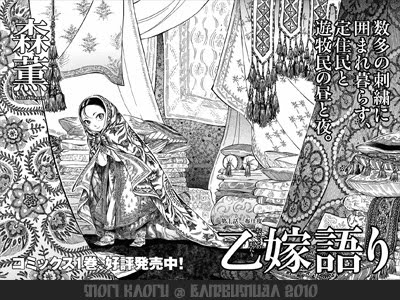
Ototo Yome Gatari" is a manga series written by Kaoru Mori and serialized in "fellows! (fellows!) from October 2008. It is the second full-length manga by Kaoru Mori, and is set in Central Asia and the Caspian Sea region in the late 19th century. This is the second full-length manga by the author, and is set in Central Asia in the late 19th century, around the Caspian Sea, and tells the story of the people that Henry Smith, a traveler from England, meets. The story progresses with each of the following wives: the first "Amir," the second "Taras," the third "Laila and Leili," the fourth "Anis," and the fifth "Pariah," all of whom are considered to be "beautiful ladies," an archaic term.
A girl who lives in the neighborhood of the Eyhon family.
Her family consists of only her father and mother. She is Amir's first friend in the area.
She has a strong sense of justice and is very outspoken. She is also a shy person, and sometimes responds to people she is interested in in an indifferent manner.
She can bake beautifully crafted bread and is not clumsy with her hands, but she is not good at embroidery because she gets frustrated and cannot get it right. She seems to be better suited to physical activities than to embroidery.
She has long hair and wears fashionable embroidered clothes, but it seems that most of her work is done with the help of others.
'umar (Ainu oral saga)
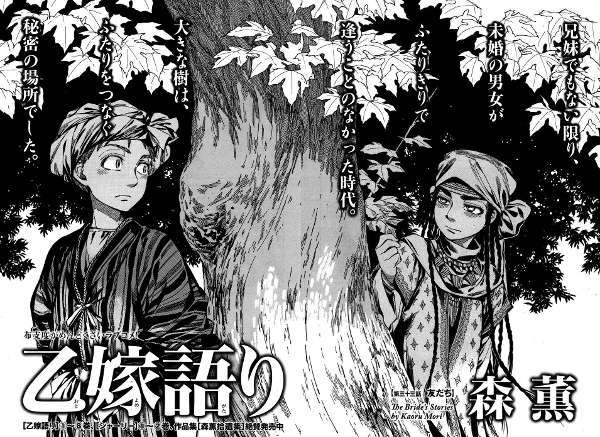
Umar is on the left. On the right is Pariya. Two impatient people.
Pariya's marriage proposal.
She was bereaved of her ailing mother before she can remember. After that, she lived alone with her father, who used to run a merchant's inn.
Because of this, he thinks it is better for a woman to be healthy, and he has been interested in Pariya from the very beginning.
She is able to use an abacus and is taking Pariya to business meetings to get materials to rebuild the collapsed town.
In the future, she would like to run a merchant's inn with a water mill.
Common characters
Henry Smith
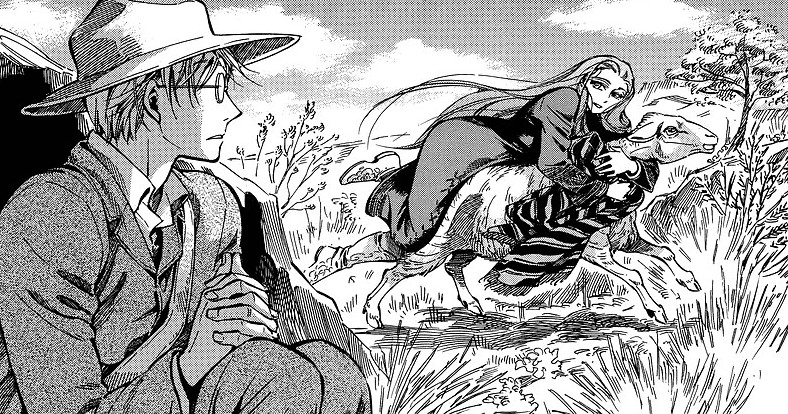
Smith is in the front. In the back is Talas.
He is the protagonist of this story, and plays the role of a rhapsodist in the unfolding story of the Ototo wives he encounters on his travels.
He is from England and is English. He has blond hair and wears glasses.
He has a soft-spoken and good-natured personality, but his quick wit sometimes saves Amir and his friends from danger.
Her family is quite wealthy, giving her a gold pocket watch with a coat of arms as a gift in lieu of a betrothal present and having a maid at home exclusively to babysit her children. Since his brother is the eldest son, he will not take over the family business, and he says that he is allowed to do what he likes. He is interested in foreign customs and culture and keeps a notebook of notes about the people he meets as he continues his travels.
He falls in love with and becomes engaged to his second wife, Taras, but is separated from her due to local customs and their unique parent-child relationship.
ant
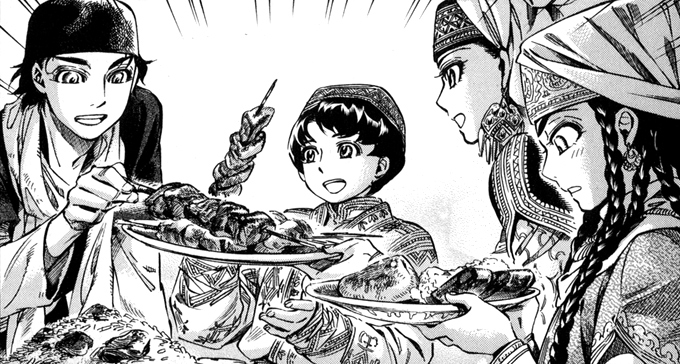
Leftmost is Ali. Next to them from right to left are Karkuk, Amir, and Pariya.
He is Smith's interpreter and guide to Ankara.
He is well-spoken and worldly.
She takes on the role of Smith's guide in order to save money for their wedding. However, she has no one to marry. He is not particular about who he marries, and his attitude is optimistic, saying, "I don't care who it is. At first, he is not acquainted with Smith, and Smith gets into an argument with him looking for Ali.
He is often taken aback by the good-natured Smith.
Terms in "Ototo Yome Narrative
marriage
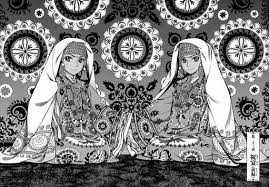
Laila and Leili as brides
The average life expectancy of people in this period was about 50 years, and the marriageable age was about 15 to 16 years. Amir got married at the age of 20, which is a considerable delay.
Nomadic tribes in particular call on other tribes to help them find a suitable partner and marry at an early age. This is because they cannot have many children if they get married too late.
In addition to the betrothal money, the male members of the family would take goats, oxen, horses, and sometimes a band to the home of the bride-to-be, with the entire family and relatives in attendance. The amount of money spent was enormous, and it was a huge expense just to get one person married.
On the other hand, the female family members would make preparations to welcome the bride. They would prepare a large quantity of food for the guests who came to celebrate the marriage.
child
It is considered good for a woman to have many siblings and to give birth to many children.
In a world not as advanced as today's medicine, the mortality rate of babies born was quite high, and the mothers were fully armed with lots of embroidery and amulets to make sure that the babies grew up healthy.
preparation of cloth
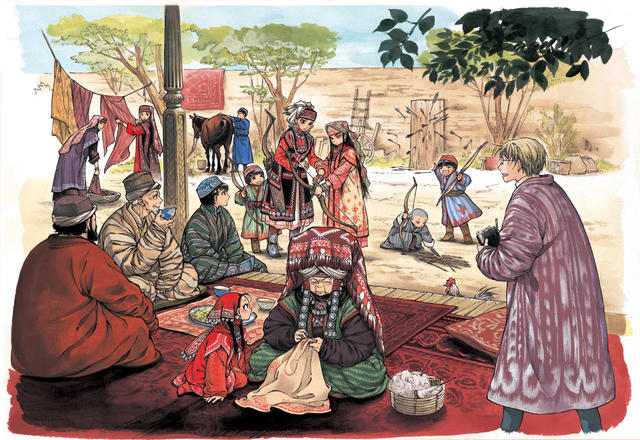
Embroidered cloth and Tilleke, Karkuk's niece
Women begin to prepare cloth before the marriageable age.
Cloth preparation is the process of not only making but also embroidering the everyday items to be brought to the marriage ceremony. The mothers teach their daughters how to do this so that their daughters will not be embarrassed when they go to their destination.
There are about 100 types of embroideries, ranging from small ones such as a comb-over to large ones such as sheets. The most gorgeous and gorgeous item is the bridal gown that the bride wears. This is so that the neighbors can tell if you have a good bride or not.
Embroidery also has the meaning of a talisman, and is sometimes embroidered to ward off evil for the sake of the bride's unborn child.
Women's Work
The Amir were semi-nomadic people, so they could ride horses and use bows, while Laila and Leili were described as barefoot divers who caught fish and shellfish, and occasionally picked up glass to take to the market to supplement the family income.
In addition, the women of the region sell their embroidered goods to supplement the family income, and they also have a lot of work to do, such as raising children, taking care of the house, and tending to the livestock, so there is no time for rest.
Even so, the head of the household is the father, and what the father says is not good enough, no matter what anyone says.
Backstories, trivia, and small stories/episodes/anecdotes of "The Ototo Yome Narrative" (Japanese only)
Ethnic differences

Tags
Contents
- Outline of "Ototo Yome Narrative
- Synopsis and story of "Ototo Yome Narrative
- The First Otsu Wife
- second wife
- The Third Otsu Wife
- The Fourth Otsu Wife
- The Fifth Otsu Wife
- Characters in "The Ototo Yome Narrative
- Characters and Characters of the First Otsu Wife
- Amir Hargar
- Karkuku Eyhon
- balkirsch
- azer
- Characters and Characters of the Second Otsu Wife
- wrasse (any fish of family Labridae)
- Characters and Characters of the Third Otsu Wife
- Laila and Leili
- Saman and Farsami
- Characters and Characters of the Fourth Otsu Wife
- anise
- sea-lane
- Characters and Characters of the Fifth Otsu Wife
- parishioner
- 'umar (Ainu oral saga)
- Common characters
- Henry Smith
- ant
- Terms in "Ototo Yome Narrative
- marriage
- child
- preparation of cloth
- Women's Work
- Backstories, trivia, and small stories/episodes/anecdotes of "The Ototo Yome Narrative" (Japanese only)
- Ethnic differences
- Meticulously drawn
- Amir's bridal gown
- Embroidered fabric products
- Banquet meal
- The vast landscapes of Central Asia