
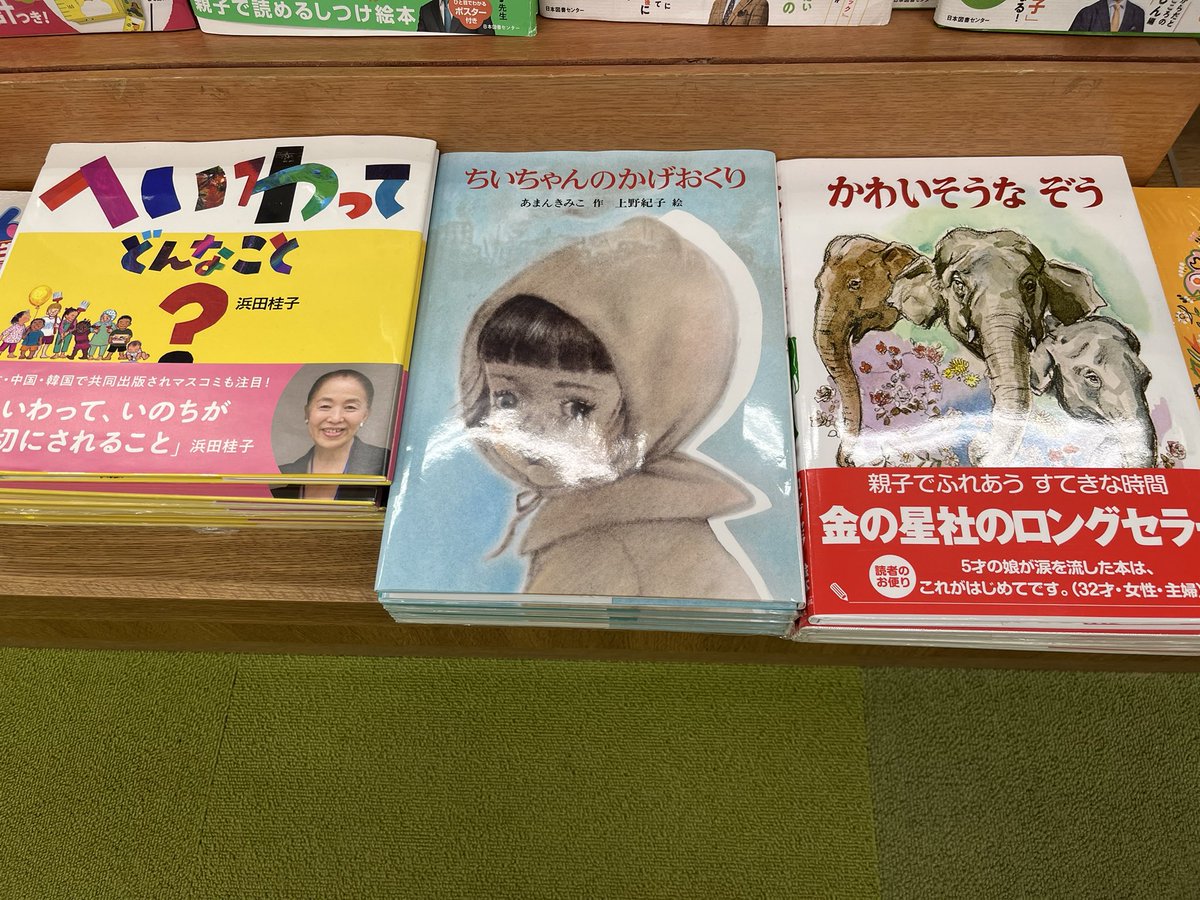
Japanese language textbooks" are a must for students in school. Interspersed among them are many sad stories that will make you shed tears. They include the tragedy of war and the tragedy of human-animal interactions. Many of these masterpieces are filled with sadness that pierces our hearts when we look back on them as adults, even though we could not understand them at the time. This article introduces a selection of "sad stories" that appeared in Japanese language textbooks.
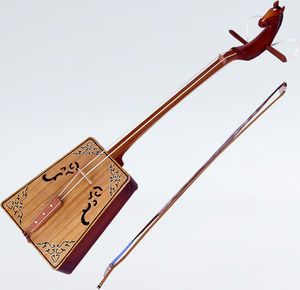
Mongolian Folktales. A story about the origin of the morinhall (horse-headed zither), a traditional Mongolian musical instrument. Also known as "The White Horse of Sukho.
Source: www.catalog-shopping.co.jp
Batokin
Horse-shaped at the tip
(Outline)
One day, a nomadic boy named Suho picked up a white colt that had fallen and was struggling on his way home. A few years later, the lord of the village holds a horse race to find a marriage partner for his daughter. Suho rides the well-grown white horse and wins the horse race.
However, the lord does not allow poor Suho to marry his daughter, but gives him three silver coins and orders him to give the white horse to himself. Suho refuses the order and is beaten by the lord's retainers, who take the white horse away from him. He barely makes it home, but his grief over the loss of the white horse remains.
The white horse escaped while the lords were having a banquet, but when it returned to Suho, it was dying because it had been shot in the body by arrows fired by the lords' retainers during its escape. The white horse died the next day in spite of his care.
Sukho had been unable to sleep for many nights, but one night he finally fell asleep and saw the white horse in his dream. The white horse told Suho to make a musical instrument out of his dead body. The result was the morinhaor (horse-headed zither).
(Comments)
It doesn't have a happy ending, but I think this is happy.
Source: book.akahoshitakuya.com
This is a picture book with a story about a horse-headed koto. I think I understand the reason for the somewhat sad sound of the horse-headed koto.
Source: book.akahoshitakuya.com
When I was four years old, my son, who didn't really understand it, entered elementary school, and he was moved and crying. I think he finally understood it in the true sense. There seemed to be something that touched my heart, and for a while I seemed to be thinking only about this story. It was such a memorable masterpiece.
Source: www.ehonnavi.net
[Original song] スーホ's white horse [Recitation play]
It's reading.
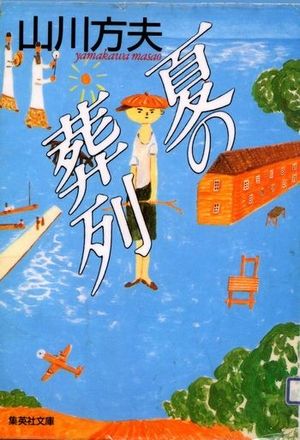
Summer Funeral Row."
Source: takagi.sakura.ne.jp
"Natsu no Soretsu" (Funeral Procession in Summer) (Chu-
Masao Yamakawa
(Outline)
In the middle of the day in summer, the main character, a boy, and his friend Hiroko spot a funeral procession crossing a potato field. The boy chases after the procession, thinking that he might be able to get a manjuu (a Japanese sweet bun), when a ship-borne aircraft arrives.
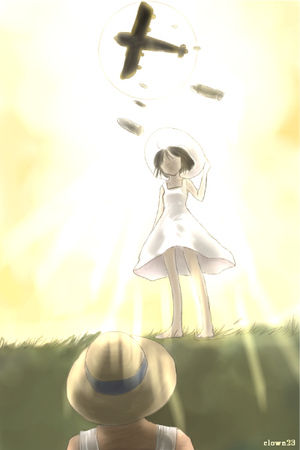
Hiroko does not hear the adult's voice telling her not to run because she will be targeted, and she runs to his side and tells him to run to the air-raid shelter, but he refuses, saying, "Go away. Hiroko was wearing pure white clothes. Her white clothes made her a perfect target.
Thinking that he would be shot to death if she stayed near him, he pushed her away. At the same time, he felt a strong impact, and with a roar, potato leaves flew up into the sky. Hiroko, her white clothes stained with blood, is rushed to the hospital.
Source: www.portalgraphics.net
He left town without hearing what happened to her after she was exposed to gunfire. It was the day before the war ended.
Still haunted by the memories of that summer, he returns to the town to forget it all.
There he once again witnesses a funeral procession. He was delighted to see the picture on the coffin. It was a picture of Hiroko, who was almost 30 years old and still had a strong trace of those days.
I was not a murderer.
He asked the boy following the funeral procession about the cause of her death.
She committed suicide the day before yesterday.
A girl who was all alone in the war was shot to death by a machine gun in this field, and she's been out of her mind ever since."
The funeral procession was for Hiroko's mother. They only had old photos of her.
(Comments)
夏の葬列 これ今まで読んだ本で一番鬱だわ… 爽快に気持ち悪い
— ke (@kemeroppihotmai) 2013.11.30 18:48
Even though it is a short story, he firmly grabs the heart and tries to shake it. He feels the shadow of the scene and the inside of his heart that the text creates, and he continues to leave a bad aftertaste. It is not an unfathomable despair, but it is full of loneliness, loneliness and melancholy.
Source: book.akahoshitakuya.com
I have the impression that there are many works that leave something unpleasant in my mind after I read them. But that must be the charm.
Source: book.akahoshitakuya.com

Contents
- The Gongitsune.
- (Outline)
- (Comments)
- One Flower
- (Outline)
- (Comments)
- Memories of a Boy's Day."
- (Outline)
- (Comments)
- Chii-chan no Kagewakegae.
- (Outline)
- (Comments)
- To my brothers who never grew up: ......"
- (Outline)
- (Comments)
- Chick's Eye."
- (Outline)
- (Comments)
- Otzebel and the Elephant.
- (Outline)
- (Comments)
- The White Horse of Suho
- (Outline)
- (Comments)
- Summer Funeral Row."
- (Outline)
- (Comments)