
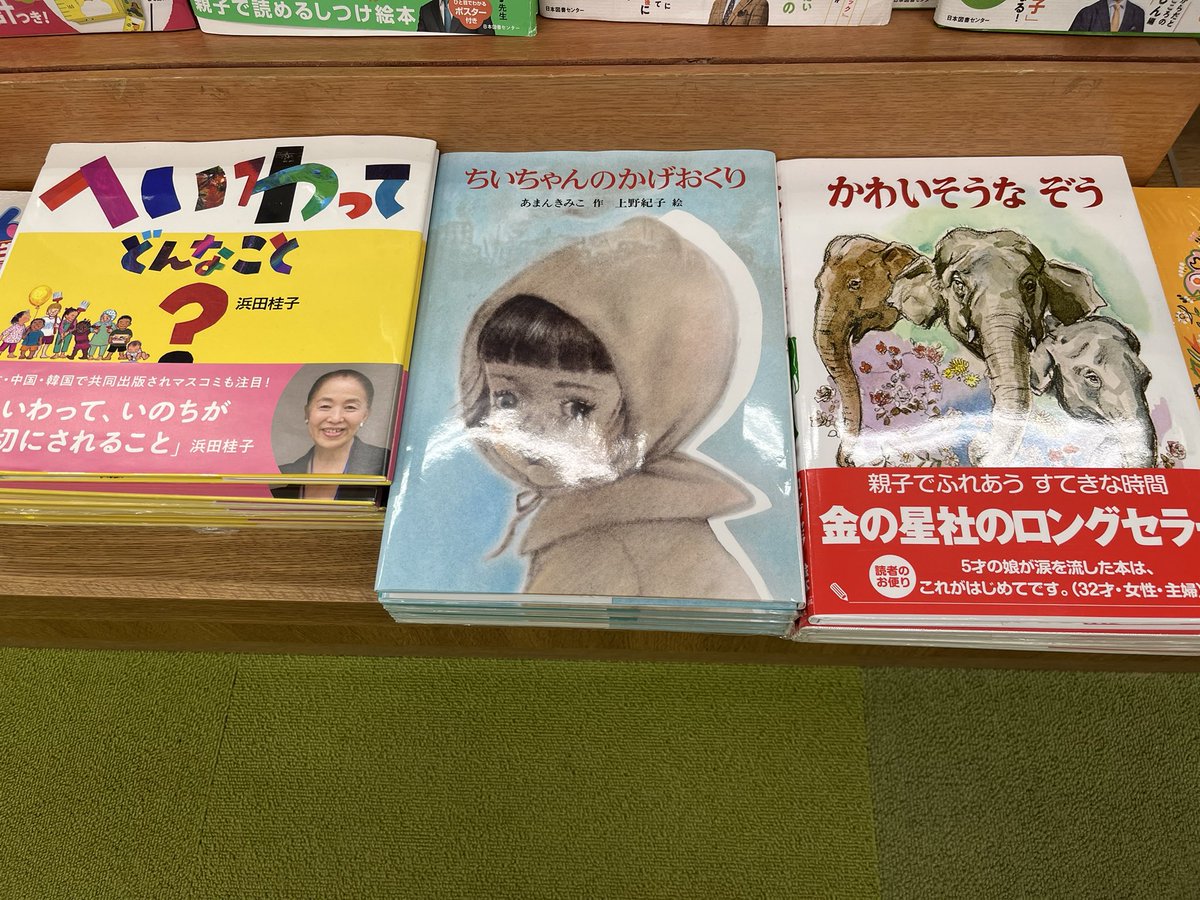
Japanese language textbooks" are a must for students in school. Interspersed among them are many sad stories that will make you shed tears. They include the tragedy of war and the tragedy of human-animal interactions. Many of these masterpieces are filled with sadness that pierces our hearts when we look back on them as adults, even though we could not understand them at the time. This article introduces a selection of "sad stories" that appeared in Japanese language textbooks.
The boy, crying, steals his little brother's milk, which is so cute that he can't stand it. The boy will not be able to escape this crime and will continue to suffer for the rest of his life.
Source: yoshiko2.web.fc2.com
Chick's Eye."
Source: img6.zozo.jp
"Hiyoko no Gan" (Eye of a Chick) (Kozo)
Amy Yamada
(Outline)
When I was in the third grade of junior high school, he transferred to a new school. He was a boy with strange eyes that seemed to be staring at something but not at anything. It seemed to me, as a female classmate, that I missed him. But I couldn't remember why I missed him so much, so I stared at him every once in a while.
Later, when the committee members for the festival were being selected, one boy and one girl, he and I were nominated. We were awkward at first, but we started talking to each other and became closer. With that, when we were together, we no longer looked at each other with nostalgic eyes. But he still had a strange look when he was alone.
On our way home together, we would talk about his family. His family was very unhappy. But he laughs as he says something positive. Then we hold hands and I was happy.
When I got home, my mother and sister were arguing. She wanted to get a rabbit that was on sale in front of a department store. At that time, my mother said, "I don't want to buy a rabbit. The chick we bought at the night stall turned out to be a pitiful thing.
That reminded me of the chick's dying eyes. The eyes looking into the distance, seeing nothing. Eyes looking at death. The same eyes as his. He, too, was staring at death.
The next day when I went to school, I was told he was dead.
He was taken away by his sick father who was pessimistic about life.
I cried.
Later, when I was walking around town, I saw people with the same eyes as the chick. Every time I see them, I have the urge to ask them, "What is death?
I wonder if you are staring death in the face.
(Comments)
I think that this work is not something that can be recommended to junior high school students in their prime. It is surprising that this was published in a textbook.
Source: sinsyo-fukei-garoku.blogspot.com
It's heavy on me. It doesn't mean that I can say in a word that I'm sad. but it's always about Naiko. It's funny, though, but I held a bit of a longing. It's like jealousy.
Source: id3.fm-p.jp
The eyes of the chick were shocked by this work. It is sad because the love started warmly.
Source: book.akahoshitakuya.com
Chick's Eye
www.pat.hi-ho.ne.jp
The Eye of the Chick Amy Yamada When I looked into the boy's eyes, for some reason, I was surrounded by a feeling of nostalgia, but I could not immediately remember what kind of memory it had come from. I was still in the third year of junior high school at that time, and it seemed that there was nothing to miss at that age, so I was surprised and confused when the feeling of sorrow covered my breast like a mist and dampened my heart. He, Mikio Aizawa, stood on the platform, with clear eyes,
You can read the full text here.
Otzebel and the Elephant.
Source: www.amazon.co.jp
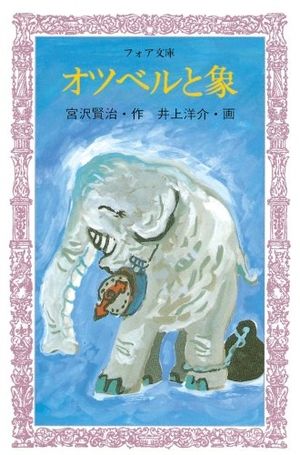
"Otbert of Liège and the Elephant" (Chu-ni)
Written by Kenji Miyazawa
Otsuvel and the Elephant" is a short children's story by Kenji Miyazawa. It was published in the first issue (January 1926) of "Monday," a magazine sponsored by the poet Kamenosuke Ogata. It is one of the few fairy tales published before Kenji's death. It has been widely included in textbooks and also used as a teaching material in Kumon.
(Outline)
Source: www.youtube.com
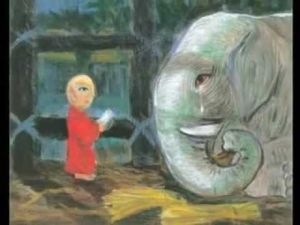
A man named Otubelu was treating a white elephant as a tool for his work. However, because he did not feed the elephant at all, the elephant grew thinner and thinner, and when it finally collapsed, the elephant wrote a letter to its friends, asking for help. The elephant wrote a letter to his friends asking them to help him. The elephant wrote a letter to his friends asking them to help him, and they came to his rescue, crushed Otubelu's face, and left.
(Comments)
A person's free and convenient thoughts or desires
The cunning and cunning of taking advantage of the favors of elephants
I feel sad that this kind of person has always existed.
Source: www.ehonnavi.net
The burning out process was depicted in a short story that was very easy to understand. I myself did not notice the exhaustion of my mind and body. At the end of the story, I was impressed by the elephant that smiled with sadness.
Source: book.akahoshitakuya.com
At the end of the story, who said to whom, "Oh, (one character unknown), if I shouldn't go into the river?" What was (one character unknown) like?
Source: kokiwata1.blogspot.com
This is an issue that is being discussed not only in class, but also among readers and fans. What does this sentence mean? What is the missing single character that is missing in the original manuscript? Many interpretations have been given, but the truth is unknown.
Kenji Miyazawa Otbert of Liège and the Elephant
www.aozora.gr.jp
Otbert of Liège AND THE ELEPHANT MIYAZAWA KENJI. IT'S A BIG DEAL WHEN I'M Otbert of Liège ON THE FIRST SUNDAY OF A Ushikai'S DAYS. I HAVE SIX 稲扱 INSTRUMENTS INSTALLED, AND THEY'RE MAKING A LOUD NOISE. SIXTEEN FARMERS, THEIR FACES ALL RED, ARE STEPPING ON THEIR FEET, TURNING THE INSTRUMENTS, AND TAKING ONE SIDE OF THE MOUND OF RICE.
I can read the full text.
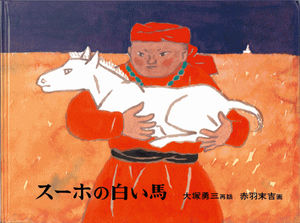
The White Horse of Suho
Source: blogs.yahoo.co.jp
"スーホ no shirouma" (White Horse of Kyoto) (Shonii)

Contents
- The Gongitsune.
- (Outline)
- (Comments)
- One Flower
- (Outline)
- (Comments)
- Memories of a Boy's Day."
- (Outline)
- (Comments)
- Chii-chan no Kagewakegae.
- (Outline)
- (Comments)
- To my brothers who never grew up: ......"
- (Outline)
- (Comments)
- Chick's Eye."
- (Outline)
- (Comments)
- Otzebel and the Elephant.
- (Outline)
- (Comments)
- The White Horse of Suho
- (Outline)
- (Comments)
- Summer Funeral Row."
- (Outline)
- (Comments)