
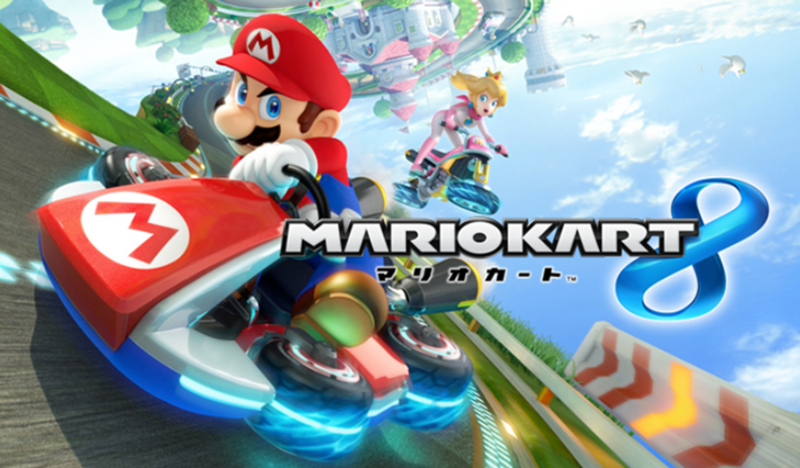
The Mario Kart series, an action racing game, celebrated its eighth title with Mario Kart 8, which was released last May.
Let's take a look back at the series from the first game released in 1992.
SFC Super Mario Kart
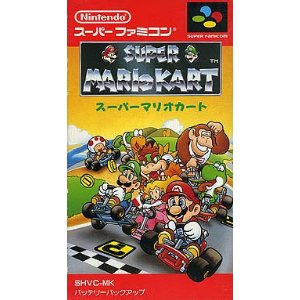
Original: Released on August 27, 1992
Wii VC June 9, 2009
Wii U VC June 19, 2013
This is the memorable first title released on the Super Nintendo Entertainment System.
The basic system is completed in this work, including the element of items to sabotage rivals in pure races.
In this work, there is an element to increase the maximum speed by earning coins. (They are dropped by bumping into rivals or being attacked by items.)
Also, in Grand Prix mode, there is a number remaining, and if you take 4th place or lower, you will be disqualified and have to retry with less number remaining. (If you take the same position 3 times, you get 1UP)
The game achieved the highest sales among all Super Nintendo Entertainment System software.
N64 Mario Kart 64
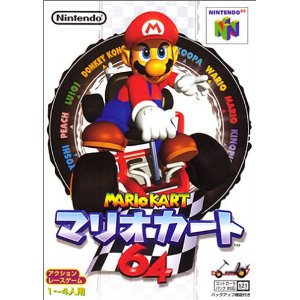
Original Released on December 14, 1996
Wii VC January 30, 2007
This is the second title released for the Nintendo-64.
The courses are now displayed in 3D, allowing for more powerful racing.
Mini-turbo by drifting is available in this game.
The now-standard Mirror Mode (called "extra" in this title) also made its first appearance, and Wario and Donkey Kong (second generation) also made their first appearance in the Mario Kart series in this title.
Although there were some changes and eliminations from the previous title, such as the elimination of coins, a decrease in the number of courses, and the elimination of the remaining number system, this title also achieved the highest sales among the Nintendo-64 titles.
GBA Mario Kart Advance
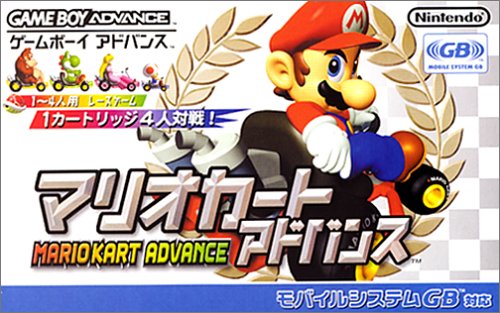
Original July 21, 2001 release
Wii U VC July 22, 2015 Available on July 22, 2015
This is the third title released on the Game Boy Advance.
This work was developed by Intelligent Systems, the same company responsible for the popular SRPG "Fire Emblem" series.
In this work, the coin system and the remaining number system have been restored, and the courses have returned to 2D, so it can be said to be a direct descendant of the first work.
However, the motion and other elements are the same as in the previous work.
The main feature of this title is the ability to play against other players nationwide and send ghosts via cell phone.
There is also an extra course that allows you to play the course of the SFC version.
GC Mario Kart Double Dash!
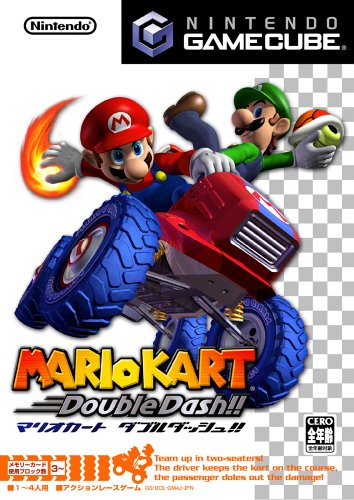
Released on November 7, 2003
This is the fourth title released on the Gamecube.
This is the first game without the hardware name in the title.
The main feature of this game is that it is a two-player game.
The key is how to capture the race by taking turns driving and using items. This is the key to the game.
The chemistry between the two characters is also a key point.
The rules of the Grand Prix mode have been revised in this title, allowing players to advance to the next race even if they finish in fourth place or lower.
DS Mario Kart DS
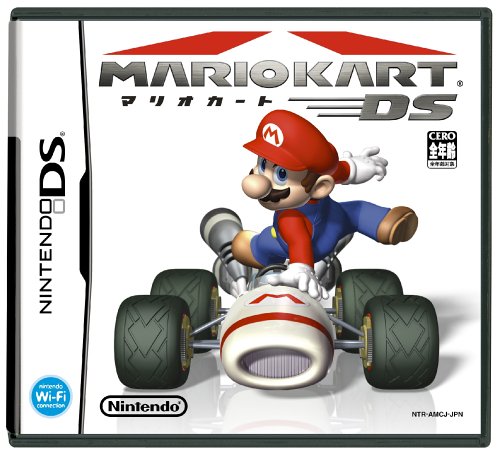
Released on December 8, 2005
This is the fifth game released on the Nintendo DS.
The logo was changed from a pop one to a stylish one from this work.
In this title, players were able to design their own logo for each character, and they were able to play against other players around the world using the now-defunct Nintendo Wi-Fi Connection service.
In addition, the VS and Battle modes, which previously could only be played locally against other players, can now be played by a single player, and the number of players has been increased from four to eight using wireless communication.
A new mode called "Mission Run" was introduced in this title, which offers a different kind of tension from normal racing, where players race under various conditions, such as collecting a specified number of coins in the back.
In addition, courses from previous titles have been remade and re-recorded in this title.
Wii Mario Kart Wii
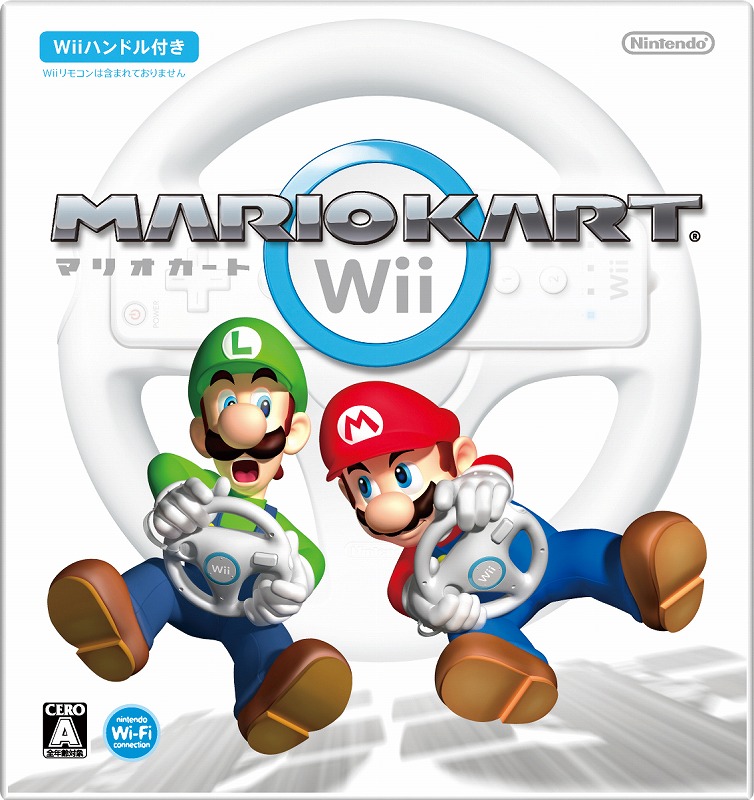
April 10, 2008 Release
This is the sixth title released for the Wii.
This title was released with a Wii handle, which can be held horizontally and operated as if you were steering a car with the Wii remote.
In addition to the Wii Handle, the Wii Remote + Nunchuck, Classic Controller, and Gamecube Controller can also be used.
Although hiragana is the main character used in the Mario series, kanji is used comparatively frequently in this title.
In Grand Prix mode, the number of players has increased from 8 to 12.
Bikes and jumps made their first appearances in this title, and riding on jumps and inputting commands now gives the game a flashy, extreme-sports-like action.
3DS Mario Kart 7
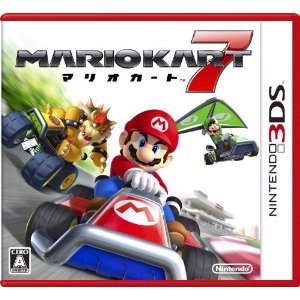
December 1, 2011 Release
This is the seventh title released on the Nintendo 3DS.
This is the first numbered title in the Mario Kart series and the first title since "Mario Kart Double Dash! which was released on the GameCube.
This title expanded the scope of racing to include flying and underwater.
Also, you can now customize your machine, and the performance of the machine changes depending on the combination, so you can race with the customization that suits you best.
Coins are back, and collecting them during a race will increase your maximum speed. (Up to 10 coins)
Coins earned during races are counted, and collecting a certain number of coins will release machine parts.
A driver's perspective mode is also available for the first time, which allows players to tilt the device for more realistic racing experience.
Wii U Mario Kart 8
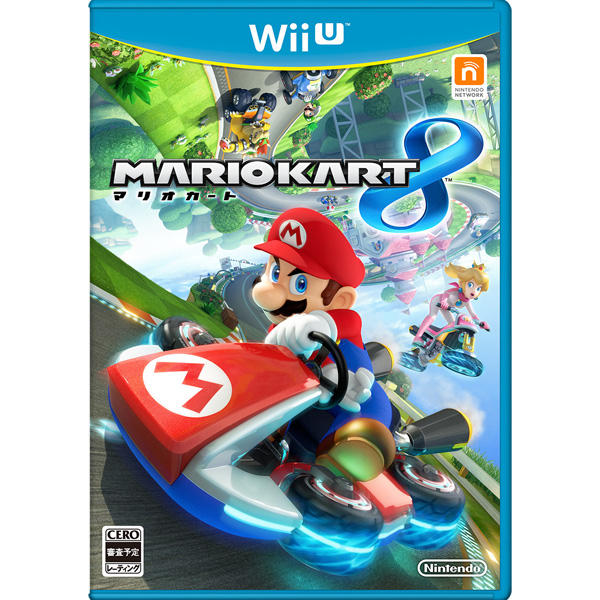
May 29, 2014 Release
This is the latest title released on Wii U.
It continues the elements of the previous title, such as flying, underwater, and customizing the machine, and brings back the bikes that were in the Wii version.
Anti-gravity elements make their first appearance in this title.
When you enter an anti-gravity area, such as a wall, your tires become horizontal, allowing you to run on walls and ceilings.
This was also the first time that the company collaborated with another game and company, collaborating with Animal Crossing, The Legend of Zelda, F-Zero, and Mercedes-Benz.
With the update, the 200cc engine displacement made its first appearance in the Grand Prix mode, and braking drift became mandatory, making this work unprecedented.
