
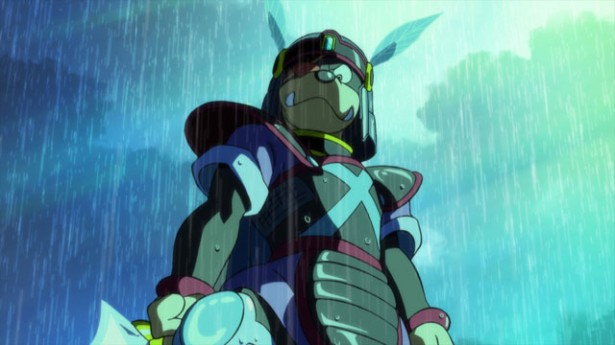
I know this is a bit late, but I dare you. I chose it because of the popularity of "Osomatsu-san" and the fact that it is a remake of a masterpiece from Tokiwa-so. The dog is not a tough dog like in the old anime, but a complete copy of the original work. It is not a complete copy of the original, and the characters are well-developed. Moreover, the characters are well-developed. This also seems to have been the policy of the production team. (view spoiler)
What is Captain Savelle?
He is a villain who appeared in "Doraemon: Nobita's Daimajyo". His title is "SS chief" in the service of Dablander, the evil minister of the kingdom of Bauwanko, where dogs have evolved and built civilization after being separated from the outside world. His breed is probably a Doberman.
He is a master swordsman, and shows his mastery of the sword in both the original work and this film. In the original, his right eye looks completely white, but this is an eye patch.
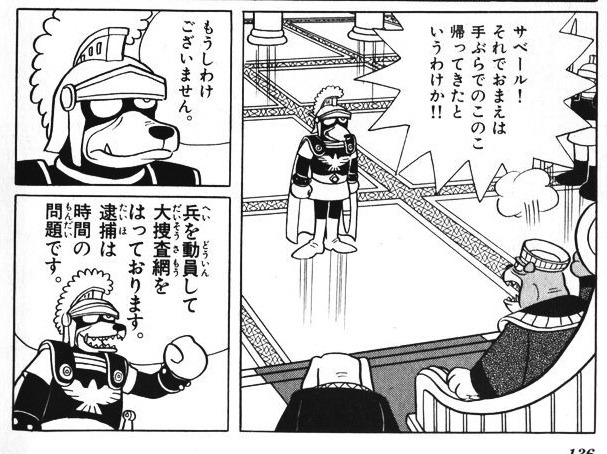
He looks old in this way. He is a captain and may be of a certain age.
The ambition of the Dove Lander is to revive the fire-breathing cars and flying ships, ancient weapons that were sealed up 5,000 years ago, and to conquer the world. The first king of the country considered the research and development of these weapons dangerous, so he sealed them off.
What is "Doraemon: Nobita's Daimakyo"?
Set in Africa, the first half of the story is an adventure in an unexplored region, while the second half is about regaining power from the bad guys, which is as different and exciting as it gets.
The story is also enlivened by the recovery of foreshadowing, such as the fact that Peco, a stray dog that Nobita happened to find in a vacant lot and give a sausage to, is actually a prince from the Land of Dogs, the pinch caused by leaving behind a useful tool, and the mechanism behind a prophecy that has been handed down in the country.
The production of the friendship that both Nobita and Gian build with Peco is also well known as a heartwarming story. In the remake film version, this was further emphasized and the characters were explored in depth. The use of tools is also very clever, as in the key role of a tool that is unlikely to be of any use in the war: the preemptive promise machine.
The machine is a tool that allows you to make promises such as, "I will definitely eat tomorrow, so fill me up now," in order to get a head start on the outcome of your meal. In this case, you will smell and taste the same result as if you had eaten a meal, and you will also feel full. However, the promise must be kept, so the next day you must eat for two days.
Bauwanko Kingdom
Africa is a country in the Congo region. It is isolated from the outside world, and the only way in or out is through a fast-flowing waterway.
It is located in the "heavy smokers' forest," a region that is always shrouded in fog, and is recognized by the local indigenous people (humans) as a God's country that is shrouded in fog. It is a place that can only be reached with the scientific power of Doraemon.
An ecosystem different from that of the outside world has developed, and dogs, not monkeys, have evolved as intelligent creatures. According to old works, intelligence is higher in the Bauwanko nation.
They had advanced science and technology 5,000 years ago, but their civilization declined with the sealing of weapons development. Some sites point out that it has fallen to the level of ancient Rome. Although they do have soldiers, their main fighting force is the white armies using swords and spears.
gigantic statue of a god
The protector of the kingdom. It is modeled after Bawangko I, the founder of the kingdom. It is a huge statue that seems to be made of stone and is hollow inside. The light of a pendant, which has been handed down from generation to generation to the royal family, shines on a specific spot to allow the light to enter from the foot of the statue.
There was a prophecy that "Ten foreigners will come when the country is in turmoil, and they will move the hearts of the giant gods," and the Davlanders were waiting in anticipation of the prince's arrival, relying on this prophecy.
The other five people in the prophecy are another group of Doraemon from a little further in the future (Shizuka promised to send her future self as a helper, since she would help them later with the tools).
While they are using their secret tools to hold off the soldiers on the surface, Nobita and his friends in the present time are guided by Doraemon of the future to the depths of the Giant God Statue, where they are taught the true nature of the Giant God's heart and how to move it.
The Giant God Statue is a kind of giant robot, and moving its heart means turning a heart-shaped sculpture, which is the source of its activation. There is also a treasure room inside.
There are gears everywhere. When entering, the entrance moves up like a shutter. Doraemon and Gian opened the treasure room, mistaking it for the room of the Giant God's heart. The statue of the Giant God is controlled by a kind of magical power. In its normal state, it is a seated statue. The crown of the statue opens like a cave, allowing you to lean out and look out.
The statue has no gears, but is an image of an ancient ruin, with stairs, ivy-covered walls, and a statue made of crystal (?). The entrance collapses and you can go inside. You can enter by collapsing the entrance. Gian and Suneo opened the treasure room by mistake. There is a quip about this, "How does Doraemon of the future know that it is the 'treasure room'?
As soon as the heart of the Giant God begins to move, the entire pedestal rises and is activated by contact with the needle in the statue's head.
It seems to be on complete autopilot, moving without excess or deficiency like a rubber doll, destroying fire-breathing cars and flying ships. It is a normal to standing statue. The eyes and the jeweled part of the head of the statue are windows.
The prophecy about the 10 foreigners remains as a mural, but the foreigners depicted in it are apparently Doraemon's group. Moreover, it was pointed out that the equipment of each person is the same as in reality (e.g., the future group is wearing a bamboo-copter).
Comparison of old and new Captain Savelle in the movie
Older work: Doberman-like, but large and burly. His language is a little rough.
He is also very bold, saying to the prince (or rather, Doraemon) and his party, "You can't take one more step! He is a bold man. He gives the impression of a belligerent villain as he fights with an evil smile on his face.
Nevertheless, he has a chivalrous spirit, and when Peco, a prince who is also a master swordsman, challenged him to a fight, he did not hesitate to slay his unarmed opponent without question, and called it an honor to fight a prince.
He even says, "I am honored to fight with the prince," and orders his men to give him a sword to fight with. In fact, the captain would have won if he had not succeeded in getting rid of the sword and activating the statue of the giant god. The design of the sword does not seem to be much different from that of his subordinates.
The swordsmanship style seems to be technique-oriented.

Old work captain.
He is not a purebred Doberman, but rather a mixed blood with shepherds and wolves.
He has inherited the characteristics of being a master swordsman with one eye and a sword, but he not only gives orders but also takes it upon himself to kill the prince.
He does not show much emotion, but when he finds out that the prince is still alive, he smiles madly and slays the stone statue, adding a belligerent character that is different from the old one.
The prince's new character is more belligerent than the old one: he does not want to bully the weak, but rather to live to fight with the strong. We see a line in which the prince, a master swordsman, admires the prince's skill and looks forward to a fight.

Captain of the remake. Relatively faithful to the original, but looks young.
In battle, he will fight even children as soon as he sees them as "enemies. However, he is not a mere fighting maniac, but rather a man who apologizes for his rudeness when he is wrong, even as he uses his sword to subdue an ordinary man.
He also emphasized his warrior and chivalrous spirit, showing respect to opponents who were more than equal to him in skill.
The design of the sword was also changed. While the other soldiers had relatively ordinary swords, this one was custom-made with a magnificent, flowing curved design. The blade of the tsubasa is also probably a blade, and it seems that only a master class would be able to handle this sword. The sword, including its overall design, was the embodiment of the character.
I don't know if his swordsmanship is self-styled, but I got the impression that he pushed himself with great strength.
According to Shun Oguri, who voiced the character, "He was not interested in justice or evil, but was devoted to the way of the sword.
Peco's connection with Peco
Prince Kuntak, aka Peco, a guest character in this work, is a prince of a peaceful country, but a master swordsman who is able to defeat trained soldiers. The reason why he came to the human world was because of his battle with Sabert (he fell into a lake during the battle), and in the old work, Peco and Sabert fought.
In this film, there is a scene where Peco is practicing his sword, and the flag for a rematch was raised, but it didn't come true. There are mixed opinions about this.
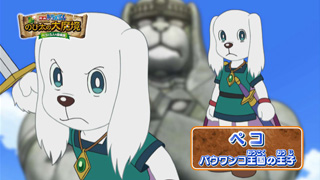
His exact age is unknown, but he is in a sense a terrifying child who is recognized as a rival by a master swordsman at an age when he could be called a child.
Relationship with dublander
[Old work] Faithful. When Peco and his friends entered the statue of the Giant God, he was a little impatient, saying, "Leave it to me.
This work] Although he listens to commands, he does not seem to be fascinated with Davlander. It is unclear if he is simply businesslike or if he is siding with the dublanders to the extent that he wants to fight the enemies of the outside world. When he chased after the people inside the Giant God Statue, he showed some anger, but no sense of impatience.
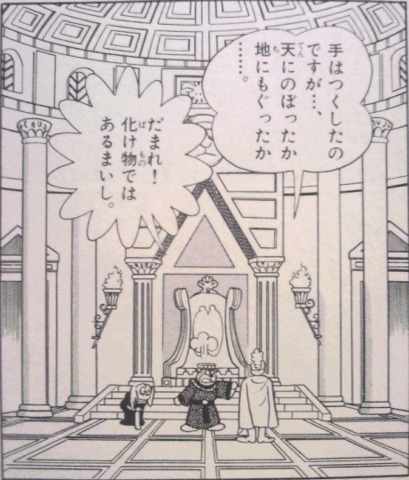
This line was also in the old film, but both were interrupted by dublanders. In the new film, he is flustered and even praises his enemies.
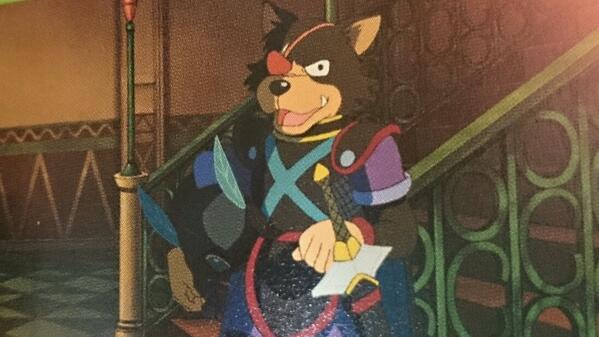
It's like, "It's my job, so I'll do what you say." This is the same scene as the picture above. In the old movie version, he was interrupted and said "Oh...", but in the remake version, he is very relaxed.
Additional scenes showing the character of the remake captain

Related Articles
An ordinary kid becomes a hero. Perman"
Fujiko F. Fujio's (hereinafter referred to as "Mr. F") works include "Doraemon," which is famous for its pattern of "a peculiar being staying at home," and "peculiar short stories" reminiscent of "Se Ni ni Bizarre Monogatari" (Strange Stories). Among them, Perman may be a little special.
Read Article
In-depth description and discussion of The Doraemon's (Dora's Dora 7)
The Doraemons" is the story of Doraemon and seven other feline robots who have pledged their eternal friendship to each other. The story is sometimes touching, sometimes acrobatic, and sometimes slapstick comedy. These adventures are sometimes solved by the special abilities of the members, sometimes by their resourcefulness, and most of all, by the friendship among the seven, symbolized by their special secret tool, the "best friend telecard".
Read Article
Spoiler commentary and discussion of Doraemon (manga and anime)
A manga, anime, and video game series by Fujiko F. Fujio that has been serialized since 1969 in Shogakukan's learning magazines ("Good Boy," "Kindergarten," "First Grader" to "Fourth Grader"). It depicts the uproar caused by Doraemon, a robot who comes from the future in the 22nd century to help Nobita Nobi, who has led a miserable life and left debts to his grandchildren, and by the secret tools of the future that Doraemon brings with him. The work was discontinued in 1996 with the death of Fujiko F. Fujio.
Read Article
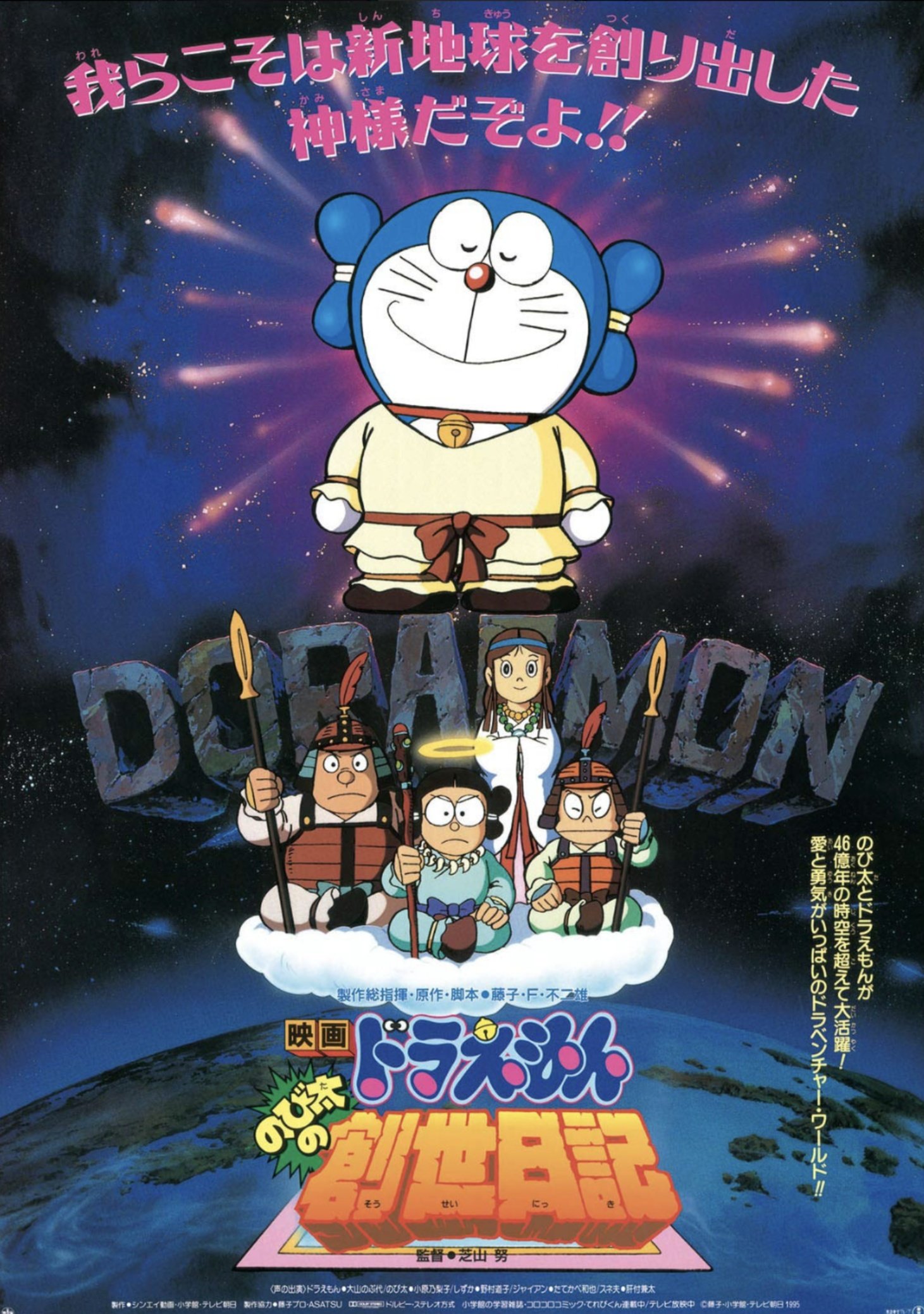
Spoiler commentary and discussion of Doraemon: Nobita's Genesis Diary (film).
Doraemon: Nobita's Diary of Creation" is the 16th animation film in the series, released in 1995. Nobita Nobi, a fifth grader, creates a new universe using the Genesis Set that Doraemon, a cat-shaped robot, purchased at a department store in the 22nd century future, and begins to write an observational picture diary as his free study during summer vacation. In the new earth that exists in that universe, new creatures and human beings are born. This is the definitive work on the theme of "Genesis" by Fujiko F. Fujio, the author of "Doraemon. The film recorded box-office revenues of 1.3 billion yen and won high acclaim for touching on the birth of the universe and life.
Read Article
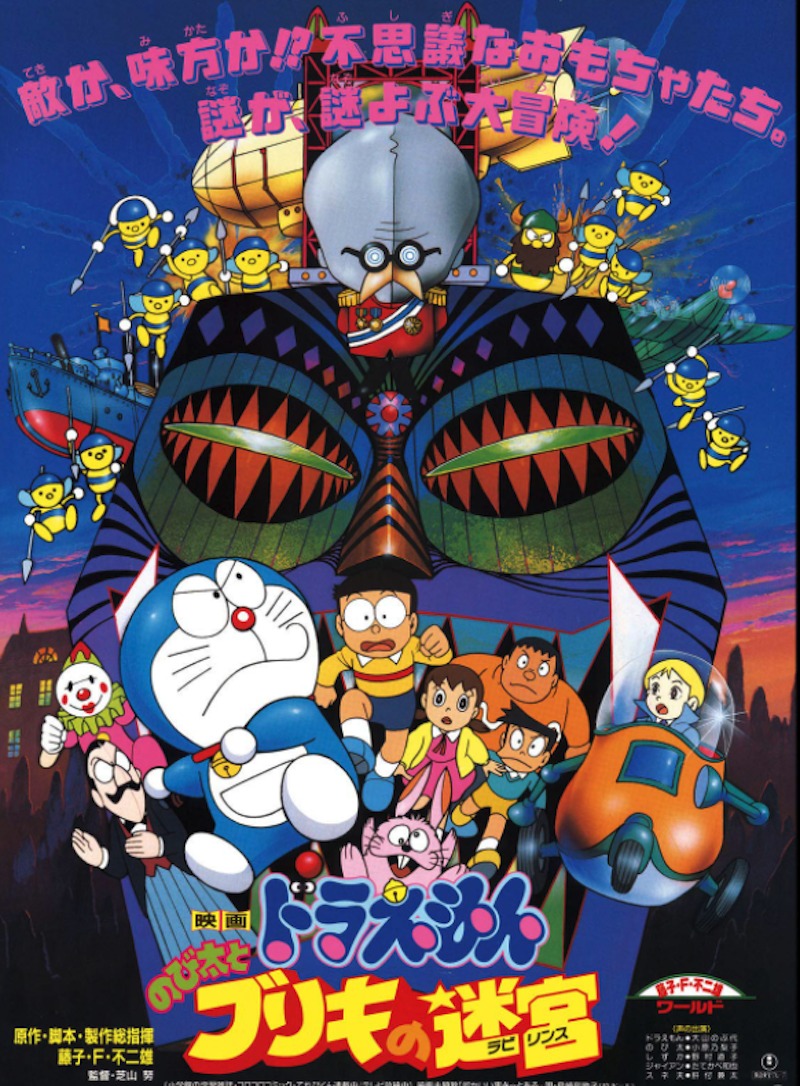
Doraemon: Nobita and the Tin Labyrinth (film) Spoiler Commentary and Discussion Summary
Doraemon: Nobita and the Tin Labyrinth" is the 14th animation film in the series, released in 1993. Nobita Nobi, a fifth grader in elementary school, receives a trunk that opens a gate to Tin-Tin Island, an island of toys made of tin. Nobita and Doraemon enjoy their time on Tin Island, but suddenly Doraemon is kidnapped by tin soldiers. The film is unique in that Doraemon, the main character, breaks down and is absent during the middle of the film, leaving Nobita and his friends to fend for themselves.
Read Article
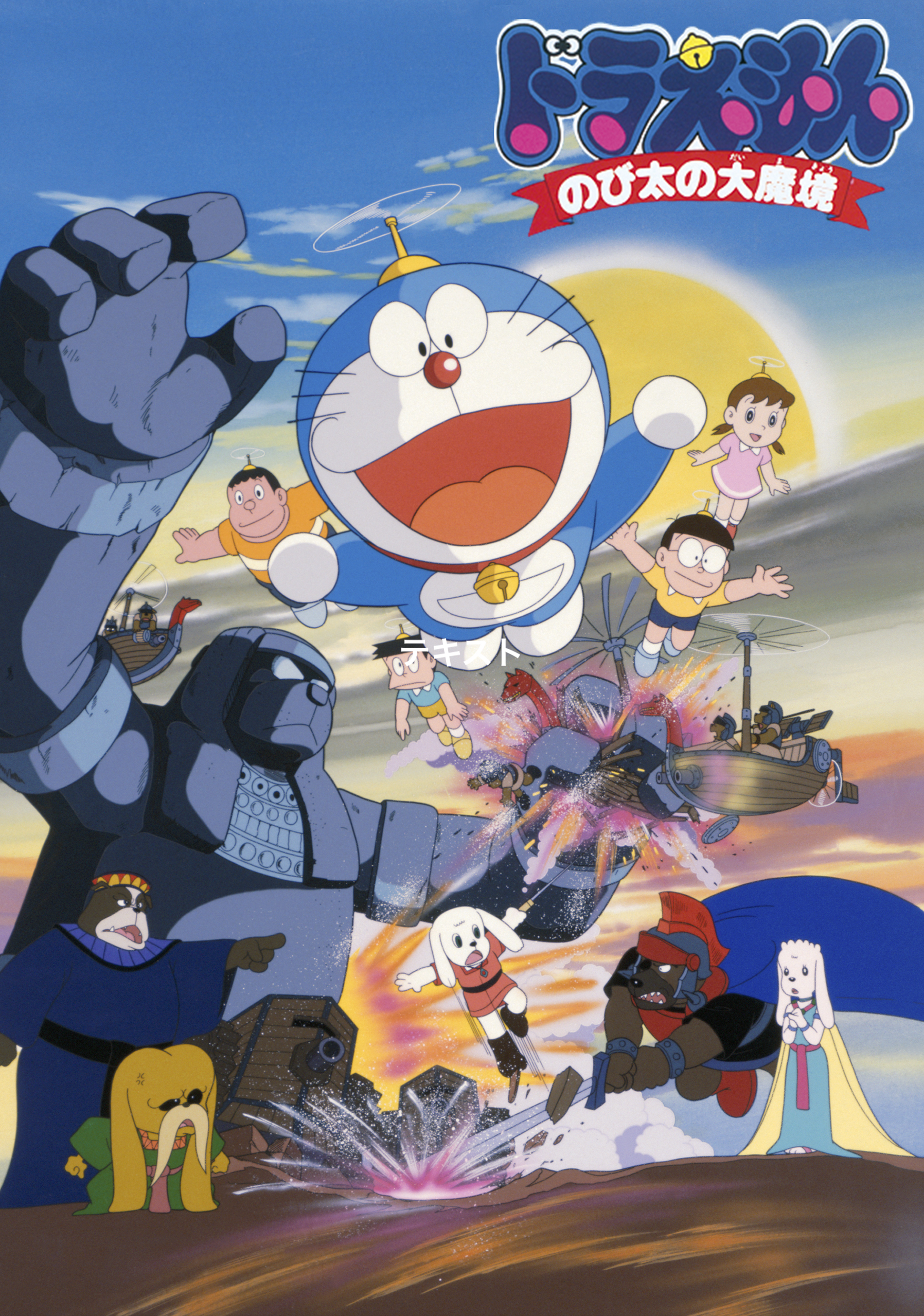
Doraemon: Nobita's Daimakyo (The Movie) Spoilers and Discussion Summary
Doraemon: Nobita's Demon Kingdom" is the third feature-length animated film based on Fujiko F. Fujio's "Doraemon," released in March 1982. This work is set in the Bauwanko Kingdom, a dog kingdom under a dictatorship, and features interactions and battles between the dog inhabitants there and Doraemon and his friends. The opening song "Doraemon's Song" was used in this work, and the style of the story, in which Gian goes from being a bully to cooperating with Doraemon, Nobita, and others in their adventures, became a standard feature.
Read Article
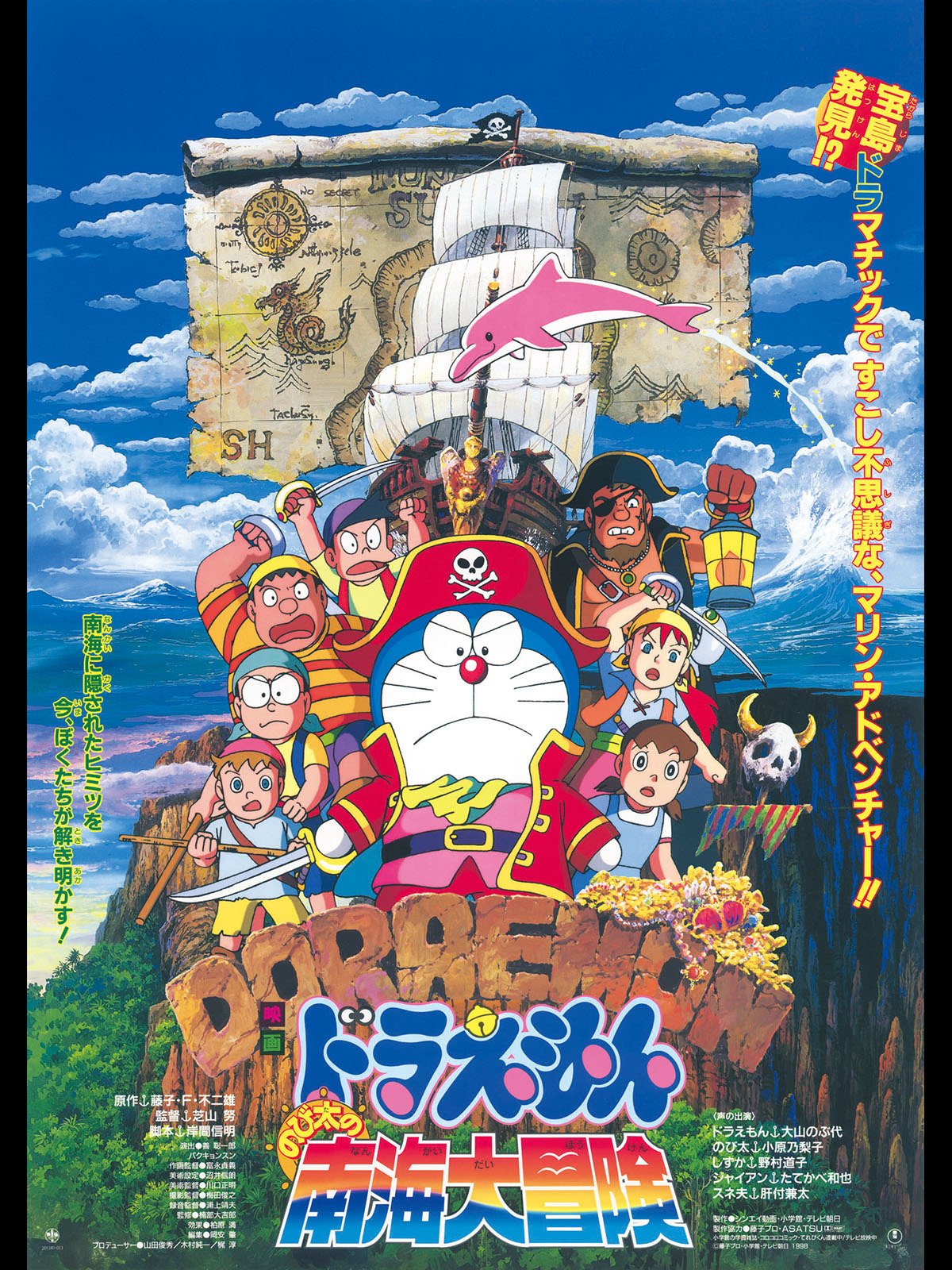
Doraemon: Nobita's Great Adventure in the South Seas (movie) spoiler commentary and discussion.
Doraemon: Nobita's Great Adventure in the South Seas" is an animated film released in 1998. Doraemon and Nobita, accompanied by Gian and his friends, head off on a sea adventure to Treasure Island. Along the way, they are transported back in time to the Caribbean Sea in the 17th century due to a change in space-time. Doraemon and Nobita get separated from Doraemon and his friends. Doraemon and his friends meet real pirates and join them. Nobita washes ashore on an island, where he meets a boy named Jack. This is the 19th film in the series, and its distribution revenue exceeded that of the previous film, "Nobita's Adventures in Twisted City," becoming the highest-grossing film of all time at the time of its release in 1998.
Read Article
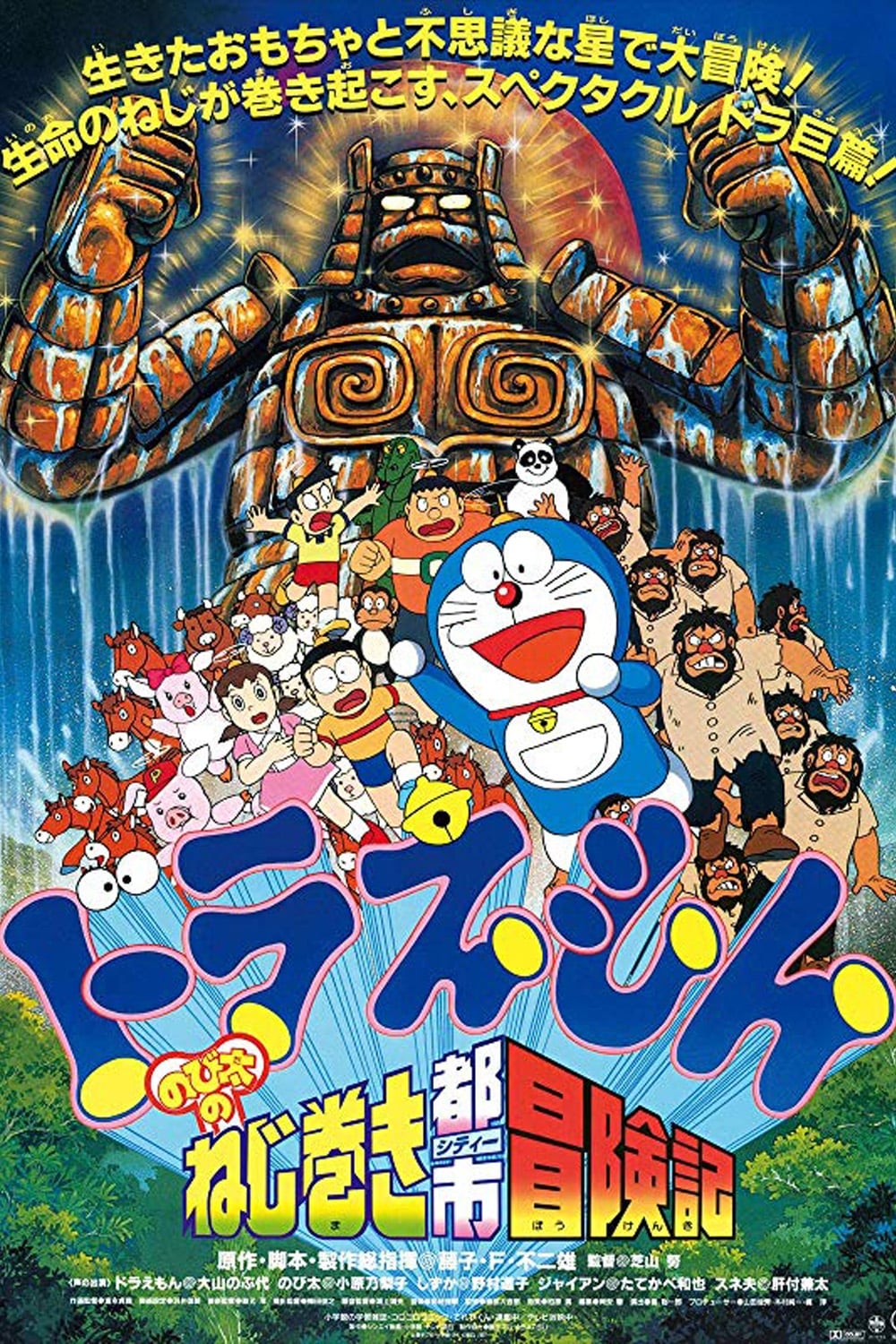
Spoiler commentary and discussion of Doraemon: Nobita's Adventures in Twisted City (movie).
Doraemon: Nobita's Adventures in Twisted City" is an animated film released in 1997. Doraemon gets a voucher for an asteroid from a lucky draw in the 22nd century, and Nobita accidentally finds a vast planet. He invites Suneo and Gian to join him and attempts to develop a city on the planet, but unexpected trouble arises. This is the last film by Fujiko F. Fujio, the author of the original "Doraemon". It is also a memorable film in that the people who live on the same planet as Nobita and his friends appear as villains and environmental issues are discussed.
Read Article
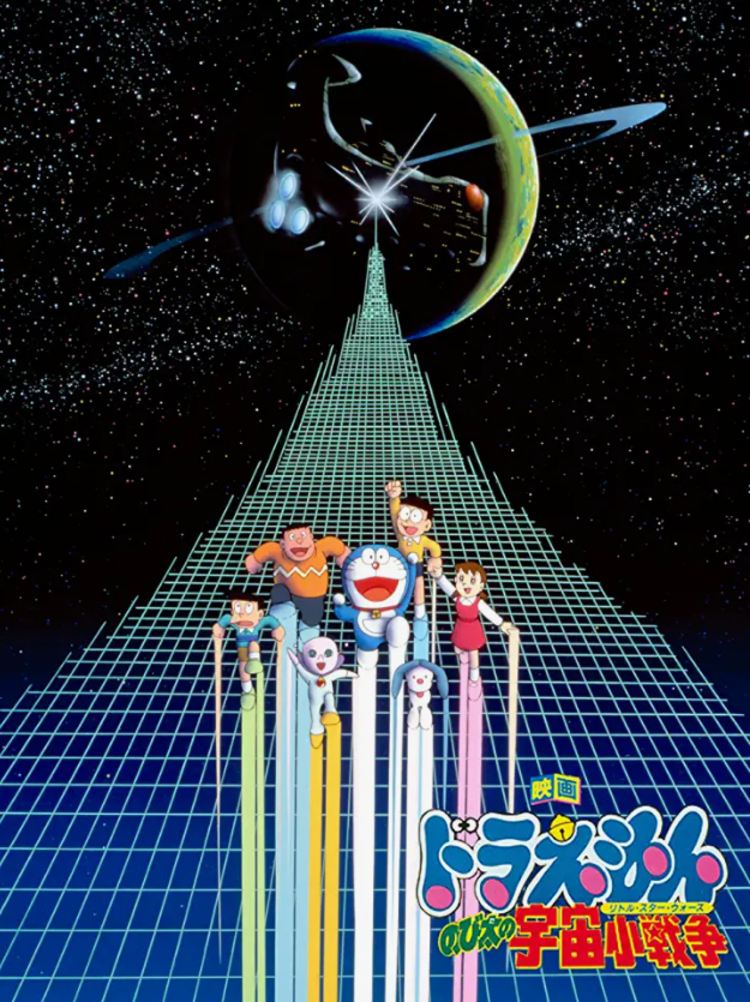
Spoiler commentary and discussion of Doraemon: Nobita's Space Wars (movie)
Doraemon: Nobita's Space Wars" is the sixth feature-length animated film based on the manga "Doraemon" by Fujiko F. Fujio. Nobita Nobi, a fifth grader, Doraemon, a cat-shaped robot, and his friends meet Papi, a small alien. Doraemon and his friends learn that the planet Pirika, where Papi lives, is ruled by a dictatorship, and they set off into space to save it. This work is inspired by the novel "The Gulliver's Travels" and the science fiction movie "Star Wars.
Read Article
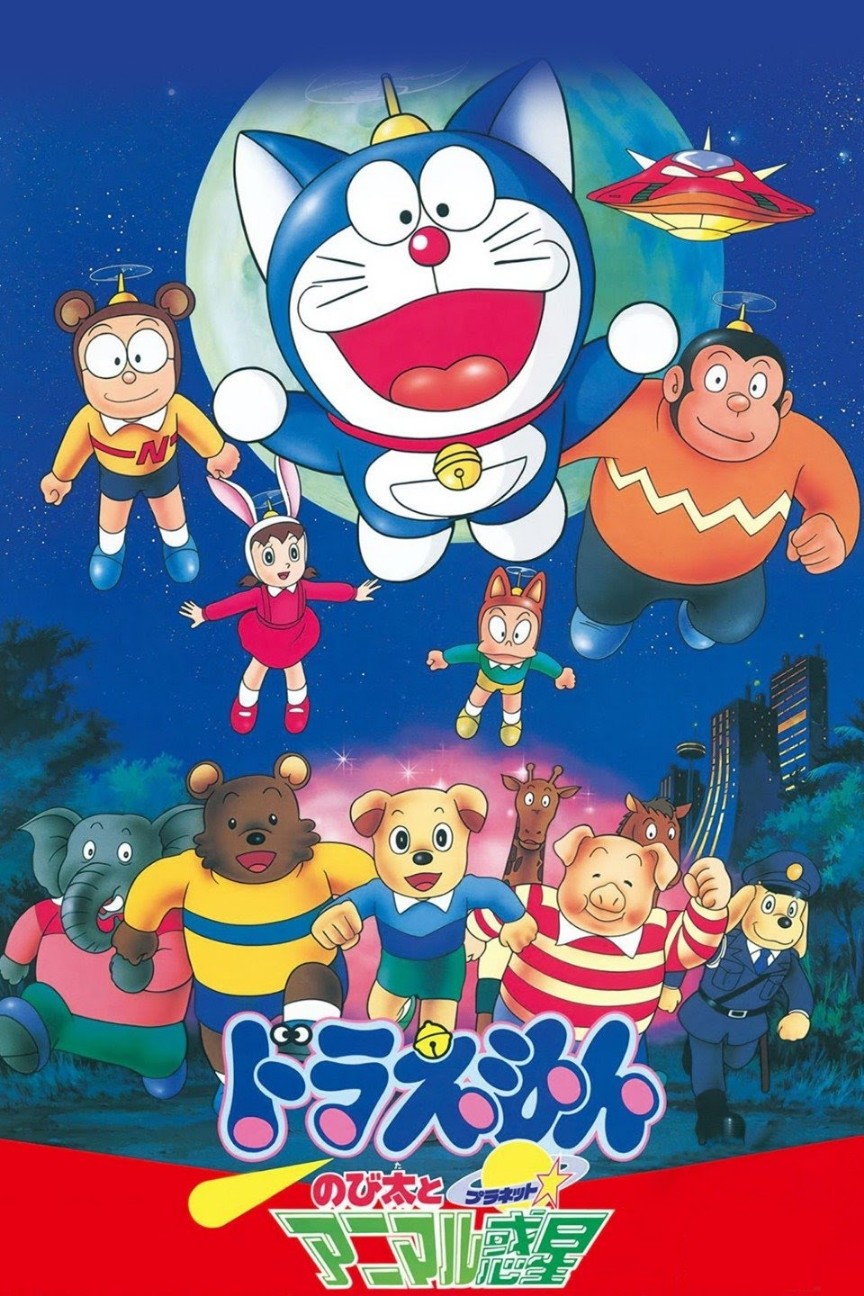
Doraemon: Nobita and the Planet of the Animals (film) Spoiler Commentary and Discussion Summary
Doraemon: Nobita and the Animal Planet" is the 11th animation film in the series, released in 1990, and based on the manga written by Fujiko F. Fujio. Nobita Nobi (Nobita Nobita), a fifth grader in elementary school, Doraemon, a cat-shaped robot, and his friends pass through a mysterious pink mist and arrive at the Animal Planet, where animals live. Doraemon and his friends stand up to save Animal Planet from the evil forces of invasion. This work depicts the battle between Doraemon and the Nimuge, a group of animals invading Animal Planet, but it also depicts real-life social issues such as environmental destruction.
Read Article
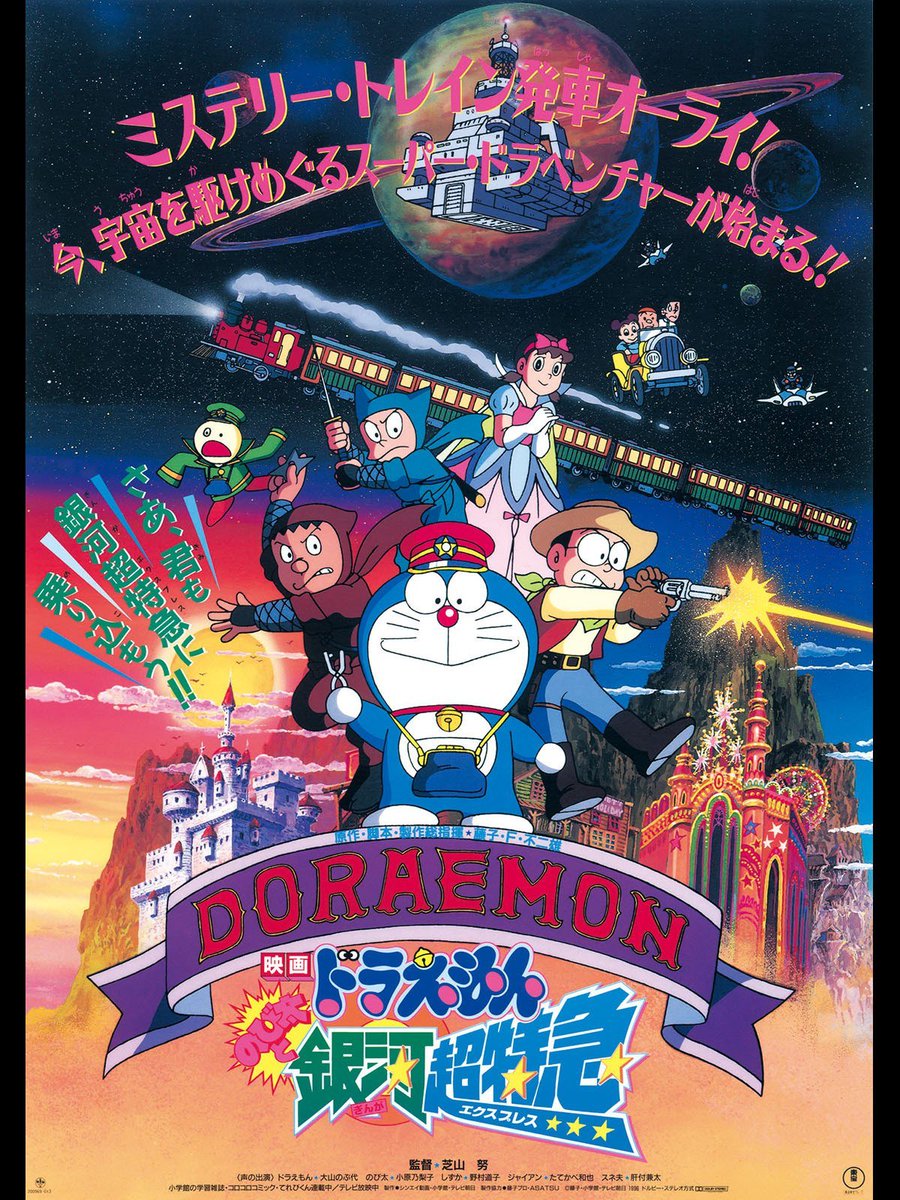
Doraemon: Nobita and the Galactic Super Express (movie) spoiler commentary and discussion.
Doraemon: Nobita and the Galactic Express" is the 17th animation film in the series, released in 1996. Nobita invites his classmate Takeshi Goda and others to join him on a space trip. However, unexpected happenings occur on the space trip, and they are also attacked by a mysterious life form. This was the last film that Fujiko F. Fujio, the author of the original "Doraemon," wrote and saw through to the screening of this film.
Read Article
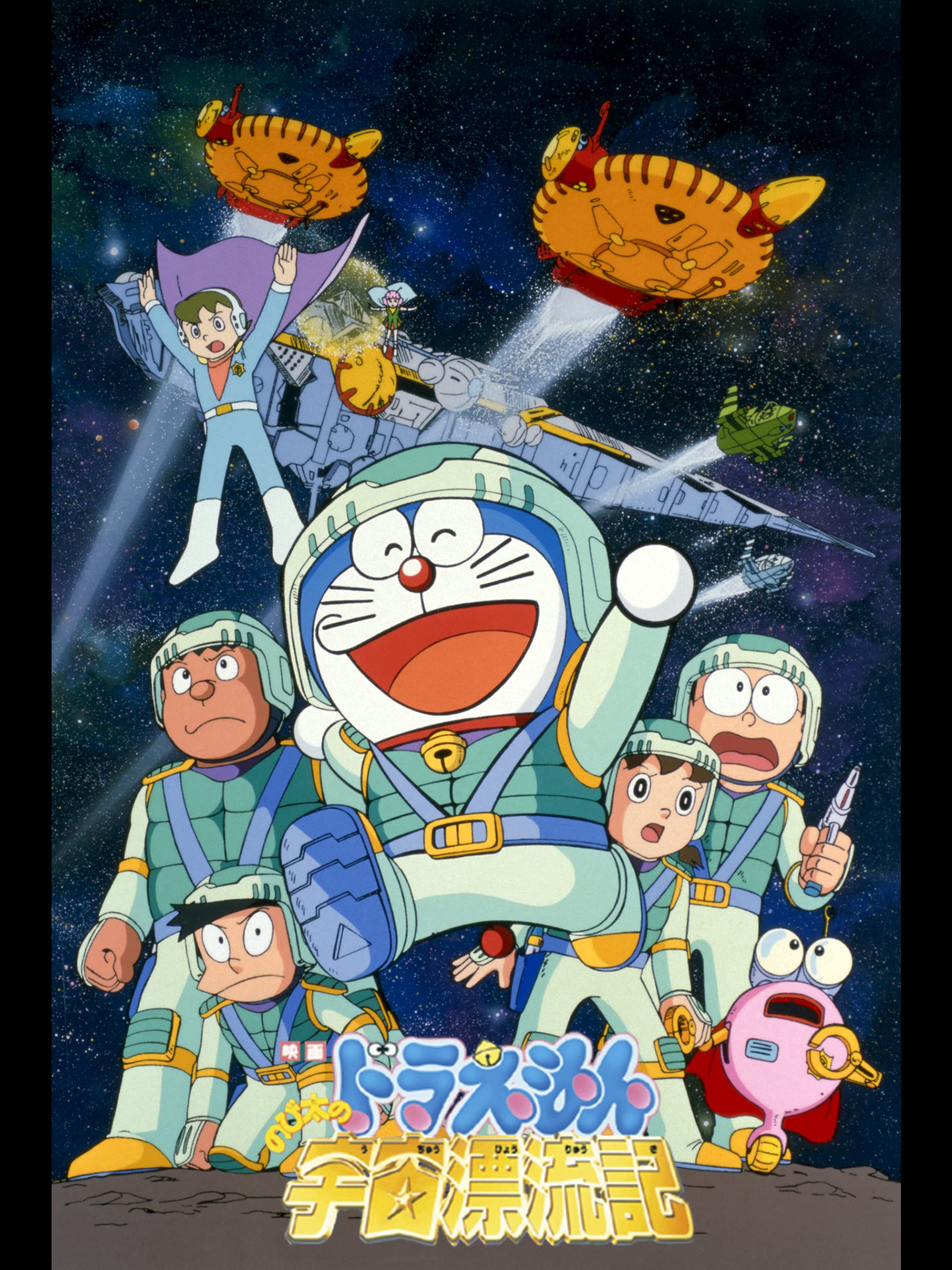
Spoiler commentary and discussion of Doraemon: Nobita's Space Drift (film).
Doraemon: Nobita's Space Drift" is an animated film released in 1999. Nobita and his friends enjoy playing Doraemon's secret tool, the space exploration game, but Suneo and Gian are trapped in the game world, and the game box is taken away by a mysterious spaceship. In order to save Suneo and his friends, Nobita and his friends go out into space and confront an invasion force that aims to invade the earth. The staff for this film includes Kazutaka Miyatake, mechanical designer of the sci-fi robot animation "Macross" series, and Studio Nue. In addition, no celebrity entertainers were used as guest characters, but only voice actors.
Read Article
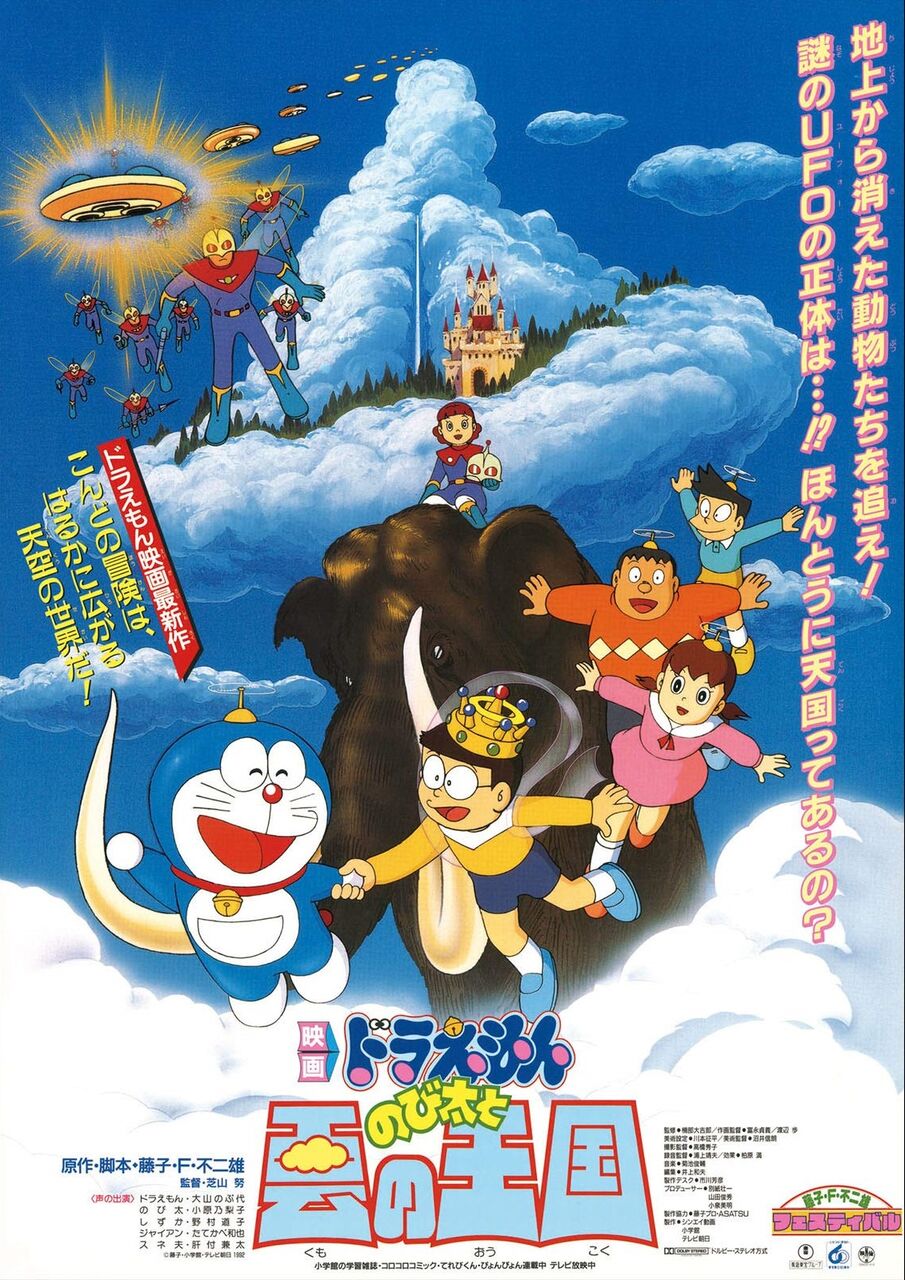
Doraemon: Nobita and the Kingdom of the Clouds (film) Spoiler Commentary and Discussion Summary
Doraemon: Nobita and the Kingdom of Clouds" is the 13th animation film in the series, released in 1992, and based on the manga written by Fujiko F. Fujio. Fifth grader Nobita Nobi (Nobita Nobita) believes that there is a heaven above the clouds, while Doraemon, a cat-shaped robot, creates a cloud kingdom for Nobita with the tools of his four-dimensional pocket. However, a heavenly world already exists above the clouds. This film is unusual in that it is the first film version in which Doraemon breaks down and a great flood destroys the human race.
Read Article
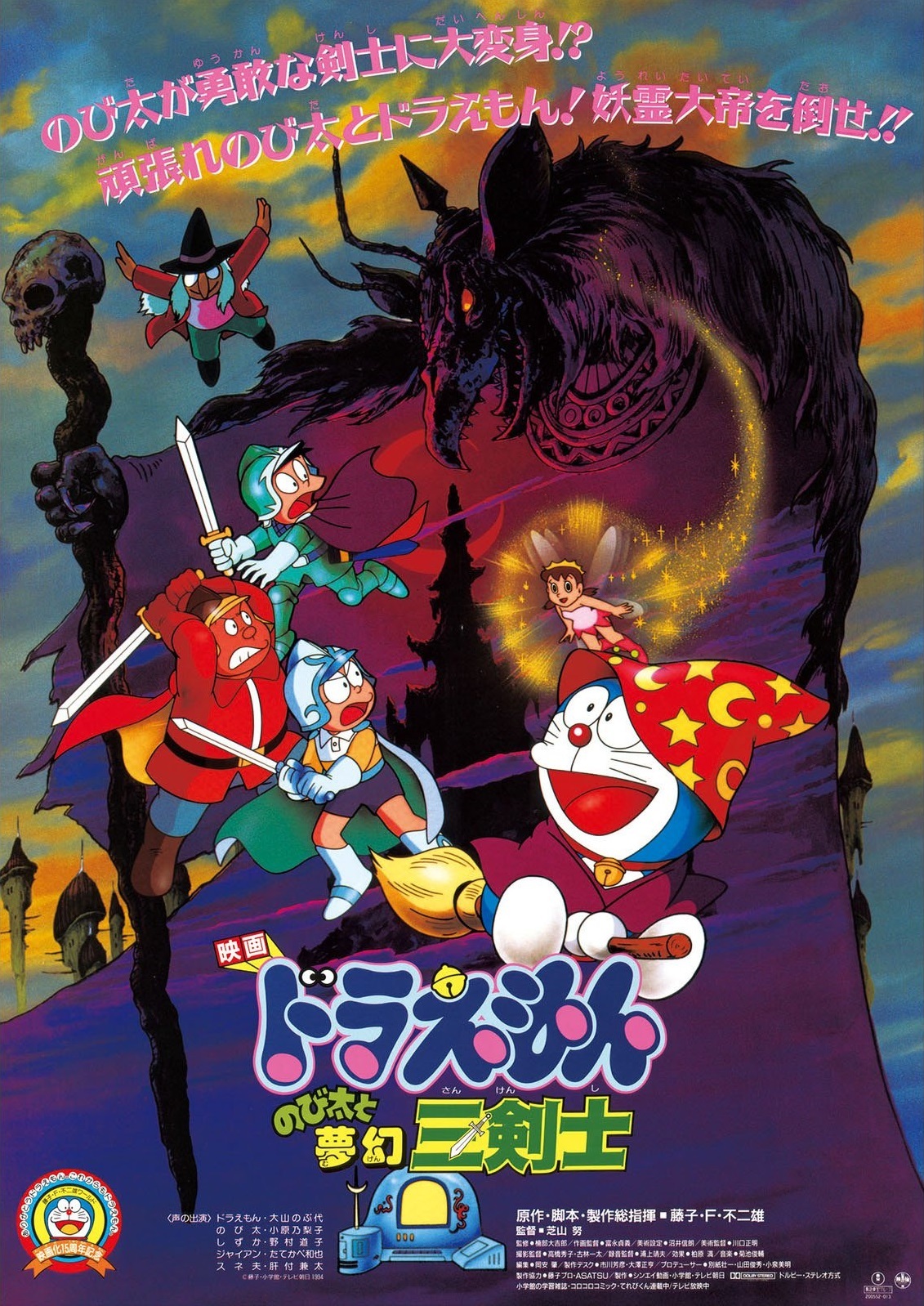
Doraemon: Nobita and the Three Dreamy Swordsmen (film) Spoiler Commentary and Discussion Summary
Doraemon: Nobita and the Dreamy Three Swordsmen" is the 15th animation film in the series, released in 1994. Nobita Nobi, a fifth grader in elementary school, experiences various dreams on a dreaming machine imported from the 22nd century by Doraemon, a cat-shaped robot. Eventually, he takes on the dream world of the "Three Swordsmen of Dreaming," ruled by the spectral giant Odrome. This is a unique work in which characters other than Doraemon and Nobita are treated as guests.
Read Article
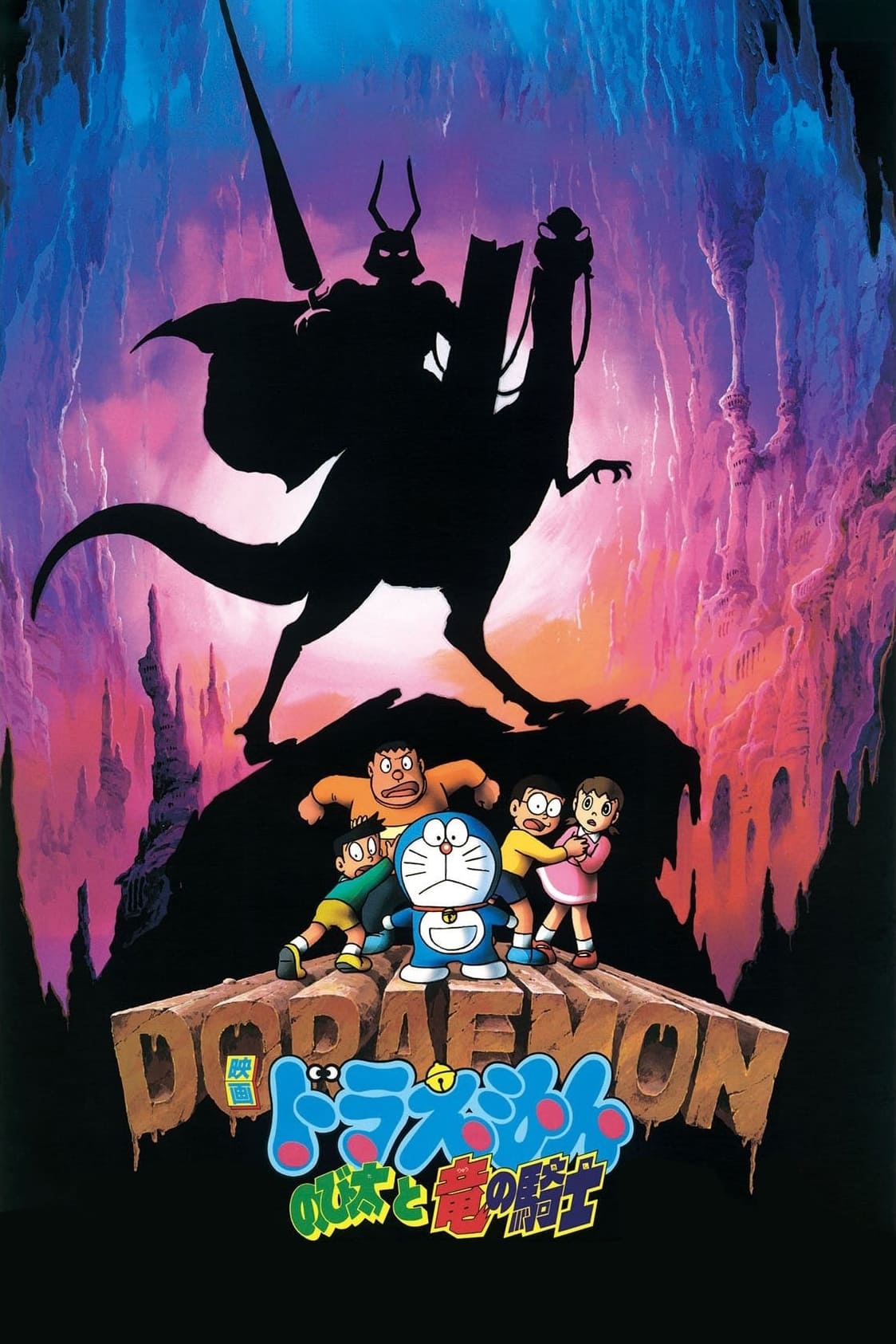
ドラえもん のび太と竜の騎士(映画)のネタバレ解説・考察まとめ
『ドラえもん のび太と竜の騎士』とは、藤子・F・不二雄が手掛けた漫画『ドラえもん』の劇場版長編アニメ第9作目作品である。 小学5年生の野比のび太や同級生達がネコ型ロボットのドラえもんが出したどこでもホールで地下の広い洞窟を作り楽しむが、その洞窟から恐竜や恐竜人達が住む地底国へと繋がっていたという物語展開となっている。 大の恐竜好きである藤子・F・不二雄が『ドラえもん のびたの恐竜』(1980年)に続き、地底世界の恐竜や恐竜人の姿を手掛けた長編大作。
Read Article
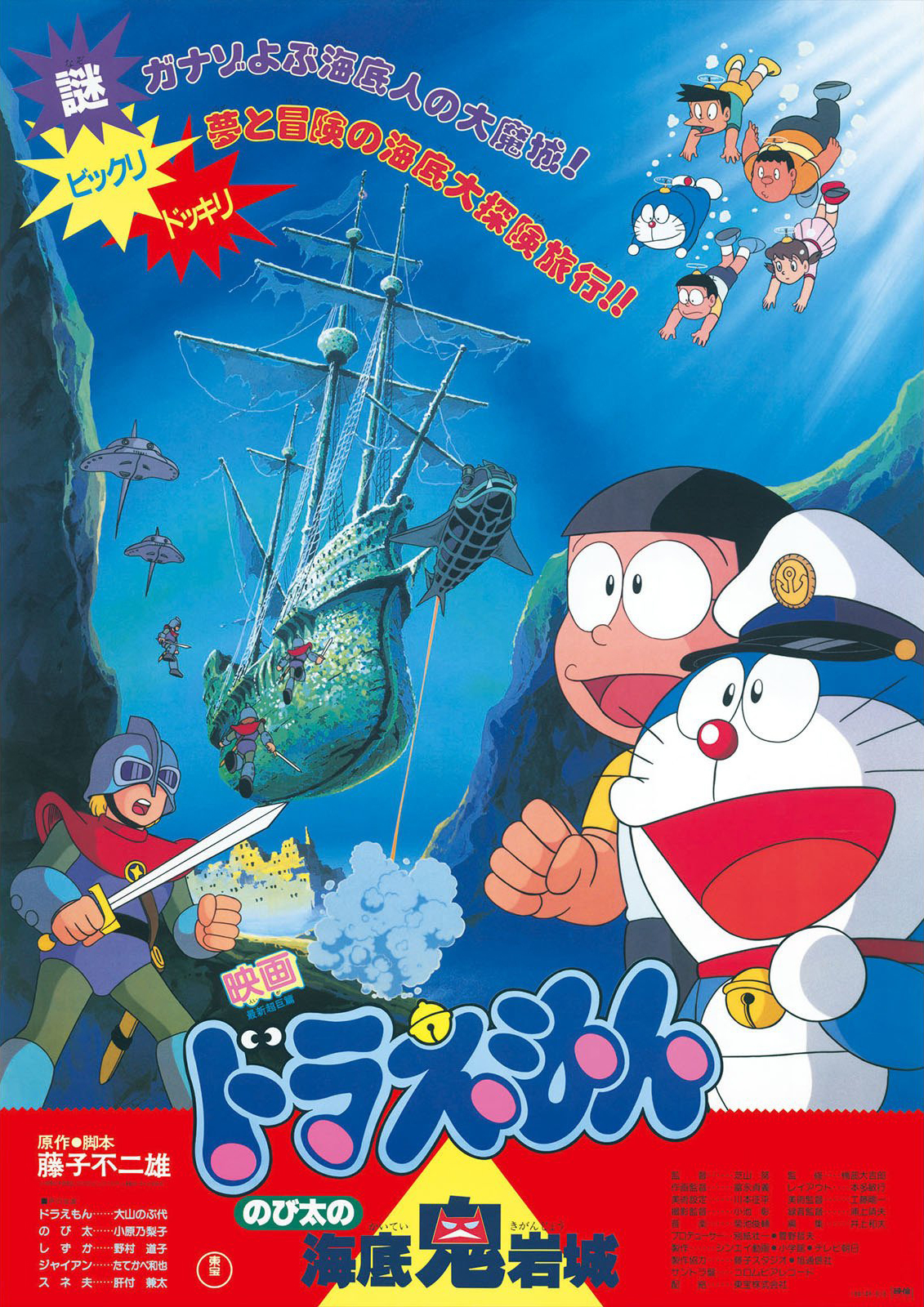
Doraemon: Nobita's Undersea Oniwashiro (The Movie) Spoilers and Discussion Summary
Doraemon: Nobita's Undersea Oniwashiro is the fourth feature-length animated film based on the manga "Doraemon" by Fujiko F. Fujio, and was released on March 12, 1983. Nobi Nobita (Nobi Nobita), a fifth grader in elementary school, goes to an undersea camp with some of his classmates during their summer vacation with the help of Doraemon, a cat-shaped robot, and enjoys exploring deep-sea fish. Just then, they encounter the Mu Federation, an undersea subterranean nation, and the story takes a major turn. While knowledge about the deep sea and the seafloor is conveyed through the story, the film also depicts the ruthlessness of the Mu Federation, the self-destruction of ATVs, and other serious developments.
Read Article
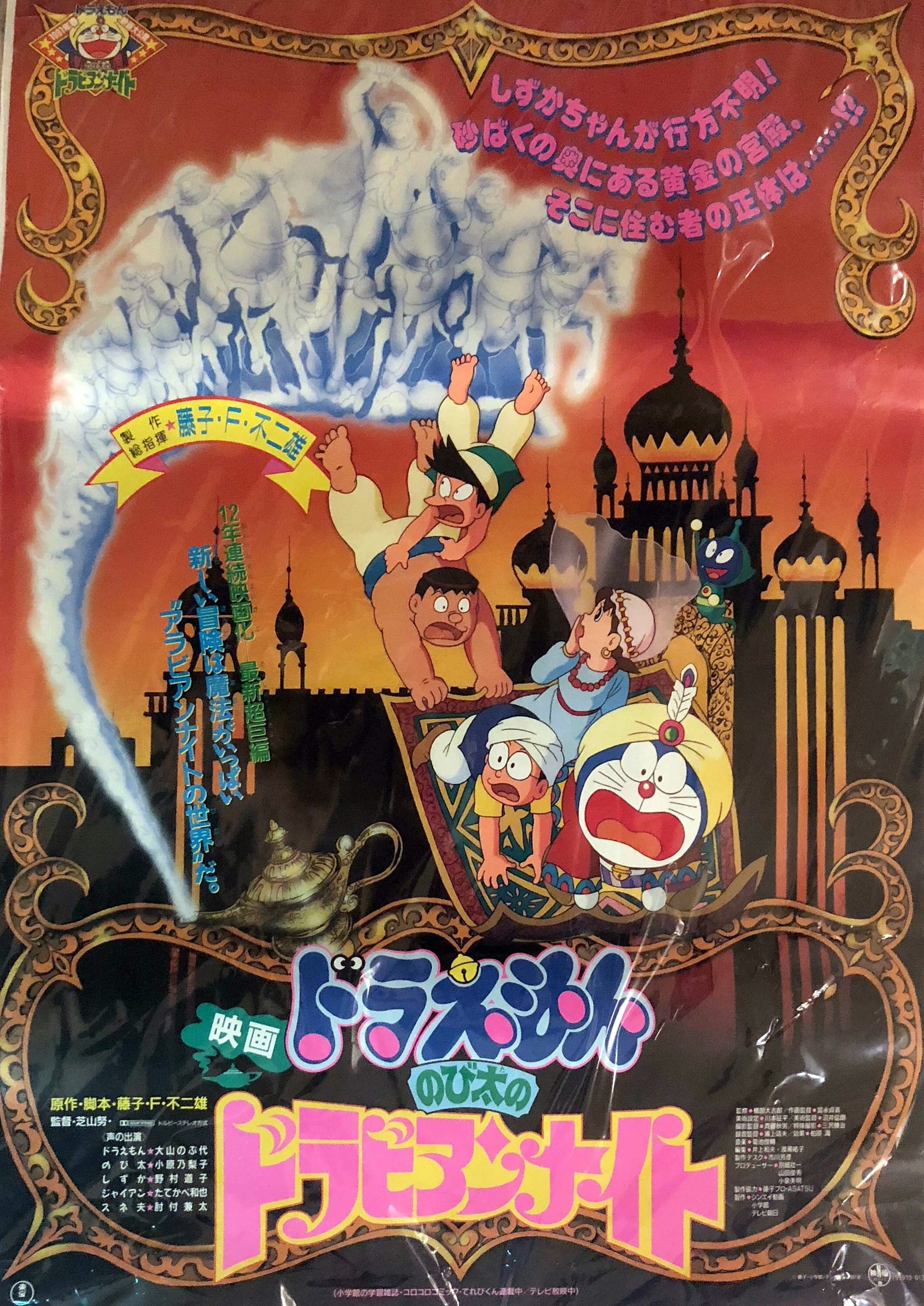
Spoiler commentary and discussion of Doraemon: Nobita's Drabian Nights (movie).
Doraemon: Nobita's Drabian Nights" is the 12th animated film in the series, released in 1991, and based on a manga written by Fujiko F. Fujio. Nobita Nobi, a fifth grader, enters the world of picture books using the tools in the four-dimensional pocket of Doraemon, a cat-shaped robot. However, Shizuka Minamoto, who was also enjoying the picture book world, goes missing. The film is set in Baghdad in the year 794 and is inspired by the picture book "Arabian Nights.
Read Article
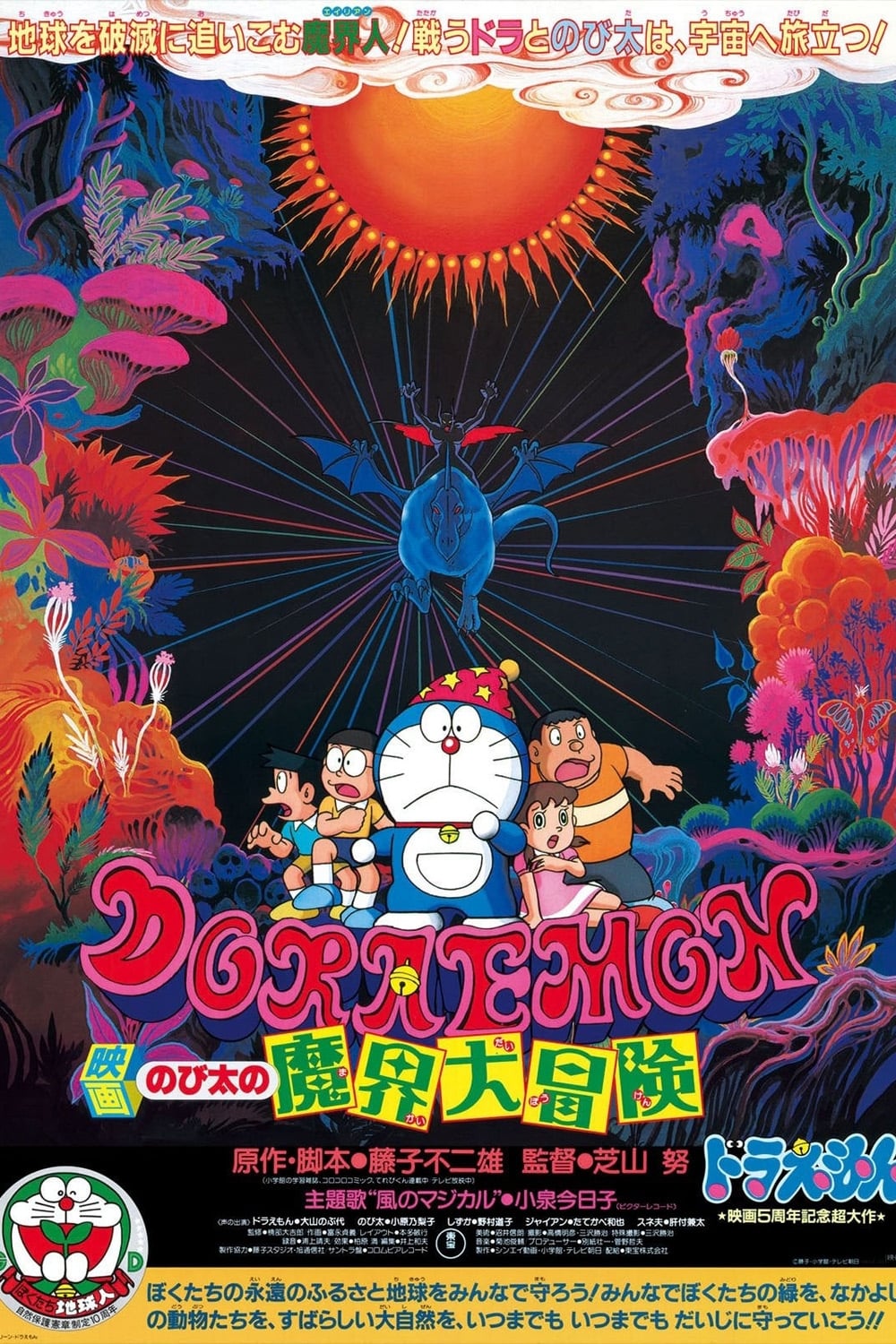
Spoiler commentary and discussion of Doraemon Nobita no Makai Daiboken (The Great Adventure of Nobita in the Magic World) (movie).
Doraemon: Nobita's Magical World Adventure" is the fifth feature-length animated adaptation of Fujiko F. Fujio's manga "Doraemon" and was released on March 17, 1984. Nobita Nobi, a fifth grader in elementary school who yearns for magic, uses the tools of Doraemon, a cat-shaped robot, to bring about a magical world. However, it is not the ideal Nobita had in mind at all, but a magical world ruled by demons. This work depicts a parallel world where the real world and the magical world created by Doraemon's tool, Moshi Moshi Box, intersect.
Read Article
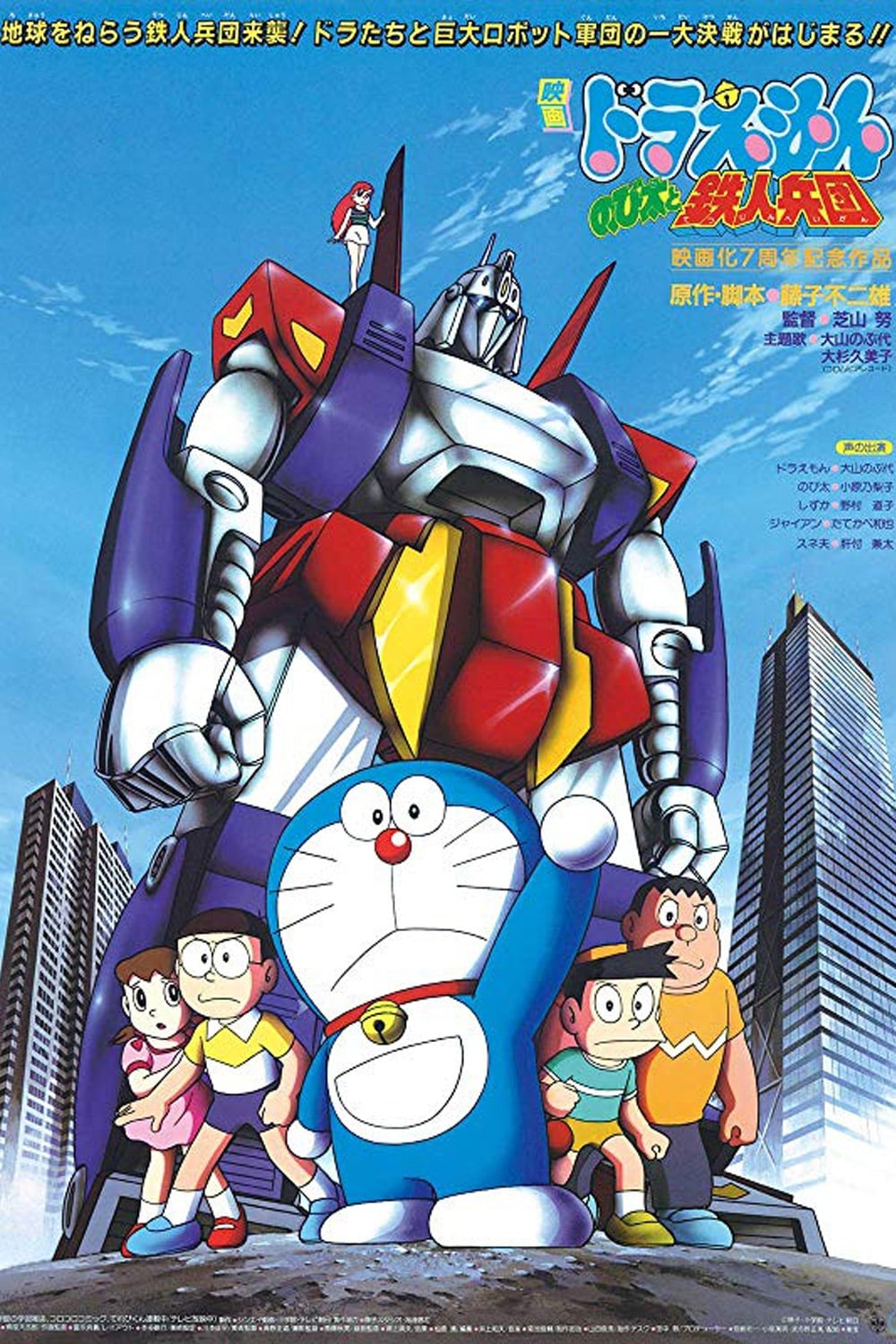
ドラえもん のび太と鉄人兵団(映画)のネタバレ解説・考察まとめ
『ドラえもん のび太と鉄人兵団』とは、藤子・F・不二雄が手掛けた漫画『ドラえもん』の長編アニメ第7作目作品である。小学5年生の野比のび太(のびのびた)は巨大ロボットが手に入れ喜ぶが、それは地球侵略を企む鉄人兵団の兵器だった。それからネコ型ロボットのドラえもんやのび太達は、ロボット惑星のメカトピアから地球侵略に来た鉄人兵団との戦いが展開する。地球人の総奴隷化という熾烈な目的を持つ鉄人兵団を、ドラえもん原作者の藤子・F・不二雄は「ドラえもん映画史上最強の敵」だと語った。
Read Article
Spoiler commentary and discussion of Doraemon: Nobita's Dinosaurs (1980 film).
Doraemon: Nobita's Dinosaur" is a "Doraemon" film released on March 15, 1980. Nobita Nobi, a fifth grader, promises his classmates, including Suneo Konekawa (Hone Kaseo), that he will find a dinosaur fossil, and discovers what looks like a dinosaur egg under a cliff. With the help of Doraemon, a cat-shaped robot, he gives birth to a dinosaur named Pisuke from the egg and raises him, but this is the beginning of a series of turbulent events. This is the first "Doraemon" movie commemorating the highly acclaimed "Doraemon" musical stage version and remake movie.
Read Article
Doraemon the Movie: Nobita's Earth Symphony Spoiler Commentary and Discussion Summary
Doraemon the Movie: Nobita's Earth Symphony is a film based on Fujiko F. Fujio's manga "Doraemon," which was released in March 2024. It is the 43rd film in the "Doraemon the Movie" series. Nobita and his friends meet a girl named Mikka, who has a beautiful singing voice, before a music concert. Micka is a survivor of the planet Musica, where music once flourished. The creature that destroyed Musica was a space creature called Noise. Nobita and his friends fight using music to save the planet from being targeted by Noise.
Read Article
Summary of Doraemon's Secret Tools
Doraemon" is a manga and animated film by Fujiko F. Fujio, based on the manga, in which Doraemon, a cat-shaped robot created in the 22nd century, helps Nobi Nobita, the ancestor of his owner, Sewashi, with a mysterious tool. Since its TV animation in 1979, it has become a popular work in Japan. The "secret tools" are items that Doraemon pulls out of his four-dimensional pocket to help Nobita, and they are the centerpiece of the work. The Secret Tools also play an important role in the annual theatrical film "Doraemon the Movie".
Read Article
Summary of Nobita Nobi's classmates and classmates
Nobi Nobita is a character in the science fiction gag manga "Doraemon" by Fujiko F. Fujio. He is the secondary character in "Doraemon" and is an elementary school student who lives a S (little) F (mysterious) life with the main character, Doraemon. He belongs to the 5th grade 3 class at school (4th grade in the manga), where he spends his days studying and playing with his classmates and classmates. In addition to characters such as Shizuka Minamoto, Takeshi Gouda (a.k.a. Gian), and Suneo Konekawa, with whom he always acts together, he has many classmates in the manga.
Read Article
Summary of guest heroines of Doraemon
The science fiction gag manga "Doraemon" by Fujiko F. Fujio is one of Japan's most popular manga, boasting national popularity." Despite its "children's" nature, it is loved by men and women of all ages, not only in Japan, but around the world. The TV and movie versions of "Doraemon" sometimes include guest characters who do not usually appear in the series. Among them, those with a heroine (female) guest character sometimes include an element of romantic comedy, which is different and more interesting than those with a male guest character who focuses on friendship.
Read Article
Summary of Doraemon's girlfriends and lovers
Doraemon, the main character in Fujiko F. Fujio's children's science fiction manga "Doraemon," is a cat-shaped robot from the 22nd century who one day comes to Nobi Nobita, an elementary school student living in the 20th century. Nobita's descendant, who lives in the 22nd century, told him to come here in order to make Nobita, who is not good at studying, sports, or anything else, into a respectable person. Doraemon lives with Nobita in his house and together they lead a peaceful life. Doraemon's friendships expand and he is sometimes depicted going out on dates with his girlfriend.
Read Article
Summary of Doraemon's cooking, meals, food, snacks, and drinks
Doraemon" is a manga by Fujiko F. Fujio and an anime/movie based on it, which began serialization in the children's manga magazine Shogakukan in 1969 and is known as a national work. It is a gag manga about the daily life of Doraemon, a cat-shaped robot, and Nobita Nobi, an elementary school student who is not good at sports and studies. The main story is that Doraemon solves Nobita's mishaps with secret tools that he takes out of his belly pocket. In addition to Doraemon's favorite food, dorayaki, many foods and drinks appear in the secret tools.
Read Article
Summary of Nobita Nobi's (Doraemon) grandmother's appearances
Nobita's grandmother is a character in the science fiction gag manga "Doraemon" by Fujiko F. Fujio. She is the blood grandmother of Nobita, the secondary character in "Doraemon," and mostly refers to Nobita's father Nobisuke's mother (paternal grandmother). His mother Tamako's mother (maternal grandmother) rarely appears. Nicknamed Nobita's grandmother, "Grandma's Memories," an episode of Nobita and Nobita's grandmother, is known as one of the most moving episodes in the "Doraemon" series.
Read Article

A collection of little-known Doraemon backstories and urban legends
Everyone is familiar with Fujiko F. Fujio's masterpiece "Doraemon. This time, we have collected such little-known back stories, small stories, back settings, and urban legends of Doraemon. Are there any episodes you know?
Read Article
In-depth summary of Kis-My-Ft2 (Kiss My)
Kis-My-Ft2 is a seven-member group that debuted with the single "Everybody Go" on August 10, 2011. The members are Hiromitsu Kitayama, Kennaga Senga, Toshiya Miyata, Wataru Yokoo, Taisuke Fujigaya, Yuta Tamamori, and Takatsugu Nikaido. The group was named after the initials of each member. They are good at performing on roller skates. The group also continues to be active in a wide range of venues, not only as a group but also individually, starring in movies, TV dramas, and commercials.
Read Article
What is Tokiwasou? History, anecdotes, trivia, cartoonists who lived there, members, and where it is located!
Tokiwa-so is a two-story wooden apartment building in Minami-Nagasaki 3-chome, Toshima-ku, Tokyo. Although the building was demolished in 1982 due to aging, it is still very well known as a "sacred place for manga. Even today, the Tokiwa-so Manga Museum and the Tokiwa-so Project have left their mark on the manga world. This article provides information about Tokiwa-so and the manga artists who lived there.
Read Article
Tools "I don't want" in "Doraemon
"What tools do you want at Doraemon?" We sometimes hear this question, but on the other hand, we also hear the question, "I definitely don't want this one tool! Even if I could have all of the tools from the pockets and all of the works, I would definitely throw this one away! Even if I could have all the tools that appeared in the work, including the pockets, I would definitely throw this one away! Please take a look at some of these "unwanted" tools.
Read Article
A compilation of gaffes & outbursts & other hilarious statements from the cartoon "Doraemon".
Doraemon" is a well-known cartoon character, but did you know that the cartoon "Doraemon" and the animated TV series "Doraemon" actually say completely different things (under the strict supervision of our BPO)? In this article, we have excerpted the frame scenes of the real "Doraemon" as he is depicted in the cartoon "Doraemon.
Read Article
Doraemon" is no longer a joke! Secret Tools
The "secret tools" in the popular national anime and manga "Doraemon" are all very attractive. The "Dokodemo Door" and the "Takekoputaa" are all things that every human being would like to have! They are all things that any human would want to have. However, there are also "jokey secret gadgets" among them. I have compiled a list of them, because they were terrible when I opened the lid, and there were a large number of them.
Read Article
Time Patrol, over here! Violations regarding the history of "Doraemon
I often hear people say that it is already a violation when Doraemon came to Nobita's place, but I also see quite a few other actions that make me want to say, "Aren't you altering history, hey?", Dora-san.
Read Article
![Fujiko F. Fujio] Spoiler Alert! I'll show you everything, Kawasaki City Museum](https://renote.net/files/blobs/proxy/eyJfcmFpbHMiOnsiZGF0YSI6NTY2MjEzNCwicHVyIjoiYmxvYl9pZCJ9fQ==--0c310c539b9822e93d73f765034169995c943fec/8d499747327daac730a94583a6adf40f.jpg)
Fujiko F. Fujio] Spoiler Alert! I'll show you everything, Kawasaki City Museum
The Fujiko F. Fujio Museum in Kawasaki City, Kanagawa Prefecture, is known as a place where many people visit every year. Please use this article as a guide to enjoy the Fujiko F. Fujio Museum to the fullest. It contains spoilers, so be warned if you don't want your fun taken away until you get there!
Read Article
Warning! Nothing makes me cry like "STAND BY ME Doraemon"! Doraemon "bokete" excellent bokeh compilation
Doraemon" is a science fiction manga by Fujiko F. Fujio that was serialized in "Yoriko" (Shogakukan) from 1970. It depicts the interaction between a cat-shaped robot named "Doraemon" and a boy named "Nobita" in elementary school. Even after Fujiko F. Fujio's death, "Doraemon" has continued to be made into movies that are always talked about as "tear-jerkers." We have compiled a list of shocking "bokete" that break down the world view of "Doraemon.
Read Article
Tags
Contents
- What is Captain Savelle?
- What is "Doraemon: Nobita's Daimakyo"?
- Bauwanko Kingdom
- gigantic statue of a god
- Comparison of old and new Captain Savelle in the movie
- Peco's connection with Peco
- Relationship with dublander
- Additional scenes showing the character of the remake captain
- Opponent is Nobita (Peco in the old work)
- Changes, characters, and characters other than Captain Savelle
- Pekoe.
- Princess Spiana
- brussels sprouts
- penis
- dublander
- Dr. Koss.
- Bruteli Bernard.
- Changes and descriptions other than Captain Savelle's
- summary