
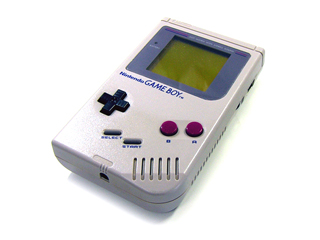
Gunpei Yokoi developed a portable game console that followed the Game & Watch, which became a worldwide hit. Its next generation console was released for the first time in nine years.
Product Overview
Name Game Boy (GAMEBOY)
Type Portable game console
Manufactured by Nintendo
Released April 21, 1989
Price 12,800 yen (including tax)
Sales Japan 32.47 million units Worldwide 118.69 million units
Development Objectives
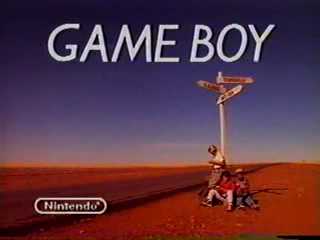
CM of the first Game Boy
Developed by Gunpei Yokoi.
It was developed nine years after 1980 as the next generation of the "Game & Watch" portable game console, which was a worldwide hit. However, at the time of its release, public interest was exclusively focused on the Super Nintendo Entertainment System (SNES), the next-generation console for the Famicom (NES), and not much was said about it.
Yokoi's goal was to "go back to the roots of games. The starting point is "to create new ideas, which is the essence of game making. At the time, the game industry was at a standstill in terms of ideas, and all it was doing was competing in terms of hardware CPUs and colors, and he felt that the industry had reached its limits. He felt that the industry was at its limits, so he set out to develop low-cost hardware that would go against the grain of the times.
Thoroughly cut costs
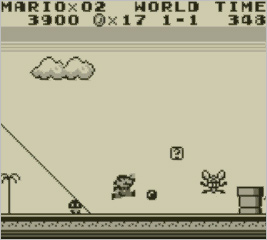
Super Mario Land
Yokoi believed that "the public would react by asking why a game machine that fits in a pocket is priced higher than the Famicom (14,800 yen)," so he devised a way to thoroughly reduce costs.
The Game Boy was developed in the same department for both hardware and software, and we repeated the process of mutually examining necessary and unnecessary functions. The result was a completely lean game console that cost 2,000 yen less than the Famicom.
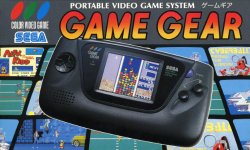
Game Gear, a rival portable game console with color LCD (introduced in 1990)
Its most distinctive element was the "monochrome" screen. The most advanced handheld games of the time had color screens that were visually vibrant, but they consumed batteries quickly and the hardware was expensive. However, this model overcame these drawbacks by applying "dead technology.
The color LCD also had the fatal flaw of being difficult to see in the sun. The black-and-white option met the needs of users in terms of utilizing the advantages of portable games, such as the ability to play games anywhere, whether in the ocean or in the mountains.
Related Articles
Inventions of Gunpei Yokoi, "Mr. Nintendo" - RENOTE
renote.net
We will look at the philosophies and ideas of Gunpei Yokoi, who transformed Nintendo from a long-established manufacturer of playing cards and hanafuda (Japanese playing cards) into the world-class company it is today.
The Secret Story of Game Boy Development: Gunpei Yokoi's Biggest Failure in Life - RENOTE
renote.net
The development of the Game Boy seemed to be going smoothly, but there was an unexpected pitfall. Gunpei Yokoi faced the biggest crisis of his life.
