

Of all the works dealing with dissociative disorders, I brought this story to the end because it was the least redeeming. It is graceful not to provide easy salvation for the story, not to mention the heaviness of the theme it deals with, but at the same time, it is because it would have the problem of "the inevitability of being entertainment. The writer's attitude of "writing about things that are commonplace" seems to be incompatible with the entertainment aspect.
Considering Dissociative Disorder 2 - "Golden Time" - RENOTE
renote.net
The second work dealing with dissociative disorders that I would like to introduce is "Golden Time. It is a work in which the protagonist, who has lost his memory and become a different personality, describes his fear that his memory will return and that his present self will disappear. What makes "me" "me" and what is "me" in the first place? It is a work that dared to challenge a theme that might be too heavy for a light novel, and when I read it back now, I feel that it is a little too early for its time.
The "Understandable Causes" of Dissociative Disorders
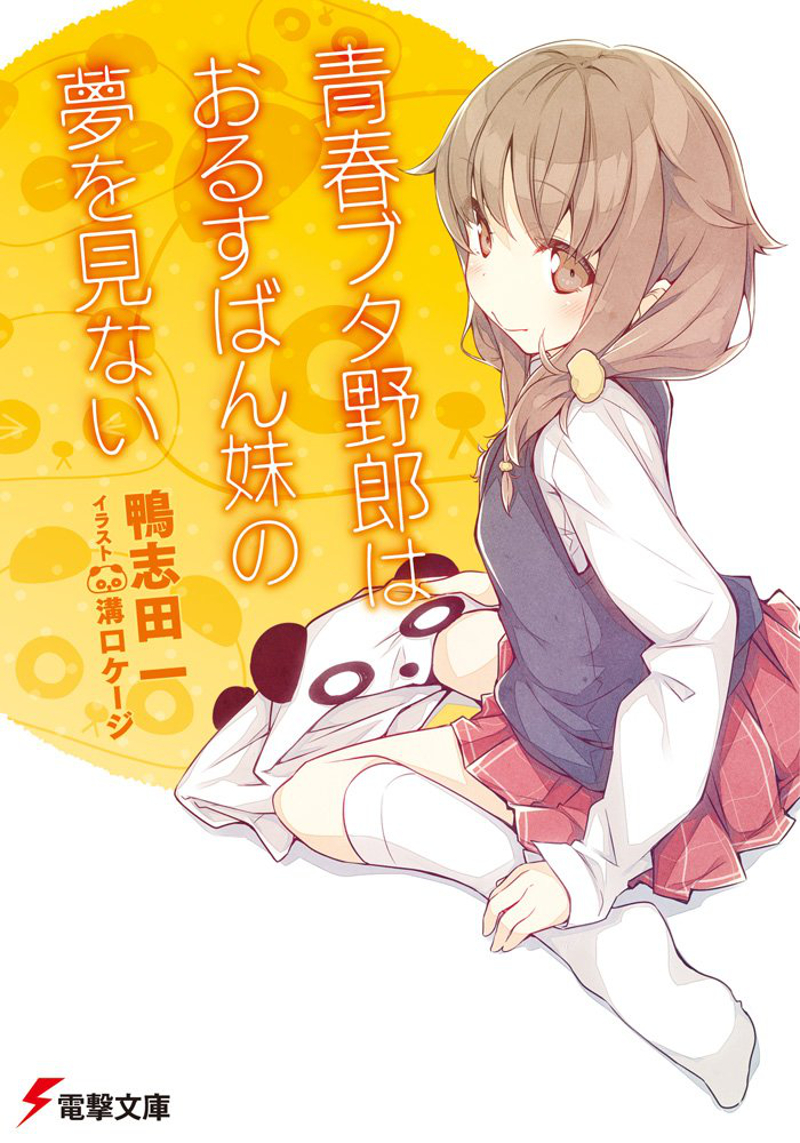
In "Seishun Butajyaku wa Orusuban no Yume Yona no Yume" (written by Hajime Kamoshita, illustrated by Cage Mizoguchi), dissociative disorder strikes the protagonist's younger sister, who refuses to go to school due to line bullying, which leads to dissociative disorder.
The family, especially the mother, refuses to recognize the alternate personality that has emerged as a result of the dissociative disorder. As a result, the protagonist has to leave home with his sister and start living on his own.
unhelpful ending
Many people might think that such a heavy story would provide some kind of redemption, but the actual story does not go in that direction. The experience of the alternate personality is not utilized, as in "Even If I Don't See You Tomorrow," nor are the two personalities integrated, as in "Golden Time.
The alternate personality that emerges due to dissociative disorder simply disappears before it can fulfill its goal of going to day school. This kind of irredeemability, which is not typical of light novels, is only depicted in a light-hearted manner.

His eyes light up at the sight of the panda he has longed to see. The "tragedy" happens right after this.
I write what I take for granted."
In a previous interview published in a magazine, there is a statement that is of interest to me.
-In the "Seishun Butajyaku" series, as in the "Seishun Butajyaku" series, you depict the "pain" that is unique to teenage boys and girls, and how to deal with that pain. What kind of feelings do you put into depicting "pain"?
Kamoshita: It is not so exaggerated as to be called feelings, but I try to write about it as a matter of course, because it is a matter of course.
Source: dengekionline.com
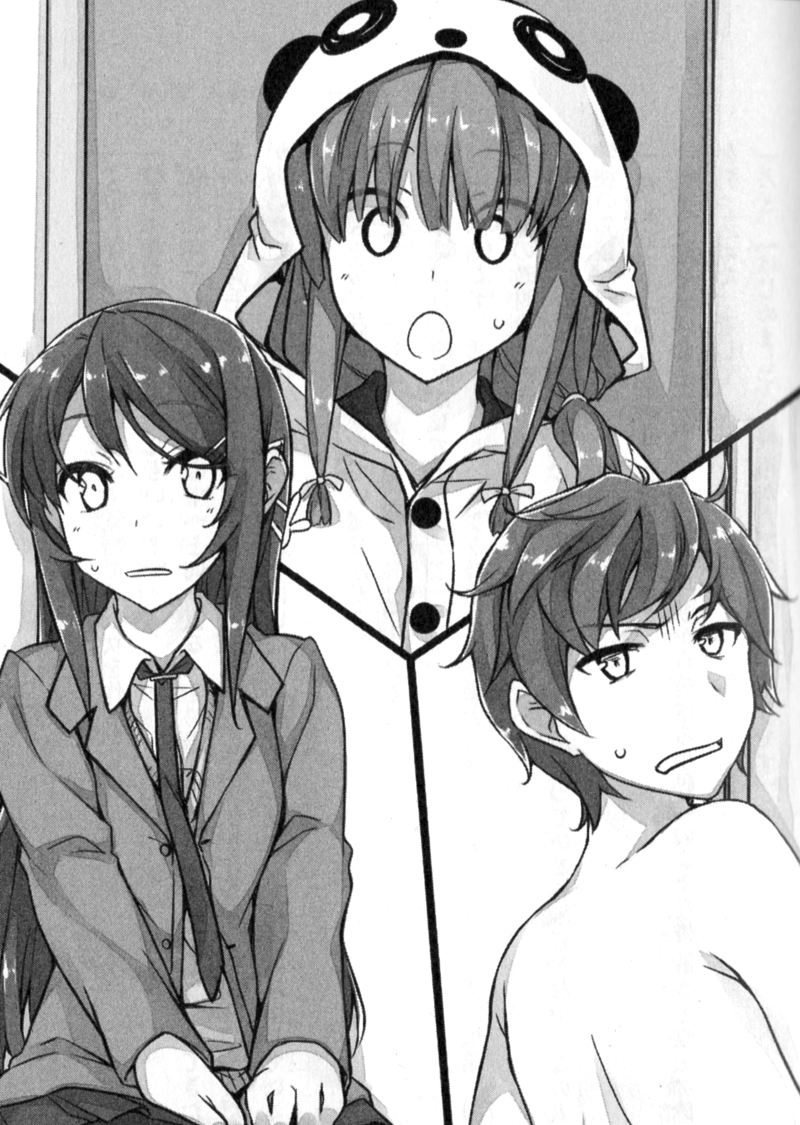
Dissociative disorders were also foreshadowed early on, such as not knowing the names of famous celebrities that everyone should know.
In other words, what is obvious is just plain writing.
'But there is no such dreamy solution. It's not cruel or anything, but as a matter of course the two don't come together" (quoted from page 281).
As the protagonist is made to say, the unredeemable ending is only so written as long as it is a natural consequence.
This is a concept that is terribly incompatible with entertainment. Writing things as they are also means writing the dirty and ugly parts as they are. This is one area that leaves me uneasy, not as a writer, but as an entertainment writer.
This work also depicts the problems of the Internet society, such as cyber bullying that triggered dissociative disorders. I would like to introduce that at some point.
