
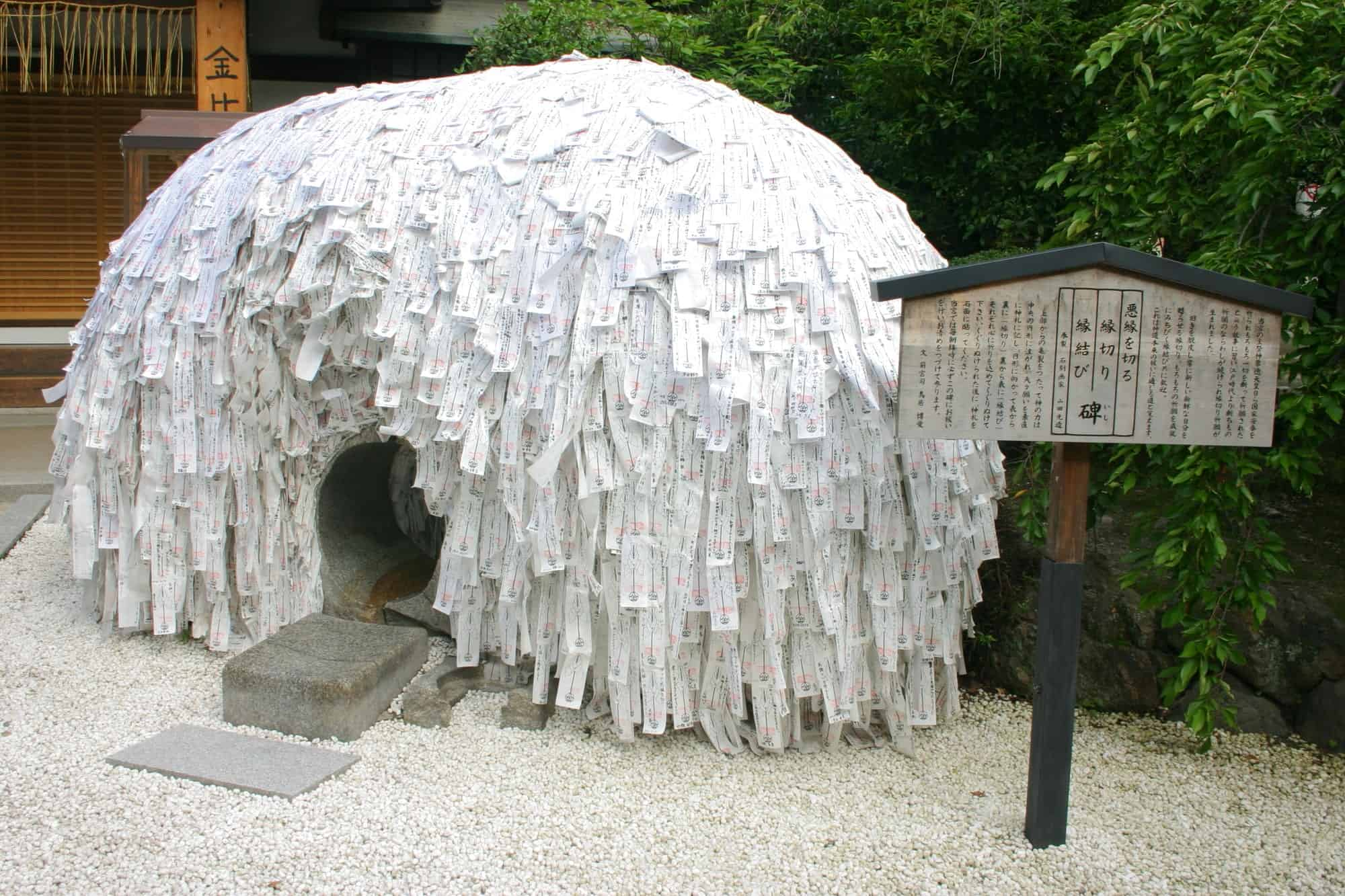
Urban legends, ghosts, and scary folklore from the Kansai region. Included are urban legends about the "Ya-Ya Festival" in Mie Prefecture, where people jump into the sea completely naked, and rumors about Yasui Konpira-gu Shrine, a shrine in Kyoto where people break off relationships with each other through curses. From mysterious stories to horrifying tales, we will introduce rumors passed down through the generations in the Kansai region.
There is a shrine called Inari Taisha in Fushimi Inari, Kyoto. Inari is worshipped as a god.
It is a truly sacred place and a popular spot in Fushimi, Kyoto. It is also a popular tourist spot, attracting a large number of visitors.
However, there is a legend that Inari-sama used to be a scary god.
The fox was originally an incarnation of fire that could manipulate flames. In cartoons, TV dramas, and animations, foxes are also referred to as yokai (monsters), such as the nine-tailed fox and the white fox.
The foxes were the embodiment of Inari, the deity of the Fushimi Inari Taisha shrine.
Legend has it that Inari often visited the village on the night of the Warring States period and took away the people's sake, causing the flames to burn the village to the ground.
It is also said that warlord Oda Nobunaga also encountered Inari in one of his writings.
It is not known how it was twisted and is now honored as the principal image supported by the people.
I am from the Kansai region and visit Inari Taisha Shrine as well as Kyoto. There is a mountain called Mt. Inari next to the shrine, and there are many torii gates along the approach to the shrine, such as Senbon-torii.
Source: xn--9oqx67ab2fnkbmy2he6h.com
What is the true role of Senbon-torii?
https://xn--9oqx67ab2fnkbmy2he6h.com/?p=481
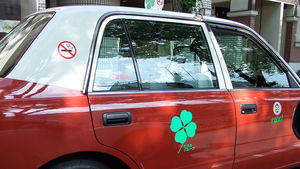
Kyoto Prefecture "Four-leaf clover cab" to bring happiness
Source: xn--9oqx67ab2fnkbmy2he6h.com
Four-leaf clover cab" to bring happiness
Four-leaf clover cab" to bring happiness
四葉のクローバー🍀のタクシー見た!!
— えり (@eringo3115) August 18, 2015
いいことあるかな💭 pic.twitter.com/Gi3W1STRDX
夫が子供達連れてプールに行ってくれた。
— おはな®︎🌼6歳&4歳 (@lauramt1979) July 21, 2019
送っていく道中見つけた幸せのヤサカ四葉のクローバータクシー🚕
(よく見るのは三つ葉マークで、初めて見た!) pic.twitter.com/5oiKnAuZwK
Kyoto is a tourist city. There are many cab companies operating in the city. One of the most famous cab companies in Kyoto is MK Taxi, which is famous for its low fares and courteous service.
The symbol of Yasaka Taxi is a "three-leaf clover. Some people call it "three-leaf" because of the mark on the ceiling light and the door portion of the vehicle. There are approximately 1,400 cabs running in the city. Only four of them have a "four-leaf" clover.
The idea for the "four-leaf cab" came from a customer who got into a cab on a rainy night and found that a wet leaf had accidentally stuck to the ceiling light and turned into a four-leaf.
The "Yotsuba Taxi" is a cab that runs around Kyoto City, and cannot be reserved or appointed.
Source: xn--9oqx67ab2fnkbmy2he6h.com
Read more
https://xn--9oqx67ab2fnkbmy2he6h.com/?p=60
The Globe of Prince Shotoku" at Ikaruga Temple, Hyogo Prefecture
Source: xn--9oqx67ab2fnkbmy2he6h.com
Ikaruga Temple "Shotoku Taishi's Globe
Ikaruga Temple "Shotoku Taishi's Globe
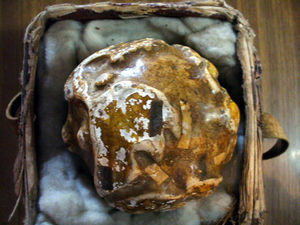
A bumpy ball said to have been made by Prince Shotoku, on display in the Treasure House of Ikaruga Temple in Hyogo Prefecture.
Seeing the bumps on the sphere reminds me of the world map I drew as a child.
The ball the size of a softball at Ikaruga Temple, built by Prince Shotoku, is called a "chichuseki" (stone in the earth).
It is listed as a treasure associated with Prince Shotoku in the "Jyoshimonocho," an inventory of the temple's holdings made during the Edo period (1603-1868).
If you look closely at this "chichuseki," you will see "Megaranika" written in the location of Antarctica.
Magallanica is the name of a fictional continent that was said to exist in the south in ancient Greece.
Since the name "Magallanica" was written on the Antarctic Continent, it is said that this globe may have been made by Prince Shotoku.
Source: xn--9oqx67ab2fnkbmy2he6h.com
Read more
https://xn--9oqx67ab2fnkbmy2he6h.com/?p=829
The Secret Behind the JR Kobe Line Station Names
Source: xn--9oqx67ab2fnkbmy2he6h.com
The Secret Behind the JR Kobe Line Station Names
The Secret Behind the JR Kobe Line Station Names
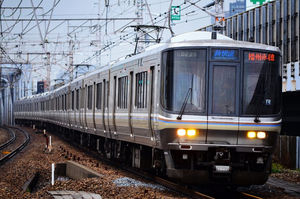
The JR Kobe Line runs along the Seto Inland Sea mainly in Kobe City, passing through key locations in Hyogo Prefecture and connecting Osaka to Himeji.
The JR Kobe Line is a popular line among locals and tourists alike, but I have heard some chilling stories about this line.
It seems that the six stations between Suma and Akashi on the JR Kobe Line, which run along the coast, are famous for frequent personal injury accidents that disrupt the schedule, especially westbound trains (toward Akashi and Himeji).
It is said that the name of the stations may be one of the causes,
↑↑↑↑↑↑↑↑↑↑↑↑↑↑↑↑↑↑↑↑
West Akashi
Asagiri
Maiko
Tarumi
Shioya
Suma
↓East
East
Ah, death again." A very strange sentence emerges.
Source: xn--9oqx67ab2fnkbmy2he6h.com
Read more
https://xn--9oqx67ab2fnkbmy2he6h.com/?p=777
Okama Coast" between Suma and Shioya, Hyogo Prefecture

Source: matomeshi.net
Okama Beach" between Suma and Shioya
Okama Beach" between Suma and Shioya
Suma in Kobe City, Hyogo Prefecture, is a famous beach in the Kansai region.
At one time, there were problems such as young people making too much noise, causing families to leave the beach and injections of stimulants to fall into the water.
However, together with "Okura Beach" in the neighboring Maiko, they are making efforts to make the beach a healthy beach, such as setting a regular bathing time and stopping the sale of large quantities of alcohol.
Although the area between Suma and Shioya is not a beach, there are beaches where you can fish, play in the water, and even swim a little, although it may be illegal to do so.
Among them, a certain beach between Suma and Shioya is called "Okama Beach.
I do not know when the name "Okama Beach" became popular, and I have never heard of its origin from anyone, even though I know the name "Okama Beach".
It is said that when you swim alone at "Okama Beach," a man always comes close to you and you get into an uncomfortable atmosphere.
Source: xn--9oqx67ab2fnkbmy2he6h.com
Read more
https://xn--9oqx67ab2fnkbmy2he6h.com/?p=352
Okiku Well, Himeji Castle, Hyogo Prefecture
Source: xn--9oqx67ab2fnkbmy2he6h.com
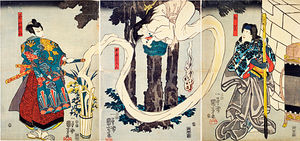
Himeji Castle Okiku Well
Himeji Castle Okiku Well
I am sure that everyone has heard the story "Bancho Sarayashiki" at least once, which always comes up in summer ghost stories.
A beautiful servant girl named Okiku broke a set of 10 Korai plates that her master valued so much that he cut her off and threw her into an old well, where she spent many nights counting the plates with a grudge. When he counted to nine, he cried out, "Ichimaiitarinai..." This is a ghost story.
There are many other legends about this famous "Okiku's Well.
For example, a little-known fact is that when Okiku broke a dish, she was tortured by the Lord's wife, had her middle finger cut off, and was placed under house arrest.
She was so eager to escape that she continued to run, even though her kimono was ripped off, and the slope she passed through on the way is called "Obizaka," which is still located near Kudan-minami 4-chome on Yasukuni Street.
Source: xn--9oqx67ab2fnkbmy2he6h.com

Contents
- Prostitution Island (Watakano Island), Mie Prefecture
- Mie Prefecture Genuine Naked Festival "Ya-Ya Festival
- Mysterious water accident at "Nakagawara Beach" in Mie Prefecture
- Cursed Stone Lantern, Mie Prefecture
- Yasui Konpiragu Shrine, a shrine to break off ties through curses, Kyoto Prefecture
- Karasuna, Kyoto, Japan
- Kyoto's three most bizarre festivals: "Agatasai," a late-night parade of portable shrines resembling sexual organs
- Kyoto Prefecture "Jizo-bon," a strange festival that makes Jizo colorful
- Kyoto Prefecture The theory that "lovers who go on a date in Arashiyama get separated" was correct: "lovers who cross the Wataratsuki Bridge together get separated.
- Kyoto: "Senbon-torii" (Thousand torii gates) at Fushimi Inari-taisha Shrine, where those who pray are sure to be visited by misfortune.
- Kyoto Prefecture "Four-leaf clover cab" to bring happiness
- The Globe of Prince Shotoku" at Ikaruga Temple, Hyogo Prefecture
- The Secret Behind the JR Kobe Line Station Names
- Okama Coast" between Suma and Shioya, Hyogo Prefecture
- Okiku Well, Himeji Castle, Hyogo Prefecture
- Headless Rider, Mt. Rokko, Hyogo
- Wakayama Prefecture: If you break a promise, you will die [Gyutama Bao-jirushi].
- Wakayama Castle, Wakayama Prefecture "Dwarf Climbing the Stone Steps" (Wakayama Castle)
- Awashima Shrine, Wakayama Prefecture "Dolls with Hair Growing Out".
- Real GANTZ! The "Izumiotsu Station Disappearance Accident" in which people disappeared.
- The Woman in Red at the Fountain Plaza at JR Osaka Station, Osaka
- Legend of Mount Inunaki, Osaka Prefecture
- Reason why "Sento-kun" was recognized in Nara Prefecture
- Nara Prefecture, Specter Ggoze (Genko-ji Temple)
- Shiga Prefecture Mushroom Specter "Kusabira God
- Urban Legends about Lake Biwa, Shiga Prefecture
- We also recommend this summary