
Urban legends, ghosts, and scary folklore from the Kansai region. Included are urban legends about the "Ya-Ya Festival" in Mie Prefecture, where people jump into the sea completely naked, and rumors about Yasui Konpira-gu Shrine, a shrine in Kyoto where people break off relationships with each other through curses. From mysterious stories to horrifying tales, we will introduce rumors passed down through the generations in the Kansai region.
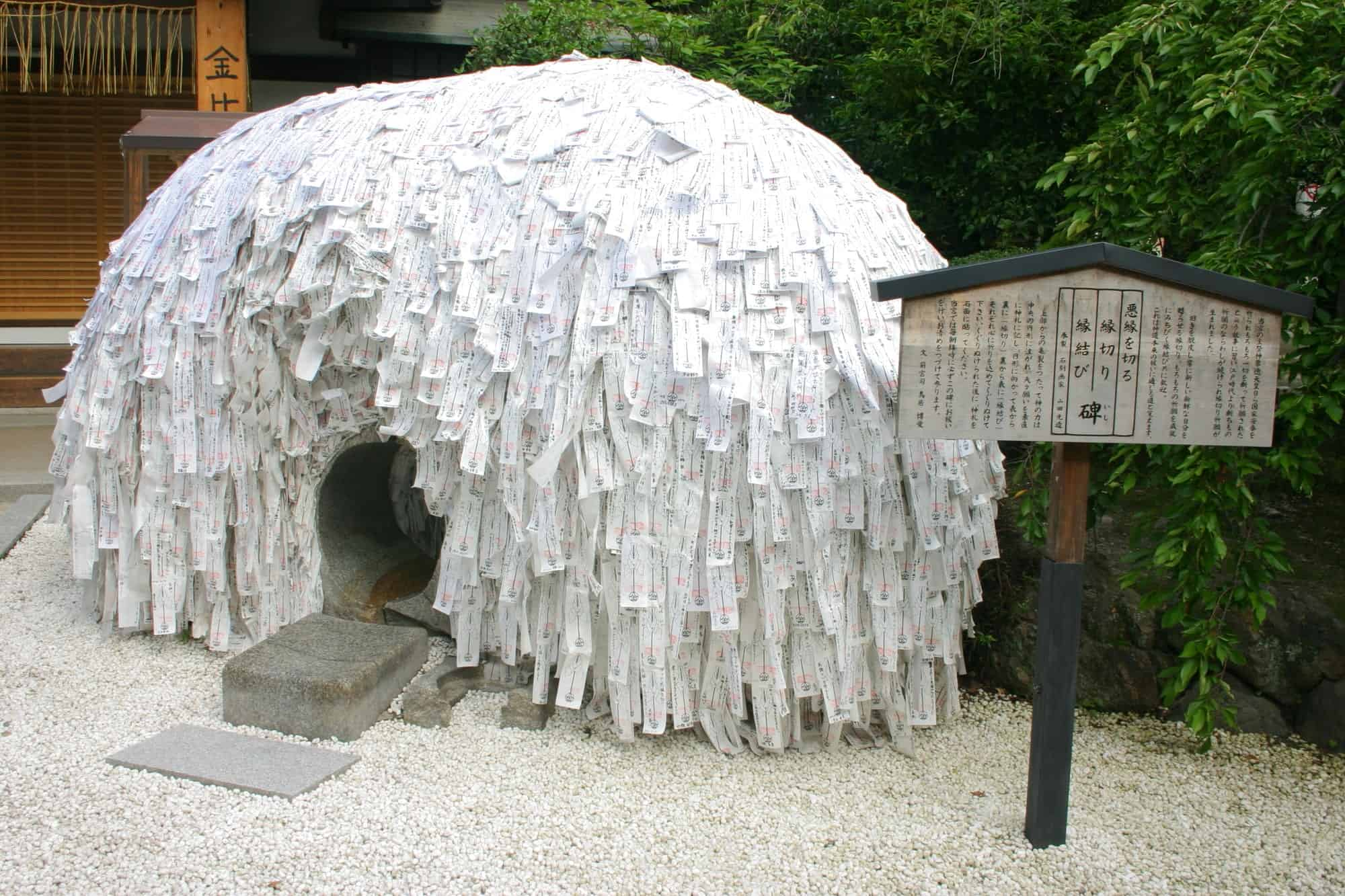
Yasui Konpira-gu Shrine in Kyoto is a shrine dedicated to the god of marriage, and is known not only for bringing good relationships together, but also for cutting off bad ones that have already formed.
While people from all over Japan come to the shrine to seek a good marriage, some people come with strong grudges, and the shrine is also known as a place where people with strong grudges, who want to inflict pain on their hateful partner, who cannot be forgiven by simply severing ties, place a curse on the person they want to punish.
The monument has a hole in it that a person can barely squat through, and if you go back and forth through the hole and put a white slip of paper on the stone monument, you can have a good marriage. I feel uncomfortable to put them on the monument because it seems to be overwriting other people's wishes.
Source: xn--9oqx67ab2fnkbmy2he6h.com
Read more
https://xn--9oqx67ab2fnkbmy2he6h.com/?p=923
Karasuna, Kyoto, Japan
Source: xn--9oqx67ab2fnkbmy2he6h.com
Crow name (Crowna)
Crow name (Crowna)
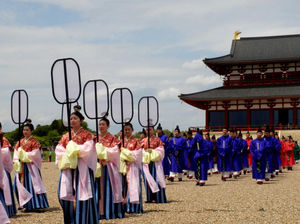
Karasuna is a custom in a vanishing village near Kyoto to give a child another name in addition to his or her real name at birth.
It is said to have originated in a time before the Nara period (710-794), when a nobleman was suspected of something untoward and fled to the mountains behind the village.
What happened at that time has long since been forgotten, but a kamidana (altar) was built in the iwaya (rock house) where the noble man who escaped lived, and the residents still continue to make offerings in turns.
It is customary in other areas to give the child both a real name and a temporary name. The real name is a name known only to the parents and the child, and is a secret name that must not be known to any other brothers or sisters.
Therefore, they usually live under a temporary name, but the Wushina have a set time when they use their temporary name, and they usually live under their real name, avoiding the use of the Wushina.
Source: xn--9oqx67ab2fnkbmy2he6h.com
Read more
https://xn--9oqx67ab2fnkbmy2he6h.com/?p=986
Kyoto's three most bizarre festivals: "Agatasai," a late-night parade of portable shrines resembling sexual organs
Agata Festival, a strange festival in the dark night, Kyoto
-あがた祭りと言うのは毎年6月5日に行われるお祭りで
— 黄前久美子 (@kumiko_oumae_b) July 23, 2019
この時期になると…なんとなく皆がそわそわし始めたりする
…こんな感じで-
それとあがた祭りに3年生4人で行ってたところで泣いた
— 斎王 (@ITONA_P) July 15, 2019
This is the story of a festival in Uji City, in southern Kyoto Prefecture, known throughout Japan as the town of tea.
In Kyoto, there are what are called "three major strange festivals," and this time I would like to introduce one of them, the "Agata Festival," also known as the "Strange Festival of the Dark Night.
The festival is held every year from June 5 to the early morning of June 6, and is called the "strange festival of the dark night" because all the lights along the streets are turned off at midnight and the parade is held in the darkness.
Let us introduce what exactly the festival is like.
I believe that festivals are filled with various wishes, originated in each area, and have been handed down from generation to generation.
Some people pray for a good harvest, some pray for a natural disaster, some pray for a big catch of fish, and some pray for a good harvest.
However, people in the past were different. In the olden days, however, people prayed for the birth of a child.
Source: xn--9oqx67ab2fnkbmy2he6h.com
Read more
https://xn--9oqx67ab2fnkbmy2he6h.com/?p=799
Kyoto Prefecture "Jizo-bon," a strange festival that makes Jizo colorful
Source: xn--9oqx67ab2fnkbmy2he6h.com
Jizo-bon, a strange festival that makes Jizo colorful
Jizo-bon, a strange festival that makes Jizo colorful
August is a time when people often return to their parents' homes for summer vacation and the Obon holidays.
This was the case when a relative living in Saitama came back to Kyoto Prefecture, where I live.
I talked a lot with my aunt because of the area where we live. I told her that I was very tired of "Jizo-bon" when I was in junior high school.
My aunt looked blank and did not seem to understand what I was saying.
After a short pause, she called my name and asked me what I meant by "Jizo-bon.
I then realized that what I had said was a misunderstanding of what other people in other parts of the world thought was a different culture or that "Jizo-bon" was something that was done everywhere in other parts of the world.
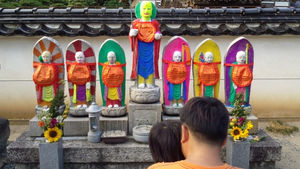
Jizo-bon is a festival that is held in a part of Kyotango City, Kyoto Prefecture, where I live.
It is held on the 25th near the end of August.
Source: xn--9oqx67ab2fnkbmy2he6h.com
Read more
https://xn--9oqx67ab2fnkbmy2he6h.com/?p=761
Kyoto Prefecture The theory that "lovers who go on a date in Arashiyama get separated" was correct: "lovers who cross the Wataratsuki Bridge together get separated.

Source: xn--9oqx67ab2fnkbmy2he6h.com
The theory that "lovers who go on a date in Arashiyama will break up" was correct: "lovers who cross the Wataratsuki Bridge together will break up.
The theory that "lovers who go on a date in Arashiyama will break up" was correct: "lovers who cross the Wataratsuki Bridge together will break up.
渡月橋を2人で渡ったら別れるって聞くけど 昨日車で 今渡月橋の上走っとるよ〜 って言われたんやけどいける? 車ならいい?
— ⓜⒶⓨⓊ (@___heureux_) July 3, 2019
渡月橋で振り返ったら別れるって聞いた事ある?
— 生八つ橋タン (@nama_yacchan) July 13, 2019
Urban legends exist in many places that say that lovers are united or separated.
In Kyoto, the ancient capital of Japan, there is also an urban legend about the fulfillment of love, among many other scary historical urban legends.
One of them is that lovers who go on a date in Arashiyama, located in the western part of Kyoto, will break up.
The original urban legend, as it is generally believed, is that crossing the Wataratsukibashi Bridge together will result in a breakup.
Arashiyama is the most visited tourist spot in Kyoto, along with the Higashiyama area, and is popular for its bustling Arashiyama area and the quiet Sagano walking course across the Watarigetsukyo Bridge.
In a place where many tourists visit, there are also many lovers who visit on dates, and in such a situation, there are many people who break up with each other, which may have led to this urban legend.
Source: xn--9oqx67ab2fnkbmy2he6h.com
Read more
https://xn--9oqx67ab2fnkbmy2he6h.com/?p=713
Kyoto: "Senbon-torii" (Thousand torii gates) at Fushimi Inari-taisha Shrine, where those who pray are sure to be visited by misfortune.
Source: xn--9oqx67ab2fnkbmy2he6h.com
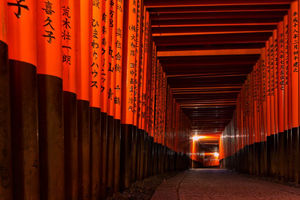
Kyoto: "Senbon-torii" (Thousand torii gates) at Fushimi Inari-taisha Shrine, where those who pray are sure to be visited by misfortune.
Kyoto: "Senbon-torii" (Thousand torii gates) at Fushimi Inari-taisha Shrine, where those who pray are sure to be visited by misfortune.

Contents
- Prostitution Island (Watakano Island), Mie Prefecture
- Mie Prefecture Genuine Naked Festival "Ya-Ya Festival
- Mysterious water accident at "Nakagawara Beach" in Mie Prefecture
- Cursed Stone Lantern, Mie Prefecture
- Yasui Konpiragu Shrine, a shrine to break off ties through curses, Kyoto Prefecture
- Karasuna, Kyoto, Japan
- Kyoto's three most bizarre festivals: "Agatasai," a late-night parade of portable shrines resembling sexual organs
- Kyoto Prefecture "Jizo-bon," a strange festival that makes Jizo colorful
- Kyoto Prefecture The theory that "lovers who go on a date in Arashiyama get separated" was correct: "lovers who cross the Wataratsuki Bridge together get separated.
- Kyoto: "Senbon-torii" (Thousand torii gates) at Fushimi Inari-taisha Shrine, where those who pray are sure to be visited by misfortune.
- Kyoto Prefecture "Four-leaf clover cab" to bring happiness
- The Globe of Prince Shotoku" at Ikaruga Temple, Hyogo Prefecture
- The Secret Behind the JR Kobe Line Station Names
- Okama Coast" between Suma and Shioya, Hyogo Prefecture
- Okiku Well, Himeji Castle, Hyogo Prefecture
- Headless Rider, Mt. Rokko, Hyogo
- Wakayama Prefecture: If you break a promise, you will die [Gyutama Bao-jirushi].
- Wakayama Castle, Wakayama Prefecture "Dwarf Climbing the Stone Steps" (Wakayama Castle)
- Awashima Shrine, Wakayama Prefecture "Dolls with Hair Growing Out".
- Real GANTZ! The "Izumiotsu Station Disappearance Accident" in which people disappeared.
- The Woman in Red at the Fountain Plaza at JR Osaka Station, Osaka
- Legend of Mount Inunaki, Osaka Prefecture
- Reason why "Sento-kun" was recognized in Nara Prefecture
- Nara Prefecture, Specter Ggoze (Genko-ji Temple)
- Shiga Prefecture Mushroom Specter "Kusabira God
- Urban Legends about Lake Biwa, Shiga Prefecture
- We also recommend this summary