
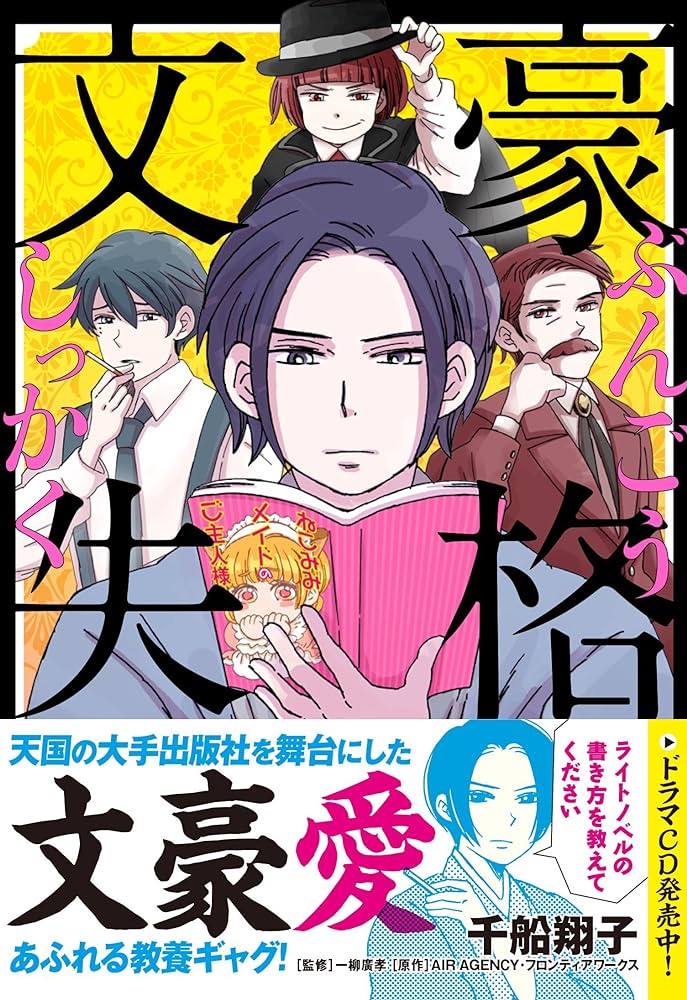
Bungo Shikkaku" is a comicalized version of AIR AGENCY/Frontier Works' drama CD "Bungo Series," serialized by Shoko Chifune in COMIC Ruel starting in 2015. A total of three volumes of the book have been released.
This gag story depicts unique literary giants living in heaven. Soseki Natsume, Ryunosuke Akutagawa, and others try their hand at writing light novels, working as radio personalities, and many other things.
The show is popular as an "educational gag" full of historical facts, as viewers can learn about the masterpieces of the great writers, their personalities, and their relationships with each other through laughter.
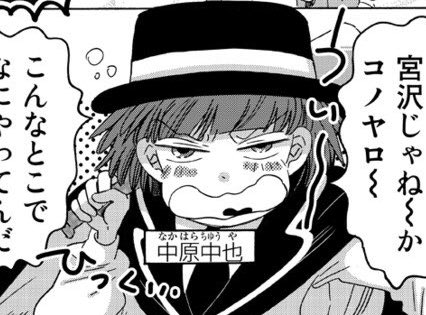
CV: Nobuhiko Okamoto
Born April 29, 1907, died October 22, 1937. He was active during the Showa period. He left more than 350 poems during his lifetime. His best-known works are "Circus" and "To the Dirty Sadness ....... He is known for his style of using his own onomatopoeia while being inspired by French impressionist poets. He highly appreciated Kenji Miyazawa, whose name was not well known at the time.
He was small in stature and had a boyish appearance, but he had a bad drinking habit, and when he drank, he would lash out and hit people. He also cursed Osamu Dazai, saying, "You look like a blue mackerel floating in the sky. Dazai, too, recognized Nakahara's talent, but disliked his personality.
In this film, his words and actions remain the same, and he goes on a rampage when he drinks. He also yells at Dazai whenever he encounters him. He tries to blow up the publishing company when he misses a deadline, and when he finds out that Kenji Miyazawa is being bullied at work, he goes to the workplace to beat him up. Because of her cute appearance, Tanizaki and Kawabata are physically distant from her, saying, "Nakahara-kun has a special place in our hearts. He has been good friends with Ango Sakaguchi since before his death and often works together with him.
Ango Sakaguchi
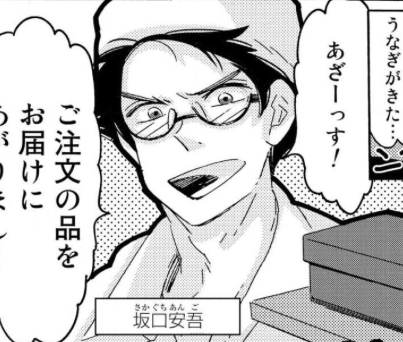
CV: Shinnosuke Tachibana
Born on October 20, 1906, died on February 17, 1955. He was active before and after World War II. He wrote a wide range of works including pure literature, historical novels, and mystery novels, and is also known for his essays. His representative works include "The Fall" and "The Discontinuous Murder Case. He gained popularity for his anti-authoritarianism and unrestrained way of life, known as the "Muyori-ha" school. He was a maverick from his childhood, and even during his school days he was a mischievous person with many problematic behaviors. As an adult, he was at one time a popular teacher at an elementary school, but he was still prone to outlandish behavior, and there is an episode in which he suddenly ordered 100 servings of curry and rice. However, he also has a naïve side. During his college years, a traffic accident caused a crack in his skull, and he suffered from the aftereffects of the accident. He developed strong paranoia, which later became a distant cause of his addiction to methamphetamine. In his later years, he became depressed and went into a frenzy due to heavy doses of methamphetamine.
In this film, he is still leading a maverick lifestyle and often causes a ruckus as a fun-loving criminal. When he tried working at a host club opened by Junichiro Tanizaki, he ordered 100 servings of curry and rice, a bizarre behavior. He also committed criminal acts, such as conspiring with Kawabata Yasunari to read out embarrassing letters from other great writers, and breaking into a pharmaceutical company together and distributing a drug that transforms great writers into their childhood selves. He also often hangs out with Nakahara Chuya, with whom he has been close since before his death.
Yasunari Kawabata
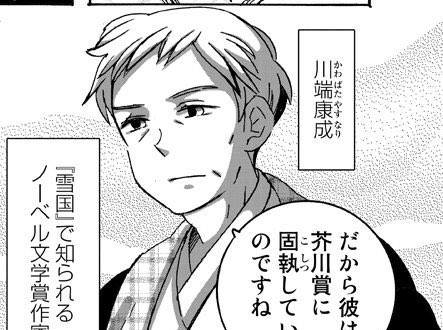
CV: Rikiya Koyama
Born June 14, 1899, died April 16, 1972. He was active before and after World War II. His representative works include "Izu no Odoriko" and "Yukiguni. He was the first Japanese to be awarded the Nobel Prize in Literature for "expressing the essence of the Japanese people with a delicate sensibility." It is said that he was a man of few words and strong eyesight. He was so strong-eyed that he repelled a burglar who broke into Kawabata's house in the middle of the night by simply staring at him for a long time. However, he took good care of people and was admired by those around him because he discovered many new writers. He also has an open-minded side, such as when he talks nakedly about his affectionate relationship with a boy who was his junior high school underclassman and dormitory roommate.
In this film, he has become a much more open-minded character, and although his eyes and expressionless face remain the same, he and Ango Sakaguchi repeatedly commit amusing crimes and get many literary giants into trouble. He also makes many outlandish and reckless gestures, which continue to baffle those around him. For some reason, he gives Nakahara Nakaya special treatment, saying, "I'll tell you something only to Nakahara-kun. Each time, Nakahara refuses, saying "No, thank you..." in a tone of voice that is unimaginable given his usual demeanor.
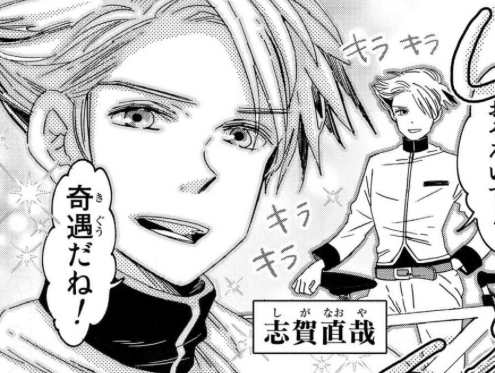
Naoya Shiga
CV: Daisuke Ono
Born on February 20, 1883, died on October 21, 1971. He was active from the Meiji period to the Showa period. His representative works are "Dark Night's Road" and "Reconciliation. Known as the "God of Novels," he has influenced many Japanese writers. He was a man of courage and daring who could not remain silent in the face of injustice, and was loved by many people because he was unaffected by trivial matters and had a cool head. He was born and raised wealthy, and there is an episode in which he rode around on a bicycle, which was expensive at the time. After World War II, he harshly criticized "Shayo" by Osamu Dazai, who was at the height of his popularity, and an outraged Dazai published "Nyosegamon" in which he criticized Shiga.
In this work, too, he is pushing forward with his original character of not caring about details. He is extremely athletic and can pole vault and pool dive with ease, and was drawn in by Akutagawa and others who had been forced to bring him along. He often makes comments that can be seen as somewhat insensitive, which infuriates the more sensitive writers. Shiga himself does not care much about it. Dazai literally holds a grudge against him even in death.
Kenji Miyazawa
CV: Kazuya Nakai
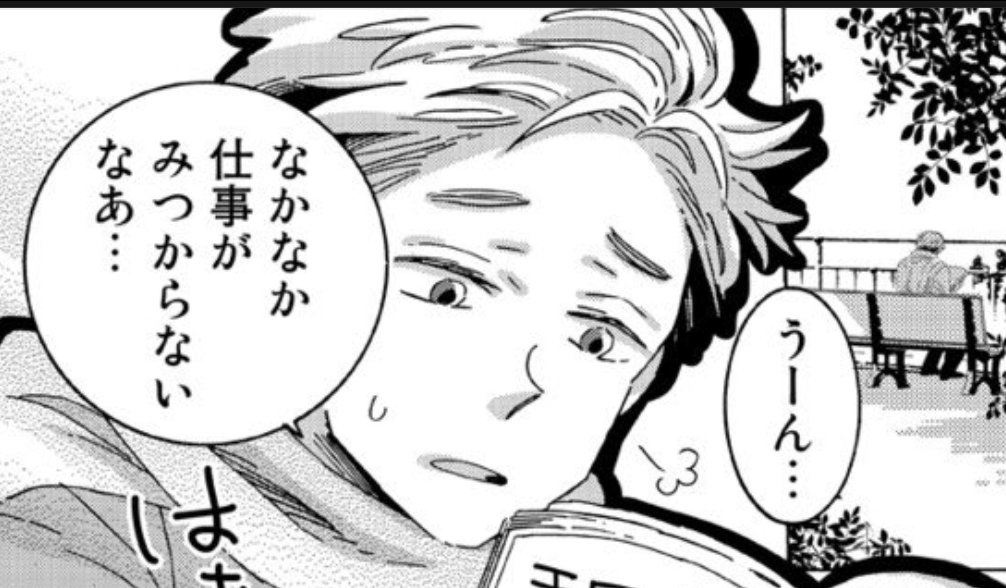
Born on August 27, 1896, died on September 21, 1933. He created many works rooted in Buddhist beliefs and peasant life. He published few works and was almost unknown during his lifetime. After his death, he became well known through the activities of artists who loved his works, and became a national artist. His fairy tales on astronomical and natural themes are known for their style of writing, which makes extensive use of onomatopoeia. He was a kind-hearted person who put the happiness of others before himself. When he was in elementary school, he saw a friend standing in the hallway with a bowl of water down as punishment for a prank, and he drank all the water to make the bowl a little lighter.
Since this work is in the afterlife, he is already a well-known writer at the time of his appearance, but he is held back by the momentum of other great writers because of his gentle personality, which is the same as before his death. He is serious and diligent. He is an avid farmer and grows various vegetables at "Eat Herb Miyazawa Farm" and gives away sexy-looking radishes and other vegetables as gifts to people. He has a strong interest in sexual matters, but his romantic relationships are rather messy, as he pretends to be a misogynist. He works at a company during the off-season, but is bullied at work. Miyazawa experienced workplace bullying even before his death, and wrote a work that seems to have been based on his experiences. When he consulted with Nakahara Chuya (Nakahara Chuya) and others, they beat him up at his workplace.
Edogawa Ranpo
CV: Kenichi Suzumura
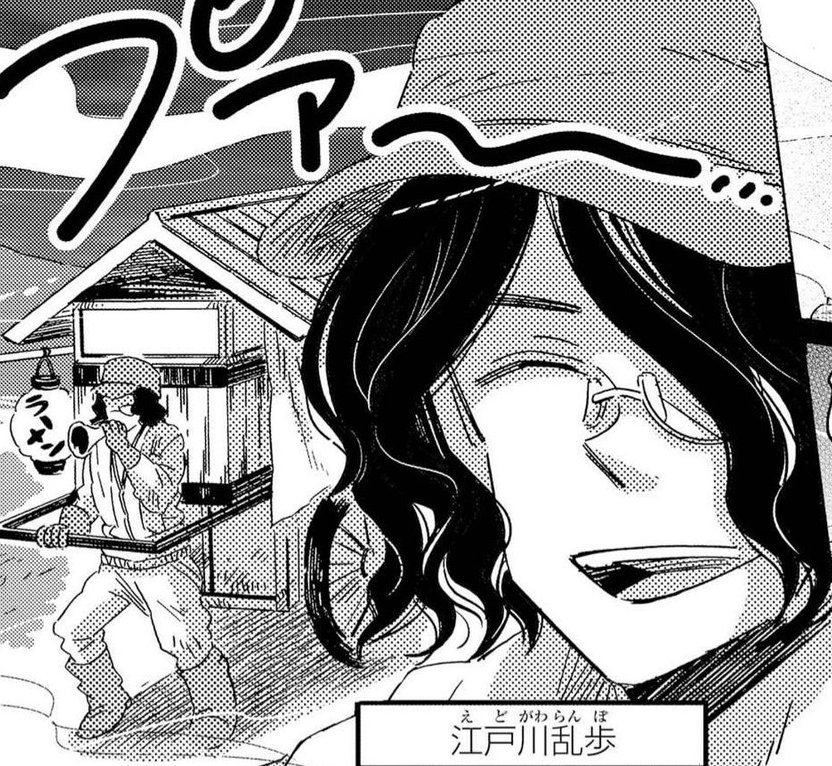
Born on October 21, 1894 and died on July 28, 1965. Active from the Taisho to the Showa period. Specializing in mystery novels, he was a key figure in establishing the full-fledged mystery novel genre in Japan. His representative works include "Kaijin Nijumenso (The Phantom with Twenty Faces)," "D-saka no Jikenbo (The Case Files of D-saka)," and "Attic Walker. The detective he created, Akechi Kogoro, remains a beloved character to this day. He was not good at socializing and tended to be withdrawn.
Edogawa, who appears in this film, still has the same dislike of people, but he can speak eloquently when he pretends to be the character he created, the "Twenty Faces of the Monster. Nijumenso is a master of disguise with 20 different faces and a fearless character who sends out advance warning letters when he targets valuable items. Edogawa speaks in a coercive manner when he is in the guise of Nijumenso, but he is usually a weak man. When he was in a slump and unable to write a novel, he was foolhardy enough to intentionally create an incident to make a story out of it. Before his death, he suddenly terminated a mystery novel that he had been writing in serial form because he "couldn't think of the culprit" toward the end of the novel, which led to the dislike of Ango Sakaguchi, who was a great fan of his. Edogawa highly appreciates Sakaguchi's mystery talent, but he still stares at him when he encounters him in heaven.
Yakumo Koizumi
CV: Tatsuo Suzuki
Born June 27, 1850, died September 26, 1904. Active in the Meiji era (1868-1912), he is best known for publishing "Kwaidan," an English-language compilation of Japanese ghost stories. Originally named Patrick Lafcadio Hearn, he was an Irish-Greek-born novelist, Japanese studies scholar, and English literature scholar, originally a British citizen. He emigrated from Ireland to the United States and happened to come into contact with Japan there. In September 1896, he began teaching English literature at the Imperial University of Japan (now Tokyo University). After leaving the Imperial University in 1903, he taught at Waseda University. Incidentally, Koizumi's successor at Imperial University was Soseki Natsume. Because of Koizumi's popularity among students, Natsume had a hard time because of unreasonable opposition from students.
He did not appear in the manga version, but only in the drama CD. She is portrayed as a natural and KY former Englishman, and is extremely fond of Japan. He is well versed in ghost stories, and it is said that when he takes pictures, something sometimes shows up in them.
Kan Kikuchi
CV: Taku Yashiro
Born on December 26, 1888, died on March 6, 1948. Known for his plays such as "Rooftop Madman" and "Father Returns" and novels such as "Lord Tadanao's Gyoki" and "Tojuro's Love". His works are characterized by their clear-cut themes based on his views on life and thought. As a businessman, he founded Bungeishunju, and was involved in the establishment of the Akutagawa Prize, the Naoki Prize, and the Kikuchi Kan Prize. He actively engaged in exchanges with young writers and artists, and devoted himself to fostering the next generation of writers. He generously provided financial support to writers who were struggling financially, and these actions greatly contributed to the development and succession of the Japanese literary world. He is also fond of betting on games such as mahjong and horse racing.
He does not appear in the manga, but is only active in the drama CDs. In the manga, he is portrayed as a writer and business owner. However, he is serious about money and calculates the amount of money to lend to those who come to him for loans after looking at the person they are borrowing money from. He has a calm personality, but when Kikuchi mentions the "cloak incident," which actually happened when he was a junior at Daiichi High School and was expelled from school in place of a friend who stole and pawned a cloak, he becomes instantly grumpy.
Editors of Heavenly Publishing
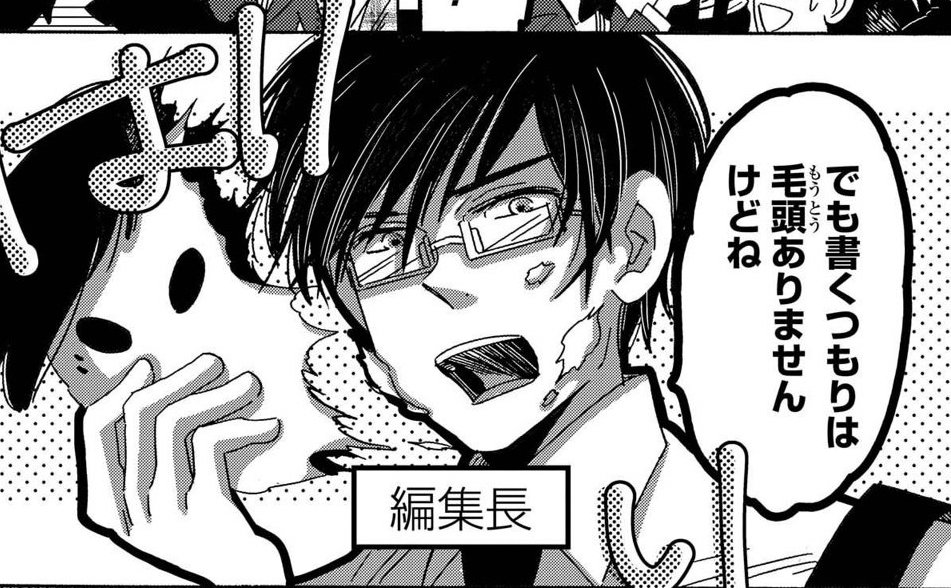
editor-in-chief

Tags
Contents
- Overview of "Bunsho Shikkaku."
- Synopsis and storyline of "Bunsho Shikkaku.
- Writer Goes to Akiba
- Embarrassing Letters from the Great Man of Letters
- Writers go to the Doujin Market.
- Characters and Characters in "Bunbougou Shikkaku" (Disqualified)
- literary masterpieces
- Natsume Soseki
- Ryunosuke Akutagawa
- Junichiro Tanizaki
- Osamu Dazai
- Nakahara Chuya
- Ango Sakaguchi
- Yasunari Kawabata
- Naoya Shiga
- Kenji Miyazawa
- Edogawa Ranpo
- Yakumo Koizumi
- Kan Kikuchi
- Editors of Heavenly Publishing
- editor-in-chief
- new editor
- Terms in "Literary Disqualification.
- Heaven/Meiji District
- Heaven Publishing
- Eat Herb Miyazawa Farm
- Heavenly Doujin Market
- Famous quotes, lines/scenes, and scenes from "Fumi no Shikkaku".
- Letter from Osamu Dazai, who wants the Akutagawa Prize, to Yasunari Kawabata, a member of the jury
- Dazai badly injured in a high jump
- The Monster of Twenty Faces and the Battle of the Bungo
- Soseki Natsume as a Teacher
- Ryunosuke Akutagawa and "Mikan
- Soseki Natsume: "If there is an obsession anywhere, you must go on until you trample it down."
- Back story, trivia, small stories/episodes, anecdotes
- Kyoka Izumi, who is good friends with his wife
- Publisher's basement cell
- Literary commentary tucked into the book