
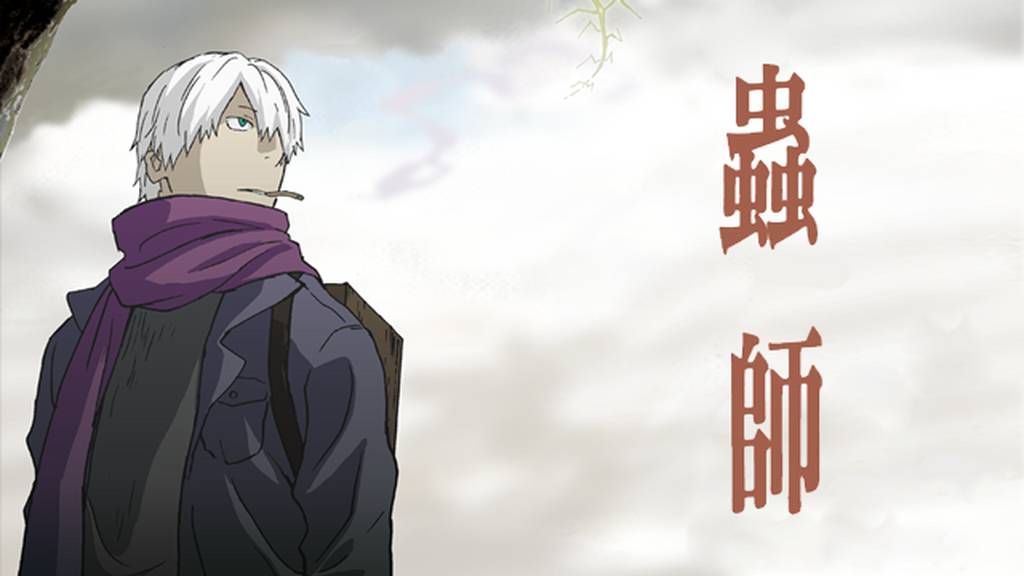
MUSHI-SHI" is a manga, anime, live-action film, and video game by Yuki Urushibara, serialized in the monthly magazine "Afternoon Season" from 1999 to 2008. The main character, Ginko, who is a professional polymath, connects poles and humans through her travels. It is a story in which Ginko sometimes stands by humans, sometimes stands by bugs, and searches for what humans should be like. The helplessness and stupidity of humans at the mercy of bugs are vividly depicted, and readers can sympathize with the resilience of the humans who are still able to survive.
A village girl, Io, was severely damaged by a flood. Io, who was sacrificed to stop the flood, survives by throwing herself into a swamp mimicked by an insect, Suiko. However, Io, who was forced by her village and parents to throw herself into the river as a sacrifice, is in a whirlpool of despair. While traveling with the swamp, Io meets Ginko. There, he learns that the swamp is an insect called a water-dwelling inhuman. Thinking that he has been saved by the water-dwelling insect, Io becomes a part of the insect and decides to live his life as an insect. In front of Ginko, Io says, "I will become a part of this swamp," and disappears into the swamp. However, this is a sad decision to give up living as a human being, out of despair that her own life was sacrificed.
Famous quotes and lines from Nijiro's father / Famous scenes and scenes
"It's about time ...... you started to envy me and ...... the name I gave you... ... I ...... wanted to give you the name of the most beautiful thing I saw in the world. ......
A man who works as a bridge carpenter had a strange experience of touching a rainbow one day. From that day on, the man developed a strange constitution. When he realizes that it is going to rain, he runs around the mountains muttering, "Ame ga kuru, ame ga tsuki. When the rain stops, he runs around in the mountains and fields muttering, "Rain is coming, rainbow is coming. When the rain stopped, he would return to his village as if nothing had happened, but even he could not control himself. Because of this, his family lived a life that was looked at with white eyes by those around them. The father, who was ill, said to his son, "It's about time ...... you started to envy me and ...... the name I gave you. ....... I wanted to give you the name of the most beautiful thing I ...... saw in this world. The son, Nijilo, was unable to hate his father, even if he wanted to.
Akoya's Famous Quotes / Famous Lines / Famous Scenes / Famous Scenes
"I wake up only to find yesterday's reality continuing to unfold before my eyes, a vast, countless, countless hours ahead of me."

Akoya (top), who was parasitized by bugs, tells Ginko (bottom) of his unspeakable fear.
Akoya, a young girl who lives on an island, has a strange constitution that allows her to age, die, and come back to life in a single day. Because of her mysterious ability, she is called a "living god" on the island and is the object of worship. Akoya was originally healthy, but when she became a living god, she could not speak and fell into a comatose sleep. Nagi, a young boy, wonders about Akoya's sudden transformation and sets out to search for a cure outside the island. Nagi, who has a vague feeling that the mysterious illness is beyond the scope of doctors, turns to Ginko, a polymath, for help. Ginko's research reveals that Akoya's symptoms are caused by a parasite, and Akoya is cured of his illness. However, Akoya, who has been cured, expresses her uneasiness, saying, "When I wake up, I only find the continuation of yesterday's reality waiting for me, and the countless hours that lie ahead of me, seemingly aimless. For Akoya, the period when he was a living god is more fulfilling than the present. Ginko speculates that Akoya may have been living in the time of the bugs that parasitized her. The life of the bug is about one day. She recalls that it was a breathtakingly fresh experience, a "new day" in the midst of repeated life and death. Akoya's strange illness was caused by her father's intentional parasitism of bugs. He had made Akoya a parasite of bugs and profited unjustly from his belief in a false image of a living god. Knowing this, Akoya could not shake off the despair of living a normal life. In the end, Akoya chose a life of being parasitized by bugs again.
Famous quotes and lines from Shigeru / Famous scenes and scenes
If we are all cured and can speak again, I can thank Tetsu-san with my own voice."

Shige holds out hope that he may be able to thank Tetsu directly for treating him like any other person.
Shige lives in a village that is afflicted with a mysterious disease, and the whole village shuns her as the cause of the strange illness. Ginko visits the village and investigates, and it turns out that Shige's voice happens to attract bugs called yasabi (rust). Although not the direct cause of the disease, the bugs attracted by Shige's voice were spreading a strange disease. As a child, Shige realized that his voice was the cause of the disease, and for the next 10 years, he never uttered a sound. Unable to write, Shige could not communicate with the villagers by writing. His voice was his only means of communication, but in order to abide by the villagers' wishes, he has kept his mouth shut, not saying a word in explanation. According to Ginko, "the wild rust that is spreading in the village can be driven away. Then Shige will be able to speak out again. Tetsu treats him kindly, even though he is an outcast. "If everyone's illnesses are cured and I can speak again, I can thank Tetsu-san. Shige holds out hope that she will be able to say it with her own voice.
Famous quotes and lines from the priest / Famous scenes and scenes
"We all endure because we don't know ...... what real ...... fertility is."
There was a man who was a priest in a poor village. The fields in that village were so poor that the villagers could only manage to harvest enough to eat every year. If a natural disaster occurred, the village would immediately suffer from starvation. Once every few years, when a disaster occurred, the priests would use the Naraz fruit to bring a bountiful harvest to the fields. The power of the fruit is exerted at the expense of one of the villagers. Ginko visits the village and approaches the priest. Why do you continue to stay in this village at the expense of one person when you could burn the fields and live elsewhere for a year and the soil would be fertile? The priest replies emphatically, "We endure because we don't know ...... what a true ...... fertility is. Once they leave the village, they will not come back once they know the wonders of the outside world and the real fertility of the land. For a long time, the priests had thought that they would have to rely on the Naraz fruit.
Wife of the Priest's Wife Quotes / Famous Quotes / Famous Scenes / Famous Scenes
"Eat it even if it's spicy? If you eat my life, I'm not afraid to die.

The wife of the priest sacrifices herself to bring fertility to the village.
Ginko arrives at a village in search of a bug called "Narazu no Mi". There, the fields have become so thin that the villagers have managed to survive on their own food. Ginko visits the man who serves as the village priest. The priest initially denies the existence of Narazu-no-Narazu, but upon Ginko's inquiry, he reveals that the priest has been using Narazu-narazu for generations when the village has suffered crop failures. Narraz nuts, if buried in the ground, would bring a bountiful harvest for a year, but the weak would die if they ate the food that grew from them. Those who were killed by the Narazu berries would have "auspicious teeth" growing in their mouths, which would then fall out and become "Narazu berries. The priests in this village have used the Naraz fruit in secret every time there is a natural disaster, and the priests used the Naraz fruit 20 years ago. The priest planted the Narazu no Nama with the thought that if only one person sacrificed himself, the village would be saved, but he was unaware that his wife was suffering from health problems. When his wife grew "Zui-teeth," the priest realized the gravity of the situation. He has been refusing to eat out of guilt, but his wife says, "Will you eat even if it's spicy? If you eat my life, I will not be afraid of dying. In exchange for his wife's life, the priest protects his village and his own life.
Hana's Famous Quotes and Lines / Famous Scenes and Scenes
"We can't ...... be happy like this."

Hana says she cannot sacrifice her family for her own happiness.
Hana and Zen, who live in a village, are in love. However, Hana has a marriage proposal from her main family, and it is an unforgivable love. Zen persuades Hana to elope with him. Late at night, the two of them go through the forest to get out of the village. But Hana stops. Hana says, "We can't be happy like this. If we leave the village, our own families will be cut off. She says that she cannot sacrifice her family for her own happiness. Zen tries to persuade Hana, but the floorboard of the bridge comes loose and Hana falls off the bridge. Hana is thought to be dead, but she returns to the village alive. However, she has lost her mind and is no longer the Hana she used to be.
Shino's Famous Quotes and Lines / Famous Scenes and Scenes

Related Articles
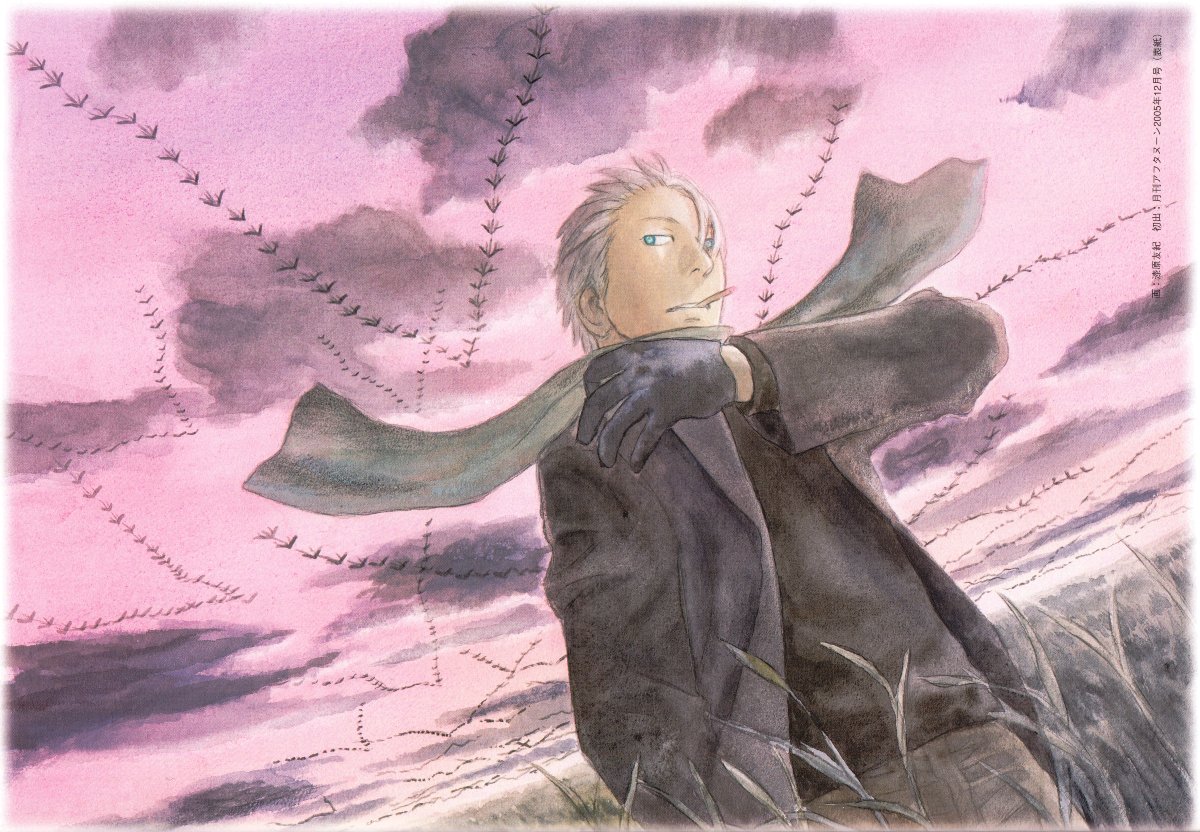
Mushishi (manga, anime, movie) spoiler commentary and discussion summary
MUSHI-SHI is a manga work by Tomonori Urushibara, serialized in the Afternoon Season supplement from 1999 to 2002. It depicts the lives of people and "mushishi," creatures that are different from familiar animals and plants, through the eyes of Ginko, a mushishi. Winner of the 30th Kodansha Manga Award in the general category, it was adapted into an animated series for Fuji Television in 2005, winning numerous awards, and was made into a live-action film starring Odagiri Joe in 2007.
Read Article

Spoiler commentary and discussion of Saiunkoku Monogatari (novel, manga, and anime)
Saiunkoku Monogatari" is a light novel by Sae Yukino and a manga/anime based on it. The original work was published by Kadokawa Beans Bunko in October 2003, and the anime began airing in April 2006. A manga series by Yura Kairi, who was in charge of illustrations for the light novel, began in July 2005. In the fictional country of Saiunkoku, Beni Shurei dreams of becoming a government official and overcomes various difficulties to realize her dream in this Chinese fantasy work.
Read Article

2024年10月秋アニメ(今期アニメ)まとめ
2024年10月期に放送される秋アニメを50音順に紹介する。2024年10月秋アニメは、有名シリーズの新作が多数ラインナップされている。アニメの放送情報や配信情報、声優・スタッフ、あらすじなどの情報をわかりやすくまとめた。
Read Article
Contents
- Outline of "Mushishi
- Ginko's Famous Quotes and Lines / Famous Scenes and Scenes
- Ginko explaining bugs
- "Each tweet may be minute, but the bugs are too numerous to count, and if they all tweeted one word, it would be so loud that it would reverberate like an echo, crawling through the world.
- Mushi is a thing between life and death, a thing that is both a "person" and a "thing," a "thing" that is alive while it is dead.
- It's a ...... beautiful thing. ...... don't know what's on people's minds, hey, Kuchinawa?"
- Even rest is a matter of survival.
- "Did you forget that what you love is an aberration?"
- They're not friends, just strange neighbors, not to be indulged, but you're free to like them."
- "It will try to protect you from other little bugs for the rest of your life, as long as you return to the land of your birth.
- "Why don't you go see him, the waterway is still connected, and if you can't row yourself, someone else can take you out on their boat."
- Famous quotes, famous lines, famous scenes and famous scenes by Kakano (Adashino)
- Kano has an eye for rare and unusual items
- Karibusa Tanyu Quotes and Sayings / Famous Scenes and Scenes
- But I'm still alive."
- "Even though the ...... situation has not changed, we are not alone, we are not alone."
- Famous quotes, lines/scenes, and famous scenes from Tama the Medicine Bags (Tama Mirai)
- All those things are gone now that I've met your daughter. ......
- Isaza's Famous Quotes and Lines / Famous Scenes and Scenes
- Isaza, who has secretly wished for peace in the mountains
- I'm sure he'll come back stronger."
- Aya Tozawa Ki's Famous Quotes, Famous Lines / Famous Scenes, Famous Scenes
- We were together the whole time.
- Nui's famous quotes and lines / Famous scenes and scenes
- "They just are and are as they are."
- "When your eyeballs look at me, they're warm as if the sun shone on them, and I remember how much I missed them by that dark pond..."
- Kumad Quotes and Quotations / Famous Scenes and Scenes
- "Will I still be ...... alive when it's gone?"
- Sui's famous quotes and lines / Famous scenes and scenes
- Behind one eyelid, there is another.
- Famous quotes and lines from Io / Famous scenes and scenes
- I'm going to be part of this swamp.
- Famous quotes and lines from Nijiro's father / Famous scenes and scenes
- "It's about time ...... you started to envy me and ...... the name I gave you... ... I ...... wanted to give you the name of the most beautiful thing I saw in the world. ......
- Akoya's Famous Quotes / Famous Lines / Famous Scenes / Famous Scenes
- "I wake up only to find yesterday's reality continuing to unfold before my eyes, a vast, countless, countless hours ahead of me."
- Famous quotes and lines from Shigeru / Famous scenes and scenes
- If we are all cured and can speak again, I can thank Tetsu-san with my own voice."
- Famous quotes and lines from the priest / Famous scenes and scenes
- "We all endure because we don't know ...... what real ...... fertility is."
- Wife of the Priest's Wife Quotes / Famous Quotes / Famous Scenes / Famous Scenes
- "Eat it even if it's spicy? If you eat my life, I'm not afraid to die.
- Hana's Famous Quotes and Lines / Famous Scenes and Scenes
- "We can't ...... be happy like this."
- Shino's Famous Quotes and Lines / Famous Scenes and Scenes
- She can't ...... believe a word I say."
- Kaj's Famous Quotes / Famous Lines / Famous Scenes / Famous Scenes
- Yeah, ......, same as ever. ......
- Zen Quotes, Famous Lines / Famous Scenes, Famous Scenes
- You can't move forward by stomping on it."
- Tatsu's Famous Quotes and Lines / Famous Scenes and Scenes
- I never knew the night could be so long, or the darkness so terrifying."
- Taki's Famous Quotes and Lines / Famous Scenes and Scenes
- "...yeah, you're everywhere. ......"