
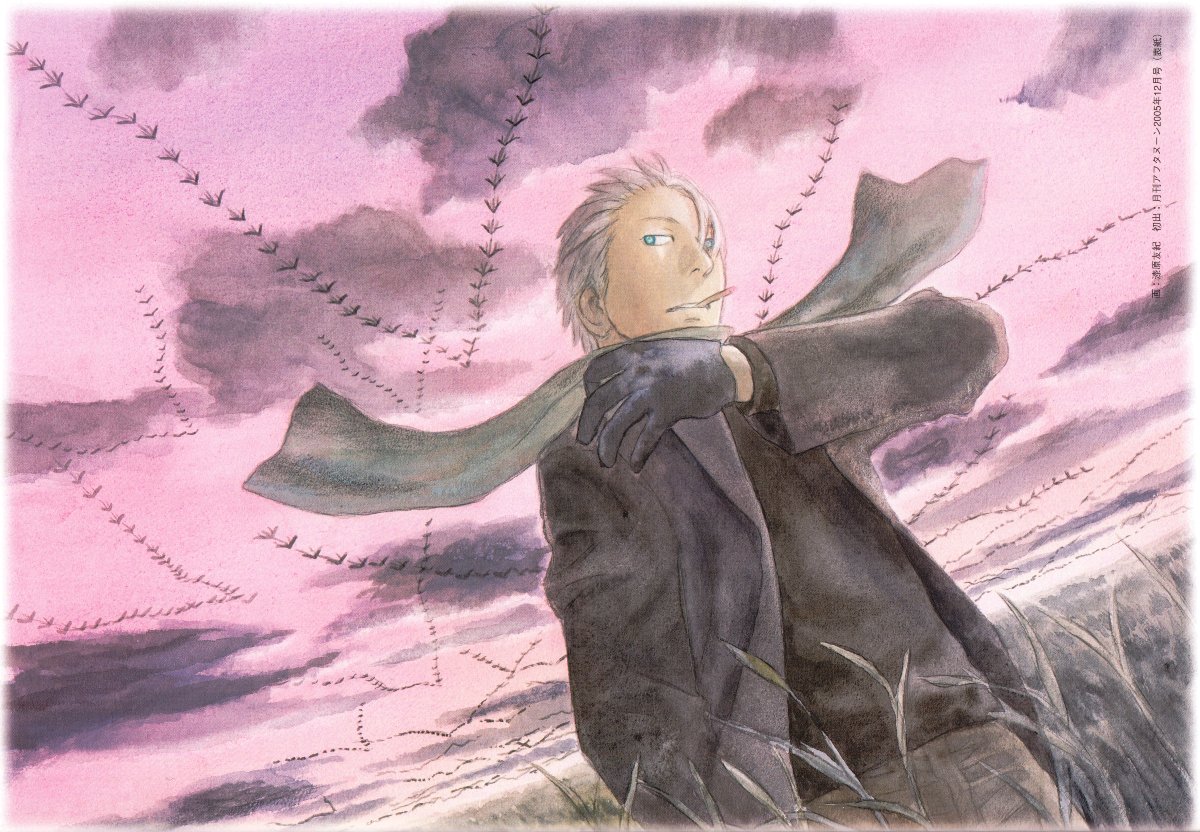
MUSHI-SHI is a manga work by Tomonori Urushibara, serialized in the Afternoon Season supplement from 1999 to 2002. It depicts the lives of people and "mushishi," creatures that are different from familiar animals and plants, through the eyes of Ginko, a mushishi. Winner of the 30th Kodansha Manga Award in the general category, it was adapted into an animated series for Fuji Television in 2005, winning numerous awards, and was made into a live-action film starring Odagiri Joe in 2007.
Outline of "Mushishi
Mushi" are strange creatures that differ from familiar animals and plants.
This fantasy work depicts the lives of various bugs and people that Ginko, a doctor and researcher specializing in bugs, encounters as he travels to various places.
It was serialized in Kodansha's "Afternoon Season" magazine from 1999 to 2003, and after the magazine stopped publication, it was serialized in the "Afternoon Monthly" magazine every other month until 2008.
In 2013, a special installment, "Hihamukage" was published in two parts.
The story is designed to take place in "a Japan that has been closed off from the rest of the world" or "a fictional period between the Edo and Meiji periods," and most of the characters are dressed in Japanese traditional clothing. The places that appear in the work also feature old-fashioned Japanese townscapes and landscapes.
In addition, the story develops through the recollections of the characters, and the time and world are sometimes depicted through hearsay rather than within the time and scope of Ginko's activities.
The story is based on one complete episode, and the setting of the story is the lands visited by Ginko the musher in his travels.
Therefore, the story revolves around a different character each time, and very few characters appear more than once throughout the series.
Ginko, the main character, also appears in every episode to solve the problems caused by the bugs, but since the main characters of the story are the people of the land where the story takes place, Ginko himself often has a minimal role in the story as a ruse.
Many of the stories are based on folktales, folklore, folklore, biology, medicine, and various problems that exist in modern society, and the stories are created by incorporating these as the "work of bugs.
In 2003, he won the Excellence Award in the Manga Division of the Japan Media Arts Festival.
In 2006, he won the 30th Kodansha Manga Award in the general category.
In 2007, it was selected in the Manga Division of the Japan Media Arts Festival's "100 Best Japanese Media".
In October 2005, it was made into an animated TV series directed by Hiroshi Nagahama and starring Hiroto Nakano.
On March 25, 2006, it received the Outstanding Work Award and the Art Award in the TV category at the 5th Tokyo Anime Awards, Tokyo International Anime Fair.
In the animation category of the Japan Media Arts Festival's "100 Best Works of Japanese Media Arts," it won 6th place overall and first place among works produced from 2000 to 2007.
The first episode "The Green Seat" was introduced and screened as one of the contemporary animation works at the Japan Media Arts Festival's 10th anniversary exhibition "The Power of Japanese Expression".
In March 2007, it was made into a live-action film directed by Katsuhiro Otomo and starring Odagiri Joe.
Characters and characters in "Mushishi
Ginko (CV: Hiroto Nakano, Childhood: Miyuki Sawashiro)

Main character. A man with gray hair and one eye. His age is unknown.
His birth name is YOKI. As a child, he traveled as a peddler with his mother, who was a traveling merchant.
He lost his mother in a cliff collapse, and was picked up by Nui, a polymath, when he was stranded.
The bugs, Ginko and Tokoyami, that live in the pond by Nui's hermitage caused his eyes and hair to change color, and he lost his left eye and his memory, including his real name.
After losing his memory, he changed his name to "Ginko" and lived among the bugs and wattari. However, he could not stay in one place because of his bugs-attracting constitution, so he became independent and earned his living as a traveling bugsmith.
He always has a "mushigusa" in his mouth to disperse the bugs that he naturally attracts.
He believes in coexisting with bugs, and while there are many mushishi who kill bugs, he is a rare kind of mushishi who does not like to kill them.
He is calm and collected, and although he is not the friendly type, he is good-natured.
He has personal relationships with Watari's Isaza and doctor Kakano.
KARIBUSA Tanyu (CV: KOBAYASHI Ai)

Daughter of the KARIBO family.
The Karibusa family has ancestors who sealed extremely powerful bugs inside their bodies long ago, and because of this, bugs are in the bodies of their children and grandchildren every few generations.
Those who have been infected with bugs are physically crippled, and in order to keep the bugs sealed in their bodies, they become "scribes" and are responsible for hearing stories about the slaughter of bugs and transcribing them on paper.
Danyu is the fourth generation scribe in the Karibo family, and his right leg, where bugs reside, is covered with an ink-colored bruise.
Although his body is tormented by bugs, he has doubts about the bugs who brag about slaughtering them, and loves the "world where bugs and people coexist" that Ginko speaks of.
Adashino (CV: Yuji Ueda)

Doctor. He lives in a seaside village.
He is a collector and seeks out items that involve bugs.
His hobby sometimes causes trouble, but he is one of Ginko's friends who understands and helps her with her work.
Isaza (CV: Kishio Daisuke, Childhood: Koshimizu Ami)

A Watari, who walks along in pursuit of light vein stripes.
He makes his living by selling information related to the fluctuations in the light veins of living creatures and bugs to bugs.
He has known Ginko since they were children.
Nui (CV: Mika Doi)

A white-haired, green-eyed polymath.
She picked up YOKI (later Ginko), who had lost her mother and was in a coma, and while treating her injuries, taught her the existence of bugs and how to deal with them.
She had a husband and child in her hometown, but when she heard that some people, including her husband and child, had gone to the mountains and not returned, she went into the mountains, where she found Tokoyami, a bug that takes in the darkness, and Ginko, a bug that eats darkness.
While researching Tokoyami and Ginko, he realizes that his family has been turned into everlasting darkness, so he takes up residence near the pond where Tokoyami dwells, and disappears as Tokoyami himself.
At that time, Yoki was also swallowed by Tokoyami, but he withdrew from her in the darkness and taught her how to return to this world.
Terminology for "Mushishi
bugs
They are as close to the source of life as possible, as different from the animals and plants we are accustomed to seeing.
They are also called "Midorimono.
In the film, they are described as "things that exist between life and death, between people and things," "things that are born from the yin and hang around on the border between the yang and the yin," and "life that is different from ours," and there are those who can see them and those who cannot.
Their ecology is shrouded in mystery, and mushers are constantly researching them. They come in a wide variety of forms.
Mushishi
Doctors and researchers specializing in bugs.
Some work while traveling from place to place, while others are active as village mushers.
Basically, they are private businesses, but there are horizontal ties such as the exchange of information among mushishi.
They also purchase rumors involving bugs from Watari's people who follow the light vein.
Light vein/light vein muscles

Related Articles
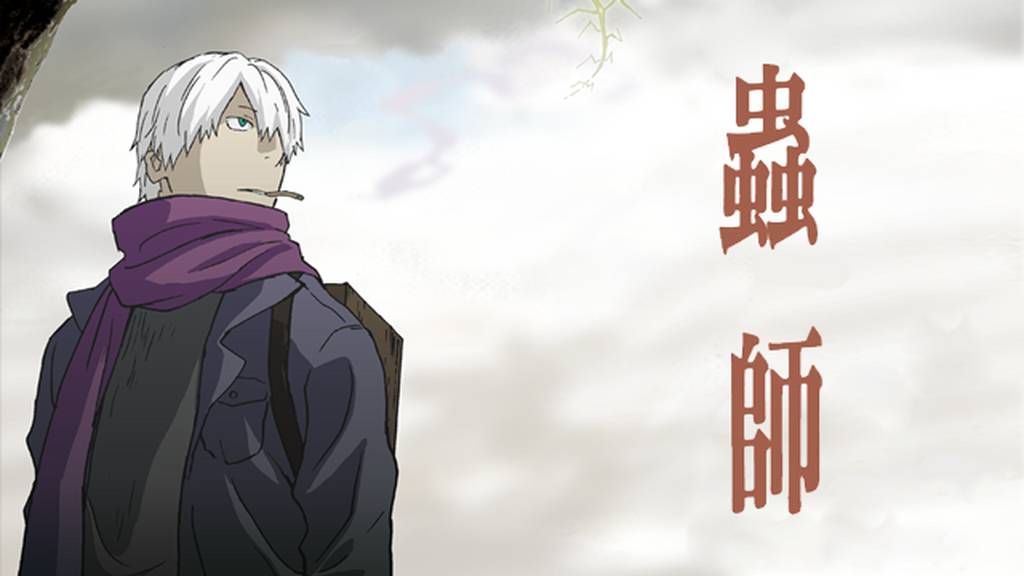
A compilation of famous quotes and lines/scenes/scenes from Mushishi
MUSHI-SHI" is a manga, anime, live-action film, and video game by Yuki Urushibara, serialized in the monthly magazine "Afternoon Season" from 1999 to 2008. The main character, Ginko, who is a professional polymath, connects poles and humans through her travels. It is a story in which Ginko sometimes stands by humans, sometimes stands by bugs, and searches for what humans should be like. The helplessness and stupidity of humans at the mercy of bugs are vividly depicted, and readers can sympathize with the resilience of the humans who are still able to survive.
Read Article
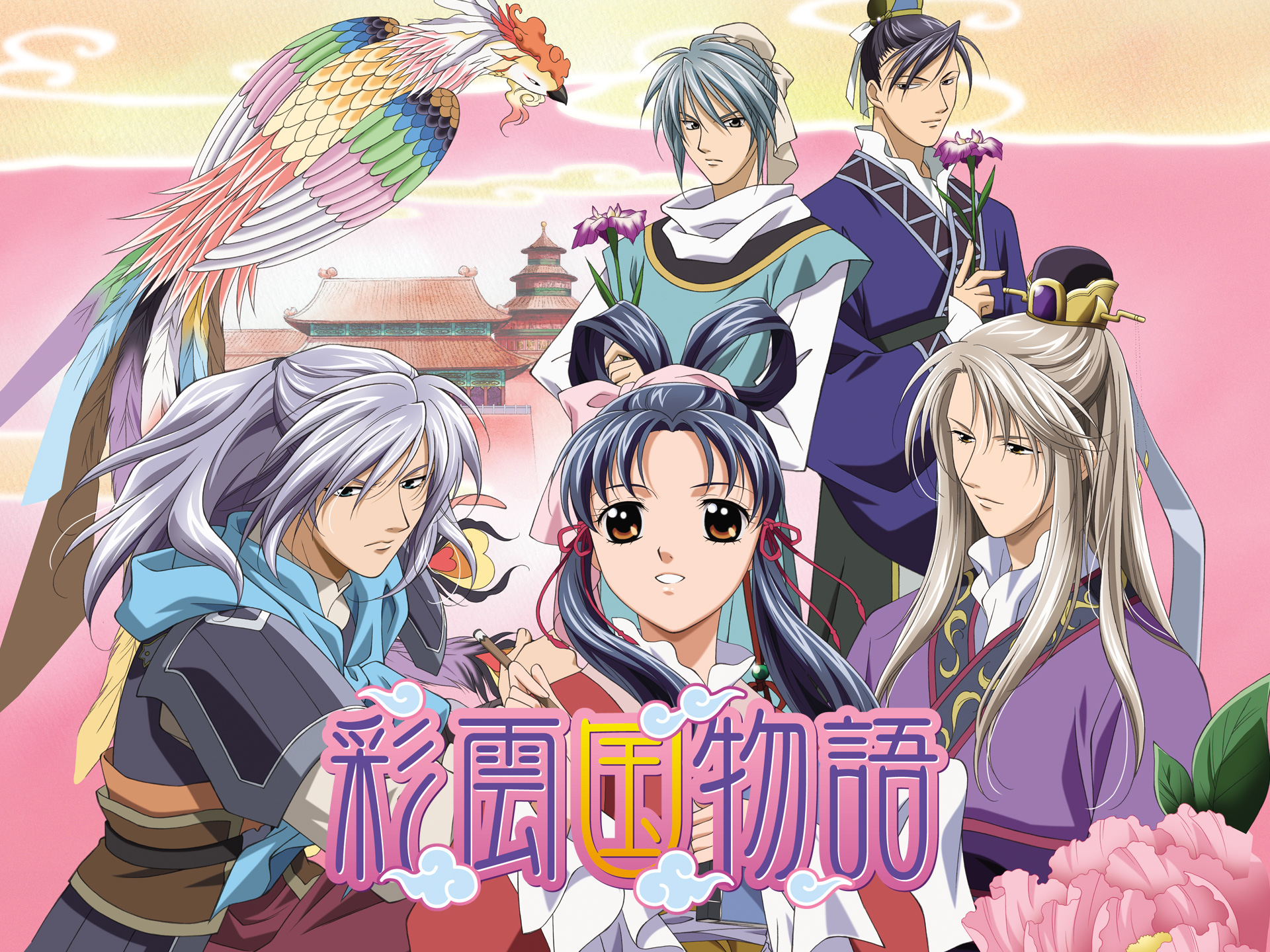
Spoiler commentary and discussion of Saiunkoku Monogatari (novel, manga, and anime)
Saiunkoku Monogatari" is a light novel by Sae Yukino and a manga/anime based on it. The original work was published by Kadokawa Beans Bunko in October 2003, and the anime began airing in April 2006. A manga series by Yura Kairi, who was in charge of illustrations for the light novel, began in July 2005. In the fictional country of Saiunkoku, Beni Shurei dreams of becoming a government official and overcomes various difficulties to realize her dream in this Chinese fantasy work.
Read Article
2024年10月秋アニメ(今期アニメ)まとめ
2024年10月期に放送される秋アニメを50音順に紹介する。2024年10月秋アニメは、有名シリーズの新作が多数ラインナップされている。アニメの放送情報や配信情報、声優・スタッフ、あらすじなどの情報をわかりやすくまとめた。
Read Article
Contents
- Outline of "Mushishi
- Characters and characters in "Mushishi
- Ginko (CV: Hiroto Nakano, Childhood: Miyuki Sawashiro)
- KARIBUSA Tanyu (CV: KOBAYASHI Ai)
- Adashino (CV: Yuji Ueda)
- Isaza (CV: Kishio Daisuke, Childhood: Koshimizu Ami)
- Nui (CV: Mika Doi)
- Terminology for "Mushishi
- bugs
- Mushishi
- Light vein/light vein muscles
- watari (Alaska pollack) (Theragra chalcogramma)
- gnus (esp. small spiral-shelled snail)
- Hikari Sake
- Insect Cigarette
- KARIBUSA Bunko
- Synopsis and story of "Mushishi
- Volume 1
- Volume 2
- Volume 3
- Volume 4
- Volume 5
- Volume 6
- Volume 7
- Volume 8
- Volume 9
- Volume 10
- special edition
- animation
- No mark (Phase 1)
- Special Edition: Hihamukage (Shadows under the Sun)
- Mushishi: The Sequel (2nd season)
- live action film
- summary
- Synopsis/Story