
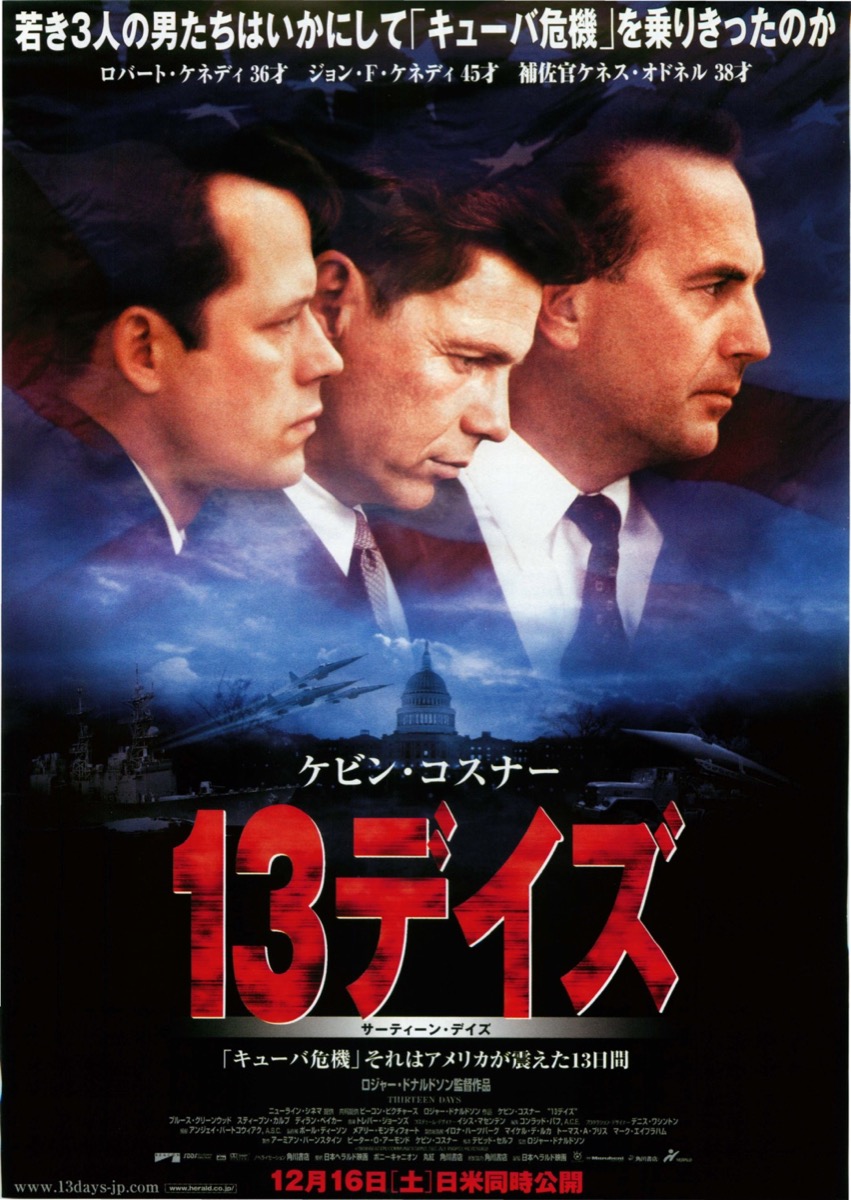
13 Days" is a political film produced in the United States in 2000. The danger of nuclear war has risen dramatically with the discovery that the Soviet Union has deployed nuclear missiles in Cuba, a country neighboring the United States. Faced with an unprecedented crisis, President Kennedy decides to implement a naval blockade instead of military action. The film depicts the tense events from the outbreak of the Cuban Missile Crisis, which brought the United States and the world to the brink of nuclear war, to the averting of the crisis. The principal cast includes Bruce Greenwood and Stephen Culp. Roger Donaldson directed the film.
Overview of "13 Days
Thirteen Days" is a political film produced in the U.S. in 2000.In October 1962, President Kennedy was informed that the Soviet Union was building a missile base in Cuba, a neighboring country of the United States. The military immediately insisted on bombing and invading Cuba, but President John F. Kennedy insisted that the Soviet Union would retaliate in response to the U.S. military attack.
With the arguments of President Kennedy and the military in sharp conflict, the president decided to impose a maritime blockade and conduct on-site inspections of Soviet cargo ships bound for Cuba.
Special Assistant to the President Kenneth O'Donnell, played by Kevin Costner, supports the Kennedy brothers by telling President Kennedy to stay on schedule in the face of the Cuban crisis and by whistling good luck to Attorney General Robert Kennedy as he negotiates peace with Soviet Ambassador Dobrynin. He also supported the Kennedy brothers by whistling and wishing them good luck when Attorney General Robert Kennedy went to peace negotiations with Soviet Ambassador Dobrynin.
The film depicts the tense development of the Cuban Missile Crisis, which brought the United States and the world to the brink of nuclear war, from its outbreak to its avoidance. Kevin Costner, who played a real-life district attorney in "JFK" who unraveled the mystery of President Kennedy's assassination from a unique perspective, produced this film and played the role of Kenneth O'Donnell, an aide to the president. Bruce Greenwood, known for his roles in "Double Jeopardy" and "The Pentagon Papers," plays President Kennedy, and Stephen Culp, known for "Graduation Morning" and "The Last Ship," plays Attorney General Robert Kennedy.
The script was written based on "The Kennedy Tapes: Inside the White House During the Cuban Missile Crisis," which was published as a printed version of secretly recorded meetings and Oval Office exchanges by President Kennedy, and on public government documents. The script was written based on The Kennedy Tapes: Inside the White House During the Cuban Missile Crisis.
The film was directed by Australian-born Roger Donaldson, known for "Cocktail," "Dante's Peak," "The Recruit," and "Caught Up.
There is an anecdote that the Pentagon refused to cooperate with the film because of the belligerent portrayal of the Chairman of the Joint Chiefs of Staff, the Air Force Chief of Staff, and the Chief of Naval Operations in the film.
Synopsis and story of "13 Days
Beginning of the Cuban Crisis
In October 1962, a U.S. U-2 reconnaissance aircraft flying over Cuba took one photograph.
The photo was sent to the Navy's Photo Analysis Center in the U.S. for immediate analysis.
Kenneth O'Donnell, Special Assistant to the President, got into the car that picked him up and headed to his usual place of work, the White House.
After finishing joking with first lady Jacqueline Kennedy about the party, he walked into the Oval Office to inform President John F. Kennedy of his plans for the day.
While working in his own office, O'Donnell was told by National Security Advisor McGeorge Bundy that he needed to see the President.
When O'Donnell told Bundy of the designated time, Bundy told him that he wanted to see him now.
O'Donnell, who was doing his job despite an unusual feeling of unease, was summoned by President Kennedy.
President Kennedy showed him a photograph showing the Soviet Union building a missile base in Cuba, a neighboring country of the United States.
conflicting (opposite, contrasting) claims
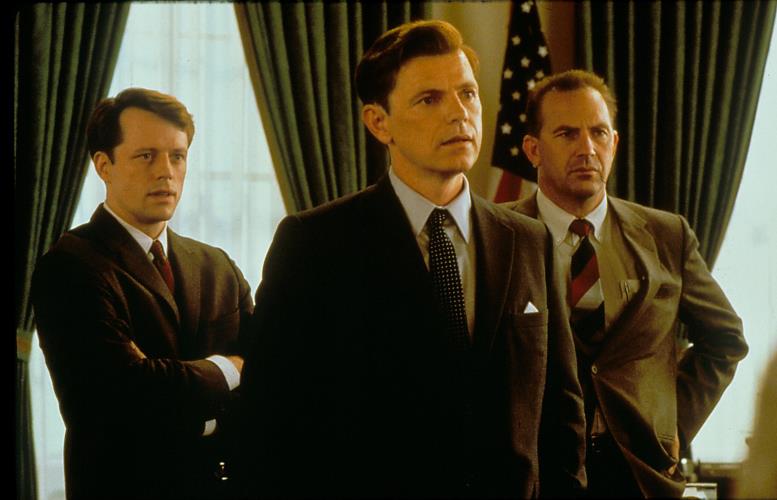
ケネディ司法長官(左)、ケネディ大統領(中央)、オドネル(右)は核戦争回避のために奮闘する。
The Cabinet Room in the White House was filled with Secretary of Defense Robert McNamara, Secretary of State Dean Rusk, Chairman of the Joint Chiefs of Staff General McWell Taylor, and Vice President Lyndon Johnson. Special Assistant to the President Kenneth O'Donnell and Attorney General Robert Kennedy were also present.
Aerial photo analyst Arthur Randall explained that photographs taken by the U-2 reconnaissance aircraft showed Soviet nuclear missiles being deployed, claiming the lives of 80 million Americans.
He insisted that in an unprecedented crisis, the military should launch an air strike and invasion as soon as possible. Secretary of Defense McNamara said, "If we are going to conduct air strikes, we should agree here and now to strike before the missiles are ready to launch."
Secretary of State Rusk insisted that international pressure be applied against the Soviet Union until it gives in and that air strikes be conducted against Cuba.
President Kennedy said, "We cannot allow Soviet nuclear missiles to be placed in Cuba. We must get them to remove the missiles at all costs."
After the Cabinet meeting, President Kennedy said, "At this point, it looks like air strikes are the only way to go," but O'Donnell said, "If we attack and kill a lot of Russians, the enemy will attack Berlin. And if they attack Berlin, NATO will not be silent. War will break out.
In the Rose Garden of the White House, Attorney General Kennedy told President Kennedy, "Put the smartest people in a room and kick their asses until they come up with some solution. He proposed the creation of "ExCom," the executive committee of the National Security Council, and in addition to Attorney General Kennedy, who proposed its creation, ExCom would be attended by only the heads of various agencies and a few competent people, including Defense Secretary Robert McNamara, CIA Director John McCone, and unofficial advisor Dean Atchison, with President Kennedy was to attend only when necessary.
television speech
The conflict between the military, which strongly advocated bombing and invasion of Cuba, and Attorney General Kennedy, who opposed military action, deepened. Attorney General Kennedy, who was attending the National Security Council's Executive Committee "ExCom" meeting, was impatient because a solution was hard to come by. As Attorney General Kennedy paced back and forth across the table, "There's got to be another option," his informal advisor, Dean Atchison, said, "Come on, Bobby. You're being naive. This is the real world."
Attorney General Kennedy told Secretary of Defense McNamara, "I don't care how crazy it sounds, how inappropriate, how ridiculous it sounds," and told him to come up with a response.
The proposal that Secretary of Defense McNamara came up with was a maritime blockade of Cuba. The idea was that the U.S. Navy would stop any Soviet ships headed for Cuba, board them, and immediately turn them back if they were loaded with weapons.
Attorney General Kennedy told President Kennedy that the opinion of the Executive Committee of the National Security Council, "EXCOM," was "split down the middle between a sea blockade and an air strike.
In response to the split in opinion, President Kennedy said, "I want everyone's agreement. That is, whether it is an air strike or a blockade of the sea. Something that everyone supports, even if it's unwilling.
In response to the disagreement, O'Donnell told President Kennedy, "The Russians will sniff it out and use it as a countermeasure.
On Monday, October 22, 1962, at 7:00 p.m., President Kennedy delivered a televised address. First, a maritime blockade of Cuba should be implemented, and shipments should be inspected, and if loaded with weapons, they should be turned back immediately.
Next, he announced that there would be even tighter surveillance of Cuba, and that any nuclear missile launched from Cuba against any country in the Western Hemisphere would be considered an attack on the U.S. and would be met with full retaliatory measures against the Soviets.
On Tuesday, October 23, after President Kennedy's televised address, a response comes from the Soviet Union, "The community of nations recognizes the fundamental right of freedom of navigation on the high seas..."
After seeing the response from the Soviets, O'Donnell expressed his opinion that "they are still not sure how to respond."
President Kennedy, considering ways to remove the missiles deployed in Cuba while avoiding war, decided to conduct an "on-site inspection" rather than a "blockade," which would have been considered an act of war. The "inspection" means that the U.S. Navy will stop all vessels entering Cuban territorial waters and inspect them to see if they are carrying weapons destined for Cuba. The Soviet ships continued to sail toward Cuba and showed no signs of stopping. Preparations were made to fire torpedoes, but the Soviet ships turned around and turned back without heading toward Cuba. Secretary of State Rusk expressed his delight: "We glanced at each other, and the other blinked first. As the U.S. government continued to order reconnaissance flights, O'Donnell told the reconnaissance plane pilot, Lt. Col. Ecker, "Even if you get hit, don't report that you got hit. If you report being shot at, the president will have to order an attack.
Avoiding the Cuban Crisis
President Kennedy ordered his brother, Attorney General Kennedy, to the Soviet Embassy in the United States to negotiate with Soviet Ambassador Anatoly Dobrynin.
ABC News reporter Sukhari was contacted by a pro-Soviet spy, Alexander Fomin, who informed President Kennedy that "through back channels, the Soviet Union would offer to remove missiles deployed in Cuba if the United States would promise not to invade Cuba."
Increasing military pressure for an immediate attack grew, and President Kennedy authorized an attack on the missile base and the start of the invasion of Cuba on the following Monday. A U-2 reconnaissance plane was conducting reconnaissance over Cuba to gather information for the military action, when the reconnaissance plane was shot down by a fired missile, killing Major Rudolph Anderson, the pilot of the plane.
After driving Attorney General Kennedy to the Soviet Embassy in the U.S. in a limousine, O'Donnell told Attorney General Kennedy, "I wish you good luck and whistle for you.
After beginning negotiations with Ambassador Dobrynin, Attorney General Kennedy again demanded the removal of the missiles that the Soviet Union had deployed in Cuba. He promised that the U.S. would not invade or support an invasion of Cuba if the Soviet Union would remove the missiles it had deployed there.
Ambassador Dobrynin demanded that the U.S. remove the missiles deployed on the Soviet border in Turkey.
In response to that demand, Attorney General Kennedy informed him that "it is impossible to incorporate this into the terms of this exchange. But if the Soviets remove all their missiles from Cuba, as part of a predetermined plan on the part of the U.S., there will be a secret agreement that the U.S. will remove all its obsolete missiles from Turkey within six months.
As a result of negotiations between Attorney General Kennedy and Ambassador Dobrynin, it was announced that the Soviet Union would remove its missiles from Cuba in order to avoid a war that could escalate to the use of nuclear weapons.
The Cuban Crisis, which had brought not only the United States but the world to the brink of nuclear war, was averted.
Characters and characters in 13 Days
key people
John Fitzgerald Kennedy (played by Bruce Greenwood)
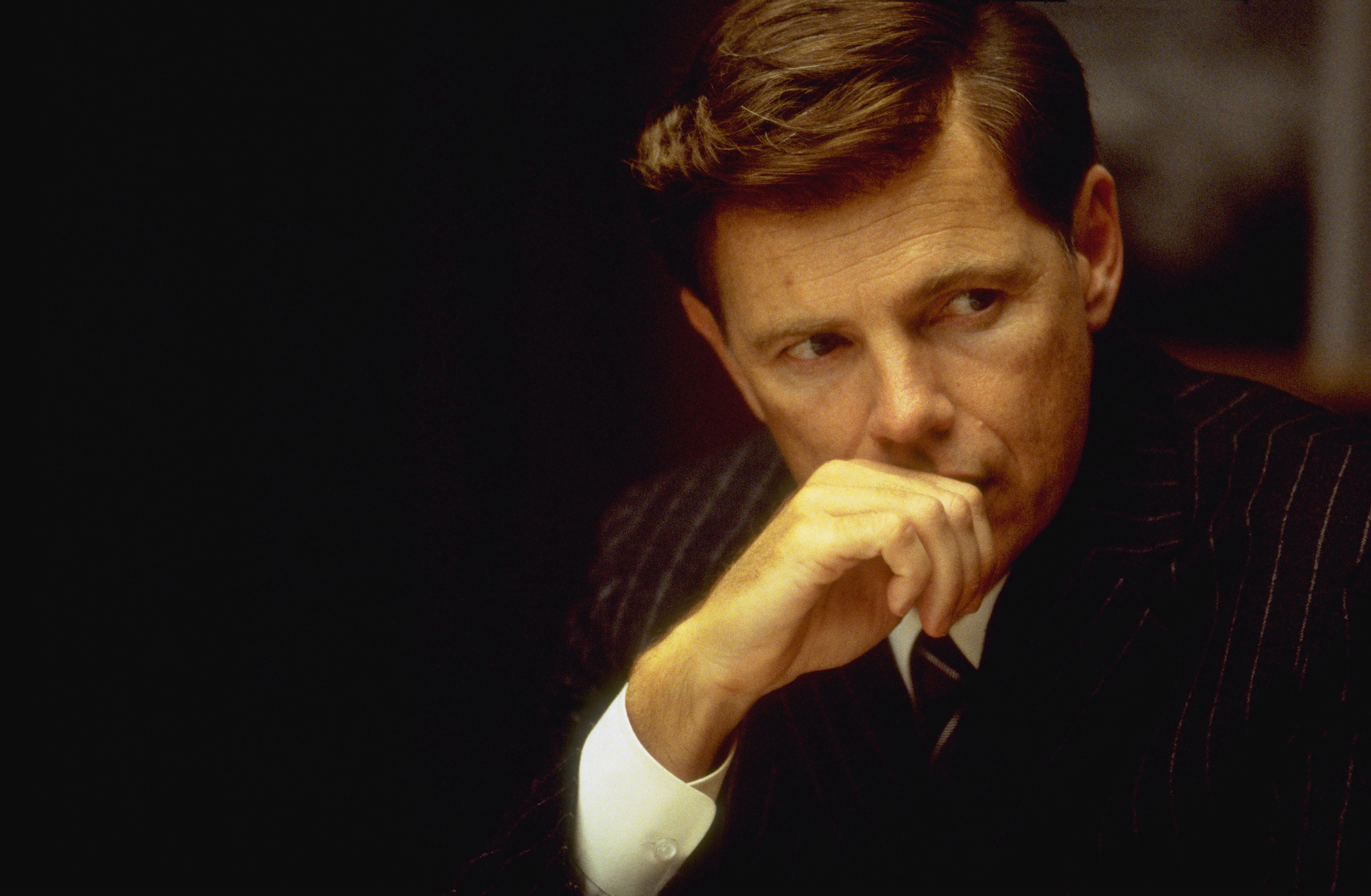
Japanese dubbed by Yoshito Yasuhara (soft version) / Koichi Yamadera (TV Asahi version)
The 35th President of the United States. He is known for being the first Irish-American to hold the office of president. In response to the Cuban Missile Crisis, which was triggered by the Soviet Union's deployment of nuclear missiles in the U.S. neighbor Cuba, he decided to impose a maritime blockade and averted an unprecedented crisis.
Robert Kennedy, who served as the 64th Attorney General of the United States, is his younger brother.
Kenneth O'Donnell (played by Kevin Costner)
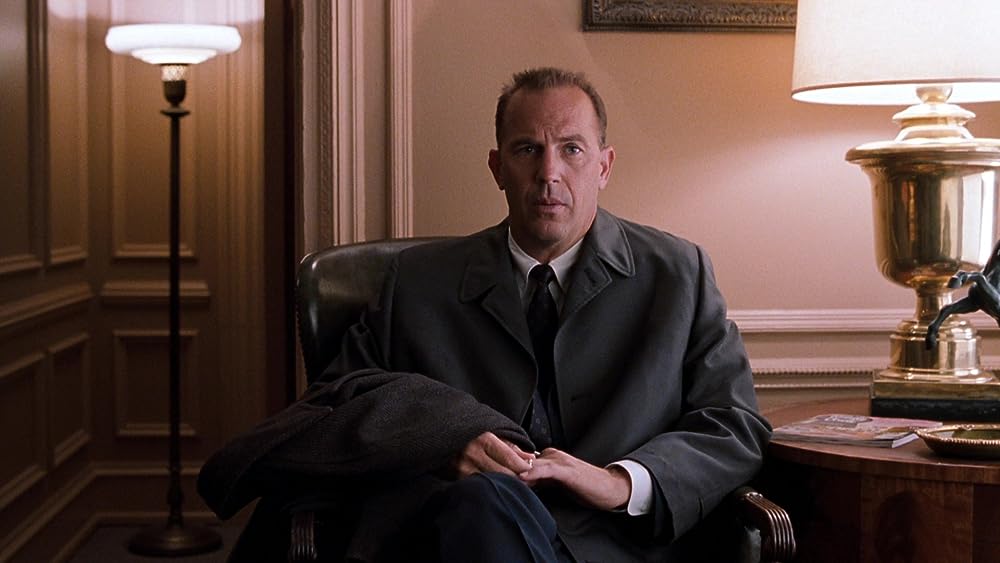
Japanese dubbed by Yasuyoshi Hara (soft version) / Kazuhiro Yamaji (TV Asahi version)
He is a Special Assistant to the President and appears throughout the film.
He became Special Assistant to the President after President Kennedy's election, but was faced with the Cuban Missile Crisis that brought the U.S. and the world to the brink of nuclear war.
He tells President Kennedy that he will continue to follow his schedule as before in the face of the Cuban crisis, among other things.
He also whistled and cheered for Attorney General Robert Kennedy when he went to negotiate with Soviet Ambassador Dobrynin.
Robert Kennedy (played by Stephen Culp)
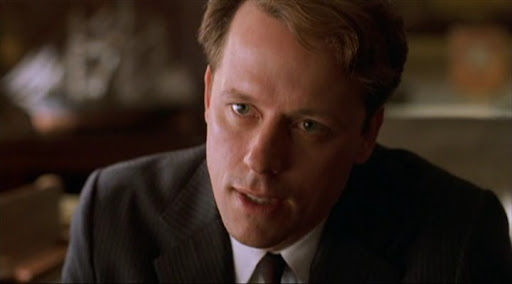
Japanese dubbing: Jumpei Morita (soft version) / Yuya Uchida (TV Asahi version)
The 64th Attorney General of the United States and brother of President Kennedy.
He convened the National Security Council Executive Committee "ExCom" with CIA Director John McCone, Secretary of Defense Robert McNamara, and other top officials from various ministries, as well as unofficial advisor Dean Atchison and other influential figures, to discuss solutions to avert a crisis. He served as a negotiator from his own brother, President Kennedy, to Soviet Ambassador to the U.S. Dobrynin, and was able to avert the crisis.
Vice President of the United States of America

Related Articles
Desperate Housewives (Drama) Spoiler Commentary and Discussion Summary
Desperate Housewives is a suspense comedy-drama that aired in the United States for eight years from 2004 to 2012. It aired for a total of eight seasons. The story takes place on Wisteria Street in a quiet suburban residential neighborhood, where ordinary housewives are involved in various incidents. It incorporates various elements of suspense, mystery, romance, and comedy. The story of housewives who are both neighbors and friends, betraying each other but overcoming incidents and life through friendship, has been well received by viewers. The show has been so popular that remakes exist in Argentina, Ecuador, and Colombia.
Read Article
Spoiler alerts and discussion of Perfect World (film).
This American film was released in 1993, directed by Clint Eastwood and starring Kevin Costner. The film co-stars Clint Eastwood and Kevin Costner, two of Hollywood's biggest stars, and the child actor who plays Phillip gives a wonderful performance that surprises the viewer. Butch, an escaped convict, meets an 8-year-old boy named Phillip while on the run and takes him out as a hostage. During their escape, the two gradually become close to each other. The heartwarming road movie with a heartbreaking ending.
Read Article
Bodyguard (1992 film) spoiler alert and discussion summary
The Bodyguard" is a 1992 romantic suspense film produced in the United States. It depicts the sweet, sad, and bittersweet love between Rachel Marron, a superstar who is sent a threatening letter, and Frank Farmer, a former Secret Service agent and professional bodyguard who protects her with his life. Starring Kevin Costner, who won an Oscar for "Dances with Wolves," and co-starring singer Whitney Houston, who makes her acting debut in this film. The film was directed by Mick Jackson, known for "Volcano" and "Shots Fired for No Reason.
Read Article
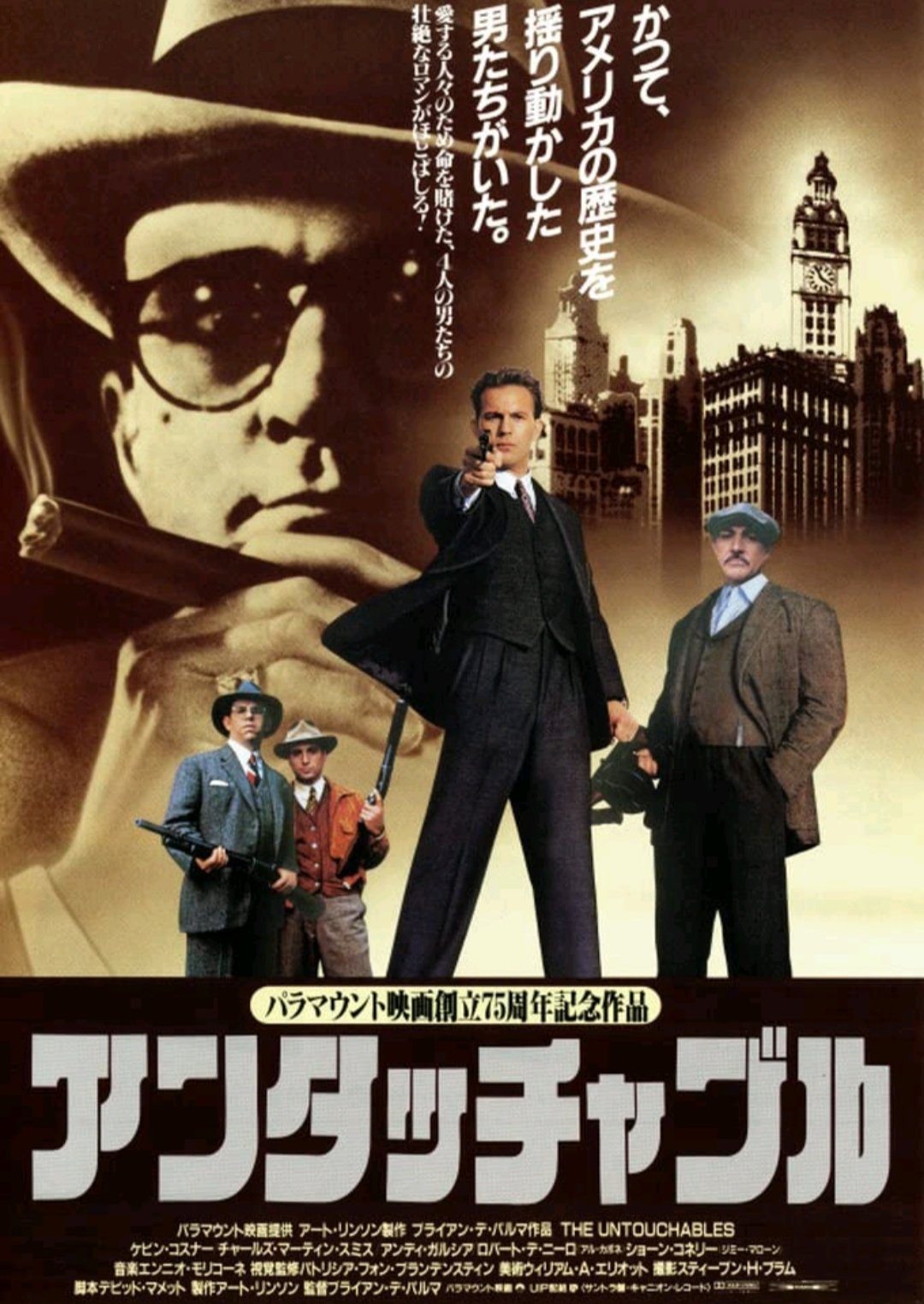
Untouchable (film) spoiler alerts and discussion summary
The Untouchables" is a 1987 American action film. Set in the metropolis of Chicago, where alcohol prohibition is still in effect, the film is a romantic depiction of four men who daringly take on Al Capone, a gangster who profits enormously from the bootlegging and trafficking of alcohol. The film stars Kevin Costner, known for "The Bodyguard," and Sean Connery, known for "Dr. No. 007. The film was directed by Brian De Palma, known for "The Killing Dress" and "Casualties.
Read Article
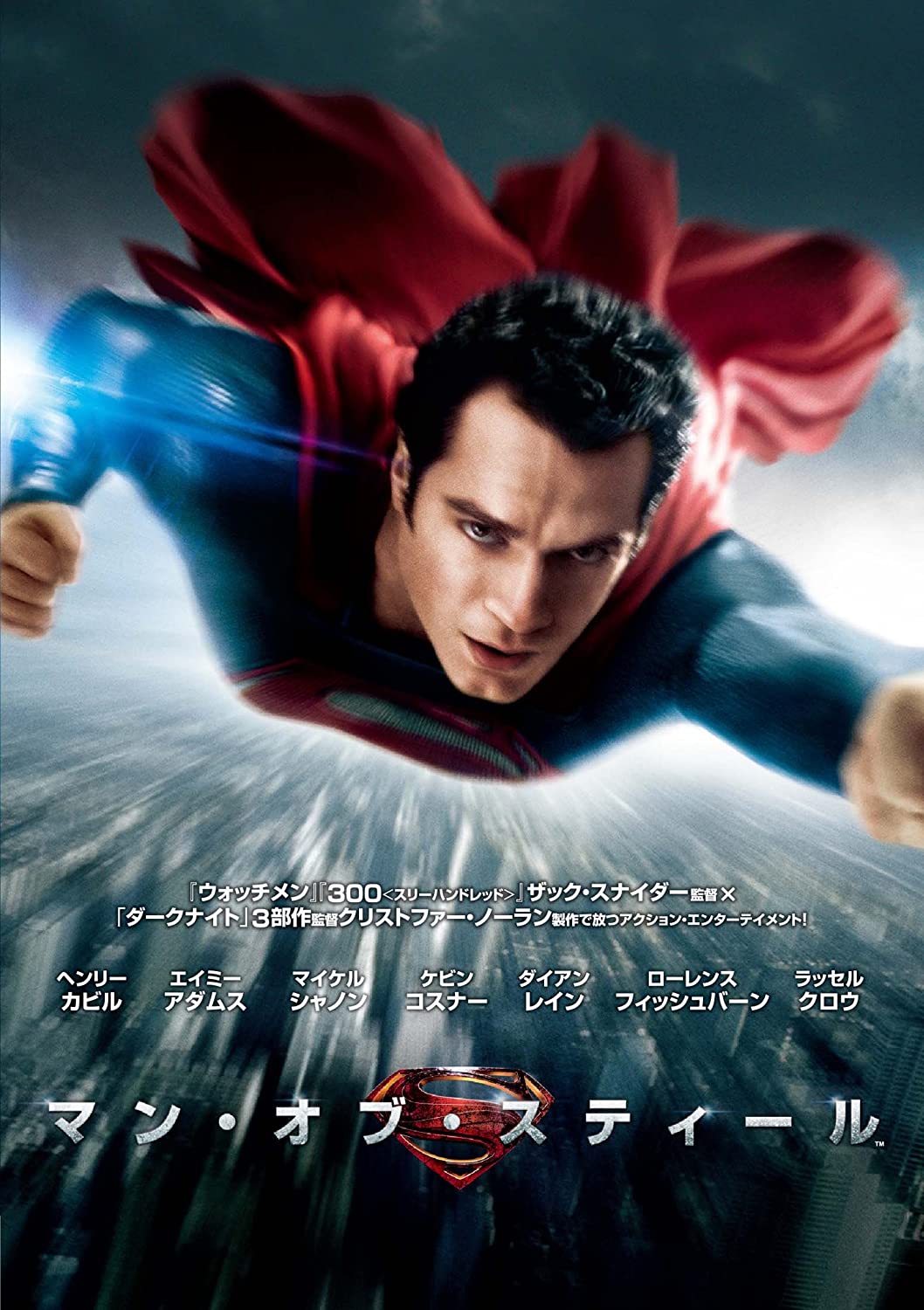
Man of Steel (DCEU) Spoilers and Discussion Summary
Man of Steel" is an American superhero film released in 2013. It is a live-action film based on the popular American comic "Superman" from DC Comics. Including the "Superman" series, this is the sixth film in the series. On Krypton, a planet far from Earth where science and civilization have developed and artificial birth is the norm, a child named "Kal-El" is born naturally for the first time in several hundred years. Later called "Superman," he is raised by a childless couple before embarking on a journey to discover his origins.
Read Article
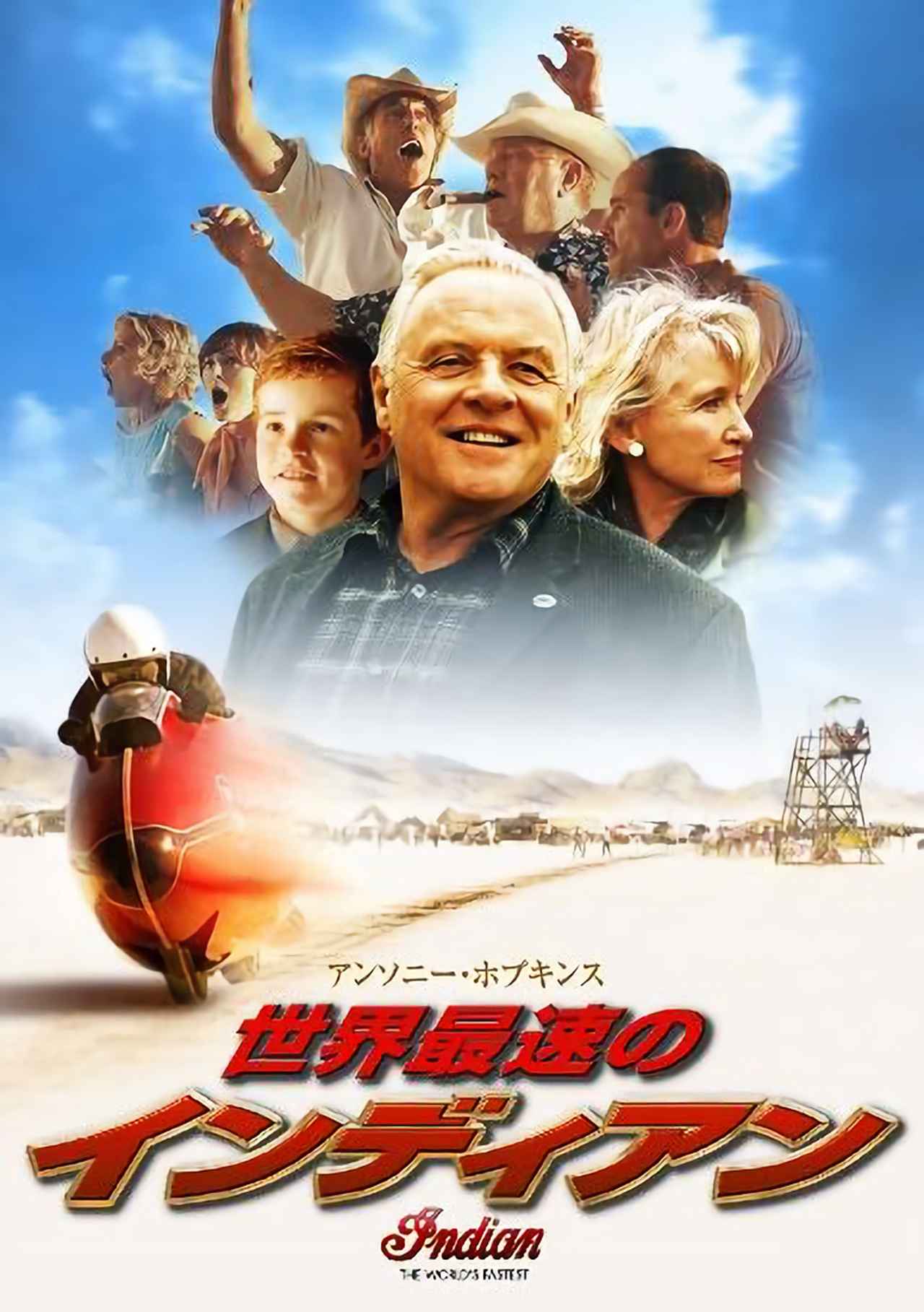
The World's Fastest Indian (film) Spoiler Summary and Discussion
The World's Fastest Indian is a 2005 New Zealand/United States biographical film. The biographical film is based on the story of real-life rider Burt Munroe, directed by Roger Donaldson and starring Anthony Hopkins. Burt Munroe, an aging rider, had long dreamed of challenging the world's fastest speed record on his beloved "1920s Indian Scout. One day, Burt realizes that his days are numbered, and decides to head for the Bonneville Salt Flats, a sacred place for bikers, for the last chance of his life.
Read Article
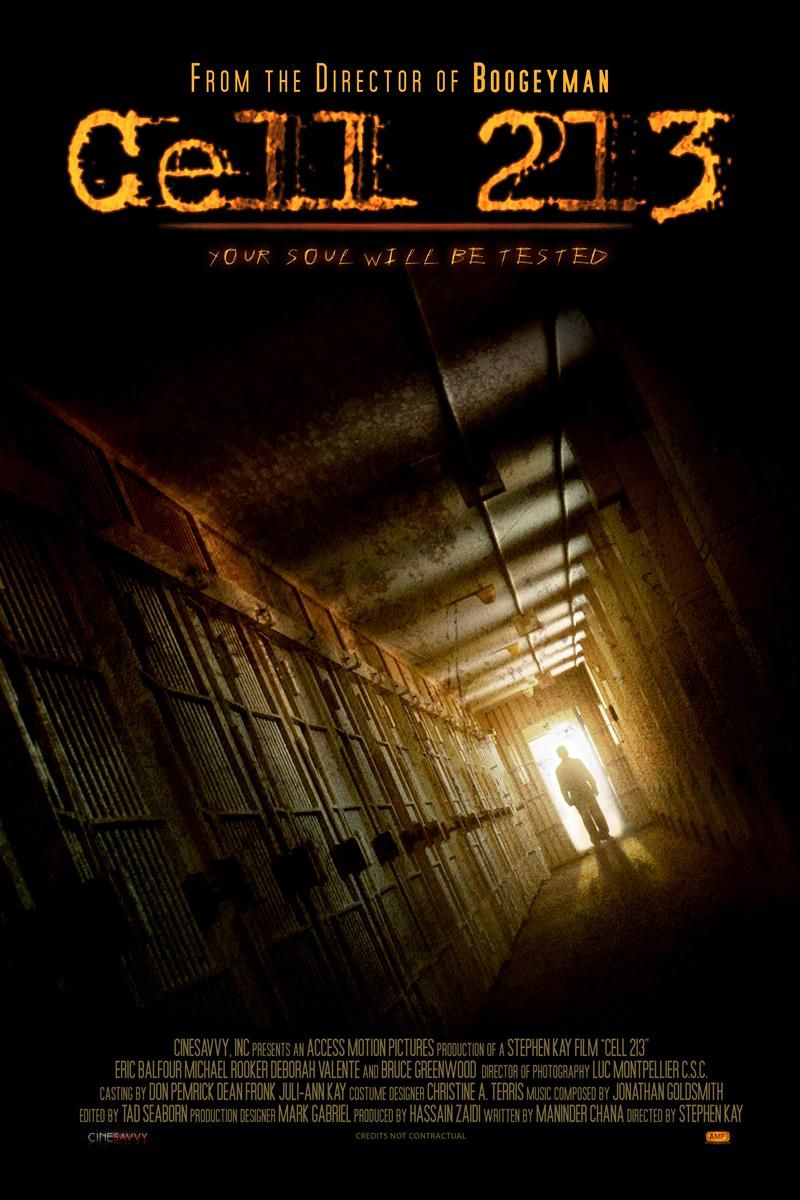
Solitary confinement is besieged by terror. Here's what you need to know about the horror movie "Sacrifice in a Cell!"
What if a grudge spirit lives in a cell with no escape? This film depicts the horror of such a locked room. It is not just a horror film, but a story that is different from other horror films, characterized by its impressive depiction and direction with some depth. We would like to introduce the movie "Sacrifice in a Cell".
Read Article
Too many mistranslations? A summary of all the anger against subtitle translator Natsuko Toda.
Natsuko Toda is known as one of Japan's leading translators. She has translated subtitles for numerous films, which we have come to take for granted. However, it seems that her translations are actually riddled with errors, and there is a lot of controversy surrounding them. In this article, we summarize the voices that have been raised about such mistranslations by Natsuko Toda. It's easy to knock it, but language is really difficult. If you are going to complain about it all the time, why don't you translate it yourself? Of course, with perfect nuance and no one will criticize you for it!
Read Article
Tags
Contents
- Overview of "13 Days
- Synopsis and story of "13 Days
- Beginning of the Cuban Crisis
- conflicting (opposite, contrasting) claims
- television speech
- Avoiding the Cuban Crisis
- Characters and characters in 13 Days
- key people
- John Fitzgerald Kennedy (played by Bruce Greenwood)
- Kenneth O'Donnell (played by Kevin Costner)
- Robert Kennedy (played by Stephen Culp)
- Vice President of the United States of America
- Lyndon Baines Johnson (played by Walter Adrian)
- Kennedy Administration Cabinet Members
- Robert McNamara (played by Dylan Baker)
- Dean Rusk (played by Henry Stroger)
- McGeorge Bundy (played by Frank Wood)
- Unofficial Advisors
- Dean Atchison (played by Len Carrio)
- first lady
- Jacqueline Kennedy (played by Stephanie Romanoff)
- military authorities
- Army General Maxwell Davenport Taylor (played by Bill Smitrovich)
- Air Force General Curtis LeMay (played by Kevin Conway)
- UN ambassador
- Adlai Stevenson (played by Michael Fairman)
- Director of the CIA
- John McCone (played by Peter White)
- Aerial Photography Specialist
- Arthur Randall (played by Daykin Matthews)
- Special Advisor to the President and Speechwriter
- Theodore C. Sorensen (played by Tim Kelleher)
- presidential spokesman
- Pierre Salinger (played by Kelly Connell)
- air force major
- Rudolph Anderson (played by Charles Esten)
- Lieutenant Commander, Navy, Reconnaissance Operations Commander
- William Ecker (played by Christopher Lawford)
- Admiral, Chief of Naval Operations
- George Anderson Jr. (played by Madison Mason)
- Ambassador of the Soviet Union to the United States
- Anatoly Dobrynin (played by Elijah Baskin)
- White House telephone operator
- Margaret (played by Karen Ludwig)
- Kenneth O'Donnell's family
- Helen O'Donnell (played by Lucinda Jenny)
- Kenny O'Donnell Jr. (played by John Foster)
- Mark O'Donnell (played by Drake Cook)
- Kathy O'Donnell (played by Caitlin Wax)
- その他
- Marshall Carter (played by Ed Roter)
- George Ball (played by James Cullen)
- Richard J. Daley (played by Jack McGee)
- Evelyn Lincoln (played by Janet Coleman)
- Andrei Gromyko (played by Olek Krupa)
- Terms for "13 Days
- Reconnaissance aircraft U2
- Cuban Missile Crisis (1962)
- president
- Cuba
- Joint Chiefs of Staff
- Famous quotes, lines/scenes and scenes from "13 Days
- President Kennedy - "I see, you probably don't realize it, but you're in that predicament with me."
- President Kennedy: "Any nuclear missile launched from Cuba against any country in the Western Hemisphere shall be considered an attack by the Soviets against the United States and shall demand full retaliatory measures against the Soviets."
- Backstory, Trivia, and Small Stories/Episodes and Anecdotes from "13 Days"
- Kevin Costner in his second appearance in a film related to President Kennedy
- Kevin Costner teams up with director Roger Donaldson for the second time
- Actor Stephen Culp, who played Attorney General Robert Kennedy twice
- Theme song and insert song for the movie "13 Days
- Theme song: Trevor Jones "The Knot Of War
- Insert song: Trevor Jones "Death of Major Anderson