
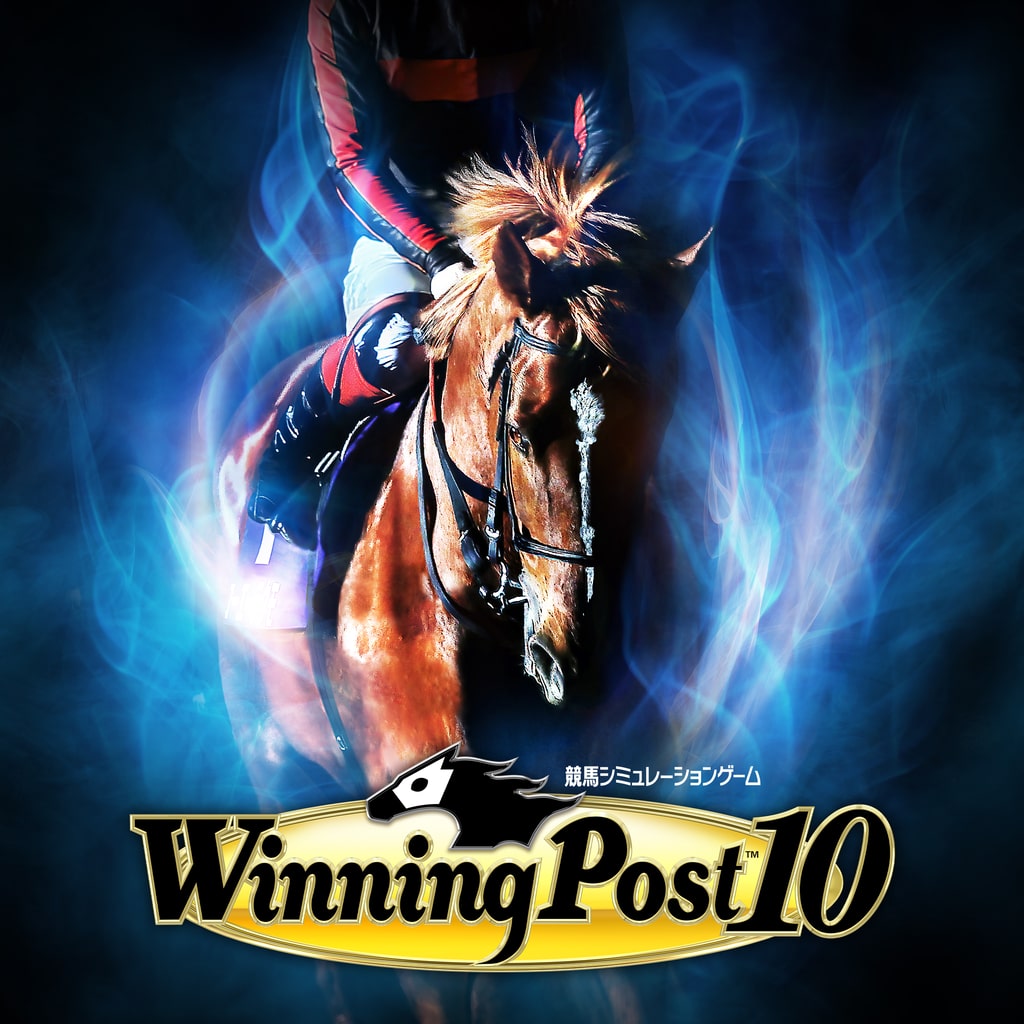
Winning Post 10" is a "horse racing simulation game" released by Koei Tecmo Games.
The player, as an owner-breeder (a producer and owner of a horse), walks through the history of horse racing, which has been built by racehorses and people related to racehorses.
This title is a commemorative title for the 30th anniversary of the series and includes many new elements, such as "horse personalities," which express the personalities of racehorses, and "historical training," which traces the transition of training techniques passed down in the world of horse racing.
Entering a race
Once the horse has improved his ability and is in good condition and not fatigued, he is ready to run in a race.
Races are divided into classes, and the races a horse can enter depend on the class it belongs to at the time.
The first race is the "Shinkansen.
The first race is the "New Horse Race," which is open to horses that have never raced in a race before.
If a horse fails to win the Shinsenga-sha, it can run in the Unfinished Race.
In the "Undefeated" race, horses that have not won a single race can run.
If a horse wins the Undefeated Class, the next race it can run in is the One-Winner Class.
As the name suggests, horses that have won one race can run in this race.
After that, if a horse continues to win races, it can move up to the "2-win class" and "3-win class.
After winning up to the three-win class, a horse can run in the "Open," "Listed," and "Jukusho" classes.
The "Grand Prize" is divided into "G1," "G2," and "G3," with "G1" being the most prestigious race.
In addition to class, there are other requirements for the races.
Basically, both stallions and mares are allowed to run, but there are some races in which only mares are allowed to run.
The regions in which the races are held also differ.
There is the "Chuo Racing," which allows horses to run in famous races such as the "Arima Kinen" and "Japan Derby.
There are also "Regional Horse Races," which are mainly dirt races, where you can face off against local horses, and "Overseas Horse Races," where you can face off against top-notch foreign horses, such as the "Prix de l'Arc de Triomphe.
Each region has its own unique characteristics, so it is important to choose the right race for your racehorse.
Racing Systems
Before a race starts, a strategy can be planned.
The player can choose the type of horse's performance.
There are nine types of strategies: "runaway," "tame runaway," "runaway," "lead," "in," "put in," "roll," "chase," and "attack the back of the pack.
The shortest way to victory is to put together a strategy that takes into account the characteristics of the racehorse, the compatibility of the jockey, and the strategies of the rival horses.
personality
Source: www.gamecity.ne.jp
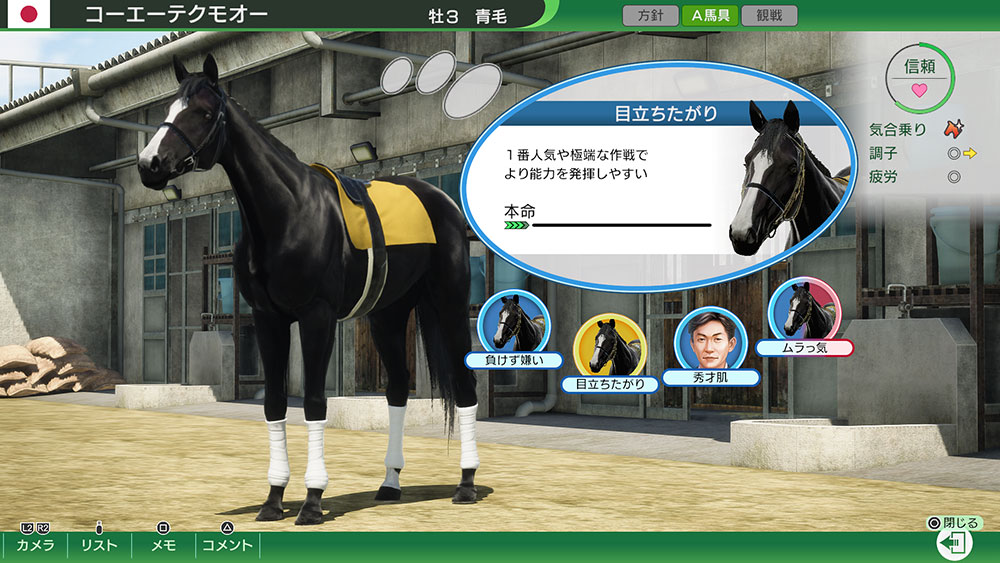
New to this title is the "Ummah Personality".
The "personality" is an expression of a racehorse's character.
There are two types of "Humor Personalities": those that a horse is born with, and those that are discovered as the horse grows up.
Some are buffed in races, while others are debuffed, and each racehorse has its own unique personality.
The debuffed horse's personality can be overcome by historical training or by the player's own choices.
In addition, the humpersonality that is buffed may evolve into a higher level humpersonality.
It is necessary to face and train racehorses more than ever before.
historical training
Source: www.gamecity.ne.jp
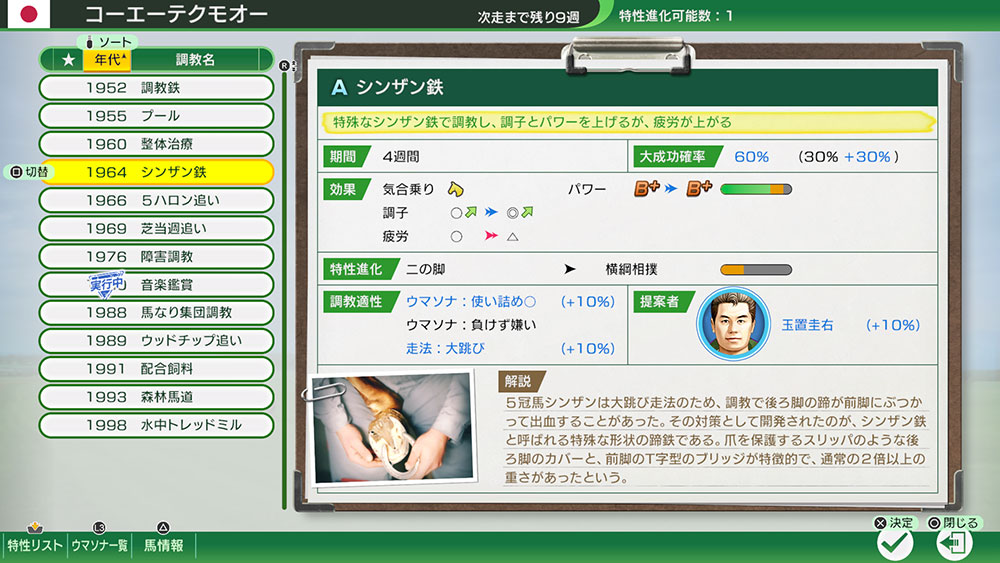
The "historical training" system, which allows players to trace the evolution of training techniques passed down in the world of horse racing, also makes its first appearance in this title.
The effects vary from evolving a racehorse's characteristics to a higher level of characteristics to temporarily increasing its ability.
The effects will be greater if the historical training is selected to match the racehorse's aptitude in terms of personality and pedigree.
In this title, more than 30 types of "historical training" have been registered, allowing players to learn about the history and evolution of training techniques.
Starting year scenario
Now you can relive the history of horse racing from even earlier years than in previous works.
The oldest year was "1976" in the previous title, but in this title, you can now start from "1973," three years earlier.
There are seven starting years to choose from, and you can start from any of the Showa, Heisei, and 2025 generations.
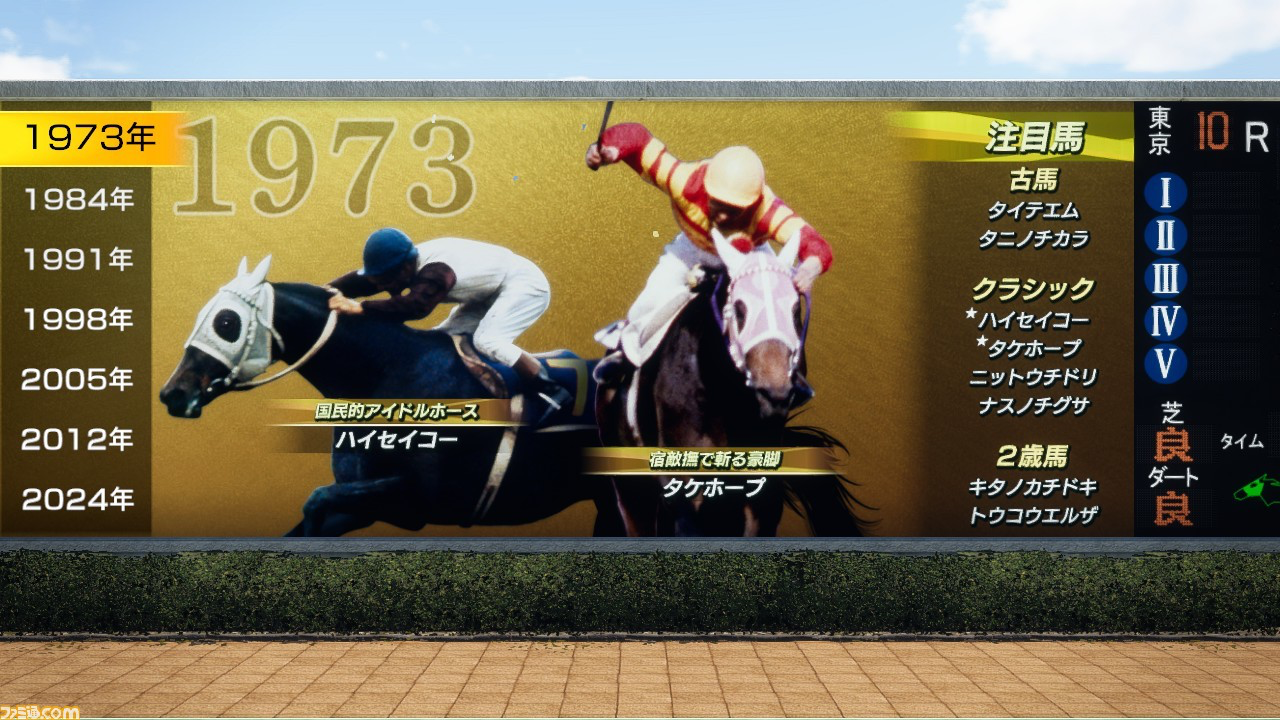
1973
Source: www.famitsu.com
This is the year that saw the appearance of "Hi-Seiko," an idle horse that caused a social phenomenon, and "Takehope," a horse that competed with Hi-Seiko.
Visitors can experience the early days of horse racing.
1984
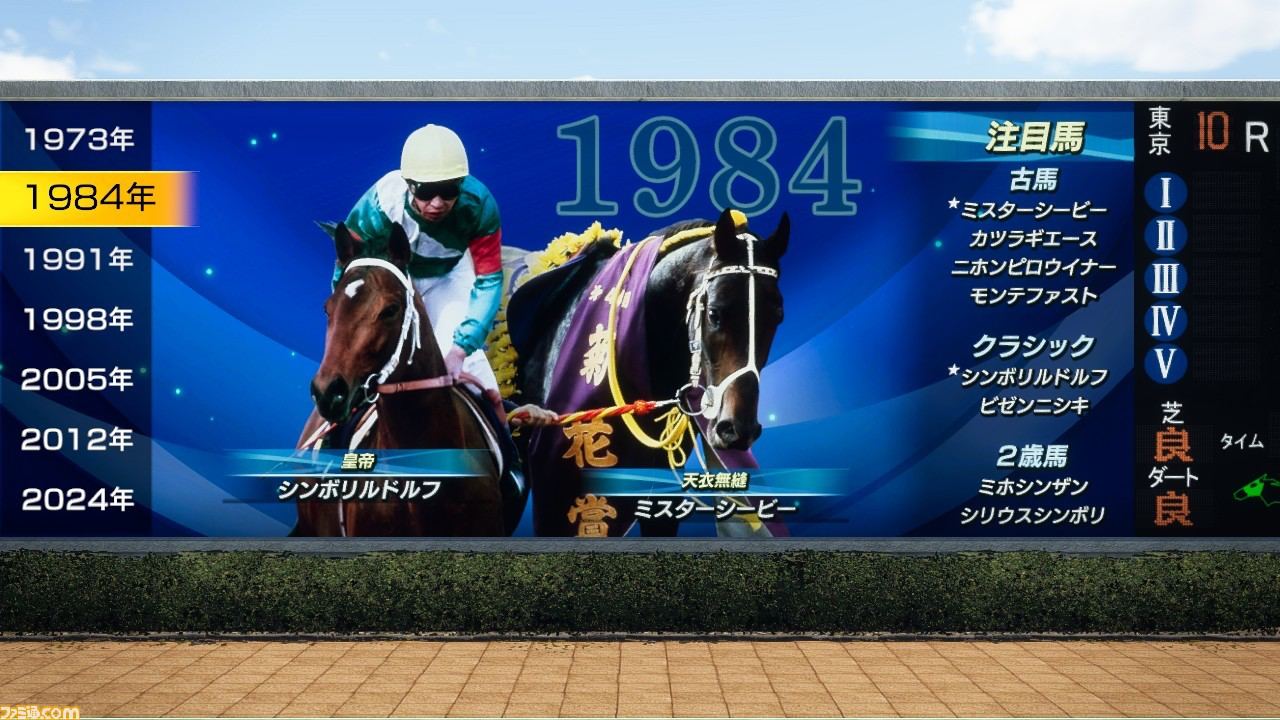
Source: www.famitsu.com
This was the year that the undefeated Triple Crown winner "Simbolirdorf" and the previous year's Triple Crown winner "Mr. Seabee" appeared on the scene.
The year was also the year that the "Japan Cup," a race in which racehorses from around the world were invited to prove the power of Japanese horses, began to be held.
1991
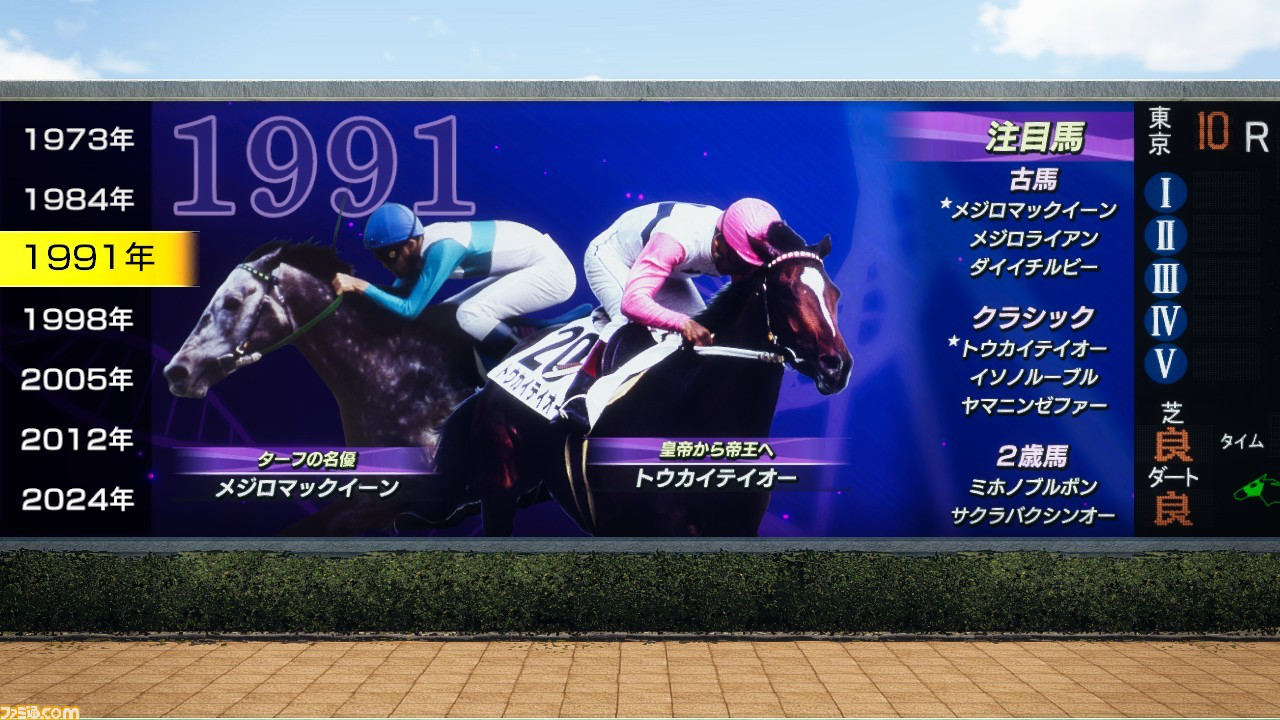
Source: www.famitsu.com
This was the year that "Tokai Teio," a child of Simbolildorf, and "Mejiro McQueen," who mainly competed in long-distance races, made their debut.
This was the year when the Showa Era changed to the Heisei Era, and training techniques began to improve dramatically.
1998
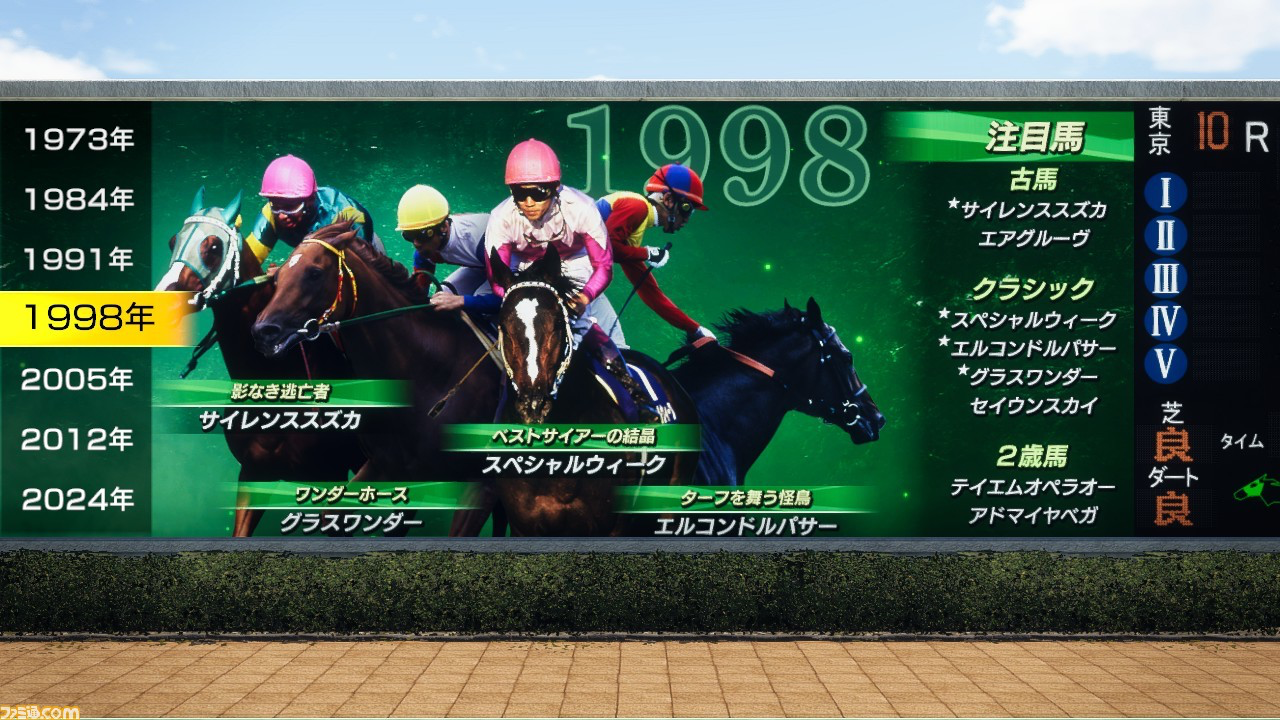
Source: www.famitsu.com
This is the year that "Special Week," who gave Yutaka Take his first Japan Derby victory, and "Elcon Dolpa Pacer," who has been active on the world stage, make their debut.
This is also the year that saw the arrival of historically famous horses such as Silence Suzuka and Glass Wonder, and is also referred to as the "Golden Generation".

Related Articles
Winning Post 8" Strategy and Wiki [PS3 / PS Vita / PC].
Here is a collection of strategy sites and wikis for the game "Winning Post 8" released by Koei Tecmo Games in 2014. It is the ninth title in the "Winning Post" series of horse racing simulation games. New elements were implemented, such as 3D modeling of farms and a marriage system for players.
Read Article
Internal Affairs or Warfare? Summary of recommended titles of "Nobunaga's Ambition" by gamer type [Event or character-oriented?
A popular work that has appeared in several titles, "Nobunaga's Ambition" has various characteristics for each title. This summary divides gamers' tastes into four categories: those who want to play internal politics, those who want to fight wars, those who focus on events, and those who focus on characters, and introduces titles that can be recommended for each type.
Read Article
Contents
- Overview of Winning Post 10
- Synopsis and story of Winning Post 10
- Programming in Logic
- 1st year
- January - March
- April - June
- July-August
- September-December
- 2nd year onwards
- Game System of "Winning Post 10
- Basic racehorse training
- Entering a race
- Racing Systems
- personality
- historical training
- Starting year scenario
- 1973
- 1984
- 1991
- 1998
- 2005
- 2012
- Year 2024
- marriage
- special characteristic
- superordinate characteristic
- bond characteristic
- intrinsic property
- Characters in Winning Post 10
- animal trainer
- Kazuo Fujisawa
- Yasuo Ikee
- rider
- Yutaka Take
- Christophe Lemaire
- Kenichi Ikezoe
- Rusei Sakai
- rival horse owner
- Masaki Otori
- Kabutoyama Tenma
- Suzuran Hagino
- Naozumi Yukino
- Miyakooji Shoryu
- Sumire Asahina
- Cecil Rene
- friend
- Yayoi Osaka
- Yue Shimakura
- Sakurako Arima
- Shuzaburo Isaka
- Takamatsu Insulated
- Maaya Morinaga
- Takao Suda
- Alice Reed.
- ematrado
- Claire Hart
- Elizafran.
- Eriko Kisaragi
- Miku Sekiya
- Kanon Takimiya
- Yumiko Mizumori
- Carlo Ishido
- Saki Kozono
- Rena Kirihara
- Takumi Ashikaga
- Items for Winning Post 10
- amulet
- rainbow
- money (written before an amount)
- silver
- copper
- green
- DLC Content
- Breeding mares Sire and mare mating tickets
- Juvenile and Racehorse Limit Breakthrough Ticket
- Juvenile and Racehorse Ability Disclosure Ticket
- Racehorse Ownership +5
- Terms of Winning Post 10
- owner-breeder
- thoroughbred
- lineage establishment
- global propriety
- Backstory, Trivia, Small Stories/Episodes, and Anecdotes of Winning Post 10
- One week of pasturage and in good shape.
- End-of-month grazing mitigates decrease in racehorse life expectancy
- Improvement of chronic disease after one week of grazing