
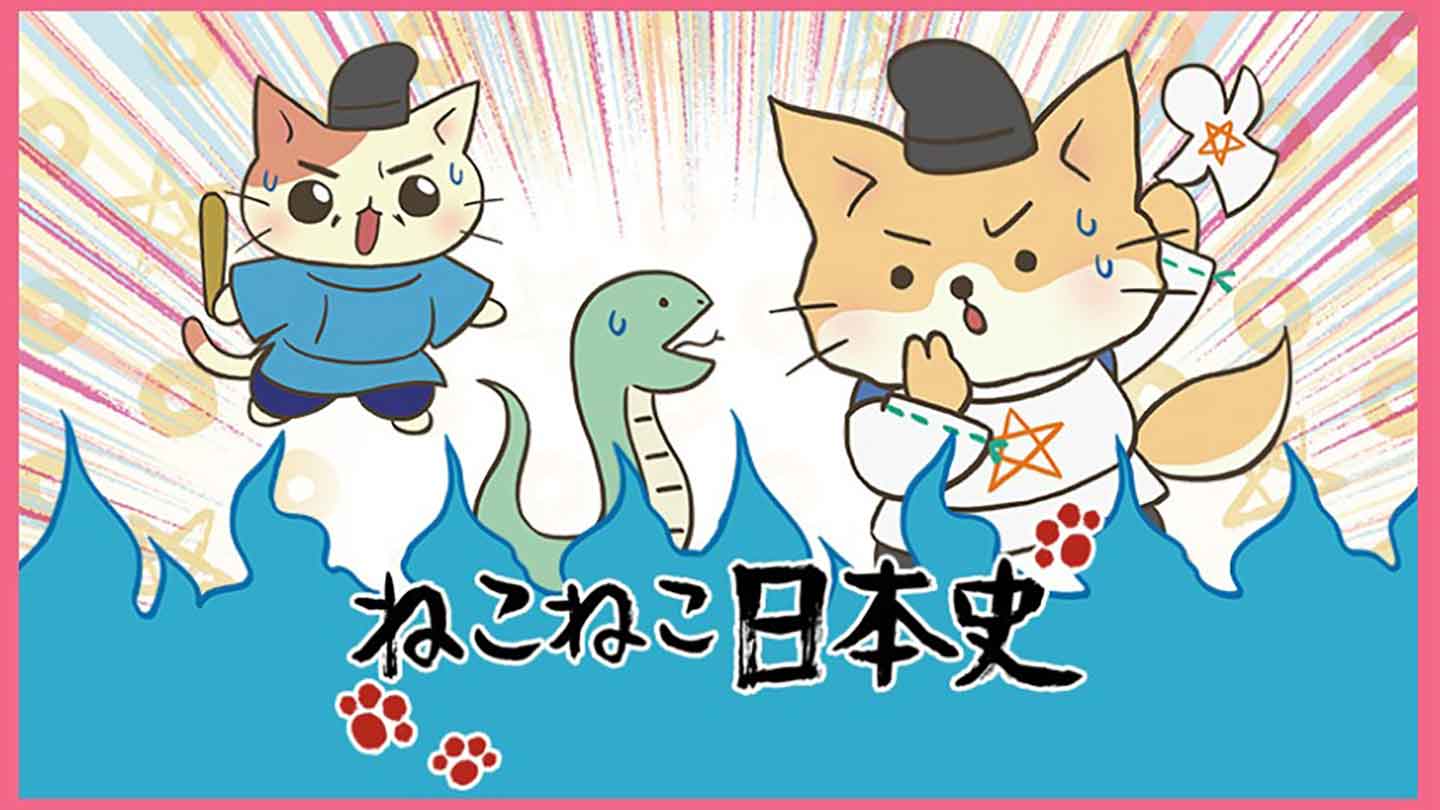
Nekoneko Japanese History" is a four-frame learning manga about Japanese history by manga artist Shigeji Soni, as well as an animated film based on the manga. The creator wanted to create a history learning manga that even small children could enjoy, and drew all the characters in Japanese history as cats. While the content is loose and cute, it is also educational and surprisingly closely follows historical facts. The manga has exploded in popularity, especially among elementary and junior high school students, and has been widely developed through the sale of character goods and related books, as well as through animation and film adaptations.
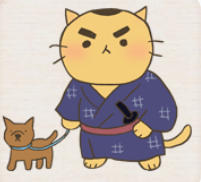
CV: Omori Himasa
A politician and military man from the end of the Edo period to the early Meiji period, born in 1828 and died in 1877. He is depicted as a cat with a dog, with thick, dignified eyebrows.
Takashi Hara/Kei Hara
A diplomat and statesman, he was born in 1856 and died in 1921.
Akiko Yosano)
A poet who revolutionized the history of literature from the Meiji era to the early Showa era as a representative of the Romantic school that renewed literature. Her husband, the poet Yosano Tekkan, was born in 1878 and died in 1942.
Terms of "Nekoneko Japanese History
green foxtail (species of annual grass, Setaria viridis)
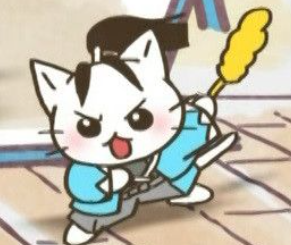
Its official name is enogogusa. It is a weed with bushy ears and belongs to the family Poaceae. It is said that when waved in front of a cat, the cat would play with it, hence the sobriquet "nekojarashi" (catnip). In the film, it is used as a weapon by warlords in place of swords and spears.
canned food
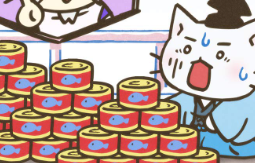
Cat food in a can. In the film, the scene is often depicted where he flicks the canned food to attract them to his side in battle.
Lemon Juice Attack
An attack used in a battle scene in the film. In one scene, a cat uses the fact that it does not like lemons to attack its enemies by pouring lemon juice on them.
Unfamiliar
Cats have a habit of disliking unfamiliar objects. Based on this fact, in the scene of cat fights, many boats and PET bottles with CDs hanging from them appear as "unfamiliar objects" as a means of attack.
Famous quotes, lines, scenes, and scenes from "Neko Neko: A History of Japan
Jomon man (cat) goes inside an earthenware vessel
In the "Jomon People" chapter of volume 2, there are two four-frame cartoons, "How to Use Earthenware, Part 1" and "How to Use Earthenware, Part 2. In the first cartoon, "How to Use Earthenware, Part 1: Put nuts in, take them out, put them in," and in the second cartoon, a cat that likes to be in a small space is depicted curled up inside an earthenware vessel. In the second part, "How to use earthenware, Part 2: Put food in, boil, eat, enter," as in the first part, the cat enters the earthenware vessel at the end. The scene depicts the cat's nature of liking to go into a small space with a "gurgling" sound.
Christian missionary
In the "Hosokawa Galasha & Xavier" chapter of volume 4, there is a scene in which Francis Xavier flashes a cross in front of cats as he proselytizes, and the cross is actually made of matatabi. This scene was depicted by taking advantage of cats' fondness for matatavi.
sound as produced by this alarm
In the chapter "Nukata-no-ou" in volume 6, there are many scenes in which the very popular genius poet Nukata-no-ou writes his famous poem on a wooden letter, and every time he does so, cats flock to the letter and claw at it, saying, "Nice song! This scene is depicted by taking advantage of the cat's habit.

Contents
- Outline of "Neko Neko: A History of Japan
- The story of "Neko Neko: A History of Japan
- Volume 2: Emperor Joto (from the Asuka Period)
- Volume 11: Emperor Kouken (from the Nara Period)
- Volume 10: Sei Shonagon (from Heian Period)
- Volume 4: Ashikaga Yoshimitsu (from the Muromachi Period)
- Volume 3: Matsuo Basho (from the Edo period)
- Characters in "Nekoneko Japanese History
- the characters (in a play or novel)
- Himiko (Himiko)
- Shotoku Taishi
- Emperor Shomu
- Michinaga Fujiwara
- Minamoto no Yoritomo
- Ashikaga Takauji
- Shingen Takeda
- Nobunaga Oda
- Tokugawa Ieyasu
- Tsunayoshi Tokugawa
- Oishi Kuranosuke
- Ryoma Sakamoto
- Emperor Jito
- Ganjin
- Saicho
- Kukai.
- Murasaki Shikibu
- Date Masamune
- Yukimura Sanada
- Musashi Miyamoto
- Yoshimune Tokugawa
- Tadataka Ino
- Heihachiro Oshio
- Isami Kondo
- Toshizo Hijikata
- Soji Okita
- Taira no Masamado
- Kiyomori Taira
- Ii Naotora
- Hideyoshi Toyotomi Hideyoshi
- Mitsunari Ishida
- Oichi.
- Cha-cha-cha.
- Matsuo Basho
- Gennai Hiraga
- Yoshida Shoin
- Atsuhime
- Natsume Soseki
- Nakatomi no Kamatari
- Yoshimitsu Ashikaga
- Dosan Saito
- Motonari Mori
- Sen no Rikyu (Sen Rikyu)
- Hanbei Takenaka
- Hosokawa Galasha
- Kanetsugu Naoe
- Kasuga bureau (Kasuga no Tsubone)
- Katsushika Hokusai
- Kinjiro Ninomiya
- Shinsaku Takasugi
- Michizane Sugawara
- Abe no Seimei / Haruaki / Haruakira / Hareakira
- Shizukagozen
- Soujun Ikkyuu
- Tomiko Hino
- Yoshikage Asakura
- Eitoku Kano
- Toshie Maeda
- wait
- Hattori Hanzo
- Jubei Yagyu
- Shintaro Nakaoka
- Yamato Takel (god of war)
- King Nukata
- Fujiwara no Sadaie/Teika
- Masako Hojo
- Unkei
- Soun Hojo
- Masayuki Sanada
- Chosokabe Motochika
- Yoshihiro Shimazu
- Kiyomasa Kato
- Monzaemon Chikamatsu
- Sakuma Shozan (Sakuma Shozan/Zozan)
- Otomo no Yakamochi
- Tomoe Gozen
- Kaneyoshi Houshi
- Kansuke Yamamoto
- Mitsuhide Akechi
- Yoshiaki Ashikaga
- Sorin Otomo
- Hidenaga Toyotomi (Hideyoshi Toyotomi)
- Issa Kobayashi
- Yoshimune Tokugawa
- Sadanobu Matsudaira
- Tadakuni Mizuno
- Yae Niijima (Yae)
- Kakimoto Hitomaro
- Kamo no Choumei / Kamo no Naga Akira
- Naoyoshi Ashikaga
- Kanami (Kanami/Kannami)
- Zeami
- Sesshu
- Tsukahara Toden
- Hisahide Matsunaga
- Princess Nohime (Princess Nohime/Nohime)
- Princess Kai
- Ihara Saikaku
- Ogata Koan
- Kogoro Katsura
- Fujiwara no Fuhito
- Empress Koumyou
- Hōhō Go-Shirakawa
- Takanobu Ryuzoji
- Katsuie Shibata
- Yodo-dono
- Tadakatsu Honda
- Kojuro Katakura
- Enku
- Kahee Takataya
- Rinzo Mamiya
- Shusaku Chiba
- Sakanoue no Tamuramaro
- Emperor Kammu
- Kusuko Fujiwara
- Sei Shonagon
- Masashige Kusunoki
- Shiro Amakusa
- Xavier.
- Hiroshige Utagawa
- Genpaku Sugita
- John Manjiro
- Eiichi Shibusawa
- Emperor Kouken
- Yoshitomo Minamoto
- Yoshitsune Minamoto
- Yoshitoki Hojo
- Shinran (third highest of the eight hereditary titles)
- Yoshitaka Kuki
- bed-time (for a baby)
- Ujimasa Hojo
- Korin Ogata
- Koshitaro Ito / Kinetaro Ito
- Taisuke Itagaki
- Ryunosuke Akutagawa
- Abeno Nakamaro
- Sadako Fujiwara (Fujiwara no Sadako/Stay)
- Tokimune Hojo
- Honen
- Kenshin Uesugi
- Izumo no Okuni
- Takakazu Seki
- Kaishu Katsu
- Hirobumi Ito
- Rampo Edogawa
- Soga no Umako
- Ono no Komacho
- Tokitaka Tanegashima
- Hidetada Tokugawa
- Senhime (Princess Sen)
- Ii Naomasa
- Hideaki Kobayakawa
- Mune-shige Tachibana
- Yoshinobu/Yoshihisa Tokugawa
- Toshimichi Okubo
- Tsuyoshi Inukai
- Makibi Kibi
- Izumi Shikibu)
- Akiko Fujiwara / Shoshi)
- Yamana Sozen/Yamana Mochitoyo)
- Amago Tsunehisa
- Yoshimoto Imagawa
- first (in a series)
- Araki Mataemon
- Nobunaga Motoori
- Takamori Saigo
- Takashi Hara/Kei Hara
- Akiko Yosano)
- Terms of "Nekoneko Japanese History
- green foxtail (species of annual grass, Setaria viridis)
- canned food
- Lemon Juice Attack
- Unfamiliar
- Famous quotes, lines, scenes, and scenes from "Neko Neko: A History of Japan
- Jomon man (cat) goes inside an earthenware vessel
- Christian missionary
- sound as produced by this alarm
- Ordained by Dozo Saito
- Backstories, trivia, and small stories/episodes/anecdotes of "Neko Neko: A History of Japan
- The film's protagonist is a modern boy cat.
- Spin-off manga of "Neko Neko Nihonshi" is now serialized in Yomiuri KODOMO Newspaper.
- Cats are classified according to the image of the characters
- Theme song and insert song for "Nekoneko Nihonshi
- Animation 1st season
- OP (opening) / ED (ending): "Chérie!" by Team Shachihoko (episodes 1 - 20)
- OP (Opening) : Team Shachihoko "Yume de mo iino" (Episodes 21-32)
- ED (ending): Team Shachihoko "Himitsu no Serenade" (episodes 21-32)
- Animation 2nd season
- OP (Opening): Oshare Track Factory "Kono Oto Connection" (Episodes 33-50)
- ED (Ending): Brian the Sun "Neko no iru fukei" (Episodes 33-50)
- OP (Opening) : Charan Po Lantern "Neko no Te Borrow" (Episodes 51-64)
- ED (Ending) : Takoyaki Rainbow "Nareta nara nara" (Episodes 51-64)
- Animation 3rd season
- OP (Opening) : Brian the Sun "Polaris" (Episodes 65-84)
- ED (Ending): hoval "Cat Balloon" (Episodes 65 - 84)
- OP (Opening): elfin' "Gururuponpon Daisakusen" (Episodes 85-96)
- ED (Ending): Diana Garnett "Thank you for the Music" (Episodes 85-96)
- Animation 4th season
- OP (Opening): elfin' "Funyan Hero" (Episodes 97-117)
- ED (Ending): Diana Garnett "Hello Again" (Episodes 97-117)
- OP (Opening): elfin' "Kimagure☆Nyannyan History! (Episodes 118-128)
- ED (Ending): Mugi (cat) "Nekko Hotte" (episodes 118-128)
- Animation 5th season
- OP (Opening): Girls2 "Guru Guru" (Episodes 129-143)
- ED (Ending): Toshiki Kondo feat. ASOBOiSM "Nekojaraso eru keru mahou himiko" (Episodes 129-143)
- OP (Opening): Girls2 "Japanese STAR" (Episodes 144-160)
- ED (Ending): Girls2 "Nekoneko Nihonshi oboe uta - Zenjidai marukawa♪" (episodes 144-160)