
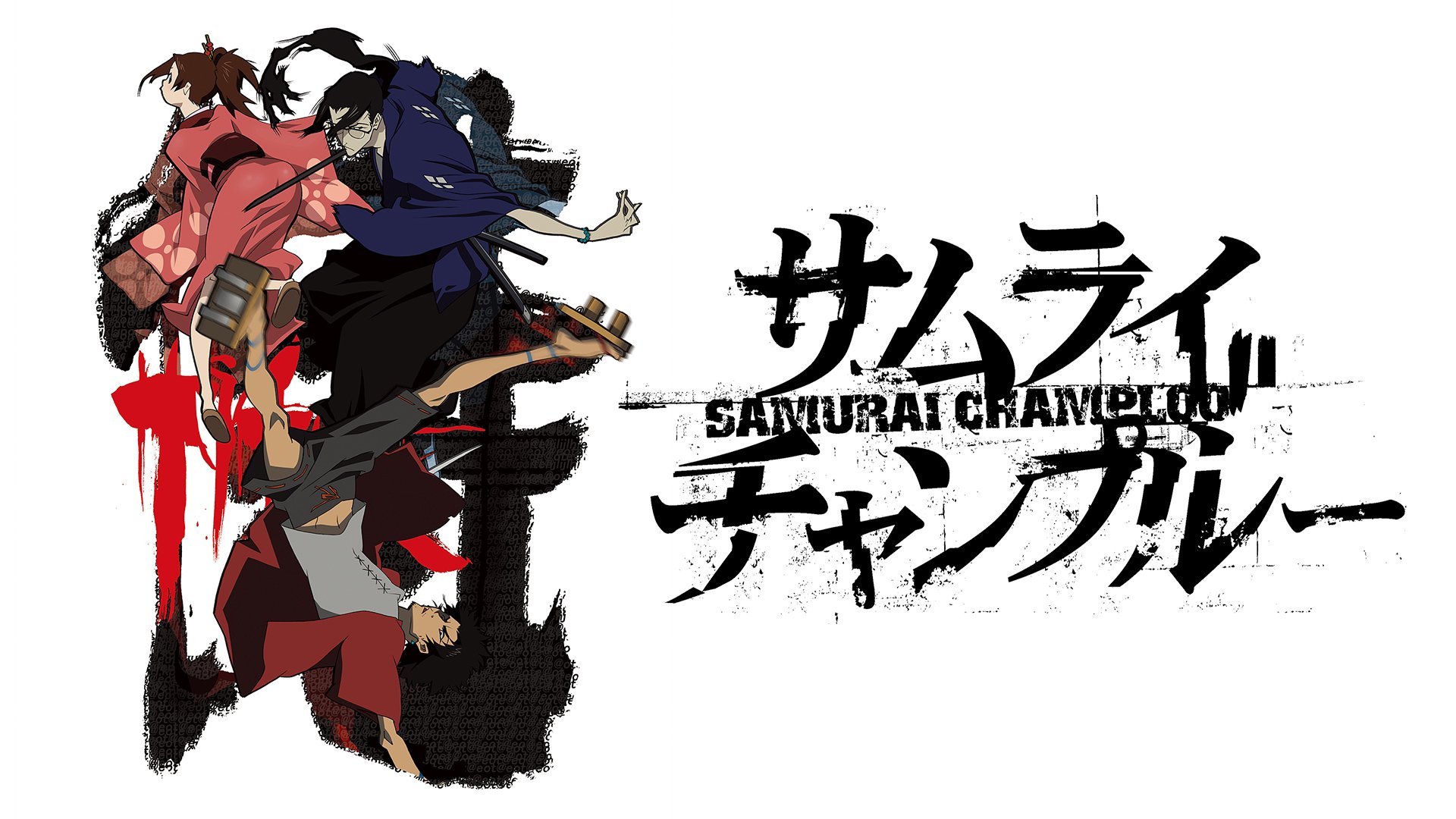
Samurai Champloo" is a unique samurai anime and manga series written and produced by Mangrove and directed by Shinichiro Watanabe, which aired from May to September 2004. The story is about a lonely girl named Fuu, who is on a journey with Mugen and Jin in search of a samurai who smells like sunflowers. The main attractions of this work are its unique worldview, which mixes the good old Japanese taste with modern hip-hop, and the numbing action scenes of the samurai who appear in the film.
These three episodes, which conclude the last half of the story, are particularly outstanding in terms of drawing, music, and direction in "Samurai Champloo. The battle scene between Jin and Kariya is full of tension and power, and is a fitting conclusion to their adventure so far. The two literally clash in the heat of battle, and the battle continues to make one's hands sweat. Jin's desperate attack successfully defeats Kariya, but this last-ditch battle is also a sight to behold.
Mugen, who fights in the background, is also being hunted down like never before. He defeats Umanosuke and his brothers, who have a grudge against Mugen, but it is still a last-ditch fight.
Mugen and Jin were wounded to the bone after defeating each other's nemesis. The two finally confront each other for a final showdown. Fuu could do nothing but watch in silence. However, their blades, which had crossed during the long battle, were broken, and in the end, there was no resolution.
Their journey comes to an end, and the moment of separation arrives. Fuu says that there is something he has not told them yet, and reveals a secret. It is about the first time Fuu threw the Kan'ei Tsuho and told them that if he got the reverse side, they would have to go on the trip with him, and if he got the front side, they could do whatever they wanted. The result was supposed to be the reverse, but Fuu had kept the fact that it was actually the front side a secret. Mugen and Jin were stunned, but they did not blame Fuu for lying.
This heartwarming ending, a change from the intense battle scene, is also full of the comedy and humanity that is typical of "Samurai Champloo.
Backstory, Trivia, and Small Stories/Episodes/Anecdotes from "Samurai Champloo
What does "Samurai Champloo" mean?
Chanpuru means "to mix" in the Okinawan language. Samurai Champloo" is set in the Edo period (1603-1868), but modern culture is scattered throughout the film, making it a true "Samurai Champloo" of the Edo period and the present. The use of katakana by the characters and the style of disregarding historical research are also major attractions of "Samurai Champloo," making it a work worthy of the title "Samurai Champloo.
A number of outstanding battle scenes created by Kazuto Nakazawa
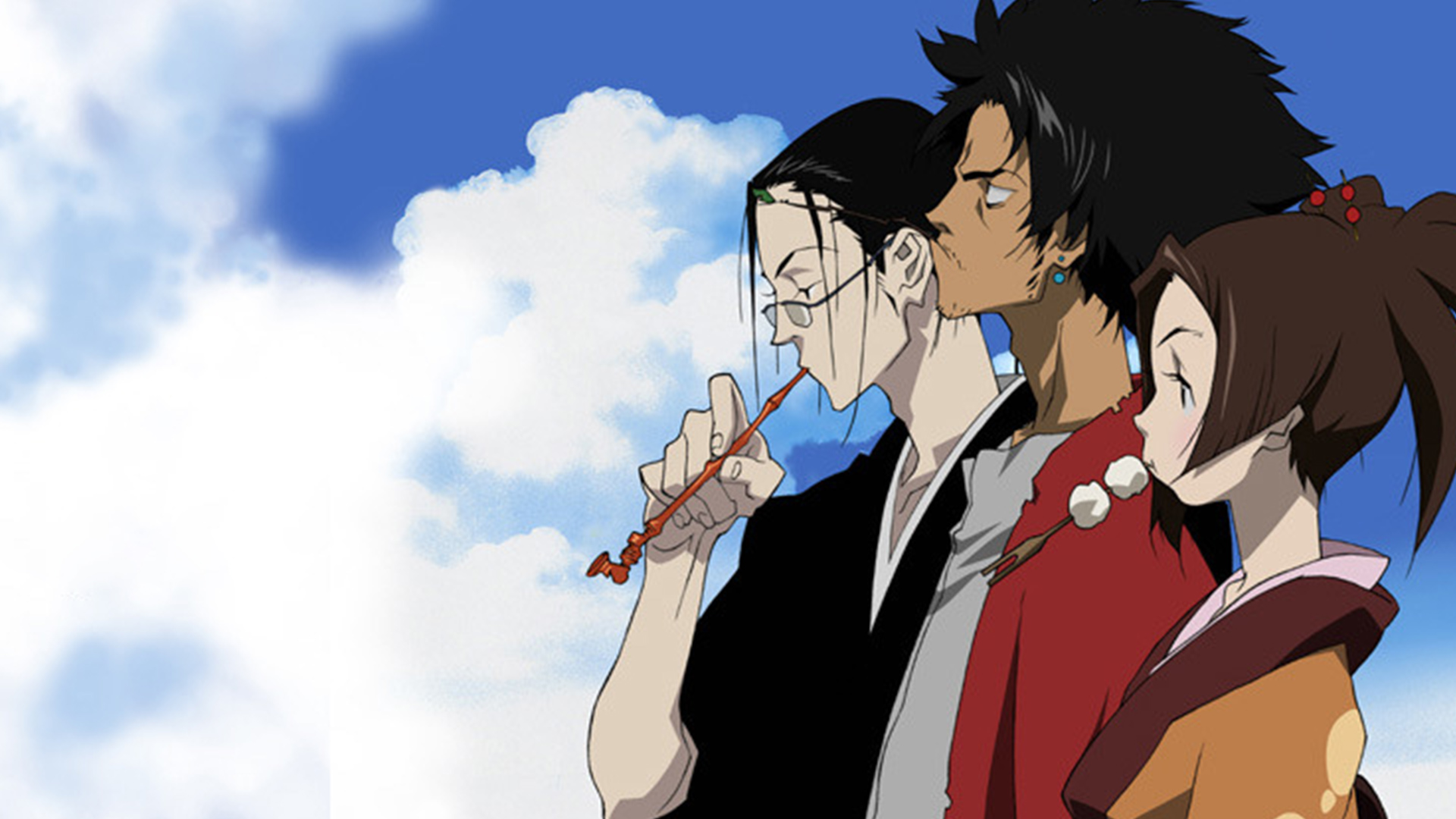
Nakazawa, who has worked as an animator, illustrator, and character designer on many animated films, is an essential staff member in creating the unique world of this film. He also directed the animated parts of the film "Kill Bill. Nakazawa's skill at drawing battle scenes is particularly impressive, and his overwhelming power of expression is sure to catch your attention. The action scenes in "Samurai Champloo" are some of the most famous in the history of anime, and are speedy and full of power.
Ginpei Sato, voice actor for Jin, is the son of actor B Saku Sato
Ginpei Sato, the voice actor for Jin, is the son of actor B Saku Sato. He has worked as a voice actor, actor, and stage actor, and also appeared in the drama "Partners" as a criminal. He is also active as an anime voice actor, and his unique voice and performance as the fake Akagi in the anime "Akagi: The Genius Who Descended into Darkness" have made him popular.
Theme song and insert song for "Samurai Champloo
OP (Opening): "battlecry" by Nujabes feat.
Lyrics: Shing02, music: Nujabes, song: Nujabes feat.
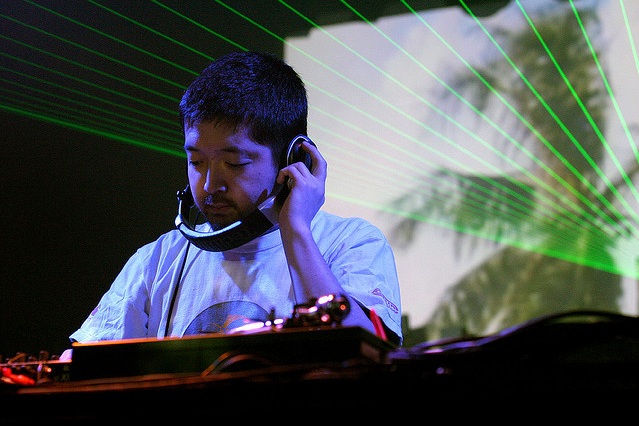
Nujabes, the composer of the OP, is a leading Japanese DJ and hip-hop trackmaker who has worked as a music producer for Comme des Garcons and other fashion shows in Paris. He was asked by Shinichiro Watanabe, the director of "Samurai Champloo," to sing the OP and the song for the film. One of the reasons for the anime's popularity among international fans is that Nujabes' music matches the anime's worldview. Mamoru Hosoda, who directed "Summer Wars" and "The Dragon and the Freckled Princess," is directing the OP animation.
ED (Ending): MINMI "Four Seasons Song
Words, music, song: MINMI
MINMI, the singer-songwriter in charge of the ED, has been active in providing music to Shonan Nofu and other artists. The song "Shiki no Uta" is a collaboration between Nujabes and MINMI, combining Japanese taste and hip-hop to create a song that follows the atmosphere of the anime. Its distinctive lyrics also match the worldview. The lyrics have a hidden element of word play, and MINMI's whispery soft voice and fast-paced lyrics are pleasing to the ear.

Tags
Contents
- Outline of "Samurai Champloo
- Synopsis and story of "Samurai Champloo
- The journey begins abruptly.
- Helping others, meeting and parting repeatedly
- The pasts of each of the three
- An encounter with a woman that led to a deeper bonding experience.
- The strongest enemy appears.
- Characters in "Samurai Champloo
- protagonist
- mugger
- gin
- Formosan sweetgum (Liquidambar formosana)
- enemy
- Ryujiro Sasaki
- Oniwaka
- rising dragon
- Umanosuke
- assassin
- Inuyama
- Sara
- Kariya Kagetoki
- Mugen's relations
- Bonin white-eye (Apalopteron familiare)
- koza (Piper methysticum)
- Jin's relations.
- Yukimaru
- Enshiro Mariya
- Related to Fu.
- Kasumi Seizo
- Characters in Episode 1
- Matsunosuke Shibui
- Tomonoshin Shibui
- Characters in Episode 2, "One Hundred Demon Nights"
- Firefly
- Characters in episodes 3 and 4
- Rikimatsu
- Ishimatsu
- day labourer, esp. on the docks
- religious mission
- Characters in Episode 5
- sawtooth manzo
- Moronobu Hishikawa
- Episode 6 Characters
- Jouji
- Episode 7 Characters
- Shinsuke
- doing something for the first time (ever, in a season, etc.)
- Episode 8 Characters
- Nagamitsu
- Characters in Episode 9
- Japanese dormouse (Glirulus japonicus)
- Characters in Episode 11
- Shino
- Characters in Episode 15
- Yatsuha
- Hankichi
- Hyakuchi Ginsa
- Episode 16 Episode 17 Characters
- occlude
- Episode 18 Characters
- Buntaigaku (Literary University)
- Episode 19 Characters
- lily
- Xavier III
- Episode 22 Characters
- sedge (Cyperaceae spp., esp. members of genus Carex)
- Episode 23 Characters
- Shadow Maru
- Terms of "Samurai Champloo
- Samurai who smell of sunflowers
- Relationship with "The Netherlands
- Famous quotes, lines, scenes, and scenes from "Samurai Champloo
- Duel scene between Mugen and Ishimatsu
- Mugen: "Live and taste hell."
- Unexpected ending from a gripping battle scene
- Backstory, Trivia, and Small Stories/Episodes/Anecdotes from "Samurai Champloo
- What does "Samurai Champloo" mean?
- A number of outstanding battle scenes created by Kazuto Nakazawa
- Ginpei Sato, voice actor for Jin, is the son of actor B Saku Sato
- Theme song and insert song for "Samurai Champloo
- OP (Opening): "battlecry" by Nujabes feat.
- ED (Ending): MINMI "Four Seasons Song