
Samurai Champloo" is a unique samurai anime and manga series written and produced by Mangrove and directed by Shinichiro Watanabe, which aired from May to September 2004. The story is about a lonely girl named Fuu, who is on a journey with Mugen and Jin in search of a samurai who smells like sunflowers. The main attractions of this work are its unique worldview, which mixes the good old Japanese taste with modern hip-hop, and the numbing action scenes of the samurai who appear in the film.
Xavier III
CV: Jurota Kosugi
Leader of Kirishitan.
Episode 22 Characters
sedge (Cyperaceae spp., esp. members of genus Carex)
CV: Kimitsugu Toya
An eerie man who claims to be unearthing buried gold.
Episode 23 Characters
Shadow Maru
CV: Toshio Furukawa
Coaches Mugen and his improvised baseball team.
Terms of "Samurai Champloo
Samurai who smell of sunflowers
A person who appears to be Huw as a young child. It can be seen in the ending.
An important key person in the work is the "samurai who smells of sunflowers. His true identity is Fuu's father, from whom she was separated. Fuu resents his father for leaving him and his mother when they were young. Fuu has made up his mind that one day he will beat his mother instead of her, and he has been searching for his father. He meets Joji, a Namban who gives him a hint about a "samurai who smells of sunflowers" during his travels. Joji tells him that sunflowers are flowers brought by the Dutch. When asked by Joji if he has any more hints, Fuu shows him a netsuke of a skull he had as a memento, which surprises Joji. Joji then advises him to put it away as it is very dangerous and leaves. Fuu's father was a felon who incited the Christians and was involved in the Shimabara Rebellion. The netsuke was a sign of his Christianity, and Joji advised him not to show it to others, as Christians were strictly controlled in Edo at that time. However, at the end of his journey, when he met his father again in Nagasaki, he was in a weakened state. Fuu was very upset to see his father in such a weakened state, whom he had resented.
Relationship with "The Netherlands

Withered sunflowers are reflected in the background.
In "Samurai Champloo," the name "Holland" appears frequently. The name "Holland" appears frequently in "Samurai Champloo," and it is inevitable that Holland, which was the only country that traded with Japan during the period of national isolation in Edo, would be involved in the story. The country of the Netherlands was also involved in the "samurai who smelled of sunflowers," as explained above. The alien named Joji, whom Mugen, Jin, and Fuu meet on their journey, is an official from Holland. In return for Joji's help in touring Japan, they provide him with information about a samurai who smells of sunflowers. The sunflower is a flower with a strong connection in the Netherlands. Joji also realized that the samurai who smelled of sunflowers might have been a Christian. However, Christianity was forbidden in Japan at that time. This meant that the samurai who smelled of sunflowers was a person related to Christianity. And approaching a samurai with a scent of sunflowers could make him an enemy of the Shogunate.
Famous quotes, lines, scenes, and scenes from "Samurai Champloo
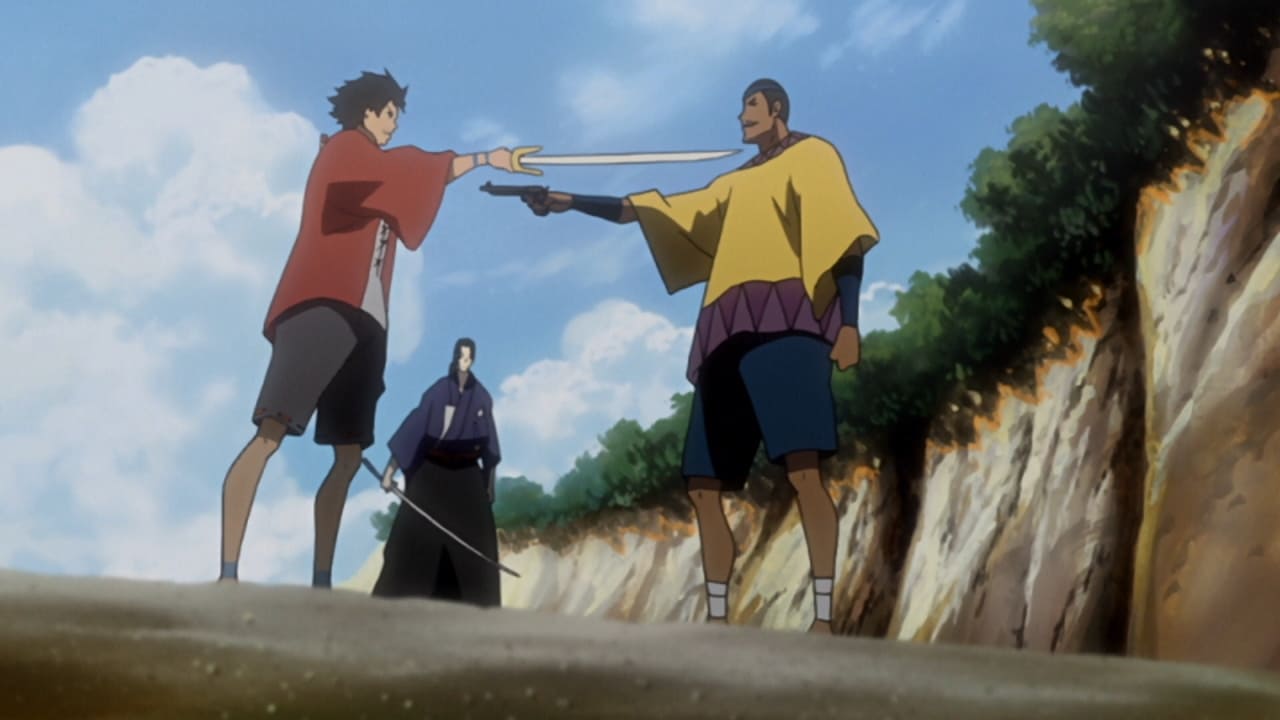
Duel scene between Mugen and Ishimatsu
In the third and fourth episodes of "Samurai Champloo," it is important to see how each character atones for the crimes he or she has committed. First is Sosuke, the son of Heitaro, the head of the KAWARA clan. Sosuke's ego is the only thing that keeps him from getting involved in the gang war. In the end, his father Heitaro takes his own life, saying that he will pay for his son's crime. Sosuke, repentant, vows once again that he will carry this clan on his back as the head of the KAWARA-Gumi. Ishimatsu betrayed Heitaro and switched sides with the Nagatomi clan. He, too, felt guilty about his crime. He put an end to Rikimatsu, the head of the Nagatomi clan, who tried to escape amidst the chaos. Sosuke asks him to return to the KAWARA clan, but Ishimatsu says he wants to make amends and disappears from Sosuke's life. Ishimatsu then challenges Mugen to a duel. Ishimatsu finally realizes the kindness of Heitaro, who does not blame him for his own betrayal. Now that he could not return to the KAWARA-Gumi, there was no way for him to make amends. So he decided to fight a duel with Mugen and make up for it by losing. Ishimatsu knew from the start that he could not beat Mugen, but he still challenged him to a fight. Mugen accepts the duel and defeats Ishimatsu without a second thought. Although Mugen usually only thinks about fighting, he helps Ishimatsu to settle the score in this scene. It is a scene that shows Mugen's own kindness.
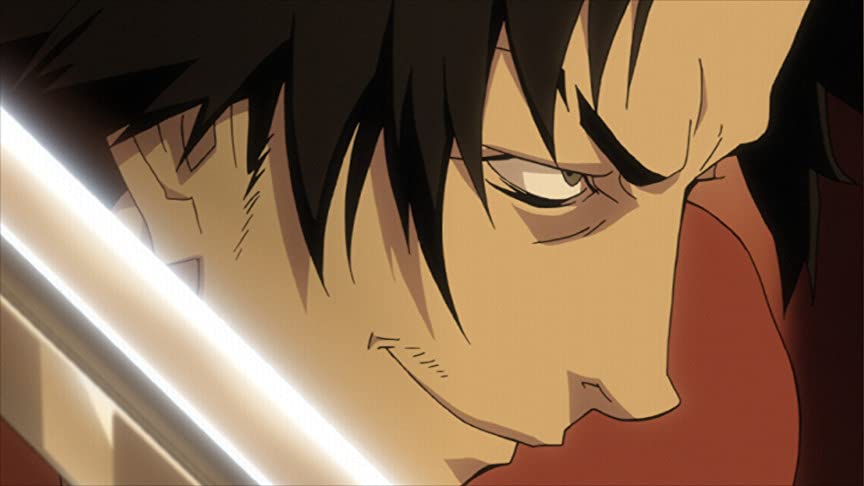
Mugen: "Live and taste hell."
In episodes 13 and 14, we hear about Mugen's precious past. Mugen has been a mystery until now, but when Mugen's friends from the past appear before the three, Jin and Fuu learn that Mugen was actually a former pirate. One of Mugen's former comrades, who calls himself Mukuro, had betrayed Mugen in the past. His sister, Koza, has special feelings for Mugen, whom she has known since childhood. Mugen made her promise that she would never be seen in front of him again in the future in exchange for helping him with the job Mukuro proposed. In the end, this was another trap by Mukuro. Mugen almost died, but he managed to save his life. In the end, Koza had betrayed Mugen out of self-satisfaction. At the end of the scene, Koza and Mugen pass each other, with Mukuro also dead and Koza left alone. It looked as if Mugen was going to finish Koza off, but despite the grandiose background music, Mugen simply slipped past Koza without saying a word. The remaining Koza broke down in tears and screamed "Kill me!" at Mugen's back, bringing the story to a close. This last scene is a masterpiece, highlighted by the background music and the overwhelming drawing ability. In addition, although it seemed that Mugen was going to kill Koza, he eventually left him behind again.
"Live and taste hell."
This is a scene with almost no dialogue, but it is one in which Mugen's message is clearly conveyed. The past that these two men will have to bear in the future is the same. However, the way they face their pasts and the difference in their resolve are presented in a contrasting manner.
Unexpected ending from a gripping battle scene

Refreshing expression of Hu

Tags
Contents
- Outline of "Samurai Champloo
- Synopsis and story of "Samurai Champloo
- The journey begins abruptly.
- Helping others, meeting and parting repeatedly
- The pasts of each of the three
- An encounter with a woman that led to a deeper bonding experience.
- The strongest enemy appears.
- Characters in "Samurai Champloo
- protagonist
- mugger
- gin
- Formosan sweetgum (Liquidambar formosana)
- enemy
- Ryujiro Sasaki
- Oniwaka
- rising dragon
- Umanosuke
- assassin
- Inuyama
- Sara
- Kariya Kagetoki
- Mugen's relations
- Bonin white-eye (Apalopteron familiare)
- koza (Piper methysticum)
- Jin's relations.
- Yukimaru
- Enshiro Mariya
- Related to Fu.
- Kasumi Seizo
- Characters in Episode 1
- Matsunosuke Shibui
- Tomonoshin Shibui
- Characters in Episode 2, "One Hundred Demon Nights"
- Firefly
- Characters in episodes 3 and 4
- Rikimatsu
- Ishimatsu
- day labourer, esp. on the docks
- religious mission
- Characters in Episode 5
- sawtooth manzo
- Moronobu Hishikawa
- Episode 6 Characters
- Jouji
- Episode 7 Characters
- Shinsuke
- doing something for the first time (ever, in a season, etc.)
- Episode 8 Characters
- Nagamitsu
- Characters in Episode 9
- Japanese dormouse (Glirulus japonicus)
- Characters in Episode 11
- Shino
- Characters in Episode 15
- Yatsuha
- Hankichi
- Hyakuchi Ginsa
- Episode 16 Episode 17 Characters
- occlude
- Episode 18 Characters
- Buntaigaku (Literary University)
- Episode 19 Characters
- lily
- Xavier III
- Episode 22 Characters
- sedge (Cyperaceae spp., esp. members of genus Carex)
- Episode 23 Characters
- Shadow Maru
- Terms of "Samurai Champloo
- Samurai who smell of sunflowers
- Relationship with "The Netherlands
- Famous quotes, lines, scenes, and scenes from "Samurai Champloo
- Duel scene between Mugen and Ishimatsu
- Mugen: "Live and taste hell."
- Unexpected ending from a gripping battle scene
- Backstory, Trivia, and Small Stories/Episodes/Anecdotes from "Samurai Champloo
- What does "Samurai Champloo" mean?
- A number of outstanding battle scenes created by Kazuto Nakazawa
- Ginpei Sato, voice actor for Jin, is the son of actor B Saku Sato
- Theme song and insert song for "Samurai Champloo
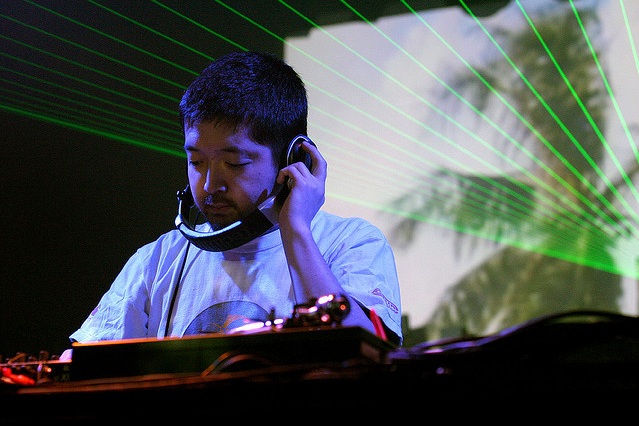
- OP (Opening): "battlecry" by Nujabes feat.
- ED (Ending): MINMI "Four Seasons Song