
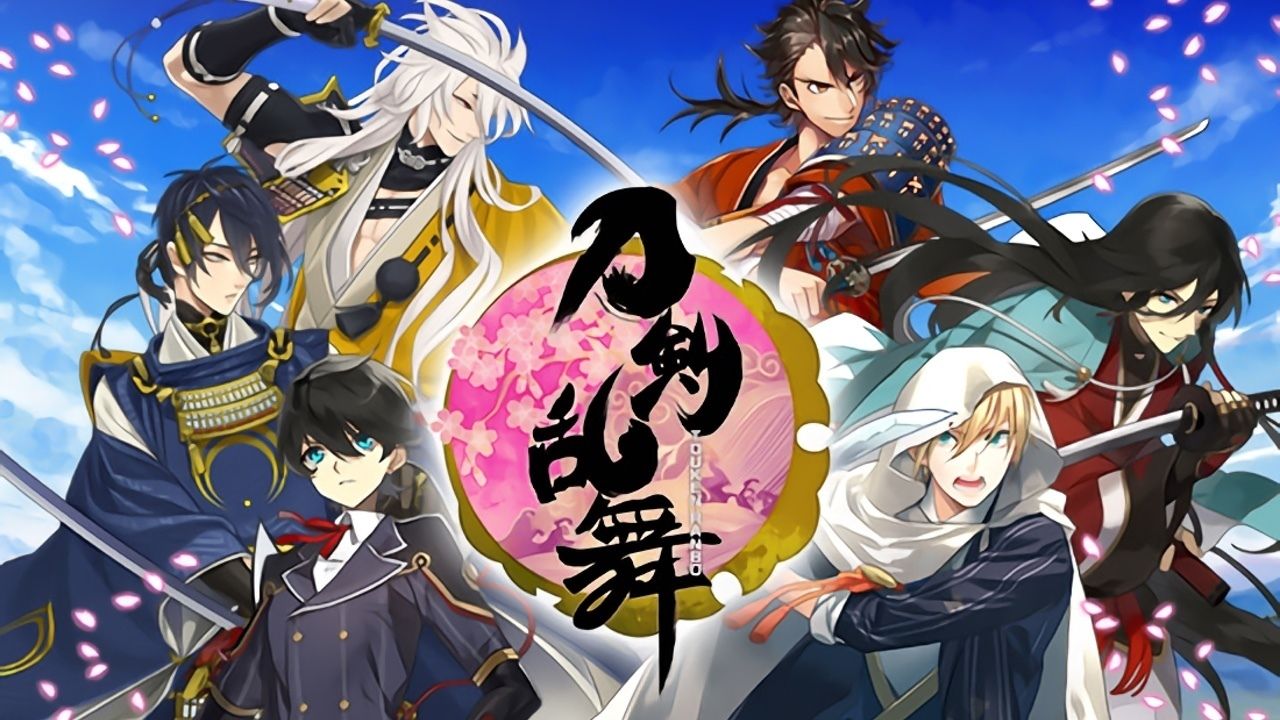
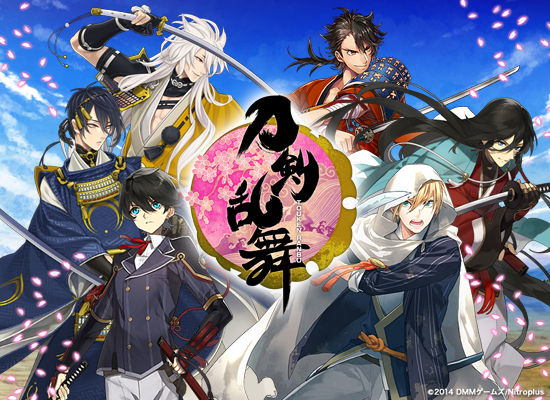
TOURABU" (short for "sword fighting") is a simulation game for browsers. The game is based on the original story by game maker Nitroplus and operated by EXNOA (formerly known as DMM Games). The game is set in future Japan. Players become "shinjinsha," or "saniwa," and are ordered by the government of the time to summon sword mourning gods called tokendanshi, or "sword men. The players then fight together with the swordsmiths against the enemies who are trying to change the history of the world to stop their plans.
Ezuki left character (Kousetsu Samonji)
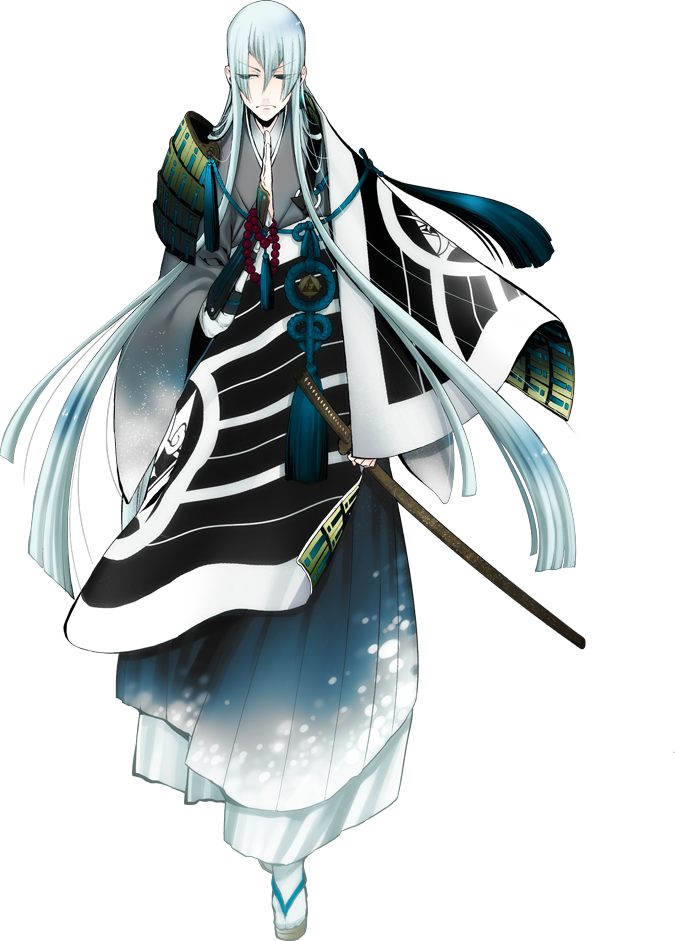
CV: Takuya Sato
This tachi sword was made by the Nanbokucho period swordsmith Shodai Samonji. The left character is a school of swordsmiths known for inscribing "left" on their swords. The first Left-moji is sometimes referred to as "Ohsa" or "Oyasamonji" to avoid mixing with other Left-moji swordsmiths. This work is known as his masterpiece. It was worn by Itabeoka Kosetsu-sai, a retainer of the Hojo clan, a warrior and diplomatic monk who was active at the time, and is said to have been given the name "E-setsu" because he wore the sword. The Fukuyama Museum of Art in Hiroshima Prefecture owns the sword.
As a swordsman, he always wears an air of melancholy. This is due to his aversion to fighting. Influenced by the fact that his former master, from whom he takes his name, was a monk, he hates fighting and is always seeking a way to heal his grief over the battle or to find a way to peace through prayer. However, his sadness is not destroyed because the very reason for the existence of swordsmiths is to fight against retrograde warfare. While he abhors fighting, his high status as a swordsman makes him a high-performance warrior suited for battle. This irony, we can surmise, is also the cause of his growing sadness. However, even though he hates fighting, he has no intention of dying unnecessarily. He is determined to fulfill his duty as a swordsman who protects history, and he will fight with a certain amount of determination when put into battle. However, he does not seem to want to fight, and prefers to go on Uchiban, expeditions, and visits to the mangya, which have nothing to do with the battlefield. In particular, he is happy to be in charge of the fields and horseback riding duty.
He is loved as the eldest brother by the other swordsmen who were made by the same swordsmiths of the Left Character School.
Yamabushi Kunihiro
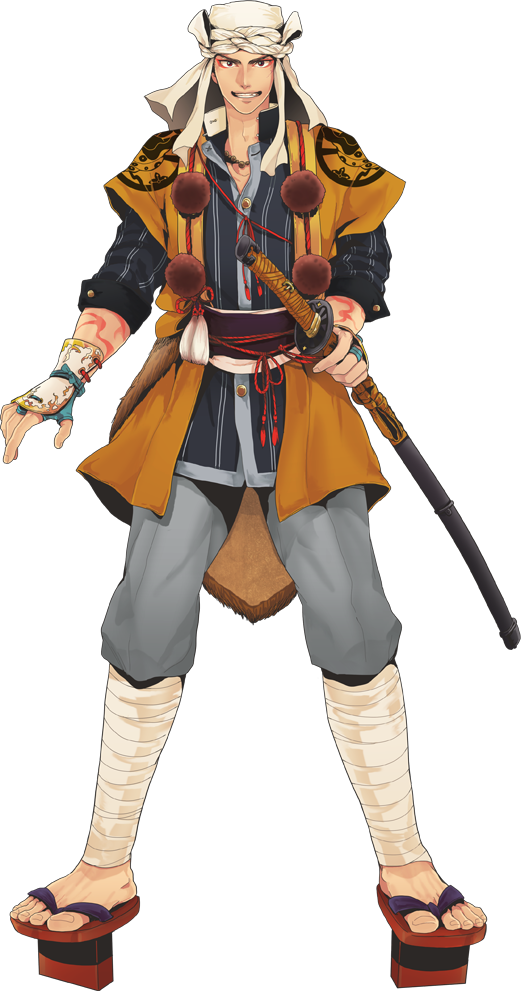
CV: Toru Sakurai
This sword was made by Horikawa Kunihiro, a swordsmith active from the Warring States period to the early Edo period. The inscription on the blade reads, "Made in the time of Yamabushi," and it is said that this sword was made by Kunihiro Horikawa while he was training as a yamabushi (a monk who practices asceticism in the mountains). The name "Yamabushi" seems to be based on this historical fact.
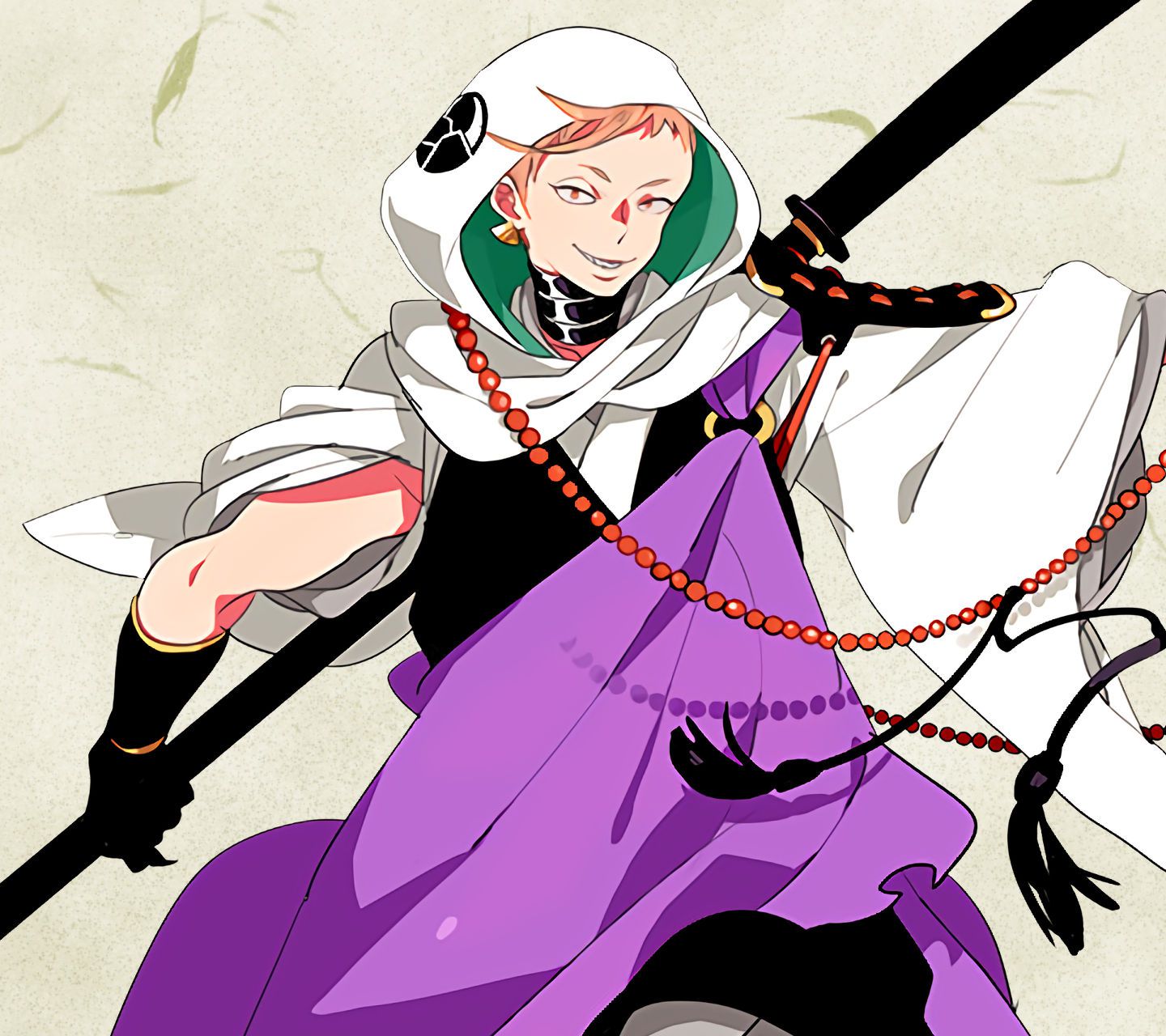
As a swordsmith, Yamabushi has a cheerful and positive atmosphere. Yamabushi Kunihiro himself has stated that this character is based on his own belief, "I want to be strong enough to laugh at everything. As his monk-like battle costume gives the impression, he often speaks and acts more like a "monk" than a warrior, as he lives his life while considering daily events as training. He is also officially described as "a man who has a bad habit of going for ascetic training immediately and staying in the mountains. The "asceticism" he refers to includes not only his desire for the Pure Land for sentient beings, but also his physical training. As if to indicate this, there are many references to "muscle" in his voice. However, he does not seem to be a hard-headed person, and sometimes shows his thoughtful side in his recollections. He also has a typical voice that sounds like "Kakakaka! is his signature voice. His laugh is unique to other characters, and many priests are impressed by his laugh.
He seems to get along well with other swordsmiths who were created or are said to have been created by Horikawa Kunihiro, just like himself. They call each other "brothers. Although the official order of precedence is unknown, both Yamabushi Kunihiro and Yamambagiri Kunihiro, a swordsmith who was created by Horikawa Kunihiro, have a clear chronology of their creation, with Yamabushi Kunihiro being born before Horikawa Kunihiro. Therefore, it can be said that Yamabushi Kunihiro is the eldest brother of the swords made by Horikawa Kunihiro according to the chronology.
His hair color is unknown in his battle costume because he wears a crown, but it is revealed to be light blue when he wears his Uchiban costume. The coloring, which is neither that of a trainee monk nor that of a samurai, is a surprise to many priests who see him for the first time.
bearded cutter (species of fish, Acanthopanax sciadophylloides)
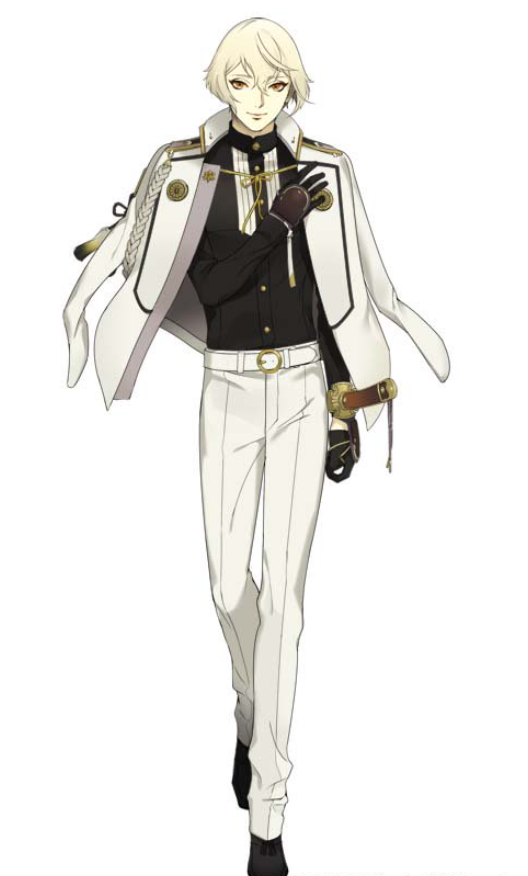
CV: Hanae Natsuki
This sword is said to be the treasured sword of the Minamoto clan, a warrior family active from the Heian period to the Kamakura period (1185-1333). It appears in many historical books related to the Minamoto clan, such as the Military History Tales. It is speculated that the tachi sword, named Yasutsuna (also known as Onikiri), owned by the Kitano Tenmangu Shrine in Kyoto, may be the same sword as the Hagegiri, but the truth is unknown. The sword's name comes from the fact that it could even cut a criminal's beard during a test cutting using the criminal's head. There are many other anecdotes about him, and each anecdote has a new name. In "Touken Ranbu," he is known only as Hagegiri.
As a swordsman, he is a calm, free-spirited, and fast-paced character. The fact that he has been a sword for more than 1,000 years seems to be the reason for his current personality. He is not very particular about his own name, perhaps due to the fact that his name has been changed over the years based on various anecdotes. He does not even remember the name of his younger brother, Hizamaru. However, he remembers his younger brother's existence, and when he first acquires the sword, he says in his voice, "Take care of my brother," indicating that he cares for him very much.
In contrast to his usual calm demeanor, on the battlefield he fights valiantly as a treasure of the Genji clan. Not a few Shinto priests are gripped by this gap between the two.
Knee Maru
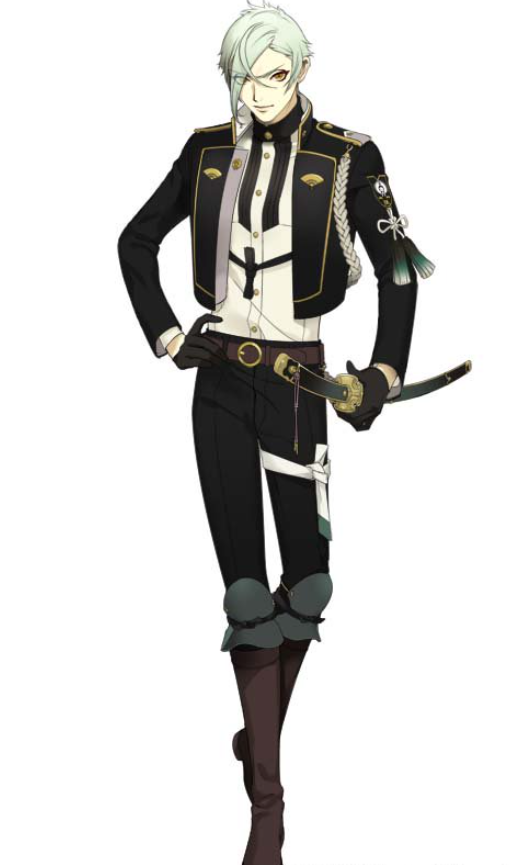
CV: Okamoto Nobuhiko
This sword is said to be the treasured sword of the Minamoto clan, a warrior family active from the Heian period to the Kamakura period (1185-1333). Its existence is mentioned in "The Tale of the Heike," a military chronicle written about the Heike, an imperial family that opposed the Minamoto clan. It is said to have been passed down from generation to generation in the Minamoto clan, along with the tachi sword Hagegiri, which is also said to be a treasured sword of the Minamoto clan. Its name comes from an anecdote about a man who cut down a criminal to both knees with a single sword during a test cut. There are many other anecdotes about him, and each anecdote has a new name. In "Touken Ranbu," he is referred to only by the name "Hizamaru. There are several swords that are thought to be Hizamaru. The most likely one is the light green one owned by the Daikakuji temple in Kyoto.
As a swordsman, Kneemaru has a serious and serious character, as if he were a warrior. He is often referred to as "the Genji brothers" by the Shinto priests. However, contrary to his adoration for his elder brother, Hagegiri is unable to remember Hazemaru's name. However, it is only the name that he cannot remember, and as the elder brother, he seems to be very protective of his younger brother. He is often pushed around by his older brother, who often gets his name wrong or follows him around at his own pace, but he still adores his brother. He is shocked when his brother forgets his name, but he is used to it and soon recovers from it. Contrary to his cool appearance, he seems to be a character of a younger brother who has a lot of hardships. The official statement says that he and Hagekiri have similar facial parts, and that they are brothers in some ways. The difference is that "Kneemaru's face is more masculine and rough. The green color of his hair is speculated by Shinjinsha to be a reference to the light green of the Tachi sword, which is thought to be Kneemaru's. In the battlefield, Kneemaru is a treasure of the Genji clan.
On the battlefield, as a treasure of the Minamoto clan, he attacks after making his name as a warrior. He shows a brave and daring fighting style. On the other hand, he does not seem to be very happy to be in charge of the Uchiban, especially in the fields and on horseback. Although he does not say so explicitly, his voice in the uchiban shows that he is dissatisfied with them.
Lion King
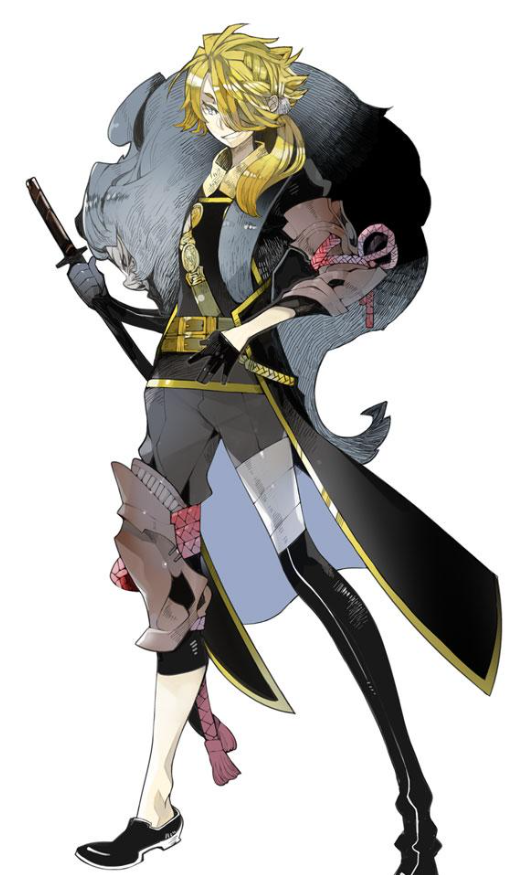
CV: Ryota Osaka
A tachi sword said to have been made by a swordsmith in Yamato Province (Nara Prefecture) who was active around the end of the Heian Period. Both the creator and the origin of the name are unknown. There are various theories as to the origin of the name, and it is unclear which one is official. It also has another name, "Shishiohmaru. It is said to have been used by Minamoto no Yorimasa, a military commander active in the same period as when it was created. When he confronted the yokai, the Japanese monster, the Emperor bestowed this sword on him as a prize.
As a swordsman, he is a cheerful, kind-hearted character with a strong sense of justice. He is fond of his former master, Minamoto no Yorimasa, whom he calls "Jicchan," and he talks about him whenever he has a chance to. He can be described as a grandfatherly child. He also has a partner on his shoulder at all times. He also always carries a partner, a mythical creature, on his shoulder. It is assumed that this chime is based on an anecdote about a chime that was given to Yorimasa as a reward for Shishio's slaying of a chime.
Although he is often referred to as "Jichan" and has a youthful appearance, he himself was born in the Heian period (794-1185), making him one of the oldest swords in Japan. Perhaps because of this, there is a "blur" in his voice, in which he mistakes the god for his former master. Most of the Heian-era swords in "Touken Ranbu" have a "grandfatherly" atmosphere, so this "blur" can be seen as the only "grandfatherly" aspect that Shishioh shows.
However, he is usually as energetic, cheerful, and innocent as his youthful appearance. In battle, he shows his leadership, which is typical of an elder man. On the other hand, he is a bit childish, but shows a side of him that other swordsmiths do not show, such as when he insists to the priests that he will play an active role and that he wants to be used a lot.
Kogarasumaru
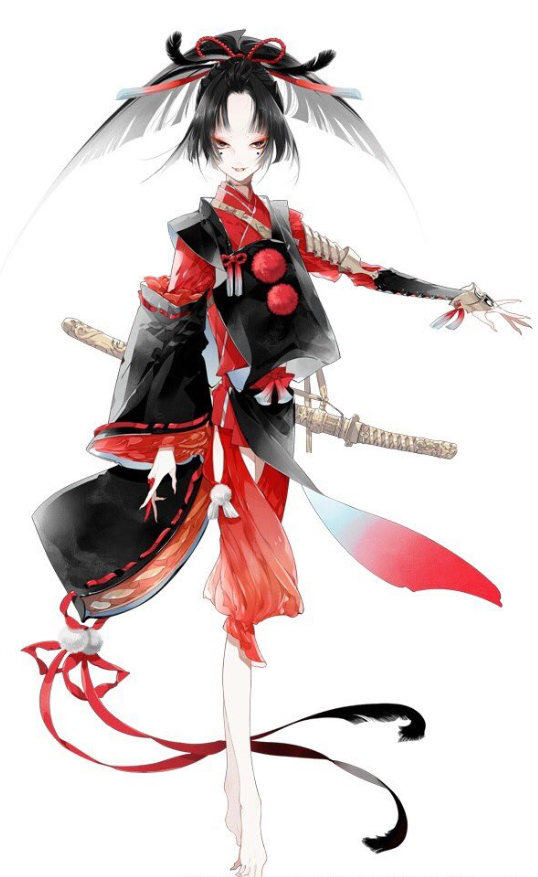
CV: Hoshi Soichiro
A tachi sword said to have been made in the Heian period (794-1185). It is called Kogarasumaru or Kogarasu. It is believed to have been made by the legendary swordsmith Amakuni, who is said to have been active during the Nara or Heian periods. This sword is characterized by its double-edged spearhead, a special form of swordsmanship known as double-edged zukuri. This form was created during the development of Japanese swords to their current form. After it passed into the hands of Taira Sadamori, a general of the Heian period (794-1185), it became a treasure of the Heike clan. It is said to have been lost in the battle of Dannoura, where the Heike clan fell, but it was discovered to have survived into the Edo period. It was presented to the Emperor during the Meiji period (1868-1912), and has since been kept as a personal possession at the National Institutes for Cultural Heritage.
As a swordsmith, he is a beautiful boy character with a somewhat inhuman atmosphere. It is said that his hairstyle, which is shaped like a bird's feather, was created in honor of the name "Kogarasu. Also, perhaps because he is "Kogarasu," he is unusually small in stature, as most tachi are large in stature. However, his size aside, he is the "father of all the swordsmiths," and he shows a generous attitude as a father to the swordsmiths in his circle, referring to them as his "children. This is due to the fact that his swords were made before the current form of Japanese swords was established. However, some of the male samurai refuse to accept him as their father. Nukumaru, a Tachi swordsmith who is said to have been in the Heike clan with him, also refuses to be his father. He acts as if he is an older man as an old sword and shows respect to the priests as if he is their master. Perhaps because of this aspect, some shinjin call him "Papagami," "Otousama," or "Otou-sama" in reference to his behavior.
On the battlefield, his usual calm appearance as a father is belied by his nonchalant fighting style, as if he is performing his duties without hesitation.
Nukemaru
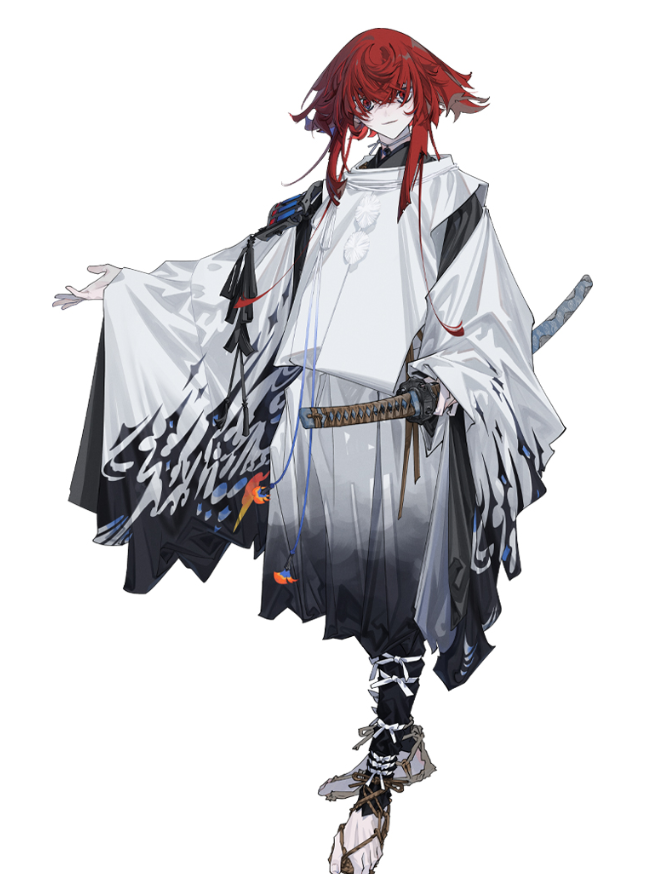
CV: Takehito Kajiwara
This is one of the treasured swords handed down to the imperial Heike family during the Heian period (794-1185). It is said to have been made by Ohara no Sanemori, a swordsmith active in Hoki-no-kuni (midwestern Tottori Prefecture) during the same period, but the authenticity of the name is unknown. The origin of the name comes from an anecdote that when Tadamori Taira, a Heike warrior, was attacked by a giant snake, the sword he was carrying slipped out of its scabbard and killed the snake. Before the name "Nukumaru," the sword was called "Kogarashi. It is said that the name "Kogarashi" was derived from an anecdote about the withering of leaves on a tree. He went missing in the Muromachi period (1333-1573) and has been missing ever since.
As a swordsman, he is a soft-spoken boy character. He sometimes speaks to the priests in a respectful manner, but also speaks to them as if he were a parent, like an elder. He often speaks in a voice that seems to be from "The Tale of the Heike," which describes the prosperity of his former master, and seems to be very conscious of the fact that he was a treasure of the Heike clan. The costume he wears is also assumed to be an imitation of the clothing of the "kamuro," or bald, child spies that the Heike clan used to release throughout the city. Nukumaru himself said in his voice, "Because I am a bald man, I would like to be forgiven. What he wants to be forgiven for is unknown.
He is not on good terms with Kogarasumaru, a swordsmith with the Tachi sword, which is said to be the treasured sword of the Heike clan. In one of his recollections, Nukumaru rejects Kogarasumaru's claim to be the "father of all swordsmiths," saying, "I only need one father. It is unclear who this "father" is.
At the time of his release, the Heike drama "Kamakura-dono 13-nin" was being broadcast and the TV program "Ningyogeki Heike Monogatari" was being re-broadcast, and miraculously, he became a topic of conversation because of the many Heike-related topics being discussed.
Kuninaga Tsurumaru
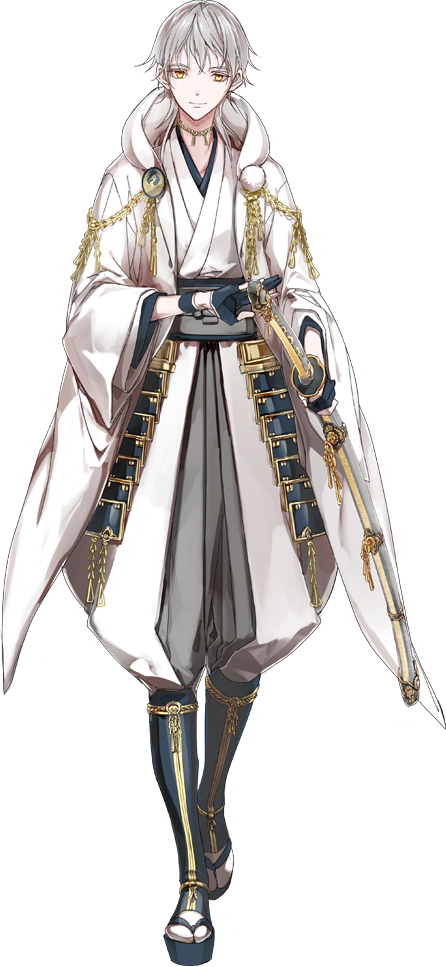
CV: Souma Saito
This sword was made by Gojo Kuninaga, a swordsmith of the Heian period (794-1185). Kuninaga is famous for being a disciple of Sanjo Munechika, a swordsmith active in the same period. There are only a few swords in existence, and this sword is considered to be one of the best among them. It is said that it was buried with its master, but was exposed by someone who wanted Tsurumaru Kuninaga. He was once dedicated to a shrine, but even then he was removed from the shrine by those who wanted him. After being handed down to the Date family, a samurai family that was the feudal lord of Sendai in the Edo period, the tomb was kept for as long as 200 years, and was presented to the Emperor of Japan in the Meiji period (1868-1912). Since then, it has been kept as a personal possession.
As a swordsmith, he has an aloof and friendly character. He believes that "surprises are necessary in life," and he always spends his time with an emphasis on "surprises. He likes to be surprised himself, but he also likes to surprise the gods and other swordsmiths. Even in battle, he considers surprise attacks to surprise his enemies, and even when he is seriously wounded, he appreciates his enemies for surprising him. Even when she is seriously wounded, she even appreciates the enemy for "surprising" her. When she is sent on an expedition, her expedition voice indicates that she is trying to surprise the people on the expedition. The only item that does not emphasize "surprise" is equipment items such as armaments. Even though she places importance on "surprise," she takes what is necessary in battle seriously. Even in the voice dedicated to the screen where he confirms daily or weekly missions, he seems to be the type of person who takes his "work" seriously for what it is, as he throws a harsh word at the goddess. He also seems to be a man who takes his "work" very seriously, as he has some harsh words for the shinigami in his voice, which is used exclusively for the confirmation screen of assignments such as on the first day of the month or during the week.
He seems to be in contact with many swordsmiths, and is especially close to those who have been introduced to the Date family. He calls them by their nicknames, and sometimes Tsurumaru Kuninaga himself is called by their nicknames.

Related Articles
Many Hall of Famers! Popular MMD Compilation of Sword Dance
Has it calmed down from a period of time? No, no, no, the popularity of sword dance has not yet waned. As soon as they were uploaded to Nico Nico Douga, they quickly became the talk of the town. From the breathtakingly beautiful and cool to the ones that make you laugh so hard your stomach muscles die, you can't stop repeating them. You may even be inspired to change your mind!
Read Article

April 2024 Spring Anime (First Semester Anime) Summary
This is an alphabetical list of spring anime that will start airing in April 2024.The April 2024 spring anime lineup includes many hot new anime and sequels to popular series. Information such as anime titles, broadcast information, cast voice actors and staffs are compiled in an easy-to-understand format.
Read Article
Spoiler commentary and discussion of the musical "Sword Dance" (Katamyu)
The musical "Sword Dance" is a musical series based on the popular video game "Sword Dance". The story is about a group of mourning gods who inhabit famous swords and take on the form of warriors to fight against historical revisionists who plan to change the course of history. The first part is a story featuring intense sword fighting, and the second part is a live performance that resembles an idol.
Read Article
Spoiler commentary and discussion of the sword dance Hanamaru- (anime)
The anime "Toukendanbu: Hanamaru" is based on the PC and smartphone game "Toukendanbu" and aired from October to December 2016 on TOKYO MX, Kantele, and BS11 for a total of 12 episodes. The game is roughly about sword mourning "sword men" who are manifested in the present day by a person with the ability to change history, and fight against a retrograde army. The story focuses on the swordsmen belonging to "a certain Honmaru," and depicts their comedic, flowery days as well as their tough battles.
Read Article
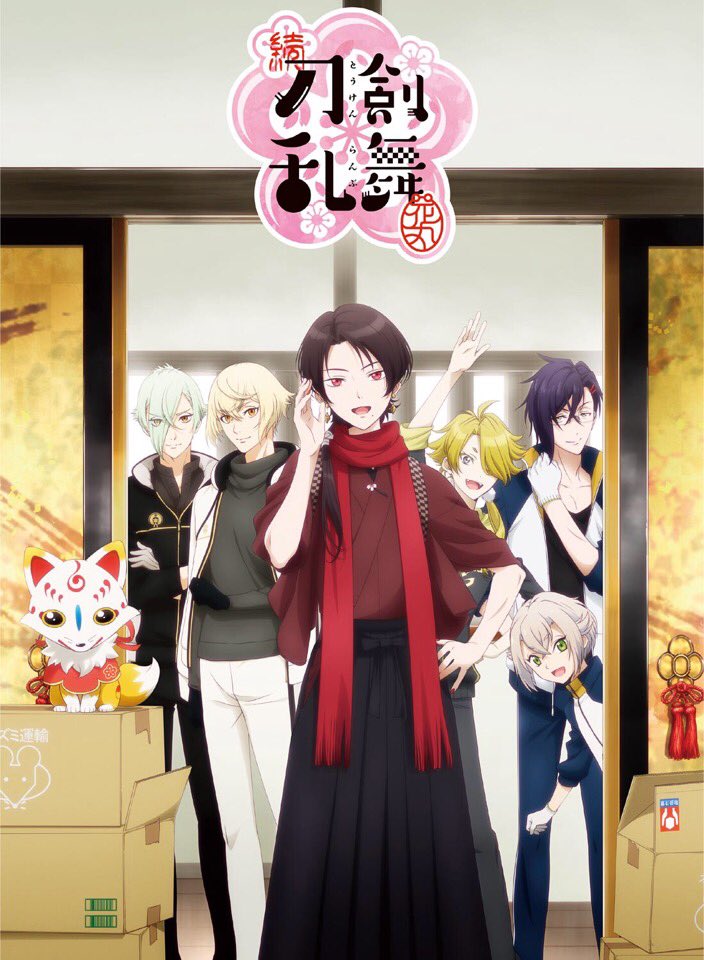
Spoiler commentary and discussion of the continuing "Sword Dance: Hanamaru" (anime)
Sequel to "Toukendanbu - Hanamaru-" is an anime based on the training simulation game "Toukendanbu -ONLINE-" Sequel to the anime "Toukendanbu -Hanamaru-" which aired in 2016. Total of 12 episodes. The sword-attached mourning gods, who have been given physical bodies, are engaged in a battle to the death against historical revisionists. The 50-odd swordsmen living in the castle are in a constant state of commotion every day.
Read Article
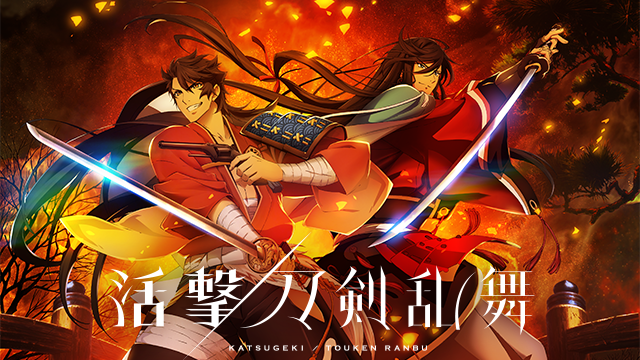
Spoiler commentary and discussion of Katsugeki: Sword Dance (anime)
Katsugeki Katana Ranbu" is an animation work produced by ufotable, based on "Katana Ranbu" by DMM Games. In the year 2205 A.D., "Shinjinsha," who have the power to awaken the feelings and minds that lie dormant in objects, call upon "Toushi," the personified form of swords, to fight to protect history in order to defeat historical revisionists who seek to change it. In Katsugeki, the battle against the historical revisionists is depicted with "Izumimori Kanetada," once the favorite sword of Hijikata Toshizo.
Read Article
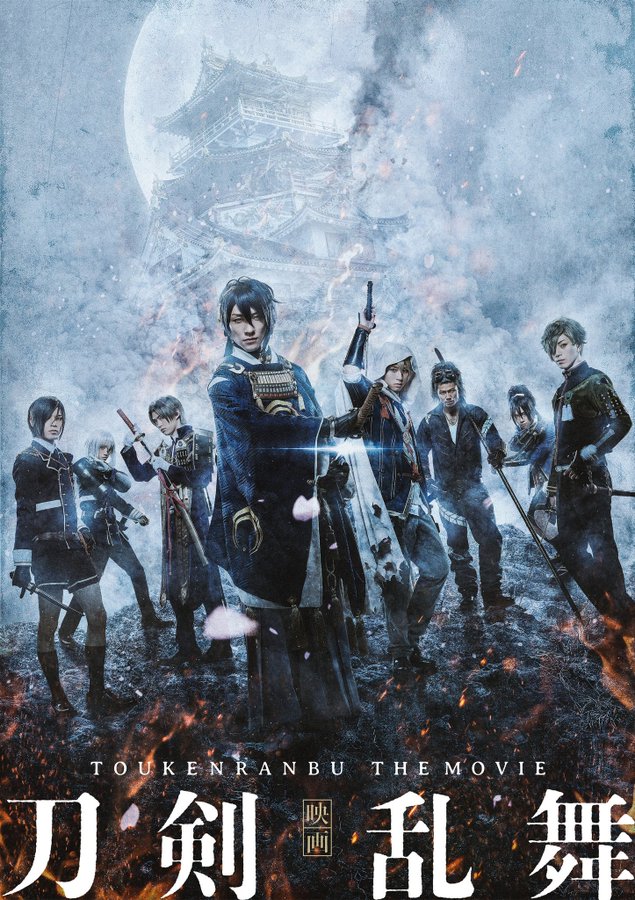
Spoiler commentary and discussion of the movie Sword Dance (Succession).
Based on the popular sword-breeding game "Touken Ranbu ONLINE" that triggered the Japanese sword boom, "Touken Ranbu (Succession) the Movie" is directed by Yakumo Yaharu and written by Kobayashi Yasuko. The film features a hot battle between "swordsmen," who are personifications of famous swords of the past, and "retrograde forces," who plan to alter history. The story takes place at Honnoji Temple, where the swordsmen have successfully defeated the retrograde army that is trying to change history by protecting Oda Nobunaga. However, just when it seems that history is being followed, they learn that Nobunaga is still alive. The cast features young stage actors, and the theme song is sung by Takanori Nishikawa and Torayasu Hotei.
Read Article
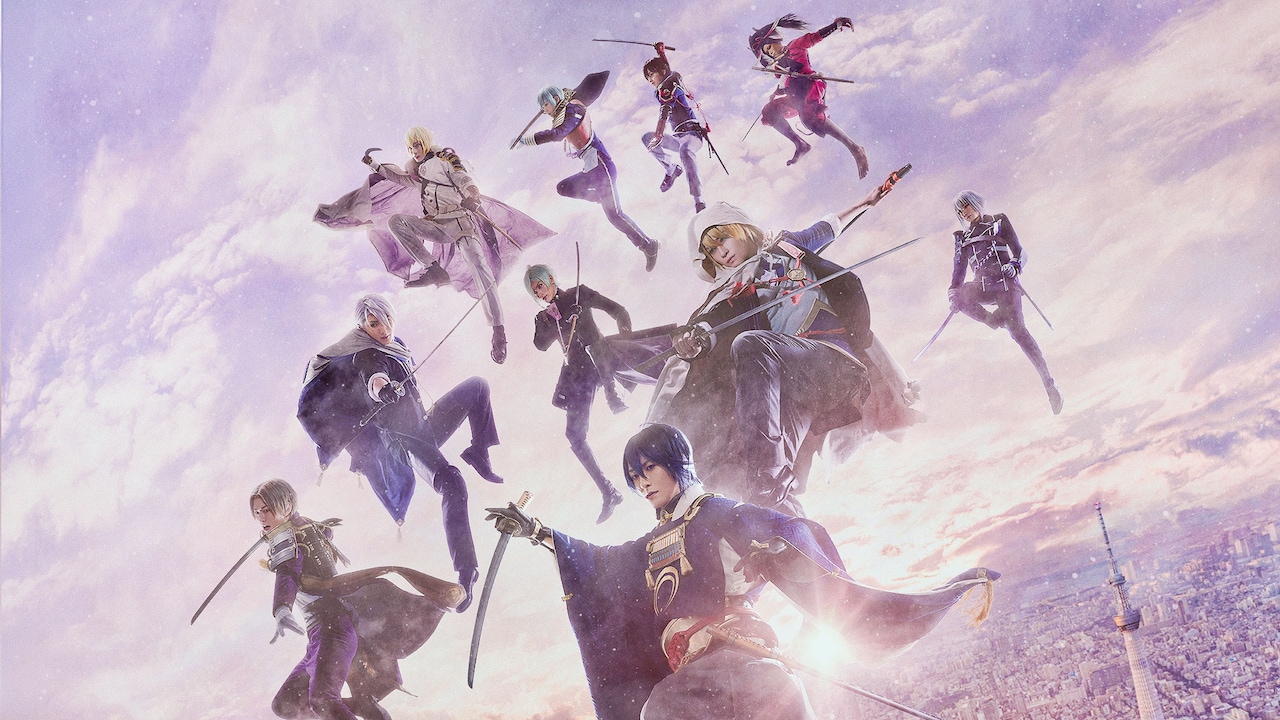
Spoiler commentary and discussion of the movie Sword Dance (Reimei).
Reimei" is the second live-action film based on the PC browser and smartphone game "Touken Ranbu" developed jointly by EXNOA (formerly DMM Games) and Nitroplus. The story depicts the battle between the sword men, who are personifications of famous swords that have left their mark on history, and the Time Armored Forces, who plan to alter history. The story takes place in the year 2012. In this time period, a critical juncture that will lead to the future is hidden. The swordsman Mikazuki Munechika, together with his temporary master Suzuki Kotone, struggles to solve the situation.
Read Article
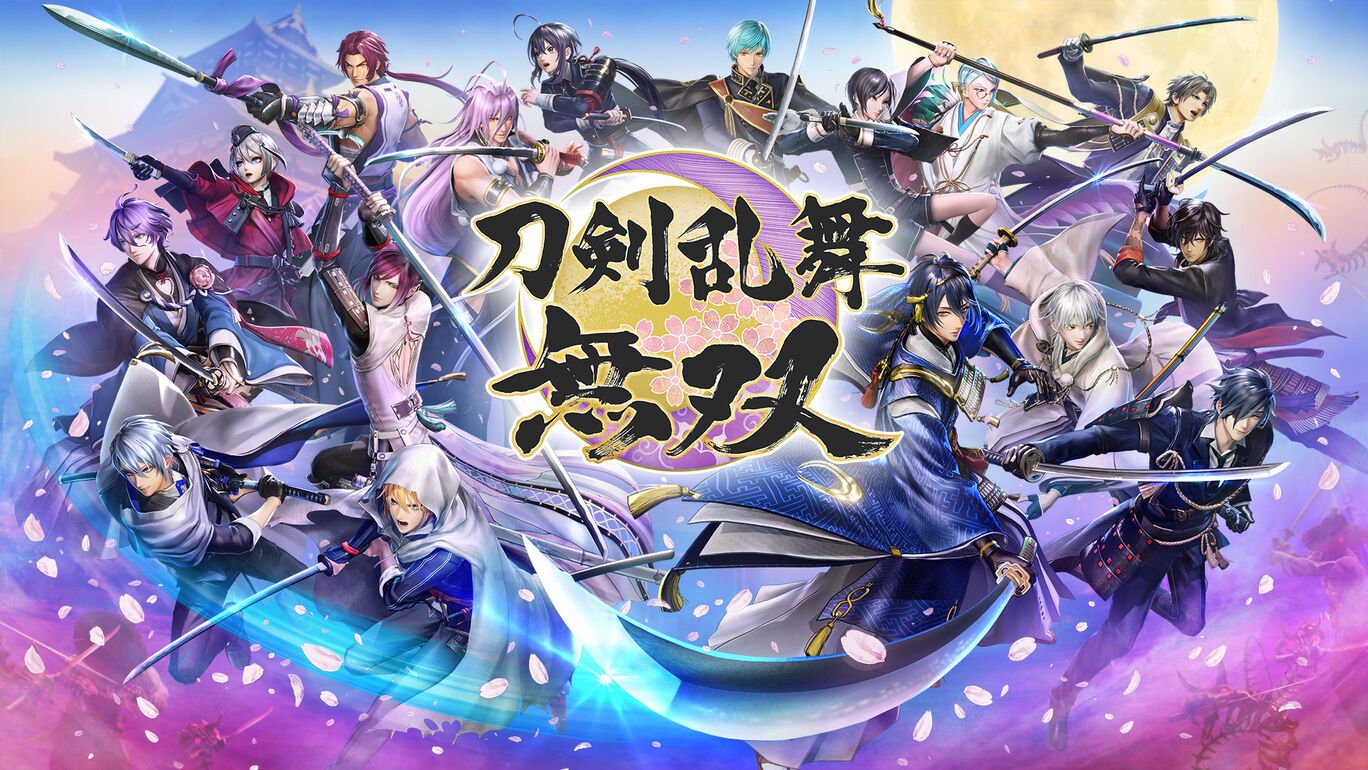
Spoiler commentary and discussion of Sword Warriors (Tousou Musou, Tourabu Musou).
Toukendanbu Musou" is a tactical action game based on the sword training simulation game "Toukendanbu". It is also a collaboration between the "Musou" game series and "Sword Dance". The story takes place in the year 2205 AD. The story depicts the battles of "Toushi," 15 mourning gods of swords who have lost their masters, who are sent by the government to investigate a plot by "historical revisionists" to change the history of Japan.
Read Article
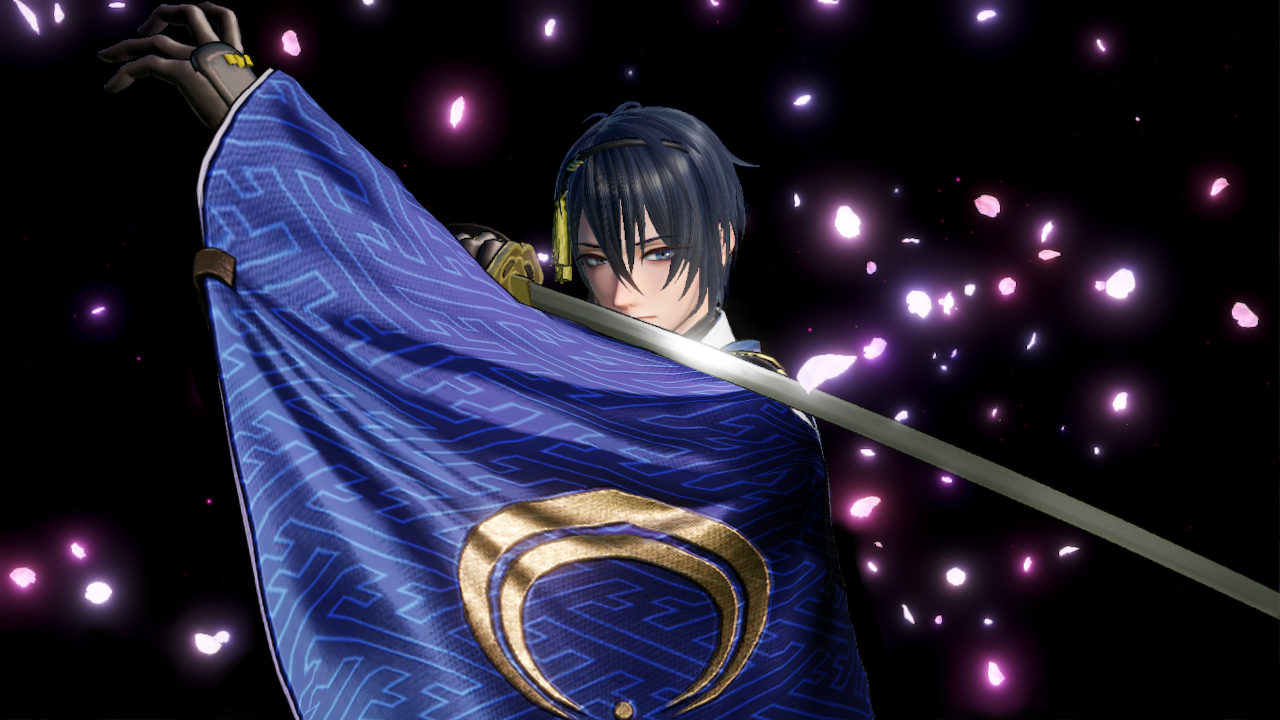
I guessed the age of the characters in the sword dance! Mikazuki Munekika is over 1000 years old! [Tourabu
We have estimated the ages of the swords in "Sword Dance". Although anthropomorphized, they are still originally swords, so they have spent an incomparable number of years compared to humans. In particular, Mikazuki Munekika, who is called "Grandpa" and calls himself "Jiji," seems to be over 1,000 years old.
Read Article
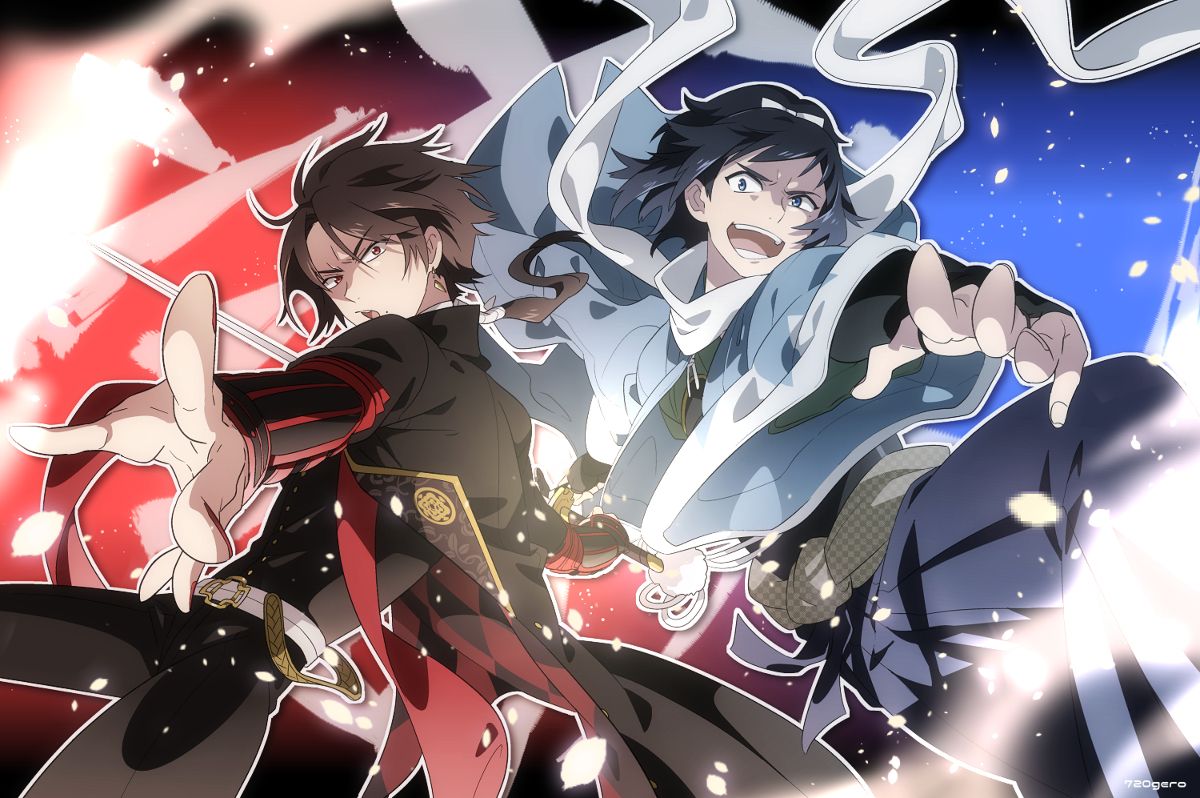
A ranking of the couplings in "Touurabu", including a popular tag that has been viewed 2 million times on pixiv! Tourabu
We have compiled a ranking of "Sword Dance" couplings, including many popular tags on pixiv, which are sometimes viewed 2 million times in a day. Illustrations of the couplings and the reasons for the ranking are also introduced, so please check how popular your favorite combination is.
Read Article
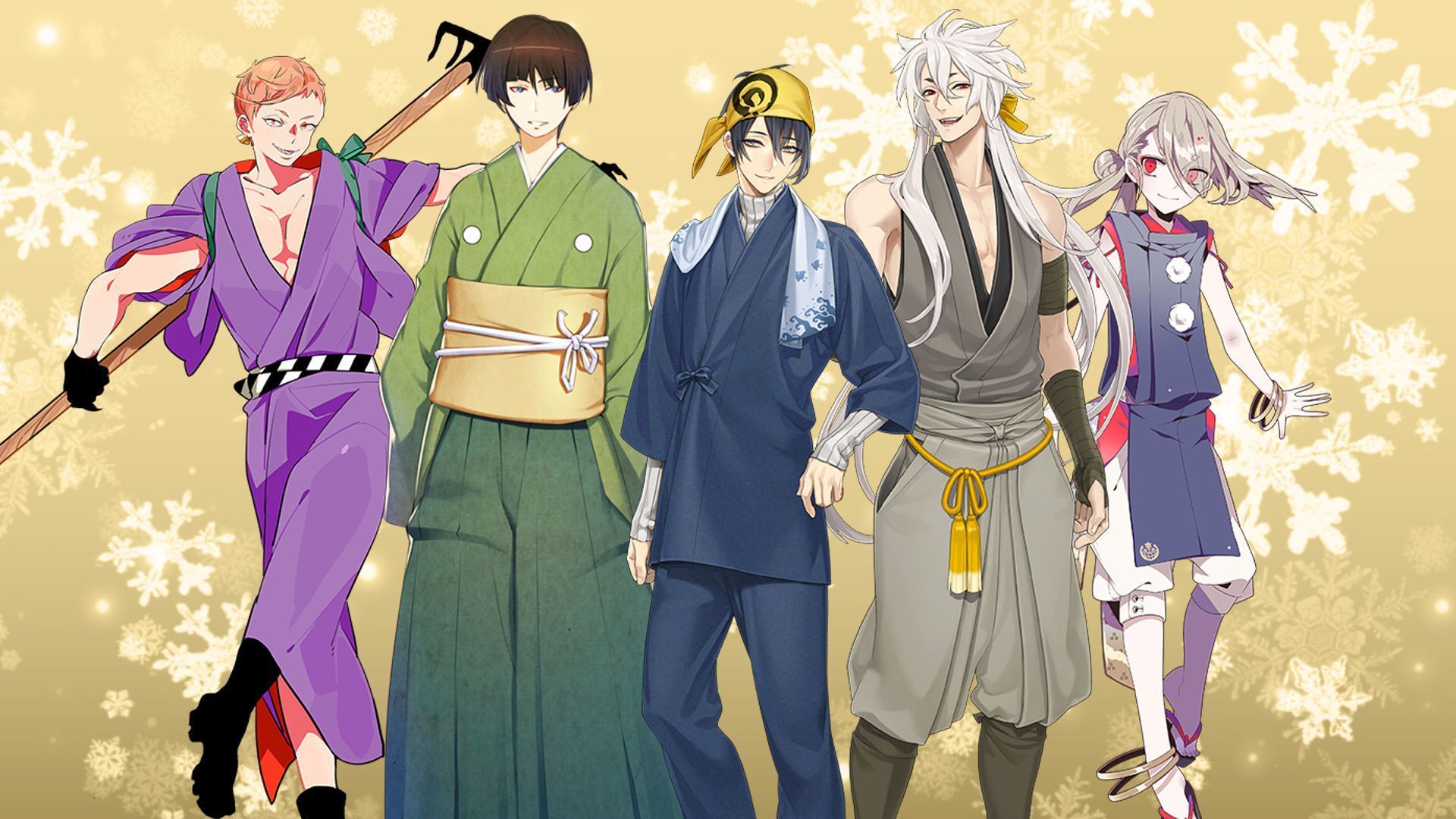
Sword Dance Uchiban Costumes Summary! Introducing from early mounted characters to Hagegiri & Kneemaru! The first time I saw a sword in the world, I was in the middle of a sword fight.
This is a collection of Uchiban costumes from "Sword Dance". This page introduces those of 51 different swords from the beginning of the service until the appearance of Hagekiri & Kneemaru. Please check out their off-mode appearance, which seems to be specialized for ease of movement and wearability, unlike their regular costumes.
Read Article
I put together a level guideline for the "Iwayu Kindergarten" sword dance! The power of the naginata is too great! [Tourabu]
This is a summary of "Iwayu Kindergarten," a leveling method in "Sword Dance" in which Iwayu, a naginata, is asked to lead the swords you want to train. The main focus is on maps that are easy to train on, according to Iwayu's level. Since short sword swordsmen do not have moderate firepower, it is recommended to level up with the help of the Cleave and Daitachi swords at first.
Read Article
The origin of the swordsmith's name, anecdotes, and history of the swordsmith! A collection of stories, anecdotes, and the origins of the names of the swordsmiths and sword schools! TOURABU
The following is a summary of the history, anecdotes, and origin of the names of the swordsmen appearing in "Sword Dance". The information is presented by sword school and swordsmith, so you can find information on your favorite swords. It is very interesting to know the history and anecdotes of each of them, and you will be able to understand their clothing and personalities.
Read Article
Sword Dance: Summary of birthdays and anniversaries of swordsmiths! Let's celebrate your favorite characters! Touyabu
The following is a summary of the birthdays and anniversaries of the swordsmiths in "Sword Dance". Since swordsmiths are personifications of swords, not humans, they seem to celebrate "the anniversary of the designation as national treasures" or "the anniversary of the designation as important cultural properties" as their birthdays or anniversaries. Please take a look at this and celebrate your favorite swordsmith!
Read Article
![Sword Ranbu] Introducing the former masters of swordsmiths! Full of famous figures such as Sengoku warlords and Shinsengumi troopers! TOURABU](https://renote.net/files/blobs/proxy/eyJfcmFpbHMiOnsiZGF0YSI6ODU3OTQ4MywicHVyIjoiYmxvYl9pZCJ9fQ==--af0ae48f7b4860c61abc26dfb3038e67b4c3b9d1/R%20(2).jpeg)
Sword Ranbu] Introducing the former masters of swordsmiths! Full of famous figures such as Sengoku warlords and Shinsengumi troopers! TOURABU
We have compiled a list of the former masters of the swordsmen in "Touken Ranbu" along with illustrations of the swords. Many of the swords were owned by famous people such as Oda Nobunaga, Date Masamune, Hijikata Toshizo, and others that appear in history textbooks. Knowing their relationship with their former masters may make you fall in love with the characters even more.
Read Article
A collection of recipes for sword forging for "Sword Dance" characters! Also includes excellent blends for each sword type! TOURABU
We have compiled a list of 42 different forging recipes that have been implemented since the beginning of the service for the very popular game "Sword Dance". In addition to recipes for each character, we have also introduced excellent blends that tend to produce each type of sword. If you are having trouble finding the sword you are looking for, please give it a try.
Read Article
A collection of unusual goods such as shoes and watches, alcohol and scissors.
Sword Dance-ONLINE-" has been in service since January 2015. It is one of the most popular contents on DMM.com with over 1.3 million registered users. Currently, many collaborations have been developed and a lot of goods are on sale. Here, we have collected a few quirky items. The collection is limited to items up to January 2016.
Read Article
Summary of the flame wars, pacifism, and other incidents involving "Sword Dance" and "Tourabu Class Group.
In this article, we summarize the incidents of flame wars, pacifism, and other incidents involving "Tourabu Gakkyukai," a fan site for "Sword Dance" and its fans. Deep love for a work is wonderful in itself, but if it goes too far, it can cause trouble for various people. Let's keep moderation in mind.
Read Article
Introducing the original swords and places associated with the swordsmiths! Recommended for pilgrimages and trips to sacred places! Touurabu
We have compiled a list of the swords that were the original inspiration for the swordsmen in "Sword Dance" and the places related to them. Many famous castles and shrines are involved, so there are many spots recommended not only for fans of "Sword Dance" but also for history buffs. Please visit them on your pilgrimage or trip to the sacred places.
Read Article
An introduction to the Japanese swords, legends and folklore that were the basis for "Sword Dance"! Also includes images of real swords! TOURABU
We have compiled a list of Japanese swords that are the origin of the swords in "Sword Dance", as well as legends and folklore related to them. Along with the origin of the sword names, we have also included images of actual swords preserved in museums. Swords of famous figures from history textbooks also appear in the book, so history buffs are welcome to check it out as well.
Read Article
With anime and anthropomorphized male units, we can't take our eyes off Sanrio!
Sanrio is a company full of cute characters such as Kitty-chan. In fact, did you know that Sanrio has created many other characters in addition to its fancy characters, and has developed "new developments" such as anime, anthropomorphic characters, and several male groups unique to Sanrio?
Read Article
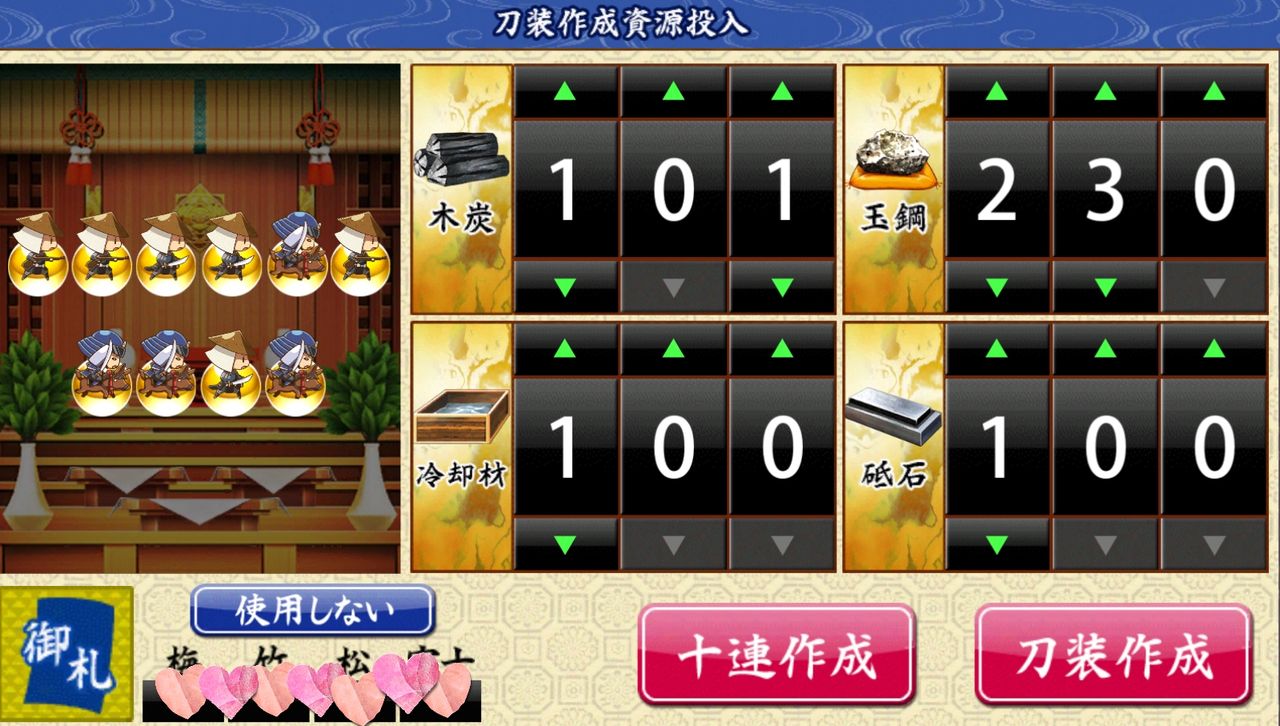
Summary of Recommended Sword Recipes for Sword Dancers [Touhou].
Sword Dance" is an application game in which players collect famous anthropomorphic Japanese swords and battle them. In the game, there are items called "sword costumes" that can be used to advance in battle, which can be obtained as quest rewards or by turning in gacha (gacha). This article introduces a collection of recommended sword armor recipes.
Read Article
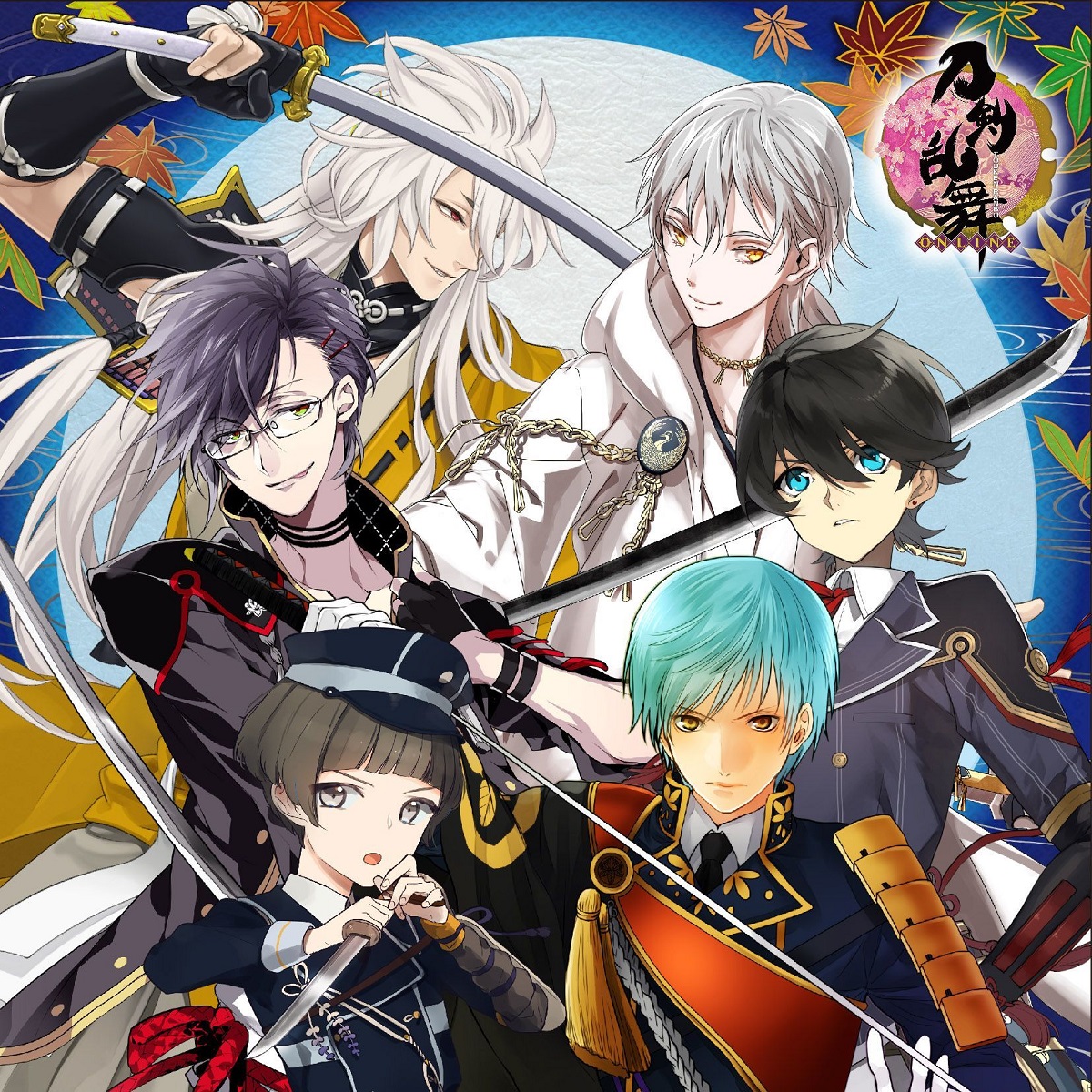
I want to go there at least once! A collection of sword locations and places associated with the swords of the sword dance [Tourabu].
Sword Dance" is a popular game in which "sword boys," personified versions of famous swords, play an active role. This popular game has been supported by many women and has been used in a variety of media. Many of the swords that appear in "Sword Dance" are real swords, and can still be seen today in museums and other places. This section introduces facilities and places where swords appearing in the game are exhibited.
Read Article
Introduction to Sword Dance Secondary Games of My Own Creation
There are many high quality secondary games of sword fighting, and some of them are distributed, so we will introduce them here.
Read Article
![Sword Ranbu] A collection of swords that were in the collection of the Meiji Emperor! Onimaru, Kogarasumaru, Hirano Fujishiro, Ichiki Ichifumi, Tsurumaru, Shishio, Uguisumaru and many more! [Touyabu]](https://renote.net/files/blobs/proxy/eyJfcmFpbHMiOnsiZGF0YSI6ODU4NjMwNCwicHVyIjoiYmxvYl9pZCJ9fQ==--42e44e571f6aa359b2e451da56cf7bea7de16613/48e884e6.jpg)
Sword Ranbu] A collection of swords that were in the collection of the Meiji Emperor! Onimaru, Kogarasumaru, Hirano Fujishiro, Ichiki Ichifumi, Tsurumaru, Shishio, Uguisumaru and many more! [Touyabu]
Kogarasumaru, Tsurumaru Kuninaga, Shishioh, and Uguisumaru, which appear in "Sword Dance," were part of Emperor Meiji's sword collection. The following is a summary of how these swords, which were carefully cared for, were brought to the Imperial Household.
Read Article
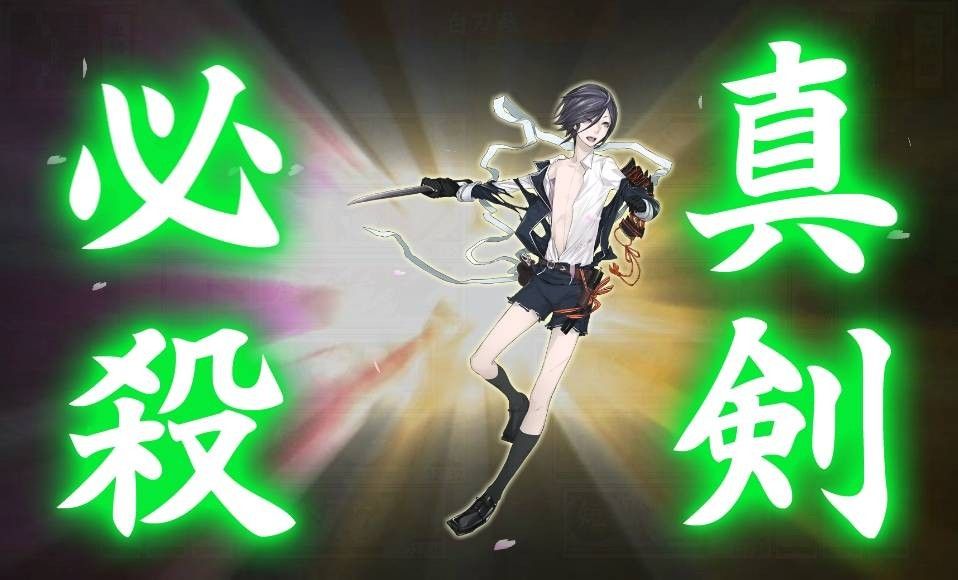
The conditions for activation of the "serious special kill" & the efficient way to collect illustrations! [Touyabu]
In "Sword Dance," a "serious kill" occurs when certain conditions are met during battle. Not only can you attack with advantage, but you can also see the exclusive illustrations of the swordsmanship of the swordsmen. We have compiled a detailed list of conditions for activating the "serious special kill" and how to efficiently collect the illustrations, which are rarely seen when just playing the game.
Read Article
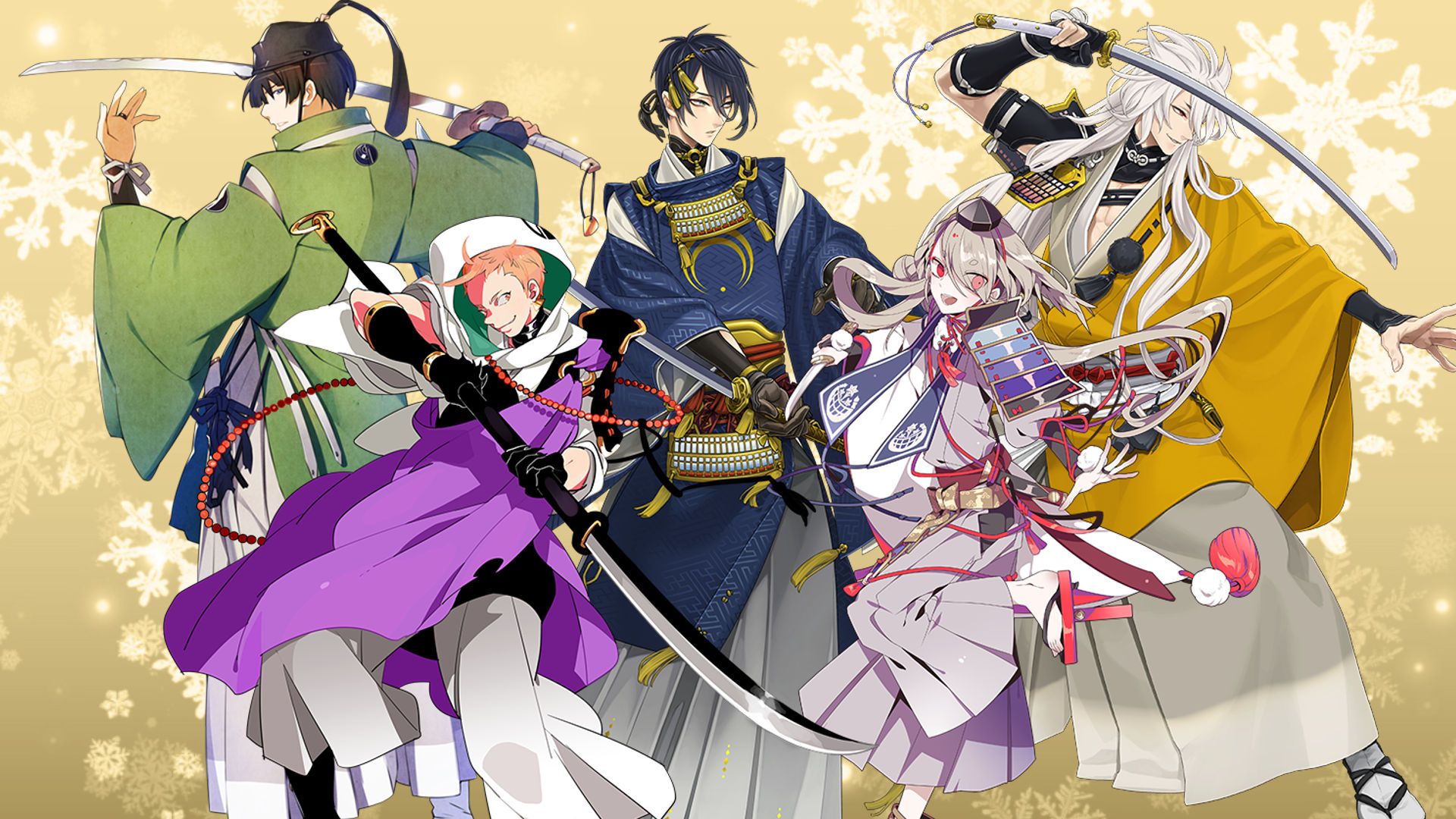
A list of spots associated with "Sword Dance"! Recommended for pilgrimages to sacred places! TOURABU
We have compiled a list of spots that are associated with "Sword Dance". These places are recommended for pilgrimages to sacred places, such as the locations of Japanese swords, which are the source of the swordsmen, and the museums of historical figures who were the original owners of the swords. These places are enjoyable not only for "Sword Dance" fans but also for history buffs, so be sure to check them out.
Read Article
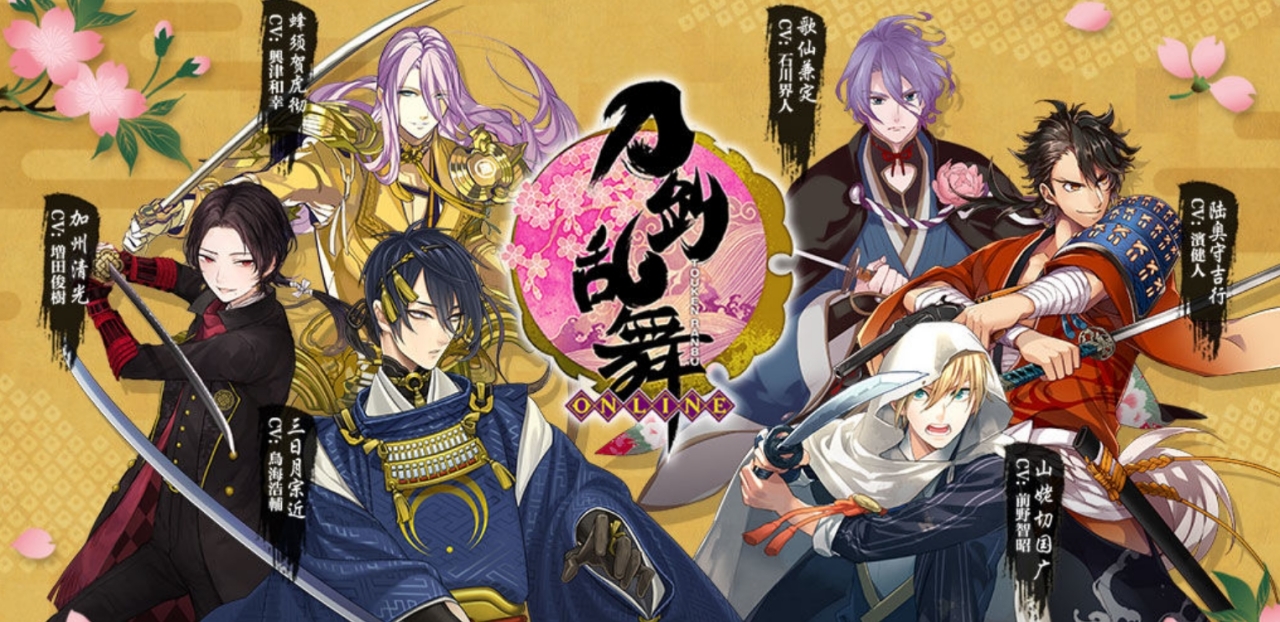
Summary of the original name of the horse and its relationship to the character in the sword dance [Tourabu].
In the browser game version of the original "Sword Dance," a major content series that boasts enormous popularity among women, "horses" exist as equipment items. Each horse has a different name and status, but like the swordsmiths, their names have their own origin stories. Here we will introduce the original story of the horses and their relationship to the characters.
Read Article
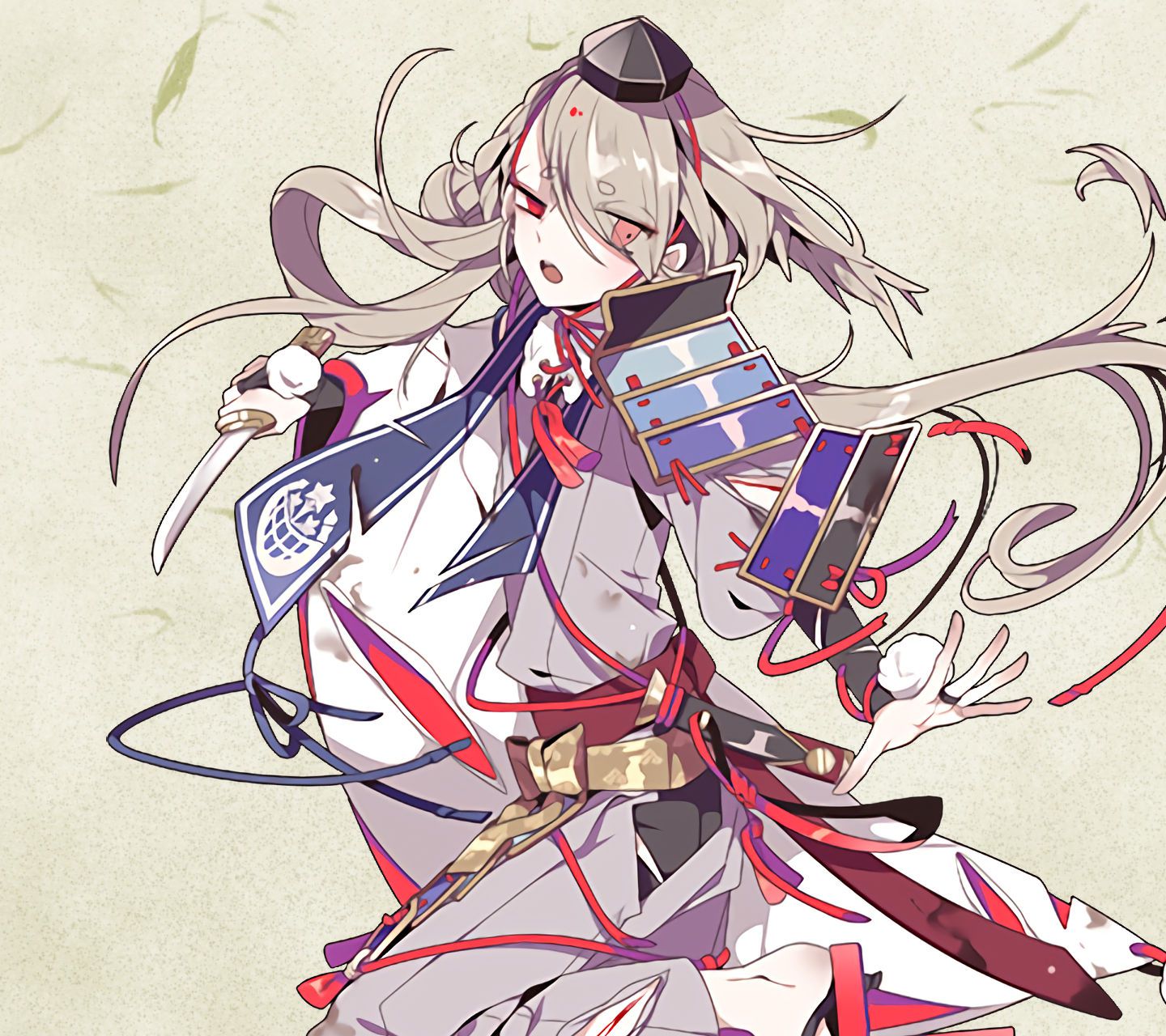
A summary of "Sword Dance" painters! Introducing the creators of the beautiful swordsmiths and the characters they work with! Tourabu
We have compiled a list of artists who have created illustrations of swordsmiths appearing in "Sword Dance. The artists and illustrators who created these beautiful illustrations are active in a variety of genres, so if you are interested in their work, please check them out.
Read Article
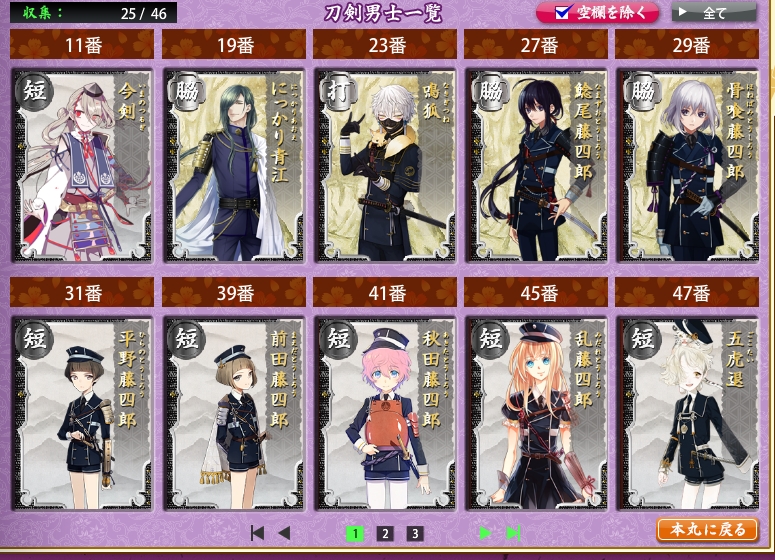
A summary of fans' passion for making sword fighting healthy for 4-year-olds.
In January 2016, "Tourabu" celebrated its first anniversary since its distribution. Over the past year, Tourabu has knocked out numerous legends, including a musical adaptation, song distribution, and various goods development, but finally the details of the smartphone version of the application have been announced, and with it, fans have been able to see "a certain care" in the ......?
Read Article
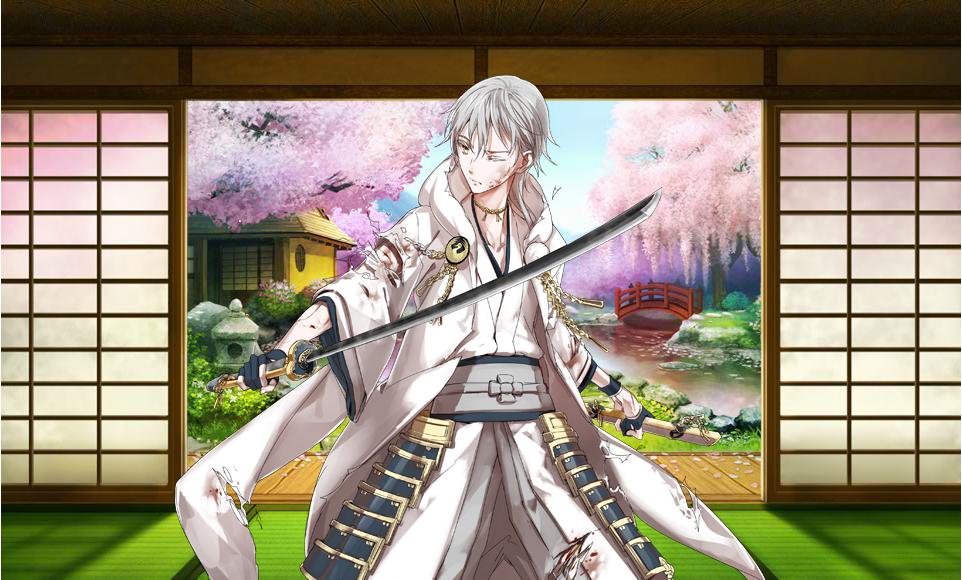
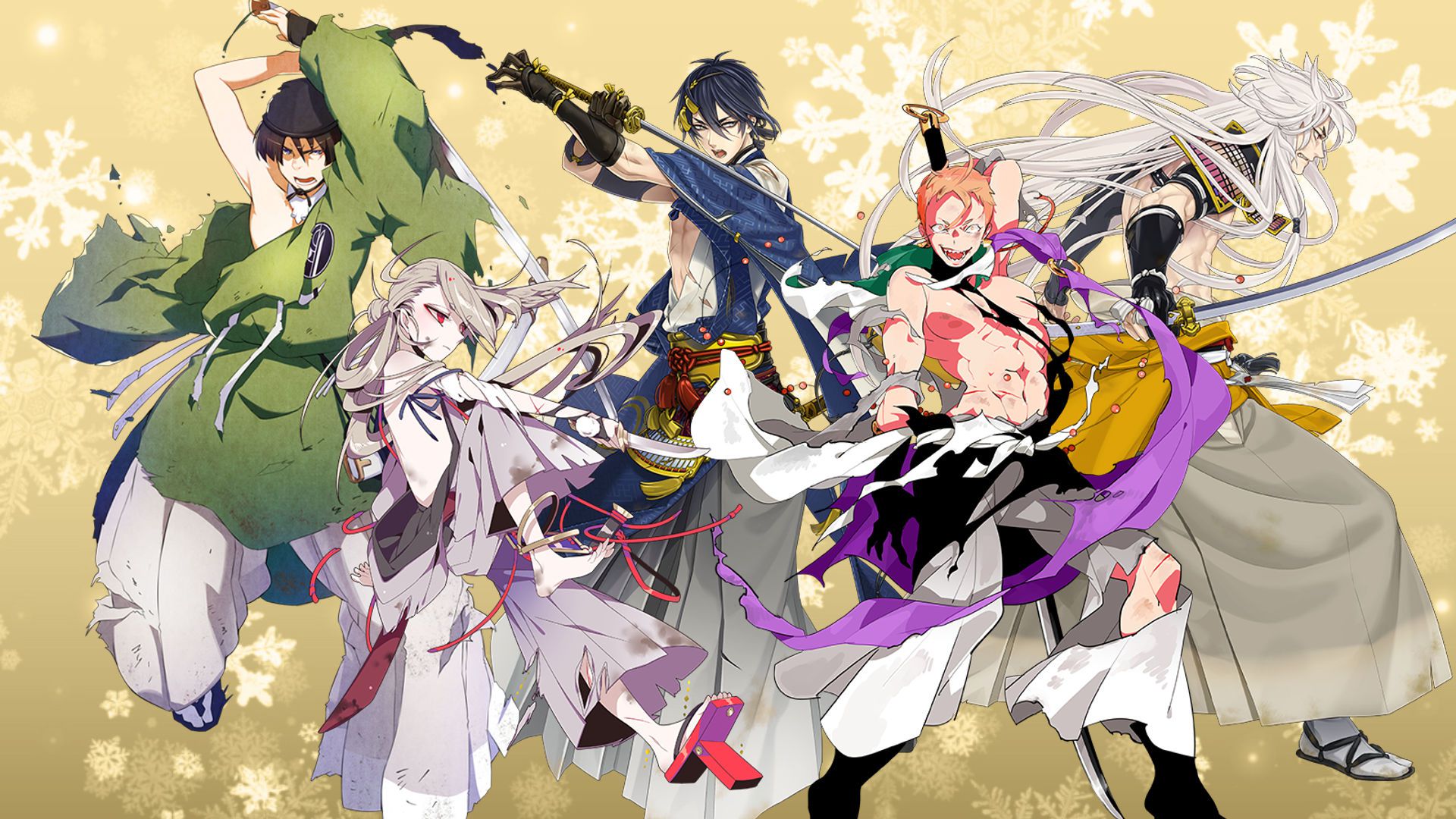
A collection of images of "Tourabu" with medium & heavy wounds! The differences in costumes and facial expressions are amazing... [Tourabu
Here is a summary of the appearance of the swordsmen in "Touken Ranbu" when they are moderately or seriously wounded. The following are those of the swords that were implemented from the beginning of the service until the appearance of Hagekiri & Hizemaru. It is tempting to see their tattered outfits and different expressions from normal, but you don't want them to look like that in your own Honmaru because they may lose their swords when they are seriously wounded...
Read Article
Collection of Golden Recipes for Sword Forging! You might get a rare swordsmith! TOURABU
The online game "Touurabu" is a popular game in Japan. Here we have collected "golden recipes" that have a high chance of forging the swordsmith you are looking for. The site also provides easy-to-understand information for beginners. We also introduce the voices of players who have succeeded in forging rare swordsmen using the golden recipe.
Read Article
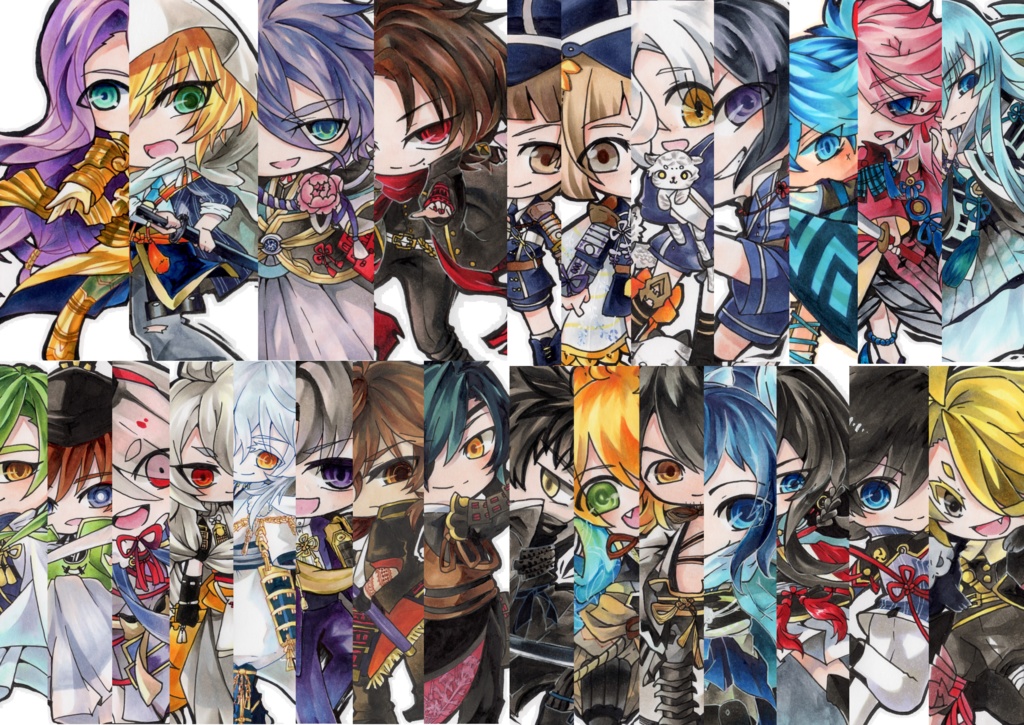
Additional illustrations and behind-the-scenes settings by the artist are now available for viewing!
Originally released as a game, "Sword Dance. The work's explosive popularity, mainly among women, eventually led to a musical, stage, anime, and even a live-action film adaptation. This article summarizes additional illustrations and backstories released by the official illustrators of "Sword Dance".
Read Article
![TouyanBu] Introducing the Top 10 Most Popular Swordsmen! No. 1 is Tsurumaru Kuninaga, a sword born in the Heian Period! The first place goes to Tsurumaru Kuninaga, a sword born in the Heian period!](https://renote.net/files/blobs/proxy/eyJfcmFpbHMiOnsiZGF0YSI6ODU3NzgwNiwicHVyIjoiYmxvYl9pZCJ9fQ==--d78e32353064e4082eec8d8472879588e07272a3/DWzDtBwVAAAVZmH.jpg)
TouyanBu] Introducing the Top 10 Most Popular Swordsmen! No. 1 is Tsurumaru Kuninaga, a sword born in the Heian Period! The first place goes to Tsurumaru Kuninaga, a sword born in the Heian period!
We have compiled a ranking of the 1st to 10th most popular swordsmiths in "Touken Ranbu". The first place goes to Tsurumaru Kuninaga, who has a charming gap between his fragile appearance and cheerful personality.
Read Article
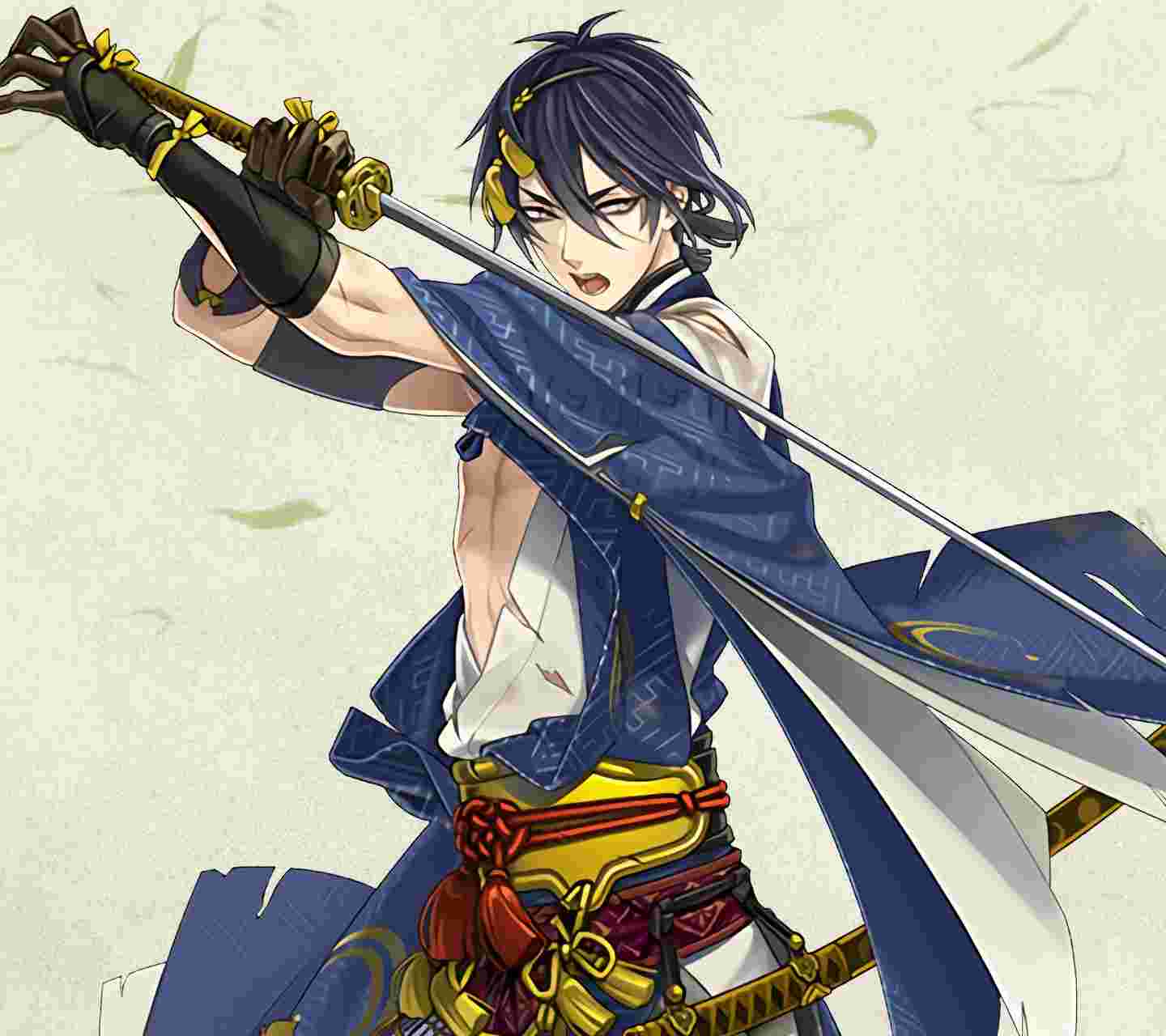
Costume illustrations of "Sword Dance"! Includes battle scenes and Uchiban outfits! TOURABU
We have compiled a collection of standing pictures of swordsmen in "Sword Dance" that make it easy to recognize their costumes. The illustrations include standing pictures of battle scenes, medium and severely wounded figures, and Uchiban figures, etc. Please use them as reference materials when you create fan art.
Read Article
Tags
Contents
- Outline of "Sword Dance
- Synopsis and story of "Sword Dance
- Game System of "Sword Dance
- forging a sword
- manifestation point
- Renketsu (alchemy)
- (a) the study of (a)
- battle
- fatigue
- energy
- training (e.g. in martial arts)
- expedition
- Formation (formerly: Organization)
- organization
- sword unraveling
- grooming
- Collection (formerly Uchiban)
- tools at one's disposal
- practice
- Manyya
- walk
- companion
- exchange counter
- Characters in "Sword Dance
- short sword
- Ima no Tsurugi
- Fujishiro Hirano
- Atsushi Toushirou
- Maeda Toushiro
- Akita Toushirou
- Ran Fujishiro (Midare Toshiro)
- Gokotai
- Yagen Toshiro
- Kuniyoshi Aizen
- Sayo-samonji
- Hakata Toushirou
- Goto Toushirou
- Yukimitsu Fudo
- Shinano Toushirou
- Taiko Kane Sadamune
- Houcho Toushirou
- Mouri Toushirou
- Kenshin Kagemitsu
- Masamune Hyuga
- Chatananagiri
- Taikoo Left Monji
- short sword
- Nikkari Aoe
- Namazuo Toushirou
- Bonetoku Toushirou
- Kunihiro Horikawa
- Urashima Toratetsu
- Monoyoshi Sadamune
- Kagotekirigie
- Tadahiro Hizen
- Chikanemaru
- floating dust
- var. of Japanese long sword
- NARUKI KITSUNE
- Sozasa Monji
- Kiyomitsu Kashu
- Yasusada Yamato
- KASEN KANESADA
- Yoshiyuki Mutsukami
- Kunihiro Yamambagiri
- Hachisuka Toratetsu
- Heshikiri Hasebe
- Nagasone Nekotetsu
- Izuminokamikanesada
- Ookurikara
- Masakuni Dotanuki
- Kikkosadamune
- Senko Muramasa
- Nansen Ichimonji
- Nagayoshi Yamambagiri
- Buzen River
- Nankai Taro Choson
- Kuwana River
- Masahide Suishinshi
- Kiyomaro Minamoto
- Matsui River
- Jizo Yukihira
- May rain river (Samidarego)
- Murakumo River
- Inaba E.
- Masamune Ishida
- long sword
- Mikazuki Munechika
- Kogitsune Maru
- Mitsuyo Oodenta
- Sohaya no Tsuruki (Tsurugi of Sohaya)
- Suzumaru Tsunetsugu
- Onimaru Kunitsuna
- Ichigo-no-Ippiki (One season, one sprinkle of strawberry)
- Ookanehira
- Japanese nightingale (Cettia diphone)
- Akashi Kuniyuki
- Candlestick Mitsutada
- Daihannya Nagamitsu
- Koryu Kagemitsu
- Ezuki left character (Kousetsu Samonji)
- Yamabushi Kunihiro
- bearded cutter (species of fish, Acanthopanax sciadophylloides)
- Knee Maru
- Lion King
- Kogarasumaru
- Nukemaru
- Kuninaga Tsurumaru
- Azuki Nagamitsu
- Chiyoganemaru
- mountain bird's hair
- Kokin Denju no Tachi (Sword of the Ancient and Modern Period)
- Nikko Ichimonji
- Norimune Ichimonji
- Himekuru Ichimonji
- Mitsutada Fukushima
- Sasanuki
- Hatchonenbutsu (Buddhist prayer)
- large sword
- Ishikirimaru
- Hotarumaru (firefly)
- Taroutachi
- Jiro-tachi
- Nenekirimaru
- spear
- Dragonfly Cutter
- Nihon-go (Japan Go)
- Otegine
- Ouchidori Jumonji Yari
- Human Bone
- halberd
- Iwatooshi (Oshio Iwato)
- Tomoe-gata Naginata
- Shizukata naginata
- sword (originally esp. a doubled-edged sword)
- Yoshimitsu Hakusan
- Seven Star Sword
- Support/guide character
- chivalrous man (c. Edo period)
- black sake (presented as an offering to the gods)
- peach-skinned son
- swordsmith
- Sword soldiers
- enemy character
- Historical revisionist
- Retrograde Time Forces
- Kempo-no-Meshi (Keibi-ishishi)
- Items from "Sword Dance
- resources
- Sword
- horse
- amulet
- bill
- recovery item
- Nehyo Sugar (Konpeito)
- the harvest
- elegance
- lightweight equipment or dress
- koban
- Koshu gold
- pigeon
- Terms of "Sword Dance
- SANJIWA
- government
- Initial Sword / Initial Sword
- Kinkiji (Kinji)
- Sword type (sword type)
- special (special)
- Extremely
- sword level
- Ranbu Level
- departure for the front
- Honor
- battlefield
- critical hit (esp. in RPGs)
- A serious and murderous attack.
- Sword destruction (sword destruction)
- Famous quotes, lines, and scenes from "Sword Dance
- Yakken Fujishiro: "I even went through the handle!"
- Kuninaga Tsurumaru: "Life needs surprises. If we only know what to expect, our hearts will die first.
- Kofukumaru: "When it melts, we are all iron."
- Backstories, trivia, small stories/episodes, and anecdotes from "Sword Dance
- Sword Girls" nominated for 2015 New Word and Buzzword of the Year
- Kon-no-Suke" won second place at Yurukyara Grand Prix 2016
- Various projects and collaborations that have enlivened the sword industry
- Theme songs and insert songs for "Sword Dance
- Theme song: "Yumegen Ranbunsho" by Kanetaro Itagaki
- Theme song: "You and Me" by Yumi Matsutoya