
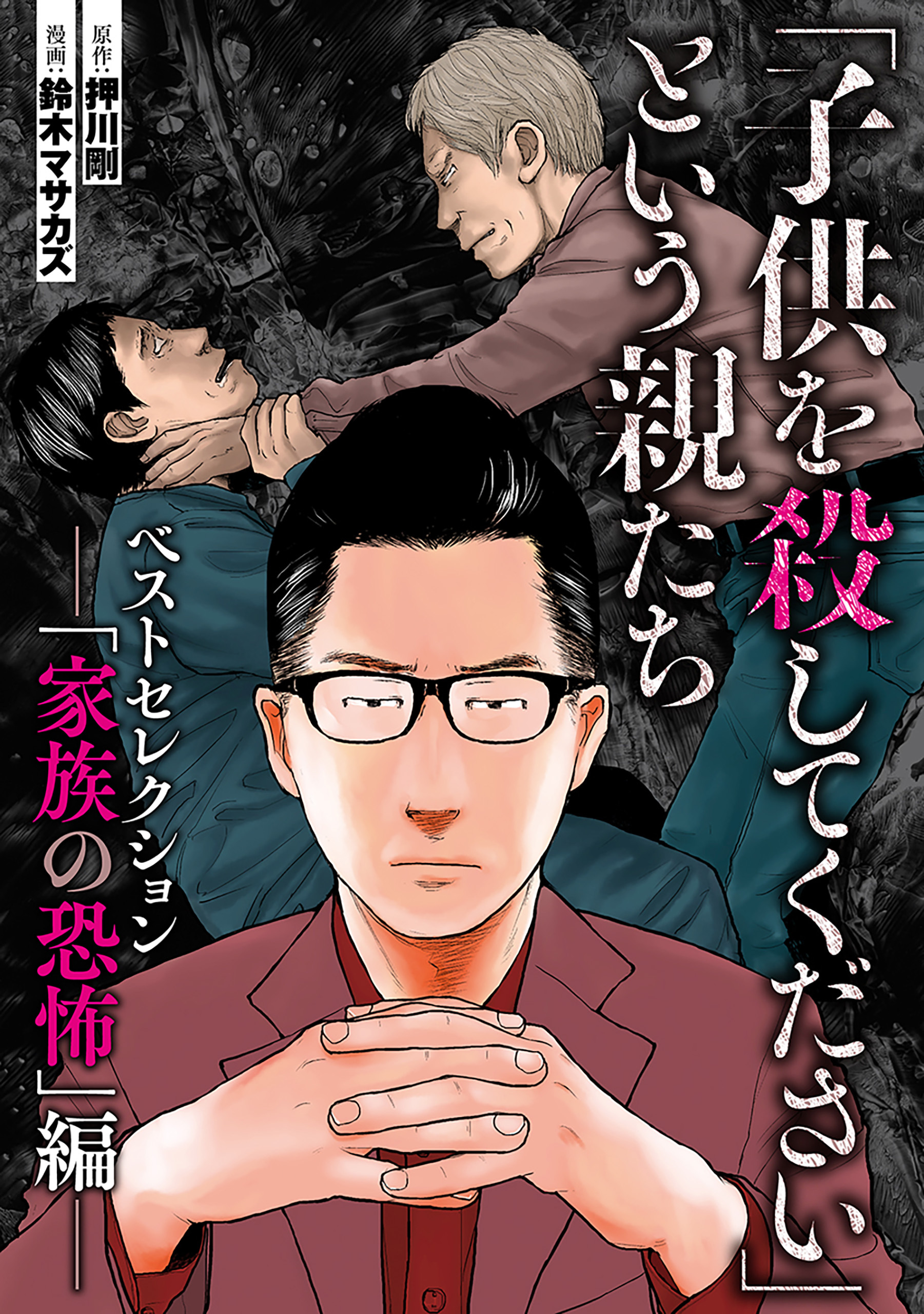
Parents Who Ask to Kill Their Children" is a manga adaptation by Masakazu Suzuki based on a nonfiction book by Tsuyoshi Oshikawa. The work pursues the darkness that families in modern society face, and has been the topic of discussion in various media. Each of the characters, who are affected by diseases, have the potential to become criminals if they make the wrong move. The main character, Tsuyoshi Oshikawa, is on the verge of becoming a criminal and attempts to rescue them by all means possible. The original story, "Parents Who Ask to Kill Their Children," was released on July 1, 2015.
Misako Kurosawa's mother. She always has a gaunt expression on her face. She never once took her daughter, who may be suffering from mental illness, to the hospital, but allowed her to live alone for more than 10 years, visiting her daughter's apartment once a week to cope with the situation. In fact, he only went to the entrance of the apartment and was not aware of any devastation in the room or the condition of his daughter. Nevertheless, he does not want the intervention of others, such as Oshikawa, the people at the public health center, or the police, and is only concerned about public opinion.
victim
Erika Kawano
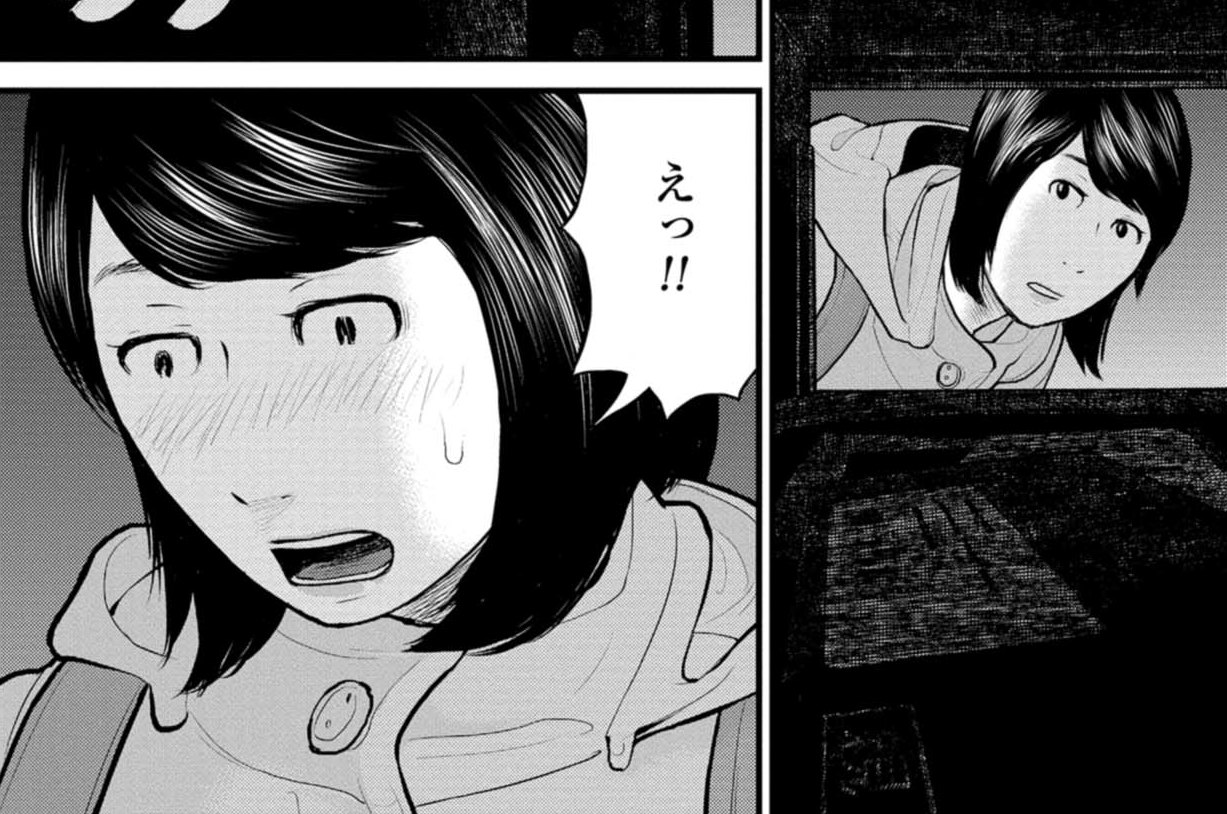
A woman who was in a relationship with Yoshinobu Takarada for a while. She is 21 years old. She is a victim of stalking by Yoshinobu. Her pretty appearance makes her popular among men, and she is always surrounded by men. She does not have a good reputation and is said behind her back to be a "lightweight woman. She sent messages to Yushin, with whom she had been dating for a while, saying things like, "If you break up with me, let's die together," and exchanging words that would put a burden on the other person's heart.
This caused Yushin to become a stalker, and she was aware that she had a guilty conscience when he tried to cut her off, so she reached a settlement.
Tanaka
A couple who live in the neighborhood next door to the Wada family in "The Broken Lives of Mother and Daughter. They are victims of the paranoia of Harumi, the sister of the subject of protection. Harumi's harassment has even caused the police to be dispatched to their home. They wish to move out, but are unable to do so because they still have a mortgage on their house.
Terms from "Parents Who Say 'Please Kill My Child'"
Tokiwa Mental Health Center Office
It is a private company that persuades people with problems such as severe schizophrenia, depression, withdrawal, alcoholism, drug addiction, domestic violence, and worsening adjustment disorder to seek medical care at the request of their parents.
The director, Tsuyoshi Oshikawa, and a small group of elite staff members, including Akane Saneyoshi, are running the operation. In order to save a subject under their protection, they conduct a detailed investigation of the subject's family relations, childhood, and medical history. After the investigation, they contact the public health center, go directly to the subject's doctor, or introduce the subject to a new doctor in order to connect the subject to the correct medical care.
people who withdraw from society (e.g. retire to the country)
It is a condition in which a person is unable to leave his/her home or room for more than six months without being able to go to school or work.
In the case of children, the most common reasons are being bullied at school, being shocked by witnessing bullying, not fitting in with classmates, and not getting along with teachers.
In the case of adults, the reasons for withdrawal vary from person to person. For example, a person may be unable to leave his or her workplace due to a physical injury caused by the harsh working environment, or a person may become depressed due to the failure of a romantic relationship.
Many people who withdraw from society also suffer from depression, schizophrenia, or panic disorder.
Types of Mental Illness
alcohol dependency
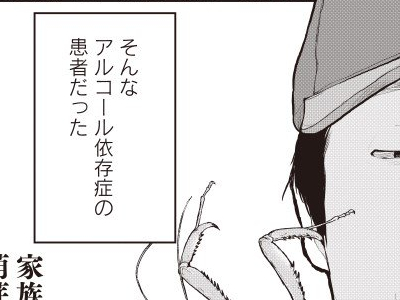
Protected persons suffering from alcoholism
Alcoholism is one of the most common of many addictions.
It refers to a condition in which a person is no longer able to control the way he or she drinks alcohol (the amount of alcohol consumed, timing and circumstances). It is an addiction that is very difficult to stop by oneself because of the abnormality in the brain.
The characteristic point of alcoholism is that the alcoholic no longer "drinks to have fun" but "drinks to live. It is estimated that a total of 570,000 people, or about 1% of the Japanese population, are considered to be suffering from alcoholism. When alcohol consumption ceases for a certain period of time, withdrawal symptoms such as tremors in the hands, irritability, anxiety, insomnia, and emotional outbursts occur, leading to a vicious cycle of drinking again in order to suppress them. The patient is often unaware that he or she is addicted to alcohol.
In treatment, it is important for the patient to be aware that he or she is dependent on alcohol, and to have a strong will to get treatment, as well as the support of family and surroundings.
schizophrenia
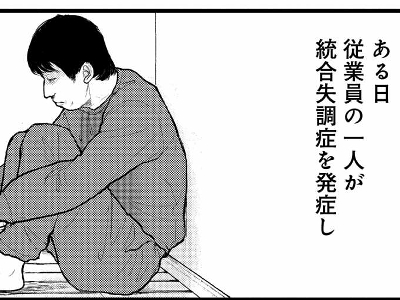
Oshikawa's colleague suffers schizophrenia.
The causes of schizophrenia are still not clearly understood. It is said that it may be caused by stress, lack of sleep, or disordered living.
Symptoms include delusions, hallucinations (auditory hallucinations), and thought disorder (the patient may lose coherence in thinking, lose context in conversation, and may not know what he or she is talking about). It also includes symptoms such as a decline in cognitive intelligence and a loss of emotional volatility.
Early treatment of schizophrenia can prevent further deterioration of the disease and reduce the severity of the symptoms, thereby improving the chances of recovery.
Asperger's syndrome
Asperger's syndrome is a developmental disorder. They have difficulty in reading distant expressions and metaphors, and are often unable to communicate smoothly with others.
They are not good at what is called "reading the air. According to recent studies, there is one person in 100 with this syndrome. Males tend to have this syndrome more often than females, and it is estimated to be about four times as common as in females.
One of the characteristics of this syndrome is that it is easily detected late because there is no delay in intellectual development or language development.
panic disorder
Panic disorder is an attack symptom in which a person suddenly suffers from motive, dizziness, nausea, and chest pains, even though there is no specific physical illness. The main symptoms are palpitations, sweating, tremors, breathlessness, chest pain, nausea, dizziness, intoxication, anxiety, and thirst.
If the symptoms persist for a long time, the patient may not be able to go to school or commute to work and may easily become depressed, so it is important to consult a specialist and receive appropriate treatment if subjective symptoms are present.

Tags
Contents
- Overview of "Parents Who Say, 'Please Kill My Child'"
- Synopsis and story of "Parents Who Ask to Kill Their Children"
- Mentally ill or criminal?
- The Broken Lives of Mothers and Daughters
- Children who do not forgive their parents
- Cases that did not result in a request
- Characters and characters from "Parents Who Ask to Kill Their Children"
- Tokiwa Mental Health Center Office
- Takeshi Oshikawa
- Akane Saneyoshi
- The attending physician of the protected person
- Vertical mountain
- Kano
- Department of Social Services officials
- Public Health Nurse
- person subject to protection
- Shinsuke Arai
- Norio Kimura
- Harumi Wada
- Wada's mother
- Takuya Tanabe
- Makoto Sawairi
- Yoshinobu Takarada
- Kiyoshi Yoshihara
- Tomoki Tsuruyama
- Misako Kurosawa
- client
- Shinsuke Arai's Parents
- Kimura's father (Kimura Chichi)
- Kimura's mother
- Tomoko Wada
- Takuya Tanabe's mother
- True mother of Sawairi
- Father of Takarada
- Takarada's mother
- Friend of Yoshinobu Takarada
- Yoshiwara's younger siblings
- Tsuruyama's parents
- Kurosawa's father
- Kurosawa's mother
- victim
- Erika Kawano
- Tanaka
- Terms from "Parents Who Say 'Please Kill My Child'"
- Tokiwa Mental Health Center Office
- people who withdraw from society (e.g. retire to the country)
- Types of Mental Illness
- alcohol dependency
- schizophrenia
- Asperger's syndrome
- panic disorder
- Famous quotes, lines/scenes and scenes from "Parents Who Ask to Kill Their Children"
- Tsuyoshi Oshikawa: "It is the cry of the children's hearts."
- Tsuyoshi Oshikawa: "Are you a human being before you are a doctor?"
- Tsuyoshi Oshikawa: "I think it's time for you to make a clean break with your helpless fucking parents, don't you?"
- Backstory, Trivia, and Small Stories/Episodes/Anecdotes from "Parents Who Asked to Kill Their Children"
- TV coverage full of cuts