
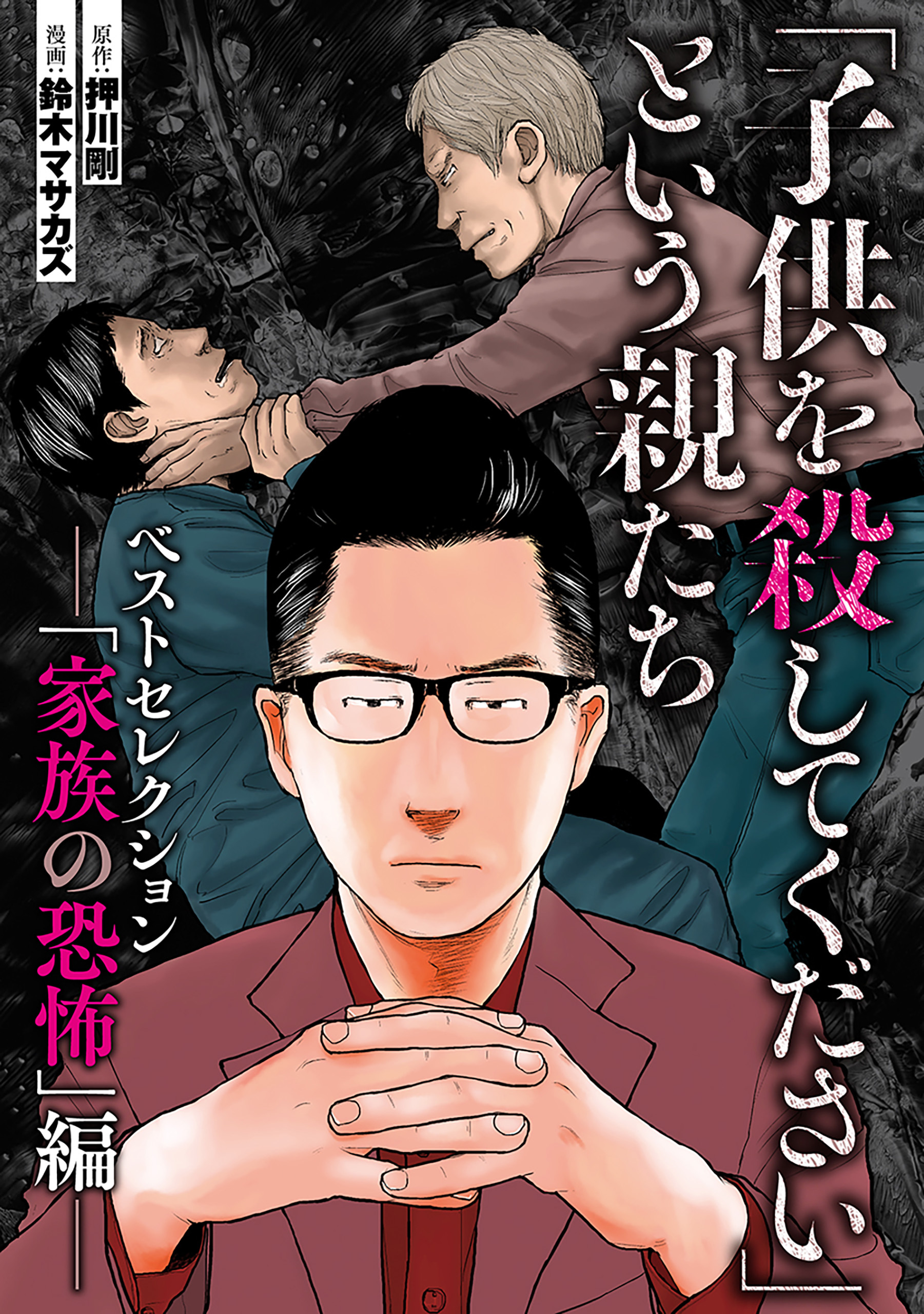
Parents Who Ask to Kill Their Children" is a manga adaptation by Masakazu Suzuki based on a nonfiction book by Tsuyoshi Oshikawa. The work pursues the darkness that families in modern society face, and has been the topic of discussion in various media. Each of the characters, who are affected by diseases, have the potential to become criminals if they make the wrong move. The main character, Tsuyoshi Oshikawa, is on the verge of becoming a criminal and attempts to rescue them by all means possible. The original story, "Parents Who Ask to Kill Their Children," was released on July 1, 2015.
Overview of "Parents Who Say, 'Please Kill My Child'"
Parents Who Ask to Kill Their Children" is a manga adaptation by Masakazu Suzuki based on an original nonfiction book written by Tsuyoshi Oshikawa and serialized in Shinchosha's "Monthly Comic Punch".
The original nonfiction book written by Tsuyoshi Oshikawa was released on July 1, 2015, and the manga began serialization on August 9, 2017, in 12 volumes. The work, which nakedly depicts the pathologies of modern society, garnered attention as a blockbuster issue work that sold a total of 1.4 million copies.
The work, which is a true story by the original author Tsuyoshi Oshikawa, unabashedly depicts the problems and darkness of the people who are recently featured as incidents in the news. The manga is based on the original story, which struggles to rescue people with problems such as withdrawal, alcoholism, drug addiction, domestic violence, and worsening adjustment disorder. The story unfolds in an omnibus format.
Synopsis and story of "Parents Who Ask to Kill Their Children"
Mentally ill or criminal?
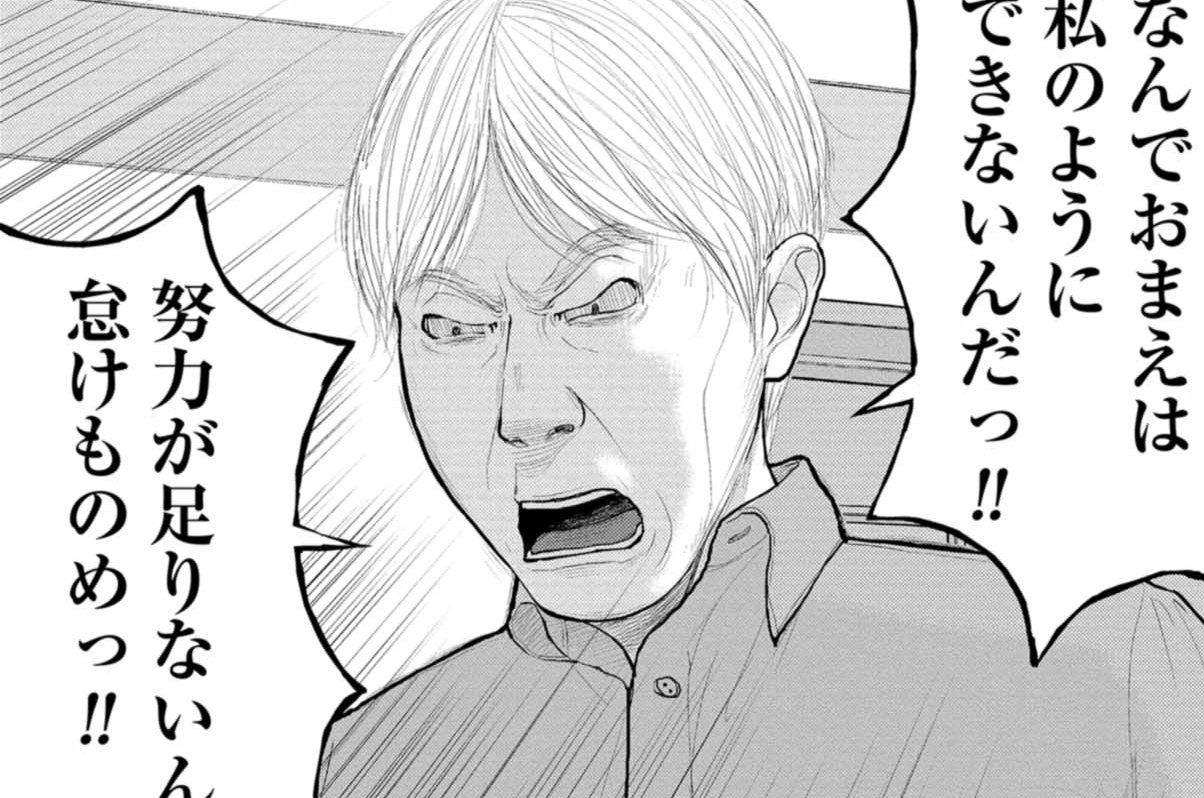
息子である慎介を厳しく叱責する父親
Almost half of the homicide cases uncovered are between relatives in the relationship between the suspect and the victim. Among these cases, crimes committed by children are on the decline, while criminal cases between family members are on the rise.
Children may have severe schizophrenia, panic disorder, addiction, etc., and even when they need psychiatric treatment, they are not treated appropriately.
The Tokiwa Mental Health Center is a facility that connects such individuals to treatment, and on that day, the main character Takeshi Oshikawa, who runs the facility, receives a request from a parent for help.
Oshikawa and his staff member Akane Saneyoshi immediately go to the home of a young man, Shinsuke Arai, who is the subject of their investigation. The young man was in the yard of his parents' house, naked and swinging a baseball bat fully. Oshikawa discovers at first glance that the young man is a "real" mentally ill person.
He is the eldest son of a so-called elite family, and since his father runs a law firm, his future was destined to be a lawyer. His grades, which had been improving steadily, dropped sharply when he took the university entrance exam, and the frustration of having his path to law school cut off caused him to begin to get sick. He tries to escape reality by being delusional, and gradually begins to believe that his delusions are true. His anger gradually became uncontrollable, and he became so ill that he beat his cat to death with a baseball bat.
With the cooperation of his parents, Oshikawa took the step of forcibly hospitalizing the young man. However, the young man's calm demeanor at the hospital led to his discharge after only three months.
The parents, fearing that their child would kill them, pleaded with Oshikawa to find another place to take him, no matter how much money it would cost.
However, they could not find a mental hospital that would take in the young man and allow him to be hospitalized. Oshikawa took this opportunity to rent a house, where he decided to take care of the young man. As a result of his hard work, the young man recovered to the point where he was able to work outside the home. However, because he had not fully recovered, he assaulted a co-worker twice during work, and was eventually arrested and committed to a police mental hospital.
Oshikawa visited the hospital regularly to talk with the young man, but his delusional pathology was fixed and he could only work with him by attending to his illness.
The Broken Lives of Mothers and Daughters
A woman visits Oshikawa. The woman's request was "I want you to help my mother. Her family consisted of her mother, her sister Harumi Wada, and her younger sister Tomoko Wada, and the woman was her younger sister. One day, she could not contact her mother at all, so she sought help from the Tokiwa Mental Health Center Office.
The sister had been mentally ill since she was in junior high school and was a recluse. She often made noise from her room in the family home, which was not a place where she could rest her mind. In order to escape from this environment, she enrolled in high school with her mother's help, where there was a dormitory.
Her mother told her, "From now on, stay away from this house," and she took over all of her sister's nursing care. She left the house, saying, "I will help your mother someday."
About 10 years later, when she lost contact with her mother, she moved to save her mother, and with the cooperation of Oshikawa, she went to her parents' house with the police and government officials in tow. The inside of the house was in a terrible state of disarray. The windows were covered with newspapers, the rooms were dimly lit, and garbage was strewn about. Oshikawa thought of the worst case scenario in his mind. When he went upstairs to see if he could find her, he found his mother standing there holding a kettle with a ghostly look on her face. She was completely unconcerned about the state of the house and seemed rather annoyed by the intrusion of her sister and Oshikawa. Then her sister's screams echoed in the room. The police secured the sister, and Oshikawa tried to talk with her. When he asked her if she understood the situation, she said, "It's Tanaka's fault," naming the person who was not responsible at all but rather a victim of her sister's paranoia, and further exclaimed, "He's trying to humiliate me.
Call the police!" my sister shouted, her pathology so advanced that she did not even realize that the people in front of her were uniformed police officers.
After the government officials correctly ascertained the current situation of the mother and sister, the sister was transferred to a psychiatric hospital, and the mother was taken in by the client's sister.
One month passed, and the sister sent an e-mail to the Tokiwa Mental Health Center Office. The content of the message was, "My sister has been diagnosed as schizophrenic.
Oshikawa concluded that although her sister had shown symptoms of mental illness at an early stage, her mother accepted that she was just a "shut-in" and that this happened because she failed to recognize that she was ill.
Children who do not forgive their parents
One fine day, Oshikawa was visiting a baseball stadium where a game was being played to learn about his client's family environment. Takuya Tanabe, the male subject of the case, was not interested in the game at all, and was mumbling to himself. His father, on the other hand, is absorbed in watching the baseball game without regard for his son, and his mother is concerned about her son's condition. The mother was concerned about her son's condition, for she did not know who he might get into trouble with at any moment. Sure enough, when the child hit him a little, Takuya yelled at the child's mother with an unusual swagger.
Takuya Tanabe, the subject of protection, has been visiting a psychiatrist for more than 10 years, but his symptoms did not improve at all, and he even stopped visiting the psychiatrist himself. She became so violent that she shot her mother with an air gun, and requested Takuya's family doctor Tateyama, who was accompanying Takuya and his mother, to have Takuya hospitalized. However, the doctor refused the request, saying that hospitalization was not necessary.
Feeling the need to change the doctor, Oshikawa requested the public health center to introduce him to another doctor. The official was able to refer him to another doctor in view of his exhausted mother. The newly introduced doctor knew Takuya's history of visits to the hospital and his upbringing, and he said that Takuya could be admitted to the hospital, but on the condition that the police and the public health center be present. Takuya himself had a good educational background and was an articulate person, so the doctor wanted to prevent Takuya from suing the police and the public health center for improper hospitalization.
On the day of hospitalization, Oshikawa entered Takuya's room, where he was using a computer alone, without permission. Takuya yells at Oshikawa, "I'm calling the police! Takuya shouted at him, "I'm going to call the police!" Takuya replied, "The police are already here," and demanded to talk to each other. As a result of the discussion, Takuya says, "I will go to the hospital by myself, but I will not go today. To his words, Oshikawa says, "Who's going to trust that? No one can trust you now," he tells him. Quickly, Takuya looks at his mother, but by the look on her face, he understands the situation he is in, and reluctantly accepts that he will be hospitalized.
Thinking that this would be a relief, he is released from hospitalization after only one month at the hospital to which he was referred, "Irukuno Hospital. Her doctor, Kano, told her, "If she gets violent at home, just call the police.
Oshikawa again asks Takuya's mother about his childhood. Takuya did not have any good friends, was bullied by people in the upper ranks of the school caste, bullied by children younger than himself, and led a life as a student with constant troubles. It turns out that medical care around the residence cannot be counted on, and Oshikawa, with a renewed understanding of Takuya's childhood, decides to conduct relocation therapy to physically separate him from his family.
Takuya, of course, was reluctant to do so, but when Oshikawa told him to "take the step of entrusting himself to others," Takuya agreed to undergo the relocation therapy. Takuya finally finds a doctor who understands his symptoms correctly and helps him to improve his condition.
However, Takuya's resentment toward his parents did not seem to clear up at all, and Oshikawa asked him, "Wasn't it your mother who pushed Takuya into a corner as a young boy? Oshikawa throws him understanding words such as, "It was your mother who pushed Takuya when he was a little boy, wasn't it? He throws understanding words at me, "You're my mother, aren't you? Takuya, who for the first time understood the pain of his upbringing, cried alone in bed that night.
Six years later, thanks to his own efforts, he was able to be discharged from the hospital with a stamp of approval.
Cases that did not result in a request
One day, the mother felt something touch her buttocks and turned quickly to see her oldest son had just passed by. The mother thought it must have been an accidental touch. This case was a request to help her eldest son with such a precedent.
Because the Tokiwa Mental Health Office is a private company, it conducts detailed hearings. The client's eldest son had been a child since he was a child, and we asked him questions about his upbringing, parent-child relationship, marital relationship, and other in-depth questions that would fill an A4 file. The client's eldest son had been restless since childhood, often breaking things, and was the target of bullying at elementary school. He was the target of bullying in elementary school, and out of resentment, he began to bully his younger brother daily. In adolescence, he became violent toward his mother. He had already been to a psychiatrist, and the diagnosis was that he had schizophrenia and Asperger's disorder. After reading the report obtained from the client, Oshikawa had mixed feelings: "It is always the mother who puts out the fires of problematic behavior.
Later, the client who visited the office was a woman wearing elegant and fine clothes.
While asking her about her son directly from her mouth, Oshikawa asked her one question, "What is the good thing about your eldest son? The mother who was asked the question could not answer even one question. How much will you help us here?" Oshikawa answered, "It is whether I can pay it by selling the tower condominium in which you live. Of course, there was no reason that the commission fee would be the same as a condominium costing tens of millions of dollars, but Oshikawa lied in order to test how seriously the mother wanted to help her eldest son. She was surprised, thought for a moment, and said, "If you are going to do that much, please refer me to a hospital where they can drug him or euthanize him. Since this was against Oshikawa's policy, she softly refused, saying "I can't do that.
As a result, the request was refused.
A few days later, the eldest son in question stabbed his father to death and was arrested.
Characters and characters from "Parents Who Ask to Kill Their Children"
Tokiwa Mental Health Center Office
Takeshi Oshikawa
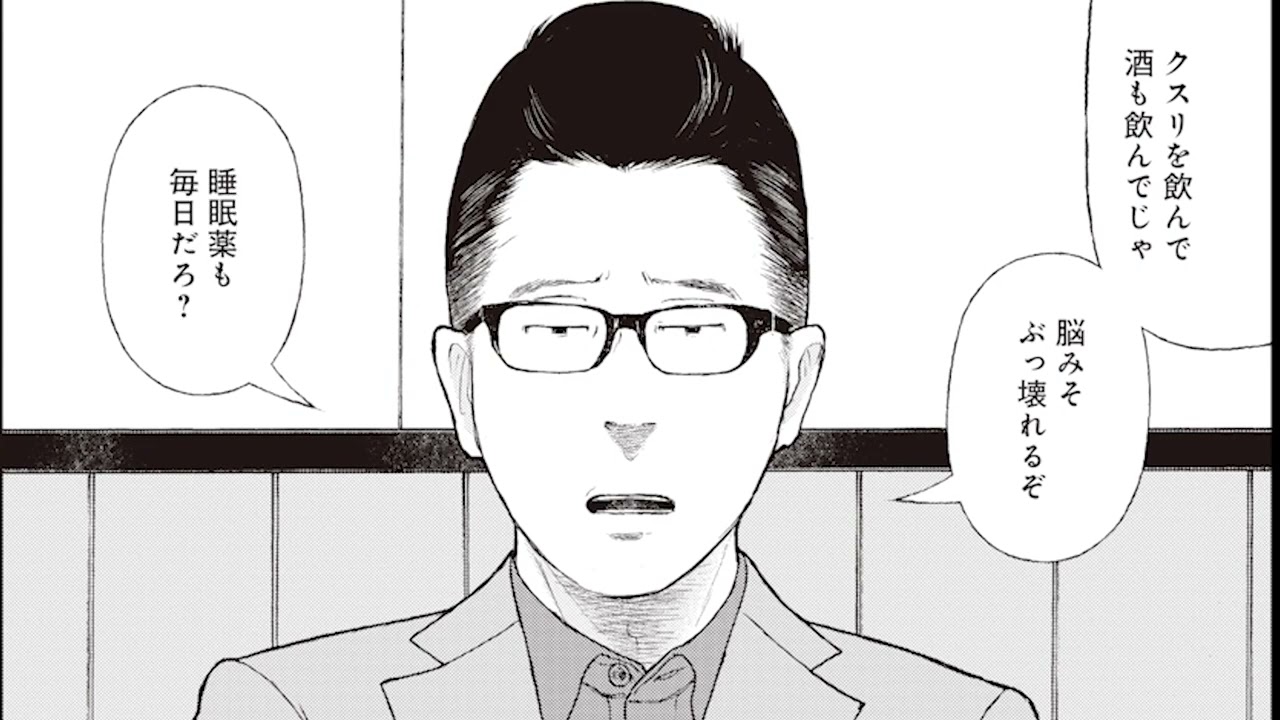
Tsuyoshi Oshikawa is the author of the manga and the main character. He is the director of the Tokiwa Mental Health Center Office.
His tough exterior works to his advantage when he takes his subjects to the hospital and gets into their pockets.
When he was a student, there was a mental hospital on his way to school, and he interacted for a time with patients who were being treated in a confined manner.
Although his interactions with the patients ceased when he moved away, it was one of the reasons for him to do the work he does today.
He is a man with a strong sense of responsibility and a kind heart, but he also shows his rational side in helping patients.
Akane Saneyoshi
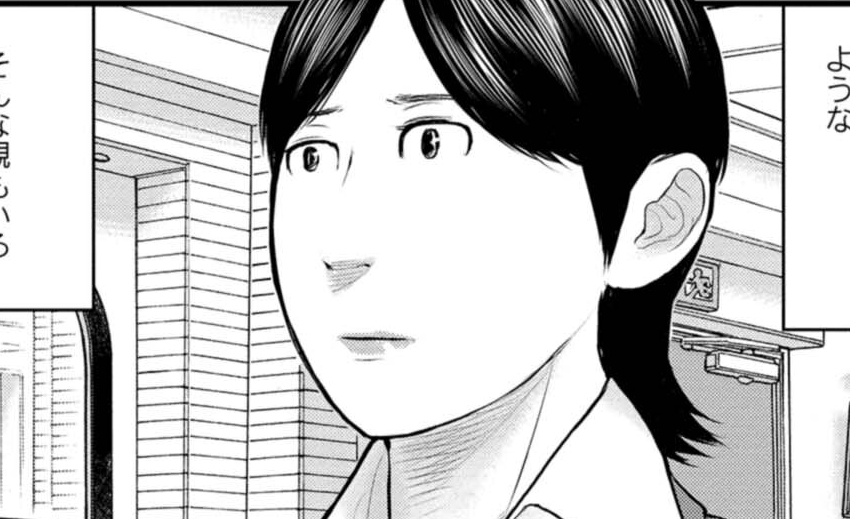
A female staff member working at the Tokiwa Mental Health Office.
She mainly handles calls to the office seeking help, undertakes consultations, interviews clients about their family structure and the current status of protected persons, and compiles reports.
If necessary, she also tracks and videotapes the subject's daily activities.
He has a strong sense of responsibility and a kind heart, but he does not have a good sense of flower arrangement.
The attending physician of the protected person
Vertical mountain
Takuya Tanabe is the first doctor for Takuya Tanabe, the subject of "Children Who Won't Forgive Their Parents".
He is a doctor with a good reputation in the community, but in reality, he is a doctor who is too self-protective and dismissive of treatment.
Oshikawa, the main character, calls him a "stupid doctor.
Kano

Tags
Contents
- Overview of "Parents Who Say, 'Please Kill My Child'"
- Synopsis and story of "Parents Who Ask to Kill Their Children"
- Mentally ill or criminal?
- The Broken Lives of Mothers and Daughters
- Children who do not forgive their parents
- Cases that did not result in a request
- Characters and characters from "Parents Who Ask to Kill Their Children"
- Tokiwa Mental Health Center Office
- Takeshi Oshikawa
- Akane Saneyoshi
- The attending physician of the protected person
- Vertical mountain
- Kano
- Department of Social Services officials
- Public Health Nurse
- person subject to protection
- Shinsuke Arai
- Norio Kimura
- Harumi Wada
- Wada's mother
- Takuya Tanabe
- Makoto Sawairi
- Yoshinobu Takarada
- Kiyoshi Yoshihara
- Tomoki Tsuruyama
- Misako Kurosawa
- client
- Shinsuke Arai's Parents
- Kimura's father (Kimura Chichi)
- Kimura's mother
- Tomoko Wada
- Takuya Tanabe's mother
- True mother of Sawairi
- Father of Takarada
- Takarada's mother
- Friend of Yoshinobu Takarada
- Yoshiwara's younger siblings
- Tsuruyama's parents
- Kurosawa's father
- Kurosawa's mother
- victim
- Erika Kawano
- Tanaka
- Terms from "Parents Who Say 'Please Kill My Child'"
- Tokiwa Mental Health Center Office
- people who withdraw from society (e.g. retire to the country)
- Types of Mental Illness
- alcohol dependency
- schizophrenia
- Asperger's syndrome
- panic disorder
- Famous quotes, lines/scenes and scenes from "Parents Who Ask to Kill Their Children"
- Tsuyoshi Oshikawa: "It is the cry of the children's hearts."
- Tsuyoshi Oshikawa: "Are you a human being before you are a doctor?"
- Tsuyoshi Oshikawa: "I think it's time for you to make a clean break with your helpless fucking parents, don't you?"
- Backstory, Trivia, and Small Stories/Episodes/Anecdotes from "Parents Who Asked to Kill Their Children"
- TV coverage full of cuts