
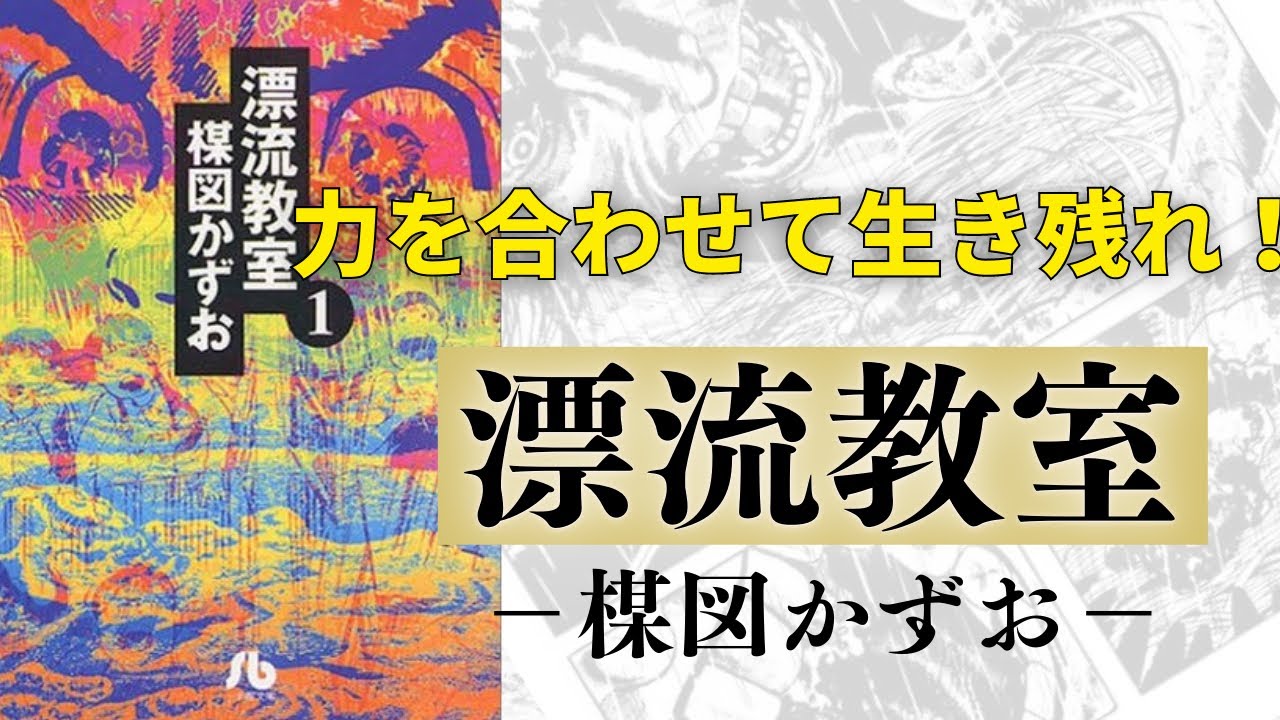
Drifting Classroom" is a science fiction manga work by Kazuo Umezu that was serialized in "Weekly Shōnen Sunday" from 1972 to 1974. The themes are pollution and "the love between a mother and child that transcends time". One day, Yamato Elementary School, where Sho Takamatsu, a sixth grader, attends, is hit by a loud explosion and tremors. When the shaking stops and he looks outside the gate, he sees a devastated land. Not only the students but also the teachers panic and die one after another. Thrown into a future world ruined by environmental destruction, the children face various difficulties in their attempts to survive.
Future Starfish
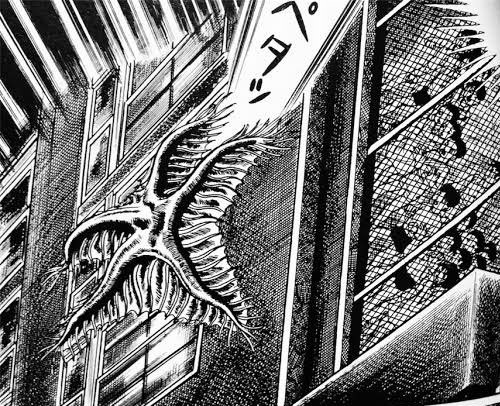
A huge starfish-like creature that suddenly came from the direction of the sea. Even if a part of the body is cut, it can move for a while like the tail of a lizard. Sho and others grill it to try to eat it, but it smells like chemicals, the smoke soaks in the eyes and tears do not stop. It seems like they are eating future creatures, but one of the students also ate it.
Famous Words, Lines, Scenes and Scenes from "Drifting Classroom"
Sho: "We have come to the future!"

Kakeru (center) and his classmates are convinced that they went back in time when they saw the memorial stone found with the signboard of Yamato Elementary School.
They were led to a place where Yuichi had found a sign for Yamato Elementary School that had become dilapidated. There was also an old stone monument that said, "The spirits of Yamato Elementary School's 862 people sleep here." From the devastated desert and the unlikely solar eclipse, Kakeru was convinced that this was the future. He told everyone, "We have come to the future!" This is an important scene that will be the cornerstone of future development, where children will be confronted with the reality that they have to live in a world where there is no father or mother.
Emiko: "Look! You're still a savage!"
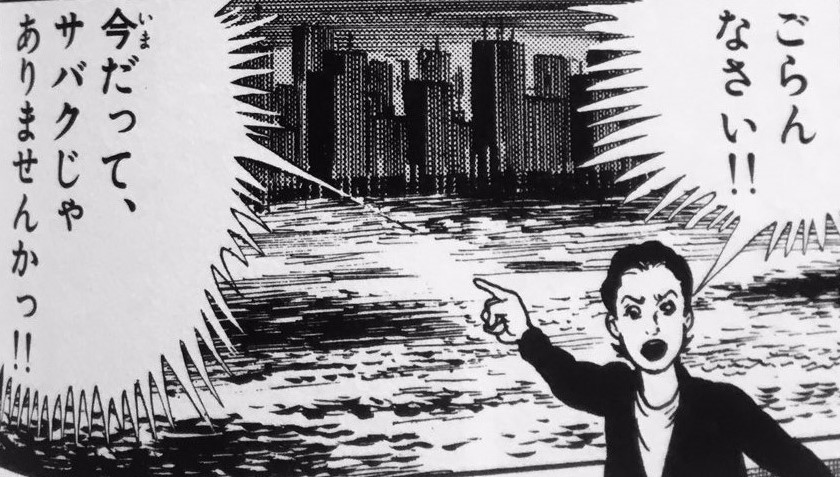
This remark was made to a man who was on the same boat as Emiko. Emiko had written a letter to Kakeru, who did not know where she was, in a bottle and had been sending it to the sea. The man who was looking at it spoke to Emiko. Emiko said, "My son is having a hard time with Sabaku now." He told her that Tokyo would become Sabaku. The man laughed a lot. In response, Emiko said, "Look! Even now it is Sabaku!" She pointed to the city which is full of concrete and asphalt. This is an excellent remark that can be seen as a message from this film that appeals to environmental problems.
Scene in which the children alone operate to save Kakeru, who has developed appendicitis
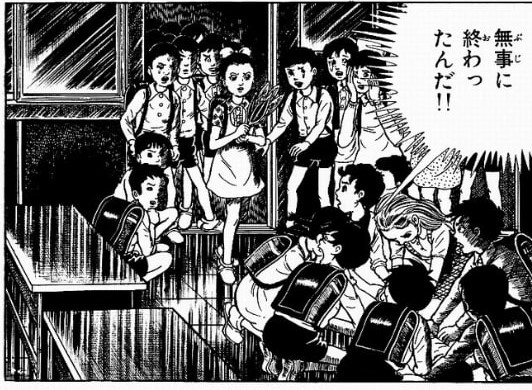
Sakiko (center) went to pick up a lily of the valley, which has an anesthetic effect, and when she returned to the classroom, the operation had been completed safely.
Finally, food began to run out, and Sho began to suffer from appendicitis in the midst of a dangerous situation in which she was separated from Otomo and her dissatisfaction exploded. She fell into a critical situation where she might die if left alone. She fell into a situation where Yanaze, who wanted to become a doctor, and a girl who dreamed of becoming a nurse. She performed an emergency operation using what she had at school. In the absence of anesthetics, she carried out the operation using a cutter or whiskey, and even received a blood transfusion. Sakiko risked her life to enter the territory of the Otomo army in order to obtain lily of the valley, which has an anesthetic effect. The scene conveys the strong spirit of children who are desperately trying to survive in a critical situation where they can't be bothered to pretend to be alive.
Yuichi: "I'll make sure it doesn't become this world!"
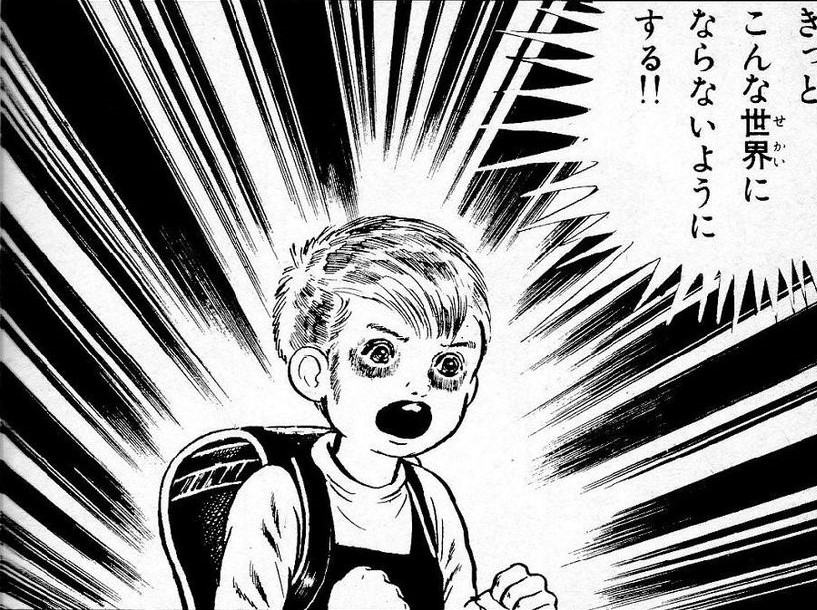
As we return to the present, Yuichi vows to change the future.
The words that Yuichi, who is returning to the present day, conveyed to Sho and others. With the hope that if Yuichi can return to the present day and change the future, the present future world may also change, the children begin to pray to send young Yuichi home. After overcoming many hard experiences with Sho and others, Yuichi returns to the present day with the strong will to "I will surely not become such a world!" At the end of the story, this is an important scene where the light of hope finally begins to appear.
Behind-the-Scenes Stories, Trivia, Small Stories / Episodes and Anecdotes of "Drifting Classroom"
One of the candidates was "I'm home."
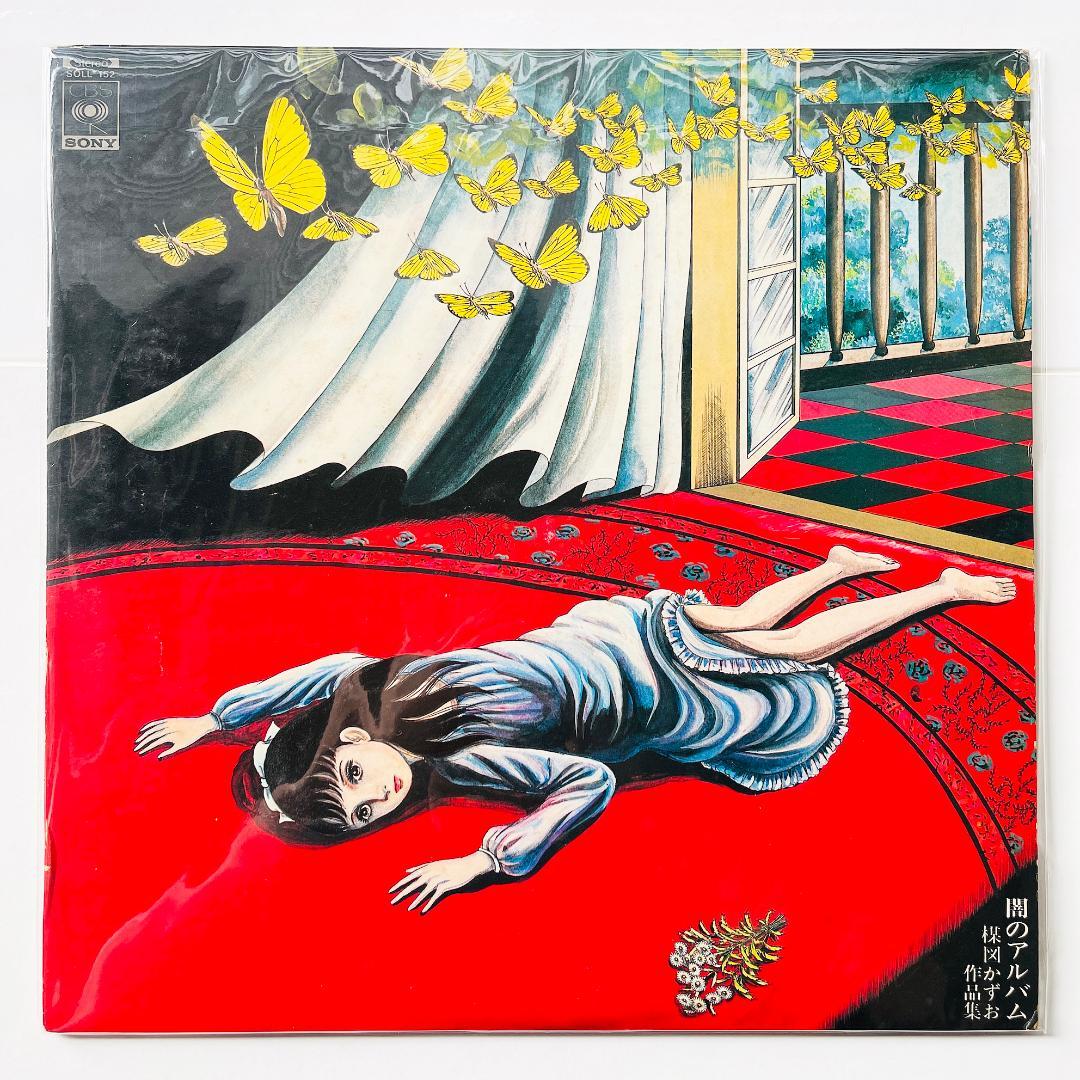
When deciding the title of the film at the editorial meeting, one of the candidates was "I'm home." Umezu said that he had decided it as a secret title in his mind. Umezu, who is also active as an artist, said in the line of "Drifting Classroom" in "The Album of Darkness," "Our password is I'm home, isn't it?"
"14 years old", the sequel to "Drifting Classroom"
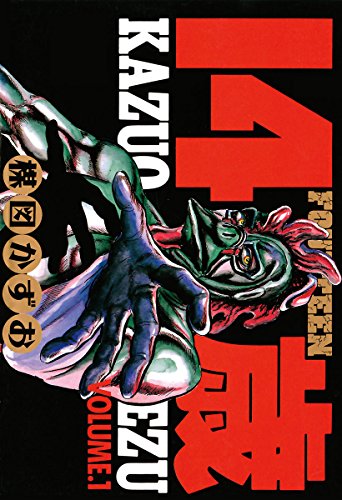
Umezu intended to write a sequel after the series was over, but it was canceled because he felt something was wrong with the setting. From 1990 to 1995, however, he published a series called "Fourteen years old" in "Big Comic Spirits." Set in the 22nd century, it depicts children who are trying to get through the crisis of the fall of humanity, and Umezu calls it a sequel to "Drifting Classroom."
It was novelized by Jun Kazami in 1985.

Related Articles
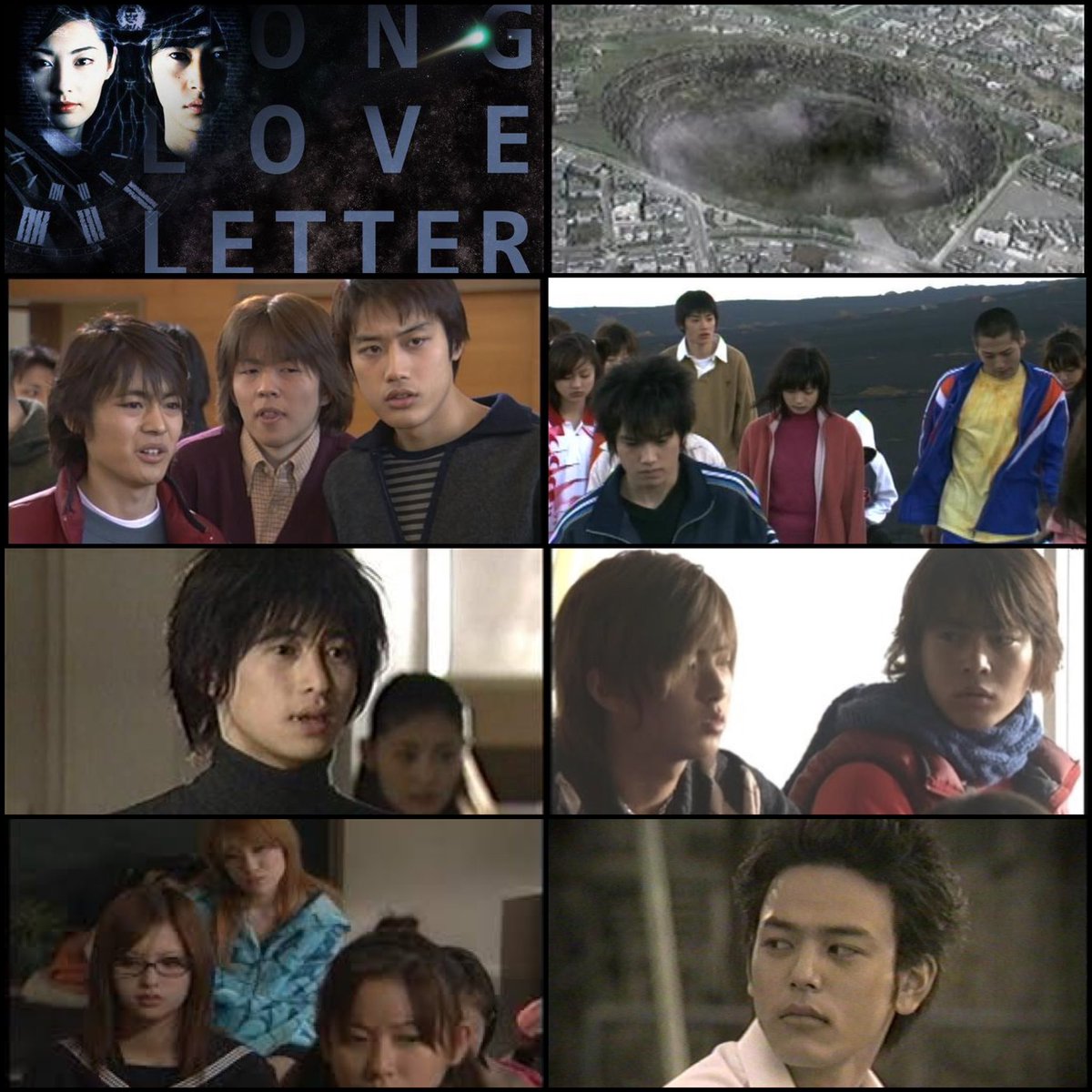
Long Love Letter - Drifting Classroom (Drama) Spoiler Commentary and Discussion Summary
Long Love Letter - Drifting Classroom" is a drama series that aired on Fuji TV in 2002. It is based on Kazuo Umezu's manga "Drifting Classroom", but the content is significantly different. It stars Yosuke Kubozuka and Takako Tokiwa. Other cast members include Ren Osugi, Takayuki Yamada, and Satoshi Tsumabuki. The story is that one day, the school building of Honkura High School suddenly slips back in time to the future. The film depicts students and teachers who have time-slipped into the desert where nothing exists, and they try their best to live their lives while supporting each other.
Read Article
Summary of Spoiler Commentary and Discussion of Baptism (Kazuo Umezu)
Baptism" is a manga by Kazuo Umezu. It was serialized in "Weekly Shoujo Comic" magazine from 1974 to 1975. Kazuo Umezu is famous as a master of horror manga, and his specialty is a style that directly expresses the fear of deformed things. Although such scenes can be seen in "Baptism," it is characterized by its unique storytelling depicting the eeriness of the human psyche, and is highly regarded as one of his best works in the middle of his career. This horror film depicts how a once beautiful and accomplished actress entrusts her life to her own daughter in a terrifying way.
Read Article
Summary of spoiler commentary and discussion of Watashi wa Shingo (Kazuo Umezu)
Watashi wa Shingo" is a manga by Kazuo Umezu, serialized in "Big Comic Spirits" magazine from 1982 to 1986. It is a full-length SF work by Kazuo Umezu, a leading horror manga author, depicting the near future to come, and even after the serialization ended, it became a huge hit as it was made into a radio drama and a musical. It is also known as Kazuo Umezu's representative work of the 1980s. The story revolves around the faint first love of Satoru Kondo and Masuzu Yamamoto, who are both in the 6th grade of elementary school, and an industrial robot that comes to have an ego under the influence of the two's actions.
Read Article
Summary of Makoto-chan (Kazuo Umezu) Spoiler Commentary and Discussion
Makoto-chan" is a manga by Kazuo Umezu. It was serialized in "Weekly Shōnen Sunday" from 1976 to 1981. There is also a sequel, "Cho! Makoto-chan" also exists. It is a work that is recognized as a representative gag manga of the 1970s together with "Gakideca", and was a big hit because Kazuo Umezu, a horror manga artist, created high tension gags while using horror techniques. It depicts the main character Makoto Sawada, a kindergartener, causing a great commotion at Seishu Kindergarten and the Sawada family, and the people involved in the commotion.
Read Article
おろち(楳図かずお)のネタバレ解説・考察まとめ
『おろち』とは、楳図かずお原作のホラー漫画。『週刊少年サンデー』誌上にて、1969年から1970年まで連載された。2008年には、実写映画版が公開されている。同作品の特徴は、視覚的な恐怖描写よりも人間の深層心理の不気味さを克明に描いた点にあり、サイコサスペンスものの先駆けとして人気が高い。『おろち』は、謎の美少女おろちを狂言回しにして、数々の人間の暗部がドラマとして紡がれていくオムニバスホラー作品である。
Read Article
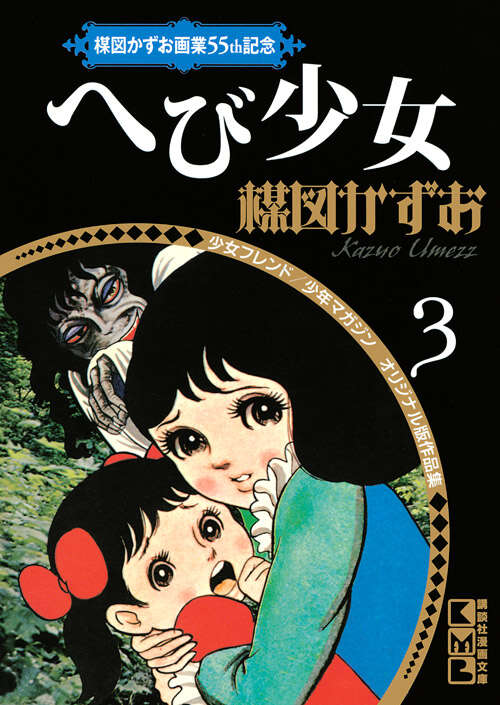
へび少女(楳図かずお)のネタバレ解説・考察まとめ
『へび少女』とは、楳図かずお原作のホラー漫画。1966年に、『週刊少女フレンド』誌上にて連載された。楳図かずおは、恐怖漫画の第一人者であるが、同作品が彼の出世作として知られている。少女が蛇に変身していく様が徹底したホラー描写で描かれており、多くの読者に強烈なインパクトを与えた。『へび少女』は、銃でうわばみを撃った祖父を持つ主人公の少女が、継母としてやって来たへび女の復讐によって、蛇に変身していく。そして、主人公の親友姉妹が、彼女を助けるために活躍するという物語である。
Read Article
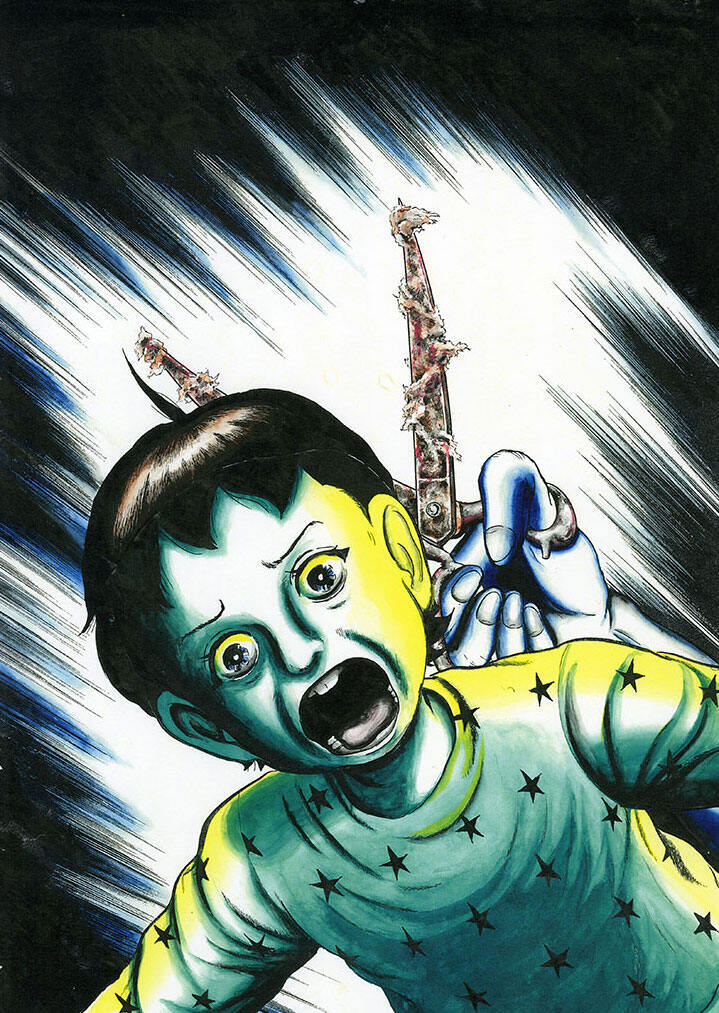
神の左手悪魔の右手(楳図かずお)のネタバレ解説・考察まとめ
『神の左手悪魔の右手』とは、楳図かずお原作のホラー漫画。『ビッグコミックスピリッツ』にて1986年から1988年まで連載された。メディアミックスとして2006年に実写映画版が公開されている。数多い楳図作品の中でも圧倒的なスプラッター・ゴア描写が展開されることで知られており、多くの読者に衝撃を与えたといわれている。同作品は、主人公の少年・山の辺想を狂言回しにして、彼の周辺で起きる恐怖現象や惨劇を描いたオムニバスホラー漫画である。
Read Article
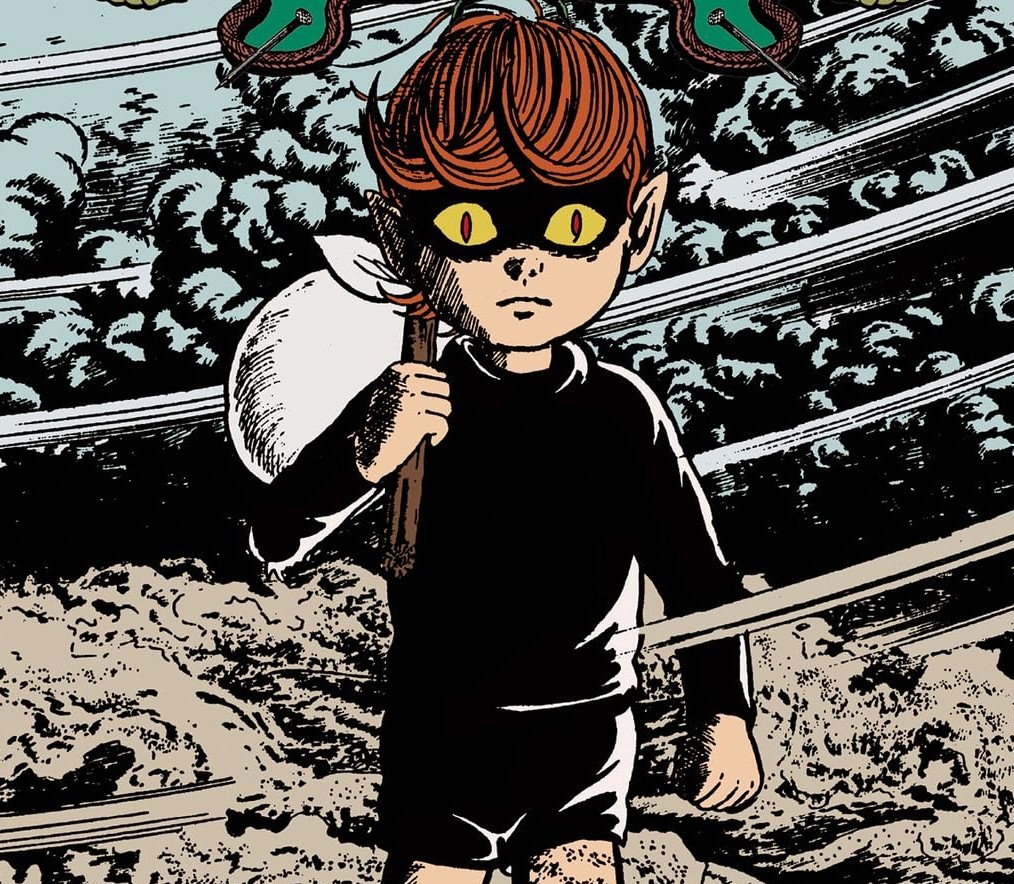
猫目小僧(楳図かずお)のネタバレ解説・考察まとめ
『猫目小僧』とは、楳図かずお原作のホラー漫画。1967年から1968年まで『少年画報』、1968年から1969年まで『週刊少年キング』で連載され、1976年に『週刊少年サンデー』 に短編4話が掲載された。メディアミックスとしてテレビアニメ版と実写映画版がある。人間に近い風貌をした主人公の妖怪、猫目小僧が人間と妖怪双方に忌み嫌われながらさすらいの旅を続け、行く先々で奇怪な事件に巻き込まれる様子を描いたホラー作品であり、楳図の代表作の1つとして知られている。
Read Article
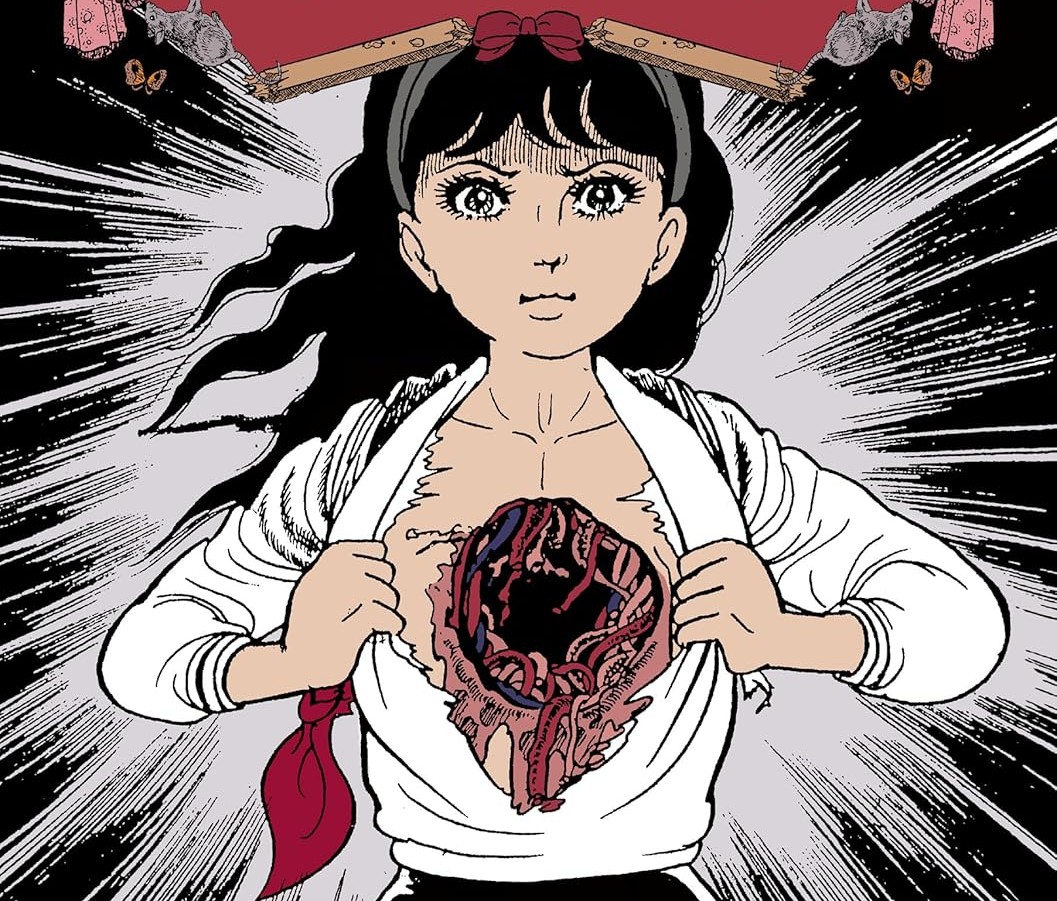
恐怖(高校生記者シリーズ)のネタバレ解説・考察まとめ
『恐怖』とは、楳図かずおによるホラー漫画。『月刊平凡』にて1966年から1970年まで連載された『高校生記者シリーズ』をコミックスにまとめたものである。全21エピソードから成り、視覚的な怖さやサイコサスペンス的な恐ろしさなど、あらゆる形の恐怖ストーリーが描かれている。同作品はみやこ高校新聞部に所属する高校生男女が、様々な恐怖体験や事件に巻き込まれていくホラー作品である。
Read Article
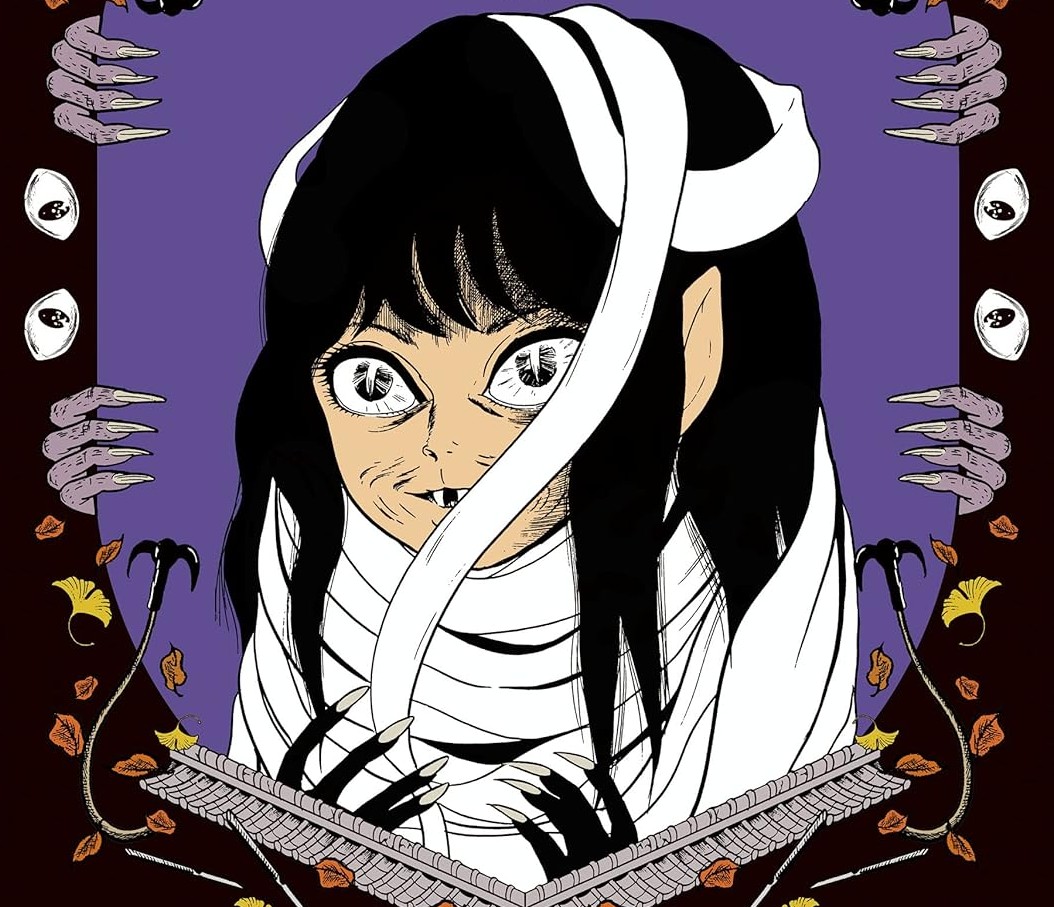
黒いねこ面(楳図かずお)のネタバレ解説・考察まとめ
『黒いねこ面』とは、楳図かずおによるホラー漫画。1966年に『週刊少女フレンド』誌上にて連載された。ホラー漫画の第一人者である楳図の出世作の1つとして知られており、同時期に描かれた『へび少女』や『紅グモ』と共にファンの間で人気が高い。また、化け猫をモチーフにした物語と視覚的な恐怖描写で、多くの読者に衝撃を与えた。『黒いねこ面』は、江戸時代に起きた飼い主一家惨殺事件の復讐劇であり、化け猫が転生した少女に襲われる主人公の少女の恐怖と不条理が描かれている。
Read Article
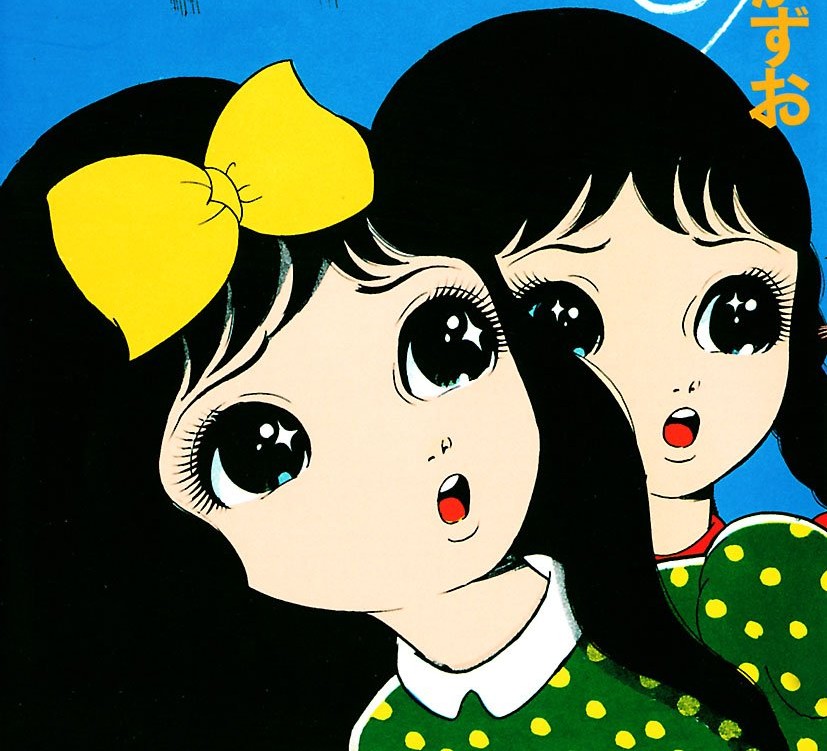
紅グモ(楳図かずお)のネタバレ解説・考察まとめ
『紅グモ』とは、楳図かずおによる恐怖漫画。1965年から1966年にかけて『週刊少女フレンド』にて連載された。楳図の少女向け作品初期の傑作として知られている。クモを題材にして人間が異形の者に変貌する怖さと、少女姉妹の明暗を分けた不条理ドラマが見どころである。同漫画は、可愛らしい姉妹が継母の策略に嵌り、紅グモという恐ろしい虫に翻弄されていく様子が描かれたホラー作品である。
Read Article
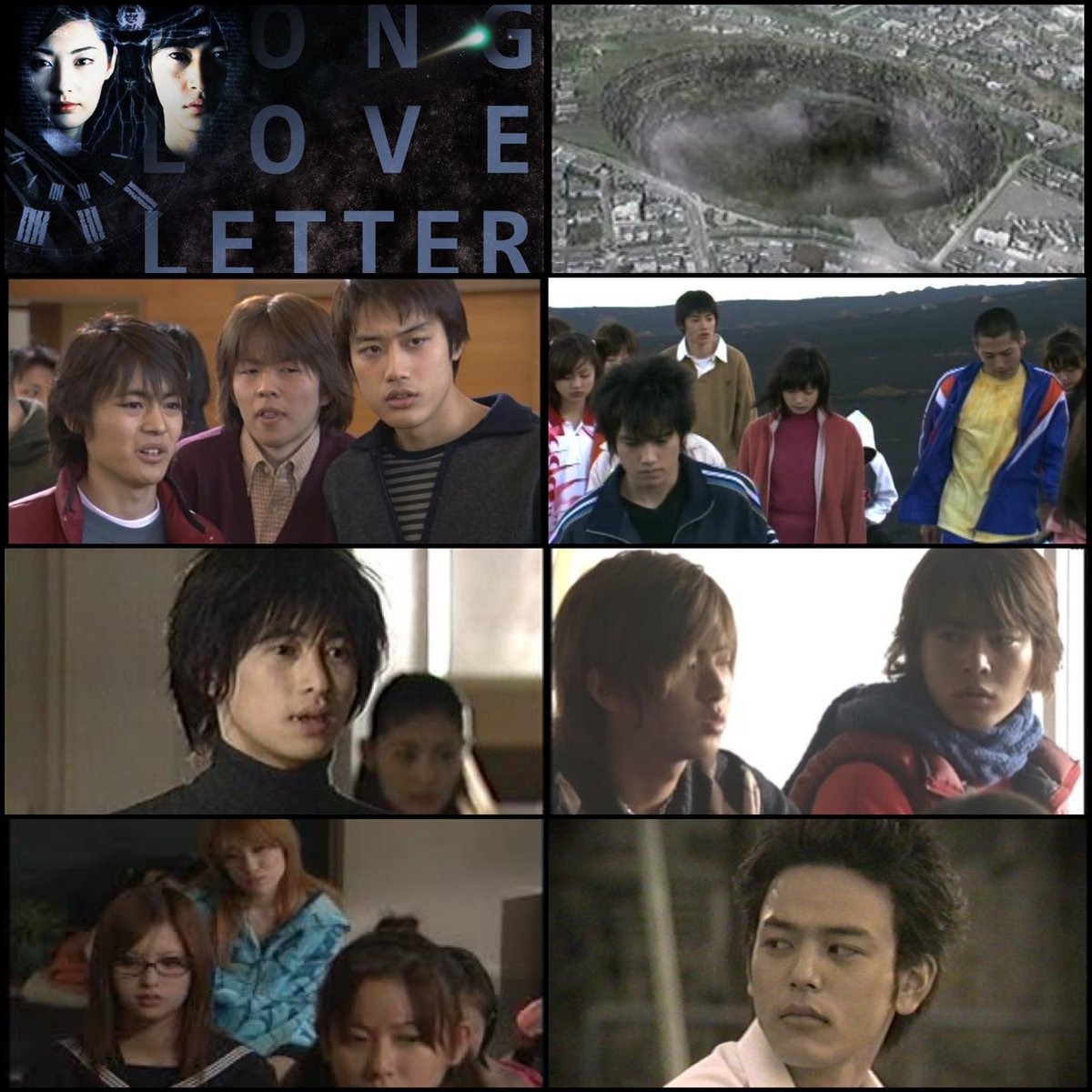
A look at the actors who played students in the drama "Long Love Letter - Drifting Classroom" 10 years later!
Here we have compiled a list of actors who played students in "Long Love Letter - Drifting Classroom," a drama based on Kazuo Umezu's novel that took the world by storm when it aired in 2002, 10 years later. Actors who made a breakthrough enough to play the lead roles, such as Hayato Ichihara and Takayuki Yamada, appear in the film, and their gorgeous faces are the talk of the town. Others have married and started families or are active in the Takarazuka Revue, and are active on their own stages.
Read Article
Tags
Contents
- Outline of "Drifting Classroom"
- Outline and story of "Drifting Classroom"
- Drifting stitch
- Caterpillar stitch
- Plague stitch
- Future Humanity
- Heaven
- List of Drifting Classroom characters
- Key person
- Sho TAKAMATSU
- Sakiko Kawada
- Otomo
- Nishi Ayumi (Nishi Ayumi)
- Yuichi ONODA
- Kyusaku SEKIYA
- Emiko TAKAMATSU
- Minister
- Ferocity
- Ikegaki (pond fence)
- Otsuki (big moon)
- Shibata
- Ishida
- Other students
- Shinichi Yamada
- Yanaze
- Onna Bancho (Woman Bancho)
- Nakata
- Hashimoto
- Mikawa (Yoshikawa)
- Other people
- Wakahara
- Oki (big tree)
- Mochi no Moriya
- Term "drifting classroom"
- Kaichu
- Plague
- Mirai Mushrooms
- Hitotsume-kyo Sutra
- Mirai Jinrui
- Future Starfish
- Famous Words, Lines, Scenes and Scenes from "Drifting Classroom"
- Sho: "We have come to the future!"
- Emiko: "Look! You're still a savage!"
- Scene in which the children alone operate to save Kakeru, who has developed appendicitis
- Yuichi: "I'll make sure it doesn't become this world!"
- Behind-the-Scenes Stories, Trivia, Small Stories / Episodes and Anecdotes of "Drifting Classroom"
- One of the candidates was "I'm home."
- "14 years old", the sequel to "Drifting Classroom"
- It was novelized by Jun Kazami in 1985.
- Adapted into a film by Toho in 1987.
- It was adapted into a TV drama by the Fuji TV network in 2002.