

Ryoma" is a manga and anime series written by Tetsuya Takeda (original story) and Yu Koyama (artwork)! Ryoma" is a manga by Tetsuya Takeda (original story) and Yu Koyama (art), and an anime based on it, serialized in "Shonen Big Comic" from 1986 and in "Young Sunday" from 1987. It is a historical manga about the life of Sakamoto Ryoma (Ryoma), a hero at the end of the Edo period. From boyhood to adolescence, the story depicts the friendship and growth of Ryoma, Takeichi Hanpeita, Okada Izo, and other young men against the backdrop of the Tosa class system. The manga was adapted into an animated television series in 1992.
Words, lines, scenes of "Oi! Ryoma"
Ryoma SAKAMOTO: "I'll be strong!"

Born into the Sakamoto family of Tosa goshi (country samurai), Ryoma grew up to be a weak and crybaby boy despite his strong name.
One day, Ryoma goes out to cherry blossom viewing with his mother's blessing and Genon-chan, meets Okada Izo and other friends, and has a good time together.
However, the parasol that Izo had made on the spot was looked down on and criticized by the upper-class samurai. In Tosa, the status of the upper-class samurai and the goshi (country samurai) was severely discriminated, and goshi were not allowed to use a parasol. Goshi had suffered from unreasonable treatment from the upper-class samurai and had endured it since the old days.
The parasol was broken, Ryoma was beaten, and Izo, who was fighting with his sword, was half-killed. Furthermore, Giku, who was in poor health, became ill due to this disturbance.
The first time Ryoma came into contact with class discrimination, he was shocked. In order to face up to the unreasonable situation, he swore, "I will be strong!" and began to practice swordplay himself. Ryoma, who had been only crying and passive since the beginning of the story, started to move forward on his own volition from this scene.
From this point on, Ryoma's weak-willed personality became subverted and grew stronger. This scene is the starting point of Ryoma SAKAMOTO, the hero of his later life.
Ryoma SAKAMOTO:' I'M GOING TO BE ONE WITH KAYO! I'M GOING TO GO BEYOND THE STATUS THAT I WOULD NEVER BE!'

At the time of his youth, Ryoma was living a troubled life.
He had mutual affection with Kayo SASAKI, a daughter of the Jodai Karo (chief retainer of the castle), but he could not do anything about it because of the class barrier.
One day, Kayo comes to visit Ryoma in secret. She says she will marry a hatamoto (direct retainers of the bakufu, which is a form of Japanese feudal government headed by a shogun) in Edo. She tells Ryoma of her feelings and asks him to crawl at night to get rid of her affection. If she is found, Ryoma will commit seppuku, but if she manages to live safely, she will be held by Ryoma.
Ryoma, who made up his mind, sneaked into the Sasaki family that night and tied the knot with Kayo. In a world where there is no discrimination of status, people who like each other can be tied like this.
Kayo replies to Ryoma, who is impressed and says,' I am going to be one with Kayo now! I am going to be one more than I should never be! What a wonderful thing!' by saying,' Anyone who likes each other. it would be nice if this is allowed in this world.'
The relationship between the two is limited to this night, and after that, Kayo gets married as planned. Both Ryoma and Kayo understand this, and this is a scene in which the joy of being united across social classes and the sadness of not being able to keep up with them live together.
In the second half of the story, there are other royalists who cannot stop being obsessed with their social status and domain. It is also a scene that can be said to be one of the reasons why Ryoma could become such a person. Ryoma dreams of a world where everyone can live freely away from such obsession.
Yonosuke MUTSU: "They. are willing to die. because they are royalists."

Since the arrival of Commodore Perry, the Sonno Joi Ron (Revere the Emperor, Expel the Barbarians) was in full swing, and the Choshu Domain, which advocated radical Sonno Joi (Revere the Emperor, Expel the Barbarians) Movement was in the lead. Alarmed by this situation, Satsuma teamed up with the Aizu side of the bakufu and said, "We will pull down the Choshu side in the Coup of August 18. As a result, the power of the Sonno Joi (Revere the Emperor, Expel the Barbarians) faction declined at once. Due to this influence, the power of the Sonno Joi faction declined at once after the
Yoshimura Torataro, Shingo NASU, and Kasuke Yasuoka, who were ronin (masterless samurai) who left the Tosa clan and had nowhere to go after the collapse of the Tosa-Kinnoto Party, supported Kugyo (court nobles) and Nakayama Tadamitsu of the Sonno joi ha (supporters of the doctrine of restoring the emperor and expelling the barbarians), called themselves' Tenchu-gumi' and raised an army to overthrow the Shogunate.
Ryoma, accompanied by Yonosuke MUTSU, goes to see their former friends. Ryoma desperately tries to stop them, but they are already prepared for death, and they do not listen to him because they are trying to escape as a precursor to defeating the shogunate.
Before long, Ryoma gave up trying to persuade them, and the time for parting came. Tenchu-gumi members were cheerful, but they and Ryoma understood that this would be the parting of the day.
Mutsu looked down on Tenchu-gumi, who had started a reckless battle with no chance of winning, but he admired the spirit of Tenchu-gumi and said,' They. are willing to die anyway. they are royalists.' Mutsu was smart but cheeky and had a habit of looking down on others, but he changed his mind when he saw him trying to stick to his beliefs beyond his interests. Soon, Mutsu increased his presence as Ryoma's right-hand man.
After this, the members of Tenchu-gumi were attacked by the bakufu and all of them lost their lives. It was also the beginning of the violent deaths of Tosa's comrades one after another in the upheaval of the end of the Edo period. This scene suggests that the royalists, including Ryoma, will suffer a tragedy in the future.
The situation became more intense, and Ryoma, who had not appeared before, and Mutsu the world, became involved in it. Ryoma performed a great miracle that remains in the history of the end of the Edo period, and Mutsu also worked as his right arm, and before long, he played an active role as a famous Minister for Foreign Affairs.
DO N'T CRY ALONE!

Ryoma helped Ryo Narasaki, who was about to be sold his younger sister by someone in debt. Hearing of Ryo's plight, Ryoma could not leave him alone and begged Teradaya to send him to work.
Although Oryo began to have feelings for Ryoma, she could not afford to respond to Ryoma, who was busy with national affairs, and the two of them passed each other.
Under such circumstances, the situation changed from Sonno Joi (revere the Emperor, expel the barbarians) to Kobu-gattai (union of the imperial court and the shogunate), and the Tosa Kinnoto was oppressed by the Tosa Domain and destroyed.
Ryoma worries about his best friend, Hanpeita TAKECHI, and Okada Izo, and spends days in agony. On the other hand, Oryo can't see Ryoma and is full of feelings for him.
The two men return to Teradaya for the first time in a long time, but Ryoma can't afford to worry about Oryo, and his attitude is plain.
Later, Ryoma learns that his close friends, Takeichi and Izo, have been sentenced to death by a letter from a maiden that has reached Teradaya. Ryoma leaves the boat and cries by himself. Oryo swims after her and chases her. When she gets on the boat, she shouts, "Don't cry by yourself!" Ryoma says, "If you cry, you can hold me and cry on my chest!" Ryoma says, "If you don't cry, you can just hold me and cry on my chest!" Ryoma says, "If you don't cry, you can just hold me and cry on my chest!" Ryoma says, "If you don't cry, you can just hold me and cry on my chest!" Ryoma says, "If you don't cry, you can just hold me and cry on my chest!" Ryoma says
The scene in which Ryoma, who was thinking of Ryoma but could not express his feelings until now, finally burst his emotions. This finally made Ryoma face Ryoma, and it became a chance for Ryoma and Ryoma, who had been at a delicate distance until now, to communicate their feelings. After this, the two became irreplaceable each other, and they later became a married couple and had their first honeymoon in Japan.
Ryoma SAKAMOTO: "I am Ryoma SAKAMOTO, a Japanese!"

In order to overthrow the shogunate and create a new world, Ryoma, Nakaoka Shintaro and others worked hard to make the Satsuma-Choshu alliance.
With the help of Satsuma, Choshu purchased warships and weapons, but the people of Choshu, who had a deep grudge against Satsuma, were not willing to accept them. So Ryoma approached Kogoro KATSURA to build a fifty fifty relationship by selling Choshu rice at a low price to Satsuma, which was suffering from a poor rice harvest, and to make the deal a success.
Katsura shows his magnanimity by saying,' I will give it to you for free (not for sale at a low price),' and on the other hand, he asks Ryoma,' About the purchase of weapons. this rice. are you really a samurai. you are like a merchant.'
To this, Ryoma replies, "I am Ryoma SAKAMOTO from Japan!"
It is said that people at that time belonged to domains and feudal lords and did not recognize themselves as' Japanese.' It can be said that this was the scene in which' Japanese' was born.
This scene also clearly shows that even the leaders of the world, such as Katsura of Choshu, Saigo of Satsuma, and Okubo of Satsuma, could not get away from the preoccupation with social status and domain, while only Ryoma escaped from such preoccupation.
Until now, Satsuma and Choshu had been at odds with each other, but after this, they began to compromise toward the conclusion of an alliance. It was because of Ryoma's work that the Satsuma-Choshu Alliance, which was thought to be impossible, succeeded. From here, the story rapidly accelerated toward overthrowing the Shogunate.
Ryoma SAKAMOTO: "I'm still on my way, but I'll do it! Follow me and look!"

The alliance between Satsuma and Choshu, which Ryoma had long desired, was formed, and a path to overthrowing the Shogunate was created.
Pleased, Ryoma says, "I want to be happy with my friends from Tosa Province," and goes to Teradaya. Miyoshi Shinzo, who is escorting him, wonders if the Tosa friends will gather at Teradaya, but nobody comes.
Late at night, Ryoma pours sake into every cup he has. In the clouds of the last days of the Tokugawa shogunate, Ryoma and other royalists from Tosa shed too much blood and died an unnatural death. Ryoma holds a feast in his heart with his fellow victims.
Ryoma remembers and talks to each of Takeichi, Izo, Yoshimura Torataro, and others. This scene mixes Ryoma's feelings for them, who have lost their irreplaceable friends, and Ryoma's modest joy, who has accomplished a great job and has been able to repay their sacrifices. Also, the reader is reminded of the great sacrifices Tosa has made to create a new world.
Ryoma swears to them by saying, "Everyone. I'll do my best! Let's drink a lot together tonight!" and "I'm still on my way, but I'll definitely do it! Follow me and watch!" As he swears, he continues to be active in the Satsudo Pact, the Fune Nakabachi Plan, and Taisei Hokan (transfer of power back to the Emperor), but he doesn't have much time left.
Ryoma SAKAMOTO: "Will the Kaientai of the world do it?"

Yoshinobu TOKUGAWA, the last shogun of the Tokugawa shogunate, finally announced Taisei Hokan (transfer of power back to the Emperor). His wish finally came true, and Ryoma shed tears of emotion.
Ryoma immediately compiled the new government's plan and the list of positions, and visited the residence of the Satsuma clan the next day.
Kazuzo OKUBO of Satsuma, who had planned to raise an army to overthrow the Shogunate before the Taisei Hokan (transfer of power back to the Emperor) was realized that Ryoma had made a list of positions for the new government and brought it to him. He was worried about how much power he would have.
After being shown the list of official posts, the leaders of the Satsuma and Choshu Domains, including Kichinosuke Saigo, Komatsu Tatewaki, and Ookubo of the Satsuma clan, and Hirosawa Saneomi of the Choshu clan, realized that the name of Ryoma was not included in the list.
Saigo and Ryoma, who were suspicious and asked,' Sakamoto-nasa. namba dokemo-su?', Ryoma replied,' Even Kaientai in the world will do it.' Ryoma had no interest in being promoted in the new government and was already thinking about jumping out to the world.
This is a scene where the vividness of Ryoma, who has no personal feelings, stands out against the people of Saccho (Satsuma Domain and Choshu Domain), who think that they, who accomplished the great work of the Restoration, should naturally be appointed to important posts in the new government. It also makes us think about how Ryoma would have performed if he had lived after the Restoration, and what would have become of Japan after that.
Komatsu was impressed by Ryoma, saying,' Sakamoto is no longer the world's partner.' and everyone was stunned. Yonosuke MUTSU, who was also present at this time, was greatly pleased with this and said about this scene,' Sakamoto looked two or three times bigger than Saigo.'
Ryoma is finally taking a new step toward his long-cherished dream. I can't help but look forward to what he will do in the future, but he will die just one month later.
Inside story, trivia, small story / episode and anecdote of "Oi! Ryoma"
Notation of names influenced by "Ryoma ga Yuku"

Related Articles

Summary of Spoiler Commentary and Discussion of Byakuya Gyo (Keigo Higashino)
Byakuya Gyo" is a long mystery story by Keigo Higashino published in 1999. The number of copies in circulation exceeded 2 million as of December 2010. 1973, a murder takes place in Osaka. The murderer is Ryoji Kirihara, the son of the victim, a fifth grader, and Yukio Nishimoto, the daughter of the suspect. Time passes with the case unsolved. The two grown-up children begin to help each other in criminal activities, and a series of unexplainable incidents occur around them. The story was made into a TV drama in 2006 and a movie in 2011.
Read Article

Spoiler commentary and discussion summary for JIN
JIN" is a TV drama series that aired on TBS from October to December 2009 and a manga series in "Super Jump" by Motoka Murakami. It is a medical story with strong science fiction elements that depicts "what would happen if a modern doctor went back in time to the end of the Tokugawa Shogunate? The drama is an adaptation of a medical historical drama manga with strong science fiction elements that depicts "what would happen if a modern doctor went back in time to the end of the Tokugawa Shogunate? The fifth episode achieved a viewer rating of over 20%, and the final episode recorded an average viewer rating of 25.3% and an instantaneous highest viewer rating of 29.8%. This record was the highest rating for a commercial TV drama series broadcast in 2009, and the drama received a great response and became a nationally popular drama.
Read Article
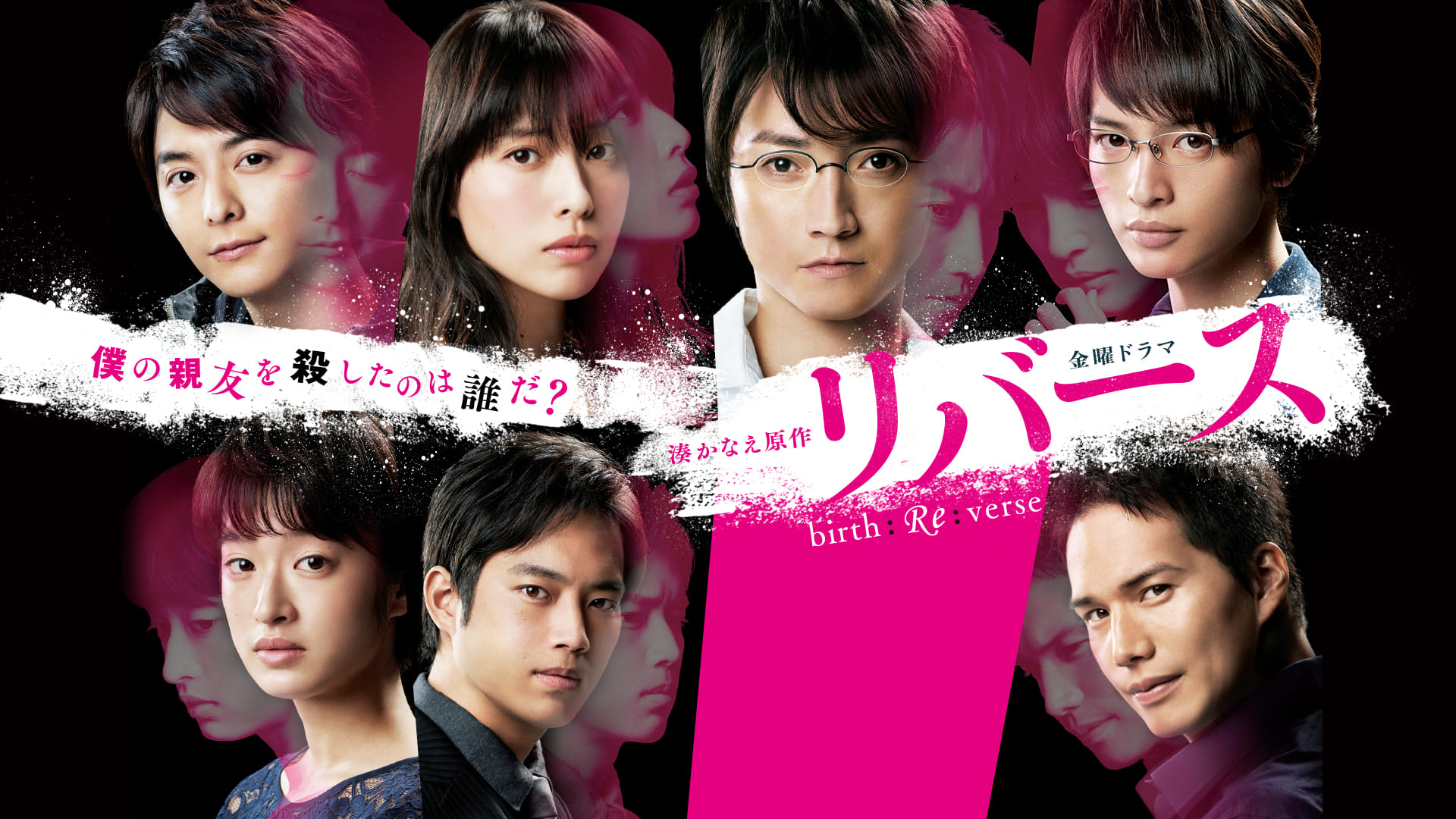
Spoiler commentary and discussion of Rebirth (novel and drama)
Rebirth" is a TV drama based on a mystery novel by Kanae Minato that aired from April to June 2017. The main character, Kazuhisa Fukase, was on a graduation trip with his college friends 10 years ago when his best friend, Yuki Hirosawa, disappeared and was found dead. someone sent Fukase and his friends a letter accusing them of the incident 10 years ago, and the mystery is about finding out who is responsible. The story, which alternates between the present and the past, gained popularity.
Read Article

Spoiler commentary and discussion of The Emperor's Chef (2015 drama)
The Emperor's Chef" is a drama based on the life of Tokuzo Akiyama, who served as the head of the kitchen of the Imperial Household Ministry's Imperial Household Ministry's Imperial Household Office. It stars Takeru Sato, with other actors including Hana Kuroki and Kenta Kiritani. Atsuzo Akiyama is adopted by his parents as the son-in-law of Matsumaeya, a marine products wholesaler, and begins working as the heir to the business. One day, he starts to dream of becoming the best chef in Japan, and struggles to achieve his dream. The average viewer rating was 14.9%, and it won numerous awards, including the Tokyo Drama Awards 2015.
Read Article

TANG TANG (film) Spoiler Commentary and Discussion Summary
TANG" is a live-action film directed by Takahiro Miki, based on the novel "Robot in the Garden" by Deborah Install. Ken (Kazuya Ninomiya), a no-good man who has been kicked out of his house for playing too many video games, has given up on his future with his wife, Emi (Hikari Mitsushima), for one reason or another, and has never taken a step forward in life. However, as he watches Tang, a robot that is supposed to have no memories or emotions, gradually learn about "friends" and "kindness," he gradually regains his old self. With an astonishing 97% satisfaction rate, this film will bring smiles, emotions, and warm tears to the hearts of people all over Japan.
Read Article

幸福の黄色いハンカチ(映画)のネタバレ解説・考察まとめ
『幸福の黄色いハンカチ』とは1977年に公開された日本の映画である。監督は山田洋次。刑期を終えて出所した島勇作は妻の島光枝へ、まだ自身を待っていてくれるなら家の前に黄色いハンカチを掲げてほしいという手紙を送っていた。それから勇作は故郷へ向かう道中、東京から北海道に来ていた花田欽也と小川朱美に出会い3人で行動することとなる。欽也の赤いファミリアに乗り、トラブルが相次ぎながらも3人の旅は続いた。光枝のいる家が近づくにつれ不安に襲われる勇作であったが、やがて真実と向き合う覚悟を決める。
Read Article

Former Entertainment Reporter Revealed! A summary of entertainers who actually have bad personalities [Tetsuya Takeda, Laura, etc.
A former entertainment reporter exposes a celebrity who looks nice on TV but actually has a bad character or a rotten guts! That person who looks mild-mannered is actually.... Don't be fooled by appearances and images.
Read Article

Morning Drama: Images of locations for NHK's "Jun to Ai" TV series [Miyakojima, Okinawa & Taisho Ward, Osaka].
We have compiled images of Miyako Island, Okinawa & Taisho Ward, Osaka, the filming locations for NHK's television series "Jun to Ai". We have covered images that will heal you with the beautiful nature of Okinawa, areas with Okinawan culture even though they are in Osaka, and images where you can enjoy the unique atmosphere of Taisho Ward. We will introduce more and more images of locations where you can immerse yourself in the world of "Jun to Ai.
Read Article

Introducing the famous dramas that have attracted public attention! Lots of charm in cast, story, music and more!
We have compiled a list of dramas that have been broadcast in the past with great casts and stories, such as "Ryusei no Kizuna" and "JIN - Jin. We will introduce more and more works that deserve to be called hidden masterpieces with a synopsis and review of each work!
Read Article

2015 Drama Viewing Ratings Rankings
Do you usually watch dramas? In this issue, we will introduce the ranking of drama viewership in 2015. If you want to relax during the year-end and New Year holidays, please refer to this ranking and watch dramas during the year-end and New Year holidays. If you want to relax during the year-end and New Year's holidays, please refer to this ranking and watch dramas during the year-end and New Year's holidays. *Average ratings for dramas that started in October are as of December 1.
Read Article
![Naoki Hanzawa] Masterpieces everywhere! A compilation of TV dramas that were super fun! The White Night's Lights, and more!](https://renote.net/files/blobs/proxy/eyJfcmFpbHMiOnsiZGF0YSI6NjMyMDcxMCwicHVyIjoiYmxvYl9pZCJ9fQ==--a5bbe255202e0aca0036063991e2fdd2d71de4be/20200901_hanzawa.jpg)
Naoki Hanzawa] Masterpieces everywhere! A compilation of TV dramas that were super fun! The White Night's Lights, and more!
Even if you don't watch serial dramas, you may be familiar with some of the popular dramas from the past, as well as some of the recent masterpieces that have shined with their scripts and direction. Please read through to the end for a list of such classics as "Naoki Hanzawa" and "Shiryakko"! Naoki Hanzawa" is a TV drama series based on the novel "Naoki Hanzawa" by Jun Ikeido, broadcast on TBS's "Sunday Gekijo" slot.
Read Article
Tags
Contents
- Overview of "Oi! Ryoma"
- Outline and story of "Oi! Ryoma"
- Birth of Ryoma
- Kendo training in Edo
- Formation of Sonno Joi and Tosa Kinnoto
- Leaving the domain to Shanghai
- Meeting with Kaishu Katsu: To the President of the Naval Training Center
- Formation of Kameyama-shachu and the Satsuma-Choshu Alliance
- Kaientai's Activities and Taisei Hokan
- Death of Ryoma
- Characters in "Oi Ryuma"
- Key person
- Sakamoto Ryoma
- Hampei pounded fish cake TAKECHI / Zuizan TAKECHI
- Izo OKADA
- Shintaro NAKAOKA (Shintaro NAKAOKA)
- Sakamoto family
- Sakamoto Otome
- Sakamoto Hachihei
- Sakamoto Sachi
- Sakamoto Gonpei
- Chizu SAKAMOTO
- Sakamoto Ei
- Sakamoto Iyo
- Sakamoto no Chino
- Sakamoto Harui
- Genon-chan (Genon-chan)
- Tosa Domain
- Yodo YAMAUCHI
- Toyo Yoshida
- Shojiro GOTO
- Taisuke INUI
- Fukuoka Toji
- 卓馬 YAMAMOTO / Takuma YAMAMOTO
- Yataro IWASAKI (Yataro IWASAKI)
- Shingo NASU
- Danzo OISHI
- Kasuke Yasuoka
- Yoshimura Torataro
- Kensuke TANAKA
- Kitsuma KITAZOE
- Kameyata MOCHIZUKI
- 寅之進 IKEDA
- Chuichiro
- Michinosuke KIYOOKA
- Shinnosuke KINOSHITA
- Shunpei NASU
- Saichiro INOUE
- Junosuke SHIMAMURA
- Nanzaemon HIJIKATA / Hijikata Hisamoto
- Hironojo MIZOBUCHI
- Sanshiro SASAKI / Takayuki SASAKI
- Shunta OKAUCHI
- Kayo SASAKI
- Hiroe Yamada
- Shigenari MATSUI
- Kenji Fukutomi
- Hineno no Benji
- Shosuke KUSUYAMA
- Okagami 新輔
- Shoryu KAWATA
- TAKECHI Tomi
- Nakahama Manjiro / Nakahama Manjiro
- Kai
- Aya
- Shizuko KIYOOKA
- Kaientai (Kameyama-shachu) (Kameyama Shachu)
- Yonosuke MUTSU
- Sonojo SAWAMURA
- Chojiro KONDO
- Kenzaburō Okamoto
- Ike 内蔵太
- Nagao Kenkichi
- Tarō Takamatsu
- Tarō Narasaki
- Shogunate
- Katsu-kaishu (victory Kaishu)
- Naosuke II
- Iemochi TOKUGAWA / Yoshitomi TOKUGAWA
- Yoshinobu HITOTSUBASHI / Yoshinobu TOKUGAWA
- Ichio OKUBO
- NAGAI Naomune
- Kozukenosuke OGURI
- Kazunomiya
- Shinsen-gumi
- Isami Kondo
- Toshizo HIJIKATA
- Soji OKITA
- Keisuke YAMANAMI
- Heisuke TODO
- Shusuke KONDO
- Choshu Domain
- Shoin Yoshida
- Kogoro KATSURA
- Shinsaku TAKASUGI
- Genzui KUSAKA
- Shunsuke ITO
- Aritomo YAMAGATA
- Monta INOUE
- Masanosuke SUFU
- Toshimaro YOSHIDA
- Matabe KIJIMA
- Kuichi IRIE
- Chuzaburo TERASHIMA
- 敬親 MOURI
- Zoroku MURATA
- Miyoshi 慎蔵
- OH!
- Omatsu
- Satsuma Domain
- Saigo Kichinosuke / Saigo Takamori (Kamori SAIGO)
- Ichizo OKUBO / Toshimichi OKUBO
- Komatsu Tatewaki
- Hanji Hanjiro NAKAMURA
- Saisuke GODAI / Tomoatsu GODAI
- Shinbei TANAKA
- Hisamitsu SHIMAZU
- Koba Dennai
- Echizen Domain
- Shungaku MATSUDAIRA
- Hachiro Mitsuoka
- Sanai HASHIMOTO
- Gentaro MATSUDAIRA
- Dennojo 出淵
- Higo Domain
- Teizo MIYABE
- Gensai KAWAKAMI
- Imperial Court
- Kintomo ANEGAKOJI
- Tomomi IWAKURA
- People of Kyoto
- Otose
- Ryo Narasaki
- Otora
- Tokichi
- Minekichi
- Barrel
- People of Edo
- Sadakichi CHIBA
- Jutaro CHIBA
- 佐那子, Chiba Prefecture
- Chiba Hassun
- Komanosuke SHIMADA
- Umanosuke UEDA
- People of Nagasaki
- Eishiro Ozone
- Thomas Glover
- Ueno Hikoma
- Omoto
- Other
- John Eric
- Margaret.
- Perry
- Shozan SAKUMA (Sakuma Shozan)
- Sakuma Junko
- Kiyokawa Hachiro
- Seiichiro Honma
- Izumi Maki
- Munenari DATE
- Toda Uta
- Katamori MATSUDAIRA
- The term "Oi! Ryoma"
- Tosa Class System
- Joshi (senior samurai)
- Goshi (country samurai)
- Events at the end of the
- Treaty between the United States of America and the Empire of Japan
- Ansei no Taigoku (Ansei Purge)
- Ikedaya Incident
- Coup of August 18 (Hachigatsuju Hachini no Seihen)
- Kinmon no hen Incident
- Choshu Conquest
- Thoughts and positions at the end of the Edo period
- Sonno joi (revere the emperor, expel the barbarians)
- Kobu-gattai
- Kinno
- Sabaku
- Group
- Tosa Kinnoto (loyalist clique of Tosa)
- Ronin Company
- Kameyama shachu (Kameyama shachu)
- Kaientai
- Rikuentai (Army Support Corps)
- Tenchu-gumi (Tenchu-gumi)
- Shinsen-gumi
- Mimawarigumi
- Kiheitai Army
- Policy
- Satsuma-Choshu Alliance
- Satsudo Meiyaku (Treaty between Satsuma and Tosa)
- Taisei Hokan (transfer of power back to the Emperor) (Taisei Hokan)
- Senchuhassaku (ship Nakabachi method)
- Other
- Sakoku (national isolation)
- Dappan (leaving the domain)
- Tenchu (heavenly punishment)
- Tengu
- Words, lines, scenes of "Oi! Ryoma"
- Ryoma SAKAMOTO: "I'll be strong!"
- Ryoma SAKAMOTO:' I'M GOING TO BE ONE WITH KAYO! I'M GOING TO GO BEYOND THE STATUS THAT I WOULD NEVER BE!'
- Yonosuke MUTSU: "They. are willing to die. because they are royalists."
- DO N'T CRY ALONE!
- Ryoma SAKAMOTO: "I am Ryoma SAKAMOTO, a Japanese!"
- Ryoma SAKAMOTO: "I'm still on my way, but I'll do it! Follow me and look!"
- Ryoma SAKAMOTO: "Will the Kaientai of the world do it?"
- Inside story, trivia, small story / episode and anecdote of "Oi! Ryoma"
- Notation of names influenced by "Ryoma ga Yuku"
- The Story of Ryoma as a Hero
- Works that are different from historical facts unique settings
- The final episode of the original anime
- Author Tetsuya Takeda's love of Ryoma
- Theme song and inserted song of "Oi! Ryoma"
- OP (opening): Tetsuya Takeda "The Tears of"
- Ed Ending: "Kaze no Ippo" by Tetsuya Takeda