

Ryoma" is a manga and anime series written by Tetsuya Takeda (original story) and Yu Koyama (artwork)! Ryoma" is a manga by Tetsuya Takeda (original story) and Yu Koyama (art), and an anime based on it, serialized in "Shonen Big Comic" from 1986 and in "Young Sunday" from 1987. It is a historical manga about the life of Sakamoto Ryoma (Ryoma), a hero at the end of the Edo period. From boyhood to adolescence, the story depicts the friendship and growth of Ryoma, Takeichi Hanpeita, Okada Izo, and other young men against the backdrop of the Tosa class system. The manga was adapted into an animated television series in 1992.
Overview of "Oi! Ryoma"
"Oi Ryuma" is a comic and anime series that was serialized in "Shonen Big Comic" by Tetsuya Takeda (original) and Yu Koyama (a painter) in 1986. It was serialized in "Young Sunday," the successor to "Shonen Big Comic" in 1987, and was completed in 1996. After the series, a special dialogue book "THE MAKING OF Oi! Ryuma" by Takeda (original) and Oyama (a painter) was released.
This historical work depicts the life of Sakamoto Ryoma (Ryoma), a hero at the end of the Edo period, from birth to death. Born as a Tosa-no-goshi (country samurai), Ryoma was a crybaby and weak boy, but he grew up strong through the love of his family and exchanges with his childhood friends such as Hanpeita TAKECHI and Okada Izo.
From his boyhood to his youth, the ryoma, the people of the Sakamoto family, TAKECHI and OKADA played a central role in the story, which boldly incorporated fiction such as the conflict between Ryoma and Joshi (senior samurai) and the interaction with American John Eric.
When Ryoma grew up, he threw himself into the Sonno Joi (Revere the Emperor, Expel the Barbarians) movement, and although he lost his friends one after another in the turbulent times, he accomplished great works such as the Satsuma-Choshu Alliance and Taisei Hokan (transfer of power back to the Emperor) that moved the times.
After he became an adult, he succeeded in depicting the heroic actions of Ryoma in an attractive way by incorporating his own setting in accordance with historical facts.
While depicting Ryoma's life in a comical manner, it also covers the movement of the world from the end of the Edo period to the Meiji Restoration based on historical facts. For this reason, it was often placed in libraries for the purpose of learning history. Many people say that this work made them interested in Japanese history and the history of the end of the Edo period, and it is highly valuable as a study manga.
It was adapted into a TV anime in 1992 by NHK General TV, and the original author Tetsuya Takeda took charge of the opening and ending themes. It was also adapted into a stage drama in 2005 and 2006.
Outline and story of "Oi! Ryoma"
Birth of Ryoma
On November 15, 1835, a boy was born to the Sakamoto family of Tosa.
The boy, who had curly hair and a mane of hair on his back, was named "Ryoma" by his older sister, Otome.
A few years later, Ryoma grew up to be a whiny, weak boy, despite the maiden's wish to "make him into a strong samurai. He was bullied by the neighborhood thugs, led by Okada Izou, and was not very good at swordsmanship, and even his cram school gave up on him, but his older sister Ei and Otome did not abandon him and disciplined him strictly.
One day, Ryoma and his mother Sachi went out to see cherry blossoms. One day, Ryoma and his friends made an improvised parasol out of a rag umbrella for Sachi, who was frail and weak. However, it catches the eye of a passing samurai, and they are accused of making a mistake. In Tosa, where the status system was strictly enforced, local samurai were not allowed to wear parasols.
The parasol is broken, Ryoma is beaten, and Izo is half-killed when he rises to his feet. Sachi, who was so excited, vomited blood and collapsed.
This was the first time that Ryoma was exposed to the unreasonableness of the status system. Ryoma then made up his mind to "be strong" and began to seriously devote himself to swordsmanship, which he had always disliked.
Later, Ryoma got into a fight with Shojiro Goto, Taisuke Inui, and others, who were the children of a samurai at that time, but was saved from danger by Kayo Sasaki, the daughter of a Jodai Garou (a retainer).
Goto and Inui, who had a grudge against Ryoma and his friends, applied for a tournament at the dojo where Ryoma and Takeichi attended a sword fight. Ryoma's success wins the team competition, but Takeichi's reputation is destroyed when he loses the individual match, and Takeichi is depressed. Takeichi is depressed. So Ryoma proposes to improve Takeichi's reputation by capturing a tengu that has taken up residence in the village of Ushioe. Izo joins in, and the three set out to exterminate the tengu.
The tengu is an American castaway named John Eric.
When Eric showed Ryoma a map of the world, Ryoma learned for the first time how big the world is, and he and Eric became good friends. However, if he turned Eric in to the magistrate's office, he might be killed. So, Ryoma and his friends lie that they killed the tengu and threw him into the sea, and secretly brought Eric back to the Sakamoto family. They also enlisted the help of Kayo and Sachi, who learned of this, and succeeded in getting John out to sea.
After the "tengu extermination" incident, Ryoma and Kayo became good friends. Some time later, Ryoma temporarily joined the procession of Yōdō Yamauchi, a young lord of Tosa, as Kayo's retainer.
A friend of Ryoma's noticed this and tried to approach the procession, splashing a fish he was carrying in front of the procession. His friend was rudely killed by Yodo's order. Seeing this, Ryoma becomes enraged and slashes at Yodo. Yodo escapes, but Ryoma is placed under house arrest in the Sakamoto family storehouse as a criminal. Four days later, Ryoma is released from house arrest and learns that Sachi has died at the magistrate's office. Sachi had not eaten or slept for three days and three nights, and sat up for three days and three nights, even vomiting blood. With his death, Ryoma's sins were forgiven.
Four years later, at the age of 16, Ryoma had grown into a strong young man. However, his anger toward the unreasonable world only grew.
He went to see Izo, a bouncer in a brothel, where he met a prostitute named Kai. Ryoma and Kai fell in love with each other, but Kai was given up to a samurai and soon developed labor cough. When Ryoma learns of this, he goes to see Kai, but is unable to do anything for her and realizes how helpless he is.
Kayo and Ryoma had feelings for each other, but they were unable to fulfill them due to the difference in their status. Kayo eventually marries into the shogun's family in Edo (Tokyo), and in order to break off her unfulfilled love, she invites Ryoma to "come crawling in the night" with her. Ryoma has given up on his feelings for Kayo, but he takes a risk and crawls in the night with Kayo. Ryoma and Kayo feel the joy of being united as one, transcending the differences in their status.
Kendo training in Edo
In 1853, at the age of 18, Ryoma traveled to Edo to train in swordsmanship, and joined the Chiba Dojo in Okecho, one of the three major dojos of the Hokushin Itto style in Edo.
In Edo, Ryoma was reunited with Kayo Sasaki, and at a shrine they visited together, they met Shoin Yoshida of Choshu and his students Kogoro Katsura, Shinsaku Takasugi, Genzui Kusaka, and Shunsuke Ito.
At that time, four black ships led by the American Perry appeared off the coast of Uraga. People were horrified and the shogunate was in a panic.
Ryoma, who was sent to defend the coast of the Tosa Clan, wanted to get a closer look at the black ships while the other clansmen ran away, so he decided to go closer to them. There he reunites with Katsura, Takasugi, Kusaka, and Ito, who are looking for Matsukage, who is planning to board the black ships.
The following year, Perry again led eight black ships to the waters off Uraga.
The Shogunate signed the Treaty of Nichibeiwa Shinshin Treaty (Japan-U.S. Friendship Treaty) and opened the ports of Shimoda and Hakone. Finally, the Tokugawa Shogunate's policy of seclusion collapsed.
Shoin was once again captured by the Shogunate for attempting to smuggle himself aboard the black ships and was sent to Choshu.
Meanwhile, Ryoma, having completed his training in swordsmanship, left Edo to return to Tosa, and on the way he met Shoin, who was being escorted to Hagi. Ryoma is concerned about the cruel treatment of Matsukage by the officials, and tries to rescue him. In the end, he was unable to rescue Matsukage, but Katsura and the others were so moved by what they saw that they renewed their friendship.
Upon his return to Tosa, Ryoma's sister Otome's husband, Shinsuke Okagami, tells him about the recklessness of the barbarians and tells him about Kawata Shoryu, a painter who was a member of the open-minded faction. He said that Koryu had heard about America from John Manjiro, who had returned from the U.S., and had written about it in a book. When Ryoma visits Koryu's house, he learns that Manjiro, a fisherman he met as a child in the village of Ushioe, is John Manjiro, and that it was John Eric who saved Manjiro when he was cast adrift. Ryoma exchanged the nautical magnet given to him by John when he was a child for a book written by Koryu, which he read to further broaden his horizons.
In 1856, Ryoma once again traveled to Edo to train in swordsmanship. This was to be the final farewell to his father Yahei. Takeichi and Izo also left for Edo to train in swordsmanship, and Ryoma eventually became the headmaster of the Okemachi Chiba Dojo of the Hokushin Itto style, while Takeichi became the headmaster of the Momoi Dojo of the Kyoshin Meichiryu style.
In 1857, Yonodo Yamauchi, the lord of the Tosa domain, held a tournament at the Tosa domain residence in Edo.
Ryoma from the Okemachi Chiba Dojo of Hokushin Itto-ryu and Kogoro Katsura from the Saito Dojo of Shinto Munenryu were invited to participate as representatives. Both had defeated well-known and strong opponents, and the final was a showdown between Ryoma and Katsura. Ryoma won the match, and the name of his sword rang out throughout Edo.
The next day, Takuma Yamamoto, a fellow Tosa samurai, held a victory party for Ryoma. However, the funds were raised by pawning a luxury watch that Takuma had taken from a merchant. This gets the attention of Tosa samurai Hiroe Yamada, who arrives at the scene of the celebration. Takeichi tried to get Takuma to commit seppuku in front of Yamada, but Ryoma tactfully pretended that Takuma had committed seppuku and allowed him to escape. This incident further boosted Ryoma's stock.
Formation of Sonno Joi and Tosa Kinnoto
The world was thrown into turmoil by the arrival of the Black Ships, and the shogunate was shaken by the Yotsugi problem.
Ii Naosuke, the lord of the Hikone domain, assumed the position of Tairo (chief minister) amid a conflict between progressive daimyos who supported Yoshinobu HITOTSUBASHI and conservative daimyos who supported Yoshitomi TOKUGAWA. Ii signed trade treaties with the United States, the Netherlands, Russia, the United Kingdom, and France without imperial sanction, making Yoshitomi TOKUGAWA the 14th shogun. He then began to crack down on the fiercely opposed daimyos and the Sonno Joi (Revere the Emperor, Expel the Barbarians) faction. In this "Ansei no Taigoku" (Ansei Purge), Kayo SASAKI's husband was forced to commit seppuku (suicide by disembowelment) and Shoin YOSHIDA was beheaded. Ryoma felt bad anger and doubts about the shogunate.
Ryoma, who was conferred full mastership of the Hokushin Itto-ryu, returned to Tosa, where young people were also burning with the desire to be loyal to the Emperor.
In the midst of this, the news came that Tairo (chief minister) Ii Naosuke had been killed by royalists outside the Sakuradamon Gate. Upon learning of this, the Tosa goshi renewed their determination to fight as royalists.
A goshi (country samurai), Toranoshin IKEDA, who adored Ryoma, by Ryoma about the Hokushin Itto-ryu (Hokushin One sword School).
One day, the elder brother of Toranoshin, Chuichiro, was killed by the upper-class samurai, Hiroe YAMADA and Hitoshi Shigeru Matsui. Angry that he could not succeed in life, Yamada got drunk and killed Chuichiro, who happened to pass by him on the street. In Tosa Province, even if a upper-class samurai killed a goshi, he was not punished. Toranoshin, who had a grudge against him, killed Yamada and Matsui and avenged his elder brother. As a result, the upper-class samurai and goshi became touch-and-go. Toranoshin, who felt responsible, committed seppuku (suicide by disembowelment) and was assisted by Okada Izo. A battle between the upper-class samurai and goshi was avoided, but the gap between them became deeper and deeper.
At that time, incidents of killing and injuring foreigners by Japanese occurred one after another in various places, and the world was in turmoil.
TAKECHI met with royalist royalists from Choshu and Satsuma, and formed the Tosan-Kinnoto (loyalist clique of Tosa) to support the movement to expel foreigners. TAKECHI met a meeting with Yoshida Toyo, who was involved in the movement as a politician, and tried to persuade him to make the domain into a royalist. However, TAKECHI was flatly refused.
In such a situation, some goshi gave up the Tosa Domain and left the domain. TAKECHI, accompanied by the Tosa Kinnoto (loyalist clique of Tosa), tried to persuade Toyo in the end, but failed, and decided to attack Toyo. Ryoma opposed this plan, but due to this, he broke away from TAKECHI and left the Tosa Kinnoto.
Leaving the domain to Shanghai
Kayo SASAKI, who became a widow, returned to Tosa-do. Kayo gave Ryoma a letter that she had received from Nakahama Manjiro. It was a letter from John Eric. It was written that he would take Ryoma to the sea of the world because he would stop by Nagasaki soon. Seeing this, Ryoma decided to leave the clan. However, his older brother Gonpei, who was on guard against Ryoma's departure from the clan, hid his sword. Ryoma was at a loss that he could not leave the clan without his sword, but his older sister Sakae, who had divorced her husband and returned to the Sakamoto family, guessed this and gave her the sword. It was the noted sword' Mutsu no kami Yoshiyuki,' which was given to her by her husband Shibata as a keepsake. Receiving the sword, Ryoma decided to leave the clan, but Sakae committed suicide to take responsibility for this.
Hanpeita TAKECHI, who was trying to assassinate Yoshida Toyo, ordered three of his comrades, Shingo NASU, Danzo OISHI danzo OISHI, and Kasuke Yasuoka, to carry out the assassination. However, Toyo was a master of the Shinkage-ryu (Shinkage School), and they were not confident in their abilities. Takechi therefore sent Okada Izo to assist him.
The three of Nasu, Oishi and Yasuoka, who ambushed Toyo, tried to attack him with a sword, but even the three of them could not kill him at all. Then, Izo caught up with Toyo and finally killed him, and his head was exposed to the riverbank.
On the other hand, Ryoma, who arrived in Nagasaki, met John Eric again.
He met Takasugi Shinsaku again and was guided by Takasugi to learn about the miserable state of Qing, which was ruled by Western powers. Seeing with his own eyes the absurdity of one country ruling over another, Ryoma refused to travel to the world with John and decided to return to Japan to protect Japan.
When Ryoma returned to Japan, he headed for Kyoto.
He was reunited with Sonojo SAWAMURA, Shingo NASU, Danzo OISHI, and Kasuke Yasuoka, who had assassinated Yoshida Toyo, and was introduced to Kiyokawa Hachiro (Hachiro Yoshimura), a prominent patriot, by Yoshimura Torataro (Toratsora Kiyokawa), who had also left the domain.
Kiyokawa showed a strategy to turn a group of roshi (masterless samurai) collected with money from the bakufu (Japanese feudal government headed by a shogun) into an army to overthrow the bakufu. Ryoma was asked to be the leader, but he declined. Instead, he told them that he wanted to build an overwhelming fleet of black ships in order to defeat the bakufu without having to go to war. They were disgusted by Ryoma and broke up in a fight. Later, a part of this group of roshi became Shinsen-gumi (a group of masterless samurai).
After Ryoma and Sawamura broke up with Yoshimura and others, they wandered aimlessly and without money until they met Otose, the landlady of Teradaya, a boat inn in Fushimi-ken, and they settled down at Teradaya. Since then, Teradaya became Ryoma's regular inn in Kyoto-ken.
Meeting with Kaishu Katsu: To the President of the Naval Training Center
Ryoma went to Edo and settled down at the Chiba Dojo. In Edo, he was reunited with Takasugi Shinsaku, who urged him to kill Katsu Kaishuu, the shogunate's chief magistrate for warships. At the time, Katsu was considered to be an exoticist and a great wicked man who advocated the opening of Japan to the outside world.
Ryoma went to kill Katsu together with Jutaro Chiba, a young teacher at the Chiba Dojo. Shigetaro was also a member of the Sonno Jyooi theory, which opposed the opening of the country to the barbarians. Ryoma is so impressed by what he learns about the world and the situation in Japan that he immediately becomes Katsu's apprentice. Later, Sawamura Sonojo was also taken in as Katsu's apprentice by chance.
Ryoma proposes to Katsu that he take the nobles who oppose opening the country to the outside world aboard a shogunate warship and explain to them the recklessness of expelling the barbarians. Under this plan, Anegakouji Kintomo, a leader of the Imperial Court's anti-exclusionist faction, was assigned to board the warship. Anegakoji took a liking to Ryoma, who served as his escort, and after boarding the warship, he realized the recklessness of the exclusionists. However, he was assassinated by someone.
The Shogunate decided to establish a naval training camp in Kobe, and Ryoma and others stayed in Kyoto for this purpose.
While calling for the naval training camp, Ryoma encounters Isami Kondo, Soji Okita, and other members of the Shinsengumi, and a confrontation ensues. The situation was somehow resolved, but Okita, attracted by Ryoma's words and actions, came to visit Ryoma later that day. While walking together, Ryoma, Okita, and Izo Okada saved Ryu Narazaki, whose sister was about to be taken away for debt. This was how they met Oryo, who later became Ryoma's wife.
At the time, the Choshu clan had most of the powerful court nobles in its control in Kyoto, and was now running alone to overthrow the shogunate in one fell swoop. Choshu's rival, the Satsuma clan, was not amused. So the Satsuma clan joined forces with the Aizu clan, a faction of the shogunate, and succeeded in expelling Choshu from Kyoto. Choshu and Satsuma thus became bitter rivals, and the tide of the times changed from the overthrow of the shogunate to a combination of the shogunate and the shogunate.
Yamauchi Yodo of the Tosa Clan, originally a member of the Kobu Gappo faction, unwillingly favored the loyalist Takeichi Hanpeita because of Tokisei's policy of Kinnou overthrow of the shogunate. However, now that the current situation had become one of a combined public-business alliance, there was no longer any use for the loyalist faction. Yodo, who had long been annoyed with Takeichi's influence over the clan, urged him to return to Tosa to incriminate Takeichi, who had outlived his usefulness.
Ryoma, seeing the danger to his life if he returns to Tosa, urges Takeichi not to return, but Takeichi, who blindly trusts Yodo, returns to Tosa and is captured.
Meanwhile, Yoshimura Torataro, Nasu Shingo, Yasuoka Kosuke, and others of the Tosa Kinno party called themselves the "Tenchugumi," and raised an army to overthrow the shogunate in Yamato.
The Tenchugumi were stigmatized as rebels and were pursued by the Shogunate. Shingo Nasu was killed in battle, Kosuke Yasuoka was captured and beheaded, and Torataro Yoshimura committed suicide.
In Tosa, Takeichi was held in prison. Twenty-three local samurai, led by Kiyooka Michinosuke, rose up to demand Takeichi's release and the reestablishment of the kinou system of government in the domain.
The goal of Kiyooka and his men was not to fight, but to assert their own theory in a dignified manner at the court of justice. Therefore, Kiyooka and the others surrendered quietly to the high ranking samurai, but in vain, they were dragged out to the riverbank and beheaded without even being given time to read their resignations.
At the same time, radical Choshu-affiliated samurai, driven into a corner, were planning to set fire to the capital, recapture the emperor, and take him away to Choshu. When Ryoma learned of this, he and Kogoro Katsura headed for Kyoto to stop his comrades from joining in this outrage.
The radicals usually used the inns Ikedaya and Shikokuya as meeting places. Ryoma arrived in Kyoto and staked out the Shikokuya. However, the Shinsengumi, who had obtained this information, attacked Ikedaya with only five men. This is known as the "Ikedaya Incident. This incident resulted in the deaths of many prominent samurai, including Miyabe Teizo of Higo and Yoshida Toshimaro of Choshu. The name of the Shinsengumi rang out throughout Japan as a result of this incident.
Choshu, angered by the Ikedaya Incident, rallies its forces in Kyoto. Choshu forces attacked Kyoto from three directions (Saga, Fushimi, and Yamazaki) and engaged the Shogunate's forces in battle. This was the "Forbidden Incident.
The Choshu forces overwhelmed the Aizu forces of the Shogunate, but the attack by the Satsuma forces reversed the situation, resulting in their destruction and defeat. Genzui Kusaka and others were killed in the battle, and Kyoto was burnt to the ground.
The Kobe Navy Yard was closed down due to problems with its students' participation in the Ikedaya Incident and the Forbidden Gate Incident. Ryoma and other Tosa samurai were left with nowhere to go but to live in Satsuma, thanks to Masaru's advice.
Formation of Kameyama-shachu and the Satsuma-Choshu Alliance
Okada Izo, who had been hiding in Kyoto after being separated from Takeichi Hanpeita, was found and captured by Shojiro Goto, Tensuke Inui, and other samurai. Izo was sent to Tosa and tortured. Izo decides to endure the torture and not to tell anything until Ryoma comes, but Ryoma is being protected by Satsuma and will not come to Tosa. When he is told this, he breaks down and confesses to the assassination of important persons under Takeichi's orders. As a result, it was decided that Takeichi would commit seppuku and Izo would be beheaded. Takeichi shows his pride, determination, and regret to his superiors by cutting his stomach in three horizontal strips. Izo was beheaded on the riverbank and hanged.
Ryoma and his men headed for Satsuma with Saigo Kichinosuke, the leader of Satsuma. At the time, Ryoma was planning to form the "Ronin Company," an association of ronin (ronin) who would promote the overthrow of the shogunate while engaging in trade and shipping.
Upon arriving in Satsuma, Ryoma met Komatsu Tatewaki and Okubo Ichizo, who were running Satsuma with Saigo, and briefed them on the movements of the Shogunate and Choshu. The Satsuma leaders were surprised by his insight, and decided to provide a ship and funds for the ronin company that Ryoma envisioned.
At the same time, the Shogunate was considering a second conquest of Choshu. If the Shogunate crushed Choshu, Satsuma would be targeted next. So Ryoma came up with the idea of a "Satcho alliance" in which Satsuma and Choshu would join forces to fight the Shogunate with ships and weapons purchased by Ryoma's Ronin Company. The Ronin Company was based in Nagasaki and called itself "Kameyama Shachu.
Ryoma went to Choshu to establish the Satcho alliance. At the same time, Shintaro Nakaoka, a samurai who had left the Tosa domain and was working separately from Takeichi and Ryoma, also had his own plan for a Satcho alliance and went to Satsuma to realize it. As a result, Nakaoka visited Choshu with Saigo and arranged for the alliance to be formed.
Ryoma persuaded Katsura Kogoro and Takasugi Shinsaku in Chosyu, and waited for the arrival of Nakaoka and Saigo. However, Saigo, who could not persuade the Satsuma chiefs, did not come to Choshu. The Choshu side's face is destroyed, and their distrust of Satsuma deepens.
Ryoma, who was not ready to give up, persuaded Saigō in Kyoto and Katsura in Chōshū, and they agreed to conclude the Satsuma-Chōshū alliance again.
Katsura heads for Kyoto, where Saigo is, to conclude the alliance. Ryoma enters Kyoto via Nagasaki and Osaka. Ryoma thought that the Satcho alliance had already been concluded, but the alliance was on the verge of breaking down due to the rivalry between the two sides. Furious, Ryoma rushed to the residence of the Satsuma Cabinet and desperately tried to persuade the leaders of Satsuma. Moved by Ryoma's words, Saigō agreed to come to terms with the Satsuma side and promised to form an alliance with them. The Satcho alliance was finally concluded, and this marked a turning point in the history of Japan, and the situation of the time quickly moved toward the overthrow of the shogunate.
By this time, Ryoma's name had become known to the Shogunate and he was in danger of being killed. Takasugi therefore assigned Miyoshi Shinzo, a master of the spear, as Ryoma's bodyguard.
After witnessing the conclusion of the Satcho alliance, Ryoma and Miyoshi entered Teradaya, the inn where Ryoma was staying. However, their appearance is detected by the Shogunate and they are attacked by Shogunate officials. Ryoma and Sankichi manage to escape from Teradaya, but Ryoma is seriously injured by a cut on his thumb. Ryoma, Sankichi, and Oryo manage to escape, but are hunted by the shogunate and taken into hiding at the Satsuma clan's residence. After their wounds healed, Ryoma took Oryo to Nagasaki and then to Satsuma. This became their honeymoon. During this time, Kameyama Shaju changed its name to "Kaientai" (海援隊).
Kaientai's Activities and Taisei Hokan
The Second Choshu Conquest started in Choshu, and Kaientai including Ryoma went to Choshu to rescue them.
The Shogunate forces were able to attack with overwhelming force, but thanks to the excellent command of their commander, Omura Masujiro, as well as the efforts of the Kiheitai Army and Kaientai, the Choshu clan won a series of battles and finally defeated the Shogunate forces.
At that time, the Tosa clan, which was left behind by the times, finally switched to the loyalist movement to overthrow the Shogunate, and began to struggle with each other to catch up. Nakaoka Shintaro saw this and planned to add the Tosa clan to the Satsuma-Choshu Alliance. Goto Shojiro, who became a chief retainer of the Tosa clan, rode it and came to Nagasaki to see Ryoma. Ryoma and Goto, who had a meeting in Nagasaki, overcame their long-standing personal grudges and agreed to join hands.
In Kyoto, Shikenko (Four Wise Men's Meetings) of Hisamitsu Shimazu, Yamauchi Toyoshige, Shungaku Matsudaira, and Date Munenari were held.
Kichinosuke Saigo and Ichizo OKUBO of the Satsuma clan planned to have Tomomi IWAKURA, a court noble, in their arms to issue an imperial order to overthrow the Shogunate at the Shikanko Kaigi (Meeting of the Four Wise Men), but the plan ended in failure because Yodo ignored the meeting and returned to Tosa Province. This ruined Tosa's face, and Gofuji, who was in a hurry, fell in love with Ryoma. So Ryoma came up with the idea of having the Tosa Domain lead the' Taisei Hokan' (transfer of power back to the Emperor), in which the Tokugawa Shogunate returned power to the Imperial Court.
In addition, Ryoma drafted a new government concept called "Senchuhassaku" (Ship Nakabachi Plan), which later led to "Gokajyo no Goseimon" (Charter Oath of Five Articles). Ryoma and Nakaoka persuaded Satsuma and Tosa to conclude the Satsuma-Tosa Pact, but Ryoma, who wanted to bring about Taisei Hokan (transfer of power back to the Emperor) and overthrow the bakufu peacefully, and Satsuma and Choshu, who wanted to overthrow the bakufu by force, gradually became opposed to each other. Ryoma became the biggest obstacle to the anti-bakufu faction.
Ryoma and Goto preached to the cabinet officials of the Shogunate to realize Taisei Hokan (transfer of power back to the Emperor). Eventually, the Shogunate gathered the executives of the domains in Tokyo to Nijo-jo Castle for a meeting. Shogun Yoshinobu Tokugawa issued an order to return power to the Imperial Court. At last, Ryoma's long-cherished wish of Taisei Hokan was realized.
Death of Ryoma
Ryoma hid himself in a soy sauce shop called Omiya in Kyoto.
On that day, Ryoma was in Omiya with Nakaoka Shintaro and was visited by people who claimed to be Totsukawa goshi (country samurai). However, this was an assassin who targeted Ryoma and Nakaoka. Tokichi, his servant, was killed from behind when he tried to take him, and the assassins who rushed into the room slashed Ryoma on the forehead and Nakaoka on the back of the head. The two desperately fought back, but Ryoma died on the spot and Nakaoka, who was deeply wounded, also died two days later. It was Ryoma's birthday.
At that time in Tosa Otome noticed Ryoma's birthday and remembered the day when Ryoma was born. Otome looked up at the sky and thought of Ryoma.
Characters in "Oi Ryuma"
Key person
Sakamoto Ryoma

CV: Minami Takayama (childhood), Toshihiko Seki (adolescence)
He was the second son of the Sakamoto family, Tosa goshi (country samurai of
When he was a boy, he was a crybaby and a weakling, but he overcame his mother's death and grew up strong.
After returning to Tosa Province, he joined the Tosa Kinnoto (loyalist clique of Tosa), which was formed by his close friend Hanpeita TAKECHI, but broke away from TAKECHI, who was trying to assassinate Sansei (Councilor of State) Yoshida Toyo, and set out on his own path. He won the Gozen Tournament held by Yamauchi Toyoshige, the lord of Tosa Province, and received the Menkyo-kaiden (full proficiency).
He eventually left Tosa, met John Eric, an American whom he had known as a child, and headed to Shanghai. There, he saw with his own eyes the tragic situation of Qing, whose country had been ruled by Western powers, and developed a strong desire to protect the country.
After returning to Japan, Takasugi Shinsaku of Choshu asked him to kill Kaishu KATSU, but when he met Katsu and touched on his thoughts, he was moved and became his disciple. Before long, when Katsu established a naval training center (Kobe Kaigun Juku) in Kobe, he became the head of the school.
After the Navy Training Center was closed, he formed' Kameyama-shachu Company,' which later became' Kaientai,' under the protection of the Satsuma-han Clan, and accomplished great works such as the Satsuma-Choshu Alliance, the Ship Nakabachi Plan, and Taisei Hokan (transfer of power back to the Emperor).
He was assassinated together with Nakaoka Shintaro at Omiya.

Related Articles

Summary of Spoiler Commentary and Discussion of Byakuya Gyo (Keigo Higashino)
Byakuya Gyo" is a long mystery story by Keigo Higashino published in 1999. The number of copies in circulation exceeded 2 million as of December 2010. 1973, a murder takes place in Osaka. The murderer is Ryoji Kirihara, the son of the victim, a fifth grader, and Yukio Nishimoto, the daughter of the suspect. Time passes with the case unsolved. The two grown-up children begin to help each other in criminal activities, and a series of unexplainable incidents occur around them. The story was made into a TV drama in 2006 and a movie in 2011.
Read Article

Spoiler commentary and discussion summary for JIN
JIN" is a TV drama series that aired on TBS from October to December 2009 and a manga series in "Super Jump" by Motoka Murakami. It is a medical story with strong science fiction elements that depicts "what would happen if a modern doctor went back in time to the end of the Tokugawa Shogunate? The drama is an adaptation of a medical historical drama manga with strong science fiction elements that depicts "what would happen if a modern doctor went back in time to the end of the Tokugawa Shogunate? The fifth episode achieved a viewer rating of over 20%, and the final episode recorded an average viewer rating of 25.3% and an instantaneous highest viewer rating of 29.8%. This record was the highest rating for a commercial TV drama series broadcast in 2009, and the drama received a great response and became a nationally popular drama.
Read Article
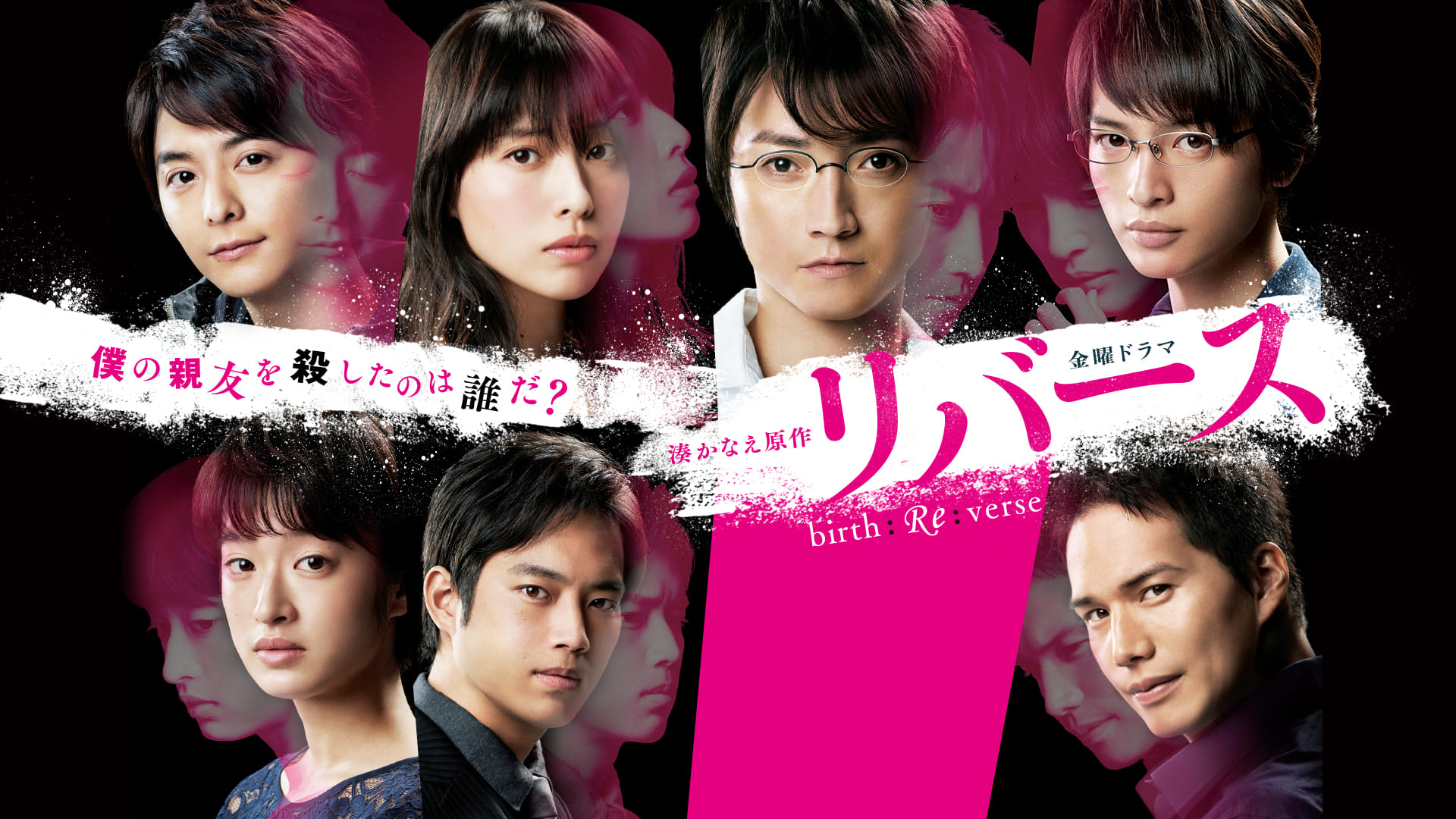
Spoiler commentary and discussion of Rebirth (novel and drama)
Rebirth" is a TV drama based on a mystery novel by Kanae Minato that aired from April to June 2017. The main character, Kazuhisa Fukase, was on a graduation trip with his college friends 10 years ago when his best friend, Yuki Hirosawa, disappeared and was found dead. someone sent Fukase and his friends a letter accusing them of the incident 10 years ago, and the mystery is about finding out who is responsible. The story, which alternates between the present and the past, gained popularity.
Read Article

Spoiler commentary and discussion of The Emperor's Chef (2015 drama)
The Emperor's Chef" is a drama based on the life of Tokuzo Akiyama, who served as the head of the kitchen of the Imperial Household Ministry's Imperial Household Ministry's Imperial Household Office. It stars Takeru Sato, with other actors including Hana Kuroki and Kenta Kiritani. Atsuzo Akiyama is adopted by his parents as the son-in-law of Matsumaeya, a marine products wholesaler, and begins working as the heir to the business. One day, he starts to dream of becoming the best chef in Japan, and struggles to achieve his dream. The average viewer rating was 14.9%, and it won numerous awards, including the Tokyo Drama Awards 2015.
Read Article

TANG TANG (film) Spoiler Commentary and Discussion Summary
TANG" is a live-action film directed by Takahiro Miki, based on the novel "Robot in the Garden" by Deborah Install. Ken (Kazuya Ninomiya), a no-good man who has been kicked out of his house for playing too many video games, has given up on his future with his wife, Emi (Hikari Mitsushima), for one reason or another, and has never taken a step forward in life. However, as he watches Tang, a robot that is supposed to have no memories or emotions, gradually learn about "friends" and "kindness," he gradually regains his old self. With an astonishing 97% satisfaction rate, this film will bring smiles, emotions, and warm tears to the hearts of people all over Japan.
Read Article

幸福の黄色いハンカチ(映画)のネタバレ解説・考察まとめ
『幸福の黄色いハンカチ』とは1977年に公開された日本の映画である。監督は山田洋次。刑期を終えて出所した島勇作は妻の島光枝へ、まだ自身を待っていてくれるなら家の前に黄色いハンカチを掲げてほしいという手紙を送っていた。それから勇作は故郷へ向かう道中、東京から北海道に来ていた花田欽也と小川朱美に出会い3人で行動することとなる。欽也の赤いファミリアに乗り、トラブルが相次ぎながらも3人の旅は続いた。光枝のいる家が近づくにつれ不安に襲われる勇作であったが、やがて真実と向き合う覚悟を決める。
Read Article

Former Entertainment Reporter Revealed! A summary of entertainers who actually have bad personalities [Tetsuya Takeda, Laura, etc.
A former entertainment reporter exposes a celebrity who looks nice on TV but actually has a bad character or a rotten guts! That person who looks mild-mannered is actually.... Don't be fooled by appearances and images.
Read Article

Morning Drama: Images of locations for NHK's "Jun to Ai" TV series [Miyakojima, Okinawa & Taisho Ward, Osaka].
We have compiled images of Miyako Island, Okinawa & Taisho Ward, Osaka, the filming locations for NHK's television series "Jun to Ai". We have covered images that will heal you with the beautiful nature of Okinawa, areas with Okinawan culture even though they are in Osaka, and images where you can enjoy the unique atmosphere of Taisho Ward. We will introduce more and more images of locations where you can immerse yourself in the world of "Jun to Ai.
Read Article

Introducing the famous dramas that have attracted public attention! Lots of charm in cast, story, music and more!
We have compiled a list of dramas that have been broadcast in the past with great casts and stories, such as "Ryusei no Kizuna" and "JIN - Jin. We will introduce more and more works that deserve to be called hidden masterpieces with a synopsis and review of each work!
Read Article

2015 Drama Viewing Ratings Rankings
Do you usually watch dramas? In this issue, we will introduce the ranking of drama viewership in 2015. If you want to relax during the year-end and New Year holidays, please refer to this ranking and watch dramas during the year-end and New Year holidays. If you want to relax during the year-end and New Year's holidays, please refer to this ranking and watch dramas during the year-end and New Year's holidays. *Average ratings for dramas that started in October are as of December 1.
Read Article
![Naoki Hanzawa] Masterpieces everywhere! A compilation of TV dramas that were super fun! The White Night's Lights, and more!](https://renote.net/files/blobs/proxy/eyJfcmFpbHMiOnsiZGF0YSI6NjMyMDcxMCwicHVyIjoiYmxvYl9pZCJ9fQ==--a5bbe255202e0aca0036063991e2fdd2d71de4be/20200901_hanzawa.jpg)
Naoki Hanzawa] Masterpieces everywhere! A compilation of TV dramas that were super fun! The White Night's Lights, and more!
Even if you don't watch serial dramas, you may be familiar with some of the popular dramas from the past, as well as some of the recent masterpieces that have shined with their scripts and direction. Please read through to the end for a list of such classics as "Naoki Hanzawa" and "Shiryakko"! Naoki Hanzawa" is a TV drama series based on the novel "Naoki Hanzawa" by Jun Ikeido, broadcast on TBS's "Sunday Gekijo" slot.
Read Article
Tags
Contents
- Overview of "Oi! Ryoma"
- Outline and story of "Oi! Ryoma"
- Birth of Ryoma
- Kendo training in Edo
- Formation of Sonno Joi and Tosa Kinnoto
- Leaving the domain to Shanghai
- Meeting with Kaishu Katsu: To the President of the Naval Training Center
- Formation of Kameyama-shachu and the Satsuma-Choshu Alliance
- Kaientai's Activities and Taisei Hokan
- Death of Ryoma
- Characters in "Oi Ryuma"
- Key person
- Sakamoto Ryoma
- Hampei pounded fish cake TAKECHI / Zuizan TAKECHI
- Izo OKADA
- Shintaro NAKAOKA (Shintaro NAKAOKA)
- Sakamoto family
- Sakamoto Otome
- Sakamoto Hachihei
- Sakamoto Sachi
- Sakamoto Gonpei
- Chizu SAKAMOTO
- Sakamoto Ei
- Sakamoto Iyo
- Sakamoto no Chino
- Sakamoto Harui
- Genon-chan (Genon-chan)
- Tosa Domain
- Yodo YAMAUCHI
- Toyo Yoshida
- Shojiro GOTO
- Taisuke INUI
- Fukuoka Toji
- 卓馬 YAMAMOTO / Takuma YAMAMOTO
- Yataro IWASAKI (Yataro IWASAKI)
- Shingo NASU
- Danzo OISHI
- Kasuke Yasuoka
- Yoshimura Torataro
- Kensuke TANAKA
- Kitsuma KITAZOE
- Kameyata MOCHIZUKI
- 寅之進 IKEDA
- Chuichiro
- Michinosuke KIYOOKA
- Shinnosuke KINOSHITA
- Shunpei NASU
- Saichiro INOUE
- Junosuke SHIMAMURA
- Nanzaemon HIJIKATA / Hijikata Hisamoto
- Hironojo MIZOBUCHI
- Sanshiro SASAKI / Takayuki SASAKI
- Shunta OKAUCHI
- Kayo SASAKI
- Hiroe Yamada
- Shigenari MATSUI
- Kenji Fukutomi
- Hineno no Benji
- Shosuke KUSUYAMA
- Okagami 新輔
- Shoryu KAWATA
- TAKECHI Tomi
- Nakahama Manjiro / Nakahama Manjiro
- Kai
- Aya
- Shizuko KIYOOKA
- Kaientai (Kameyama-shachu) (Kameyama Shachu)
- Yonosuke MUTSU
- Sonojo SAWAMURA
- Chojiro KONDO
- Kenzaburō Okamoto
- Ike 内蔵太
- Nagao Kenkichi
- Tarō Takamatsu
- Tarō Narasaki
- Shogunate
- Katsu-kaishu (victory Kaishu)
- Naosuke II
- Iemochi TOKUGAWA / Yoshitomi TOKUGAWA
- Yoshinobu HITOTSUBASHI / Yoshinobu TOKUGAWA
- Ichio OKUBO
- NAGAI Naomune
- Kozukenosuke OGURI
- Kazunomiya
- Shinsen-gumi
- Isami Kondo
- Toshizo HIJIKATA
- Soji OKITA
- Keisuke YAMANAMI
- Heisuke TODO
- Shusuke KONDO
- Choshu Domain
- Shoin Yoshida
- Kogoro KATSURA
- Shinsaku TAKASUGI
- Genzui KUSAKA
- Shunsuke ITO
- Aritomo YAMAGATA
- Monta INOUE
- Masanosuke SUFU
- Toshimaro YOSHIDA
- Matabe KIJIMA
- Kuichi IRIE
- Chuzaburo TERASHIMA
- 敬親 MOURI
- Zoroku MURATA
- Miyoshi 慎蔵
- OH!
- Omatsu
- Satsuma Domain
- Saigo Kichinosuke / Saigo Takamori (Kamori SAIGO)
- Ichizo OKUBO / Toshimichi OKUBO
- Komatsu Tatewaki
- Hanji Hanjiro NAKAMURA
- Saisuke GODAI / Tomoatsu GODAI
- Shinbei TANAKA
- Hisamitsu SHIMAZU
- Koba Dennai
- Echizen Domain
- Shungaku MATSUDAIRA
- Hachiro Mitsuoka
- Sanai HASHIMOTO
- Gentaro MATSUDAIRA
- Dennojo 出淵
- Higo Domain
- Teizo MIYABE
- Gensai KAWAKAMI
- Imperial Court
- Kintomo ANEGAKOJI
- Tomomi IWAKURA
- People of Kyoto
- Otose
- Ryo Narasaki
- Otora
- Tokichi
- Minekichi
- Barrel
- People of Edo
- Sadakichi CHIBA
- Jutaro CHIBA
- 佐那子, Chiba Prefecture
- Chiba Hassun
- Komanosuke SHIMADA
- Umanosuke UEDA
- People of Nagasaki
- Eishiro Ozone
- Thomas Glover
- Ueno Hikoma
- Omoto
- Other
- John Eric
- Margaret.
- Perry
- Shozan SAKUMA (Sakuma Shozan)
- Sakuma Junko
- Kiyokawa Hachiro
- Seiichiro Honma
- Izumi Maki
- Munenari DATE
- Toda Uta
- Katamori MATSUDAIRA
- The term "Oi! Ryoma"
- Tosa Class System
- Joshi (senior samurai)
- Goshi (country samurai)
- Events at the end of the
- Treaty between the United States of America and the Empire of Japan
- Ansei no Taigoku (Ansei Purge)
- Ikedaya Incident
- Coup of August 18 (Hachigatsuju Hachini no Seihen)
- Kinmon no hen Incident
- Choshu Conquest
- Thoughts and positions at the end of the Edo period
- Sonno joi (revere the emperor, expel the barbarians)
- Kobu-gattai
- Kinno
- Sabaku
- Group
- Tosa Kinnoto (loyalist clique of Tosa)
- Ronin Company
- Kameyama shachu (Kameyama shachu)
- Kaientai
- Rikuentai (Army Support Corps)
- Tenchu-gumi (Tenchu-gumi)
- Shinsen-gumi
- Mimawarigumi
- Kiheitai Army
- Policy
- Satsuma-Choshu Alliance
- Satsudo Meiyaku (Treaty between Satsuma and Tosa)
- Taisei Hokan (transfer of power back to the Emperor) (Taisei Hokan)
- Senchuhassaku (ship Nakabachi method)
- Other
- Sakoku (national isolation)
- Dappan (leaving the domain)
- Tenchu (heavenly punishment)
- Tengu
- Words, lines, scenes of "Oi! Ryoma"
- Ryoma SAKAMOTO: "I'll be strong!"
- Ryoma SAKAMOTO:' I'M GOING TO BE ONE WITH KAYO! I'M GOING TO GO BEYOND THE STATUS THAT I WOULD NEVER BE!'
- Yonosuke MUTSU: "They. are willing to die. because they are royalists."
- DO N'T CRY ALONE!
- Ryoma SAKAMOTO: "I am Ryoma SAKAMOTO, a Japanese!"
- Ryoma SAKAMOTO: "I'm still on my way, but I'll do it! Follow me and look!"
- Ryoma SAKAMOTO: "Will the Kaientai of the world do it?"
- Inside story, trivia, small story / episode and anecdote of "Oi! Ryoma"
- Notation of names influenced by "Ryoma ga Yuku"
- The Story of Ryoma as a Hero
- Works that are different from historical facts unique settings
- The final episode of the original anime
- Author Tetsuya Takeda's love of Ryoma
- Theme song and inserted song of "Oi! Ryoma"
- OP (opening): Tetsuya Takeda "The Tears of"
- Ed Ending: "Kaze no Ippo" by Tetsuya Takeda