
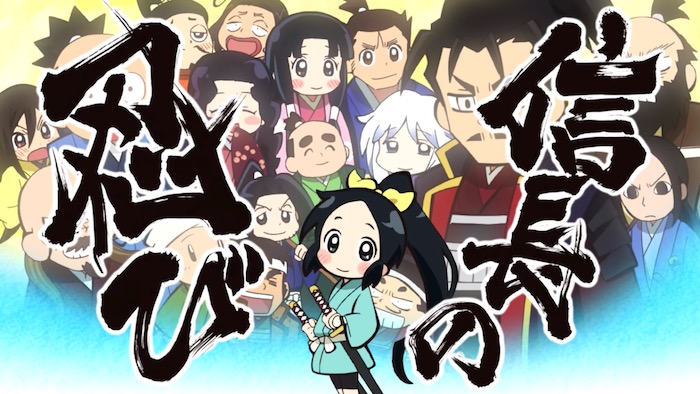
Nobunaga no Shinobi" is a four-frame manga by Naoki Shigeno that began serialization in Young Animal magazine (Hakusensha) in 2008 (issue 12), and an anime based on the manga. According to Shigeno, it is "not a ninja manga, but a warring states manga seen through the eyes of a ninja. While it is basically a gag manga, it also contains anecdotes and poems from the Sengoku period, and the story line is almost faithful to historical facts.
The story is about a young ninja girl, Chidori, who is attracted to the dream of Nobunaga Oda and together they pursue a war under heaven. Nobunaga is portrayed as a man with a super sweet tooth, and the other characters have strong personalities.
CV: Ryotaro Okiayu
A great military commander who can be said to be the "guardian god" of the Asakura clan. A great grandfather of Asakura Yoshikage, a younger brother of Ujikage, and a chief vassal who served three generations of Asakura Sadakage, Takakage and Yoshikage. When Nobunaga still unified half of Owari, he commented, "Nobunaga Oda is good at using people."
Terms of the Nobunaga no Shinobi
The anti-Nobunaga network
The' anti-Nobunaga network' refers to a grand alliance formed by those who conflicted with Nobunaga ODA due to their political or religious interests, in order to prevent the Oda family from unifying the whole country by joining forces with surrounding powers and territorial lords. In general, there are three types of anti-Nobunaga network.
・ The first encircling net = An alliance against Oda mainly by territorial lords in Kinai region (Miyoshi, Rokkaku, Asakura, etc.) and religious forces (Ishiyama Hongan-ji Temple, Hieizan Enryaku-ji Temple). Later, the Azai family joined and fought against Nobunaga. It lasted from 1568 when Nobunaga went to Kyoto to 1570 when he won the Battle of Anegawa.
This first encircling net is not mentioned much in the story.
・ The second encircling net = Although Yoshiaki ASHIKAGA was protected by Nobunaga ODA, he gradually became dissatisfied with his treatment. From there, Yoshiaki secretly got in touch with feudal lords and surrounding powers in various places. In addition to the conventional anti-Oda forces such as Azai, Asakura, Miyoshi, and Hongan-ji Temple religious organization, he also took sides with Shingen TAKEDA in Togoku (the eastern part of Japan, particularly the Kanto region), which was a stronger encircling net in a wider area than the first encircling net. The period is said to be from 1571 when Nobunaga suppressed the Nagashima Ikko Ikki (an uprising of Ikko sect followers in Nagashima) to 1573 when Shingen tried to go to the capital at the request of Yoshiaki but died of illness in the camp.
It is this second encircling net that is largely dealt with in the story.
・ The third encircling net = Yoshiaki ASHIKAGA, who played a central part in the second encircling net, was expelled by Nobunaga and escaped to the territory of the Mori family. From there, with the support of the Mori family, the encircling net was used to make a comeback. It became the largest encircling net in history with powerful local daimyos such as the Hongan-ji Temple religious organization, the Mori family and the Uesugi family who still had strong power.
This is also not so much dealt with in the story. It is said to have lasted until 1582 when Nobunaga lost his life due to a rebellion by Mitsuhide AKECHI.
"Frois's History of Japan"
To be exact, it is "Nihonshi" (History of Japan), but to avoid confusion with' Japanese history,' it is often called "Frois's History of Japan."
The Jeof Jesus ordered Frois to summarize the missionary work in Japan so that the missionaries who visited Japan and engaged in missionary work would be able to refer to it.
Frois is said to have been writing energetically, sometimes for as long as 10 hours a day. Frois wrote about a wide variety of things for the Society of Jesus, which had been looking for something like a "diary of missionary activities," and the volume of materials was huge. Church owners in Macau were too busy to read it, and "Frois's History of Japan" did not see the light of day.
When Frois died in 1597, Frois' History of Japan was kept in a church in Macao for a long time. In 1742, nearly 200 years later, a Portuguese academy finally produced a copy of the book and sent it to Portugal. However, when the church in Macao was burned down in a fire, the original copy of Frois was lost, the copy sent to Portugal was scattered and lost, and the first volume in particular went completely missing.
In the 20th century, it was finally found to be of historical value and was gradually published. The book is not only about Christian missionary work, but also about the characters of feudal lords such as Nobunaga Oda and Hideyoshi Toyotomi, the movement of warlords in various places, the lives of common people in the Sengoku period, disasters, and incidents. Although there are some misunderstandings about Japanese people and people who do not recognize Christianity are not highly evaluated, it is highly evaluated as an important material in Japanese history (Sengoku history) because it supports excellent observation and accurate information collection.
"Frois's History of Japan," written by Frois who forgot to eat and sleep, tells the story of the "Warring States Period" that excites history lovers.
"Shinchoko-ki"
Other than "Frois's History of Japan," "Shinchoko-ki" (Biography of Nobunaga ODA) is the first book to be mentioned as a material of the same period.
The author is Ota Gyuichi, who was a close aide of Nobunaga. It is the first biography of Nobunaga ODA in history, and consists of 16 volumes: the first volume covers the period from Nobunaga's childhood to the time before he went to Kyoto under the orders of Yoshiaki ASHIKAGA, and the next 15 years until the Honnoji Incident.
Gyuichi himself wrote in the okugaki (postscript) of "Shinchoko-ki" (Biography of Nobunaga ODA),' Nothing was intentionally deleted or created. If this is a lie, I will be punished by God,' and his reliability is different from other war chronicles. His writing attitude is very sincere, and his reliability as a material is very high.
It can be said that it is not a war chronicle with a strong color as a reading material, but a' record' without any creation. However, it is objective but also shows Gyuichi's own values and views of people, such as the medieval Japanese view of morality in which Shintoism, Buddhism and Confucianism were fused, the description of the attack on Yamayaki Hiei, and the description of the execution of the wife and children of Murashige ARAKI who defected from Nobunaga.
In "Shinchoko-ki" (Biography of Nobunaga ODA), Gyuichi wrote that Nobunaga was "determined and respected justice," "energetic and busy," "amiable and respected reason," and "an unrivaled hero of all time." Then why did the hero have to be killed in the Honnoji Incident? This book makes readers think that if there had been no Honnoji Incident, if Nobunaga had lived, history might have changed greatly. "Oda Nobunaga" seen by Ota Gyuichi throws a heated debate on history lovers.
Words, lines, scenes from "Nobunaga no Shinobi"
Chidori "I think it's a sin to be a Sengoku daimyo who does does nothing but not fight or obey."
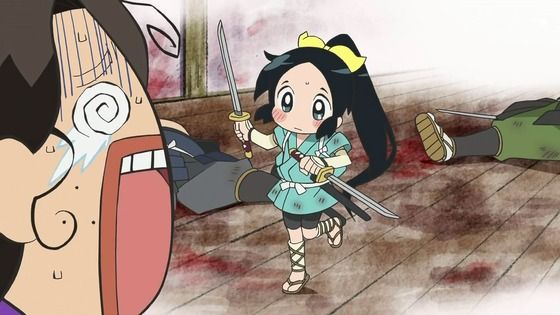
Saito Tatsuoki panics when his Gifu Castle is attacked.
When Gifu Castle was attacked and Tatsuoki became angry, Chidori said to him, "There is no war, but there is no obedience. I think that it is a sin to be a warring lord who does nothing." Following the words, "If you win the war, the country will become rich, and if the country becomes strong, it will not be invaded by other countries. It is sad, but in this turbulent time, winning the war is for the people of the domain. Nobunaga is trying to put an end to such turbulent time." Hearing this, Nobunaga got very angry with Tatsuoki, saying, "What are you! Weren't you just protecting your own business!" It can be said that this is a famous line that shows Chidori's trust in Nobunaga.
Chidori "No matter how hard you get, don't give up. The main purpose of stealth is to' live.'"
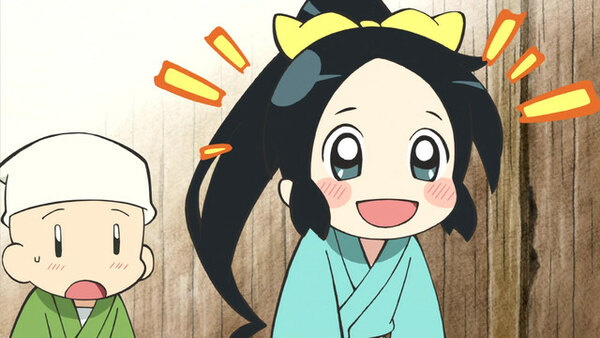
Chidori talks about the nature of Shinobi.
When he was asked by Nobunaga to give a lecture to the spies of the Oda family, he said,' Do not give up no matter how hard you are in a difficult situation. The main duty of Shinobi is to' live.'' After this, he said,' Live as if you are going to die!' and the spies of the Oda family labeled him as' not very smart.' However, when Chidori was dispatched to Nobunaga as a ninja of Iga, he said,' Shinobi is not a samurai, so he does not die for his lord. Instead, it is his duty to survive and convey information.' This is a famous line that shows the self-recognition (identity) of Chidori as' Shinobi.'
Makara Naotaka' A warrior may be called a dog (or a dog), or a beast (or a beast), but it is a book to win!'
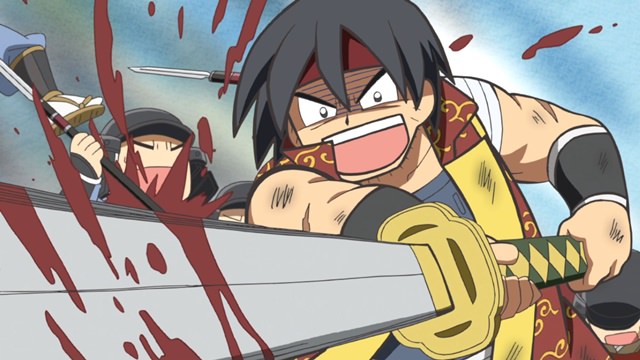
Makara Naotaka left alone among the enemy troops.
Asakura Norikage's last words were quoted from Makara Naotaka's Tales: "A warrior can be a dog (or called a dog), or a beast (or called a beast), and' Win is a book!'" Naotaka was left alone in the Battle of Anegawa, but he had no choice but to surrender and run away. It can be said that this is a famous line that perfectly embodies Soteki's words that a samurai does not need to die a clean death, and that he should just' win' until the very end = to kill as many enemy soldiers as possible. Naotaka died standing after that.
Chidori "I think it's good,"
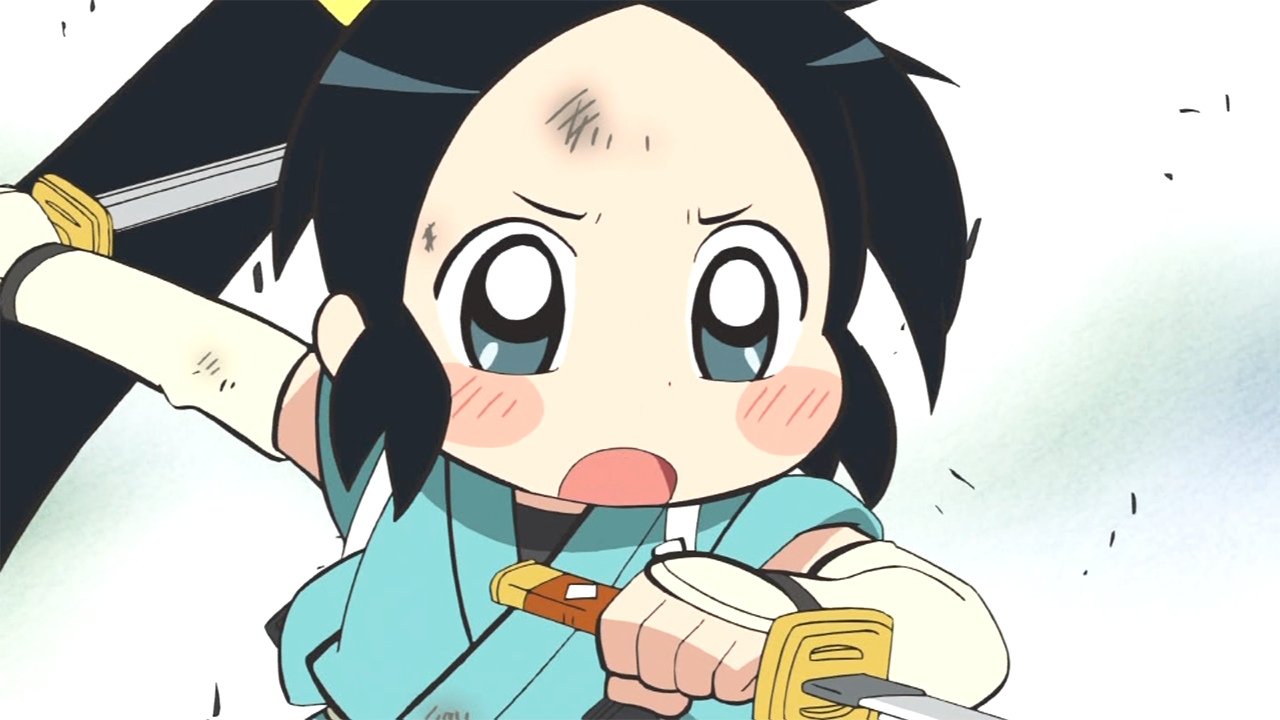
Chidori wields his sword for Nobunaga while shaving his own heart.
When a priest of Enryaku-ji Temple asked Chidori at the time of the fire attack on Mt. Hiei, "You said something like. to end the troubled times. Do you mean Nobunaga can do anything for that?", Chidori immediately answered, "I think it's good." Chidori said, "The troubled times that lasted for 100 years will not end in a half-hearted way.", "I am sure that only Nobunaga can end this troubled times." It can be said that this is a famous line that shows Chidori's strong determination that Nobunaga will end the troubled times and that he will kill people for that.
Nobunaga ODA: "You didn't kill anyone, you killed an eagle."
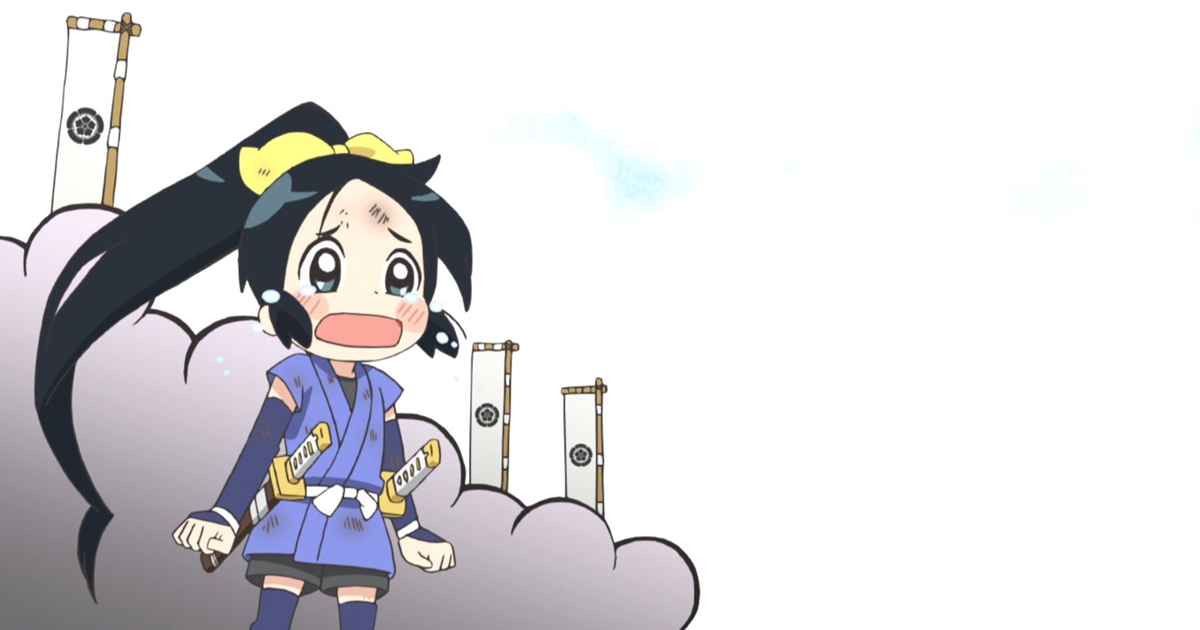
Chidori, who is bright and often acts bravely. But in fact, he felt guilty about cutting people.
At the time of the fire attack on Mt. Hiei, Nobunaga said to Chidori, who went to the front and killed monk soldiers, monks,, and many helpless people with his sword,' You did not kill any, it was an eagle.' After that, Nobunaga told Chidori,' You just followed the orders of an eagle,'' You have never killed any, ever and ever,' and' I don't believe in hell, but if there is one, I will go alone.' It can be seen that Nobunaga also has a strong determination to end the troubled times. This is a famous line from Nobunaga that makes one feel compassion for Chidori beyond one's master and servant. Chidori breaks down in tears when he hears this word.

Tags
Contents
- Overview of Nobunaga no Shinobi
- Outline and story of "Nobunaga no Shinobi"
- From Okehazama to the Ishiyama War
- Siege of Mino
- The Oda Family's Idol Oichi Marries Omi
- Chidori to Kōga Shinobi
- Yoshiaki Ashikaga, the new shogun, is already in trouble
- Chidori fighting with Kengo Daimyo
- A desperate retreat at the Kanagasaki Retreat Gate
- From Chikusa Pass to the Battle of Anegawa
- The Battle of Ishiyama
- List of Nobunaga no Shinobi characters
- People of the Oda family
- Chidori (plover)
- Nobunaga ODA
- 助蔵
- Kicho (return butterfly)
- Shibata Katsuie
- Mori Yoshinari (Moriyoshi)
- Mori Nagayoshi
- Mori Ranmaru
- Ota Gyuichi
- Akechi Mitsuhide
- Hiroko
- Ittetsu INABA
- Ando Morinari
- Bokuzen UJIIE
- Toshiie MAEDA
- Takigawa Kazumasu
- Sakuma Nobumori (Sakuma no Bumori)
- Fujitaka Hosokawa (also known as Hosokawa Fujita)
- Araki Murashige
- Hori Hidemasa
- Koheita HATTORI
- Shinsuke MORI
- Oda Nobuhiro
- Ikeda Tsuneoki
- Harada Naomasa
- Nobukatsu KITABATAKE (Oda)
- Tsutsui Junkei
- Kuki Yoshitaka
- Yasushige TSUGE
- People of the Kinoshita family
- Hideyoshi KINOSHITA
- Nene
- Koroku HACHISUKA
- Hanbei TAKENAKA
- Hidenaga KINOSHITA
- Naka
- People of the Tokugawa family
- Tokugawa Ieyasu
- Hattori Hanzo
- Honda Tadakatsu
- Sakai Tadatsugu
- Sena
- Nobuya TOKUGAWA
- Sadamasa OKUDAIRA
- Torii Suneemon
- People of the Azai family
- Nagamasa AZAI
- Oichi
- Azai Hisamasa
- Endo Naotsune
- Todo Takatora
- Isono Kazumasa (Isono Kazumasa)
- Azai Inori
- Azai Manpukumaru
- Akao Kiyotsuna
- People of the Asakura family
- Asakura Yoshikage
- Yoshiie Yamazaki (Yamazaki)
- Makara Naotaka
- Saito Tatsuoki
- Asakura Kageakira
- Kagechika Torii
- Kagenari TAKAHASHI
- Nagashige TOMIDA
- Maeba Yoshitsugu
- People of Honganji
- Kennyo of Hongan-ji Temple
- Nyoshunni
- Kyonyo of Hongan-ji Temple
- Sanmi-dono Palace
- Shimozuma Rairen (Shimotsuma)
- Shimotsuma Rairyu
- Saiga Goichi
- 岡吉 Masa (Okayoshi)
- Shimotsuma Raitan (Shimotsuma Raisin)
- Kennin of Gansho-ji Temple
- Members of the Takeda family
- Shingen Takeda
- Mochizuki Chiyome
- Takeda Nobukado
- Takeda Katsuyori
- Yamagata Masakage
- Masanobu KOSAKA
- Haruno BABA
- Naito Masatoyo (If you don't have it, it's delicious)
- Akiyama no Nobutomo
- Oyamada Nobushige
- Nagasaka Kyokukansai
- MUTO (SANADA) Masayuki
- Tsuchiya Masatsugu
- Anayama Nobutada (also known as Baisetsu)
- People of the Uesugi family
- Uesugi Kenshin
- Uesugi Kagetora
- Kagekatsu UESUGI
- Kanetsugu HIGUCHI (Higuchi)
- Nokizaru Toryo
- Hairy people
- Terumoto MORI
- Kikkawa Motoharu (Kawamoto)
- Kobayakawa Takakage
- Murakami Takeyoshi (Mitake MURAKAMI)
- Motoyoshi Murakami
- Iga Ninja
- Momochi Tanba (Yusuke Momochi Tanba)
- Kanbe no Kominami (Kobe Port)
- Magodayu OII
- Kido Yazaemon
- Tateoka Dojun
- Other people
- Yoshiaki Ashikaga
- Imagawa Yoshimoto
- Imagawa Ujizane
- Matsuna Hisahide
- Matsunaga Hisamichi (Matsuna ga hisamichi)
- Jotei ROKKAKU
- Sugiyatsu Zenjubo
- Luis Frois
- Kitabatake Tomonori
- Kitabatake Tomofusa
- Miyoshi Sanninshu (Miyoshi Triumvirate)
- Kakujo
- Kanesada SEKI
- Manase Dosan
- Gensaku
- Hatano Hideharu
- Akai Naomasa
- Okabe Mataemon (Okabe Mataemon)
- Morishige TSUCHIBASHI
- Kosuzume (sparrow)
- Hotaru (firefly)
- Extra edition
- Saito Dosan
- Motonari MORI
- Yoshiteru ASHIKAGA
- Asakura Norikage
- Terms of the Nobunaga no Shinobi
- The anti-Nobunaga network
- "Frois's History of Japan"
- "Shinchoko-ki"
- Words, lines, scenes from "Nobunaga no Shinobi"
- Chidori "I think it's a sin to be a Sengoku daimyo who does does nothing but not fight or obey."
- Chidori "No matter how hard you get, don't give up. The main purpose of stealth is to' live.'"
- Makara Naotaka' A warrior may be called a dog (or a dog), or a beast (or a beast), but it is a book to win!'
- Chidori "I think it's good,"
- Nobunaga ODA: "You didn't kill anyone, you killed an eagle."
- Behind the Scenes, Trivia, Small Stories / Episodes and Anecdotes of "Nobunaga no Shinobi"
- "Bonus" which can be read by removing the cover of the book of "Nobunaga no Shinobi"
- Descendants of Fujitaka Hosokawa are the 79th Prime Minister and Morihiro Hosokawa.
- Natsume Yoshinobu is the ancestor of Natsume Soseki.
- THE ONLY INJURY Honda Tadakatsu, THE INVINCIBLE MAN OF HIS LIFE, HAS EVER SUFFERED.
- Miyoshi Seikai Nyudo actually existed.
- Irresistible Connection between Ieyasu and the Imagawa Family
- ' Arukimiko' (walking shrine maiden), also known as' Ashinagabozu' (long-legged priest)
- Theme song and insert song of "Nobunaga no Shinobi"
- Theme song: Renka "徒桜" (Chapter 1 to Chapter 13)
- Theme song: Valshe "MONTAge" (CHAPTER 14 - CHAPTER 26)
- Theme song: Renka "Shirayuki" (CHAPTER 27 - CHAPTER 39)
- Theme song: Lily's Blow "Hana no Kage" (Shadow of a Flower) (CHAPTER 40 - CHAPTER 52)
- Theme song: "Goldfish tears" by Renka (CHAPTER 53 - CHAPTER 65)
- Theme song: Valshe "Sou no Ri" (CHAPTER 66 - CHAPTER 78)