
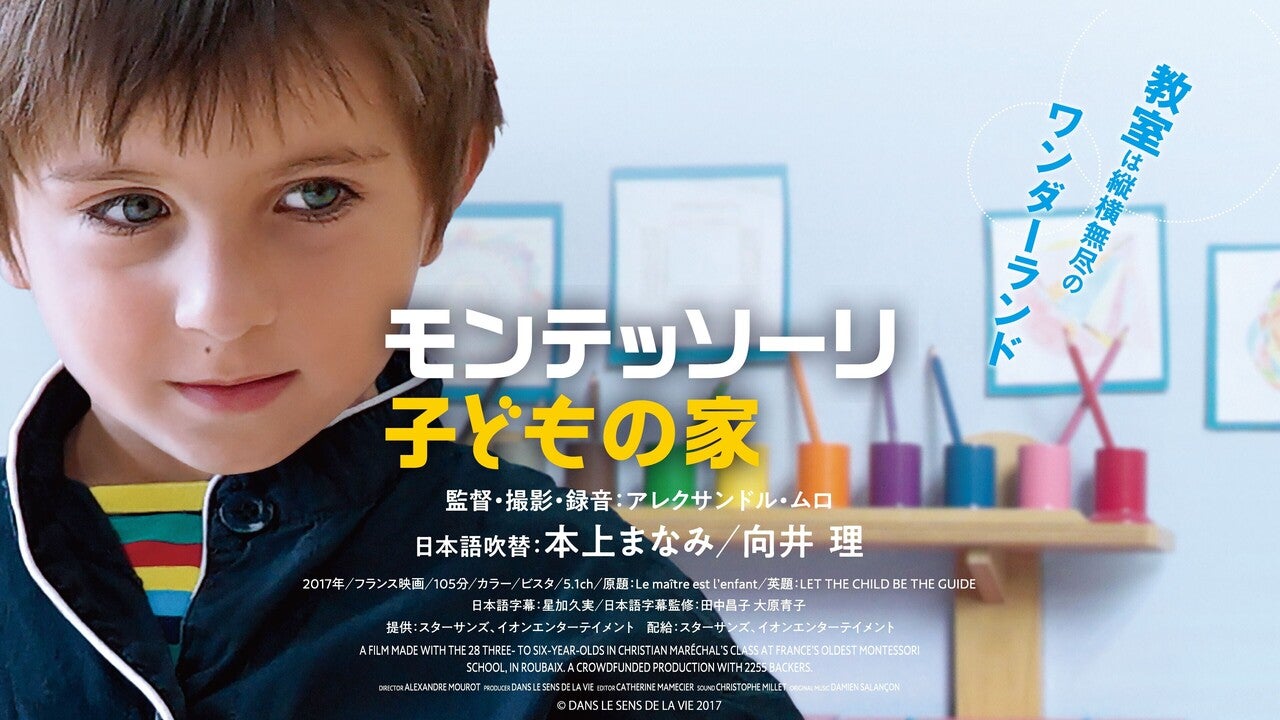
Montessori: A Child's Home" is a French documentary film that portrays the fascination of the Montessori method of education, which is favored by many people around the world, and the growth of the children. The film was shot over a period of two years and three months at the country's oldest Montessori kindergarten in Roubaix, Northern France, and succeeded in capturing 28 children between the ages of 2.5 and 6 learning freely with unique teaching tools, as well as the touching moments that occur as the children grow up. The Japanese dubbed version features Manami Honjo as the voice of Maria Montessori and Osamu Mukai as the director.
Teaching tool
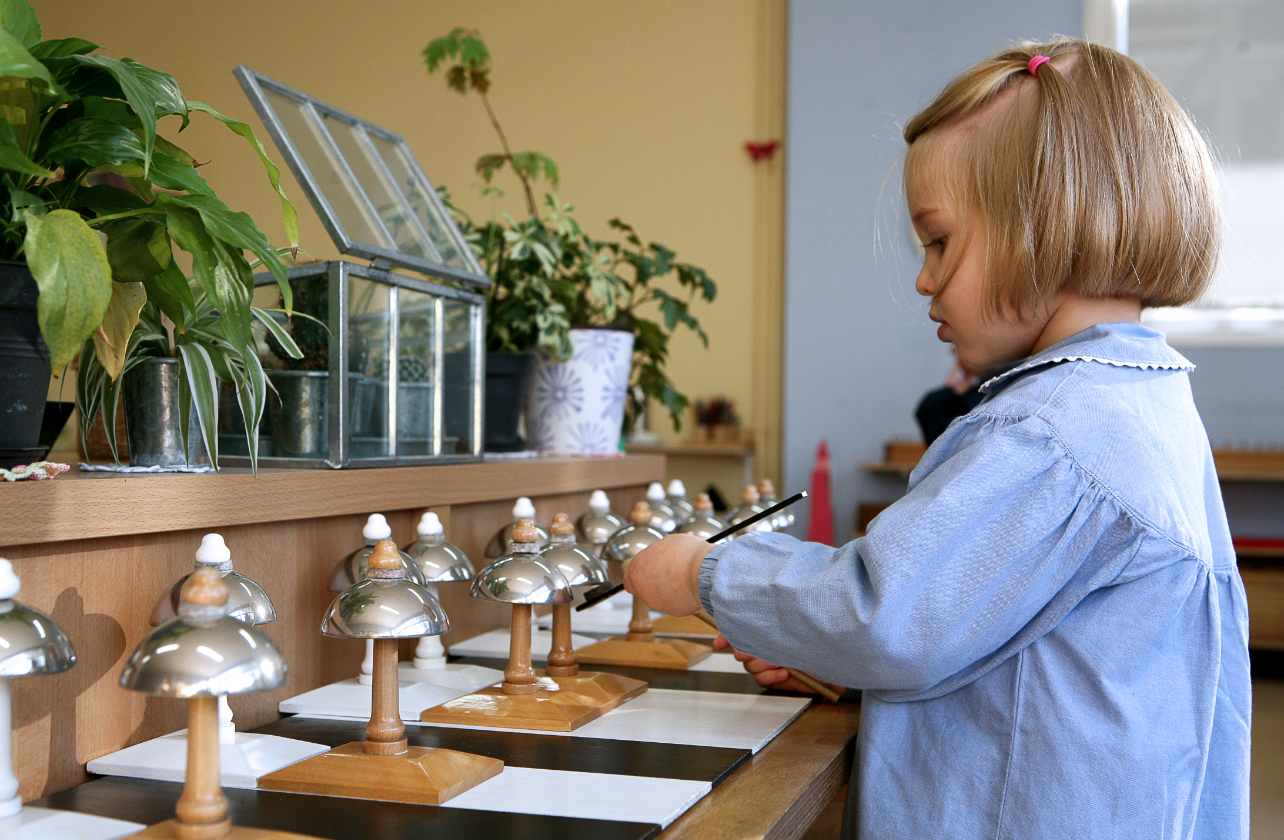
Sound a bell Charlotte
In a Montessori school, teaching tools are neatly arranged on shelves. The children are free to choose from among them, bring them to their desks, concentrate on their "work" to their heart's content, and return them to their original shelves when they are finished. This process is repeated. While teaching tools are an important part of Montessori education, the difference between these tools and toys is in their different purposes.
Toys are intended to entertain the child, whereas teaching tools are intended to help the child grow. The usage of each teaching tool is also determined by the tool, which is different from toys that can be handled freely.
Words, lines, scenes and scenes from "Montessori Kodomo no Ie" (Montessori Children's House)
Maria Montessori: "Children's behavior teaches us many things. Children are not powerless; they are full of dignity."
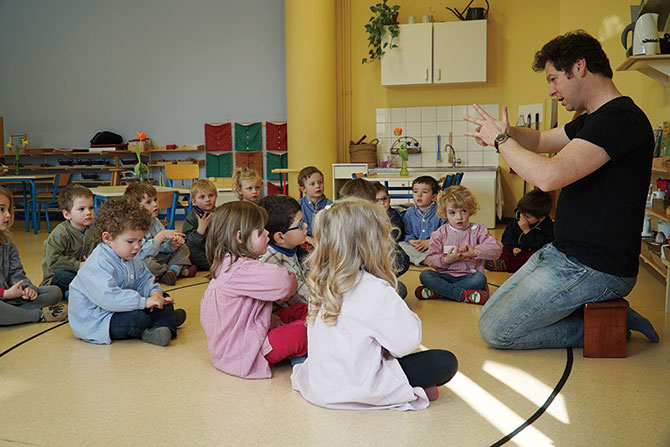
Children listening to the teacher
At the beginning of the film, the first words of Maria Montessori are, "The actions of the child teach us much. The child is never a powerless being. They are beings of dignity." In What Montessori discovered through her observation of children was that they are born with the power to develop themselves. These are important words that form the basis of Montessori education.
Maria Montessori "I had this crazy idea that you could raise a child to be a discerning hard worker by rewarding him or her for his or her appetite, self-esteem, etc., but there was no such desire in the child who was about to grow up."
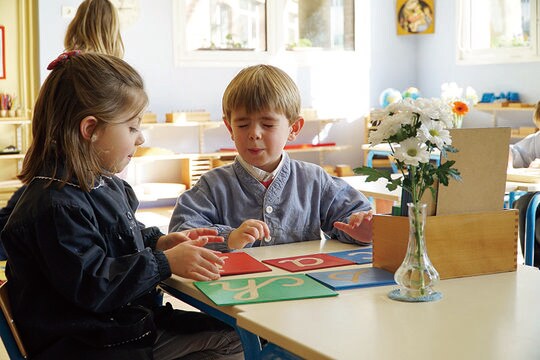
School children touching the sand lettering plate
As Maria Montessori observed the "work" of the children, he said, "I had a foolish assumption. I thought that in order to raise a child to be a good listener and a hard worker, it would be good to reward him for his appetite and self-respect. But there was no such desire in a child who was about to grow." Montessori emphasizes that there is no reward or punishment for children, because the act of praising or punishing them can deprive them of the fun, motivation, and interest to realize their mistakes.
Director Aleksandr Muro said, "The classroom is a laboratory and a place for observation. Do not interfere with children, do not interfere with their concentration, do not place obstacles, and children will make great leaps."
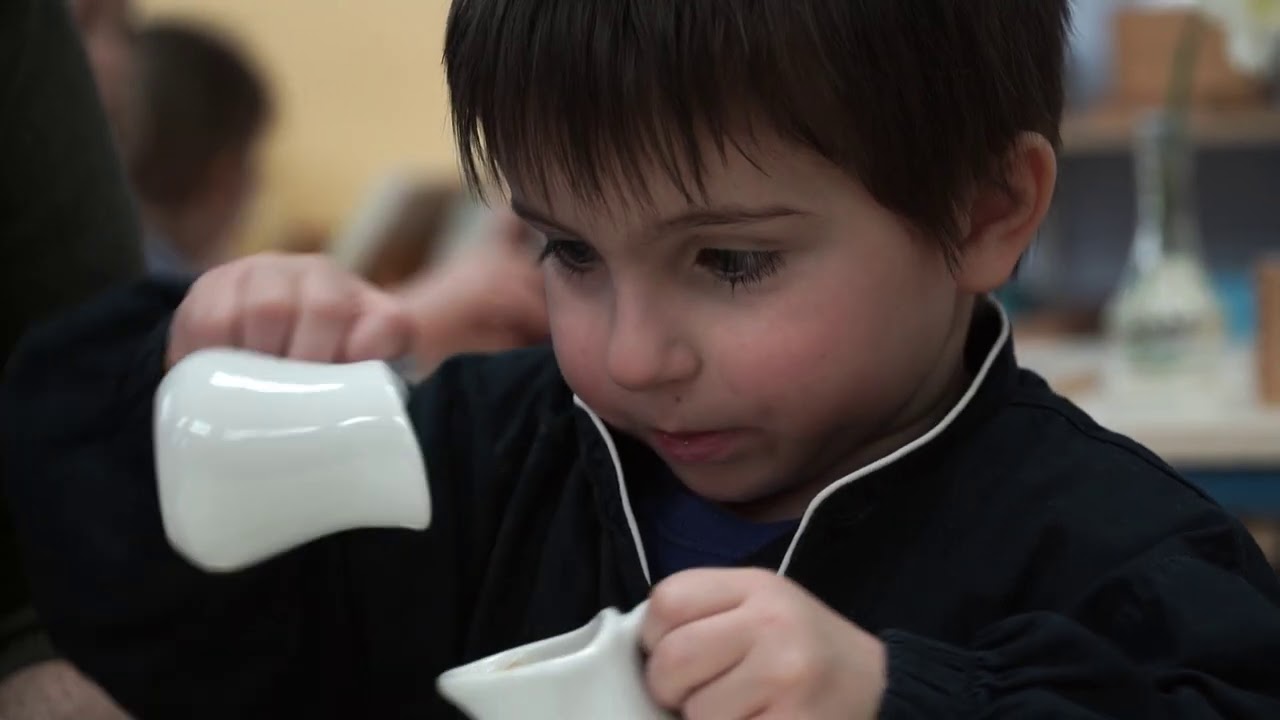
Gero devoting himself to his "work"
In observing the children's "work," director Alexandre Muro said, "The classroom is a laboratory, a place to observe. Do not intervene with the children, do not disturb their concentration, do not place obstacles in their way, and they will make wonderful leaps forward." Id. Montessori education does not have a detailed daily schedule or a teacher-directed program that follows a manual. The children's activities are kept self-directed, and the sense of accomplishment brought about by their own efforts is the driving force to move on to the next task. Concentration is the key to learning and self-actualization. The importance of this statement is noteworthy because Montessori was aware of this fact long before it was elucidated by neuroscience.
"Montessori Kodomo no Ie" (The House of the Montessori Children): Behind-the-Scenes Stories, Trivia, Small Stories /
The impetus for the production came from the director's own eldest daughter.
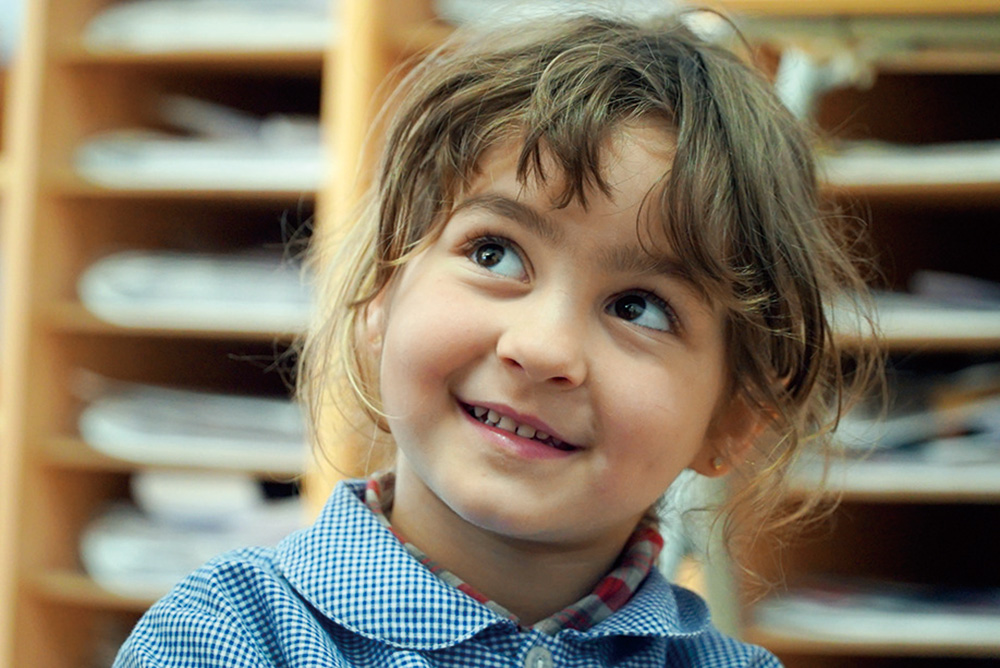
This film shows children's lively expressions.
The film begins with a personal image of director Muro. The footage is of the director's own eldest daughter. When observing his children in their daily lives, Muro let them do as they pleased, identifying their own difficulties and resolving them at their own rhythm. However, it was difficult for those around him to understand him, and they sometimes thought he was strange or questioned his sanity. Director Muro decided to make this film as a result of this incident, which is also said to have triggered his interest in children's psychology and educational methods.
Muro, who decided to shoot alone
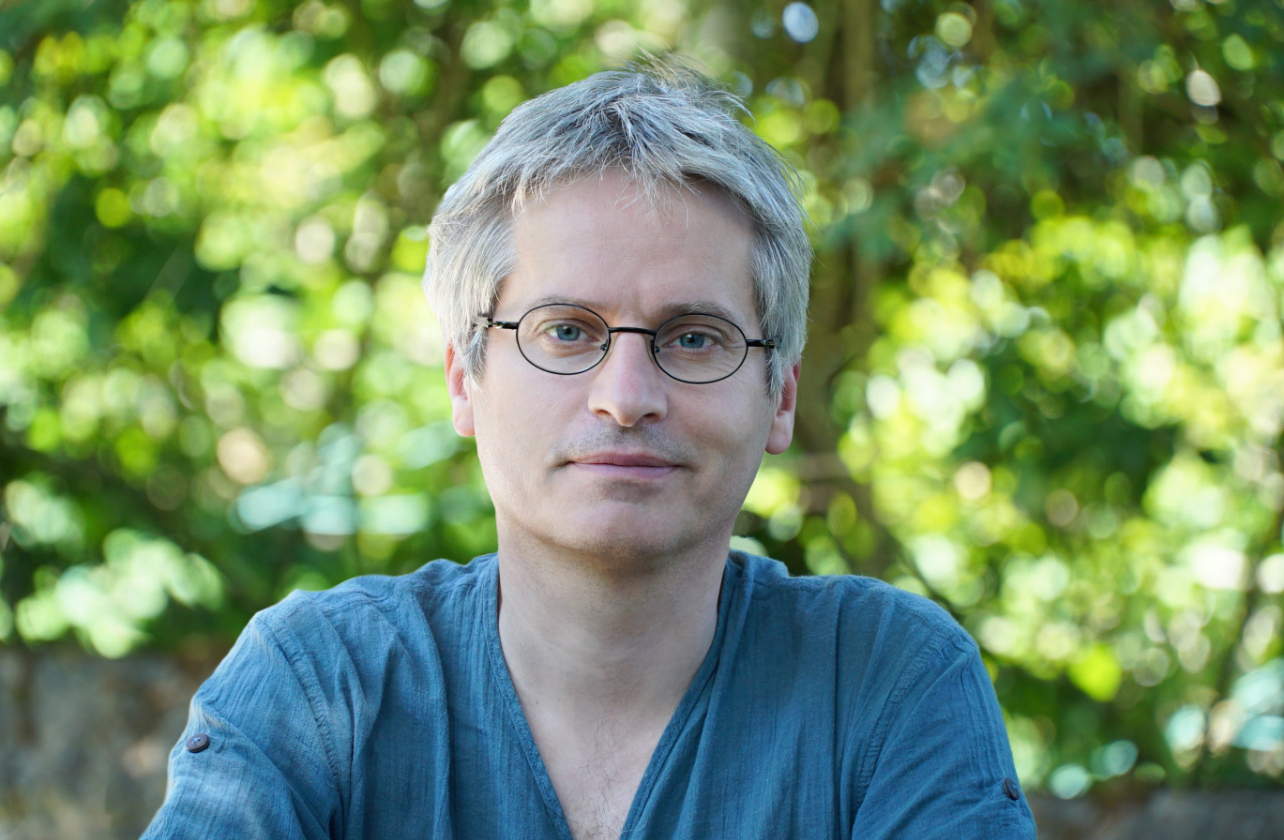
Aleksandr Muro
Director Muro, who wanted to show the Montessori method of education, decided to shoot the film alone. He attached a leg to a small camera and two microphones to it so that he could move freely. He filmed at the children's eye level. After observing the classroom for three weeks, he began filming in March 2015. The equipment was brought in little by little so that he could gently blend in with the children, and he began by taking pictures before filming. Filming came to an end in June 2016, but he continued to visit the classes many times to capture the children's progress. The preview in Roubaix was reportedly very moving, with an audience of 620 people in addition to the children and their entire families.
Children photographed as they are
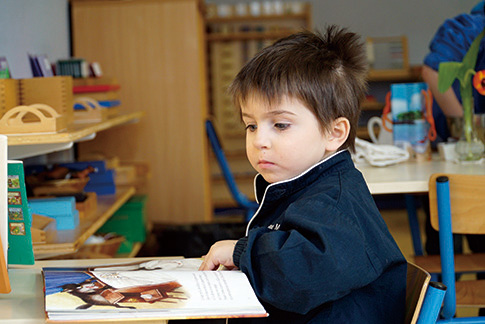
Gero, the central pupil
The director responded that he did not choose the children, and that he did not specifically point the camera at some of them during the shoot. The filming was reportedly very difficult, as the children regularly attended Roubaix's Montessori kindergarten and were completely unpredictable as to what would happen. Several personalities stand out in this film because they happened to have the chance to capture the magical moments in the children's learning, the same way a teacher waits patiently. The children discover for themselves how to do it well and how to do it well, and their eyes light up with enthusiasm as they read the letters and transfer the water. Some children hesitated for a long time and lost their way before beginning the many scenes full of fun and tenderness. The film also offers a glimpse of the children who observed the filming. The audience tends to see them as the rest of the crowd, but that is a reading theory of the images and not the director's intention. The children, who have learned independence, concentration, how to relate to others, and humility thanks to this method, are what make the film so appealing.

Tags
Contents
- Overview of Montessori's House of the Child
- The plot and story of "Montessori Kodomo no Ie"
- Children like to "work."
- Children who are not jealous
- Introduction of the "sensitive period"
- Sensitive period
- Period of linguistic sensitivity
- Focus on "Concentration Phenomenon
- Montessori Education Aims
- Characters from "Montessori Kodomo no Ie"
- teacher (classroom)
- Christian Maréchal.
- Children
- Jello
- Gallance
- Charli
- Felix.
- Alix
- Rare
- Montessori Children's House terminology
- Maria Montessori
- Children's home
- Teaching tool
- Words, lines, scenes and scenes from "Montessori Kodomo no Ie" (Montessori Children's House)
- Maria Montessori: "Children's behavior teaches us many things. Children are not powerless; they are full of dignity."
- Maria Montessori "I had this crazy idea that you could raise a child to be a discerning hard worker by rewarding him or her for his or her appetite, self-esteem, etc., but there was no such desire in the child who was about to grow up."
- Director Aleksandr Muro said, "The classroom is a laboratory and a place for observation. Do not interfere with children, do not interfere with their concentration, do not place obstacles, and children will make great leaps."
- "Montessori Kodomo no Ie" (The House of the Montessori Children): Behind-the-Scenes Stories, Trivia, Small Stories /
- The impetus for the production came from the director's own eldest daughter.
- Muro, who decided to shoot alone
- Children photographed as they are